What is an Email Legal Disclaimer and Why It Matters for Businesses
In an era where digital communication is paramount, the role of email legal disclaimers becomes increasingly critical for businesses. These disclaimers serve
Sophie Grant
Email Signature Specialist, Scribe
Introduction
In an era where digital communication is paramount, the role of email legal disclaimers becomes increasingly critical for businesses. These disclaimers serve as essential safeguards, protecting sensitive information while navigating the complexities of confidentiality and liability. By clearly outlining the legal implications of email content, they not only enhance a company's reputation for compliance and ethical communication but also mitigate potential risks.
However, many organizations mistakenly believe that email disclaimers provide complete protection, leading to potential vulnerabilities. Understanding the nuances of these disclaimers is essential for safeguarding against potential legal challenges in a complex regulatory landscape.
Define Email Legal Disclaimer
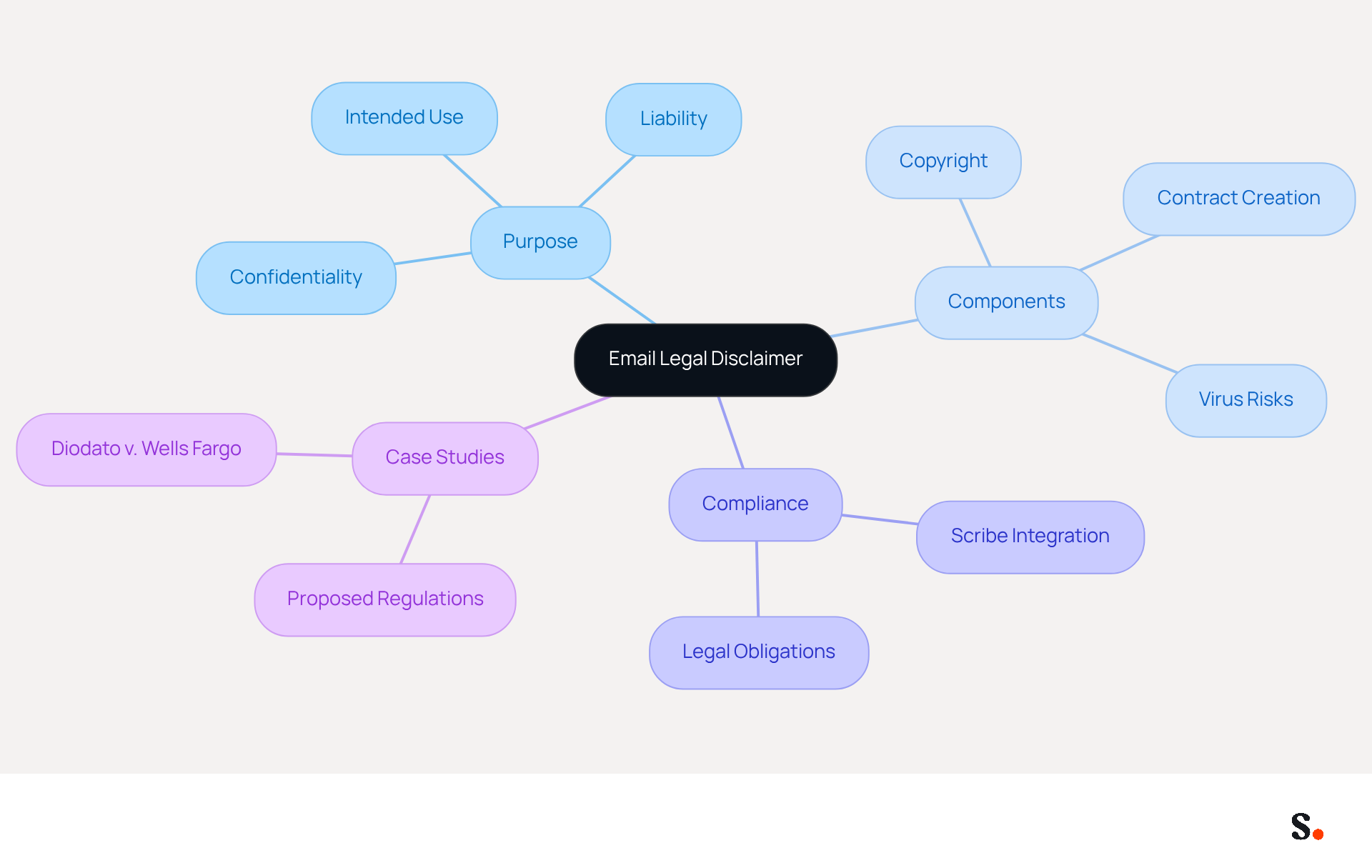
An email legal disclaimer included in a message footer serves as a critical safeguard for businesses, outlining the legal implications of the content. Its main aim is to inform recipients about confidentiality, liability, and the intended use of the information included within the email legal disclaimer. For instance, a typical notice might state that the message is confidential and meant exclusively for the recipient, forbidding any unauthorized use or revelation.
This regulatory safeguard is crucial for businesses handling sensitive information, as it helps mitigate risks associated with data breaches and miscommunication. Moreover, the email legal disclaimer addresses issues like copyright, contract creation, and virus risks, providing a solid legal framework for digital communications.
In the context of using Scribe, automated signature management ensures that notices are consistently applied and updated across all communications. Scribe's integration with systems like HRIS and business phone systems allows for real-time synchronization of signature information, meaning that any changes are automatically reflected without requiring action from team members. This feature ensures compliance with industry standards and highlights the importance of including an email legal disclaimer in every message.
Scribe's SOC 2 Type II compliance further ensures that the data associated with these notices is handled securely, providing an additional layer of protection for sensitive information. In the UK, companies are legally obligated to include their registered name, number, location of registration, and registered office address in all communications, which underscores the significance of adherence in message notices.
The case of Diodato v. Wells Fargo Ins. Servs. USA, Inc. demonstrates how communication notices can safeguard interactions under attorney-client privilege, emphasizing their importance in judicial contexts. Recent data shows that a considerable number of enterprises are implementing written notices to improve their protections, with courts acknowledging their significance in establishing confidentiality and liability limits.
Incorporating an email legal disclaimer as part of effective communication notices is not just a best practice; it is essential for protecting sensitive information and ensuring compliance with legal standards.
Explain Importance for Businesses
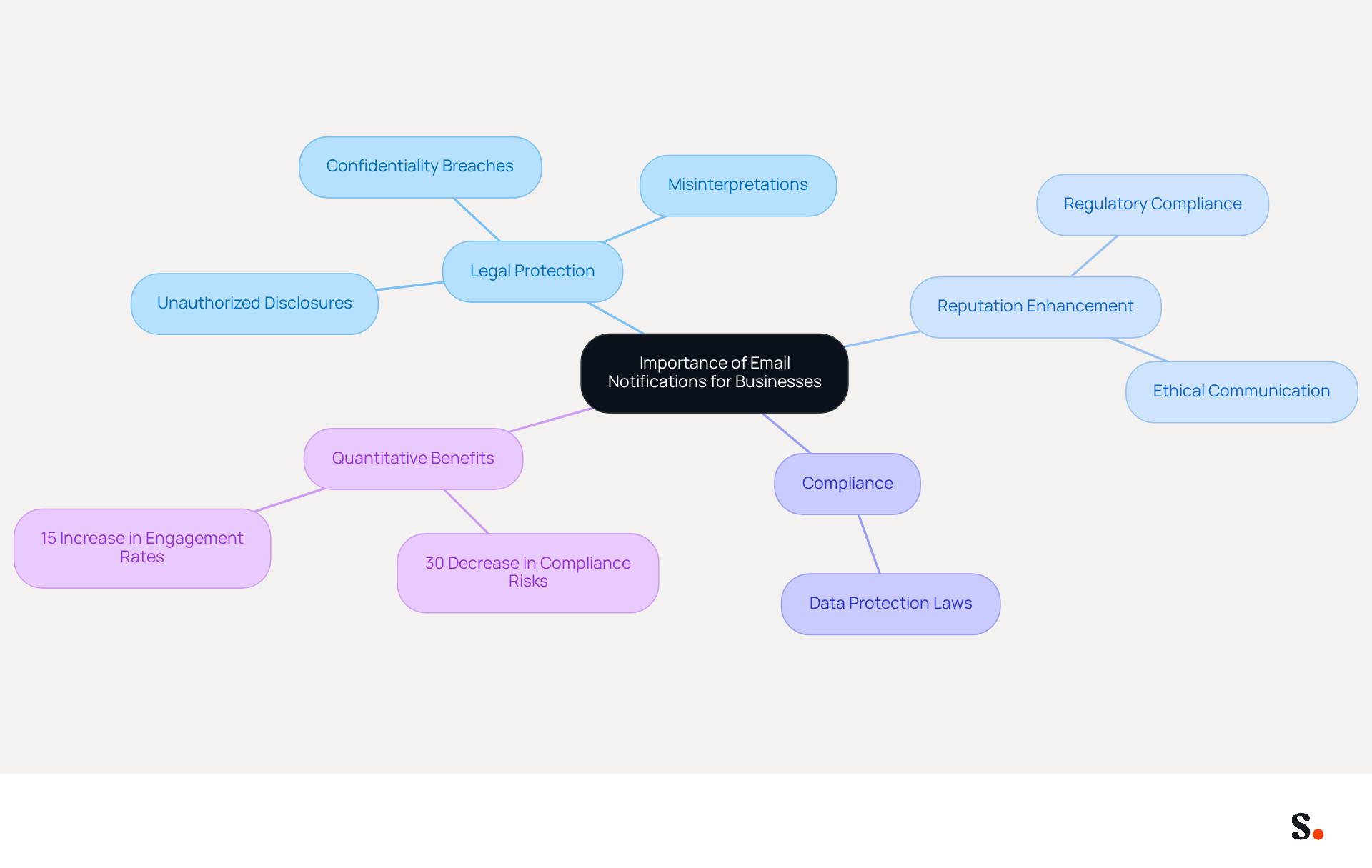
Email notifications, accompanied by an email legal disclaimer, are vital in protecting businesses from legal liabilities. They serve as a first line of defense against claims related to confidentiality breaches, misinterpretations, and unauthorized disclosures. For instance, accidental misdelivery of sensitive information can lead to serious legal repercussions; a notice can assist in clarifying that the information is confidential and not meant for the incorrect recipient, potentially decreasing the risk of judicial consequences.
Additionally, these statements enhance a company's reputation by demonstrating commitment to regulatory compliance and ethical communication, as stated in the email legal disclaimer. In an era of increasingly stringent data protection laws, having a well-crafted email legal disclaimer is crucial for maintaining trust with clients and stakeholders.
Organizations utilizing effective communication notices have reported a 30% decrease in compliance risks and a 15% rise in engagement rates, underscoring the importance of these tools in today's business landscape.
With Scribe's automated email signature management, organizations can effortlessly update and oversee their email signatures, ensuring that all notices are consistently applied. With Scribe's SOC 2 Type II compliance, you can trust that your data handling is secure, further reinforcing the trustworthiness of communications. This proactive approach not only mitigates risks but also enhances the organization's credibility, making it an essential tool for Marketing Managers aiming to enhance their organization's protective measures.
Outline Components and Types
Understanding the key components of email legal disclaimers is essential, as inadequate disclaimers can leave businesses vulnerable to legal challenges.
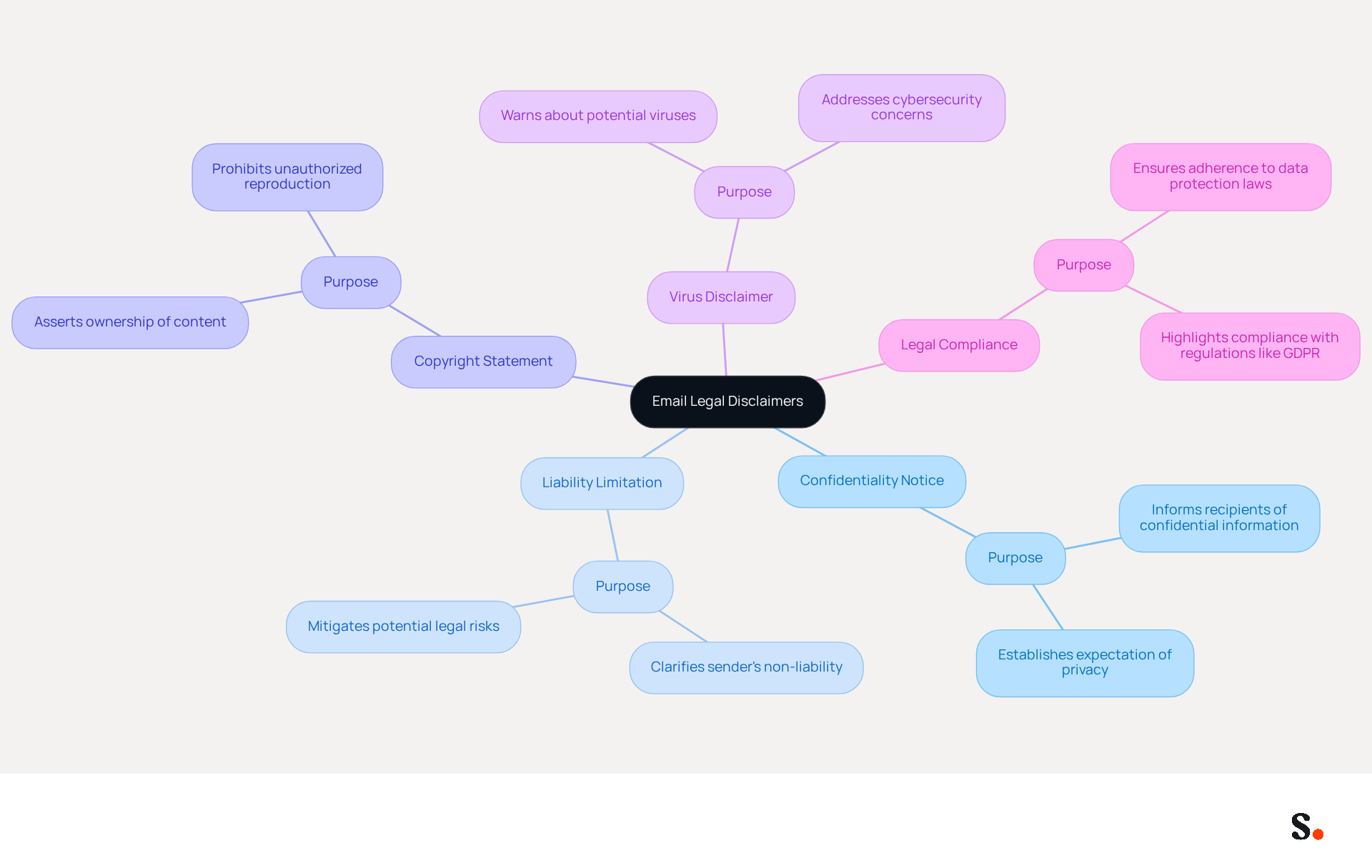
- Confidentiality Notice: This informs recipients that the message contains confidential information intended solely for the designated recipient, thereby establishing the expectation of privacy.
- Liability Limitation: This section clarifies that the sender is not liable for any damages resulting from the use of the content, helping to mitigate potential legal risks.
- Copyright Statement: This asserts the sender's ownership of the content, prohibiting unauthorized reproduction or distribution, which is vital for protecting intellectual property.
- Virus Disclaimer: This warns recipients that the sender cannot guarantee the absence of viruses in the email, addressing potential cybersecurity concerns.
- Legal Compliance: Some notices may include statements regarding adherence to data protection laws, such as GDPR or HIPAA, ensuring that businesses follow relevant regulations.
Various kinds of notices can be customized for particular industries or circumstances. For example, marketing notices often include opt-out choices for promotional messages, while advisories used by law firms highlight client confidentiality. Regular evaluations and updates of these statements are crucial to reflect changes in regulations and company policies, ensuring they remain effective in safeguarding sensitive information. Research shows that having an email legal disclaimer can significantly reduce the risk of legal issues, highlighting its importance in professional communication. Case studies emphasize the significance of tailoring notices to fulfill industry-specific needs, improving compliance and protecting confidential information. Common errors in creating email notices include using excessively lengthy messages that overwhelm recipients and generic templates that fail to meet specific business requirements. By prioritizing tailored legal disclaimers, businesses not only protect themselves but also foster trust with their clients and partners.
Discuss Misconceptions and Limitations
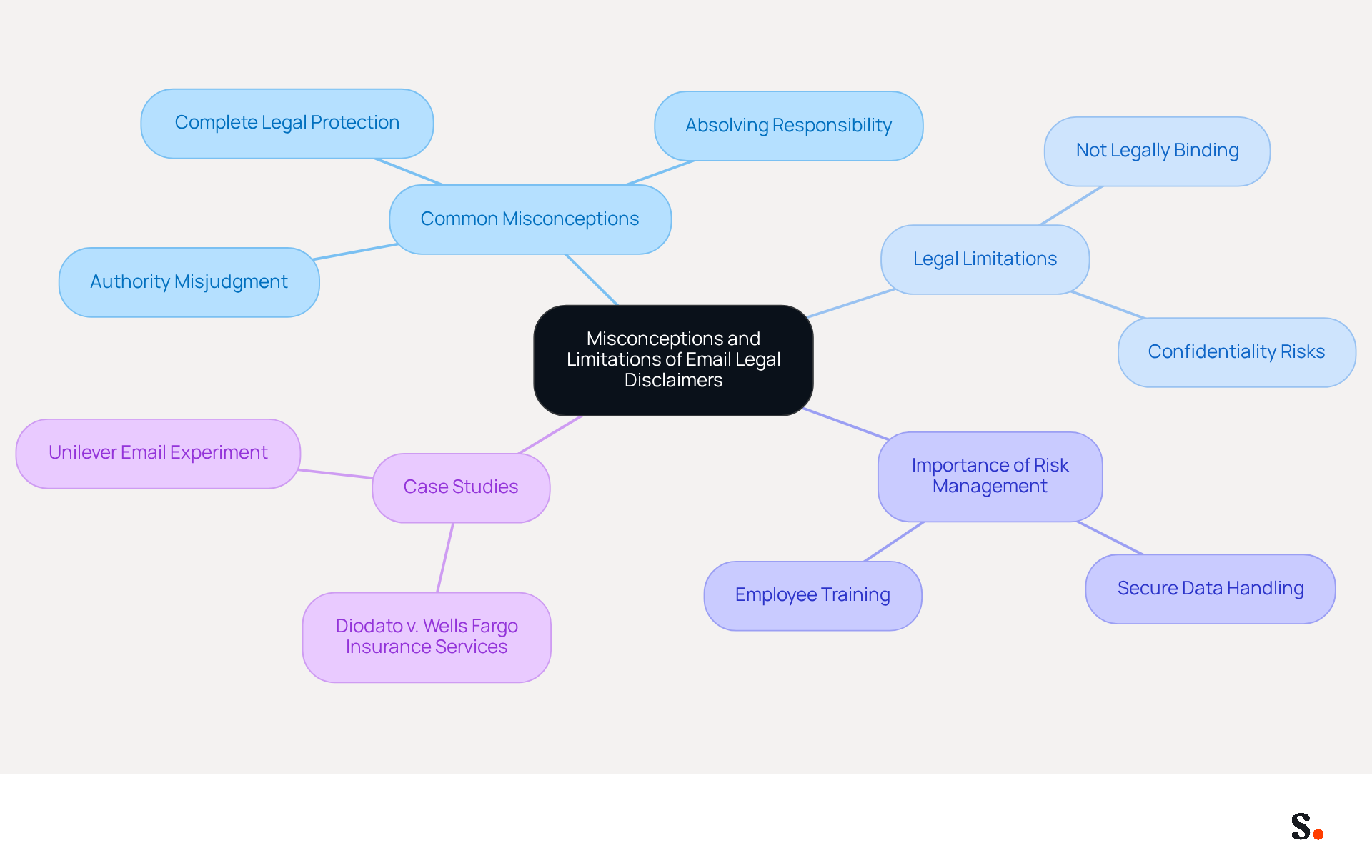
Misconceptions surrounding the email legal disclaimer can lead businesses to underestimate their legal limitations. A common belief is that the email legal disclaimer offers complete legal protection, but this is a misconception. An email legal disclaimer is not a legally binding contract and may not withstand scrutiny in court. For instance, while a confidentiality notice may signal the sensitive nature of the information, it does not ensure that the recipient will honor that confidentiality. Furthermore, some companies mistakenly believe that including an email legal disclaimer absolves them of all responsibility. In reality, notices should be viewed as part of a broader risk management strategy that includes secure data handling practices and comprehensive employee training. Businesses often misjudge the authority of an email legal disclaimer, leading to potential legal pitfalls. Understanding these constraints is crucial for effectively employing an email legal disclaimer without overestimating its authority.
Statistics indicate that a considerable number of recipients do not read warnings; in a notable experiment, only six out of 46 managers responded correctly to a hidden message embedded in a confidentiality notice. This highlights the risks of relying solely on an email legal disclaimer for protection, as many recipients overlook them. Moreover, incorporating an email legal disclaimer in a message notice is legally mandated in some nations, emphasizing the significance of notices in specific situations. Case studies, such as the Diodato v. Wells Fargo Insurance Services, illustrate that while an email legal disclaimer can contribute to privilege claims, it does not guarantee protection if communications are forwarded without proper precautions. This necessitates a shift in focus from mere compliance to active risk management. Therefore, organizations must emphasize operational confidentiality measures and employee awareness rather than simply incorporating an email legal disclaimer in their communications. Additionally, relying solely on disclaimers can create a false sense of security and dilute a brand's integrity, underscoring the importance of a comprehensive risk management strategy.
Conclusion
Email legal disclaimers are not just formalities; they are essential safeguards against legal liabilities that every organization must prioritize. By clearly outlining the confidentiality, liability, and intended use of the information shared, these disclaimers serve as a protective barrier against miscommunication and unauthorized disclosures. These disclaimers play a critical role in ensuring compliance with legal standards, which in turn enhances a business's credibility.
Throughout this discussion, we have highlighted the various components of an effective email legal disclaimer, including:
- Confidentiality notices
- Liability limitations
- Copyright statements
Additionally, we addressed common misconceptions, such as the belief that disclaimers provide absolute legal protection. It is crucial for businesses to recognize that while disclaimers are valuable tools, neglecting to integrate them into a comprehensive risk management strategy can expose businesses to unnecessary vulnerabilities.
Ultimately, email legal disclaimers are vital not just for compliance, but for building trust with clients and stakeholders. Organizations are encouraged to prioritize the implementation of well-crafted disclaimers as part of their communication strategy. By doing so, businesses not only protect sensitive information but also reinforce their commitment to ethical practices and regulatory adherence, paving the way for stronger relationships and enhanced reputation in the marketplace.
Frequently Asked Questions
What is the purpose of an email legal disclaimer?
An email legal disclaimer serves to inform recipients about confidentiality, liability, and the intended use of the information included in the email. It aims to protect businesses by outlining the legal implications of the content.
Why are email legal disclaimers important for businesses?
Email legal disclaimers are crucial for businesses handling sensitive information as they help mitigate risks associated with data breaches and miscommunication. They also address issues like copyright, contract creation, and virus risks.
How does Scribe assist with email legal disclaimers?
Scribe provides automated signature management to ensure that email legal disclaimers are consistently applied and updated across all communications. Its integration with systems like HRIS and business phone systems allows for real-time synchronization of signature information.
What compliance standards does Scribe meet regarding email legal disclaimers?
Scribe is SOC 2 Type II compliant, ensuring that the data associated with email legal disclaimers is handled securely, providing an additional layer of protection for sensitive information.
What legal obligations do companies in the UK have regarding email communications?
Companies in the UK are legally required to include their registered name, number, location of registration, and registered office address in all communications, highlighting the importance of adherence to legal standards in email notices.
Can email legal disclaimers protect communications in legal contexts?
Yes, the case of Diodato v. Wells Fargo Ins. Servs. USA, Inc. illustrates how communication notices can safeguard interactions under attorney-client privilege, emphasizing their importance in judicial contexts.
Are businesses increasingly implementing email legal disclaimers?
Recent data indicates that a considerable number of enterprises are adopting written notices to enhance their protections, with courts recognizing their significance in establishing confidentiality and liability limits.
List of Sources
- Define Email Legal Disclaimer
- Email Disclaimers: Recipient Beware (https://csklegal.com/newsroom/publications/email-disclaimers-recipient-beware)
- Do email disclaimers really protect my corporate communications? (https://bybrand.io/blog/corporate-email-disclaimer)
- Proposed email disclaimer law would create new problems rather than solve old ones, says expert (https://pinsentmasons.com/out-law/analysis/proposed-email-disclaimer-law-would-create-new-problems-rather-than-solve-old-ones-says-expert)
- The Importance of Email Disclaimers for Businesses - Tyler Law LLP (https://tylerlawllp.com/blog-posts/the-importance-of-email-disclaimers-for-businesses)
- Email Disclaimers: Tips for Business Communication | Mailchimp (https://mailchimp.com/resources/email-disclaimer)
- Explain Importance for Businesses
- What Will Happen If My Business Doesn't Use an Email Disclaimer? - Lawpath (https://lawpath.com.au/blog/what-will-happen-if-my-business-doesnt-use-an-email-disclaimer)
- Email Disclaimers: Tips for Business Communication | Mailchimp (https://mailchimp.com/resources/email-disclaimer)
- A client asked me today, are email disclaimers really worth the email they are typed on??? | Catherine Higgins (https://linkedin.com/posts/catherine-higgins-a357859_lawbase-contracts-auslaw-activity-7343157235222487043-yd3K)
- 10 Essential Email Disclaimer Examples for Effective Marketing (https://scribe-mail.com/en-US/blog/10-essential-email-disclaimer-examples-for-effective-marketing)
- Outline Components and Types
- Email Disclaimer: What It Is, When Do You Need It + Examples | iubenda (https://iubenda.com/en/blog/email-disclaimer)
- The Importance of Email Disclaimers for Businesses - Tyler Law LLP (https://tylerlawllp.com/blog-posts/the-importance-of-email-disclaimers-for-businesses)
- Email Disclaimers: Tips for Business Communication | Mailchimp (https://mailchimp.com/resources/email-disclaimer)
- Email Disclaimer Examples: 25+ Templates by Industry, Region, and Use Case (https://syncsignature.com/blog/email-disclaimer-examples)
- Your Guide To: Confidential Email Disclaimers [With Examples] - IR Global (https://irglobal.com/article/your-guide-to-confidential-email-disclaimers-with-examples)
- Discuss Misconceptions and Limitations
- 💌 Email Confidentiality Clauses: It Won’t Save You (But This Advice Might) (https://lawwithmiller.com/blogs/milleriplaw/email-confidentiality-myth?srsltid=AfmBOoohDY9Gkofo9Ksg1lDjpZhfn-uIpjMSLFgLPyBPMLv7st6XiqTX)
- The Email Disclaimer Delusion: Why Your Signature Block Won't Save Your Privilege (https://linkedin.com/pulse/email-disclaimer-delusion-why-your-signature-block-wont-jd-morris-flste)
- 20 good email disclaimer examples - get your own email disclaimer (https://mail-signatures.com/articles/email-disclaimer-examples)
- Do You Really Need an Email Disclaimer? (https://llssa.org/do-you-really-need-an-email-disclaimer)
Get started with Scribe
Keep every signature compliant
Free 14-day trial — no credit card.