Master Email Confidentiality Disclaimers for Effective Marketing
Email confidentiality disclaimers play a crucial role in safeguarding sensitive information and ensuring communication integrity. As organizations navigate the
Sophie Grant
Email Signature Specialist, Scribe

Introduction
Email confidentiality disclaimers play a crucial role in safeguarding sensitive information and ensuring communication integrity. As organizations navigate the complexities of data privacy, understanding the critical components of these disclaimers can significantly bolster trust with clients and partners. Despite the importance of these disclaimers, many organizations find it challenging to create them effectively.
So, what really makes an email confidentiality disclaimer effective, and how can organizations put these elements into practice to protect their communications?
Understand the Purpose of Email Confidentiality Disclaimers
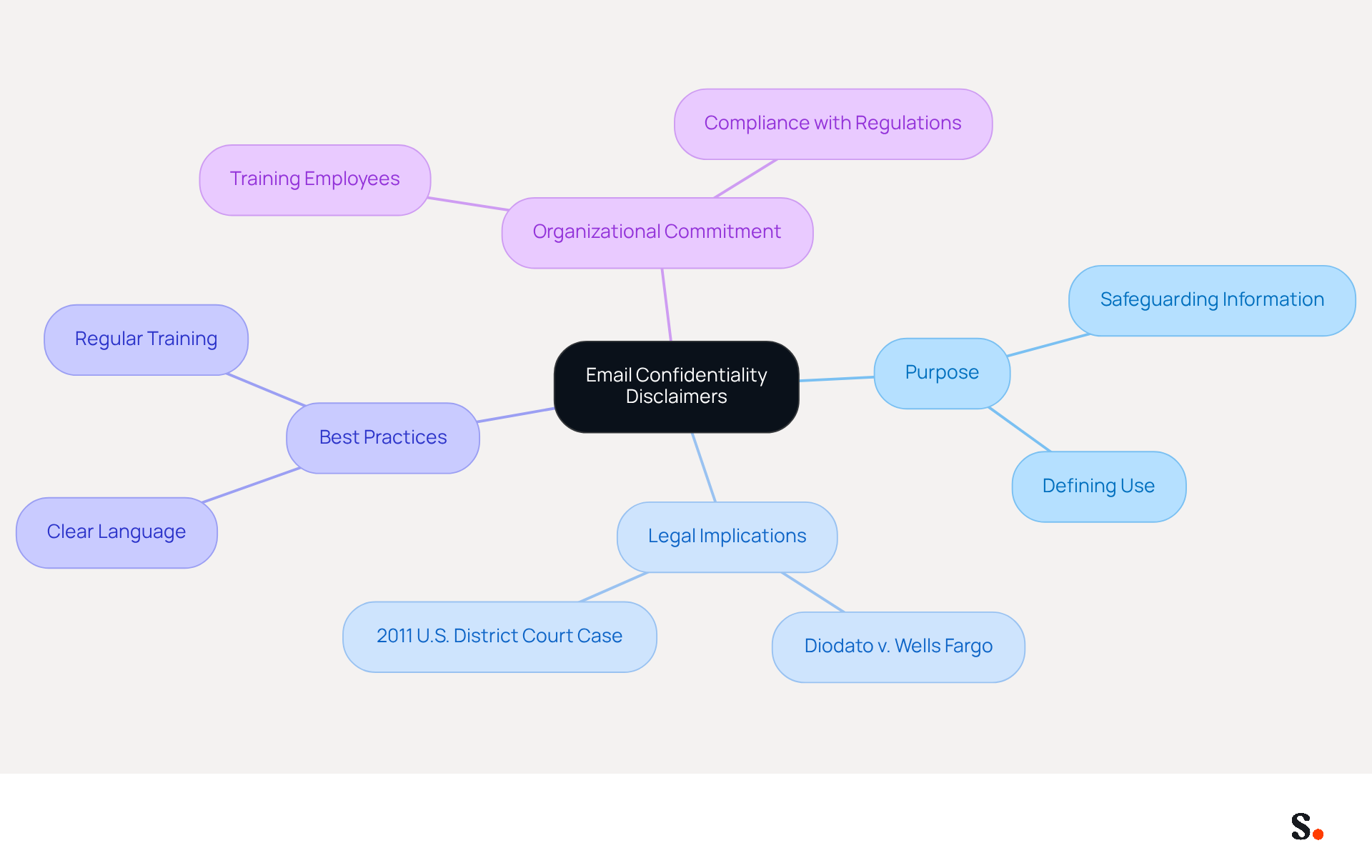
Email confidentiality disclaimers play a pivotal role in safeguarding sensitive information and defining the intended use of communications. They include an email confidentiality disclaimer to notify recipients that the content within the message is confidential and should not be revealed without authorization, which is particularly vital in fields such as healthcare and finance, where data privacy is essential. For example, a 2011 U.S. District Court case emphasized the lack of a confidentiality notice in communications related to a trade secret claim, highlighting the possible consequences of not utilizing such notices.
Furthermore, the email confidentiality disclaimer assists in reducing risks by indicating that the message may contain privileged information, thus reinforcing the sender's intent to uphold confidentiality. In the case of Diodato v. Wells Fargo Ins. Servs. USA, Inc., emails with notices were safeguarded under attorney-client privilege, demonstrating their critical role in legal protections.
Incorporating well-crafted notices, such as an email confidentiality disclaimer, not only enhances a business's professional image but also builds trust with clients and partners, ensuring sensitive communications are handled with care. Effective notices should include an email confidentiality disclaimer and use concise and clear language, avoiding legal jargon to ensure they are easily understood by recipients. Regular training for employees on the significance of the email confidentiality disclaimer and other notices can further enhance an organization’s dedication to confidentiality and data protection.
At Scribe, we are committed to confidentiality, as evidenced by our SOC 2 Type 2 certification, which certifies that our security policies and controls continuously meet the highest industry standards. By syncing your Google Workspace with Scribe, you can streamline signature management, ensuring that any changes in your team are automatically reflected in your signatures. This not only saves time but also reinforces the integrity of your communications, allowing you to maintain brand consistency and compliance with data protection regulations. By prioritizing the email confidentiality disclaimer, businesses not only protect their data but also foster a culture of trust and accountability.
Incorporate Essential Elements in Your Disclaimer
To effectively protect sensitive data, an email confidentiality disclaimer must encompass several essential components. These include:
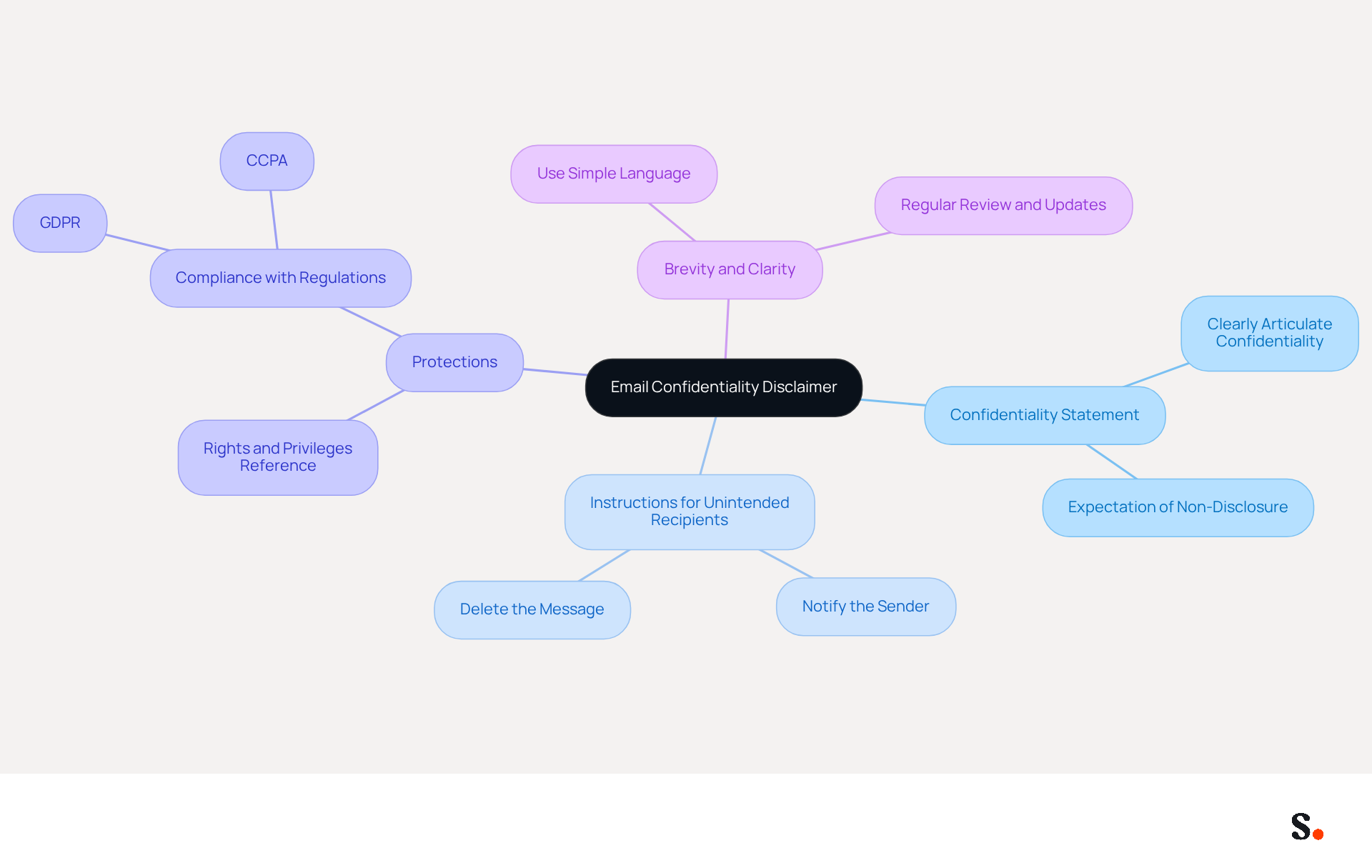
- Confidentiality Statement: Clearly articulate that the message and its contents are confidential and intended solely for the designated recipient. This establishes the expectation that the details should not be shared without permission, as outlined in the email confidentiality disclaimer.
- Instructions for Unintended Recipients: Provide clear guidance for individuals who receive the message by mistake. This typically means notifying the sender and deleting the message to avoid unauthorized access to sensitive information.
- Protections: Reference any rights or privileges associated with the email content. This can help protect the sender in case of disputes, reinforcing the legal boundaries around the information shared. It is also crucial to ensure that the notice adheres to relevant regulations, such as GDPR and CCPA, particularly when managing personal data.
- Brevity and Clarity: Use simple and concise language to ensure the statement is easily understood. Steering clear of technical terminology is essential, as intricate language can perplex recipients and diminish the effectiveness of the notice. Regularly reviewing and updating the notice is vital to maintain its relevance and compliance with changing regulations.
Incorporating these elements not only helps businesses communicate their intent clearly but also includes an email confidentiality disclaimer to safeguard their interests. Organizations that implement well-defined confidentiality statements can significantly reduce the risk of legal consequences associated with data breaches. This statistic highlights how crucial it is for businesses to maintain a professional image through effective communication.
With Scribe's automated signature management, businesses can ensure that their disclaimers are consistently applied across all communications. Scribe ensures that signature information is automatically synced from business phone systems, so any updates are reflected in real-time, which boosts compliance and security. Moreover, Scribe's SOC 2 Type II certification assures users that their data is managed with the highest level of care, enhancing trust and reliability in communications. Case studies demonstrate that companies using Scribe experience fewer legal challenges and enhanced compliance with regulations. By promoting a culture of awareness regarding confidentiality in communications, businesses can better safeguard their sensitive information and uphold trust with their clients.
Implement Disclaimers Effectively in Email Signatures
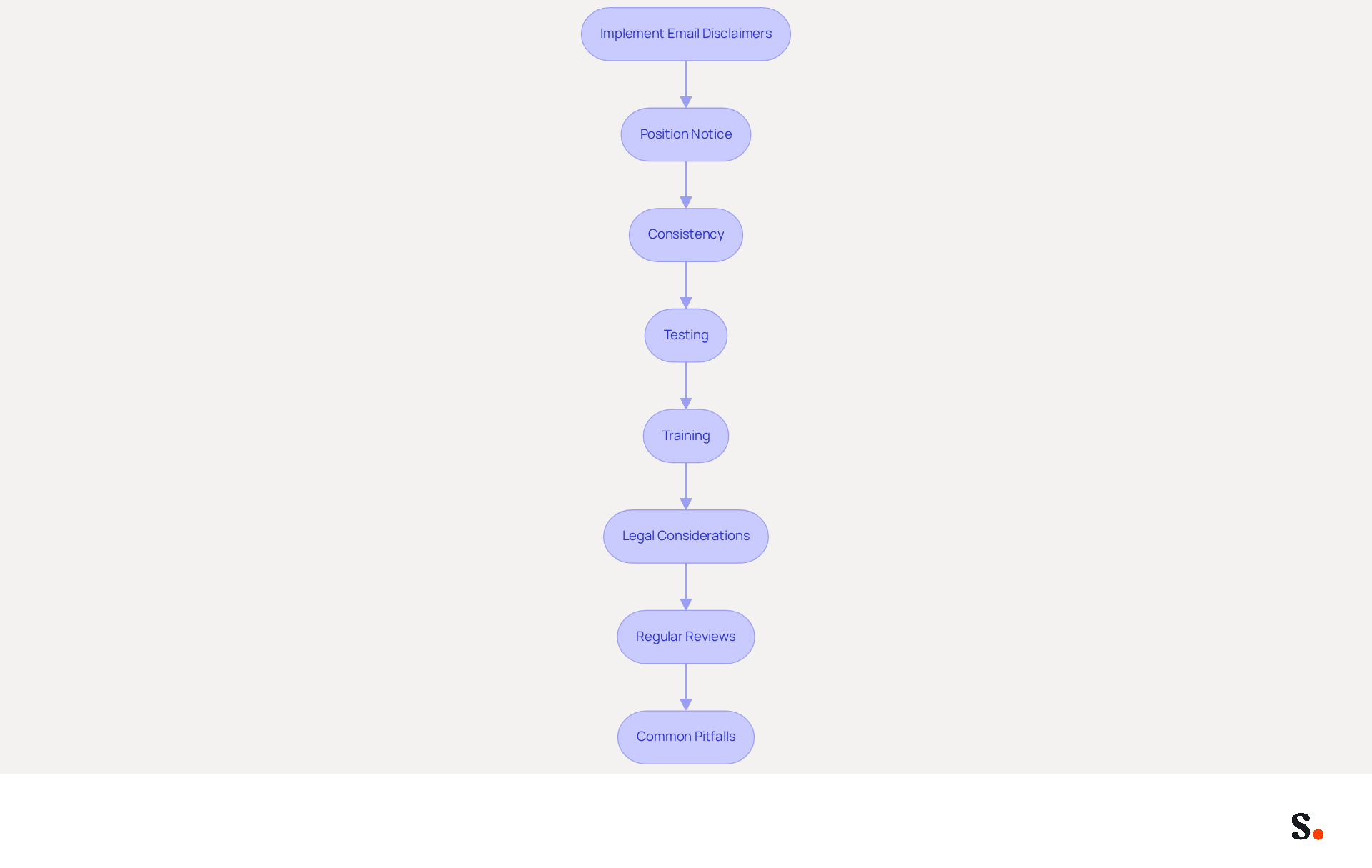
To effectively implement an email confidentiality disclaimer, businesses must adopt a strategic approach that ensures compliance and enhances communication integrity.
- Position the notice at the bottom of the signature to ensure it is included in every outgoing message. This placement ensures visibility without overshadowing the message content.
- Consistency: Ensure that all team members utilize the same format for notices to maintain brand consistency and professionalism. This can be accomplished by developing a standardized signature template that incorporates the notice.
- Testing: Before implementing the new signature, verify it across various email clients to ensure that the notice displays correctly. This step is crucial, as inconsistencies can weaken the effectiveness of the statement.
- Training: Educate employees on the significance of the notice and how to use it effectively. This training can help reinforce the importance of confidentiality in communications, including the email confidentiality disclaimer, and ensure that all team members understand their role in protecting sensitive information.
- Legal Considerations: It's crucial to ensure compliance with relevant laws and regulations. Seek legal counsel to assess the suitability of using a notice, particularly in industries with stringent requirements.
- Regular Reviews: Establish a systematic schedule for reviewing and updating notices to reflect changes in regulations and company policies. Regular updates are vital for maintaining ongoing compliance and effectiveness.
- Common Pitfalls: Be aware of frequent errors in creating notices for correspondence, such as using excessively lengthy language or generic templates that may not offer sufficient protection. Customizing notices to your specific requirements can improve their effectiveness.
By neglecting these essential steps, businesses risk not only legal repercussions but also the trust of their clients and partners.
Avoid Common Mistakes in Crafting Disclaimers
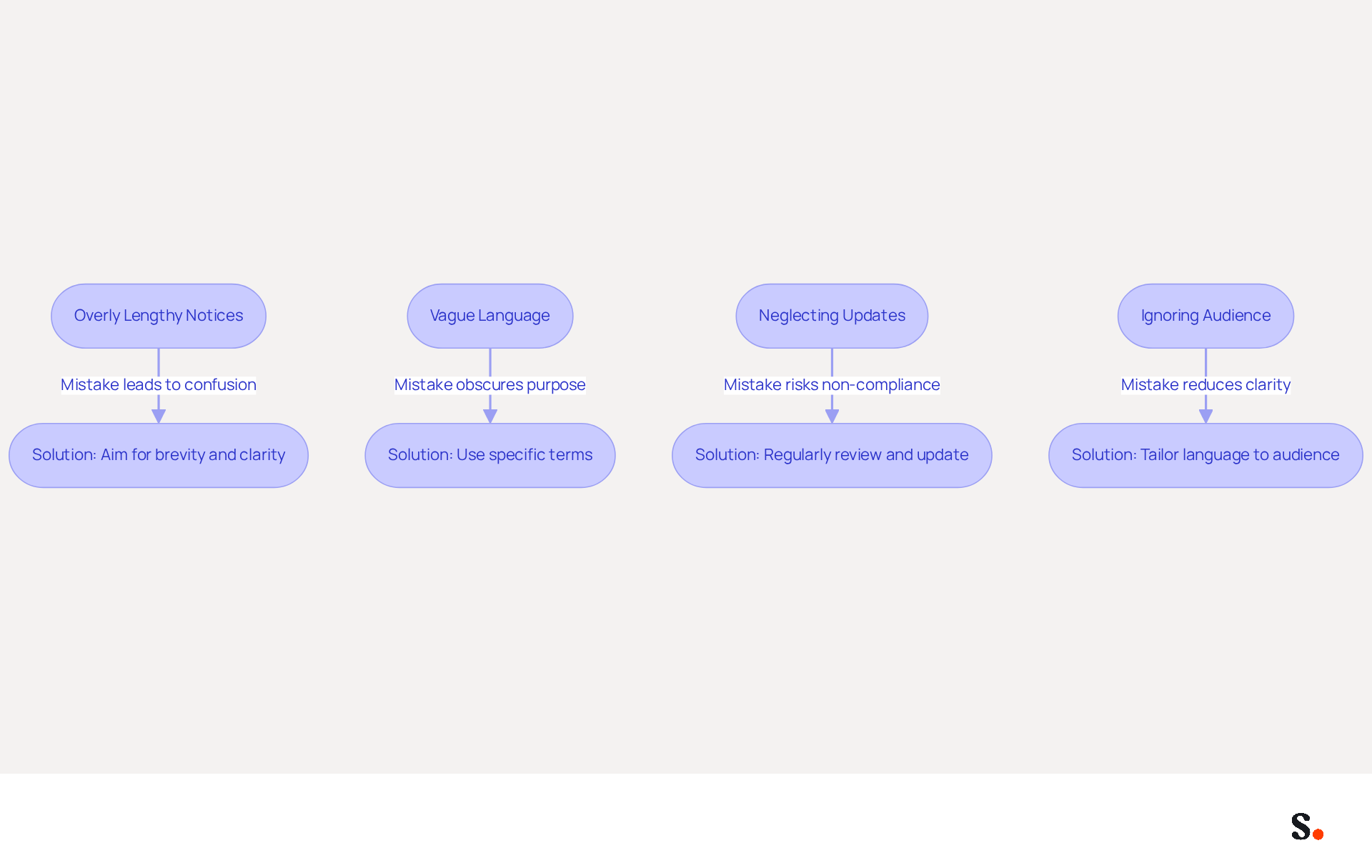
Crafting effective email confidentiality disclaimers requires careful consideration to avoid common pitfalls:
- Overly Lengthy Notices: Lengthy notices often lead to confusion and disengagement among recipients. Research shows that long email notices filled with legal jargon can confuse recipients and reduce engagement. Aim for brevity while still including essential details to maintain clarity and professionalism.
- Vague Language: Using ambiguous terms can obscure the purpose of the statement. Specificity is crucial to ensure that recipients clearly understand the confidentiality of the information being communicated. Disclaimers should articulate the nature of the content and the expectations for handling it.
- Neglecting Updates: Regularly reviewing and updating notices is vital to reflect any changes in legal requirements or company policies. An outdated notice may not provide the necessary protections, as an email notice alone does not ensure compliance with regulations like HIPAA or GDPR; proper safeguards are still necessary. Organizations should establish a routine for assessing and updating their statements to ensure compliance.
- Ignoring Audience: Tailoring the language and content of the notice to the audience is essential. Consider the industry and the level of understanding of the recipients to ensure clarity. For example, healthcare notices should clearly state the management of protected health information (PHI) to comply with HIPAA requirements.
By avoiding these pitfalls, businesses can create an email confidentiality disclaimer that not only protects sensitive information but also enhances recipient trust and engagement. For instance, organizations that have implemented clear and concise disclaimers have seen improvements in legal protection and recipient trust.
Conclusion
In an era where data breaches are increasingly common, email confidentiality disclaimers have become indispensable for organizations. By incorporating these disclaimers into email signatures, organizations can safeguard their data and boost their credibility with clients and partners.
This article highlighted key elements that make email confidentiality disclaimers effective, including:
- The importance of clarity
- Brevity
- Regular updates
It emphasized the necessity of training employees on the significance of these disclaimers and the need for compliance with regulations such as GDPR and CCPA. Additionally, the role of Scribe in automating and standardizing these disclaimers across communications was showcased, demonstrating how businesses can maintain brand consistency and legal protection.
Ultimately, focusing on email confidentiality disclaimers goes beyond just legal compliance; it’s about building a culture of trust and accountability in your organization. By implementing best practices and leveraging tools like Scribe, businesses can ensure that their communications are secure, professional, and effective. Inadequate attention to email confidentiality can lead to severe repercussions, both legally and reputationally.
Frequently Asked Questions
What is the purpose of email confidentiality disclaimers?
Email confidentiality disclaimers are used to safeguard sensitive information and define the intended use of communications, notifying recipients that the content is confidential and should not be disclosed without authorization.
Why are email confidentiality disclaimers particularly important in certain fields?
They are especially vital in fields like healthcare and finance, where data privacy is essential, as they help protect sensitive information from unauthorized access.
Can you provide an example of a legal case that highlights the importance of email confidentiality disclaimers?
A 2011 U.S. District Court case emphasized the lack of a confidentiality notice in communications related to a trade secret claim, illustrating the potential consequences of not using such notices.
How do email confidentiality disclaimers help reduce risks?
They indicate that the message may contain privileged information, reinforcing the sender's intent to uphold confidentiality and providing legal protections, as seen in the case of Diodato v. Wells Fargo Ins. Servs. USA, Inc.
What are the characteristics of effective email confidentiality disclaimers?
Effective disclaimers should be well-crafted, concise, clear, and free of legal jargon to ensure they are easily understood by recipients.
How can organizations enhance their commitment to confidentiality?
Regular training for employees on the significance of email confidentiality disclaimers and other notices can enhance an organization’s dedication to confidentiality and data protection.
What certification does Scribe have that demonstrates its commitment to confidentiality?
Scribe is certified with SOC 2 Type 2, which indicates that its security policies and controls meet the highest industry standards for confidentiality.
How does syncing Google Workspace with Scribe benefit businesses?
Syncing Google Workspace with Scribe streamlines signature management, ensuring that changes in the team are automatically reflected in signatures, saving time and maintaining brand consistency and compliance with data protection regulations.
List of Sources
- Understand the Purpose of Email Confidentiality Disclaimers
- Email Disclaimers: Recipient Beware (https://csklegal.com/newsroom/publications/email-disclaimers-recipient-beware)
- Email Confidentiality Notice Austin TX - Cenkus Law (https://cenkuslaw.com/annoying-email-confidentiality-disclaimers)
- Email Disclaimers: Tips for Business Communication | Mailchimp (https://mailchimp.com/resources/email-disclaimer)
- Your Guide To: Confidential Email Disclaimers [With Examples] - IR Global (https://irglobal.com/article/your-guide-to-confidential-email-disclaimers-with-examples)
- Incorporate Essential Elements in Your Disclaimer
- Your Guide To: Confidential Email Disclaimers [With Examples] - IR Global (https://irglobal.com/article/your-guide-to-confidential-email-disclaimers-with-examples)
- Email Disclaimer Guide With 12 Templates & Examples - Termly (https://termly.io/resources/articles/email-disclaimers)
- Email Disclaimers: Tips for Business Communication | Mailchimp (https://mailchimp.com/resources/email-disclaimer)
- 10 Essential Email Disclaimer Examples for Effective Marketing (https://scribe-mail.com/en-US/blog/10-essential-email-disclaimer-examples-for-effective-marketing)
- Implement Disclaimers Effectively in Email Signatures
- Email Disclaimers: Tips for Business Communication | Mailchimp (https://mailchimp.com/resources/email-disclaimer)
- The Importance of Email Disclaimers for Businesses - Tyler Law LLP (https://tylerlawllp.com/blog-posts/the-importance-of-email-disclaimers-for-businesses)
- Why Consistent Email Signatures Matter More Than You Think - Signite (https://signite.io/blog/consistent-email-signatures-matter-more-than-you-think)
- 4 Best Practices for a Unique Email Signature That Drives Results (https://scribe-mail.com/en-US/blog/4-best-practices-for-a-unique-email-signature-that-drives-results)
- 12 Best Email Signature and Disclaimer Practices (https://cloud-awards.com/12-tips-for-effective-use-of-email-signatures-and-disclaimers)
- Avoid Common Mistakes in Crafting Disclaimers
- Email Disclaimer Examples for Confidentiality, HIPAA, and Legal Protection (https://oppora.ai/blog/email-disclaimer)
- Email Disclaimer Guide With 12 Templates & Examples - Termly (https://termly.io/resources/articles/email-disclaimers)
- Email Disclaimers: Tips for Business Communication | Mailchimp (https://mailchimp.com/resources/email-disclaimer)
- What is an Email Legal Disclaimer and Why It Matters for Businesses (https://scribe-mail.com/en-US/blog/what-is-an-email-legal-disclaimer-and-why-it-matters-for-businesses)
Get started with Scribe
Keep every signature compliant
Free 14-day trial — no credit card.