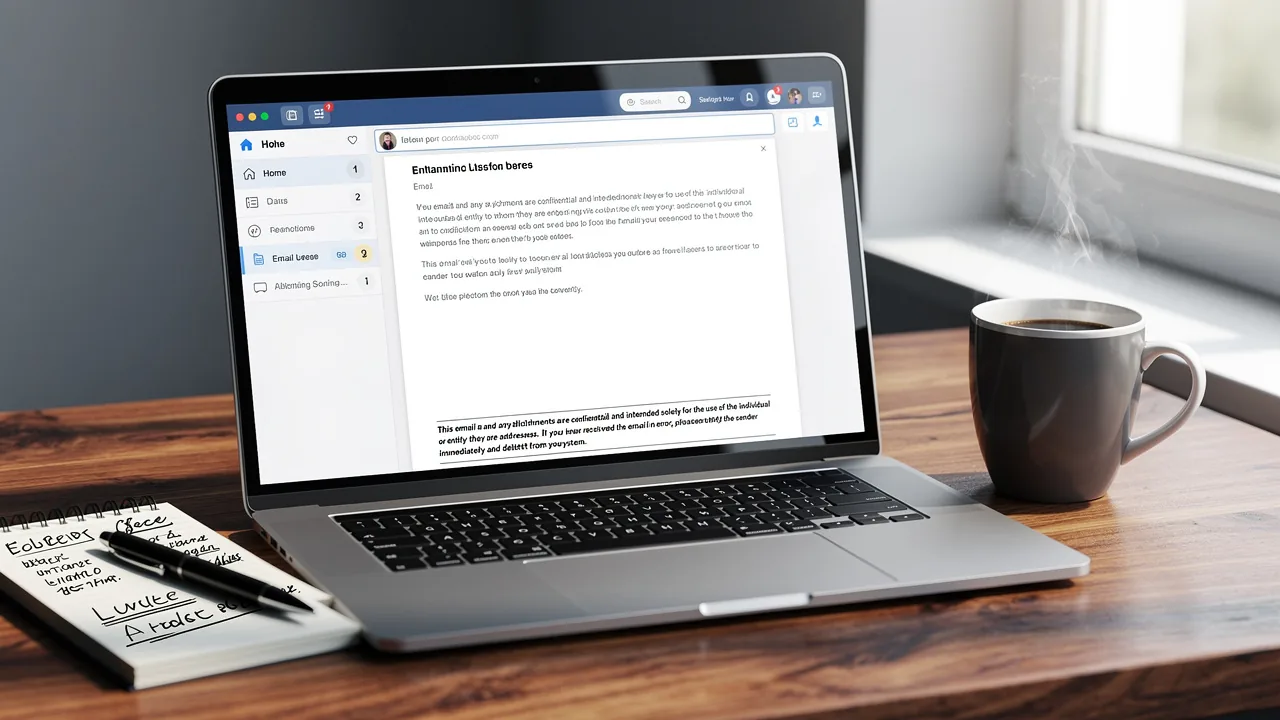
4 Essential Confidentiality Disclaimer Samples for Your Emails
In a landscape fraught with data breaches and privacy concerns, the role of confidentiality disclaimers in business emails emerges as a critical safeguard
Sophie Grant
Email Signature Specialist, Scribe

On this page
- Introduction
- Scribe: Automate Confidentiality Disclaimers in Your Email Signatures
- Understand the Importance of Confidentiality Disclaimers in Business Emails
- Explore Different Types of Confidentiality Disclaimers for Various Industries
- Implement Best Practices for Crafting Effective Confidentiality Disclaimers
- Conclusion
- Frequently Asked Questions
- List of Sources
Introduction
In a landscape fraught with data breaches and privacy concerns, the role of confidentiality disclaimers in business emails emerges as a critical safeguard. These disclaimers act as a crucial defense mechanism, safeguarding sensitive information and building trust between organizations and clients. This article will examine the key elements that contribute to an effective confidentiality disclaimer and explore how organizations can customize them to comply with specific legal standards. Understanding the nuances of confidentiality disclaimers is not just a legal obligation; it is a strategic imperative for maintaining client trust and safeguarding sensitive information.
Scribe: Automate Confidentiality Disclaimers in Your Email Signatures
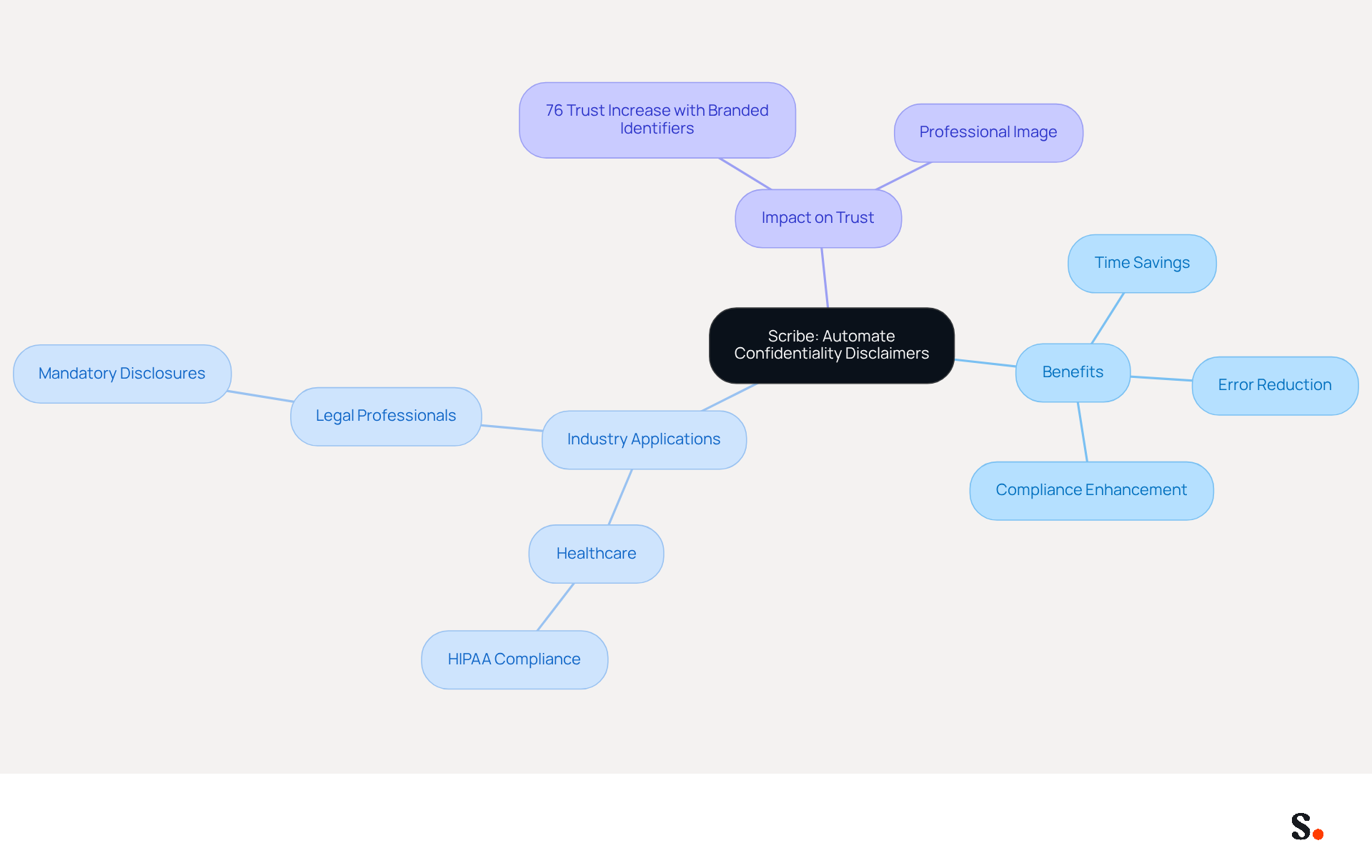
Scribe's solution for automating a confidentiality disclaimer sample in email signatures addresses a critical need for legal protection in communications. By automating this process, organizations save time and simplify how they manage email communications. This approach significantly reduces the risk of human error and enhances compliance with industry regulations.
With Scribe, companies can easily tailor their statements to meet specific legal requirements, making it a versatile tool for various industries. For instance, in the healthcare sector, including HIPAA-compliant disclaimers is crucial for protecting sensitive patient information. Similarly, legal professionals must incorporate specific disclosures to adhere to industry standards, reinforcing their professional integrity.
Research shows that 76% of recipients feel more trust toward senders who utilize branded identifiers in their emails, emphasizing the significance of a refined and compliant signature. Moreover, organizations that implement centralized signature management can save considerable time and minimize compliance risks, as manual updates often lead to costly compliance errors.
By adopting Scribe's automated approach, organizations not only enhance their professional image but also ensure that their communications include a confidentiality disclaimer sample to remain compliant with evolving legal frameworks. This leads to a more trustworthy and professional communication strategy, ultimately contributing to a stronger brand presence.
Understand the Importance of Confidentiality Disclaimers in Business Emails
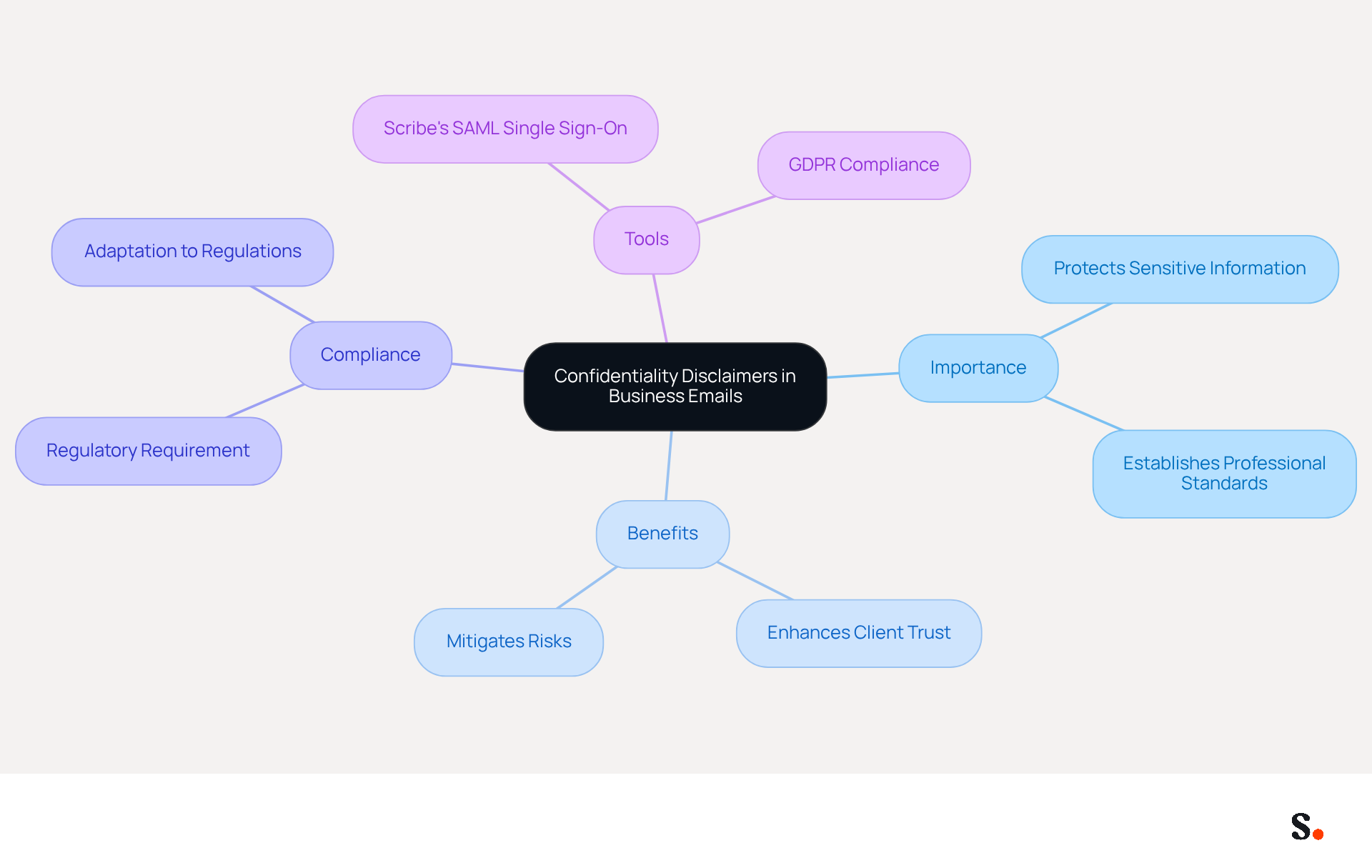
In today's digital landscape, safeguarding sensitive information is more critical than ever for businesses. A confidentiality disclaimer sample is essential in business communications, especially in sectors that handle sensitive information like healthcare, finance, and legal fields. These notices act as a confidentiality disclaimer sample, informing recipients that the email content is confidential and intended solely for them, which protects the sender's interests and establishes a professional standard that fosters trust. As data breaches become more frequent, a well-crafted privacy notice reduces risks and shows a commitment to protecting sensitive information.
Research shows that 80% of consumers prefer businesses that communicate transparently about how they manage data, highlighting the importance of clear disclaimers. Case studies demonstrate that organizations implementing effective privacy notices can significantly enhance client trust and loyalty, ultimately improving their market position. This proactive approach not only mitigates risks but also positions organizations favorably in the market. For instance, organizations that frequently assess and refresh their privacy notices are better prepared to adjust to changing regulations and cybersecurity risks, reinforcing their dedication to privacy.
With Scribe's SAML Single Sign-On integration, organizations can ensure secure access to signatures, reinforcing the importance of confidentiality. Additionally, Scribe's compliance with GDPR further emphasizes its commitment to safeguarding user data, making it an essential tool for organizations that prioritize secure email signature management. Clearly defining what counts as confidential information and applying it consistently across all communications helps organizations avoid legal issues and promotes a culture of vigilance among employees. Ultimately, the implementation of a confidentiality disclaimer sample is not only a regulatory requirement but also a strategic advantage in building trust and credibility with clients.
Explore Different Types of Confidentiality Disclaimers for Various Industries
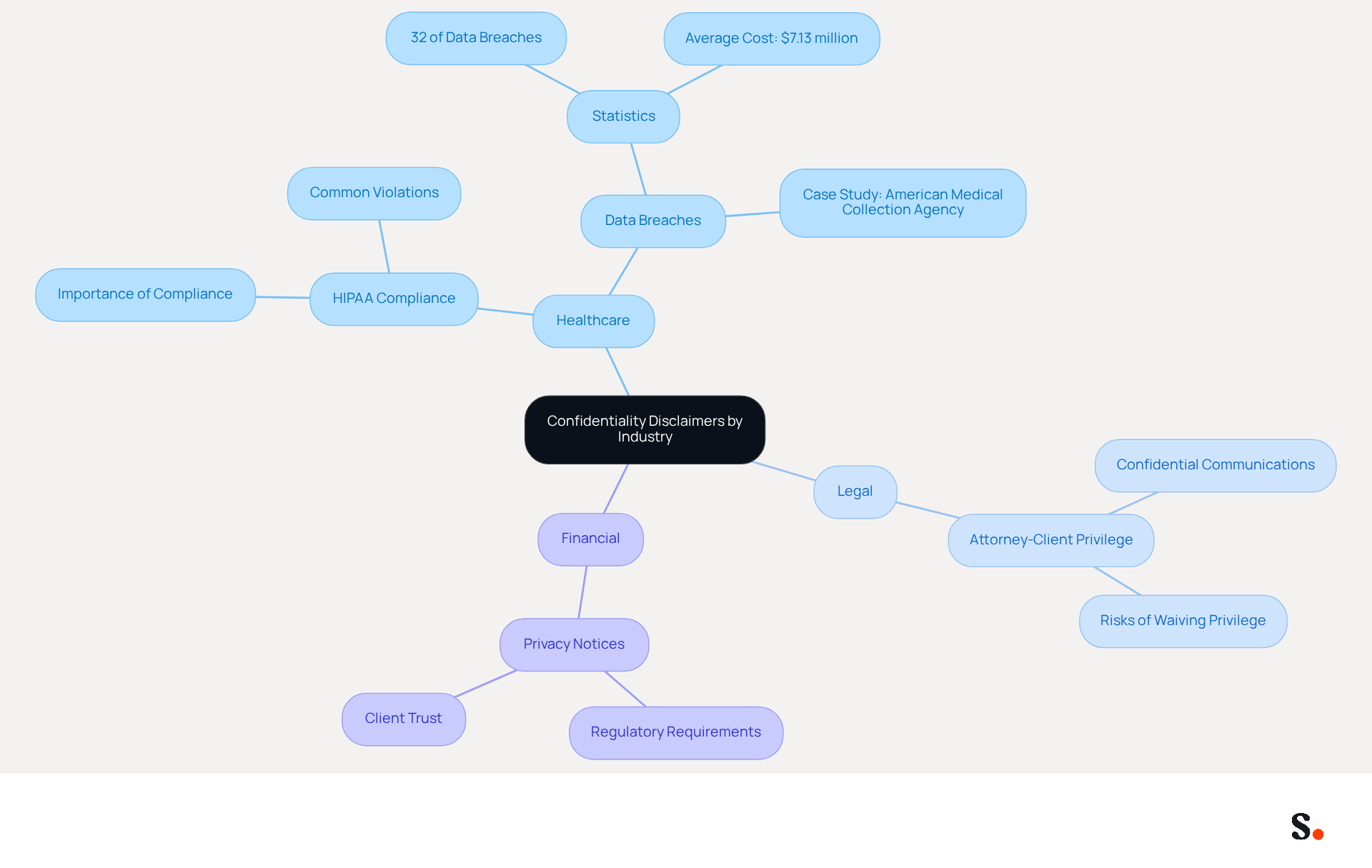
Organizations across various sectors face increasing pressure to implement effective privacy statements that comply with regulations and protect sensitive data. Healthcare organizations, for example, must include HIPAA-compliant notices to indicate that emails may contain protected health information. This necessity is underscored by the fact that the healthcare sector accounted for 32% of all documented data breaches from 2015 to 2022, highlighting the critical need for stringent privacy measures.
Legal firms frequently employ statements that emphasize attorney-client privilege, ensuring that communications remain confidential and safeguarded from disclosure. In the financial sector, institutions generally include notices about the privacy of financial data, which is crucial given the growing scrutiny on data protection and privacy regulations.
Customizing privacy notices to meet sector-specific requirements enables businesses to safeguard sensitive information and comply with relevant regulations. A case study involving the American Medical Collection Agency data breach, which affected over 25 million individuals, underscores the importance of robust confidentiality practices in the healthcare sector. These tailored disclaimers not only provide legal protection but also foster trust among clients and stakeholders, which is essential for long-term success.
Scribe's SAML Single Sign-On integration further enhances security by allowing organizations to manage access through their identity provider, ensuring that only authorized personnel can access sensitive communications. Scribe's dedication to GDPR compliance highlights the importance of secure email signature management, empowering organizations to manage personal data confidently while meeting regulatory standards. Ultimately, the failure to address sector-specific privacy needs can lead to severe consequences, both legally and in terms of client trust.
Implement Best Practices for Crafting Effective Confidentiality Disclaimers
To effectively protect sensitive information, businesses must implement best practices for confidentiality disclaimers:
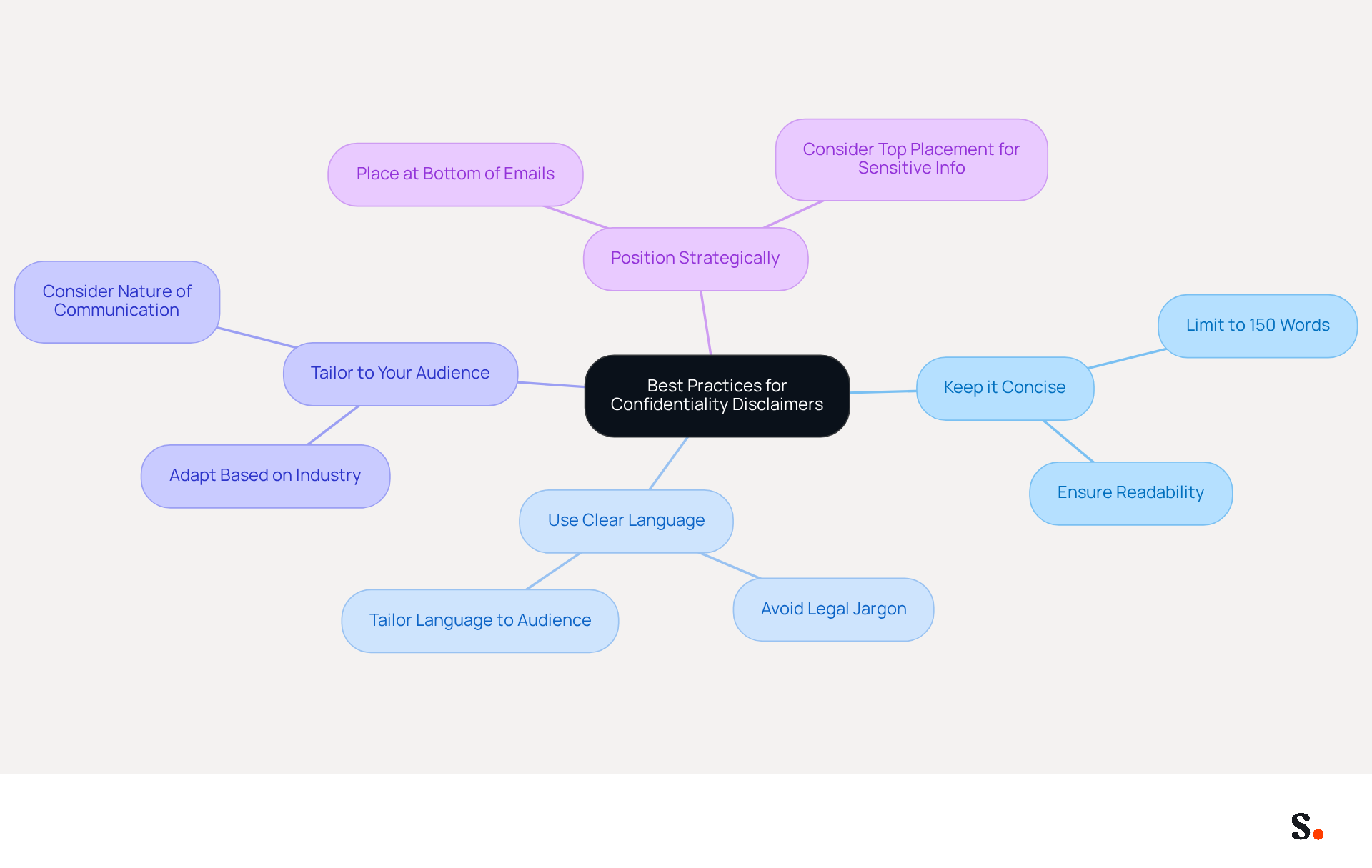
- Keep it concise: Disclaimers should be brief and to the point, ideally under 150 words, to ensure they are read and understood.
- Use clear language: Avoid legal jargon and ensure that the notice is easily comprehensible for all recipients, enhancing its effectiveness. Myla Sarmiento emphasizes that businesses should ensure the language used is clear and tailored to their specific needs.
- Tailor to your audience: Adapt notices based on the recipient's industry and the nature of the communication, as different sectors may have distinct privacy requirements. This customization can help in establishing trust and clarity.
- Position strategically: Place notices at the bottom of emails to ensure visibility without overwhelming the main message. Additionally, consider placing privacy footers at the top of messages containing sensitive information to improve visibility.
Following these practices helps businesses enhance their privacy statements, protecting sensitive information and minimizing legal risks. Regular updates and evaluations of these statements are crucial, as businesses face challenges in keeping their privacy statements compliant with evolving regulations. Significantly, 70% of messages include sensitive information, underscoring the critical need for data protection. Research shows that effective notices not only convey professionalism but also lower risks tied to information sharing, emphasizing the importance of clear, tailored language. Furthermore, training employees on the proper usage of a confidentiality disclaimer sample is crucial for maintaining confidentiality and ensuring that all team members understand the importance of these measures. Ultimately, the clarity and precision of these disclaimers can significantly influence a business's reputation and legal standing.
Conclusion
Implementing confidentiality disclaimers in email communications is not merely a regulatory requirement; it is a strategic necessity for businesses aiming to protect sensitive information. Scribe's automated solutions help organizations maintain consistent and tailored confidentiality disclaimers in their email signatures, enhancing legal protection and building trust with recipients.
Throughout this article, we have highlighted the importance of confidentiality disclaimers, particularly in industries such as healthcare, finance, and legal sectors. We outlined best practices for crafting these disclaimers, demonstrating how clear communication can reduce risks and bolster a company's professional image.
With data breaches on the rise, implementing strong confidentiality measures is crucial. Organizations are encouraged to adopt Scribe's solutions to streamline the management of email signatures and ensure compliance with evolving legal frameworks. By embracing confidentiality in their communications, businesses not only protect themselves but also enhance their reputation and trustworthiness in the marketplace.
Frequently Asked Questions
What is Scribe's solution for email signatures?
Scribe offers a solution for automating confidentiality disclaimers in email signatures, addressing the need for legal protection in communications.
How does automating confidentiality disclaimers benefit organizations?
Automating confidentiality disclaimers saves time, simplifies email management, reduces the risk of human error, and enhances compliance with industry regulations.
Can Scribe's solution be tailored for specific industries?
Yes, Scribe allows companies to tailor their confidentiality statements to meet specific legal requirements, making it versatile for various industries such as healthcare and legal professions.
Why is including disclaimers important in the healthcare sector?
In the healthcare sector, including HIPAA-compliant disclaimers is crucial for protecting sensitive patient information.
What impact do branded identifiers in emails have on recipients?
Research shows that 76% of recipients feel more trust toward senders who utilize branded identifiers in their emails.
What are the advantages of centralized signature management with Scribe?
Centralized signature management can save considerable time and minimize compliance risks, as manual updates often lead to costly compliance errors.
How does Scribe enhance an organization's professional image?
By adopting Scribe's automated approach, organizations ensure their communications include a confidentiality disclaimer, contributing to a more trustworthy and professional communication strategy.
List of Sources
- Scribe: Automate Confidentiality Disclaimers in Your Email Signatures
- What's a Good Email Signature? Key Components vs. Common Mistakes (https://scribe-mail.com/en-US/blog/what-s-a-good-email-signature-key-components-vs-common-mistakes)
- Company-Wide Email Signature Solution and Best Practices (https://opensense.com/blog/company-wide-email-signature-solution-and-best-practices)
- 5 Effective Ways To Manage Email Signatures For Large Firms (https://paayatech.com/blog/5-effective-ways-to-manage-email-signatures)
- Ensuring Email Signature Compliance: Legal Requirements | Crossware365 (https://crossware365.com/blog/ensuring-email-signature-compliance-legal-requirements)
- Company-Wide Email Signature Management | CloudM (https://cloudm.io/resources/blog/optimize-your-process-with-company-wide-email-signature-management)
- Understand the Importance of Confidentiality Disclaimers in Business Emails
- Proposed email disclaimer law would create new problems rather than solve old ones, says expert (https://pinsentmasons.com/out-law/analysis/proposed-email-disclaimer-law-would-create-new-problems-rather-than-solve-old-ones-says-expert)
- The Importance of Email Disclaimers for Businesses - Tyler Law LLP (https://tylerlawllp.com/blog-posts/the-importance-of-email-disclaimers-for-businesses)
- Email Disclaimers: Tips for Business Communication | Mailchimp (https://mailchimp.com/resources/email-disclaimer)
- Best Practices for Using Confidentiality Notice Emails in Marketing (https://scribe-mail.com/en-US/blog/best-practices-for-using-confidentiality-notice-emails-in-marketing)
- Explore Different Types of Confidentiality Disclaimers for Various Industries
- 51 HIPAA Statistics Every Healthcare Entity Needs to Know in 2026 | UpGuard (https://upguard.com/blog/hipaa-statistics)
- Legal News & Analysis on Litigation, Policy, Deals : Law360 (https://law360.com)
- HIPAA Statistics (https://compliancy-group.com/hipaa-statistics)
- Legal News & Business Law News (https://natlawreview.com)
- Healthcare Data Breach Statistics (https://hipaajournal.com/healthcare-data-breach-statistics)
- Implement Best Practices for Crafting Effective Confidentiality Disclaimers
- The Importance of Email Disclaimers for Businesses - Tyler Law LLP (https://tylerlawllp.com/blog-posts/the-importance-of-email-disclaimers-for-businesses)
- How to Use an Email Confidentiality Notice | Mailchimp (https://mailchimp.com/resources/email-confidentiality-notice)
- Confidential Email Disclaimers (Examples and Template Included!) (https://clio.com/blog/confidential-email-disclaimer)
- Best Practices for Using Confidentiality Notice Emails in Marketing (https://scribe-mail.com/en-US/blog/best-practices-for-using-confidentiality-notice-emails-in-marketing)
- Crafting the Perfect Email Disclaimer | CoreMatter (https://corematter.biz/crafting-the-perfect-email-disclaimer)
Get started with Scribe
Keep every signature compliant
Free 14-day trial — no credit card.