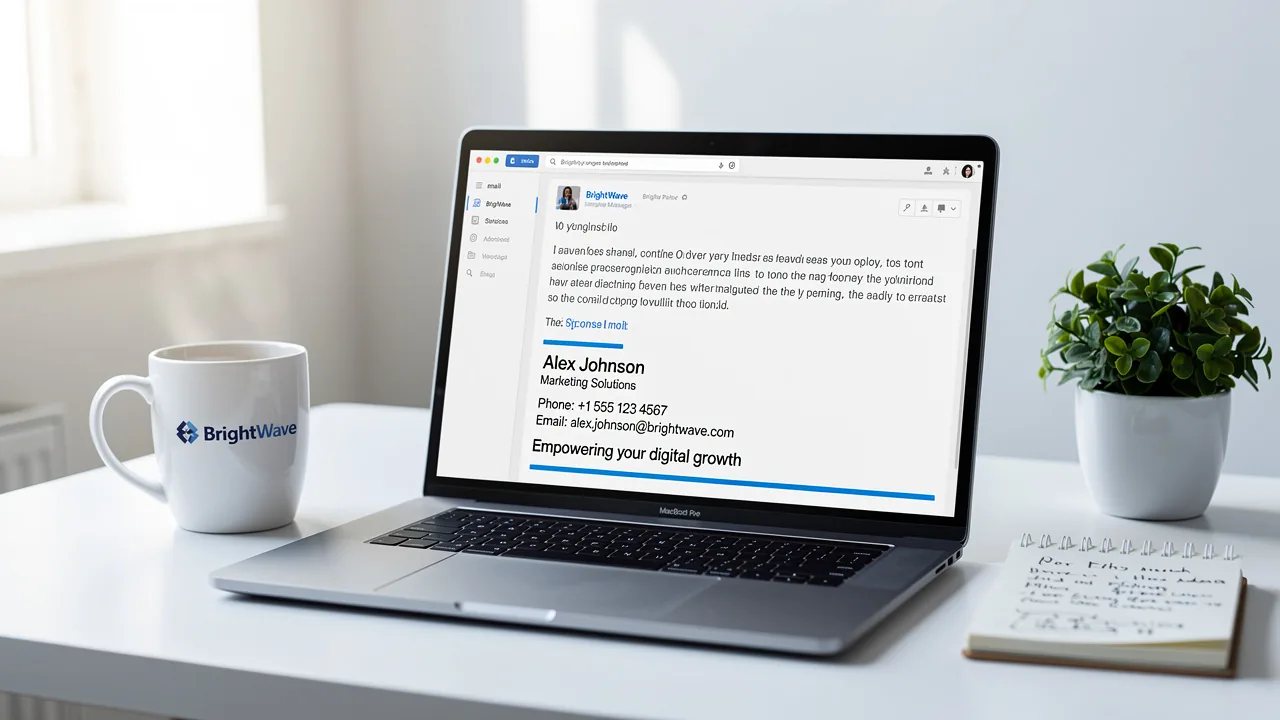
4 Best Practices for an Effective Attorney Email Signature
Crafting an effective email signature presents a unique challenge for attorneys, as it must balance professionalism with marketing effectiveness. By
Sophie Grant
Email Signature Specialist, Scribe

Introduction
Crafting an effective email signature presents a unique challenge for attorneys, as it must balance professionalism with marketing effectiveness. By incorporating essential elements such as contact information, branding strategies, and compliance with legal standards, attorneys can transform their email signatures into impactful marketing assets. Attorneys often struggle to find the right balance between compliance and marketing effectiveness in their email signatures. Understanding these key practices can transform an attorney's email signature into a vital tool for client engagement and professional credibility.
Get started with Scribe
See why teams switch to Scribe
Free 14-day trial — no credit card.
Identify Key Elements for an Attorney Email Signature
A proficient attorney email signature is crucial for establishing professionalism and enhancing client interactions. It should include several essential components:
- Full Name: Clearly state your complete name, including any middle names or initials, to avoid ambiguity.
- Professional Title: Specify your title, such as 'Attorney at Law' or 'Partner', to establish your role.
- Law Firm Name: Include the name of your law firm to reinforce your affiliation and credibility.
- Contact Information: Provide direct contact details, including phone numbers and email addresses, facilitating easy communication with clients.
- Website Link: A link to your law firm’s website enables individuals to explore your services further.
- Social Media Links: If relevant, include links to professional social media profiles to enhance your online presence and engagement.
- Legal Disclaimers: Depending on jurisdiction, specific legal disclaimers may be necessary to protect confidentiality and comply with regulations.
Including these elements ensures a polished appearance and turns the digital footer into a vital tool for engagement. Research shows that a professional photo can boost trust and response rates significantly. Moreover, standardized electronic identifiers improve company credibility and brand recognition, creating a favorable first impression on clients. By utilizing Scribe's signature generator, attorneys can create compliant and visually appealing signatures that reflect their brand identity, ensuring consistency across all communications.
To enable one-click synchronization with Scribe, you must grant permission to connect with your service provider, requiring Super Admin access. This allows for effortless updates, meaning any changes in your provider directory-such as moving teammates or updating their information-are automatically reflected in Scribe without manual input. Without Scribe, keeping approvals current and compliant with regulations can be a time-consuming challenge. This feature not only saves time but also ensures that all approvals remain current and compliant with regulations, including GDPR and CCPA. Furthermore, Scribe is SOC 2 Type II compliant, ensuring the safety of your data while streamlining the management process for your identifiers. Ultimately, a well-crafted attorney email signature can significantly influence client perceptions and interactions.

Incorporate Effective Design and Branding Strategies
To effectively represent your legal practice, an impactful email signature is essential. Consider the following design and branding strategies:
- Consistent Branding: Utilize your law firm’s color palette and logo to ensure brand consistency across all communications. This not only strengthens your identity but also improves memorability and recognition among customers. Incorporating a logo is essential, as it aids customers in recalling your firm.
- Simple Layout: Maintain a clean and uncluttered design. Avoid excessive graphics or fonts that can distract from essential information, as a well-structured signature helps establish legitimacy and professionalism. Neglecting details in your email signature can undermine client trust and expose your firm to legal risks.
- Readable Fonts: Opt for professional, easy-to-read fonts such as Arial or Calibri. Limiting the use of different font styles contributes to a cohesive look, which is crucial for maintaining credibility in legal communications.
- Mobile Optimization: Make sure your email footer stays under 600 pixels wide for optimal display on mobile devices, as many users view emails on smartphones.
- Call to Action (CTA): Incorporate a subtle CTA, such as a link to schedule a consultation or download a resource. Effective CTAs can significantly enhance engagement and prompt immediate action, leading to more consultations and inquiries. For instance, phrases like 'Schedule Your Free Consultation Today' can create a sense of urgency.
- Professional Image: If suitable, add a professional headshot to personalize your email and foster trust with customers. Studies show that adding a professional photo can boost trust and response rates significantly. As Sophie Grant, an Email Signature Specialist, mentions, 'A well-organized sign-off enhances the professional image of the legal practitioner and their firm, instilling confidence in customers and colleagues.'
By applying these design principles, attorneys can create an attorney email signature that not only looks professional but also reinforces their brand identity, ultimately enhancing trust and engagement with their audience. Furthermore, with Scribe, every modification made in your Aircall configuration will automatically be reflected in your digital identifiers, ensuring seamless synchronization and brand consistency. Moreover, Scribe's integration with Calendly enables automatic updates to your contact details, simplifying the process of keeping information current and improving client interactions. It is crucial to refrain from including irrelevant or misleading details in digital communications to uphold a professional first impression, particularly given that nearly 1 TB of information daily is squandered on disclaimers in the legal field. For wording, see our privileged and confidential email disclaimer sample.

Ensure Compliance with Legal and Ethical Standards
Navigating compliance and ethical considerations in attorney email signatures is not just a formality for attorneys; it’s a critical aspect of their professional integrity. Attorneys must consider several key factors:
- State Bar Regulations: Familiarize yourself with your state bar’s requirements regarding electronic signatures, including any mandatory disclaimers or disclosures. The California Supreme Court's amendments to Rule 1.15 highlight the significance of precise communication and prompt distribution of client funds, which can extend to how attorneys present themselves in written communications. As stated, "Rule 1.15 addresses a lawyer’s responsibilities for handling entrusted funds and property."
- Confidentiality Notices: Including a confidentiality notice is crucial if your emails may contain sensitive information. This notice serves as a reminder to recipients about their obligation to maintain confidentiality, thereby protecting attorney-client privilege. Including these notices helps protect against accidentally waiving privilege.
- Accurate Representation: Make sure your signature has accurate and current information, like your title, firm name, and contact details. Misrepresentation can lead to disciplinary actions, as highlighted in case studies emphasizing the significance of accurate qualifications in an attorney email signature. The California Supreme Court mandates that attorneys keep their patrons informed about significant developments, reinforcing the need for accurate representation.
- Avoid Misleading Information: It is vital not to include any information that could be construed as misleading or deceptive. Exaggerated claims about qualifications or experience can undermine your credibility and violate state bar regulations. The Supreme Court's amendments aim to proactively regulate trust accounting to prevent misconduct, which includes ensuring truthful representations in interactions.
- Legal Disclaimers: Depending on your jurisdiction, specific legal disclaimers may be necessary to protect confidentiality and comply with regulations. For instance, the Client Trust Account Protection Program (CTAPP) requires clear communication concerning the management of funds, which can also be reflected in your correspondence practices. The CTAPP was adopted to enhance public protection regarding lawyers' handling of entrusted funds, emphasizing the importance of compliance in all aspects of legal practice.
Failure to adhere to these compliance measures can jeopardize not only an attorney's reputation but also their legal standing.

Leverage Email Signatures for Marketing and Lead Generation
Attorneys can leverage their email signatures as effective marketing tools by implementing targeted strategies:
- Promotional Banners: Incorporate a promotional banner in your email footer to highlight upcoming events, webinars, or special offers that may attract customers. This method informs customers while also encouraging them to engage with your services. With Scribe, these banners can be easily updated, ensuring that your marketing messages are always current. Research indicates that emails featuring branded signatures achieve a 22% higher response rate, and Scribe boasts an average click-through rate of 12% on signature banners, enhancing the effectiveness of your marketing efforts.
- Social Media Links: Add links to your professional social media profiles, fostering connections with customers and encouraging them to engage with your content. This can enhance your online presence and facilitate interactions with customers.
- Newsletter Sign-Up: Include a link for users to subscribe to your newsletter, providing them with valuable information while simultaneously building your email list. This strategy addresses the challenge of customer retention and engagement.
- Testimonials from Clients: Consider featuring a rotating endorsement or a link to success stories from customers in your email footer. This builds credibility and trust, showcasing your expertise and the positive experiences of past clients.
- Tracking Links: Use tracking links to assess the effectiveness of your marketing efforts related to your correspondence footer. This data allows you to adjust strategies based on performance metrics, ensuring continuous improvement in your marketing approach. As mentioned by Deborah McMurray, CEO and Strategy Architect of Content Pilot LLC, 'Your electronic correspondence may be a small component in the overall strategy of your marketing, but it can be the most succinct and consistent method to convey who you are and how to reach you.'
By prioritizing these strategies, attorneys can ensure their digital communications, particularly their attorney email signature, are not only compliant but also impactful in attracting and retaining clients. Additionally, with Scribe's automated synchronization of email branding with Aircall, any changes made in your Aircall configuration will automatically reflect in your Scribe branding, ensuring brand consistency across all communications. Scribe also adheres to SOC 2 Type II compliance and GDPR/CCPA regulations, ensuring secure data handling. Attorneys should be mindful of legal compliance considerations, ensuring that necessary disclaimers and regulations are included in their signatures to avoid potential pitfalls.

Conclusion
A well-crafted attorney email signature is essential for establishing professionalism and enhancing client interactions. Incorporating key elements like full name, professional title, law firm name, and contact information helps attorneys create a polished digital presence that reflects their brand. Furthermore, effective design and branding strategies ensure that the signature not only looks professional but also reinforces the attorney's credibility and fosters trust with clients.
Key insights discussed include the importance of compliance with legal and ethical standards, which safeguards an attorney's reputation and legal standing. Adhering to state bar regulations, including confidentiality notices and accurate representation, is crucial in maintaining professional integrity. Additionally, leveraging email signatures for marketing and lead generation can significantly enhance client engagement. Strategies such as incorporating promotional banners, social media links, and tracking metrics can transform a simple email footer into a powerful marketing tool.
In the end, an effective attorney email signature plays a crucial role in client interactions. It is not merely a digital sign-off but a strategic asset that can influence client perceptions and interactions. By utilizing tools like Scribe, attorneys can ensure brand consistency, compliance, and effective marketing, all while saving time and enhancing their professional image. By adopting these best practices, attorneys can significantly improve their digital communications and client relationships.
Frequently Asked Questions
Why is an attorney email signature important?
An attorney email signature is crucial for establishing professionalism and enhancing client interactions.
What key elements should be included in an attorney email signature?
An attorney email signature should include the following elements: Full Name, Professional Title, Law Firm Name, Contact Information, Website Link, Social Media Links, and Legal Disclaimers.
How does including a professional photo in an email signature affect client interactions?
Including a professional photo can boost trust and response rates significantly.
What benefits does Scribe's signature generator offer to attorneys?
Scribe's signature generator allows attorneys to create compliant and visually appealing signatures that reflect their brand identity, ensuring consistency across all communications.
What is required for one-click synchronization with Scribe?
To enable one-click synchronization with Scribe, you must grant permission to connect with your service provider, requiring Super Admin access.
How does Scribe help maintain compliance with regulations?
Scribe helps maintain compliance by automatically reflecting any changes in your provider directory, ensuring that all approvals remain current and compliant with regulations, including GDPR and CCPA.
What compliance standard does Scribe adhere to for data safety?
Scribe is SOC 2 Type II compliant, ensuring the safety of your data while streamlining the management process for your identifiers.
How can a well-crafted attorney email signature influence client perceptions?
A well-crafted attorney email signature can significantly influence client perceptions and interactions by presenting a polished and professional image.
List of Sources
- Identify Key Elements for an Attorney Email Signature
- 5 Email Signature Templates for Lawyers (https://signature.email/blog/five-email-signature-templates-for-lawyers)
- Best Practices: Email Signatures for Law Firms (https://paperstreet.com/blog/best-practices-email-signatures-for-law-firms)
- Attorney & Lawyer Email Signature Examples - NEWOLDSTAMP (https://newoldstamp.com/solutions/email-signature-for-lawyers)
- Lawyer Email Signature Examples & Tips (https://wisestamp.com/examples/lawyer-email-signatures)
- Incorporate Effective Design and Branding Strategies
- Email Signatures for Lawyers and Attorneys | Email Signature Rescue Blog (https://emailsignaturerescue.com/blog/email-signatures-for-lawyers-and-attorneys)
- Best Practices: Email Signatures for Law Firms (https://paperstreet.com/blog/best-practices-email-signatures-for-law-firms)
- Attorney & Lawyer Email Signature Examples - NEWOLDSTAMP (https://newoldstamp.com/solutions/email-signature-for-lawyers)
- Lawyer Email Signature Examples & Tips (https://wisestamp.com/examples/lawyer-email-signatures)
- 4 Best Practices for Crafting an Effective Attorney Signature Block (https://scribe-mail.com/en-US/blog/4-best-practices-for-crafting-an-effective-attorney-signature-block)
- Ensure Compliance with Legal and Ethical Standards
- Ethics News | The State Bar of California (https://calbar.ca.gov/legal-professionals/ethics-compliance-practice-resources/ethics/ethics-news)
- State Bar of Michigan warns attorneys of phishing scam (https://michbar.org/News/NewsDetail/nid/6185)
- Phishing Email Scam Impersonating Utah State Bar Communications Director – Utah State Bar (https://utahbar.org/phishing-email-scam-impersonating-utah-state-bar-communications-director)
- Email Signature for Lawyers: Compliant, Professional Templates & Best Practices (https://syncsignature.com/blog/email-signature-for-lawyers)
- Leverage Email Signatures for Marketing and Lead Generation
- Boost Law Firm Credibility with Effective Email Signatures | Builden Partners posted on the topic | LinkedIn (https://linkedin.com/posts/builden-partners_how-to-turn-email-signatures-into-a-marketing-activity-7458217540813631488-3cjK)
- Marketing Ideas for Law Firms: 8 New Strategies for Email Marketing (https://crisp.co/marketing-ideas-for-law-firms-8-new-strategies-for-email-marketing)
- Email signature statistics: Why every business should optimize their email signatures — Stripo.email (https://stripo.email/blog/email-signature-statistics-why-every-business-should-optimize-their-email-signatures)
- Email Signatures: Valuable Real Estate (https://attorneyatwork.com/email-signatures-valuable-real-estate)
- Email Marketing Best Practices for Law Firms | Nexl (https://nexl.cloud/resources/article-email-marketing-best-practices-for-law-firms)
Get started with Scribe
See why teams switch to Scribe
Free 14-day trial — no credit card.