Best Practices for GDPR Email Signature Compliance and Engagement
Compliance with GDPR regulations is essential for maintaining trust and credibility in the digital landscape. Organizations must navigate the complexities of
Sophie Grant
Email Signature Specialist, Scribe

On this page
- Introduction
- Identify Required Elements for GDPR Compliance in Email Signatures
- Integrate Branding and Marketing Strategies in Compliance
- Utilize Automation Tools for Efficient Email Signature Management
- Conduct Regular Audits and Updates for Continuous Compliance
- Conclusion
- Frequently Asked Questions
- List of Sources
Introduction
Compliance with GDPR regulations is essential for maintaining trust and credibility in the digital landscape. Organizations must navigate the complexities of integrating essential elements into their email signatures while also leveraging these communications for effective branding and engagement. Businesses must find a way to balance compliance with effective marketing strategies. This article outlines specific best practices for creating GDPR-compliant email signatures that fulfill regulatory requirements while strengthening brand identity and engagement.
Identify Required Elements for GDPR Compliance in Email Signatures
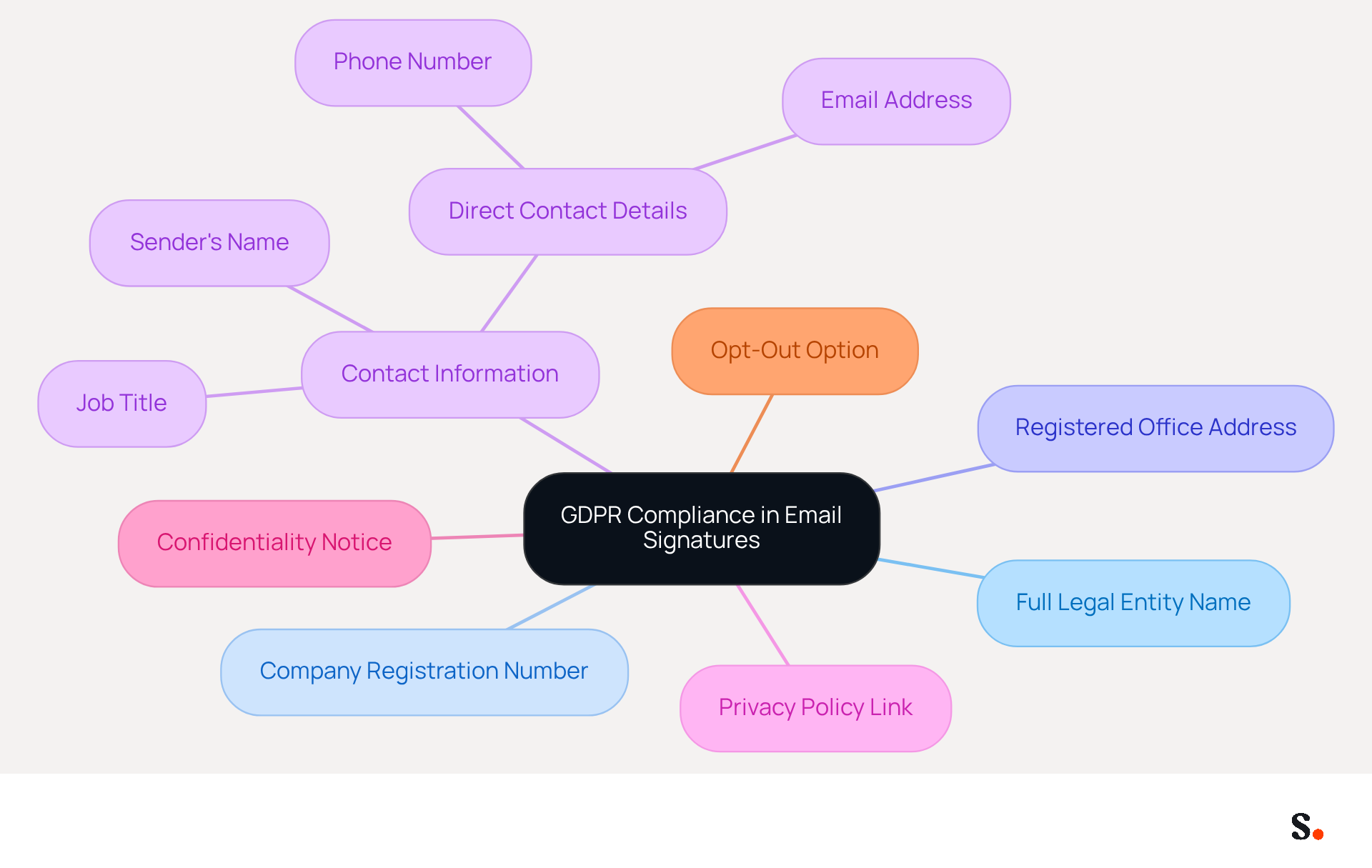
To achieve GDPR email signature compliance, organizations must integrate essential elements that ensure transparency and accountability. Key components include:
- Full Legal Entity Name: Clearly state the company's registered name to avoid ambiguity.
- Company Registration Number: Include the registration number if applicable, aiding in the legal identification of the business.
- Registered Office Address: Provide the physical address of the company to enhance transparency.
- Contact Information: Include the sender's name, job title, and direct contact details (phone number and electronic mail address) to facilitate communication.
- Privacy Policy Link: Add a link to the company’s privacy policy, ensuring recipients can easily access information on data handling practices.
- Confidentiality Notice: Include a confidentiality disclaimer to protect sensitive information shared in messages.
- Opt-Out Option: If marketing content is included, provide a clear opt-out mechanism to respect recipients' rights.
Incorporating these elements significantly reduces the risk of non-compliance related to the GDPR email signature. Failure to include these elements can lead to severe penalties and loss of trust. Organizations that adhere to these guidelines not only enhance their credibility but also align with GDPR's emphasis on data protection and transparency.
Scribe's automated solutions for managing digital identifiers ensure that these regulatory elements are consistently applied, reducing mistakes and enhancing brand integrity. By syncing Google Workspace with Scribe, organizations can save time and ensure that any updates in employee information are automatically reflected in digital identifiers, further supporting regulatory efforts. Additionally, Scribe's SAML single sign-on integration simplifies access management, allowing organizations to streamline user authentication while maintaining security. With Scribe's SOC 2 Type II certification, users can trust that their data is managed securely, emphasizing the significance of adherence in managing digital identifiers.
Integrate Branding and Marketing Strategies in Compliance
Integrating branding and marketing strategies while ensuring a GDPR email signature compliance presents unique challenges for organizations.
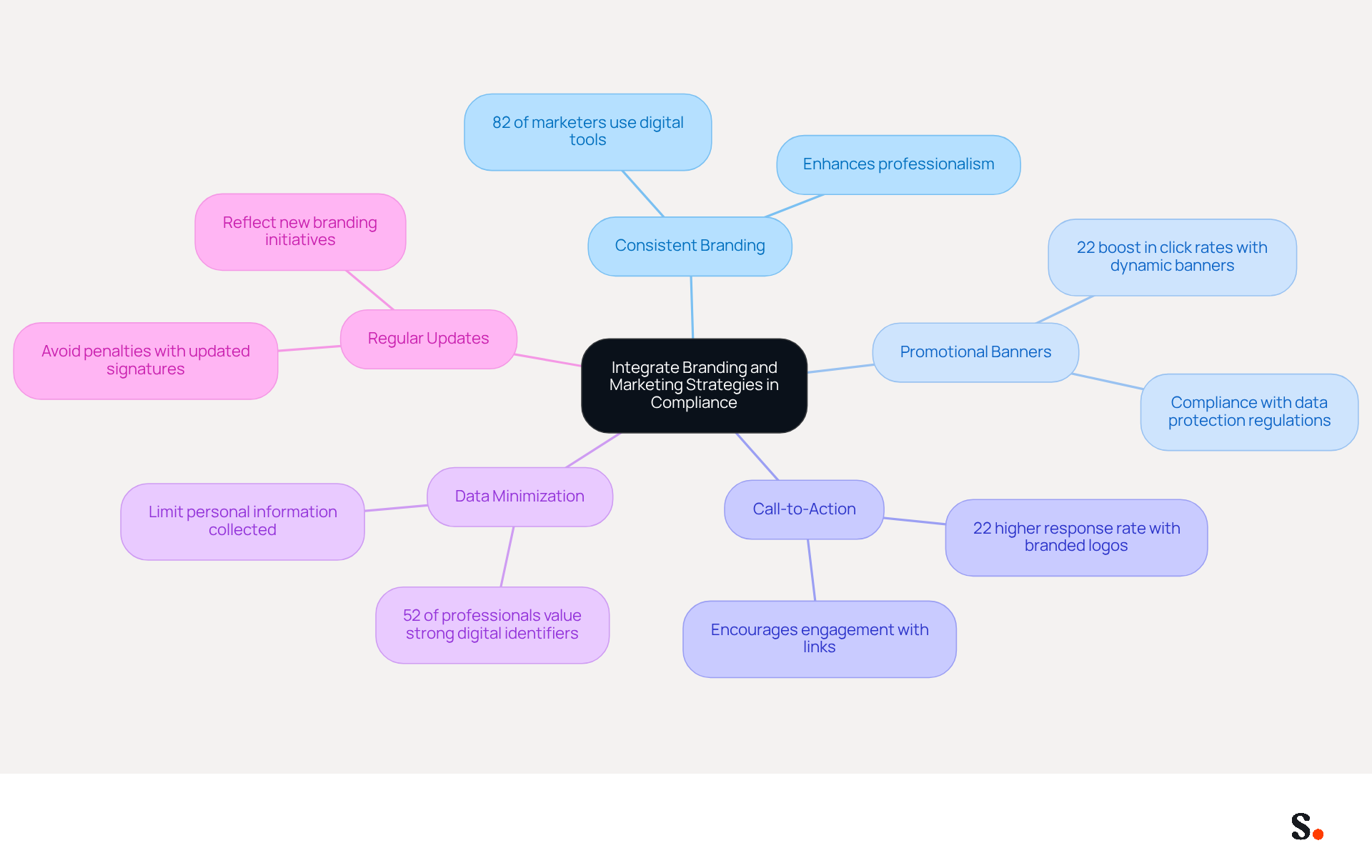
- Consistent Branding: When brands maintain consistency, they not only strengthen their identity but also enhance professionalism. In fact, 82% of marketers use digital tools to boost brand awareness.
- Promotional Banners: Utilize banners in message footers to promote current campaigns or events. It's important that these banners comply with data protection regulations, including the use of a gdpr email signature, steering clear of misleading information and unnecessary personal data. Using dynamic banners can boost click rates by 22%, which significantly enhances engagement.
- Call-to-Action (CTA): Incorporate clear CTAs that encourage recipients to engage with the brand, such as links to newsletters, webinars, or product pages. Ensure these links adhere to data protection regulations, as messages with branded logos receive a 22% higher response rate.
- Data Minimization: Limit the personal information gathered through digital correspondences to only what is necessary for communication and marketing purposes, in accordance with the guidelines for a GDPR email signature. Managing personal data in compliance with the gdpr email signature can be challenging for organizations. This method not only fulfills legal obligations but also fosters trust, because a strong digital identifier is viewed as essential for building credibility by 52% of professionals.
- Regular Updates: Periodically review and refresh digital identifiers to reflect new branding initiatives or changes in regulatory requirements. This ensures that all elements remain relevant and effective, helping organizations avoid potential penalties associated with non-compliance. Failure to comply with these regulations can result in significant legal repercussions.
By prioritizing compliance, organizations not only mitigate risks but also enhance their brand's reputation in the marketplace.
Utilize Automation Tools for Efficient Email Signature Management
Managing digital identities effectively is crucial for organizations aiming to maintain compliance and operational efficiency. Here are key practices to consider:
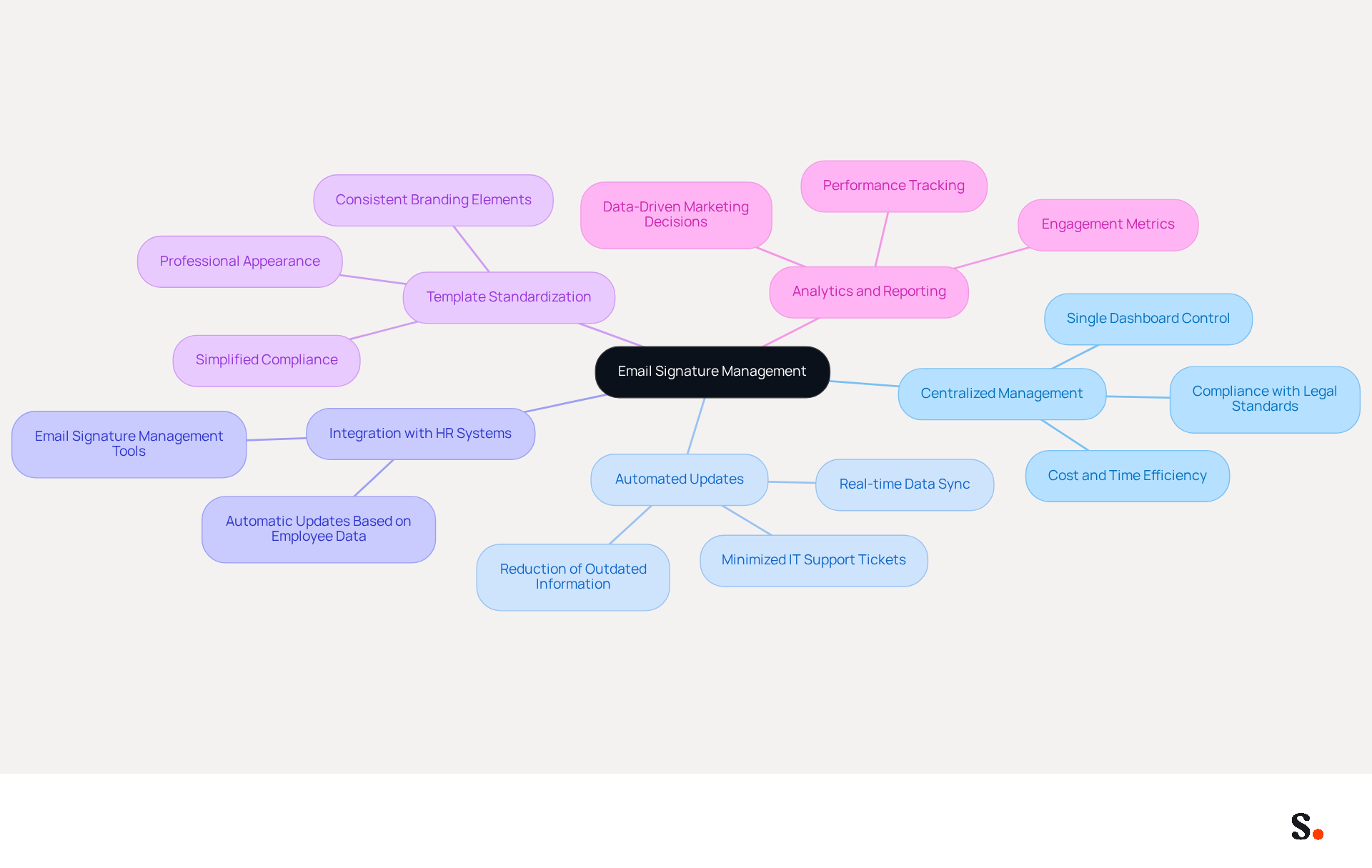
- Centralized Management: Utilize Scribe to oversee digital identifiers across the organization from a single dashboard, ensuring uniformity and adherence to GDPR regulations.
- Automated Updates: Set up automated updates for digital identifiers to reflect changes in company information, branding, or regulatory requirements without manual intervention. This approach helps ensure that all approvals stay up-to-date and compliant.
- Integration with HR systems allows for the connection of email signature management tools to automatically update gdpr email signatures based on employee data, ensuring accuracy and adherence. This minimizes the risk of outdated information, which can result in regulatory issues.
- Template Standardization: Create standardized templates that incorporate the necessary GDPR email signature elements, simplifying adherence for employees and reducing the need for customization. This ensures that all endorsements comply with legal requirements while maintaining brand consistency.
- Analytics and Reporting: Utilize analytics capabilities to monitor engagement with digital identifiers, facilitating data-driven choices on marketing tactics while ensuring adherence to data protection laws. This can assist organizations in enhancing their messaging strategy for improved performance.
By utilizing automation, organizations can simplify their messaging processes, minimize regulatory risks, and improve overall efficiency. This shift not only streamlines processes but also enhances compliance and brand integrity.
Conduct Regular Audits and Updates for Continuous Compliance
To ensure compliance with data protection regulations, organizations must regularly assess and update their gdpr email signature. Here are best practices to follow:
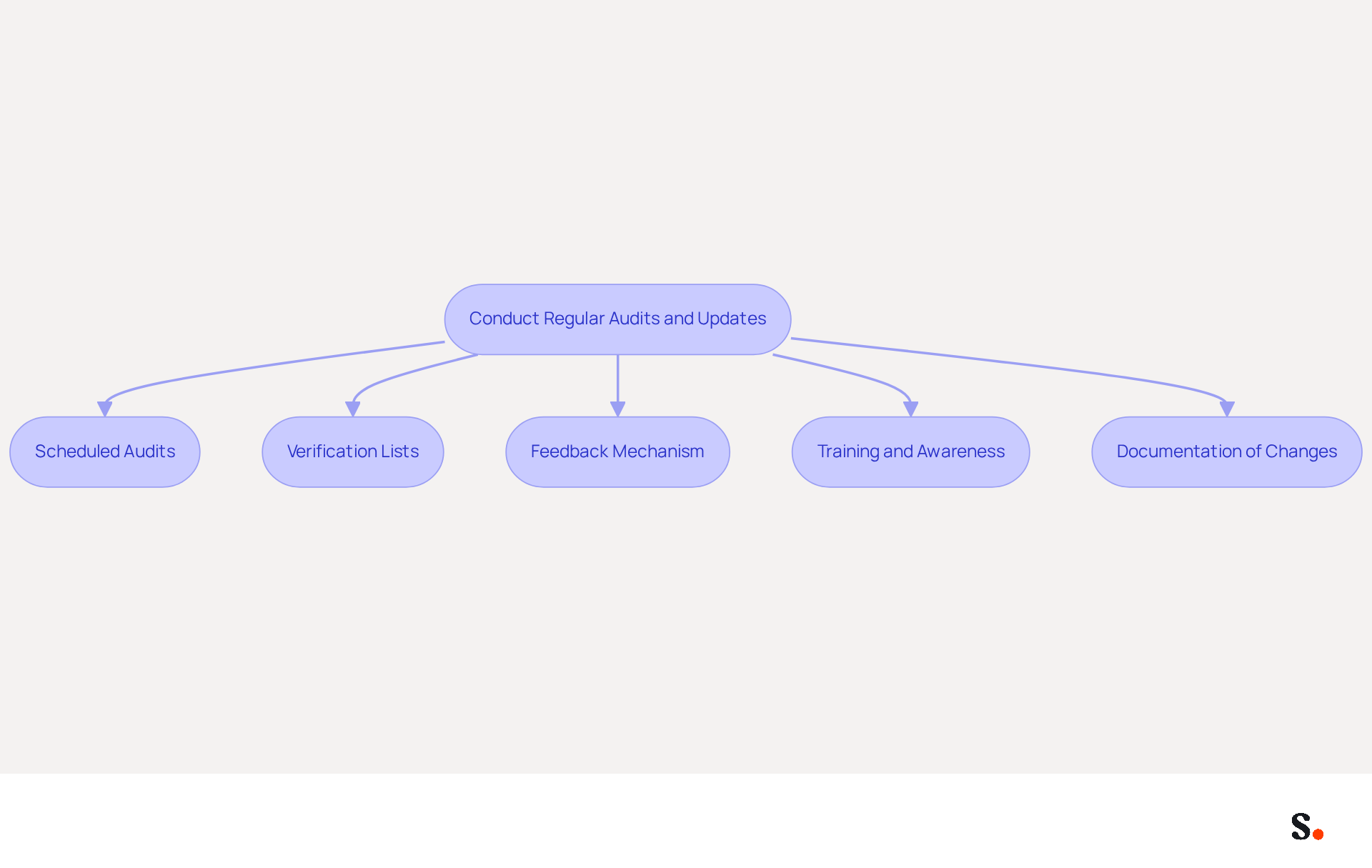
- Scheduled Audits: Establish a routine timetable for reviewing digital identifiers at least quarterly and after specific triggers, such as privacy policy updates or changes in company structure, to ensure all elements comply with GDPR requirements and reflect current company information. Regular audits assist in detecting inconsistencies and ensuring that approvals are current, reducing regulatory risks.
- Verification Lists: Utilize verification lists, including a privacy review list, to confirm that all necessary elements are present in digital identifiers, such as legal information and privacy policy links. This systematic approach ensures that no critical components are overlooked, which is essential for avoiding potential fines.
- Feedback Mechanism: Establish a system for employees to report any inconsistencies or problems with their digital identifiers, promoting a culture of adherence. Encouraging staff to engage in the regulatory process enhances accountability and helps maintain brand integrity.
- Training and Awareness: Provide regular training sessions for employees on GDPR compliance and the significance of maintaining accurate contact details, ensuring that everyone understands their role in compliance efforts. Highlight the importance of adding a privacy notice link in communication footers to enhance transparency in interactions.
- Documentation of Changes: Maintain thorough records of any modifications made to digital identifiers, including the reasoning for updates. Keeping detailed records of changes not only helps during audits but also shows clients and partners that the organization is accountable.
By prioritizing regular audits and updates, organizations can ensure that their gdpr email signature remains compliant and an effective communication tool. Data shows that companies with structured audit processes see fewer compliance-related issues, reinforcing the importance of these practices in safeguarding personal data. Additionally, integrating Scribe's SAML single sign-on allows for seamless access management while ensuring GDPR adherence, and syncing Google Workspace with Scribe automates updates, saving time and enhancing efficiency. Scribe's SOC 2 Type II certification further underscores its commitment to data security and compliance. Ultimately, neglecting these practices can expose organizations to legal repercussions and erode client trust.
Conclusion
GDPR compliance in email signatures is crucial for maintaining client trust and avoiding legal repercussions. Integrating key elements like the full legal entity name, company registration number, and a link to the privacy policy helps organizations reduce the risks of non-compliance. Tools like Scribe enable organizations to manage these elements efficiently, ensuring compliance and reducing risks.
The article highlights several key strategies for achieving compliance while enhancing brand engagement:
- Maintaining consistent branding
- Utilizing promotional banners
- Implementing automated updates
- Conducting regular audits
Organizations can effectively navigate the complexities of GDPR requirements. These practices help avoid penalties and build a strong brand reputation.
Ultimately, prioritizing GDPR compliance in email signatures is essential for organizations aiming to build credibility and trust. Organizations that neglect GDPR compliance risk not only legal penalties but also damage to their brand reputation. By leveraging automation tools like Scribe, companies can simplify their compliance processes, ensuring that their digital identifiers are not only legally sound but also effective marketing tools. Embracing these best practices will empower organizations to enhance their brand identity while safeguarding personal data, reinforcing the importance of compliance in today’s digital landscape.
Frequently Asked Questions
What are the essential elements for GDPR compliance in email signatures?
The essential elements for GDPR compliance in email signatures include the full legal entity name, company registration number, registered office address, contact information (sender's name, job title, phone number, and email address), a link to the privacy policy, a confidentiality notice, and an opt-out option for marketing content.
Why is it important to include a full legal entity name in email signatures?
Including the full legal entity name helps avoid ambiguity and ensures that recipients can clearly identify the organization.
How does a company registration number contribute to GDPR compliance?
A company registration number aids in the legal identification of the business, enhancing transparency and accountability.
What role does the registered office address play in email signatures?
The registered office address provides the physical location of the company, which enhances transparency for recipients.
What contact information should be included in email signatures for GDPR compliance?
The contact information should include the sender's name, job title, phone number, and email address to facilitate communication.
Why is it necessary to include a link to the privacy policy in email signatures?
Including a link to the privacy policy ensures that recipients can easily access information on the company's data handling practices.
What is the purpose of a confidentiality notice in email signatures?
A confidentiality notice protects sensitive information shared in messages, informing recipients about the confidentiality of the content.
What is an opt-out option, and why is it important in email signatures?
An opt-out option allows recipients to decline receiving marketing content, respecting their rights and preferences.
What are the consequences of failing to include required elements in email signatures?
Failing to include these elements can lead to severe penalties and loss of trust from recipients.
How does Scribe assist organizations in achieving GDPR compliance for email signatures?
Scribe provides automated solutions for managing digital identifiers, ensuring that regulatory elements are consistently applied and reducing mistakes. It also syncs Google Workspace with Scribe to automatically reflect updates in employee information.
What security features does Scribe offer to enhance data management?
Scribe offers SAML single sign-on integration for streamlined access management and is SOC 2 Type II certified, ensuring that user data is managed securely.
List of Sources
- Identify Required Elements for GDPR Compliance in Email Signatures
- Ensuring Compliance: Best Practices for Email Signatures and Disclaimer Under GDPR (https://adsigner.com/en/blog/how-to-create-regulation-compliant-email-signatures)
- GDPR and Email Signatures: What UK Businesses Need to Know (https://digicomm360.com/gdpr-and-email-signatures)
- GDPR Email Signature Compliance , Email Signature Glossary | SyncSignature (https://syncsignature.com/email-signature-glossary/gdpr-email-signature)
- GDPR Email Signature Compliance: Requirements by Country, Templates & Checklist (https://bulksignature.com/blog/gdpr-email-compliance-what-to-include-email-signature)
- 10 GDPR Email Signature Examples to Boost Compliance and Engagement (https://scribe-mail.com/en-US/blog/10-gdpr-email-signature-examples-to-boost-compliance-and-engagement)
- Integrate Branding and Marketing Strategies in Compliance
- 10 GDPR Email Signature Examples to Boost Compliance and Engagement (https://scribe-mail.com/en-US/blog/10-gdpr-email-signature-examples-to-boost-compliance-and-engagement)
- Research Recap: Branded Email Signatures Increase Company Recognition, Trust - Demand Gen Report (https://demandgenreport.com/industry-news/research-recap-branded-email-signatures-increase-company-recognition-trust/47252)
- Email signature statistics: Why every business should optimize their email signatures — Stripo.email (https://stripo.email/blog/email-signature-statistics-why-every-business-should-optimize-their-email-signatures)
- The impact of email signatures on your branding (https://signitic.com/en/resources/the-impact-of-email-signatures-on-your-branding)
- Utilize Automation Tools for Efficient Email Signature Management
- Best Practices for Company Wide Email Signature Management (https://scribe-mail.com/en-US/blog/best-practices-for-company-wide-email-signature-management)
- How to Automate Email Signature Updates | Exclaimer (https://exclaimer.com/email-signature-handbook/automate-email-signature-updates)
- Why Email Signature Management Matters for Your Business (https://vectorchoice.com/blog/why-email-signature-management-is-more-important-than-you-think)
- 5 Benefits of Using Centrally Managed Email Signatures | Crossware365 (https://crossware365.com/blog/5-benefits-of-using-centrally-managed-email-signatures)
- Top Email Signature Management Software for Google Workspace (https://bignewsnetwork.com/news/278548159/top-email-signature-management-software-for-google-workspace)
- Conduct Regular Audits and Updates for Continuous Compliance
- Ensuring Compliance: Best Practices for Email Signatures and Disclaimer Under GDPR (https://adsigner.com/en/blog/how-to-create-regulation-compliant-email-signatures)
- GDPR and Email Signatures: What UK Businesses Need to Know (https://digicomm360.com/gdpr-and-email-signatures)
- Email Signature Management Privacy Review: Audit Guide (https://wisestamp.com/guides/how-to-conduct-email-signature-software-management-privacy-review)
- GDPR email signature: what are the best practices for communicating by email? (https://signitic.com/en/resources/gdpr-email-signature-what-are-the-best-practices-for-communicating-by-email)
- GDPR Email Signature Compliance: Requirements by Country, Templates & Checklist (https://bulksignature.com/blog/gdpr-email-compliance-what-to-include-email-signature)
Get started with Scribe
Keep every signature compliant
Free 14-day trial — no credit card.