4 Best Practices for Automated Email Response Out-of-Office Messages
Creating an automated email response for out-of-office messages is essential for professional communication and can greatly influence how a brand is perceived
Sophie Grant
Email Signature Specialist, Scribe
On this page
- Introduction
- Identify Key Components of an Effective Out-of-Office Message
- Customize Messages for Different Scenarios and Audiences
- Maintain Professionalism and Clarity in Automated Responses
- Leverage Automated Messages to Enhance Brand Image and Communication
- Conclusion
- Frequently Asked Questions
- List of Sources
Introduction
Creating an automated email response for out-of-office messages is essential for professional communication and can greatly influence how a brand is perceived. By implementing best practices, organizations can ensure that their messages not only inform but also enhance relationships with clients and colleagues. But how do you find the right mix of professionalism and a personal touch in these automated replies? This article explores four essential best practices that will empower professionals to create impactful out-of-office messages that resonate with their audience while maintaining clarity and brand integrity.
Get started with Scribe
See why teams switch to Scribe
Free 14-day trial — no credit card.
Identify Key Components of an Effective Out-of-Office Message
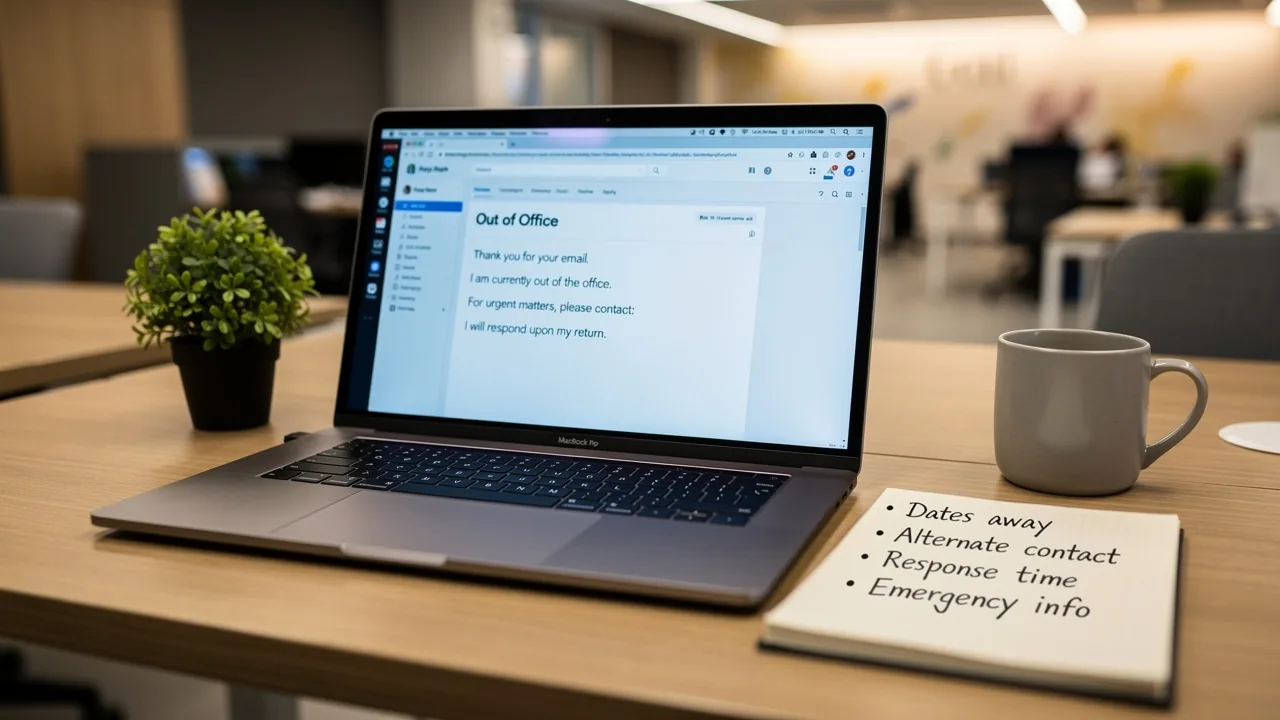
Crafting a clear and professional automated email response out-of-office is essential for effective communication. An effective OOO message should encompass several key components to ensure clarity and professionalism:
- Greeting: Begin with a polite salutation to set a positive tone.
- Dates of Absence: Clearly state the start and end dates of your unavailability. Including specific dates helps set clear expectations for when you’ll be available, reducing uncertainty for those reaching out.
- Reason for Absence: While a detailed explanation isn't always necessary, a brief mention (e.g., vacation, conference) can be beneficial. Keep personal details brief to maintain professionalism and avoid potential phishing risks.
- Alternative Contact: If applicable, provide the name and details of a colleague who can assist in your absence. Providing one clear backup contact helps relieve anxiety and reinforces your unavailability, making this practice essential for effective communication.
- Expected Response Time: Indicate when the sender can expect a reply. This assists in managing expectations and alleviates worries about delays, as a well-crafted communication should clearly convey your availability.
- Closing: End with a courteous sign-off to maintain professionalism.
Incorporating these elements not only enhances the effectiveness of your automated email response out-of-office communication but also maintains a professional image, ensuring that contacts are informed and expectations are managed appropriately. Neglecting these components can lead to misunderstandings and diminish your professional reputation.

Customize Messages for Different Scenarios and Audiences
Customizing your automated email response out-of-office is essential for maintaining effective communication and fostering positive relationships with your audience. Here are some strategies for tailoring your messages:
- Identify Your Audience: Recognize who will be receiving your communication. Is it a client, a colleague, or a vendor? Tailor your tone and content effectively to suit their expectations.
- Scenario-Specific Content: Adjust your message based on the reason for your absence. For instance, if you are attending a conference, mention the event and its relevance to your work to provide context.
- Use Appropriate Language: Maintain a professional tone for business relationships, while a more casual tone may be suitable for colleagues. This ensures clarity and appropriateness in your communication.
- Include Relevant Details: Mention specific projects or meetings to provide necessary context for your absence. This helps recipients understand the significance of your unavailability.
- Feedback Mechanism: Encourage recipients to reach out to an alternative contact for urgent matters, ensuring they feel supported even in your absence.
Ultimately, an automated email response out-of-office that is well-crafted not only informs but also strengthens your professional connections, ensuring that your absence does not hinder collaboration.

Maintain Professionalism and Clarity in Automated Responses
To enhance the effectiveness of your out-of-office messages, it's essential to adopt best practices that ensure clarity and professionalism:
- Be Concise: It's best to keep your communication brief and focused. Avoid unnecessary details that may dilute the main point, as many emails are ignored after just a glance, making it crucial to convey your message succinctly. As Smith points out, "Recipients will only read the first line or two before deciding whether to keep or delete an email."
- Use Clear Language: Avoid jargon or overly complex language. Strive for simplicity to make sure your message is clear, as misrepresenting your availability can undermine trust. Kendall emphasizes, "Misrepresenting your availability, such as claiming you’re unreachable when you’re actually checking emails, undermines trust."
- Proofread: Always check for spelling and grammatical errors. A polished communication reflects positively on your professionalism, as careless errors can undermine your credibility. A recent case study revealed that using a proofreading checklist significantly cut down errors in outgoing emails, boosting the company's professional image.
- Consistent Tone: Ensure that the tone of your message aligns with your voice. This consistency helps reinforce your brand identity and fosters trust among recipients. Schweitzer advises, "Opening an email with 'hi' or 'hey' might be alright for colleagues you’re friendly with, but for new contacts, begin your email with a proper, respectful salutation."
- Avoid Humor: While humor can be effective in some contexts, it may not be appropriate for all audiences. Maintain a professional tone to prevent misinterpretation, as excessively casual communications can damage interaction. Kendall warns, "We’ve all seen the overly casual messages: ‘I’m off sipping piña coladas, so don’t expect a reply!’ That might be fun, but it doesn’t fit every context."
By following these practices, you can ensure that your automated email response out-of-office reflects expertise and clarity, thereby improving your reputation. Ultimately, maintaining professionalism in your communications can significantly influence client perceptions and interactions. Furthermore, statistics indicate that 54% of consumers view prompt responses as crucial for selecting a company, highlighting the significance of upholding professionalism in your communications.

Leverage Automated Messages to Enhance Brand Image and Communication
An automated email response out-of-office presents a unique opportunity to elevate your brand image. Here are effective strategies to leverage these messages:
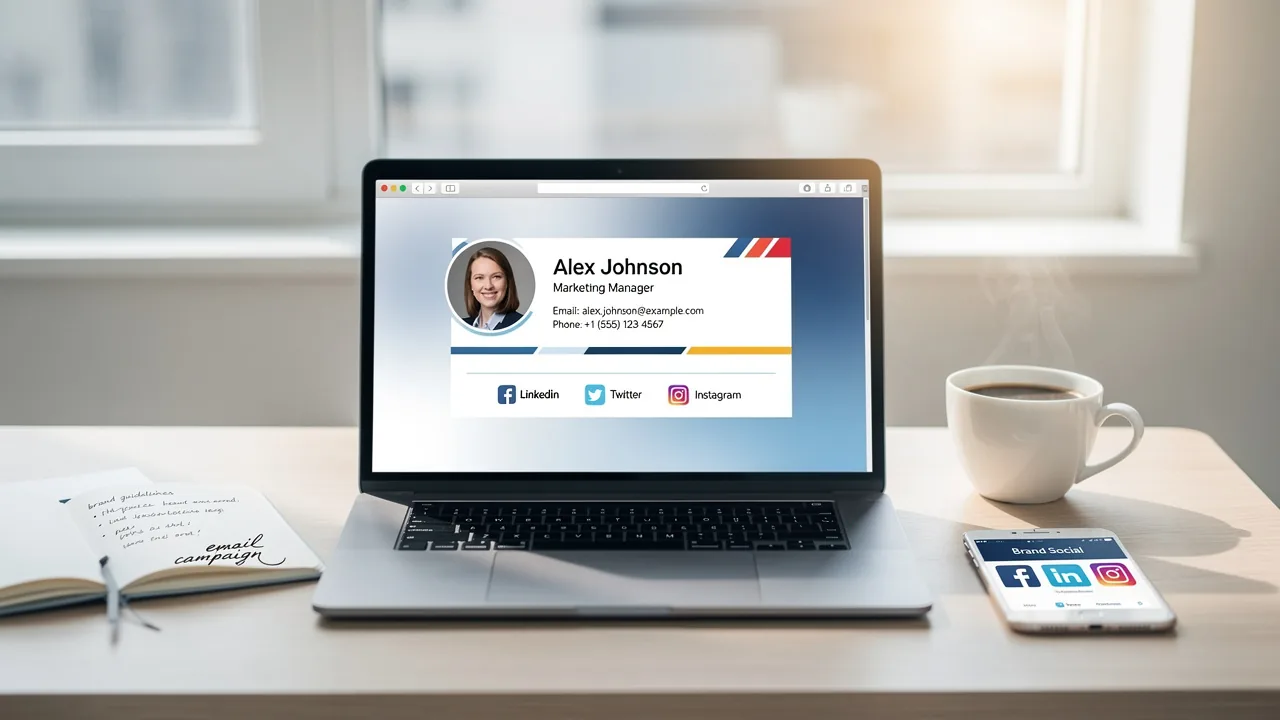
- Branding Elements: Incorporate your company logo and color scheme into the communication to strengthen identity. This visual consistency aids recipients in linking the communication with your brand. Without visual consistency, recipients may struggle to connect the communication with your brand.
- Promote Services: Use the communication to subtly highlight your services or products. Mention upcoming events or new offerings that may pique the recipient's interest, transforming a routine notification into a strategic marketing touchpoint.
- Engagement Opportunities: Include links to your website or social media channels, encouraging recipients to interact with your brand while you are away. Since 59% of Millennials prefer checking emails on their cellphones, optimizing for mobile can boost engagement.
- Highlight Values: Reflect your company’s core values in the message, such as a commitment to customer service or sustainability. This approach resonates with your audience and strengthens brand loyalty.
- Follow-Up Mechanism: Encourage recipients to reach out to an alternative contact for urgent matters, ensuring they feel valued and supported. This not only maintains communication but also enhances customer satisfaction.
Mark Nevins emphasizes that a straightforward message, such as 'I’m away until [DATE] and may not respond until then,' is particularly effective. By adopting these strategies, you can ensure that your automated email response out-of-office not only informs but also reinforces your brand identity.

Conclusion
Effective automated email responses are essential for maintaining professionalism and ensuring clear communication. By implementing best practices, such as including key components like a polite greeting, dates of absence, and alternative contacts, organizations can ensure that their automated responses not only inform but also uphold their brand image. This ensures that communication remains effective, even when the primary contact is unavailable.
The article highlights several strategies for customizing messages to suit different scenarios and audiences. Tailoring the tone and content based on the recipient - whether a client, colleague, or vendor - enhances the effectiveness of the communication. Additionally, maintaining professionalism through concise language, proofreading, and consistent tone helps build and maintain strong relationships with recipients, reinforcing trust and credibility.
Ultimately, leveraging automated messages as a branding opportunity is a strategic move that can improve overall communication effectiveness. By incorporating branding elements, promoting services, and reflecting core values, organizations can transform routine notifications into strategic touchpoints that resonate with their audience. Emphasizing the importance of professionalism and clarity in automated responses is not just beneficial; it is essential for sustaining client trust and enhancing brand loyalty.
Frequently Asked Questions
What is the purpose of an out-of-office (OOO) message?
An out-of-office message serves to communicate your unavailability to contacts, ensuring clarity and professionalism in your absence.
What are the key components of an effective out-of-office message?
The key components include a greeting, dates of absence, reason for absence, alternative contact, expected response time, and a closing.
Why is it important to include dates of absence in an OOO message?
Including specific start and end dates of your unavailability helps set clear expectations for when you’ll be available, reducing uncertainty for those reaching out.
Should I provide a reason for my absence in the OOO message?
While a detailed explanation isn't necessary, a brief mention (e.g., vacation, conference) can be beneficial. It's important to keep personal details brief to maintain professionalism.
What should I include as an alternative contact in my OOO message?
If applicable, provide the name and details of a colleague who can assist in your absence. This helps relieve anxiety for those reaching out and reinforces your unavailability.
How can I manage expectations regarding response time in my OOO message?
Indicate when the sender can expect a reply, which assists in managing expectations and alleviates worries about delays.
Why is a courteous closing important in an OOO message?
A courteous sign-off maintains professionalism and leaves a positive impression on the sender.
What can happen if I neglect the key components of an OOO message?
Neglecting these components can lead to misunderstandings and diminish your professional reputation.
List of Sources
- Identify Key Components of an Effective Out-of-Office Message
- 'I'm in Barbados': The dos and don'ts of writing an out-of-office reply (https://bbc.com/news/articles/c934xy32919o)
- STMP2GO | Out of Office Message Examples: 22 Copy-Paste Templates (https://smtp2go.com/blog/effective-out-of-office-messages)
- 4 Best Practices for Your Auto-Reply Message Out of Office (https://scribe-mail.com/en-US/blog/4-best-practices-for-your-auto-reply-message-out-of-office)
- The Right Way To Use Your Out-Of-Office Message (https://forbes.com/sites/hillennevins/2025/07/02/the-right-way-to-use-your-out-of-office-message)
- Customize Messages for Different Scenarios and Audiences
- Master Automatic Email Replies for Vacation: Boost Engagement Now (https://scribe-mail.com/en-US/blog/master-automatic-email-replies-for-vacation-boost-engagement-now)
- How To Write An Out of Office Message (https://blog.mattiejames.com/how-to-write-an-out-of-office-message)
- Creative out-of-office responses - Design Business Council (https://designbusinesscouncil.com/creative-out-of-office-responses)
- STMP2GO | Out of Office Message Examples: 22 Copy-Paste Templates (https://smtp2go.com/blog/effective-out-of-office-messages)
- 4 Best Practices for Your Auto-Reply Message Out of Office (https://scribe-mail.com/en-US/blog/4-best-practices-for-your-auto-reply-message-out-of-office)
- Maintain Professionalism and Clarity in Automated Responses
- How to craft an effective out-of-office message - Early Bird (https://early-bird.msudenver.edu/how-to-craft-an-effective-out-of-office-message)
- Email Etiquette: Dos and Don’ts of Professional Emails (https://businessnewsdaily.com/8262-email-etiquette-tips.html)
- Maintaining Professionalism in Email (https://linkedin.com/top-content/communication/email-etiquette-in-professional-settings/maintaining-professionalism-in-email)
- Automatic Replies: The Simple Tech Tweak Your Business Can’t Afford to Ignore - The Unite Group (https://theunitegroup.co.uk/2025/11/04/automatic-replies)
- 4 Best Practices for Your Automatic Response Template for Emails (https://scribe-mail.com/en-US/blog/4-best-practices-for-your-automatic-response-template-for-emails)
- Leverage Automated Messages to Enhance Brand Image and Communication
- How to craft an effective out-of-office message - Early Bird (https://early-bird.msudenver.edu/how-to-craft-an-effective-out-of-office-message)
- Out-of-Office Messages That Reflect Your Brand (https://stellapop.com/out-of-office-messages-that-reflect-your-brand)
- The Right Way To Use Your Out-Of-Office Message (https://forbes.com/sites/hillennevins/2025/07/02/the-right-way-to-use-your-out-of-office-message)
- 49 Top Email Marketing Statistics (https://forbes.com/advisor/business/software/email-marketing-statistics)
- Email Marketing Metrics: What You Need to Know (https://campaignmonitor.com/resources/infographics/24-email-marketing-stats-need-know)
Get started with Scribe
See why teams switch to Scribe
Free 14-day trial — no credit card.