4 Best Practices for Crafting an Effective Invitation for a Meeting Letter
Crafting an effective meeting invitation letter presents a strategic opportunity to engage participants and ensure productive discussions. By incorporating
Sophie Grant
Email Signature Specialist, Scribe
Introduction
Crafting an effective meeting invitation letter presents a strategic opportunity to engage participants and ensure productive discussions. By incorporating essential components and personalization, professionals can significantly enhance attendance. Many professionals struggle to engage participants effectively.
What key elements can transform a standard invitation into a compelling call to action? This article delves into best practices for creating invitations that not only convey necessary information but also resonate with recipients. Without understanding these elements, meetings may lack effectiveness, ultimately leading to more successful discussions.
Identify Essential Components of a Meeting Invitation Letter
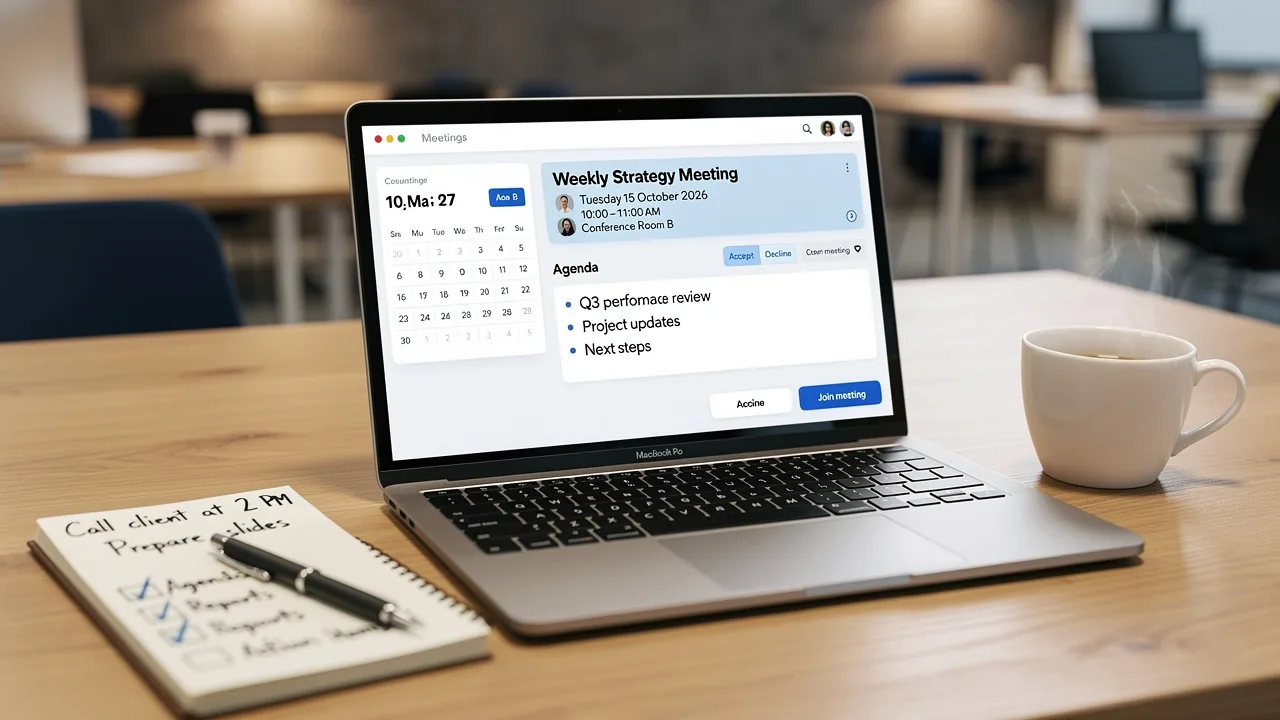
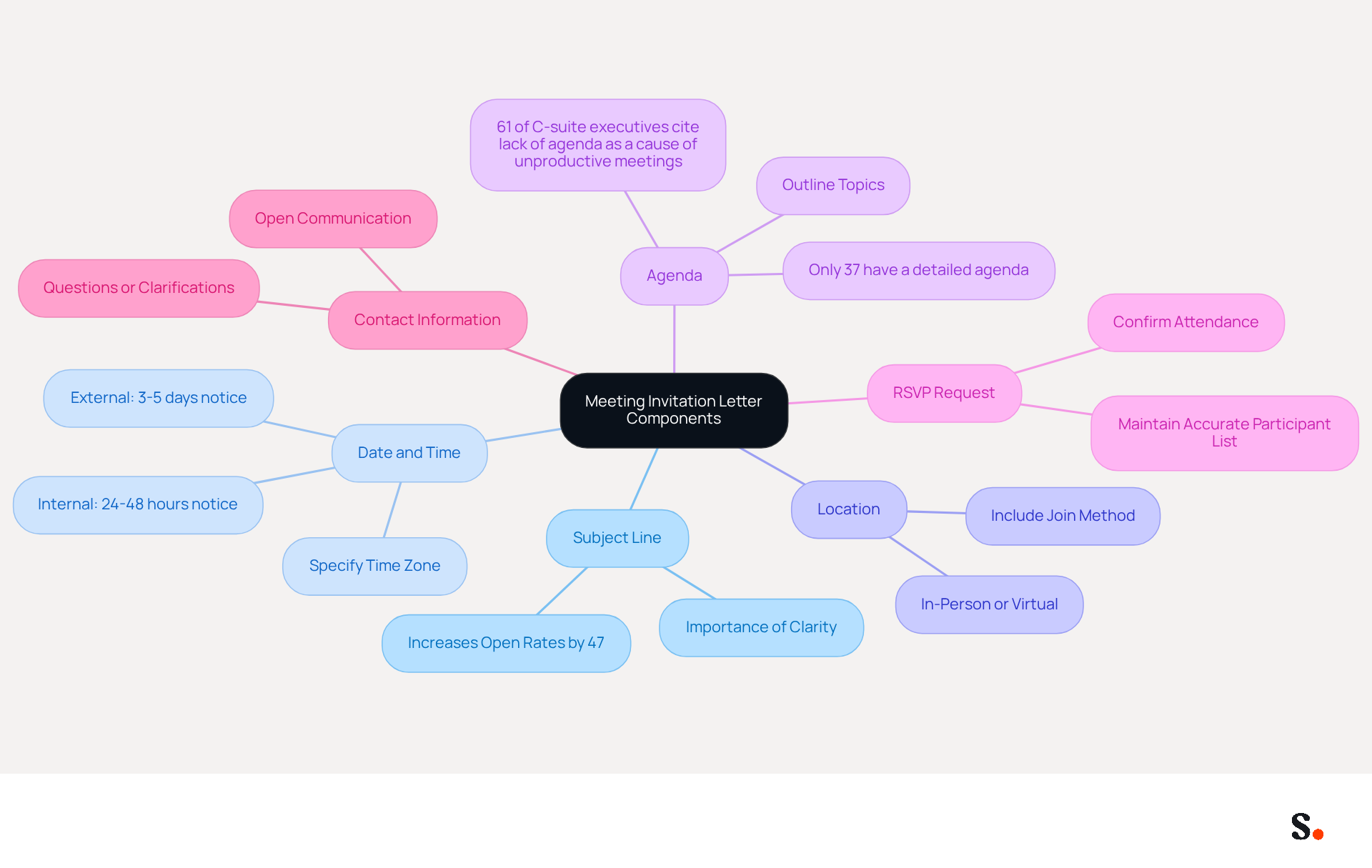
Crafting an effective meeting invitation letter requires careful consideration of several key components:
- Subject Line: A clear and concise subject line that reflects the purpose of the discussion is essential. Studies show that clear subject lines can increase open rates by 47%.
- Date and Time: Specify the exact date and time of the gathering, including the time zone if necessary. Sending requests 24-48 hours in advance for internal gatherings and 3-5 days for external events is advised to ensure sufficient preparation.
- Location: Indicate whether the meeting is in-person or virtual, providing necessary details such as the venue address or video conferencing link. Including a join method in invitations, such as a link or location, is vital for accessibility.
- Agenda: Outline the topics to be discussed to give attendees a clear understanding of what to expect. A well-defined agenda can prevent misunderstandings and enhance productivity during discussions. Without a clear agenda, meetings often lead to confusion and wasted time, as only 37% of gatherings currently have a detailed agenda. Notably, 61% of C-suite executives believe that a lack of agenda contributes to unproductive meetings.
- RSVP Request: Include a request for participants to confirm their presence, along with a deadline for responses. This helps maintain an accurate participant list and ensures that everyone is prepared.
- Contact Information: Provide details on how attendees can reach out for questions or clarifications. This opens the door for questions and helps clear up any uncertainties before the meeting.
Including these components helps create a clear invitation that boosts attendance and engagement, leading to more productive meetings. In a busy professional environment, effective meeting invitations are crucial for standing out and ensuring your gathering is taken seriously.
Incorporate Personalization to Enhance Engagement
Many invitation for a meeting letters fail to resonate with recipients, leading to missed opportunities for connection. Here are some effective strategies to personalize your meeting invitations:
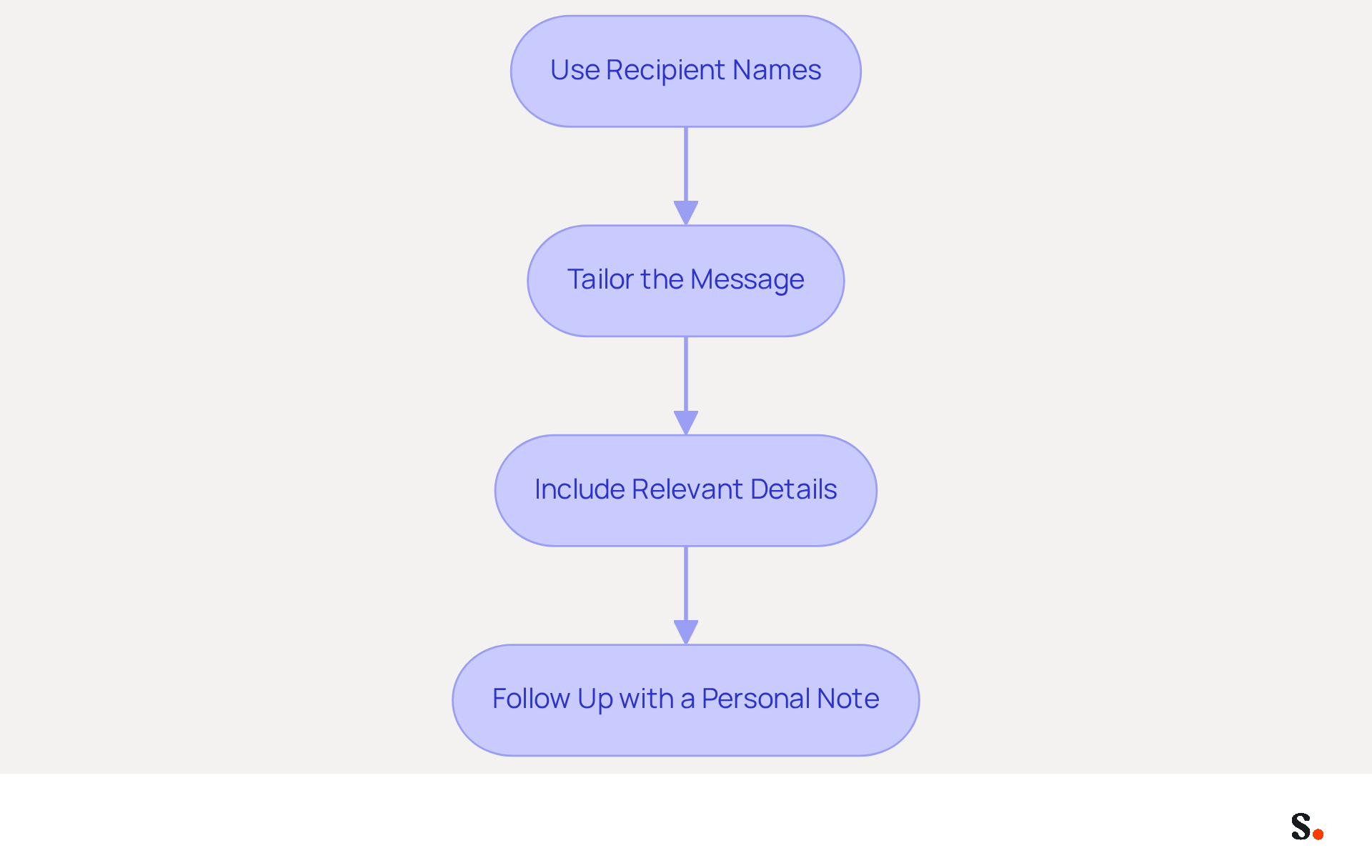
- Use Recipient Names: Address each invitee by their name to create a more personal touch.
- Tailor the Message: Customize the content based on the recipient's role or interests, explaining why their presence is important.
- Include Relevant Details: Mention specific topics that may interest the recipient or relate to their work.
- Follow Up with a Personal Note: After sending the request, consider following up with a brief message to express your enthusiasm about their potential attendance.
An invitation for a meeting letter not only enhances engagement but also paves the way for more meaningful professional relationships.
Maintain Clarity and Conciseness in Communication
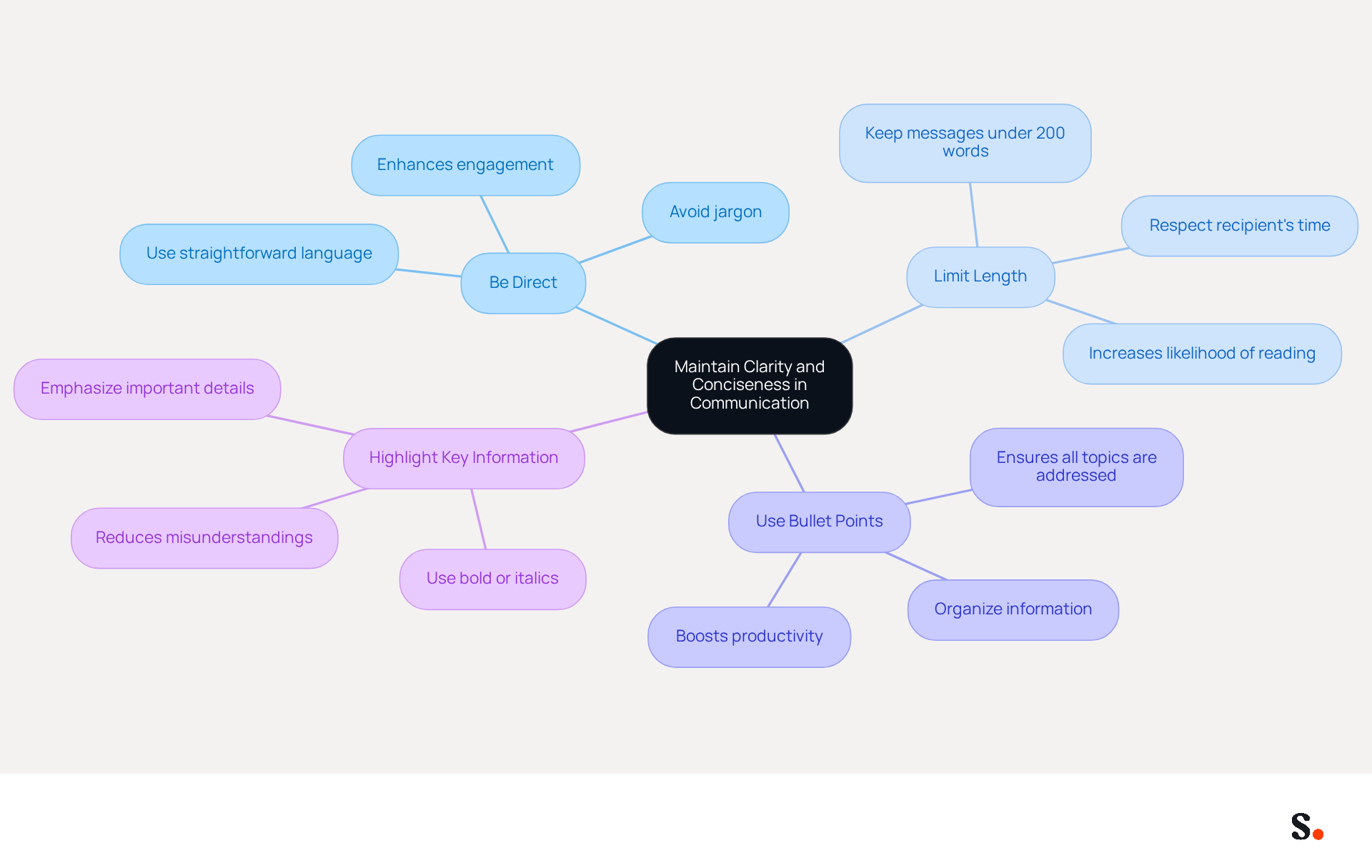
To enhance participation in meetings, clarity in the invitation for a meeting letter is essential. Follow these best practices to ensure your meeting invitation is clear and concise:
- Be Direct: Use straightforward language and avoid jargon that may confuse recipients. Unclear invitations can lead to confusion, reducing the likelihood of participation. According to a study, clear communication during discussions can significantly enhance engagement and decision-making.
- Limit Length: Keep the message brief, ideally under 200 words, focusing on the most critical information. A concise email respects the recipient’s time and increases the likelihood of them reading and responding to the invite. Research indicates that invitations lacking clarity can lead to lower attendance rates.
- Use Bullet Points: Organize information using bullet points for easy readability, especially for details like date, time, and agenda. This approach boosts productivity by ensuring all relevant topics are addressed and assists recipients in understanding the significance of the discussion. A clear agenda shows commitment to productivity and helps participants prepare.
- Highlight Key Information: Use bold or italics to emphasize important details, such as the gathering date or RSVP deadline. An invitation for a meeting letter that is clear helps everyone know the details, reducing misunderstandings and boosting attendance. Avoid common pitfalls such as overloading with information or using vague language, which can confuse recipients and decrease their involvement.
By following these guidelines, you can create announcements that are easy to read and comprehend, enhancing the likelihood of participation and promoting better collaboration. Additionally, consider sending invitations at optimal times, such as mid-week mornings, to maximize participation.
Implement Follow-Up Strategies to Confirm Attendance
To ensure robust attendance and engagement, implementing effective follow-up strategies is crucial:
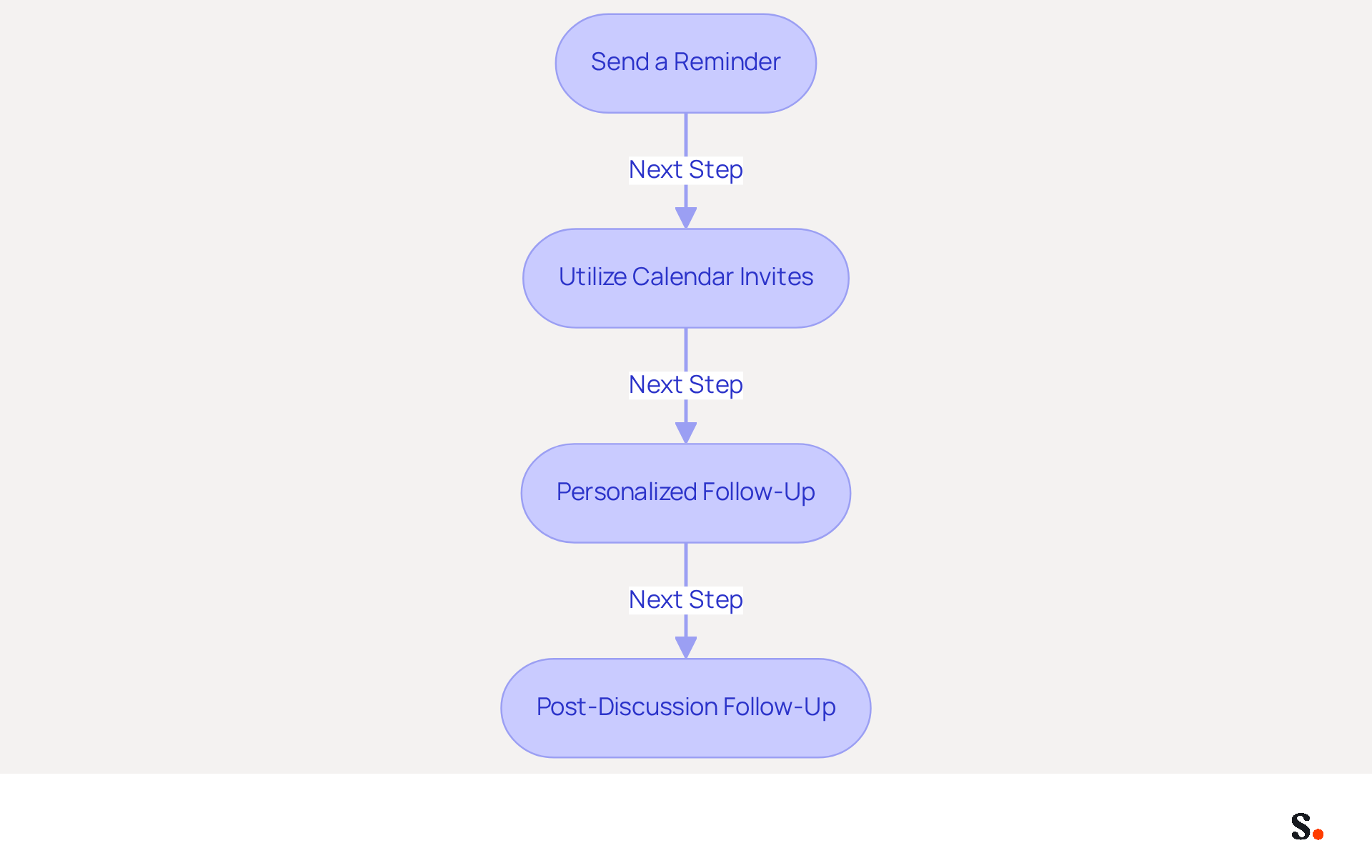
- Send a Reminder: A few days before the meeting, send a reminder email reiterating the meeting details. Research indicates that sending reminder emails one week, 24 hours, and one hour before an event can significantly improve attendance rates, with a reported 11% increase in attendance (risk ratio = 1.11). Participants often forget to confirm their attendance, leading to lower engagement.
- Utilize calendar invites to automatically remind participants of the gathering. This ensures that they have the details saved in their schedules, reducing the likelihood of missed appointments. A well-timed calendar invite can serve as a crucial nudge, reinforcing the importance of the meeting.
- Personalized Follow-Up: Reach out individually to key participants to confirm their attendance. Personalization in communication can increase engagement, with studies showing that personalized emails can improve open rates significantly. As Gabriela Łaba, Editor-in-Chief at YouCanBookMe, notes, "Incorporating a warm tone in your email reminders can enhance engagement." Expressing anticipation for their contributions fosters a sense of importance and accountability among participants.
- Post-Discussion Follow-Up: After the gathering, send a thank-you email to attendees, summarizing key points discussed and inviting feedback. This not only reinforces the value of their participation but also opens the door for future interactions. Businesses that follow up within 24 to 48 hours see a 25% higher response rate, making this step essential for nurturing relationships.
By implementing these follow-up strategies, you can enhance attendance rates and cultivate a proactive meeting culture that benefits all participants.
Conclusion
Effective meeting invitations are crucial for fostering productive gatherings. Focusing on key components like a clear subject line, specific date and time, and location details can greatly enhance engagement and participation. Personalization further elevates the effectiveness of these invitations, making recipients feel valued and more likely to attend.
The article highlights several best practices, including maintaining clarity and conciseness in communication. This clarity can reduce misunderstandings and foster better collaboration, as evidenced by studies showing improved attendance rates. Strategies such as:
- Using bullet points
- Emphasizing key information
- Sending timely follow-ups
are crucial for maximizing attendance. Implementing these techniques not only fosters a proactive meeting culture but also strengthens professional relationships.
In the end, well-crafted meeting invitations play a vital role in ensuring everyone is on the same page. By adopting these best practices, organizations can transform their meeting culture, leading to more productive discussions and stronger connections among team members.
Frequently Asked Questions
What are the essential components of a meeting invitation letter?
The essential components include a clear subject line, date and time, location, agenda, RSVP request, and contact information.
Why is a clear subject line important in a meeting invitation?
A clear subject line reflects the purpose of the discussion and can increase open rates by 47%.
How should the date and time be specified in a meeting invitation?
The exact date and time should be specified, including the time zone if necessary. It's advised to send requests 24-48 hours in advance for internal gatherings and 3-5 days for external events.
What details should be included regarding the location of the meeting?
The invitation should indicate whether the meeting is in-person or virtual, providing necessary details such as the venue address or video conferencing link.
Why is it important to include an agenda in the meeting invitation?
An agenda outlines the topics to be discussed, giving attendees a clear understanding of what to expect, which can prevent misunderstandings and enhance productivity.
What is the significance of requesting an RSVP in a meeting invitation?
Requesting an RSVP helps maintain an accurate participant list and ensures that everyone is prepared for the meeting.
What contact information should be provided in a meeting invitation?
The invitation should include details on how attendees can reach out for questions or clarifications, allowing for any uncertainties to be addressed before the meeting.
How do effective meeting invitations impact attendance and engagement?
Including the essential components helps create a clear invitation that boosts attendance and engagement, leading to more productive meetings.
List of Sources
- Identify Essential Components of a Meeting Invitation Letter
- Anatomy of the perfect meeting invitation email [includes templates] - The Lucid Meetings Blog (https://blog.lucidmeetings.com/blog/anatomy-of-the-perfect-meeting-invitation-email)
- Effective meeting invitation emails [+3 Templates] (https://trueconf.com/blog/reviews-comparisons/meeting-invitation)
- Top 10 Meeting Invitation Email Tips and Templates for Success (https://investglass.com/top-10-meeting-invitation-email-tips-and-templates-for-success)
- Creating a meeting invitation: Examples & Tips (https://meettuesday.com/en/blog/creating-a-meeting-invitation-examples-tips)
- 40 Meeting Statistics You Need to Know | Rev (https://rev.com/blog/meeting-statistics)
- Incorporate Personalization to Enhance Engagement
- Email Marketing Metrics: What You Need to Know (https://campaignmonitor.com/resources/infographics/24-email-marketing-stats-need-know)
- 10 Ways to Personalize Business Event Invitations | Simply Noted Blog (https://simplynoted.com/blogs/news/personalize-event-invitations-business)
- 2026 Marketing Personalization Statistics & Trends for Growth | involve.me (https://involve.me/blog/marketing-personalization-statistics)
- Event Personalization That Works: Tactics, Tools & Tips | Cvent (https://cvent.com/en/blog/events/event-personalization)
- Top 10 Meeting Invitation Email Tips and Templates for Success (https://investglass.com/top-10-meeting-invitation-email-tips-and-templates-for-success)
- Maintain Clarity and Conciseness in Communication
- Meeting Invitation Email, Writing Tips & Template | Cal.com | Cal.com - Scheduling Software for Online Bookings (https://cal.com/blog/how-to-write-a-meeting-invitation-email-that-gets-a-response)
- The Myth of the "Optional" Meeting Invite: How to Use It Wisely | Julie Maness posted on the topic | LinkedIn (https://linkedin.com/posts/juliemaness_meetingmanagement-activity-7382408559327838208-ASYE)
- Top 10 Meeting Invitation Email Tips and Templates for Success (https://investglass.com/top-10-meeting-invitation-email-tips-and-templates-for-success)
- 36+ essential workplace communication statistics for 2026 (https://zoom.com/en/blog/workplace-communication-statistics)
- From Chaos to Clarity: Streamline Team Communication Before, During, and After Meetings (https://meetingprotocol.org/blogs/news/from-chaos-to-clarity-streamline-team-communication-before-during-and-after-meetings)
- Implement Follow-Up Strategies to Confirm Attendance
- 16 Meeting Reminder Template Email Examples (https://savvycal.com/articles/meeting-reminder-templates)
- Friendly Email Reminders help eliminate no-shows | GReminders (https://greminders.com/articles/friendly-reminder-email-what-why-and-how-to-write)
- 12 Meeting Reminder Email Templates That Will Reduce No-Shows (https://youcanbook.me/blog/meeting-reminder-email-templates)
- 10 post-event follow-up emails to convert leads into sales (https://momencio.com/10-post-event-follow-up-email-strategies)
- A systematic review and meta-analysis of appointment reminders for enhancing hospital attendance (https://jhmhp.amegroups.org/article/view/10215/html)
Get started with Scribe
Build a professional email signature
Free 14-day trial — no credit card.