4 Best Practices for Effective Exchange Server Email Signature Management
Many organizations underestimate the impact of email signatures on their brand presence. Establishing a strong brand presence in every communication is crucial
Sophie Grant
Email Signature Specialist, Scribe

On this page
- Introduction
- Establish a Consistent Branding Strategy for Email Signatures
- Implement Effective Technical Solutions for Signature Management
- Leverage Automation Tools for Streamlined Signature Management
- Monitor and Analyze Signature Performance for Continuous Improvement
- Conclusion
- Frequently Asked Questions
- List of Sources
Introduction
Many organizations underestimate the impact of email signatures on their brand presence. Establishing a strong brand presence in every communication is crucial for organizations, yet many overlook the significance of email signatures as a branding tool. Effective management of email signatures not only enhances professionalism but also fosters trust and recognition among recipients. Organizations often struggle with the technical aspects of implementing and maintaining effective email signatures. This article explores four best practices for managing Exchange Server email signatures effectively. Without effective management, organizations risk diluting their brand identity and losing trust among recipients.
Establish a Consistent Branding Strategy for Email Signatures
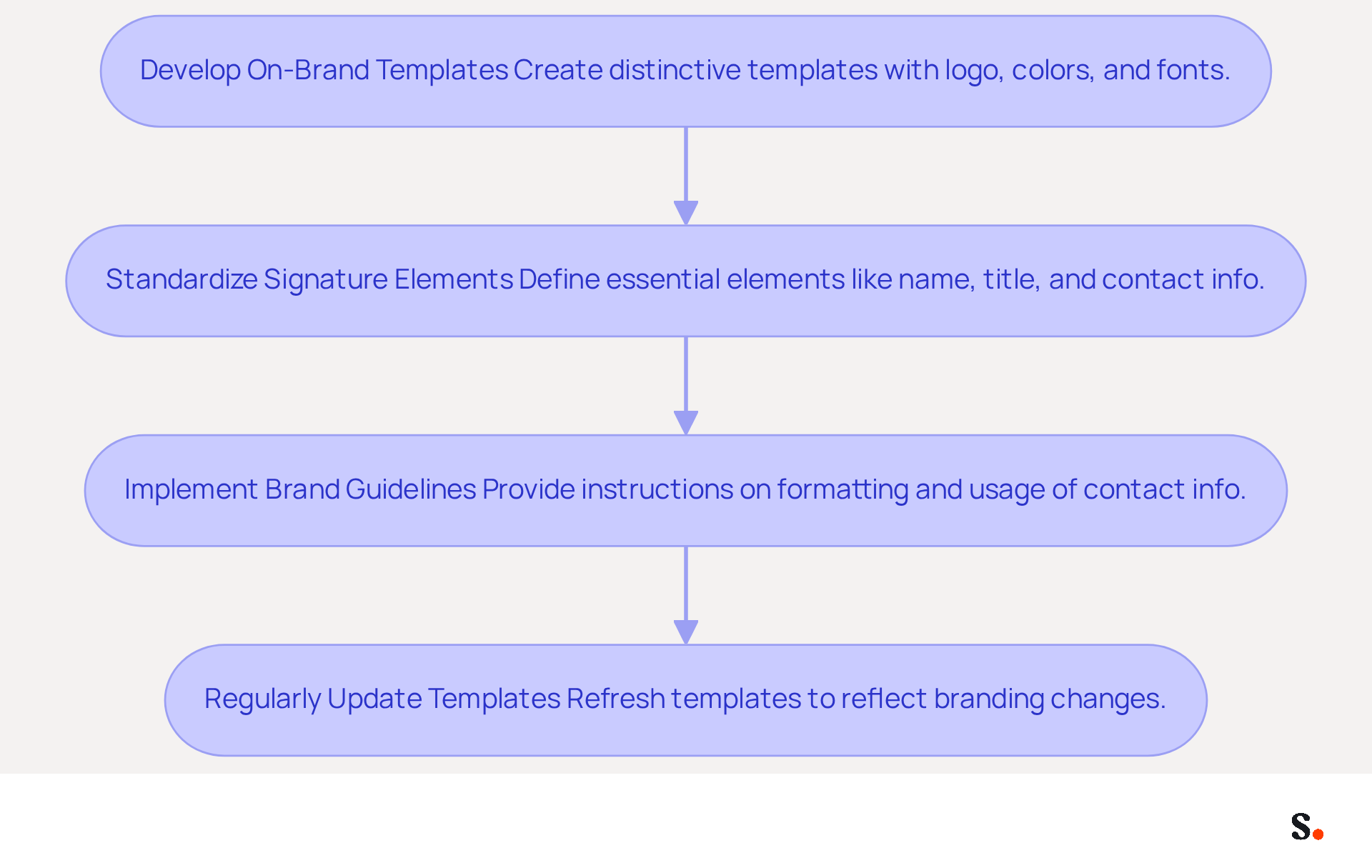
To effectively establish a cohesive branding strategy for email signatures, organizations must take deliberate steps:
- Develop On-Brand Templates: Create distinctive templates that incorporate the Scribe logo, colors, and fonts. This ensures that every message aligns visually with the brand identity, crucial since 80% of businesses consider branded message identifiers essential for trust.
- Standardize Signature Elements: Define essential elements such as employee name, title, contact information, and legal disclaimers. Consistency in these elements aids in upholding professionalism and clarity, leading to a 22% rise in response rates for organizations with uniform branding.
- Implement Brand Guidelines: Provide clear instructions for employees on how to use their contact information. This includes formatting, font sizes, and the use of images or banners. This aligns with research showing that 76% of participants feel branded digital identifiers increase their trust in the sender, emphasizing the significance of following these guidelines.
- Regularly Update Templates: As branding evolves, ensure that communication templates are refreshed accordingly. This includes changes in logos, taglines, or contact information. Without regular evaluations, organizations risk losing brand integrity and professionalism.
By following these steps, organizations can build a cohesive messaging strategy that boosts brand visibility and builds trust with recipients through the use of an exchange server email signature. This can translate into greater customer loyalty and trust. Neglecting these practices can significantly undermine an organization's ability to project a trustworthy and professional image.
Implement Effective Technical Solutions for Signature Management
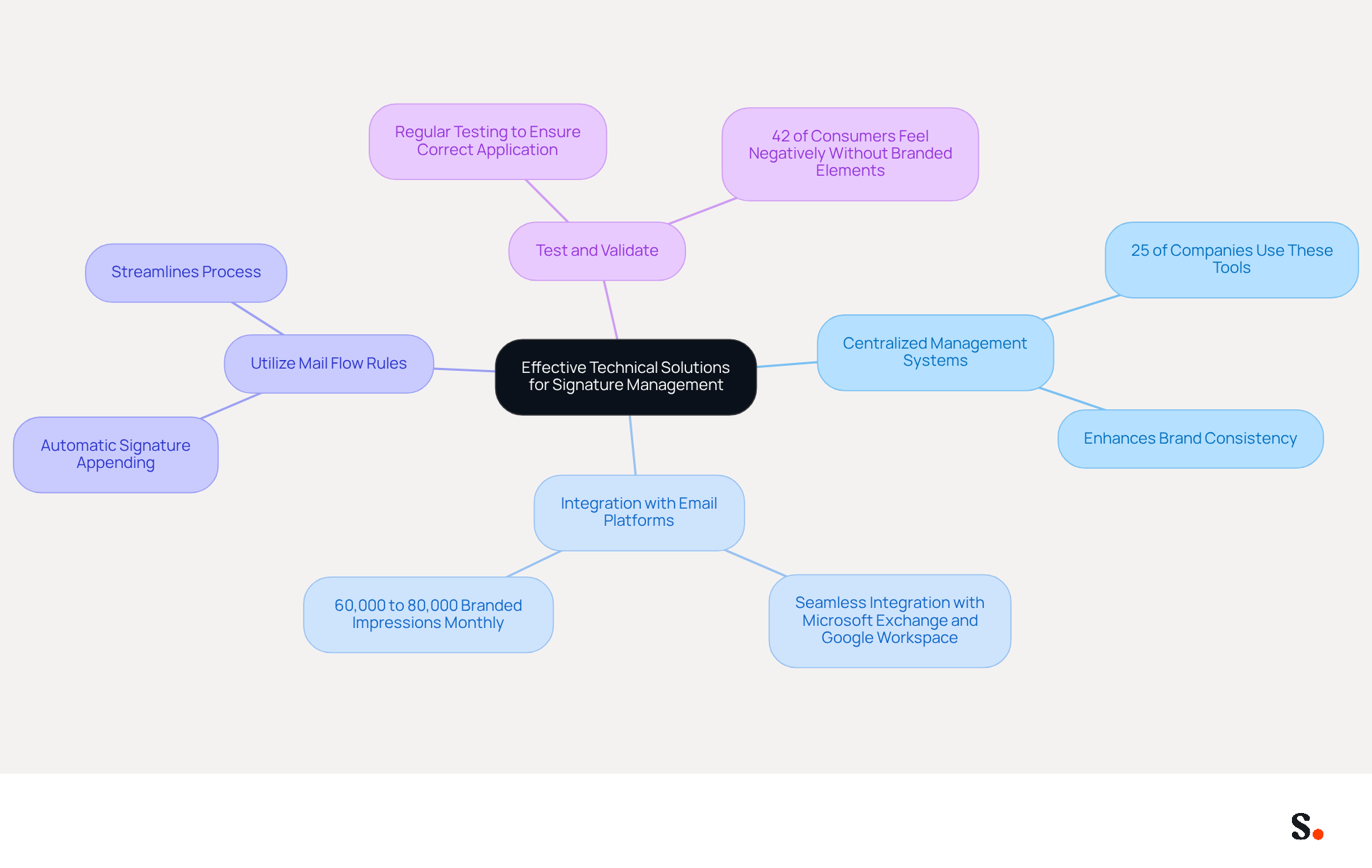
To effectively manage email signatures, organizations must adopt strategic technical solutions that enhance brand consistency and professionalism.
- Centralized Management Systems: Utilizing centralized email management tools is essential for creating and deploying an exchange server email signature throughout the organization. This approach ensures that all employees adhere to the same signature format, enhancing brand consistency. Currently, only 25% of companies use these tools, revealing a major opportunity for growth.
- Integration with Email Platforms: Selecting solutions that seamlessly integrate with existing email platforms like Microsoft Exchange or Google Workspace is crucial. This integration enables automatic updates, minimizing the need for manual intervention and ensuring that identifiers remain up to date. A 100-employee firm can produce approximately 60,000 to 80,000 branded impressions monthly, demonstrating the substantial impact of seamless integration.
- Utilize Mail Flow Rules: For organizations using Exchange, implementing mail flow rules can automatically append the exchange server email signature to outgoing messages. This ensures that every email sent contains the correct identification without requiring user action, thereby streamlining the process and maintaining professionalism.
- Test and Validate: Regular testing of the signing management system is vital to ensure that marks are applied correctly and that no technical issues arise. This practice aids in preserving brand consistency and professionalism, as 42% of consumers indicate feeling negatively toward businesses that do not utilize branded elements.
Implementing these technical solutions allows businesses to manage communication identifiers effectively, ensuring consistent branding in all communications. Recognizing the importance of digital identifiers can significantly enhance brand perception and trust among consumers.
Leverage Automation Tools for Streamlined Signature Management
Organizations face significant challenges in maintaining consistent and accurate exchange server email signatures without automation. To effectively leverage automation tools for email signature management, organizations should consider the following best practices:
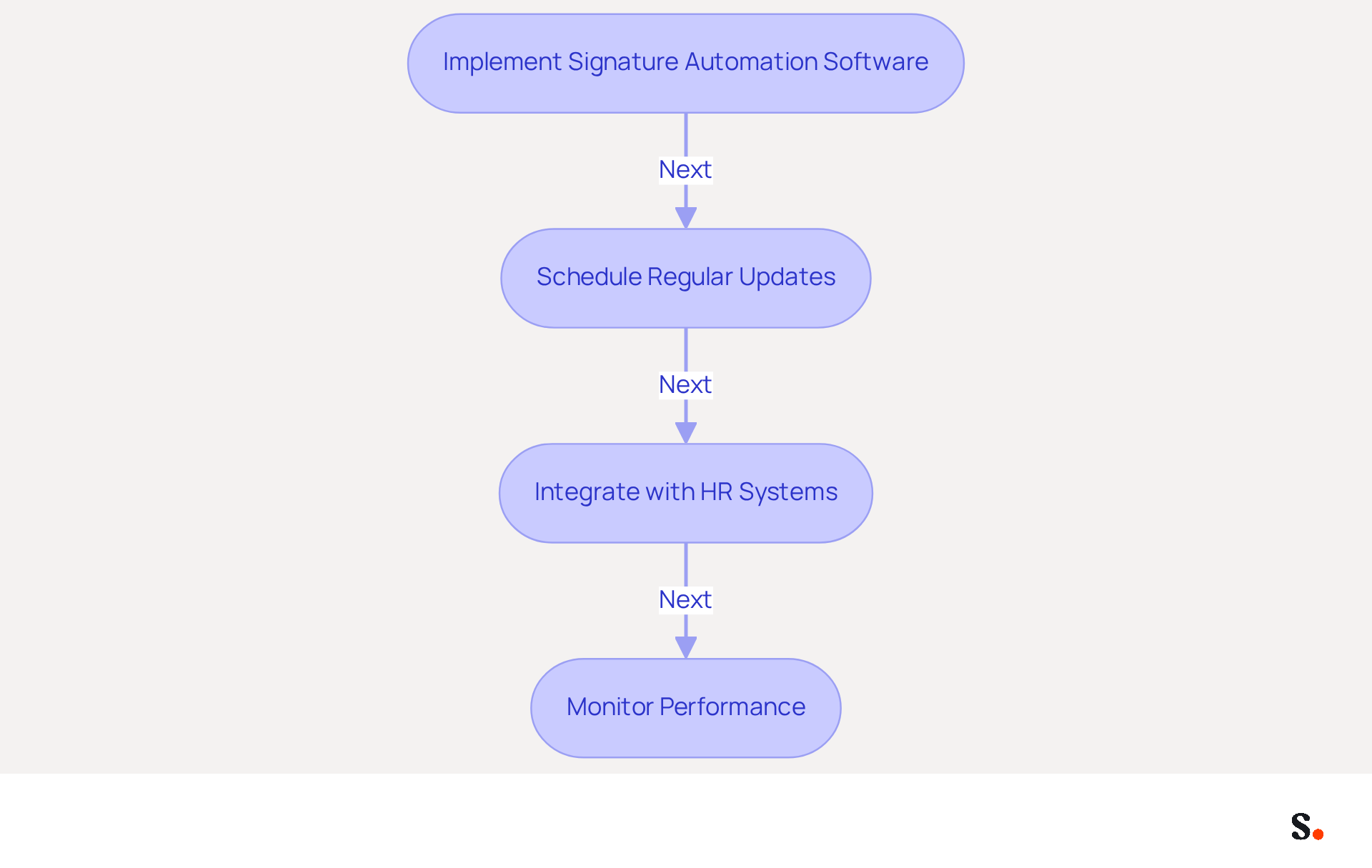
- Implement Signature Automation Software: Utilize dedicated management software like Scribe that automates the creation, deployment, and updating of identifiers throughout the organization. This approach helps avoid costly errors and ensures your brand stays consistent, as 80% of participants think a branded digital identifier is essential for a company's identity. Scribe's SOC 2 Type II compliance guarantees the safety of your data.
- Schedule Regular Updates: Set up regular updates for your email signatures, particularly when there are changes in branding or employee information. With Scribe, all modifications made in your connected HR systems or business phone systems will be automatically reflected in your email footers, ensuring that all footers remain current without manual intervention.
- Integrate with HR Systems: Connect Scribe with HR systems to automatically update sign-offs based on employee data. This integration ensures that endorsements reflect the most precise information, minimizing the risk of outdated contact details and enhancing professionalism. Additionally, Scribe offers one-click synchronization, making it easy to manage updates.
- Monitor Performance: Utilize the analytics features within Scribe to track the performance of digital identifiers. By analyzing metrics such as click-through rates and engagement, entities can refine their strategies and enhance overall communication effectiveness. Research shows that branded digital identifiers can result in a 15% rise in click-through rates to company websites.
By adopting these practices, entities can streamline their communication management processes, enhance operational efficiency, and maintain a consistent brand image across all interactions. Inconsistent use of an exchange server email signature can undermine a company's credibility and hinder effective communication.
Monitor and Analyze Signature Performance for Continuous Improvement
To maximize the impact of email signatures, organizations must adopt a systematic approach to monitoring and analysis that includes the following best practices:
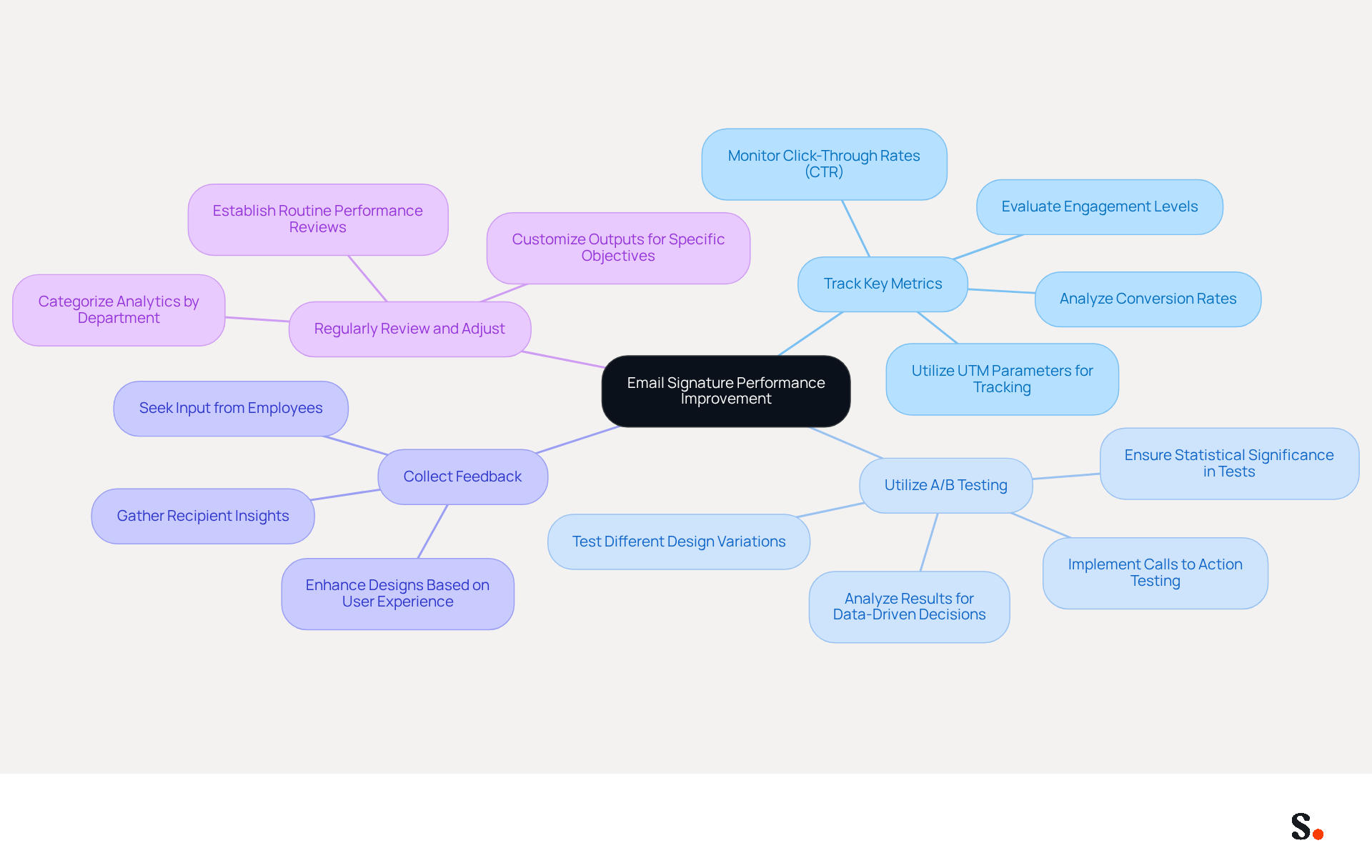
- Track Key Metrics: It is essential to identify and monitor key performance indicators (KPIs) such as click-through rates (CTR), conversion rates, and engagement levels associated with digital identifiers. For example, the average CTR for B2B marketing communications usually varies from 2% to 3%, while effective message footers can achieve click rates surpassing 10% for targeted audiences. These metrics provide clear insights into how effectively digital identifiers function as marketing tools.
- Utilize A/B Testing: Implementing A/B testing on various design variations or elements is crucial for determining which versions yield better performance. A disciplined A/B testing program for signatures can boost CTR by 2 to 3 times without extra media costs. Testing various elements, such as calls to action or banner placements, enables organizations to make data-driven choices regarding updates.
- Collect Feedback: Actively seeking input from employees and recipients regarding the digital identifiers can reveal valuable insights for enhancement. Comprehending user experience aids in enhancing designs and ensures that elements resonate with the target audience.
- Regularly Review and Adjust: Establish a routine for examining email footer performance data. Without regular evaluation, organizations risk missing out on key opportunities for improvement. For instance, organizations that categorize their analytics by department can customize their outputs to achieve specific objectives, significantly enhancing their effectiveness.
By prioritizing these strategies, organizations can ensure their email signatures remain powerful tools in their marketing arsenal.
Conclusion
Effective email signature management is essential for organizations striving to uphold brand consistency and professionalism in their communications. Implementing a cohesive branding strategy and using advanced technical solutions can significantly improve the effectiveness of email signatures. These practices build trust with recipients and strengthen the brand's presence online.
Key insights from the article highlight the importance of:
- Developing on-brand templates
- Standardizing signature elements
- Integrating with existing email platforms
Automation through tools like Scribe streamlines the management process, ensuring that signatures are always up to date and reflective of the latest branding changes. Additionally, monitoring key performance metrics allows organizations to refine their strategies and maximize the impact of their email signatures as marketing tools.
In today's competitive market, managing email signatures effectively can boost engagement and foster brand loyalty. Organizations should adopt these best practices to improve their communication and maximize the impact of their email signatures in marketing. Embracing these strategies will ensure that every email sent reinforces the brand's identity and professionalism, ultimately driving better results and fostering lasting relationships with clients and partners.
Frequently Asked Questions
What is the importance of establishing a consistent branding strategy for email signatures?
A consistent branding strategy for email signatures is crucial as it helps align messages visually with the brand identity, which is essential for building trust with recipients.
What are the key steps to develop an effective branding strategy for email signatures?
The key steps include developing on-brand templates, standardizing signature elements, implementing brand guidelines, and regularly updating templates.
How can on-brand templates enhance email communication?
On-brand templates that incorporate the Scribe logo, colors, and fonts ensure that every message aligns visually with the brand identity, which is important for establishing trust.
What elements should be standardized in email signatures?
Essential elements to standardize include employee name, title, contact information, and legal disclaimers to maintain professionalism and clarity.
What impact does consistent branding have on response rates?
Organizations with uniform branding in their email signatures experience a 22% rise in response rates.
Why are brand guidelines important for employees?
Brand guidelines provide clear instructions on how to use contact information, including formatting and font sizes, which helps increase trust among recipients.
How often should email signature templates be updated?
Email signature templates should be regularly updated to reflect any changes in branding, such as logos, taglines, or contact information, to maintain brand integrity.
What are the consequences of neglecting a consistent branding strategy for email signatures?
Neglecting these practices can undermine an organization's ability to project a trustworthy and professional image, potentially affecting customer loyalty and trust.
List of Sources
- Establish a Consistent Branding Strategy for Email Signatures
- The impact of email signatures on your branding (https://signitic.com/en/resources/the-impact-of-email-signatures-on-your-branding)
- Why Email Signatures Must Be In Your 2026 Marketing Plan | Rocketseed (https://rocketseed.com/blog/what-are-the-biggest-email-trends-for-2026)
- Why Are Email Signatures Key to Brand Awareness? | QuickMail (https://quickmail.com/role-of-email-signatures-in-brand-awareness)
- Research Recap: Branded Email Signatures Increase Company Recognition, Trust - Demand Gen Report (https://demandgenreport.com/industry-news/research-recap-branded-email-signatures-increase-company-recognition-trust/47252)
- Master Corporate Email Signature Management for Brand Consistency (https://scribe-mail.com/en-US/blog/master-corporate-email-signature-management-for-brand-consistency)
- Implement Effective Technical Solutions for Signature Management
- Scribe vs. Competitors: Best Email Signature Management Tools Compared (https://scribe-mail.com/en-US/blog/scribe-vs-competitors-best-email-signature-management-tools-compared)
- Best Email Signature Generators for Teams in 2026 (https://syncsignature.com/blog/best-email-signature-generators-for-teams)
- Email signature statistics: Why every business should optimize their email signatures — Stripo.email (https://stripo.email/blog/email-signature-statistics-why-every-business-should-optimize-their-email-signatures)
- 40+ Email Signature Statistics for 2026 (Data + Insights) (https://wavecnct.com/blogs/email-signature-statistics)
- "Email Signature Trends for 2026: What's In, What's Out" | Crossware posted on the topic | LinkedIn (https://linkedin.com/posts/crossware-ltd_new-year-new-trends-even-for-your-email-activity-7394554686046908416-vD_O)
- Leverage Automation Tools for Streamlined Signature Management
- 40+ Email Signature Statistics for 2026 (Data + Insights) (https://wavecnct.com/blogs/email-signature-statistics)
- Automating Email Signatures: How IT Teams Streamline Processes & Reduce Risk (https://exclaimer.com/blog/streamlining-it-processes-automated-email-signatures)
- Why Automated Email Signatures Are a Smart Move for Your Business (https://aabyss.uk/blog/why-automated-email-signatures-are-a-smart-move-for-your-business)
- 2026 Email Signature Trends: Centralized Control & Automation | SIGNandGO posted on the topic | LinkedIn (https://linkedin.com/posts/signngo_email-signature-trends-to-watch-in-2026-activity-7401523471786217473-zAVL)
- Email signature statistics: Why every business should optimize their email signatures — Stripo.email (https://stripo.email/blog/email-signature-statistics-why-every-business-should-optimize-their-email-signatures)
- Monitor and Analyze Signature Performance for Continuous Improvement
- The 5 key metrics to analyze your email signatures (https://signitic.com/en/resources/the-5-key-metrics-to-analyze-your-email-signatures)
- Email Signature A/B Testing: Methodology, UTM and GA4 Guide (https://signitic.com/en/resources/a-b-testing-your-email-signature-methodology-and-kpis)
- Email Metrics That Matter: What to Measure in 2026 (https://litmus.com/blog/email-metrics-that-matter-what-to-measure)
- E-Mail-Marketing-Benchmarks und Branchen-Statistiken | Mailchimp (https://mailchimp.com/resources/email-marketing-benchmarks)
- 2026 Email Signature Trends: Centralized Control & Automation | SIGNandGO posted on the topic | LinkedIn (https://linkedin.com/posts/signngo_email-signature-trends-to-watch-in-2026-activity-7401523471786217473-zAVL)
Get started with Scribe
Manage signatures across your whole team
Free 14-day trial — no credit card.