Best Practices for a Chief Executive Officer Signature That Impresses
In corporate communication, a CEO's email signature serves as a critical branding element that can shape perceptions and drive engagement. Creating a standout
Sophie Grant
Email Signature Specialist, Scribe

Introduction
In corporate communication, a CEO's email signature serves as a critical branding element that can shape perceptions and drive engagement. Creating a standout email signature for a CEO means grasping key elements that showcase professionalism, clarity, and brand consistency. Yet, many executives miss critical pitfalls that can weaken their authority and tarnish the organization's image.
How can CEOs ensure their email signatures not only reflect their professionalism but also enhance their brand's identity and effectiveness in every correspondence?
Identify Essential Elements of a CEO Email Signature
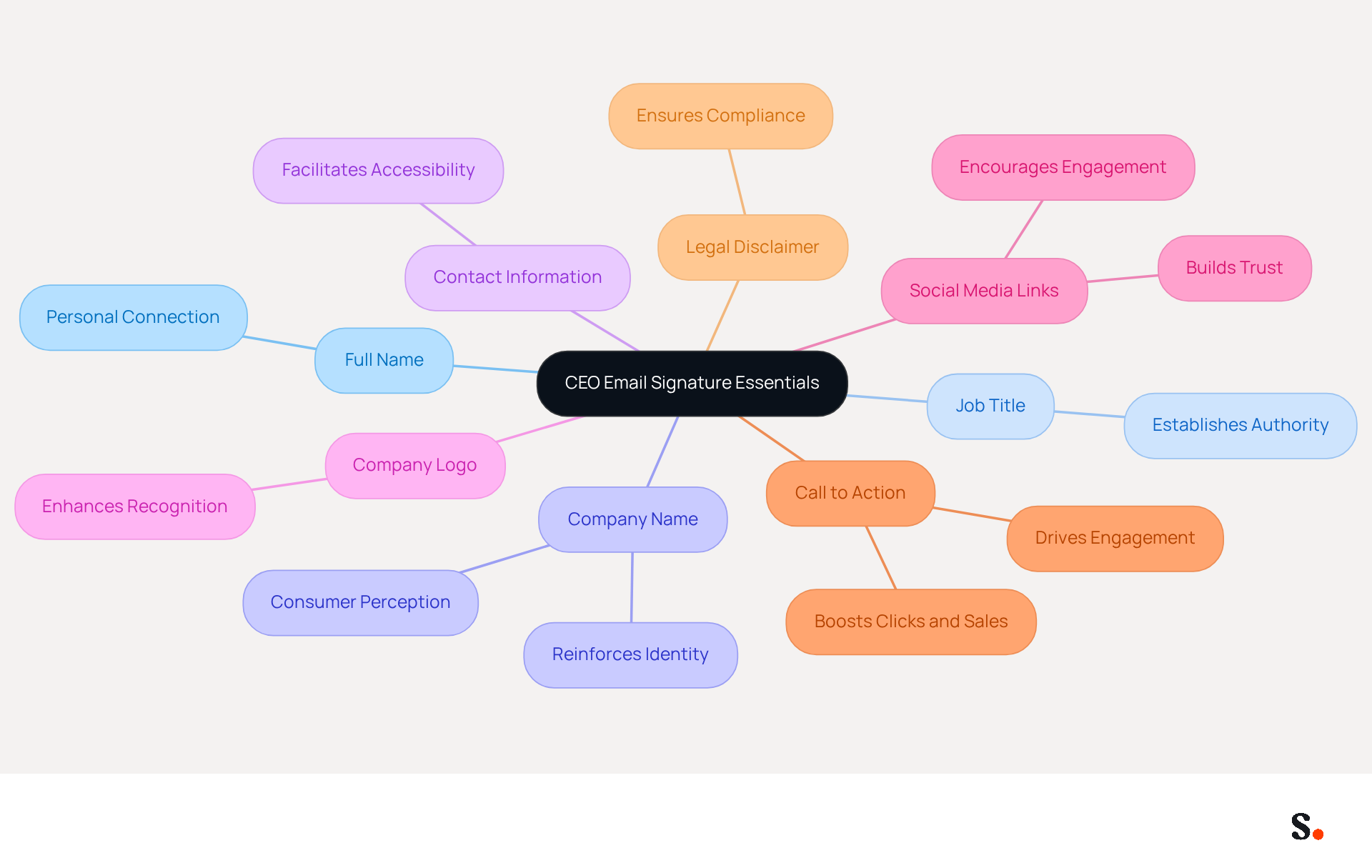
In today's competitive business landscape, the chief executive officer signature serves as a critical touchpoint for establishing professionalism and brand consistency. A well-structured email signature should include the following essential elements:
- Full Name: Clearly state the CEO's full name to personalize the communication and foster a connection with recipients.
- Job Title: Include the official title (e.g., Chief Executive Officer) to establish authority and context.
- Company Name: Clearly mention the company name to reinforce identity, as 42% of consumers feel negatively toward businesses lacking a signature.
- Contact Information: Provide a direct phone number and contact address for easy communication, facilitating accessibility for stakeholders.
- Company Logo: Incorporate the company logo to enhance recognition, contributing to a polished appearance and professional image.
- Social Media Links: Include links to professional social media profiles (e.g., LinkedIn) to encourage networking and engagement, as 76% of respondents believe that branded communication elements build trust in the sender.
- Call to Action: Consider adding a call to action, such as a link to the company website or a recent blog post, to drive engagement. Clear CTAs with action-oriented language can boost clicks by 371% and sales by 1617%.
- Legal Disclaimer: If necessary, include a legal disclaimer to comply with regulations, ensuring that the organization adheres to legal and compliance considerations.
Without a well-structured email signature, CEOs risk losing credibility and connection with their audience. This oversight can lead to missed opportunities for engagement and brand recognition. Ultimately, a well-crafted email signature that features the chief executive officer signature not only reflects the CEO's professionalism but also strengthens the organization's brand identity in every correspondence. Regular audits of signatures help maintain compliance with branding guidelines and ensure that all elements are up-to-date and relevant.
Emphasize Minimalist Design for Clarity and Impact
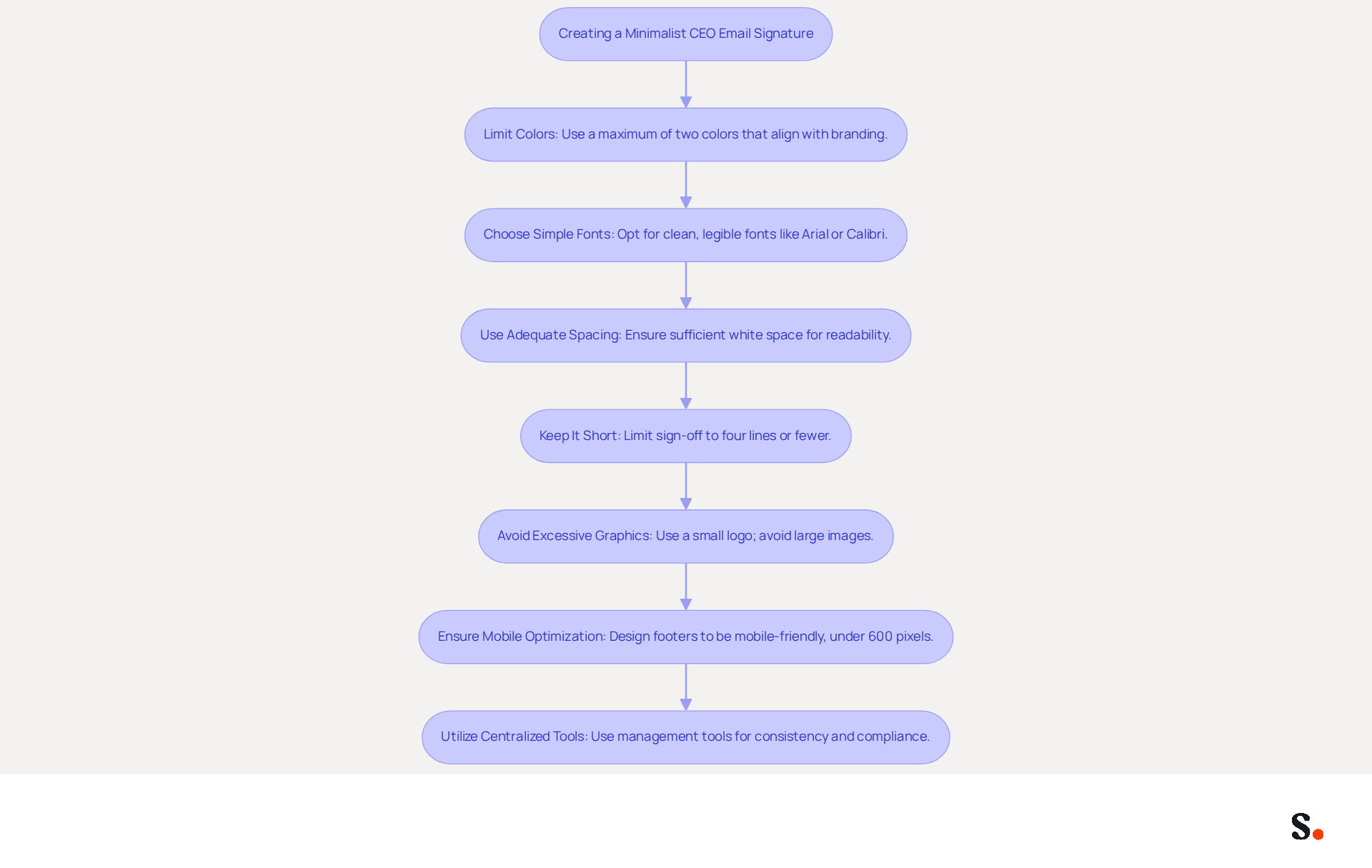
Creating a minimalist CEO email signature is essential for projecting professionalism and clarity in communications:
- Limit Colors: Utilize a maximum of two colors that align with the company’s branding to maintain a professional appearance. This approach reinforces brand recognition and trust.
- Choose Simple Fonts: Opt for clean, legible fonts that enhance readability. Avoid overly decorative fonts that can distract from the message; standard fonts like Arial or Calibri are recommended for consistency across devices.
- Use Adequate Spacing: Ensure there is sufficient white space around elements to prevent the document from feeling cramped. A well-structured layout improves readability and visual hierarchy, making it easier for recipients to engage with the content.
- Keep It Short: Limit the sign-off to four lines or fewer to convey essential information without overwhelming the recipient. Studies indicate that concise names lead to better click-through rates for calls to action, underscoring the importance of brevity.
- Avoid Excessive Graphics: Use graphics sparingly; a small logo is sufficient. Large images can hinder message clarity and deliverability, potentially triggering spam filters.
- Ensure Mobile Optimization: Design email footers to be mobile-friendly, keeping the total width under 600 pixels to ensure smooth rendering on mobile devices. This aligns with best practices and enhances accessibility.
- Utilize Centralized Tools: Consider using centralized management tools to maintain consistency across messaging formats. To facilitate seamless synchronization, grant permission to Scribe to connect with your provider, ensuring you are a Super Admin to provide these permissions. With Scribe, you can automate the synchronization of your teammates' endorsements directly from your business phone system, ensuring that all endorsements reflect the most recent branding and compliance standards. Scribe's SOC 2 Type II compliance ensures that your data is protected, enabling streamlined one-click synchronization and automated management of digital signatures.
Ultimately, a well-designed chief executive officer signature not only reflects your brand but also enhances the effectiveness of your communications. Minimalist designs not only enhance consistency but also align with contemporary communication trends, ensuring that every message sent reflects a cohesive and professional image.
Implement Centralized Control for Brand Consistency
To maintain a cohesive brand image, organizations must implement effective strategies for managing the chief executive officer signature in emails.
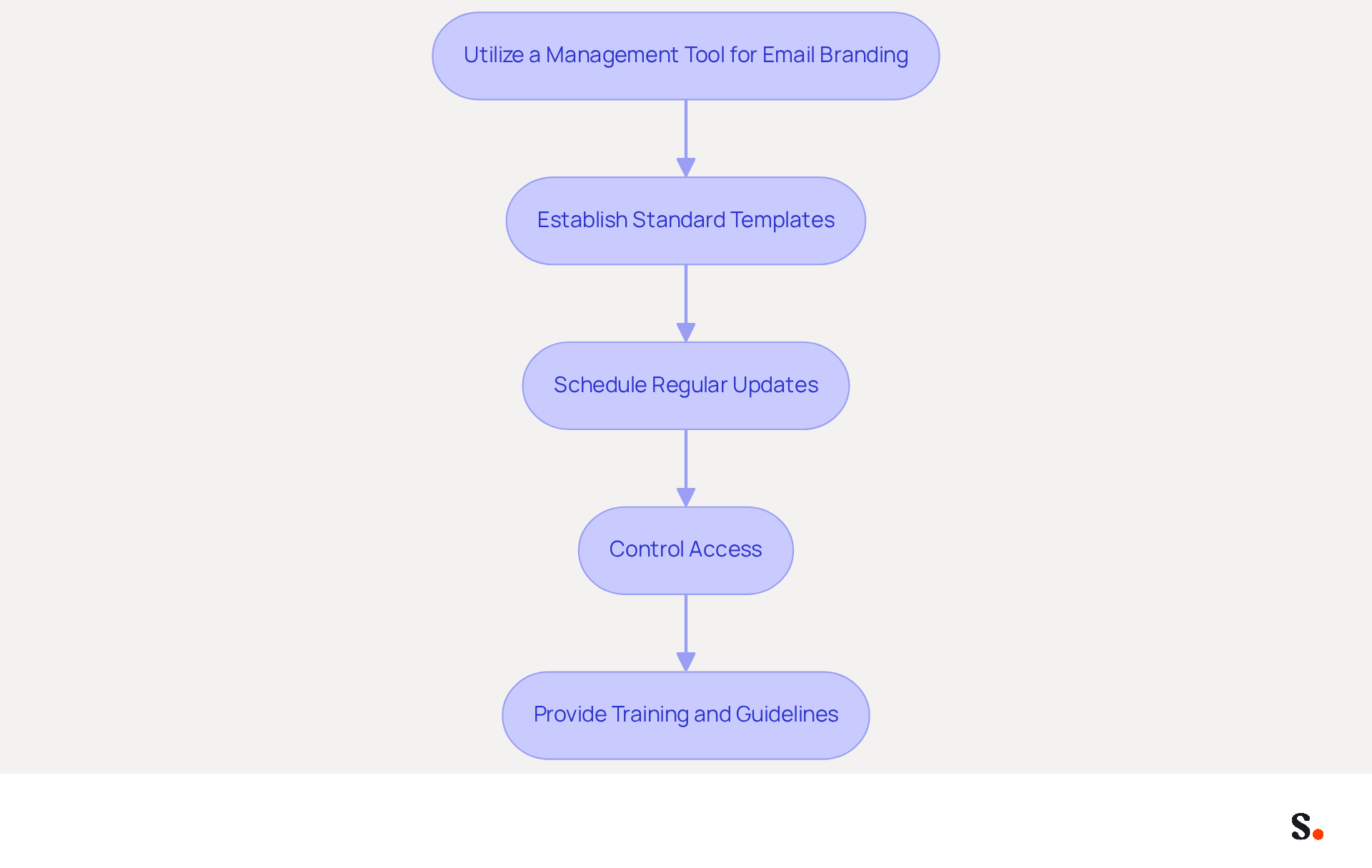
- Utilize a Management Tool for Email Branding: Implement Scribe for centralized management of email identities across the organization, allowing for streamlined updates and consistent branding.
- Establish Standard Templates: Develop standardized templates that all employees must adhere to, ensuring uniformity in design and content across all communications.
- Schedule Regular Updates: Make it a point to refresh template designs regularly to keep up with any changes in branding or contact information, maintaining relevance and accuracy.
- Control Access: Limit editing permissions to designated individuals, such as marketing or IT teams, to prevent unauthorized changes that could compromise integrity.
- Provide Training and Guidelines: Educate employees on the importance of using standardized marks and provide clear instructions on implementation.
Centralizing control over digital identifiers not only promotes a unified brand image but also improves professionalism in all communications. Statistics indicate that consistent messaging formats can result in a 22% boost in response rates, emphasizing the importance of this method. Without these measures, organizations risk diluting their brand identity and losing valuable engagement opportunities.
Avoid Common Mistakes in CEO Email Signatures
To ensure effective communication, CEOs must avoid common pitfalls in their email signatures that can undermine professionalism:
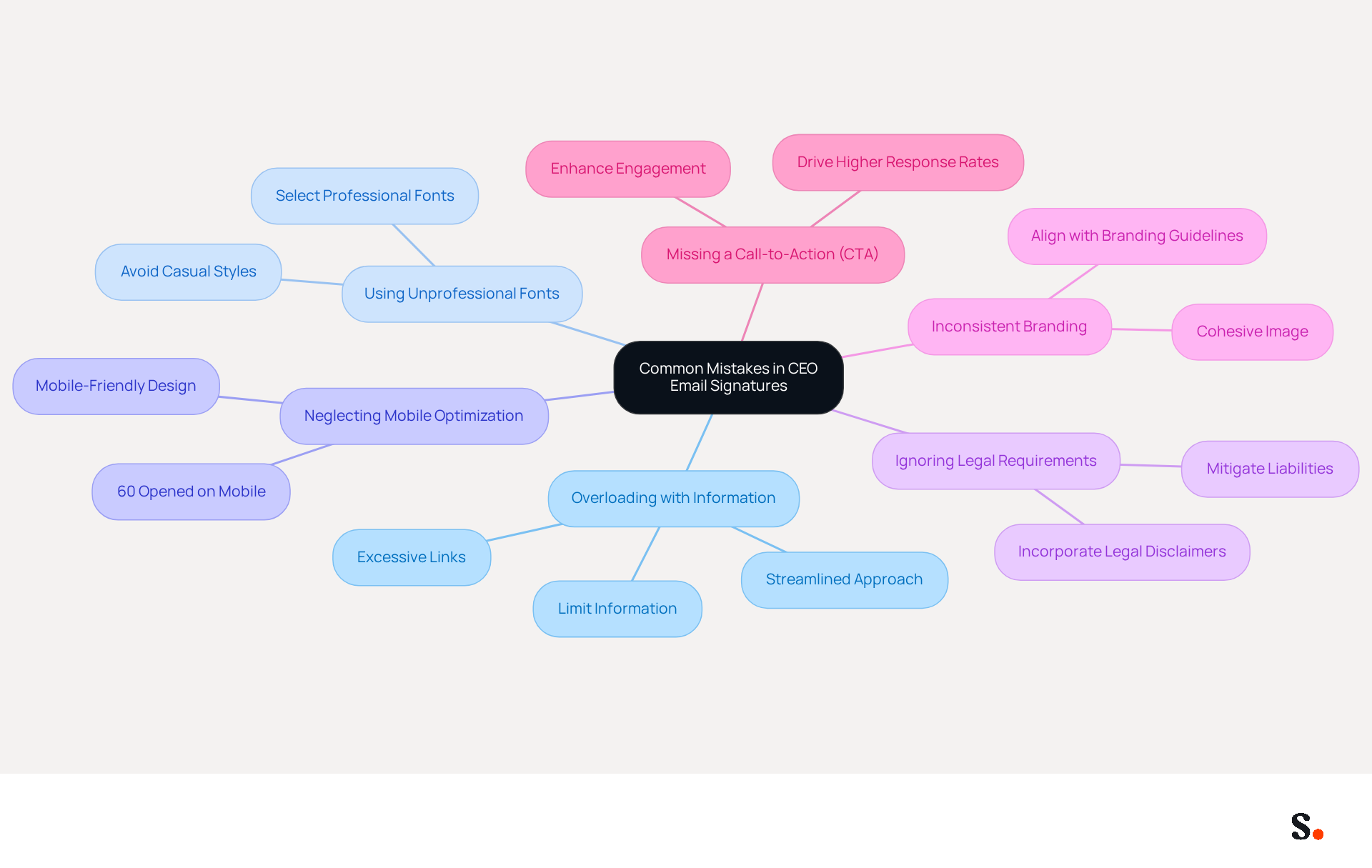
- Overloading with Information: Limit the amount of information included; focus on essential elements to maintain clarity and prevent overwhelming recipients. Richard Meryn emphasizes that excessive links can lead to a chaotic appearance; therefore, it is essential to maintain a streamlined approach.
- Using Unprofessional Fonts: Select professional fonts that align with the company’s branding. Avoid casual or decorative styles that may detract from the professionalism of the brand.
- Neglecting Mobile Optimization: Ensure the design is created to be mobile-friendly, as 60% of business emails are opened on mobile devices. This guarantees proper display across all platforms.
- Ignoring Legal Requirements: Incorporate necessary legal disclaimers to comply with regulations and mitigate potential liabilities, reinforcing professionalism. Neglecting legal disclaimers can expose the company to potential liabilities and damage its reputation.
- Inconsistent Branding: Align the identifier with Scribe’s branding guidelines, including colors, logos, and messaging, to maintain a cohesive image. Consistency across all executive communications is crucial for reinforcing the identity of Scribe. Utilizing Scribe's integration with Google Workspace guarantees that any updates to team members' information are automatically reflected in their identifiers, maintaining consistency of the image effortlessly. Scribe also adheres to SOC 2 Type II compliance and GDPR/CCPA regulations, ensuring secure data handling.
- Missing a Call-to-Action (CTA): Including a strategic CTA is essential, as it can significantly enhance engagement and lead generation. A well-placed CTA can drive higher response rates and facilitate connections with stakeholders.
By avoiding these typical errors, a CEO's contact information can effectively convey professionalism and reinforce the company's image, ultimately enhancing trust and engagement with stakeholders. A recent redesign of a sales team's contact information led to the acquisition of 312 new CRM contacts within just 30 days, illustrating the effectiveness of a well-crafted format. Additionally, with Scribe's automated synchronization capabilities, such as syncing with Aircall, any changes made in configurations will be reflected in email signatures, ensuring brand consistency and saving valuable time. Ultimately, a well-structured email signature not only reflects professionalism but also fosters trust and engagement with stakeholders.
Conclusion
In today's competitive landscape, a CEO email signature is essential for establishing credibility and trust in professional communications. By incorporating key elements such as the CEO's full name, job title, company name, and contact information, organizations can create a signature that conveys authority while enhancing accessibility for stakeholders. Clarity and minimalist design are crucial, as they directly influence how effectively the signature conveys professionalism.
Key insights from this article highlight the necessity of maintaining brand consistency through centralized control and standardized templates. Utilizing tools like Scribe allows organizations to manage email signatures efficiently, ensuring that all communications reflect the latest branding and compliance standards. Avoiding common pitfalls, such as overloading signatures with information or neglecting mobile optimization, is crucial for maintaining a polished and professional image.
Ultimately, a well-managed CEO email signature is a strategic asset for enhancing engagement and reinforcing brand recognition. By implementing best practices and leveraging centralized management solutions, organizations can elevate their communication strategies, drive engagement, and solidify their brand presence. By prioritizing effective email signature management, organizations can not only enhance their professional image but also gain a competitive edge in their industry.
Frequently Asked Questions
What is the purpose of a CEO email signature?
A CEO email signature serves as a critical touchpoint for establishing professionalism and brand consistency in communication.
What essential elements should be included in a CEO email signature?
A CEO email signature should include the following elements: full name, job title, company name, contact information, company logo, social media links, a call to action, and a legal disclaimer if necessary.
Why is it important to include the CEO's full name in the email signature?
Including the CEO's full name personalizes the communication and fosters a connection with recipients.
How does including the company name in the email signature benefit the organization?
Mentioning the company name reinforces identity and helps avoid negative perceptions, as 42% of consumers feel negatively toward businesses lacking a signature.
What contact information should be provided in a CEO email signature?
The email signature should provide a direct phone number and contact address to facilitate easy communication for stakeholders.
Why is it beneficial to include a company logo in the email signature?
Incorporating the company logo enhances recognition and contributes to a polished appearance and professional image.
How can social media links in the email signature impact engagement?
Including links to professional social media profiles encourages networking and engagement, as 76% of respondents believe that branded communication elements build trust in the sender.
What is the significance of adding a call to action in the email signature?
A call to action, such as a link to the company website or a recent blog post, can drive engagement and significantly boost clicks and sales.
When should a legal disclaimer be included in the email signature?
A legal disclaimer should be included if necessary to comply with regulations and ensure adherence to legal and compliance considerations.
What are the risks of not having a well-structured CEO email signature?
Without a well-structured email signature, CEOs risk losing credibility and connection with their audience, leading to missed opportunities for engagement and brand recognition. Regular audits help maintain compliance with branding guidelines.
List of Sources
- Identify Essential Elements of a CEO Email Signature
- Email signature statistics: Why every business should optimize their email signatures — Stripo.email (https://stripo.email/blog/email-signature-statistics-why-every-business-should-optimize-their-email-signatures)
- Best Practices for a Professional Formal Email Signature (https://scribe-mail.com/en-US/blog/best-practices-for-a-professional-formal-email-signature)
- Why email signature for CEO matters and how to create the best one - MySignature (https://mysignature.io/professional-email-signatures/ceo)
- CEO Email Signature: Executive Templates & Personal Branding Best Practices (https://syncsignature.com/blog/ceo-email-signature)
- X CEO Email Signature Examples & Best Practices [2026] (https://gsignature.com/blog-post/ceo-email-signature-examples-best-practices-for-2026)
- Emphasize Minimalist Design for Clarity and Impact
- Email Signature Trends 2026: What Designers Are Actually Using (https://markaplugin.com/blog/email-signature-trends-2026)
- 20 Email Signature Design Ideas for Every Industry (https://linkedin.com/pulse/20-email-signature-design-ideas-every-industry-bulksignature-mtaje)
- Email Signature Design Trends in 2026: What Works and What to Drop (https://bulksignature.com/blog/email-signature-design-trends)
- 4 Best Practices for an Effective Email Signature Minimalist Design (https://scribe-mail.com/en-US/blog/4-best-practices-for-an-effective-email-signature-minimalist-design)
- "Email Signature Trends for 2026: What's In, What's Out" | Crossware posted on the topic | LinkedIn (https://linkedin.com/posts/crossware-ltd_new-year-new-trends-even-for-your-email-activity-7394554686046908416-vD_O)
- Implement Centralized Control for Brand Consistency
- Research Recap: Branded Email Signatures Increase Company Recognition, Trust - Demand Gen Report (https://demandgenreport.com/industry-news/research-recap-branded-email-signatures-increase-company-recognition-trust/47252)
- The impact of email signatures on your branding (https://signitic.com/en/resources/the-impact-of-email-signatures-on-your-branding)
- 2026 Email Signature Trends: Centralized Control & Automation | SIGNandGO posted on the topic | LinkedIn (https://linkedin.com/posts/signngo_email-signature-trends-to-watch-in-2026-activity-7401523471786217473-zAVL)
- Best Email Signature Management Software: Top 12 Tools (2026)
- NEWOLDSTAMP (https://newoldstamp.com/blog/email-signature-software)
- Avoid Common Mistakes in CEO Email Signatures
- Email Signature Best Practices for 2026 (+ 15 Pro Examples) (https://wavecnct.com/blogs/email-signature-best-practices-2026)
- CEO Email Signature: Executive Templates & Personal Branding Best Practices (https://syncsignature.com/blog/ceo-email-signature)
- 5 Common Mistakes You’re Making With Your Email Signature (https://fastcompany.com/3025208/5-common-mistakes-youre-making-with-your-email-signature)
- Mastering the Art of the CEO Email Signature: A Guide to the Do's and Don'ts (https://industryleadersmagazine.com/creating-an-impactful-ceo-email-signature-the-dos-and-donts)
Get started with Scribe
Manage signatures across your whole team
Free 14-day trial — no credit card.