Best Practices for a Standard Email Signature That Boosts Marketing ROI
While many view email signatures as mere formalities, they hold untapped potential for enhancing brand visibility and engagement. By implementing best
Sophie Grant
Email Signature Specialist, Scribe

Introduction
While many view email signatures as mere formalities, they hold untapped potential for enhancing brand visibility and engagement. By implementing best practices in design and content, organizations can transform their email signatures into strategic assets that drive measurable marketing ROI. Yet, many organizations find it challenging to keep their brand consistent and make the most of their signatures.
What essential components should be included, and how can automation streamline the management process to ensure every email sent reinforces the brand's identity? Without a strategic approach to email signature management, organizations risk undermining their brand identity and missing out on valuable marketing opportunities.
Define Essential Components of an Email Signature
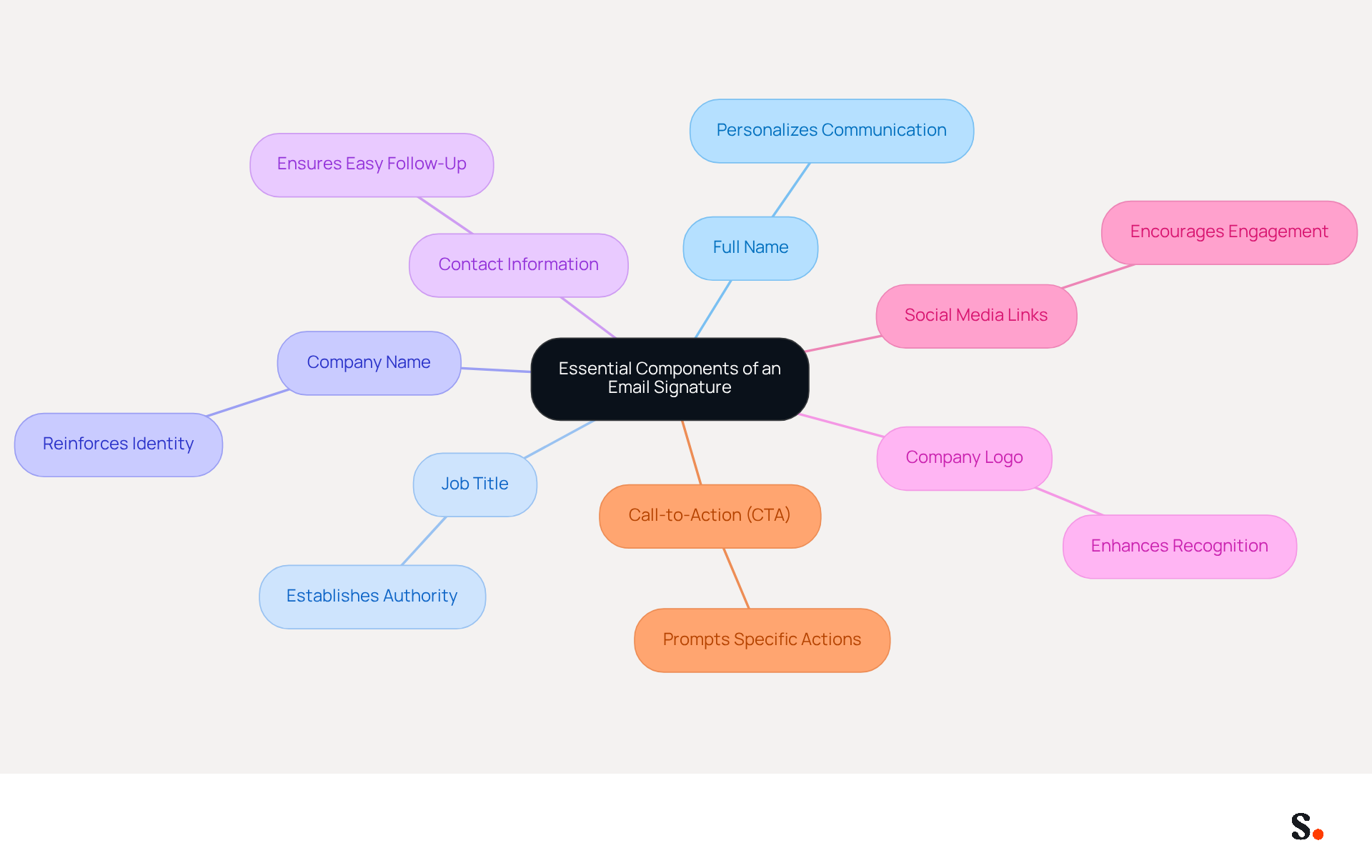
In 2026, an effective email signature must integrate key components to enhance communication and engagement:
- Full Name: Clearly stating the sender's name personalizes communication, fostering a connection with the recipient.
- Job Title: Including the sender's position establishes authority and provides context, helping recipients understand the sender's role.
- Company Name: Reinforcing identity, the company name aids in recognition and builds trust with recipients.
- Contact Information: Providing a phone number and email address ensures easy follow-up, facilitating communication.
- Company Logo: A visual element that enhances recognition, making the signature more memorable.
- Social Media Links: Including links to professional social media profiles encourages further engagement and interaction with the brand.
- Call-to-Action (CTA): A brief, compelling statement that prompts recipients to take specific actions, such as visiting a website or signing up for a newsletter, can enhance engagement rates.
Research shows that well-optimized email signatures can boost engagement by as much as 40% when they include strategic CTAs. For instance, a tech firm experienced a 180% rise in webinar registrations after refreshing their contact details with registration links. By incorporating these elements, businesses can create a standard email signature that conveys necessary information while effectively promoting their identity.
Scribe makes it easy to manage your email signatures, keeping your branding consistent and reducing errors. Each modification made in your Aircall configuration is automatically reflected in your Scribe profiles, ensuring that teammates' information is always current without requiring any action from them. This automated synchronization saves time and simplifies the process for non-technical users. Additionally, Scribe's SOC 2 Type II compliance guarantees that your data is handled securely. By leveraging Scribe's features, organizations can ensure their email signatures not only convey essential information but also drive measurable marketing success.
Ensure Brand Consistency in Design and Content
To effectively maintain brand identity in email signatures, organizations must adopt strategic best practices:
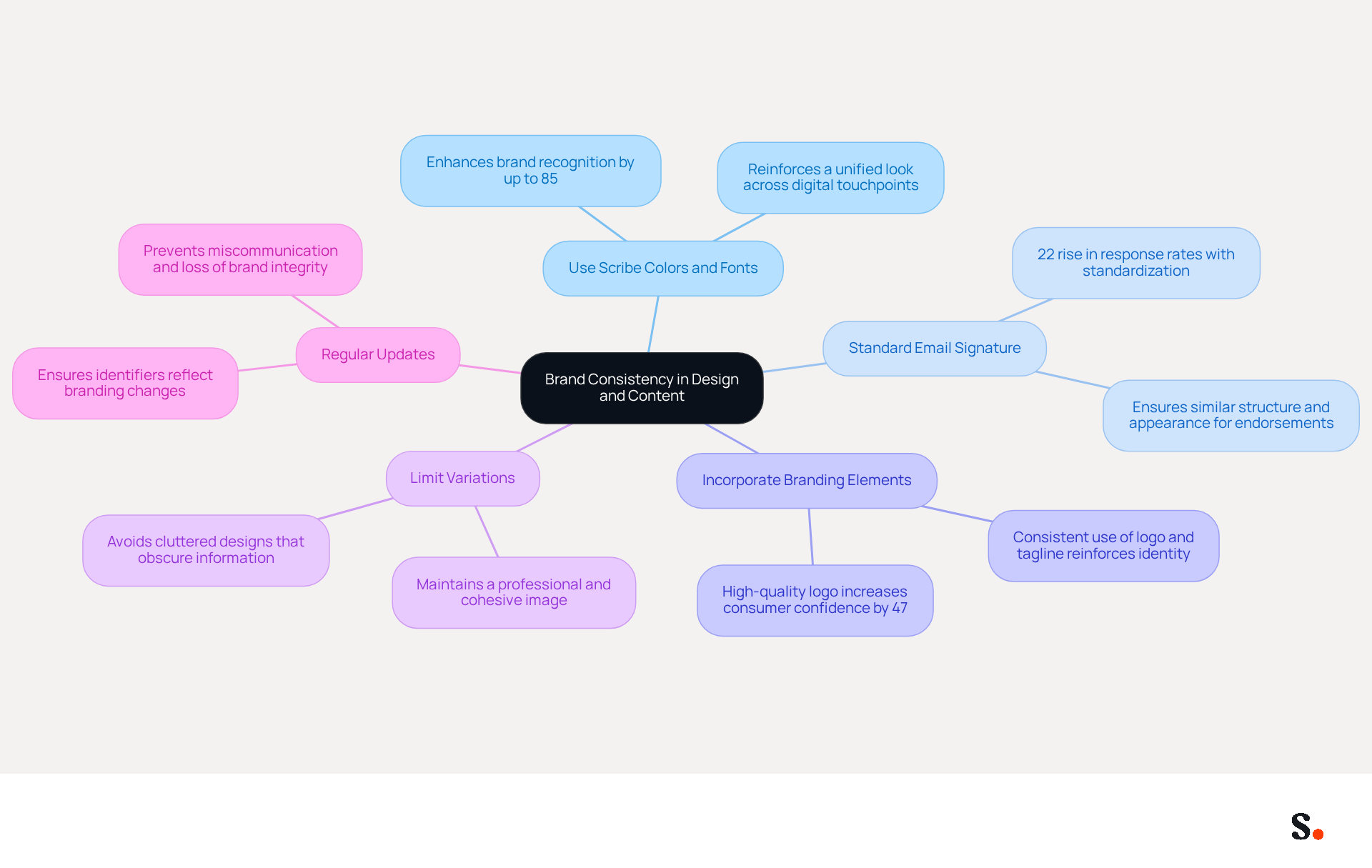
- Use Scribe Colors and Fonts: Adhering to Scribe's established color palette and font styles can enhance brand recognition by up to 85%. Consistent branding across digital touchpoints reinforces a unified look that enhances recognition.
- Creating a standard email signature for all employees ensures that endorsements have a similar structure and appearance. Organizations that use a standard email signature for their correspondence identifiers can observe a 22% rise in response rates, underscoring the importance of uniformity.
- Incorporate Branding Elements: Consistently using the Scribe logo and tagline in the standard email signature reinforces brand identity. Including a high-quality logo can increase consumer confidence by 47%, making it a vital component of effective email communication.
- Limit Variations: Avoid excessive personalization in sign-offs to maintain a professional and cohesive image. Cluttered designs can obscure important information, making it harder for recipients to engage, which is vital for ensuring that recipients engage with the message.
- Regular Updates: It's essential to periodically review and update identifiers to reflect any changes in branding or company information. Failure to update identifiers can lead to miscommunication and a loss of brand integrity.
Implementing these strategies will help ensure that every message sent with a standard email signature reflects the brand's identity, thereby enhancing recognition and trust. Without a cohesive approach to email signatures, organizations risk diminishing their brand's impact and recognition.
Leverage Automation for Efficient Signature Management
Manual updates in email signature management can drain resources and distract teams from more critical tasks. To effectively leverage automation in this area, consider the following best practices:
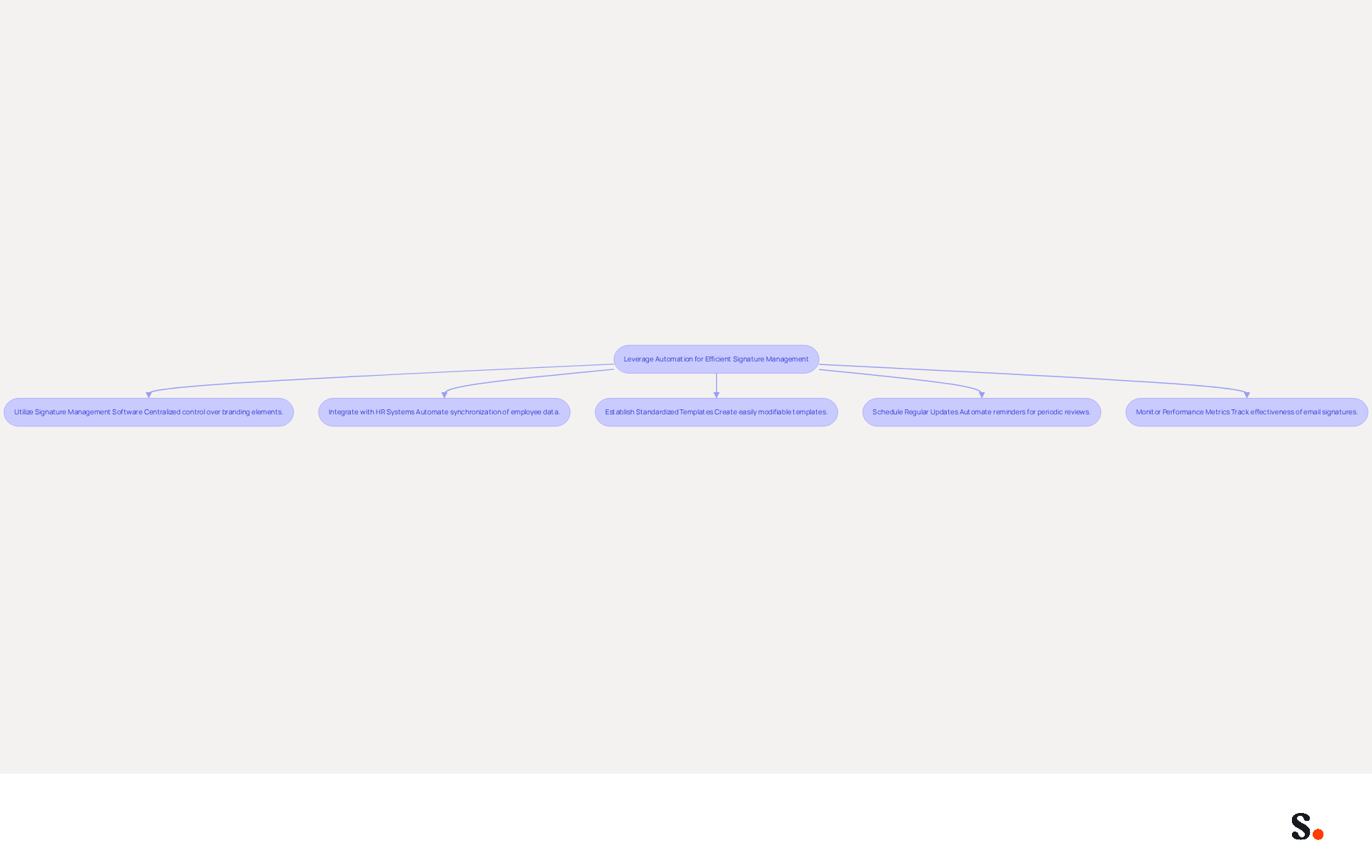
- Utilize Signature Management Software: Implement tools like Scribe that provide centralized control over branding elements. This allows for swift updates across the organization. By streamlining updates, IT teams can redirect their focus to more pressing projects.
- Integrate with HR Systems: Automate the synchronization of employee data with digital identifiers to ensure that information remains current. This integration helps maintain accuracy in job titles, contact details, and compliance disclaimers, reducing the risk of errors.
- Establish Standardized Templates: Create templates that can be easily modified for various campaigns or departments. This standardization minimizes the need for frequent manual updates and ensures brand consistency across all communications, particularly through the use of a standard email signature.
- Schedule Regular Updates: Automate reminders for periodic reviews of digital identifiers to ensure they align with branding and compliance requirements. Regular audits can help identify outdated information and maintain a professional appearance.
- Monitor Performance Metrics: Utilize analytics tools to track the effectiveness of electronic correspondence identifiers. Key metrics such as click-through statistics and engagement levels provide insights into customer interactions, allowing for data-driven adjustments to enhance performance.
Efficient management of digital identifiers not only saves time but also significantly enhances marketing effectiveness and brand perception. Research shows that branded digital identifiers can result in a 22% rise in response rates, emphasizing the significance of efficient management in optimizing marketing ROI.
Test and Optimize Email Signatures for Performance
To truly enhance the effectiveness of standard email signatures, businesses must adopt a systematic approach to testing and optimization.
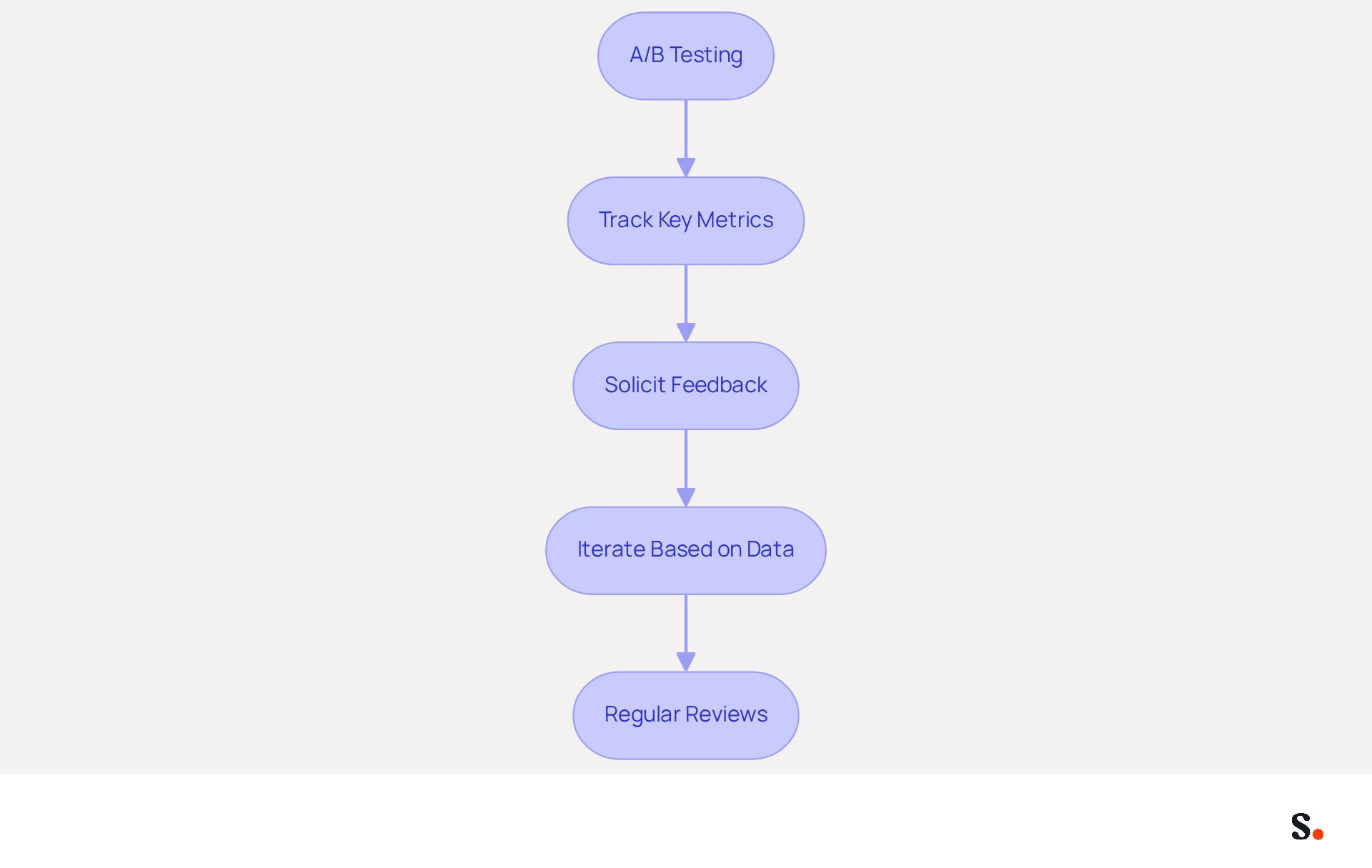
- A/B Testing: Develop two distinct versions of an email signature and distribute them to different audience segments. A/B testing often results in notable improvements. For example, one SaaS company saw a 20% boost in clicks and conversions after tweaking their design.
- Track Key Metrics: Regularly monitor essential metrics such as open rates and click-through rates. Average click-through rates for B2B marketing messages hover around 2 to 3%, but banners in the footer can achieve peaks above 12% for targeted audiences using Scribe. This data is crucial for assessing how well your digital identifiers are performing.
- Solicit Feedback: Actively gather opinions from recipients regarding their impressions of the email format. Comprehending recipient perceptions can offer valuable insights for further improvements and assist in customizing messages to audience preferences.
- Iterate Based on Data: Utilize the insights gained from testing to make informed adjustments to the design, content, and calls to action (CTAs). Regular updates are vital; refreshing digital identifiers 2 to 4 times a year keeps them relevant and aligned with your marketing goals. With Scribe, any changes made in your Google Workspace will automatically sync, saving time and ensuring brand consistency. Additionally, Scribe's SOC 2 Type II certification ensures compliance with security standards, providing peace of mind for data handling.
- Regular Reviews: Schedule periodic evaluations of digital signatures to ensure they remain relevant and effective in achieving marketing goals. This practice not only keeps the autographs fresh but also enhances their impact on overall marketing ROI. Scribe's automated synchronization with Google Workspace and Aircall means that updates are effortless, allowing marketing teams to focus on strategy rather than manual adjustments.
By prioritizing data-driven strategies, businesses can ensure their standard email signature remains a powerful tool in achieving marketing success. Remember, achieving statistical significance in A/B testing is crucial; aim for a p-value below 0.05 to ensure the reliability of your results.
Conclusion
A standard email signature is not just a formality; it is a critical tool for enhancing marketing ROI and brand communication. By integrating key components such as full names, job titles, company logos, and strategic calls-to-action, businesses can foster stronger connections with recipients while promoting their identity. Maintaining brand consistency in design and content is crucial for building recognition and trust among audiences.
Consider these best practices:
- Use automation tools like Scribe for efficient signature management
- Ensure regular updates
- Employ A/B testing to optimize performance
These strategies not only streamline the process but also enhance engagement rates. Data shows that well-optimized signatures can lead to substantial increases in response rates and conversions. By adopting these practices, organizations can ensure their email signatures serve as powerful marketing tools that align with their overall branding efforts.
Ultimately, the significance of a well-crafted email signature extends beyond mere aesthetics; it is a vital component of a cohesive marketing strategy. Organizations are encouraged to embrace these best practices and utilize tools like Scribe to maintain brand consistency, optimize performance, and ultimately drive measurable marketing ROI. By neglecting to optimize email signatures, organizations may inadvertently undermine their marketing efforts and brand integrity.
Frequently Asked Questions
What are the essential components of an effective email signature in 2026?
An effective email signature must include the following components: Full Name, Job Title, Company Name, Contact Information, Company Logo, Social Media Links, and a Call-to-Action (CTA).
Why is including a full name in an email signature important?
Including a full name personalizes communication, fostering a connection with the recipient.
How does a job title in an email signature benefit communication?
A job title establishes authority and provides context, helping recipients understand the sender's role.
What role does the company name play in an email signature?
The company name reinforces identity, aids in recognition, and builds trust with recipients.
Why is contact information necessary in an email signature?
Providing a phone number and email address ensures easy follow-up, facilitating communication.
How does a company logo enhance an email signature?
A company logo serves as a visual element that enhances recognition, making the signature more memorable.
What is the purpose of including social media links in an email signature?
Social media links encourage further engagement and interaction with the brand.
What is a Call-to-Action (CTA) in an email signature, and why is it important?
A CTA is a brief, compelling statement that prompts recipients to take specific actions, such as visiting a website or signing up for a newsletter, which can enhance engagement rates.
How can well-optimized email signatures impact engagement?
Research shows that well-optimized email signatures can boost engagement by as much as 40% when they include strategic CTAs.
How does Scribe assist in managing email signatures?
Scribe makes it easy to manage email signatures, keeping branding consistent and reducing errors, with automatic synchronization of modifications in Aircall configurations.
What compliance does Scribe offer regarding data security?
Scribe's SOC 2 Type II compliance guarantees that your data is handled securely.
List of Sources
- Define Essential Components of an Email Signature
- Email Signature Best Practices for 2026 (+ 15 Pro Examples) (https://wavecnct.com/blogs/email-signature-best-practices-2026)
- The impact of email signatures on your branding (https://signitic.com/en/resources/the-impact-of-email-signatures-on-your-branding)
- How Email Signatures Can Boost Your Marketing Efforts | Crossware365 (https://crossware365.com/blog/how-email-signatures-can-boost-your-marketing-efforts)
- Best Practices for a Correct Email Signature That Boosts Branding (https://scribe-mail.com/en-US/blog/best-practices-for-a-correct-email-signature-that-boosts-branding)
- Ensure Brand Consistency in Design and Content
- Best Practices for a Correct Email Signature That Boosts Branding (https://scribe-mail.com/en-US/blog/best-practices-for-a-correct-email-signature-that-boosts-branding)
- The impact of email signatures on your branding (https://signitic.com/en/resources/the-impact-of-email-signatures-on-your-branding)
- Why Are Email Signatures Key to Brand Awareness? | QuickMail (https://quickmail.com/role-of-email-signatures-in-brand-awareness)
- Email Signature Branding: Consistency and Impact | Crossware365 (https://crossware365.com/blog/mastering-email-signature-branding-market-presence)
- Leverage Automation for Efficient Signature Management
- WiseStamp Launches the Industry's First AI-Powered Email Signature Platform, Eliminating the Gap Between Brand Design and Instant Deployment (https://prnewswire.com/news-releases/wisestamp-launches-the-industrys-first-ai-powered-email-signature-platform-eliminating-the-gap-between-brand-design-and-instant-deployment-302774232.html)
- Automating Email Signatures: How IT Teams Streamline Processes & Reduce Risk (https://exclaimer.com/blog/streamlining-it-processes-automated-email-signatures)
- 40+ Email Signature Statistics for 2026 (Data + Insights) (https://wavecnct.com/blogs/email-signature-statistics)
- Email signature statistics: Why every business should optimize their email signatures — Stripo.email (https://stripo.email/blog/email-signature-statistics-why-every-business-should-optimize-their-email-signatures)
- 4 Best Practices for Using Email Signature Software Effectively (https://scribe-mail.com/en-US/blog/4-best-practices-for-using-email-signature-software-effectively)
- Test and Optimize Email Signatures for Performance
- The Complete Guide to Email A/B Testing Best Practices (https://truevoicegrowth.com/post/email-a-b-testing-best-practices)
- The 5 key metrics to measure the ROI of your email signatures (https://signitic.com/en/resources/the-5-key-metrics-to-measure-the-roi-of-your-email-signatures)
- Email Signature A/B Testing: Methodology, UTM and GA4 Guide (https://signitic.com/en/resources/a-b-testing-your-email-signature-methodology-and-kpis)
- How to Run A/B Tests on Your Emails (https://litmus.com/blog/email-ab-testing-how-to)
- Email Marketing A/B Testing – A Complete Guide | Mailjet (https://mailjet.com/blog/email-best-practices/ab-testing-beginners-guide-for-email-marketing)
Get started with Scribe
Build a professional email signature
Free 14-day trial — no credit card.