Best Practices for Crafting a Medical Resident Email Signature
For medical residents, crafting an email signature is not merely a formality; it is a crucial element of effective communication and personal branding in the
Sophie Grant
Email Signature Specialist, Scribe

Introduction
For medical residents, crafting an email signature is not merely a formality; it is a crucial element of effective communication and personal branding in the healthcare sector. A well-structured signature conveys essential contact information and credentials, enhancing trust and recognition among colleagues and patients.
So, what steps can medical residents take to create email signatures that are both compliant and distinctive? This article explores best practices that empower medical residents to craft impactful email signatures, enhancing professionalism while ensuring confidentiality in healthcare communications.
Include Essential Contact Information and Credentials
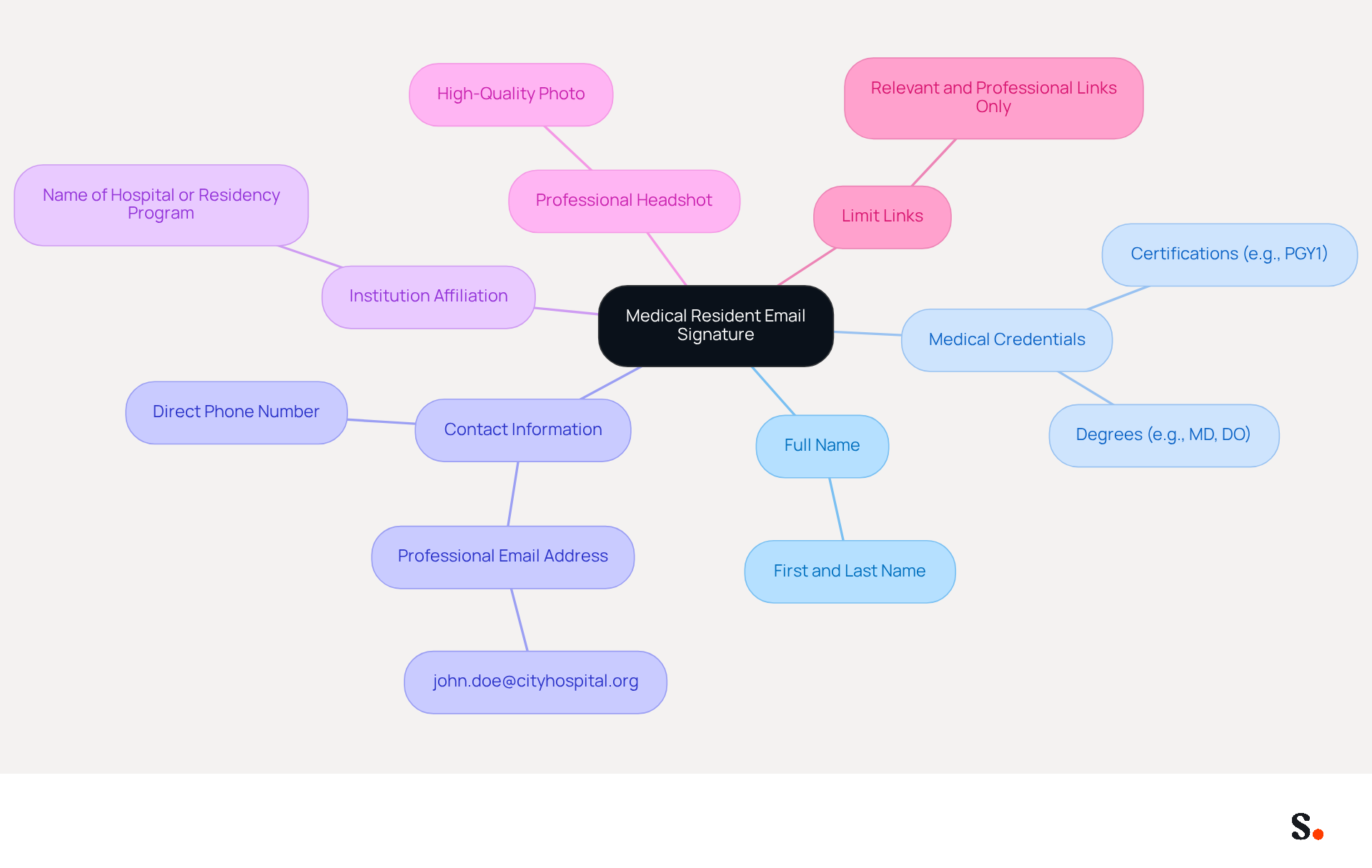
Crafting an effective medical resident email signature is crucial for medical residents aiming to establish professionalism and clear communication. A well-crafted email signature should encompass several essential elements to ensure professionalism and effective communication:
- Full Name: Clearly state your first and last name, ensuring it is prominent. This establishes your identity and authority.
- Medical Credentials: Include your degree (e.g., MD, DO) and any relevant certifications or designations (e.g., PGY1, Resident in Internal Medicine). Emphasizing your credentials strengthens your standing in the field and should be organized clearly for improved readability.
- Contact Information: Provide a professional contact address and a direct phone number. Avoid personal email addresses or phone numbers to maintain professionalism and ensure accessibility for colleagues and patients. Regularly updating this information can be a hassle, but it's essential for maintaining trust.
- Institution Affiliation: Mention the name of the hospital or residency program you are associated with, which adds credibility and context to your interactions.
- Professional Headshot: Including a high-quality photo can enhance patient recognition and trust, making your interactions more personable.
- Limit Links: Ensure that any links included in your footer are relevant and suitable, focusing on enhancing interaction without cluttering the footer.
For example:
John Doe, MD
PGY1, Internal Medicine
City Hospital
john.doe@cityhospital.org
(123) 456-7890
This format clearly shows your credentials and makes it easier for others to reach out to you. Incorporating a confidentiality notice is a smart move to protect sensitive patient information and stay compliant with HIPAA. Furthermore, using Scribe's automated management of digital signatures ensures that your representation remains compliant with GDPR and SOC 2 Type II standards, providing a secure and polished image in all communications. Scribe's features enable seamless updates and management of digital identities, ensuring that medical residents can uphold a strong image and build trust with patients and colleagues alike. Ultimately, a well-designed medical resident email signature can significantly impact how you are perceived by patients and colleagues alike.
Maintain Professional Branding and Visual Consistency
To project a professional image through your email signature, adherence to best practices is essential:
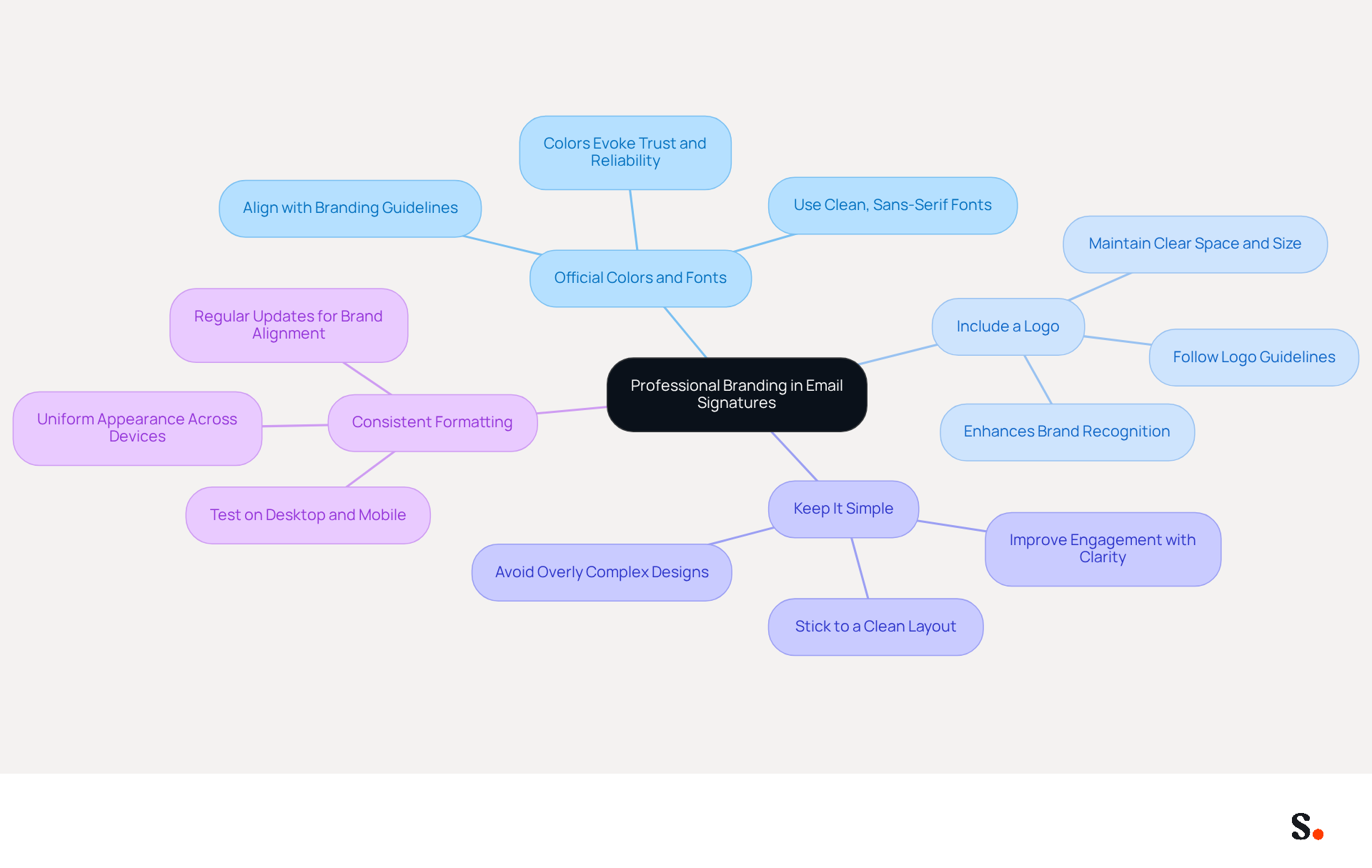
- Use Official Colors and Fonts: Align your signature with your institution's branding guidelines. This includes using specific colors and fonts that represent your hospital or residency program, as consistent branding can enhance trust and recognition among recipients.
- Include a Logo: If allowed, add your institution's emblem to your sign-off. This not only enhances brand recognition but also adds a layer of professionalism, reinforcing the credibility of your communications.
- Keep It Simple: Too many colors and fonts can detract from your professional image. Stick to a clean, easy-to-read layout that conveys professionalism. A clean and organized sign-off can improve engagement, as studies show that consistent email signatures can boost response rates by 22%.
- Consistent Formatting: Ensure that your sign-off is formatted uniformly across all devices and messaging platforms. Test how it appears on both desktop and mobile to maintain visual integrity. Regular updates and evaluations of your email branding are essential for aligning with changing brand strategies and upholding a polished image.
By following these guidelines, this professional identity can lead to more effective communication and stronger relationships.
Leverage Email Signatures for Engagement and Marketing
In the healthcare sector, a medical resident email signature serves as an essential tool for engagement and marketing. Here are some effective strategies to consider:
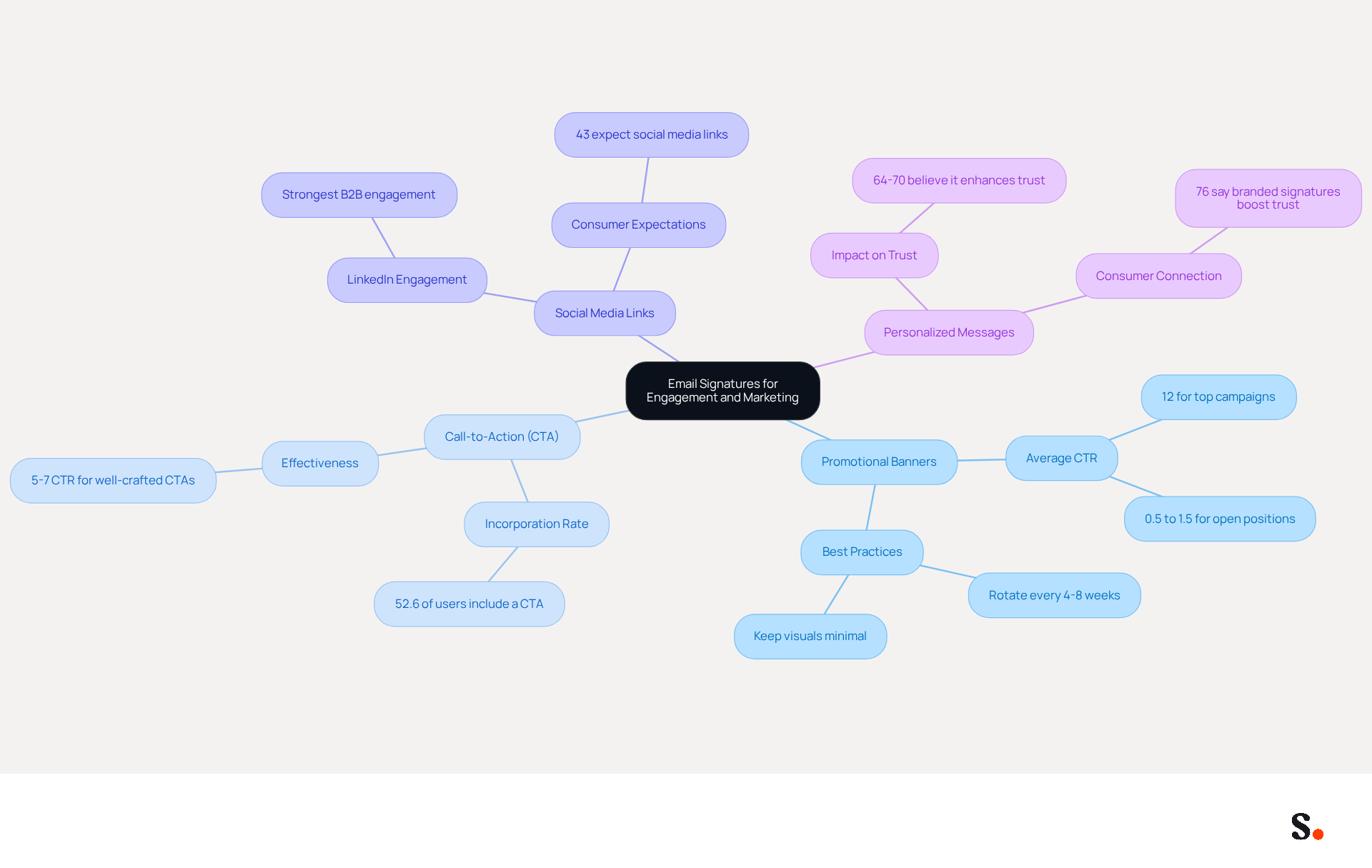
- Promotional Banners: Incorporate banners that highlight upcoming events, health awareness campaigns, or important announcements. Research shows that promotional banners can achieve an average click-through rate (CTR) of around 12%, with top campaigns reaching as high as 7%. Any changes in your Aircall settings will automatically update your Scribe profiles.
- Call-to-Action (CTA): Including a clear and concise CTA, such as 'Schedule a Consultation' or 'Visit Our Website,' encourages recipients to take immediate action. Research indicates that over half of users (52.6%) incorporate a CTA in their email footers, underscoring their effectiveness.
- Social Media Links: Adding links to career-oriented social media profiles, particularly LinkedIn, can enhance your online presence and facilitate networking. LinkedIn icons have been shown to drive strong B2B engagement, making them a valuable addition to your email footer.
- Personalized Messages: Including a brief, personalized message or quote that reflects your expertise or approach to patient care adds a personal touch. This can resonate with recipients and cultivate a deeper connection, as 64-70% of consumers believe a well-branded closing enhances trust and credibility, and 76% of respondents indicated that a branded closing boosts their trust in the sender.
By leveraging these strategies, you not only enhance your professional image with a medical resident email signature but also foster meaningful connections within the healthcare community.
Ensure Compliance and Security in Signature Design
In the realm of email communication, prioritizing compliance and security is non-negotiable:
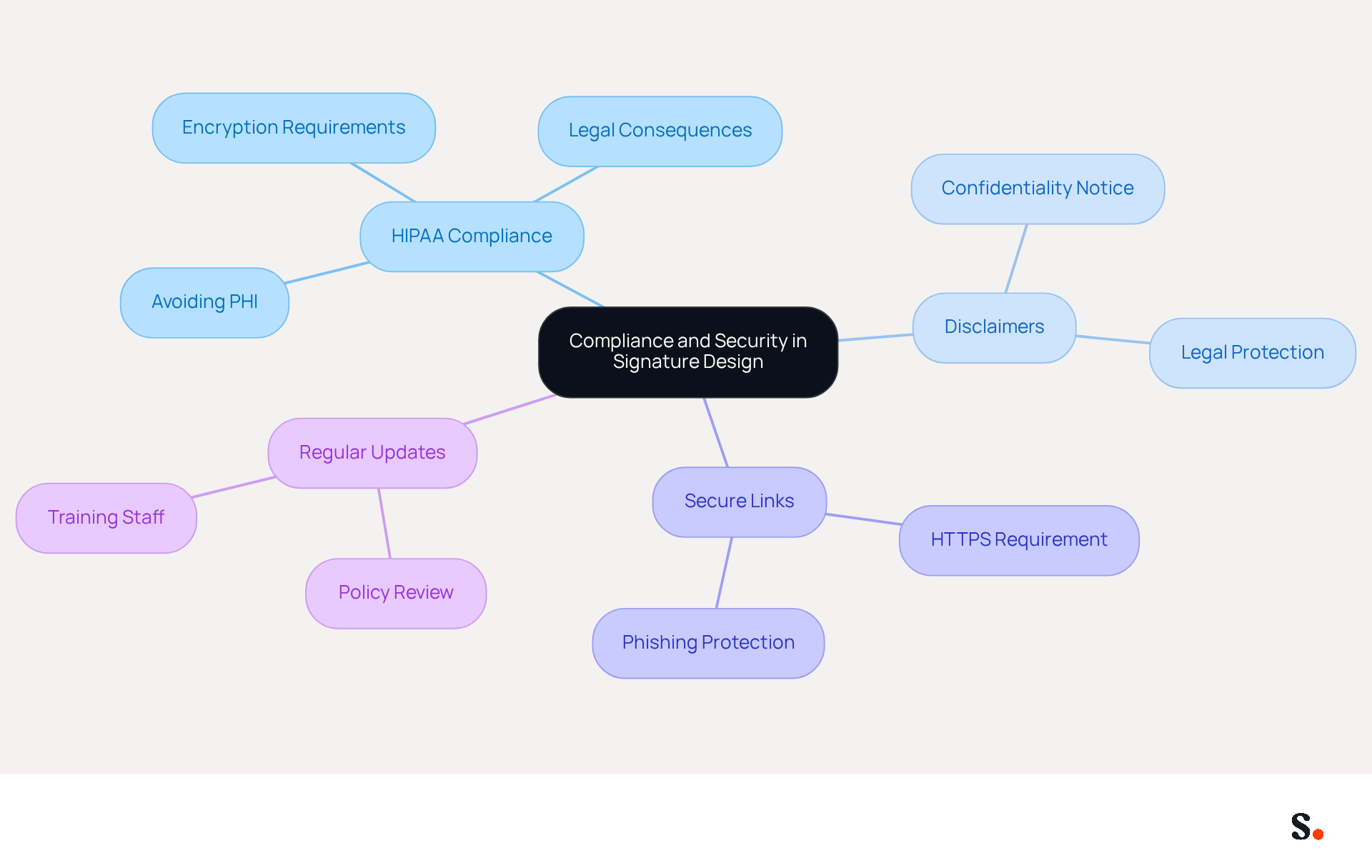
- HIPAA Compliance: Your signature must not include any Protected Health Information (PHI) or sensitive patient data. Adhering to HIPAA regulations is crucial for maintaining patient confidentiality and avoiding potential violations. Failing to comply with HIPAA can lead to severe legal consequences, as sending PHI through unencrypted channels can result in significant repercussions.
- Disclaimers: Including a disclaimer informs recipients about the confidentiality of the email and any limitations on the use of the information contained within. This practice enhances legal protection and reinforces the significance of privacy in healthcare interactions.
- Secure Links: Ensure that any links included in your email footer direct to secure websites (HTTPS). This measure protects against phishing attacks and helps maintain the integrity of your communications, safeguarding both your information and that of your patients.
- Regular Updates: Periodically review and update your credentials to ensure compliance with any changes in regulations or institutional policies. Staying up-to-date with HIPAA requirements and institutional guidelines is essential for maintaining a reputable image and protecting sensitive information.
By focusing on compliance and security in your medical resident email signature design, you can protect yourself and your patients. It also boosts your credibility in the healthcare field. Ultimately, your commitment to these principles can significantly influence your standing in the healthcare community.
Conclusion
A well-crafted email signature is essential for medical residents, serving as a cornerstone of effective communication and professional branding in healthcare. A well-structured email signature conveys professionalism, enhances trust, and ensures that essential information is readily accessible to colleagues and patients alike.
Key elements such as including your full name, medical credentials, and institutional affiliation are crucial for establishing authority and credibility. Additionally, maintaining visual consistency through official branding, using appropriate colors and fonts, and incorporating a professional headshot can significantly enhance your image. Using your email signature for engagement through promotional banners, clear calls-to-action, and social media links can further strengthen your connections within the healthcare community.
In the end, a well-designed email signature can significantly enhance communication and marketing efforts in healthcare. By focusing on compliance and security, like following HIPAA regulations and adding necessary disclaimers, medical residents can safeguard sensitive information while presenting a professional image. By adopting these best practices, medical residents can not only enhance their professional image but also foster deeper connections with patients and colleagues.
Frequently Asked Questions
Why is an effective email signature important for medical residents?
An effective email signature is crucial for medical residents as it establishes professionalism and clear communication, enhancing their identity and authority in the field.
What essential elements should be included in a medical resident email signature?
A medical resident email signature should include the following elements: full name, medical credentials, contact information, institution affiliation, a professional headshot, and limited relevant links.
How should medical credentials be presented in the email signature?
Medical credentials should be clearly stated, including the degree (e.g., MD, DO) and any relevant certifications or designations (e.g., PGY1, Resident in Internal Medicine), organized for improved readability.
What type of contact information should be provided in the email signature?
The email signature should include a professional contact address and a direct phone number, avoiding personal email addresses or phone numbers to maintain professionalism.
Why is it important to mention the institution affiliation in the email signature?
Mentioning the institution affiliation adds credibility and context to interactions, helping to establish trust with colleagues and patients.
How can including a professional headshot benefit medical residents?
Including a high-quality professional headshot can enhance patient recognition and trust, making interactions more personable.
What should be considered when including links in the email signature?
Any links included should be relevant and suitable, focusing on enhancing interaction without cluttering the footer of the email signature.
What is the benefit of incorporating a confidentiality notice in the email signature?
A confidentiality notice helps protect sensitive patient information and ensures compliance with HIPAA regulations.
How does Scribe assist medical residents with their email signatures?
Scribe provides automated management of digital signatures, ensuring compliance with GDPR and SOC 2 Type II standards, and allows for seamless updates and management of digital identities.
What overall impact can a well-designed medical resident email signature have?
A well-designed email signature can significantly influence how medical residents are perceived by patients and colleagues, enhancing their professional image and building trust.
List of Sources
- Include Essential Contact Information and Credentials
- Email Signature for Doctors: Templates, Credentials & Confidentiality Best Practices (https://syncsignature.com/blog/email-signature-for-doctors)
- Healthcare email signature management | Rocketseed (https://rocketseed.com/email-signature-marketing-for-healthcare)
- Best Practices for a Professional Doctor Email Signature (https://scribe-mail.com/en-US/blog/best-practices-for-a-professional-doctor-email-signature)
- Maintain Professional Branding and Visual Consistency
- 4 Best Practices for Your Work Email Signature Strategy (https://scribe-mail.com/en-US/blog/4-best-practices-for-your-work-email-signature-strategy)
- Johns Hopkins Medicine - Email Signature Creator (https://brand.hopkinsmedicine.org/brand/design-standards/email-signature-creator)
- Email Signature Branding: Consistency and Impact | Crossware365 (https://crossware365.com/blog/mastering-email-signature-branding-market-presence)
- The impact of email signatures on your branding (https://signitic.com/en/resources/the-impact-of-email-signatures-on-your-branding)
- Email signature statistics: Why every business should optimize their email signatures — Stripo.email (https://stripo.email/blog/email-signature-statistics-why-every-business-should-optimize-their-email-signatures)
- Leverage Email Signatures for Engagement and Marketing
- The Quantifiable Marketing Value of Email Signatures (https://ama.org/2022/06/20/the-quantifiable-marketing-value-of-email-signatures)
- 12 email signature marketing examples that drive clicks (2026) (https://signitic.com/en/resources/12-email-signature-marketing-examples-that-actually-drive-clicks)
- 40+ Email Signature Statistics for 2026 (Data + Insights) (https://wavecnct.com/blogs/email-signature-statistics)
- Research Recap: Branded Email Signatures Increase Company Recognition, Trust - Demand Gen Report (https://demandgenreport.com/industry-news/research-recap-branded-email-signatures-increase-company-recognition-trust/47252)
- Email Signature Trends 2026: Centralized Control & Automation | SIGNandGO posted on the topic | LinkedIn (https://linkedin.com/posts/signngo_email-signature-trends-to-watch-in-2026-activity-7401523471786217473-zAVL)
- Ensure Compliance and Security in Signature Design
- HIPAA Compliant Email: The Definitive Guide (2026 Update) | Paubox (https://paubox.com/blog/hipaa-compliant-email)
- HIPAA Compliant Email Service: A Quick Guide (https://hipaavault.com/hipaa-email/hipaa-compliant-email-service)
- HIPAA Compliant Email: Standards, Solutions & Providers (https://complyassistant.com/security-frameworks/hipaa-compliance-software/hipaa-compliant-email)
- Is Email HIPAA Compliant? Rules, Risks and Requirements (https://buzz.skyscape.com/is-email-hipaa-compliant)
- HIPAA Compliance for Email - Updated for 2026 (https://hipaajournal.com/hipaa-compliance-for-email)
Get started with Scribe
Manage signatures across your whole team
Free 14-day trial — no credit card.