Best Practices for Including Pronouns in Email Signatures
While promoting inclusivity in the workplace is essential, many organizations face challenges in implementing effective practices like incorporating gender
Sophie Grant
Email Signature Specialist, Scribe
On this page
- Introduction
- Understand the Importance of Gender Pronouns in Email Signatures
- Implement Pronouns Effectively in Email Signatures
- Explore the Benefits of Including Pronouns for Workplace Inclusion
- Address Challenges and Solutions in Pronoun Implementation
- Conclusion
- Frequently Asked Questions
- List of Sources
Introduction
While promoting inclusivity in the workplace is essential, many organizations face challenges in implementing effective practices like incorporating gender pronouns in email signatures. By doing so, companies can signal respect for individual identities and foster open conversations about gender diversity. However, the challenge remains: how can organizations effectively implement this practice while overcoming potential resistance?
We will discuss:
- Best practices for including pronouns in email signatures
- The benefits for workplace morale and communication
- Actionable steps for seamless integration
Understand the Importance of Gender Pronouns in Email Signatures
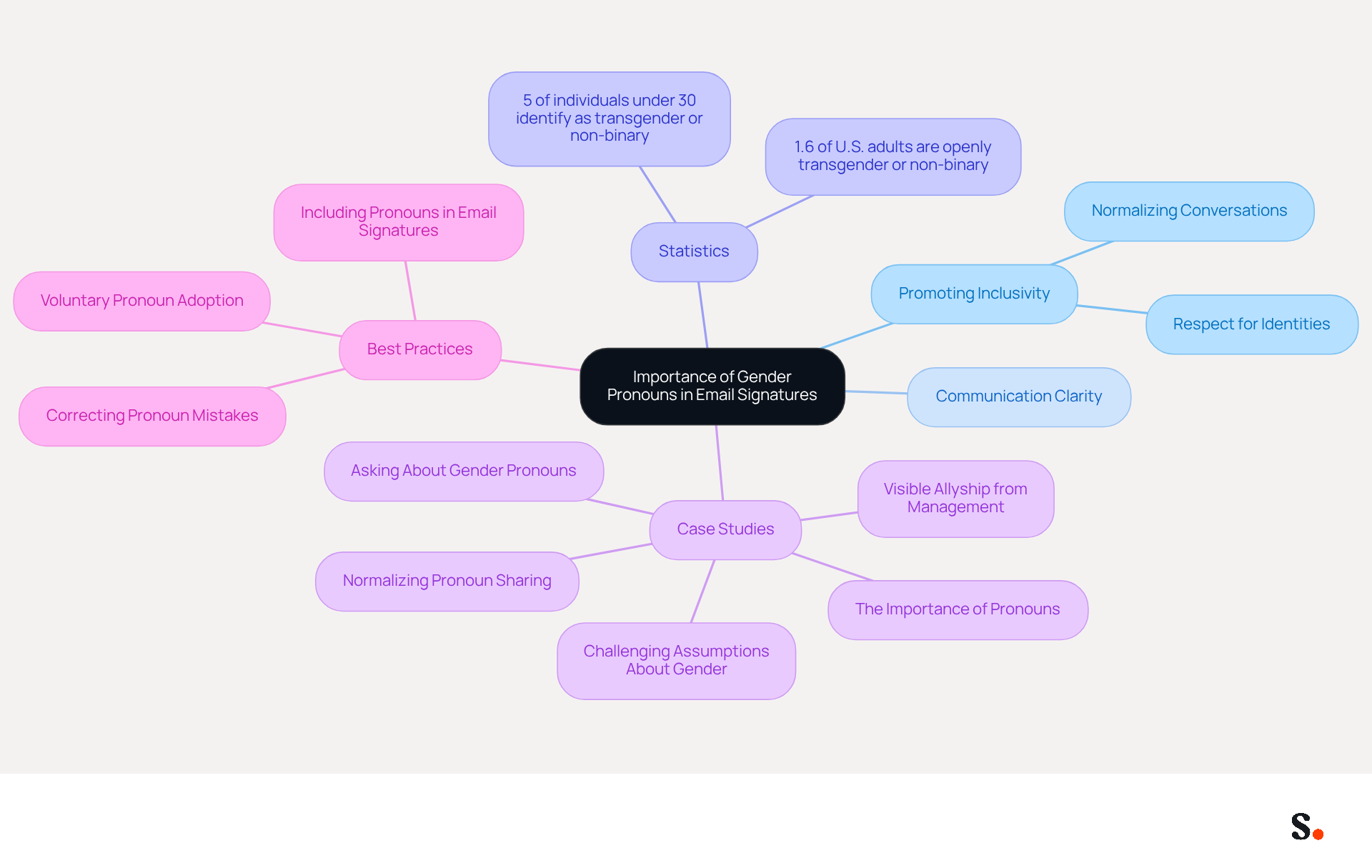
Promoting an inclusive workplace culture is essential, and this can be achieved by incorporating gender identifiers, including pronouns in email signatures. This practice not only signals respect for individuals' identities but also normalizes conversations around gender diversity. Openly sharing identifiers helps reduce the risk of misgendering, which can cause discomfort and alienation.
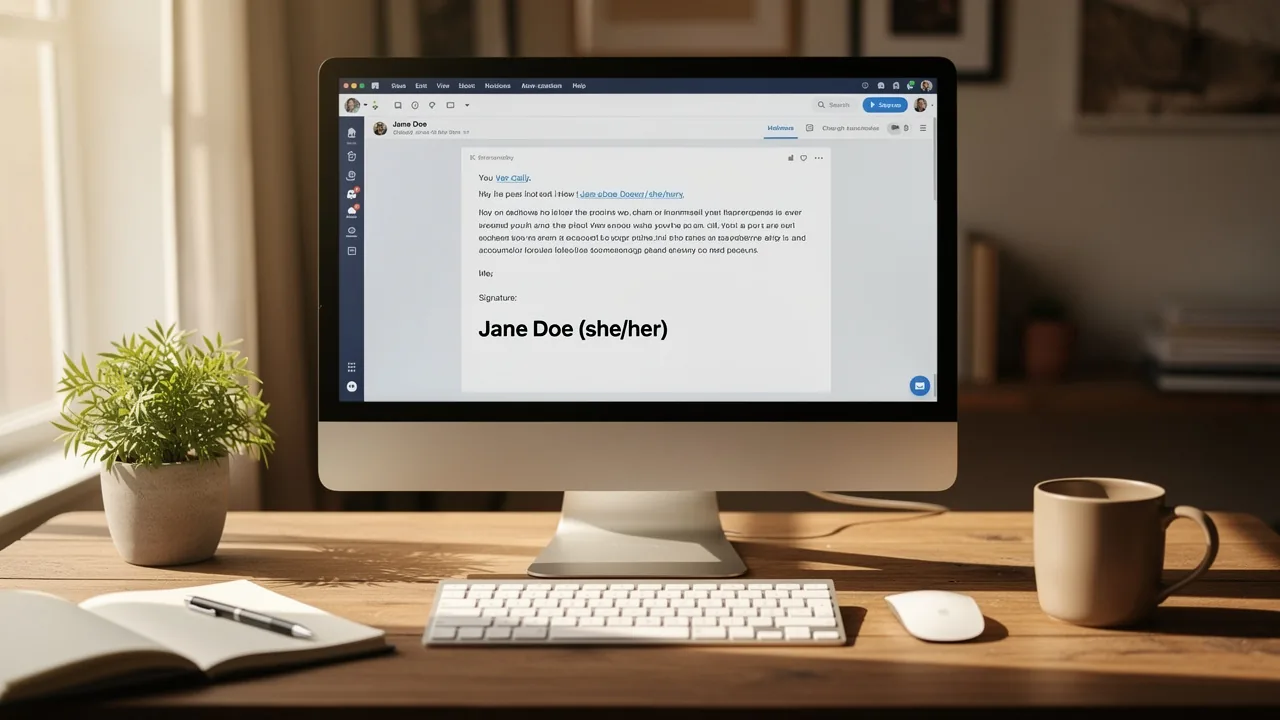
For instance, including pronouns in email signatures, like 'Jane Doe (she/her)', enhances communication clarity and fosters respect. Interestingly, about 5 percent of individuals under 30 identify as transgender or non-binary, and 1.6 percent of U.S. adults, or 5.2 million people, are openly transgender or non-binary, highlighting the importance of recognizing diverse gender identities in professional settings.
Case studies show that organizations that adopt voluntary sharing of personal identifiers, including pronouns in email signatures, create a more welcoming environment that encourages employees to express their identities safely. This practice not only enhances communication but also cultivates a more inclusive workplace culture. It is also crucial to make sharing of personal identifiers optional, respecting individual choices while fostering inclusivity.
Implement Pronouns Effectively in Email Signatures
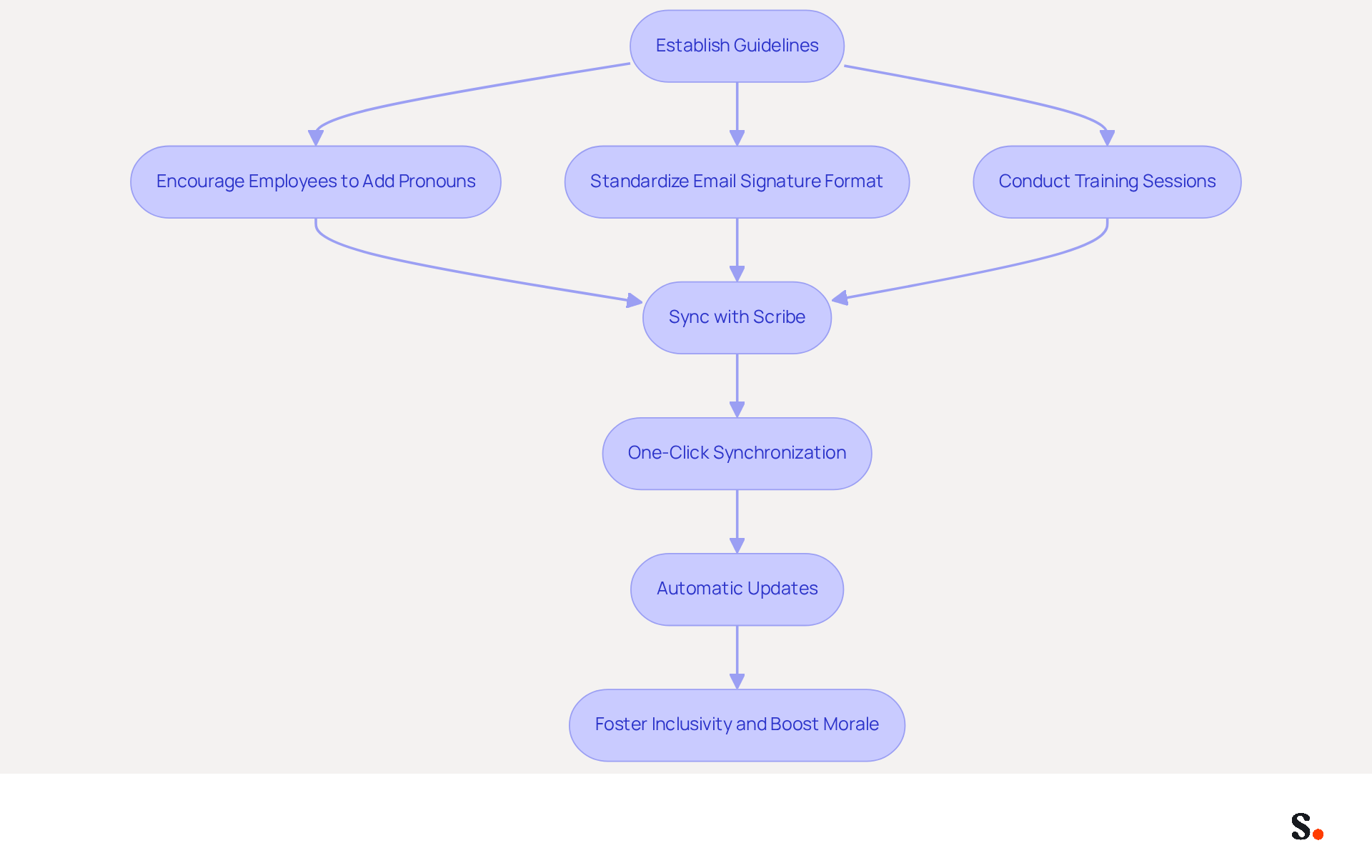
Establishing clear guidelines for incorporating personal identifiers in email footers is essential for fostering inclusivity and clarity within organizations. Employees should be encouraged to add their names in the closing block, including pronouns in email signature, for example, 'John Smith (he/him).' This strategic placement enhances both visibility and clarity for recipients. Furthermore, establishing a standardized format for autographs can assist in preserving uniformity throughout the organization. Training sessions can inform employees about the importance of this practice and how to refresh their personal marks.
Scribe simplifies this process by enabling bulk updates to email identifiers, making it easier for teams to stay aligned with the new standard. By syncing your Google Workspace with Scribe, you can save time as teammates' information is automatically updated, allowing for seamless integration of identifiers into email footers. This efficient one-click synchronization process not only strengthens brand consistency but also adheres to stringent data security standards, as evidenced by Scribe's SOC 2 Type II compliance.
Furthermore, studies show that entities implementing this practice not only foster inclusivity but also boost staff morale. A study discovered that incorporating personal identifiers in employee biographies and email formats, including pronouns in email signature, results in more favorable attitudes towards the organization and nurtures a sense of belonging among LGBTQ+ individuals. Moreover, as organizations increasingly emphasize inclusion, the practice of including pronouns in email signature is becoming a vital aspect of workplace culture, reflecting a commitment to equity and respect for gender diversity.
To enable one-click synchronization, you must grant Scribe permission to connect with your email provider. You need to be a Super Admin of your email provider to provide these permissions. You will have the option to select which teammates you want to sync with Scribe. All modifications made in your email provider directory will be automatically synced with Scribe, ensuring that your email identifiers are always up-to-date. By prioritizing the integration of personal identifiers, organizations can cultivate a more inclusive and respectful workplace culture.
Explore the Benefits of Including Pronouns for Workplace Inclusion
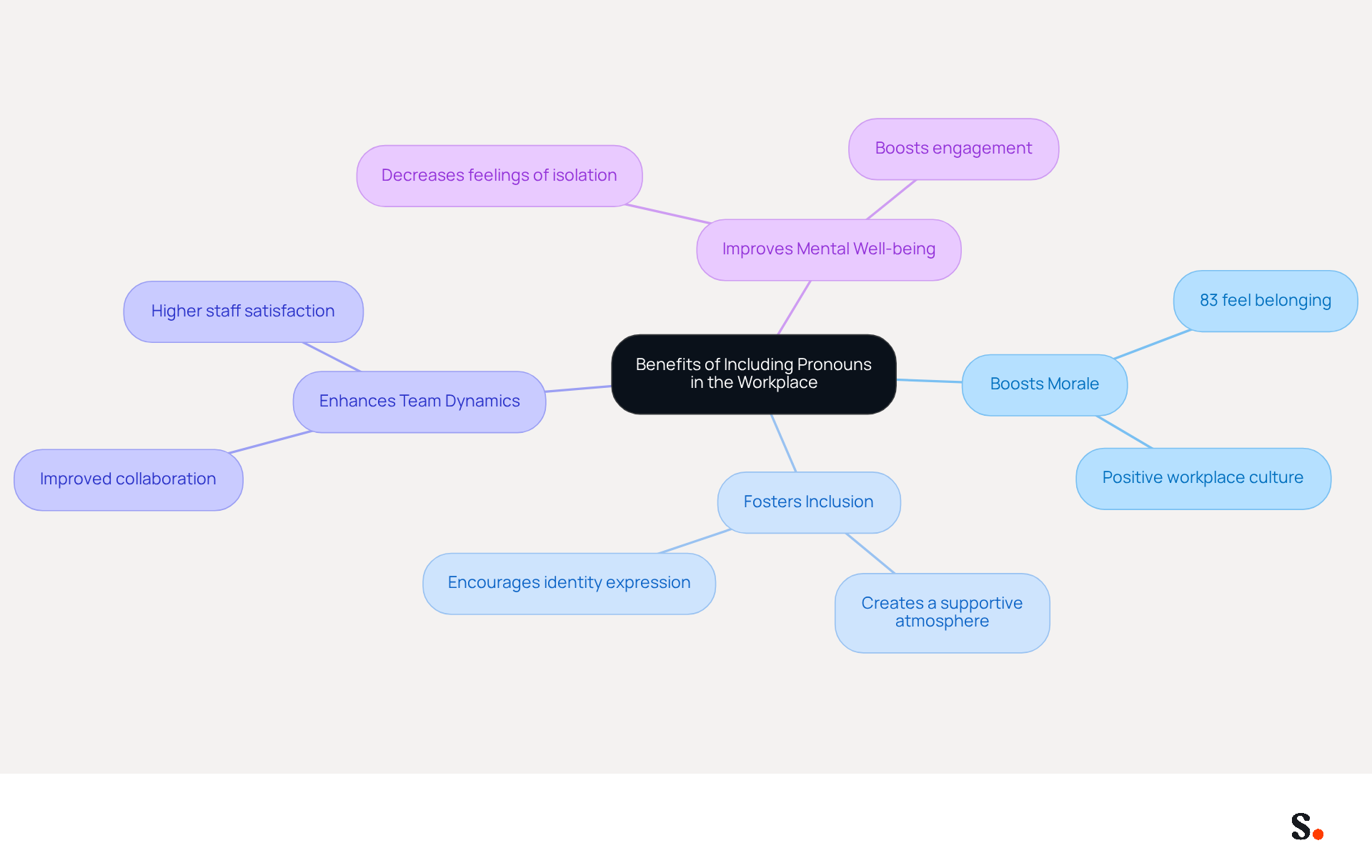
Including pronouns in email signature is a crucial step toward fostering workplace inclusion by demonstrating a commitment to diversity and respect for all staff. This practice boosts overall morale. It also fosters a culture of openness and understanding. A recent study found that 83% of individuals feel that using gendered terms at work enhances their sense of belonging, emphasizing its beneficial effect on morale and workplace culture.
Furthermore, organizations embracing gender diversity experience higher staff satisfaction and retention rates. For example, organizations that have embraced gendered language report a more inclusive atmosphere, where employees feel valued and respected. This inclusivity enhances team dynamics, leading to improved productivity and collaboration.
Moreover, studies show that when individuals feel affirmed in their identity, it can significantly boost their mental well-being, decreasing feelings of isolation and enhancing engagement. As Aubrey Blanche, Head of Equitable Design at Culture Amp, states, 'Adding identifiers to simple but visible parts of your work-life may be a small action, but it can have an incredible impact by signaling to trans, non-binary, and gender non-conforming people that they belong.'
By normalizing personal references, organizations create a supportive atmosphere. This encourages individuals to express their identities freely, benefiting the entire workplace culture. It is also vital to acknowledge that misgendering can result in adverse effects, including reduced morale and trust among staff, further highlighting the significance of using appropriate terms.
Address Challenges and Solutions in Pronoun Implementation
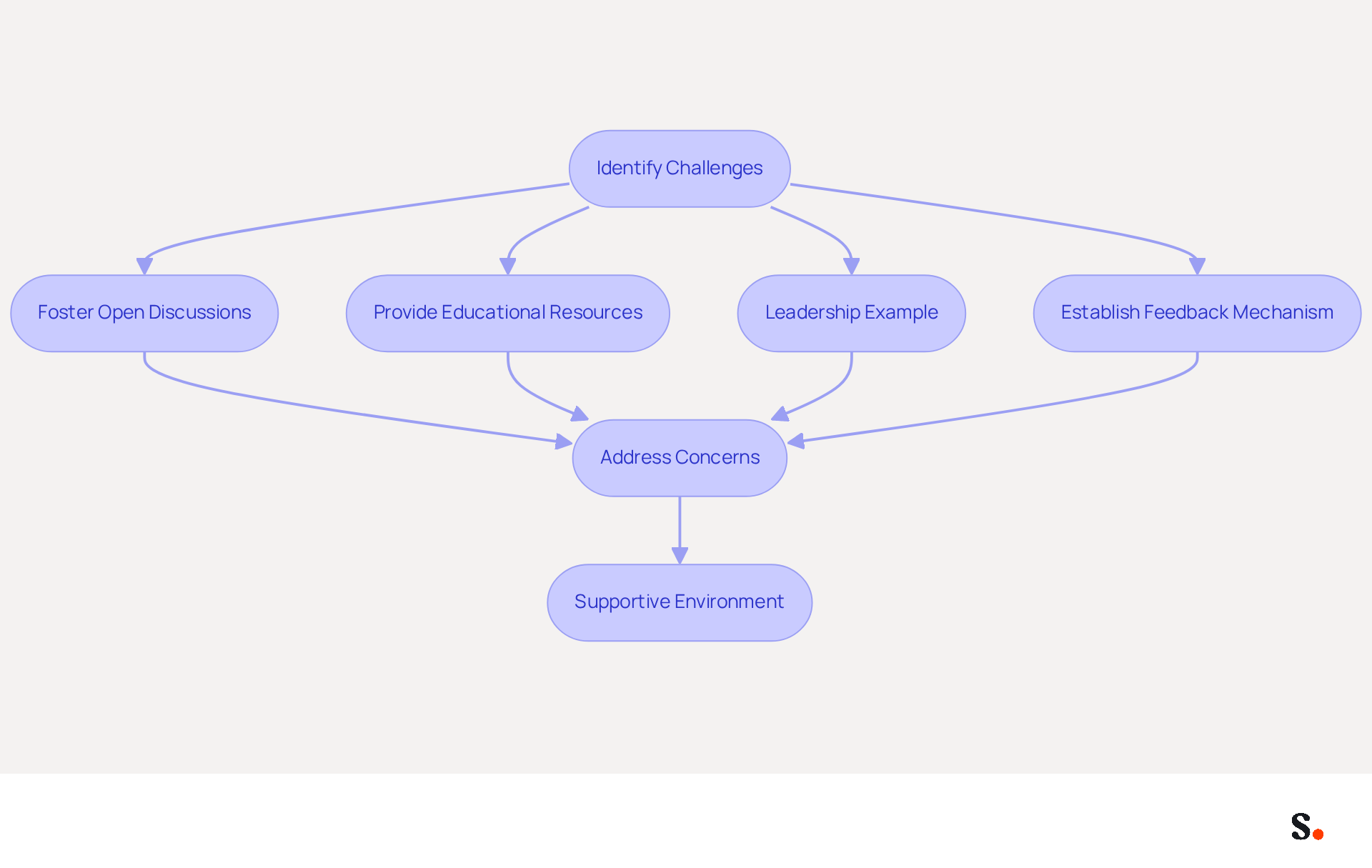
Implementing gender identifiers in email footers can face resistance, particularly from staff who may view this initiative as contentious. To address these challenges, organizations should foster open discussions about why gender identifiers matter and how they contribute to inclusivity. Providing educational resources and training can help alleviate misunderstandings and promote acceptance. Leadership should exemplify this behavior by including pronouns in email signatures, which demonstrates their commitment to the initiative.
Furthermore, organizations can establish a feedback mechanism to address any concerns and continuously enhance the implementation process. By actively addressing these challenges, companies can foster a supportive environment that invites participation in this inclusive practice.
Studies show that organizations that prioritize inclusive language see improved employee morale and a greater sense of belonging among their staff, with 83% of individuals reporting a greater feeling of acceptance when inclusive terms are utilized.
Additionally, businesses looking to maintain brand consistency in their email signatures can take advantage of Scribe's Affiliate Program. By promoting Scribe, marketing managers can ensure that their teams maintain consistent branding while earning a $30 credit for new subscriptions and a 50% commission on all referrals. This dual benefit not only supports inclusivity through proper pronoun usage, including pronouns in email signatures, but also opens a new marketing channel for the organization, enhancing overall engagement and brand visibility.
Conclusion
Incorporating gender pronouns in email signatures is not merely a trend; it is a crucial step toward fostering inclusivity and respect in the workplace. By openly sharing personal identifiers, organizations signal their commitment to recognizing diverse gender identities. However, many organizations still hesitate to adopt this practice due to concerns about implementation and employee comfort. This straightforward action improves communication clarity and reduces the chances of misgendering, fostering a more supportive work environment.
The article highlights several key insights, including:
- The importance of establishing clear guidelines for implementing pronouns in email signatures
- The positive effects on employee morale
- The necessity of making this practice optional to respect individual choices
Organizations that adopt this practice often report enhanced team dynamics and increased employee retention. Furthermore, leveraging tools like Scribe can streamline the process, ensuring brand consistency while adhering to security standards.
Ultimately, the inclusion of pronouns in email signatures is more than just a trend; it is a significant step toward fostering a workplace culture that values diversity and inclusion. By adopting this practice, organizations not only enhance communication but also lay the groundwork for a truly inclusive workplace culture.
Frequently Asked Questions
Why is it important to include gender pronouns in email signatures?
Including gender pronouns in email signatures promotes an inclusive workplace culture, signals respect for individuals' identities, and normalizes conversations around gender diversity.
How does sharing pronouns in email signatures help with communication?
Sharing pronouns enhances communication clarity and helps reduce the risk of misgendering, which can cause discomfort and alienation.
What percentage of individuals under 30 identify as transgender or non-binary?
About 5 percent of individuals under 30 identify as transgender or non-binary.
How many U.S. adults are openly transgender or non-binary?
Approximately 1.6 percent of U.S. adults, or 5.2 million people, are openly transgender or non-binary.
What impact do organizations experience when they adopt the practice of sharing pronouns in email signatures?
Organizations that adopt this practice create a more welcoming environment that encourages employees to express their identities safely and cultivates a more inclusive workplace culture.
Is it mandatory to include personal identifiers like pronouns in email signatures?
No, it is crucial to make sharing personal identifiers optional, respecting individual choices while fostering inclusivity.
List of Sources
- Understand the Importance of Gender Pronouns in Email Signatures
- Respectful Intentions, Inclusive Impact: Why Pronouns Matter - NCCJ (https://nccjtriad.org/2021/02/11/why-pronouns-matter)
- Organizations embrace equity by sharing gender pronouns in email signatures (https://internationalwomensday.com/Missions/19523/Organizations-embrace-equity-by-sharing-gender-pronouns-in-email-signatures)
- Pronouns in email signatures: workplace inclusion guide (https://inclusiveemployers.co.uk/blog/why-we-use-pronouns-in-signatures)
- LGBTQ Inclusion: Using Pronouns at Work (https://shrm.org/topics-tools/news/inclusion-diversity/lgbtq-inclusion-using-pronouns-work)
- Why sharing gender pronouns is important in the workplace | Culture Amp (https://cultureamp.com/blog/gender-pronouns-in-workplace)
- Implement Pronouns Effectively in Email Signatures
- Should your email say if you're he, she or they? (https://bbc.com/news/business-51331571)
- Sharing Gender Pronouns in Employee Bios, Email Signatures Helps Attract LGBTQ+ Applicants, Study Finds – Stories (https://stories.butler.edu/sharing-gender-pronouns-in-employee-bios-email-signatures-helps-attract-lgbtq-applicants-study-finds)
- Organizations embrace equity by sharing gender pronouns in email signatures (https://internationalwomensday.com/Missions/19523/Organizations-embrace-equity-by-sharing-gender-pronouns-in-email-signatures)
- Explore the Benefits of Including Pronouns for Workplace Inclusion
- Why sharing gender pronouns is important in the workplace | Culture Amp (https://cultureamp.com/blog/gender-pronouns-in-workplace)
- The Vital Role of Gender Pronouns in Today’s Workplace [2026 DEI Resources] | Diversity for Social Impact (https://diversity.social/the-vital-role-of-gender-pronouns-in-todays-workplace)
- The Importance of Using Pronouns in the Workplace — Talkspace (https://business.talkspace.com/articles/pronouns-in-the-workplace)
- Sharing Gender Pronouns in Employee Bios, Email Signatures Helps Attract LGBTQ+ Applicants, Study Finds – Stories (https://stories.butler.edu/sharing-gender-pronouns-in-employee-bios-email-signatures-helps-attract-lgbtq-applicants-study-finds)
- Address Challenges and Solutions in Pronoun Implementation
- The Importance of Using Pronouns in the Workplace — Talkspace (https://business.talkspace.com/articles/pronouns-in-the-workplace)
- Pronouns in email signatures: workplace inclusion guide (https://inclusiveemployers.co.uk/blog/why-we-use-pronouns-in-signatures)
- Organizations embrace equity by sharing gender pronouns in email signatures (https://internationalwomensday.com/Missions/19523/Organizations-embrace-equity-by-sharing-gender-pronouns-in-email-signatures)
- Diversity in the workplace statistics to know this year | InStride (https://instride.com/insights/workplace-diversity-and-inclusion-statistics)
- Whiteford, Taylor & Preston LLP | The Importance of Pronouns in the Workplace (https://whitefordlaw.com/news-events/the-importance-of-pronouns-in-the-workplace)
Get started with Scribe
Build a professional email signature
Free 14-day trial — no credit card.