Best Practices for Using Gender Pronouns in Email Signatures
Incorporating gender pronouns into email signatures is essential for fostering an inclusive workplace culture. By doing so, organizations affirm individual
Sophie Grant
Email Signature Specialist, Scribe

Introduction
Incorporating gender pronouns into email signatures is essential for fostering an inclusive workplace culture. By doing so, organizations affirm individual identities and signal their commitment to diversity and respect. Many organizations struggle with implementing this practice due to potential resistance and misunderstandings. This article outlines best practices for using gender pronouns in email signatures, emphasizing their significance in professional communication and their positive impact on workplace equity.
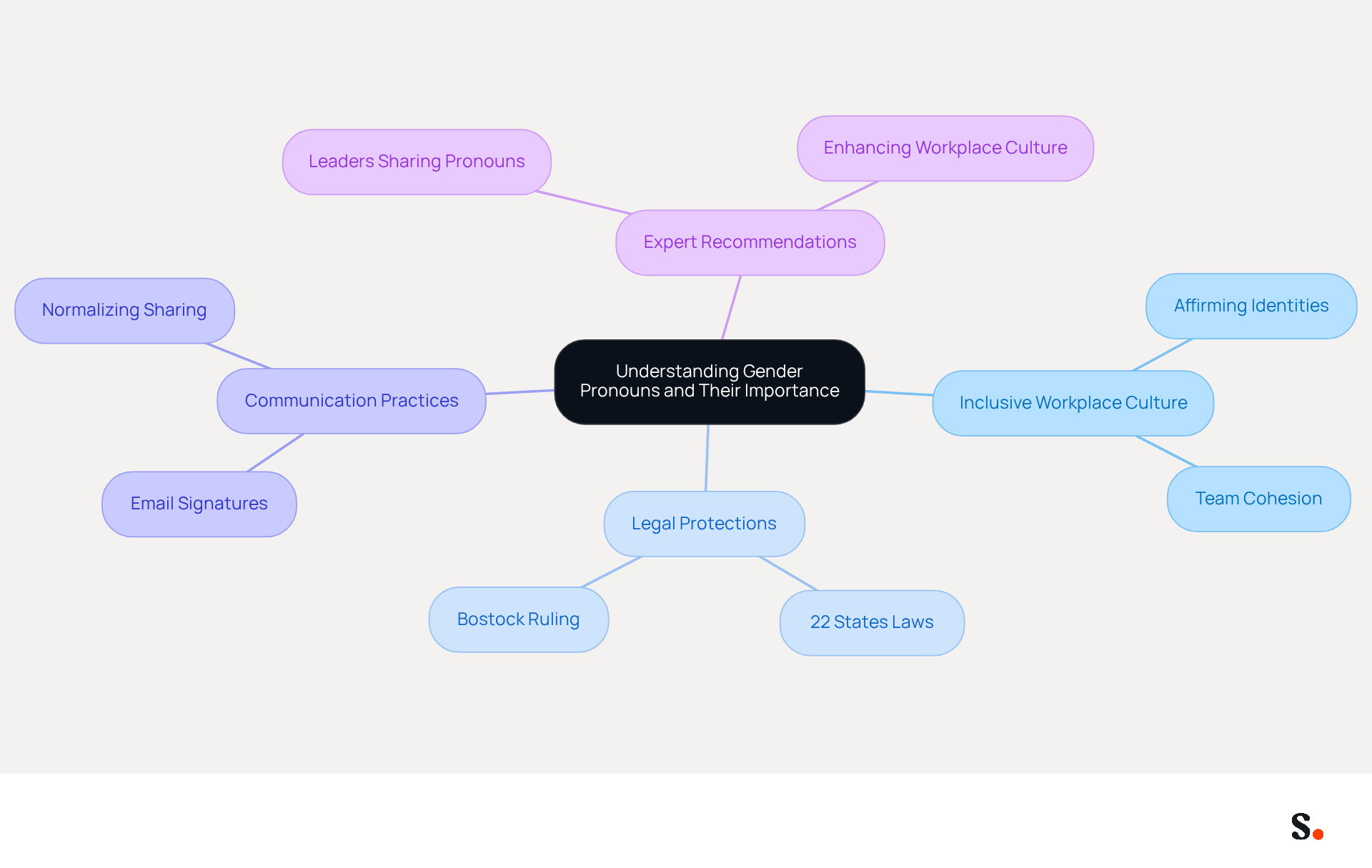
Understand Gender Pronouns and Their Importance
Understanding gender terms is crucial for fostering an inclusive workplace culture. As the United Nations states, "Using gender-inclusive language means speaking and writing in a way that does not discriminate against a particular sex, social gender or gender identity, and does not perpetuate gender stereotype." Using the appropriate terms affirms individuals' identities and fosters respect. Misgendering can create barriers to effective communication and lead to feelings of exclusion. This can ultimately undermine team cohesion and overall workplace effectiveness.
By integrating gender pronouns in email signatures, organizations demonstrate their dedication to diversity and inclusion, clarifying that they appreciate each individual's identity. This practice improves how we communicate and supports our commitment to diversity and inclusion. For instance, Intuit's Tucson Pride leader initiated a company-wide conversation about pronoun usage after observing a colleague's signature, leading to the implementation of fields for pronouns in employee messaging systems, fostering a more inclusive environment.
Statistics indicate that 22 states have enacted laws protecting identity, reinforcing the importance of respectful communication. The Bostock ruling from June 2020 further strengthens protections against discrimination based on identity, with Michelle Phillips noting, "What the law is designed to protect is if someone intentionally, maliciously misgenders someone."
Experts promote normalizing the sharing of identity labels, especially among leaders and managers, as this fosters a culture of respect. By incorporating personal references as a standard aspect of communication in professional settings, organizations can significantly enhance their workplace culture and effectiveness.
Leverage Pronouns for Workplace Inclusion and Equity
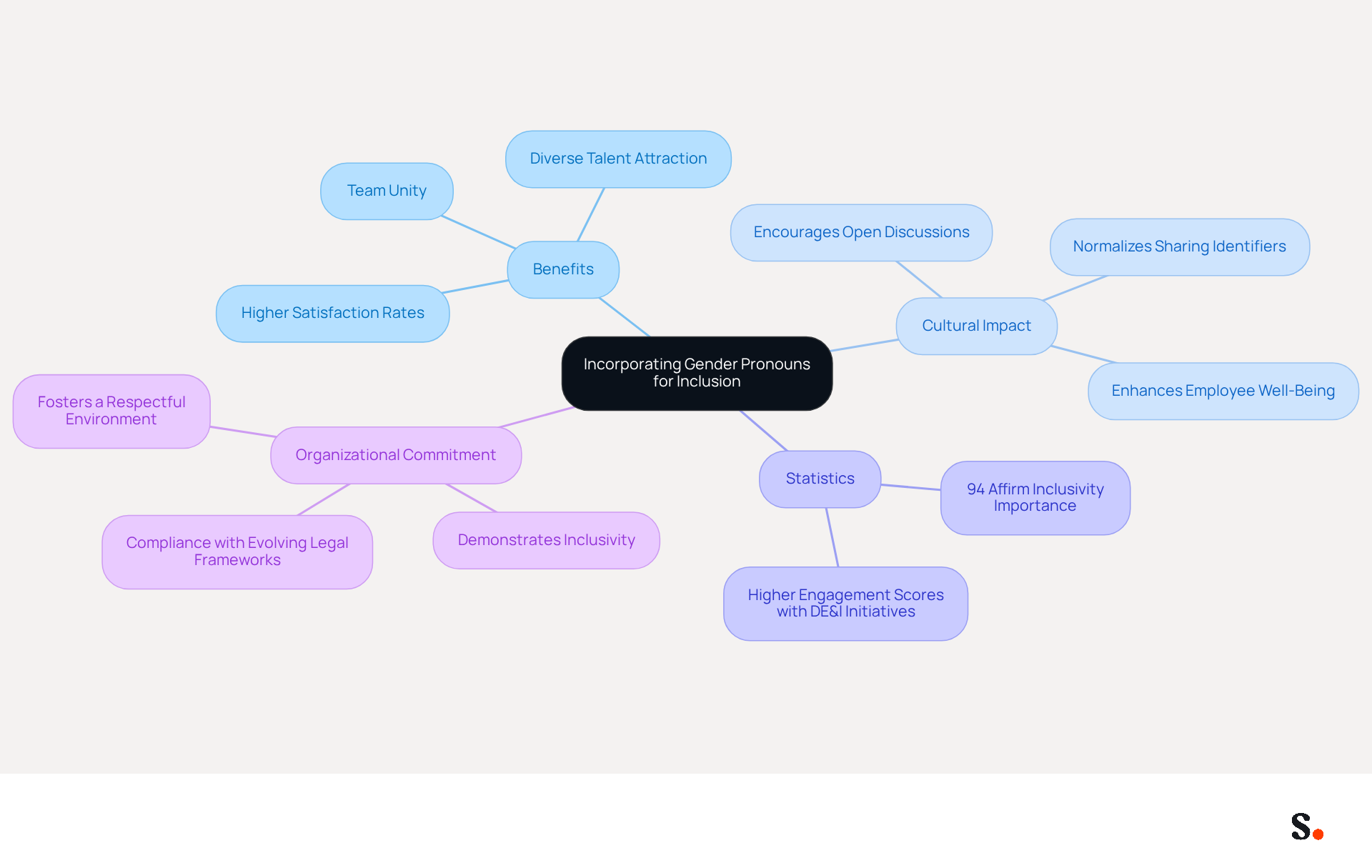
Incorporating gender pronouns in email signatures is a straightforward yet powerful strategy to enhance workplace inclusion and equity. This practice encourages open discussions about gender identity and helps normalize sharing personal identifiers among colleagues. By doing so, organizations can create a culture where everyone feels valued and respected.
For example, when staff observe their colleagues using pronouns in their signatures, it fosters an atmosphere where individuals feel secure to share their identities. This not only strengthens team unity but also draws in diverse talent, as prospective candidates recognize the organization's commitment to inclusivity.
Moreover, research shows that inclusive environments lead to higher satisfaction and retention rates, which in turn boosts the organization's financial performance. A notable statistic from the Inclusion Barometer 2024 survey indicates that 94% of respondents affirm that an inclusive workplace is crucial for attracting and retaining top talent. Additionally, organizations with diversity, equity, and inclusion (DE&I) initiatives report significantly higher employee engagement and satisfaction scores compared to those without.
By incorporating gender pronouns in email signatures, companies can effectively demonstrate their commitment to creating an inclusive environment, ultimately enhancing their overall performance and reputation. As legal frameworks evolve, organizations that embrace this practice will not only comply but also lead in fostering a truly inclusive workplace.
Implement Gender Pronouns Effectively in Email Signatures
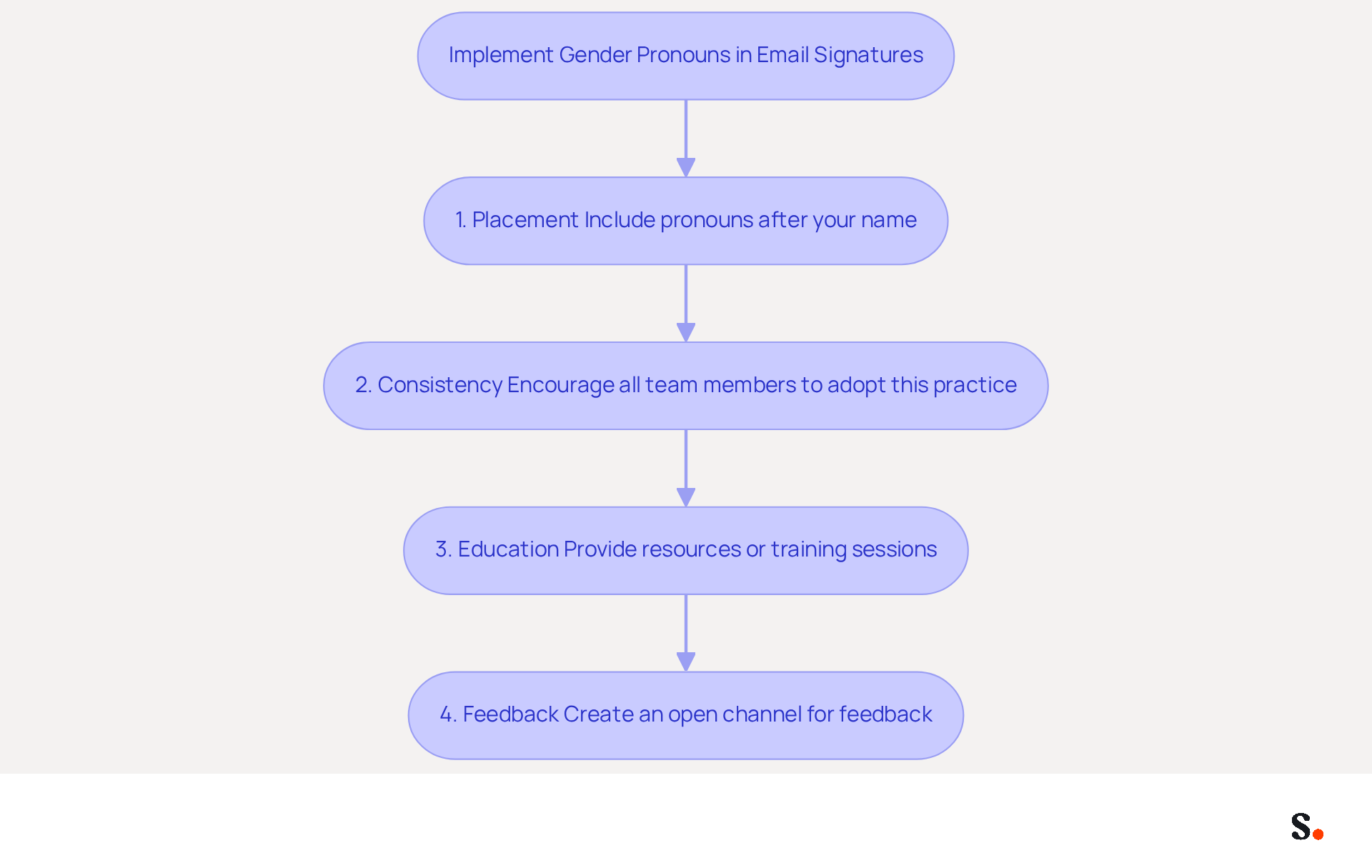
To create a truly inclusive workplace, implementing gender pronouns in email signatures is essential:
- Placement: Include your gender identifiers right after your name for maximum visibility. For example, 'John Doe (he/him)' or 'Jane Smith (she/her)'. This strategic placement allows recipients to quickly recognize your preferred pronouns.
- Consistency: Encourage all team members to adopt this practice to maintain uniformity across the organization. This consistency reinforces the message of inclusivity and demonstrates a collective commitment to respecting gender identities.
- Education: Provide resources or training sessions to inform employees about the significance of gender identifiers and how to use them correctly. Many employees may feel uncertain about how to address gender pronouns, leading to discomfort in communication. This initiative can help alleviate that discomfort, fostering a more supportive environment. As Katie Juran from Adobe stated, 'Respecting everyone’s identities is one small way we can do that.'
- Feedback: Create an open channel for feedback regarding pronoun usage. Encourage employees to share their experiences and suggestions for improvement. This practice not only improves communication but also fosters an environment of ongoing respect and understanding.
By adopting these best practices, organizations can foster a more inclusive and respectful workplace culture. For example, organizations like Virgin have successfully integrated optional fields for gender identifiers in email signatures, promoting a culture of respect and acknowledgment for transgender and non-binary individuals. A survey revealed that 74% of Americans think employers should learn and use staff's identifiers, emphasizing the increasing expectation for inclusivity in professional environments. Moreover, addressing the use of gendered terms is essential, as negative consequences faced by transgender individuals, such as reduced job satisfaction and heightened desire to leave, can result from misgendering. Ultimately, adopting gender pronouns in email signatures is not just a practice; it’s a commitment to respect and inclusivity that can transform workplace culture.
Address Challenges and Resistance to Pronoun Usage
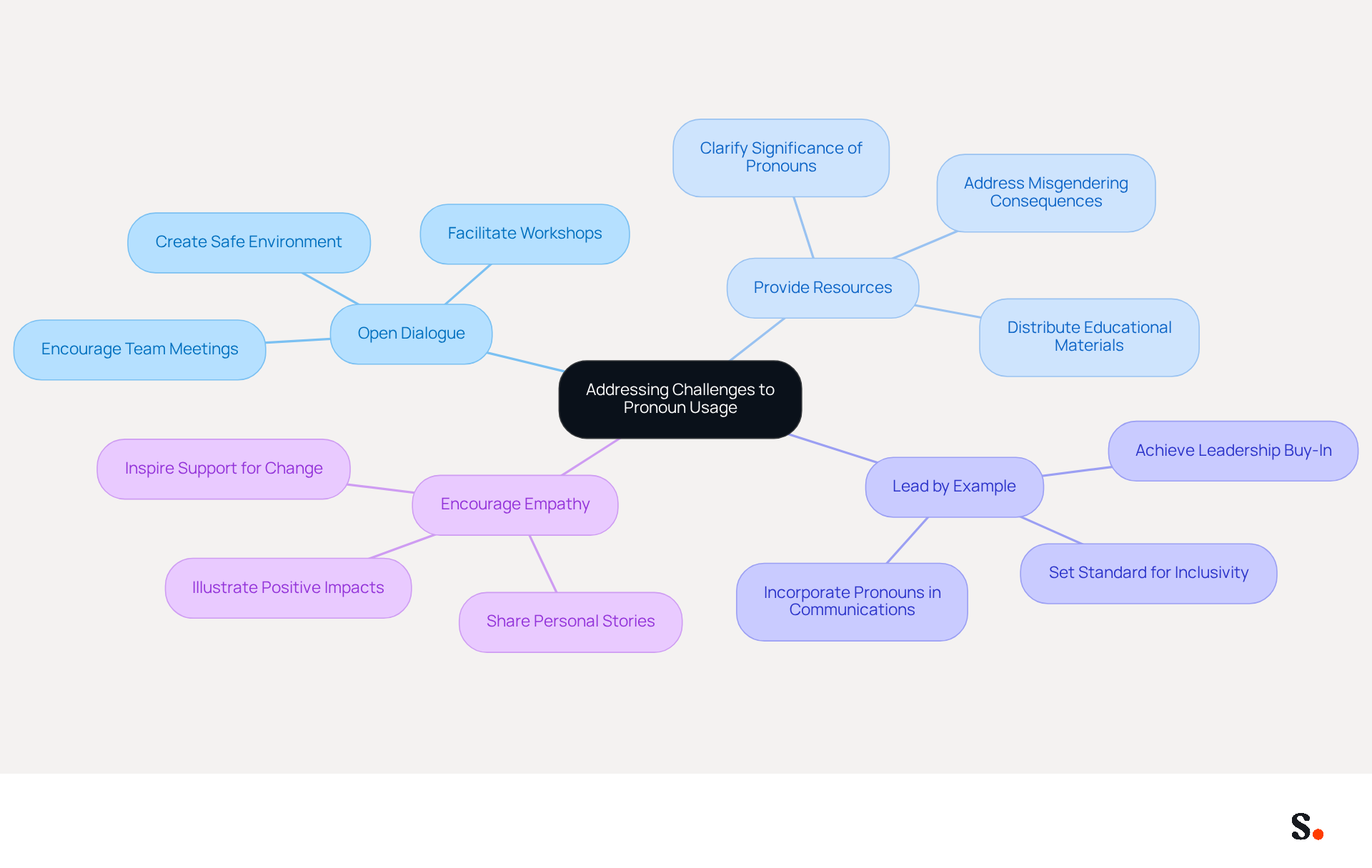
Resistance to including gender pronouns in email signatures often arises from misunderstandings about gender identity. To effectively address these challenges, organizations can implement several strategies:
- Open Dialogue: Create a safe environment for staff to share their concerns regarding gender identity usage. This can be facilitated through workshops or team meetings centered on diversity and inclusion, encouraging open communication.
- Provide Resources: Distribute educational materials that clarify the significance of pronouns and the consequences of misgendering. Such resources can help dispel myths and foster a deeper understanding among employees. Research shows that almost half of transgender individuals choose not to disclose their gender identity because they fear discrimination. This highlights the need for a supportive environment.
- Lead by Example: Leadership should exemplify inclusive behavior by incorporating their identifiers in communications. This practice not only sets a standard but also reinforces the organization's commitment to inclusivity. As Regan Gross from SHRM notes, "HR can drive this objective, but to be successful it needs to achieve complete buy-in to translate to company culture."
- Encourage Empathy: Share personal stories or testimonials from individuals who have experienced the positive impact of inclusive practices. Sharing these stories can illustrate the real impact of inclusivity and inspire others to support the change. Annie Lin emphasizes that 'knowing and using someone’s pronouns is a positive way to support the people you work with.'
By addressing these challenges head-on and adopting these strategies, organizations can foster a culture of inclusivity that benefits all employees. Additionally, case studies such as the impact of Title VII on gender identity discrimination illustrate the legal and ethical imperatives for adopting inclusive practices.
Conclusion
Incorporating gender pronouns in email signatures is essential for cultivating an inclusive workplace culture. This practice not only affirms individual identities but also signals an organization's commitment to diversity and respect. By normalizing the use of gender pronouns, companies can enhance communication, build stronger teams, and create an environment where everyone feels valued.
The article highlights several key strategies for effectively implementing gender pronouns in email signatures. These include:
- Ensuring visibility through strategic placement
- Promoting consistency across the organization
- Providing educational resources
- Encouraging open dialogue about gender identity
By following these best practices, organizations can tackle resistance and misunderstandings, paving the way for a more inclusive and equitable workplace.
Embracing gender pronouns is essential; it represents a commitment to respect and inclusion that can transform workplace dynamics. As organizations strive for 100% brand consistency and measurable marketing ROI, integrating gender pronouns into email signatures serves as a powerful tool for promoting workplace equity and attracting diverse talent. Ultimately, organizations that prioritize gender pronouns will not only enhance their internal culture but also strengthen their external reputation.
Frequently Asked Questions
Why is understanding gender pronouns important in the workplace?
Understanding gender pronouns is crucial for fostering an inclusive workplace culture, as it affirms individuals' identities and promotes respect. Misgendering can create barriers to effective communication and feelings of exclusion, undermining team cohesion and overall workplace effectiveness.
How can organizations demonstrate their commitment to diversity and inclusion regarding gender pronouns?
Organizations can demonstrate their commitment by integrating gender pronouns in email signatures, which clarifies appreciation for each individual's identity and improves communication.
Can you provide an example of how a company has implemented gender pronoun practices?
Intuit's Tucson Pride leader initiated a company-wide conversation about pronoun usage after observing a colleague's signature, leading to the implementation of fields for pronouns in employee messaging systems, fostering a more inclusive environment.
What legal protections exist regarding gender identity and pronouns?
Statistics indicate that 22 states have enacted laws protecting identity, and the Bostock ruling from June 2020 strengthens protections against discrimination based on identity, particularly against intentional misgendering.
What do experts recommend for normalizing the sharing of identity labels in professional settings?
Experts recommend that leaders and managers normalize the sharing of identity labels, as this fosters a culture of respect and enhances workplace culture and effectiveness.
List of Sources
- Understand Gender Pronouns and Their Importance
- Why sharing gender pronouns is important in the workplace | Culture Amp (https://cultureamp.com/blog/gender-pronouns-in-workplace)
- Misgendering at Work: More Than a Compliance Issue (https://shrm.org/topics-tools/employment-law-compliance/misgendering-at-work-more-than-compliance-issue)
- The Importance of Gender Pronouns in the Workplace | Intuit (https://intuit.com/blog/social-responsibility/he-she-they-why-pronouns-in-the-workplace-matter)
- Whiteford, Taylor & Preston LLP | The Importance of Pronouns in the Workplace (https://whitefordlaw.com/news-events/the-importance-of-pronouns-in-the-workplace)
- Leverage Pronouns for Workplace Inclusion and Equity
- Organizations embrace equity by sharing gender pronouns in email signatures (https://internationalwomensday.com/Missions/19523/Organizations-embrace-equity-by-sharing-gender-pronouns-in-email-signatures)
- States Are Banning Preferred Pronouns at Work, but Federal Guidelines Promote Inclusion. What Should HR Do? (https://shrm.org/topics-tools/news/inclusion-diversity/states-are-banning-preferred-pronouns-at-work-but-federal-guidelines-promote-inclusion)
- Creating an Inclusive Workplace: Boost Retention, Engagement, and Success (https://peopleforce.io/blog/why-inclusive-workplaces-foster-happier-and-more-productive-teams)
- Using Gender Pronouns in the Workplace: A Key to Inclusivity (https://emtrain.com/video-library/gender-pronouns-in-the-workplace)
- Sharing Gender Pronouns in Employee Bios, Email Signatures Helps Attract LGBTQ+ Applicants, Study Finds – Stories (https://stories.butler.edu/sharing-gender-pronouns-in-employee-bios-email-signatures-helps-attract-lgbtq-applicants-study-finds)
- Implement Gender Pronouns Effectively in Email Signatures
- Organizations embrace equity by sharing gender pronouns in email signatures (https://internationalwomensday.com/Missions/19523/Organizations-embrace-equity-by-sharing-gender-pronouns-in-email-signatures)
- Virgin Just Added Gender Pronouns to Email Signatures. Should Your Company Do the Same? (https://inc.com/jessica-stillman/virgin-just-added-gender-pronouns-to-email-signatures-should-your-company-do-same.html)
- Using Gender Pronouns in the Workplace: A Key to Inclusivity (https://emtrain.com/video-library/gender-pronouns-in-the-workplace)
- Recognizing employees’ gender pronouns is important | SAP (https://sap.com/blogs/respecting-employees-pronouns-important)
- Sharing Gender Pronouns in Employee Bios, Email Signatures Helps Attract LGBTQ+ Applicants, Study Finds – Stories (https://stories.butler.edu/sharing-gender-pronouns-in-employee-bios-email-signatures-helps-attract-lgbtq-applicants-study-finds)
- Address Challenges and Resistance to Pronoun Usage
- Whiteford, Taylor & Preston LLP | The Importance of Pronouns in the Workplace (https://whitefordlaw.com/news-events/the-importance-of-pronouns-in-the-workplace)
- How to Support Gender Identity/Expression in the Workplace (https://developmentguild.com/thought-leadership/how-to-support-gender-identity-expression-in-workplace)
- The Global Resistance to LGBTIQ Rights | Journal of Democracy (https://journalofdemocracy.org/articles/the-global-resistance-to-lgbtiq-rights)
- The New Global Struggle Over Gender, Rights, and Family Values (https://carnegieendowment.org/research/2025/06/the-new-global-struggle-over-gender-rights-and-family-values)
- Recognizing employees’ gender pronouns is important | SAP (https://sap.com/blogs/respecting-employees-pronouns-important)
Get started with Scribe
See why teams switch to Scribe
Free 14-day trial — no credit card.