Best Practices for Your Company Signature in Email Marketing
An effective email signature is not merely a formality; it is a crucial element in digital communication that can significantly enhance brand visibility and
Sophie Grant
Email Signature Specialist, Scribe

Introduction
An effective email signature is not merely a formality; it is a crucial element in digital communication that can significantly enhance brand visibility and engagement. By incorporating essential elements and adhering to design best practices, companies can transform their email signatures into powerful marketing tools that resonate with recipients.
Despite the clear benefits, many organizations find it challenging to maximize the impact of their email signatures. What strategies can be implemented to ensure that each email not only conveys professionalism but also drives measurable marketing results?
Without a strategic approach, organizations risk underutilizing a key asset in their marketing arsenal.
Define Essential Elements for Company Email Signatures
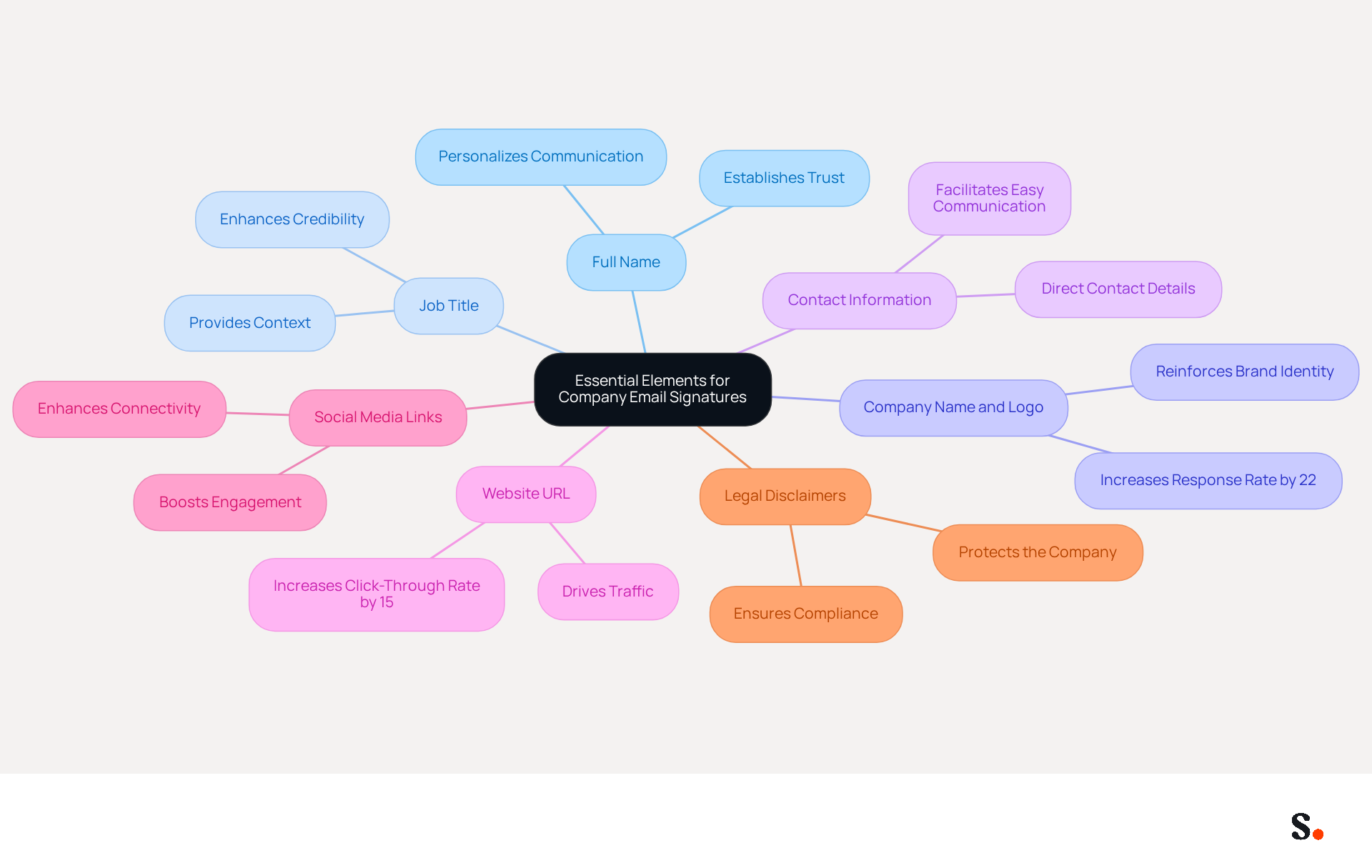
To create an effective email signature, it is essential to include key elements that enhance professionalism and trust:
- Full Name: Clearly state the sender's full name to personalize the communication and establish trust.
- Job Title: Including the sender's job title provides context and authority, enhancing credibility.
- Company Name and Logo: Prominently displaying the company name and logo reinforces brand identity, which is crucial as studies show that branded identifiers can lead to a 22% higher response rate.
- Contact Information: Direct contact details, such as phone number and email address, facilitate easy communication, making it simpler for recipients to reach out.
- Website URL: Linking to the Scribe website drives traffic and offers additional information, contributing to a 15% increase in website click-through rates for branded emails.
- Social Media Links: Incorporating icons that connect to pertinent social media profiles boosts engagement and connectivity, with 52% of professionals believing a robust digital identifier is essential for establishing trust.
- Legal Disclaimers: If necessary, adding legal disclaimers ensures compliance with regulations and protects the company, particularly in industries with specific legal requirements.
Including these elements turns the company signature in email into a powerful digital business card that boosts professionalism and brand visibility. This tool automatically syncs your email signatures with your business phone system, ensuring that any modifications made in your Aircall configuration are reflected in real-time. This seamless integration not only saves time by auto-filling your teammates' credentials but also guarantees that your team's information is always up-to-date and compliant with SOC 2 Type II standards, ensuring data security. By regularly updating and monitoring performance, you can ensure your email signatures remain effective and relevant in communication strategies. Furthermore, Scribe's average click-through rate on banners is 12%, offering measurable marketing performance metrics that improve your branding strategy.
Incorporate Design Best Practices for Visual Impact
To enhance the effectiveness of your email signature, it is crucial to adopt design best practices that prioritize clarity and brand consistency:
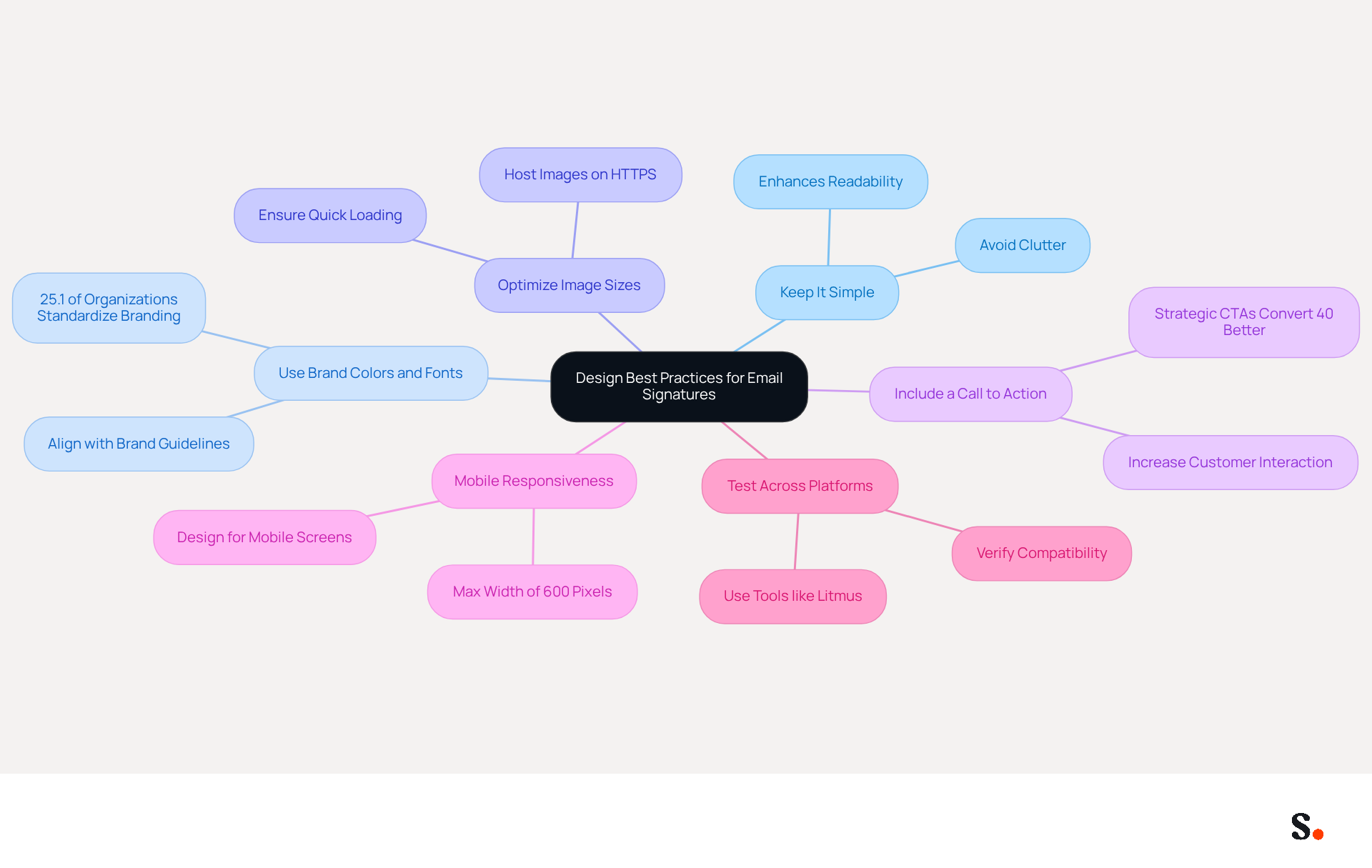
- Keep It Simple: A clean design enhances readability. Avoid clutter by limiting the number of elements in your email footer.
- Use Brand Colors and Fonts: Align the colors and fonts of your email with your brand guidelines to maintain consistency. Research shows that 25.1% of organizations prioritize standardizing their branding to ensure a cohesive professional image.
- Optimize Image Sizes: Many organizations struggle with ensuring their images load quickly and display correctly across devices. Ensure that images, such as logos, are optimized for quick loading and hosted on HTTPS URLs to enhance security and loading speed.
- Include a Call to Action (CTA): Adding a strategic CTA, such as a link to a current promotion or event, can lead to a notable increase in customer interaction. Research indicates that strategic CTAs convert 40% more effectively than generic links, making them crucial for impactful email footers.
- Mobile Responsiveness: Design elements to be mobile-friendly, ensuring they display well on smartphones and tablets. The standard banner size for mobile screens is 320 pixels, and email footers should be designed with a maximum width of 600 pixels for optimal viewing.
- Test Across Platforms: Verify how the mark appears in various messaging clients to ensure compatibility and visual integrity. Testing should be conducted in platforms like Litmus or Email on Acid to identify any layout issues.
Ultimately, the right design choices can transform your email signature into a powerful tool for brand recognition and customer engagement. For example, a redesign of email branding for a sales team resulted in acquiring 312 new CRM contacts in just 30 days, illustrating the potential effect of well-crafted branding on lead generation.
Leverage Email Signatures as Marketing Opportunities
Email identifiers represent untapped marketing potential that can significantly enhance your outreach efforts. Here are strategies to leverage them:
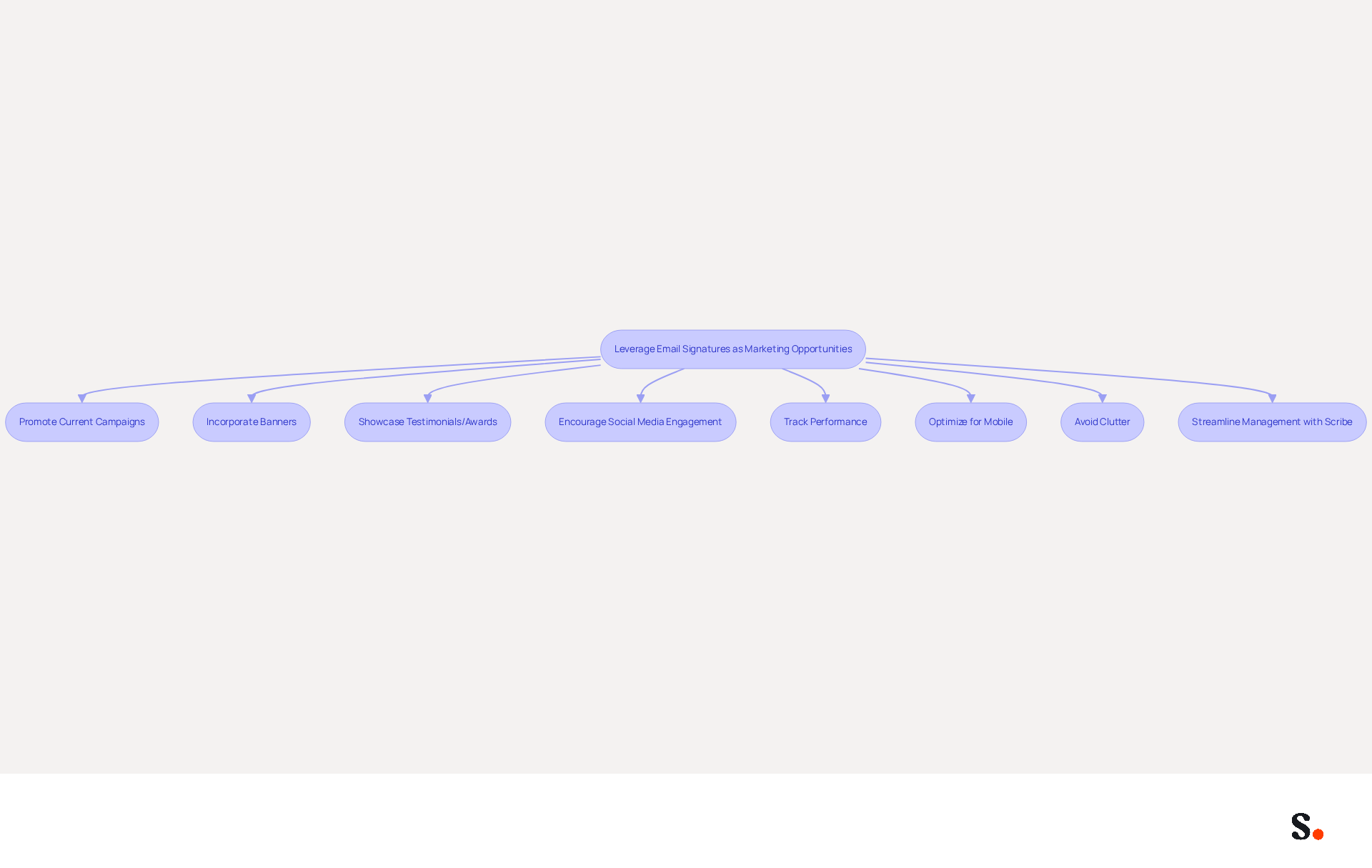
- Promote Current Campaigns: This approach ensures that every message acts as a marketing touchpoint, reaching thousands of recipients each day. Highlight ongoing promotions, events, or new product launches to maximize visibility.
- Incorporate Banners: Add visually appealing banners that link to landing pages or special offers. Studies show that well-placed banners can boost click-through rates significantly, with some campaigns achieving up to 12% CTR, translating to thousands of tracked clicks per month.
- Showcasing customer testimonials or recent awards in your company signature in email builds credibility and trust. Incorporating such elements can strengthen your reputation and influence purchasing choices at the moment of communication.
- Encourage Social Media Engagement: Include links to social media profiles to encourage recipients to connect and engage with your brand online. This strategy not only enhances your online presence but also fosters deeper relationships with your audience.
- Track Performance: Utilize tracking links to assess the effectiveness of your marketing efforts related to your message. By analyzing metrics such as click-through rates and engagement rates, businesses can make data-driven adjustments to optimize their strategies.
- Optimize for Mobile: Ensure that your contact details are mobile-friendly, as many users access messages via their phones. A well-optimized identifier enhances user experience and engagement.
- Avoid Clutter: Clutter can dilute your message and confuse recipients. Keep your digital identifiers simple and precise, steering clear of excessive information that may overwhelm recipients. A neat mark is more effective than a cluttered one.
- Streamline Management with Scribe: By syncing your Google Workspace with the application, you can save time and ensure that your email signatures are always up-to-date. This integration enables automatic updates, meaning any changes in your team’s information-such as job positions or group assignments-are reflected in the application without manual input. This not only improves efficiency but also guarantees consistency across all communications. Companies like Nike and Headspace have successfully utilized the platform to uphold brand integrity and enhance marketing ROI.
By treating electronic identifiers as marketing opportunities, organizations can improve their outreach and generate measurable results from every message sent. This strategic approach not only maximizes the impact of routine communications but also enhances your brand's presence through a company signature in email for sustained growth.
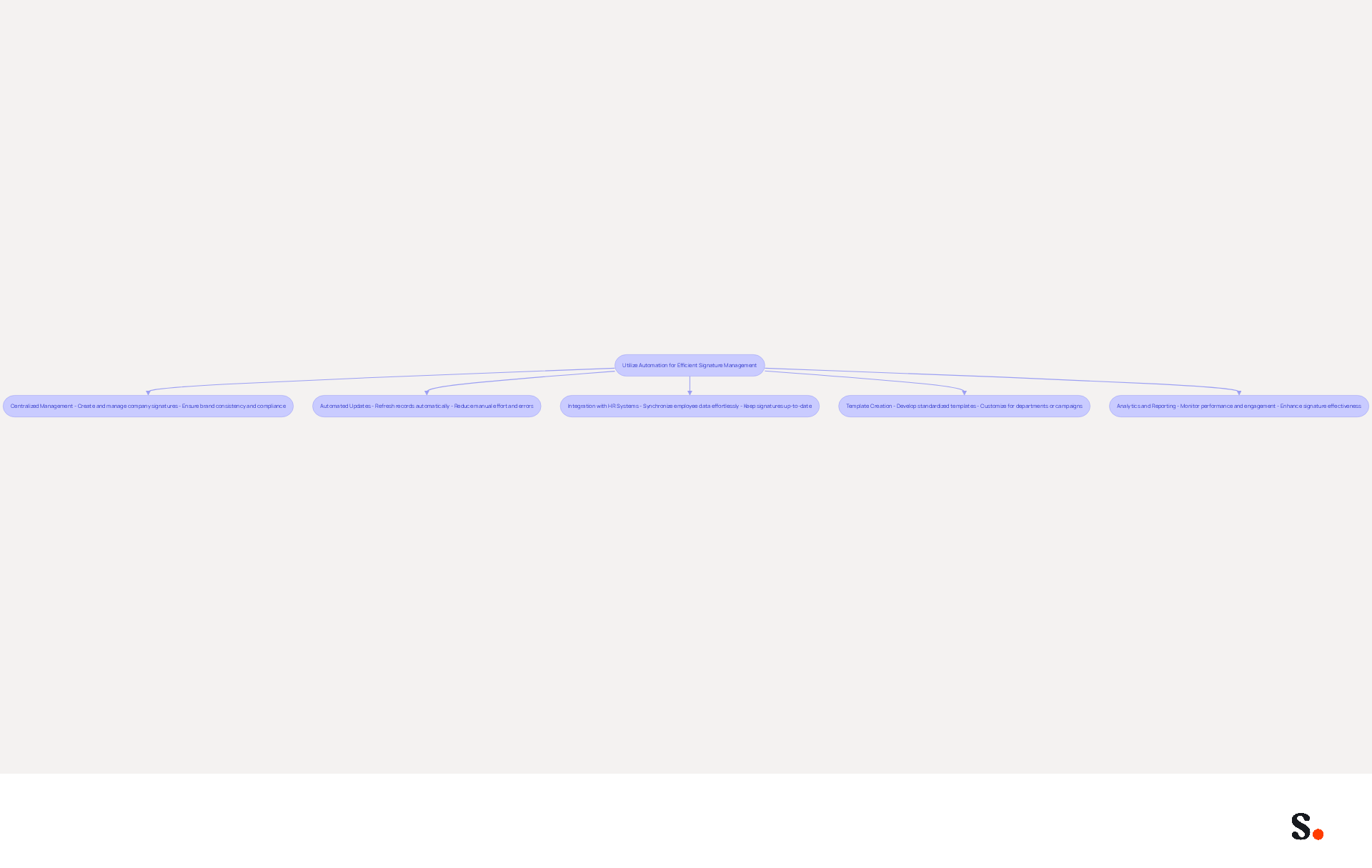
Utilize Automation for Efficient Signature Management
Effective management of digital signatures is essential for maintaining brand integrity and operational efficiency. Utilizing automation tools such as Scribe is crucial. Here are key practices:
- Centralized Management: Utilize a centralized platform to create and manage the company signature in email identifiers across the organization, ensuring brand consistency and compliance.
- Automated Updates: Adopt systems that automatically refresh records when employee information changes, significantly reducing manual effort and the risk of errors. Scribe's integration with your business phone system enables real-time synchronization of team member identifiers, ensuring that any modifications are automatically updated without needing action from your team. This is especially important during role changes or rebranding, as manual updates can be time-consuming. Manual management of electronic identifiers often leads to errors and inefficiencies, underscoring the need for automation.
- Ensure to include the company signature in email communications. Integration with HR Systems: Connect email signature management tools with HR systems to effortlessly synchronize employee data, ensuring that the company signature in email remains always up-to-date and precise. Scribe enhances teammate information from various sources, allowing for efficient updates and management.
- Template Creation: Develop standardized templates that can be easily customized for different departments or campaigns, allowing for quick adjustments while maintaining a cohesive brand image.
- Analytics and Reporting: Utilize analytics to monitor performance and engagement metrics, facilitating ongoing enhancement. Companies utilizing branded signatures have reported a 15% increase in website click-through rates and a 22% higher response rate compared to those without, highlighting the effectiveness of a strong signature.
To set up one-click synchronization, simply grant Scribe permission to connect with your mail provider. You need to be a Super Admin of your service provider to provide these permissions. By utilizing automation with Scribe, organizations can improve their management processes for the company signature in email, ensuring brand consistency while conserving time and resources. This shift to automation not only streamlines processes but also enhances compliance with SOC 2 Type II standards, GDPR, and CCPA, strengthening marketing effectiveness. Embracing automation in signature management is not just a choice; it’s a strategic necessity for future-proofing your business communications.
Conclusion
Email signatures are often underestimated, yet they hold the key to enhancing brand visibility and building professional relationships. By incorporating essential elements such as full names, job titles, and company logos, organizations can establish trust and credibility with every email sent. Furthermore, leveraging design best practices ensures that these signatures are not only visually appealing but also aligned with brand identity, ultimately transforming them into powerful marketing tools.
The article highlights several key strategies for maximizing the effectiveness of email signatures. From promoting current campaigns and incorporating engaging banners to utilizing automation for efficient management, each tactic contributes to a cohesive marketing strategy. The integration of tools like Scribe allows for seamless updates and compliance with security standards, ensuring that email signatures remain consistent and effective across the organization. With an average click-through rate of 12% on signature banners, the potential for lead generation and brand promotion is substantial.
In conclusion, embracing the full potential of email signatures can lead to measurable marketing success and enhanced brand recognition. Organizations are encouraged to view their email signatures as dynamic marketing assets rather than static elements. By implementing the best practices outlined and utilizing automation tools, when businesses implement these best practices and use automation tools, they can make sure their email communications are professional while also boosting engagement and growth. The time to optimize email signatures for marketing impact is now, as every email sent is an opportunity to connect, engage, and promote the brand effectively.
Frequently Asked Questions
What are the essential elements to include in a company email signature?
The essential elements to include in a company email signature are the sender's full name, job title, company name and logo, contact information, website URL, social media links, and legal disclaimers if necessary.
Why is it important to include the sender's full name in an email signature?
Including the sender's full name personalizes the communication and helps establish trust with the recipient.
How does including a job title in an email signature enhance credibility?
Including a job title provides context and authority, which enhances the sender's credibility.
What role does the company name and logo play in an email signature?
The company name and logo reinforce brand identity, which is crucial as studies show that branded identifiers can lead to a 22% higher response rate.
Why should contact information be included in an email signature?
Direct contact details, such as phone number and email address, facilitate easy communication, making it simpler for recipients to reach out.
How does linking to the Scribe website in an email signature benefit the company?
Linking to the Scribe website drives traffic and offers additional information, contributing to a 15% increase in website click-through rates for branded emails.
What is the significance of incorporating social media links in an email signature?
Incorporating social media links boosts engagement and connectivity, with 52% of professionals believing a robust digital identifier is essential for establishing trust.
When should legal disclaimers be added to an email signature?
Legal disclaimers should be added if necessary to ensure compliance with regulations and protect the company, particularly in industries with specific legal requirements.
How does Scribe's email signature tool enhance efficiency?
Scribe's email signature tool automatically syncs signatures with the business phone system, ensuring that any modifications made are reflected in real-time, saving time and keeping information up-to-date.
What are the benefits of regularly updating and monitoring email signatures?
Regularly updating and monitoring email signatures ensures they remain effective and relevant in communication strategies.
What is Scribe's average click-through rate on banners, and why is it important?
Scribe's average click-through rate on banners is 12%, providing measurable marketing performance metrics that improve branding strategy.
List of Sources
- Define Essential Elements for Company Email Signatures
- Best Practices for Your Signature Business Email Strategy (https://scribe-mail.com/en-US/blog/best-practices-for-your-signature-business-email-strategy)
- Email signature statistics: Why every business should optimize their email signatures — Stripo.email (https://stripo.email/blog/email-signature-statistics-why-every-business-should-optimize-their-email-signatures)
- Email Signature Best Practices for 2026 (+ 15 Pro Examples) (https://wavecnct.com/blogs/email-signature-best-practices-2026)
- What to Include in a Business Email Signature (https://rocketseed.com/blog/email-signature-what-to-include)
- 20 Tips for Creating an Effective Email Signature — SitePoint (https://sitepoint.com/creating-an-effective-email-signature)
- Incorporate Design Best Practices for Visual Impact
- Top 10+ best practices for email signatures design in 2026 (https://mysignature.io/blog/email-signature-best-practices)
- Why Email Signatures Must Be In Your 2026 Marketing Plan | Rocketseed (https://rocketseed.com/blog/what-are-the-biggest-email-trends-for-2026)
- Email Signature Best Practices - NEWOLDSTAMP (https://newoldstamp.com/blog/email-signature-best-practices)
- Email Signature Best Practices for 2026 (+ 15 Pro Examples) (https://wavecnct.com/blogs/email-signature-best-practices-2026)
- Best practices for business email signatures in 2026 (https://bybrand.io/blog/best-practices)
- Leverage Email Signatures as Marketing Opportunities
- 6 Ways to Use Email Signature to Support Marketing Campaigns (https://clearout.io/blog/use-email-signature-to-support-marketing-campaigns)
- Email Signature Marketing Examples That Drive ROI | CloudM (https://cloudm.io/resources/blog/email-signature-marketing-examples-that-drive-roi)
- 12 email signature marketing examples that drive clicks (2026) (https://signitic.com/en/resources/12-email-signature-marketing-examples-that-actually-drive-clicks)
- 12 clever ways to use your email signature to support your marketing campaigns (https://blog.hubspot.com/blog/tabid/6307/bid/31054/10-clever-ways-your-email-signature-can-support-your-marketing.aspx)
- Email signature statistics: Why every business should optimize their email signatures — Stripo.email (https://stripo.email/blog/email-signature-statistics-why-every-business-should-optimize-their-email-signatures)
- Utilize Automation for Efficient Signature Management
- Email Signature Trends 2026: Centralized Control & Automation | SIGNandGO posted on the topic | LinkedIn (https://linkedin.com/posts/signngo_email-signature-trends-to-watch-in-2026-activity-7401523471786217473-zAVL)
- Automating Email Signatures: How IT Teams Streamline Processes & Reduce Risk (https://exclaimer.com/blog/streamlining-it-processes-automated-email-signatures)
- Email signature statistics: Why every business should optimize their email signatures — Stripo.email (https://stripo.email/blog/email-signature-statistics-why-every-business-should-optimize-their-email-signatures)
- Email signature statistics and trends in 2024 (https://wisestamp.com/blog/email-signature-statistics)
Get started with Scribe
Manage signatures across your whole team
Free 14-day trial — no credit card.