Comparing the 'All the Best' Sign-Off with Effective Alternatives
Email sign-offs play a crucial role in shaping communication effectiveness, yet many professionals overlook their significance. Choosing the right sign-off can
Sophie Grant
Email Signature Specialist, Scribe
Introduction
Email sign-offs play a crucial role in shaping communication effectiveness, yet many professionals overlook their significance. Choosing the right sign-off can enhance engagement and strengthen relationships; however, many professionals find themselves uncertain about the best option. With choices like 'All the Best' and its various alternatives, how can one navigate the nuances of sign-off etiquette to ensure the right message is conveyed? This article delves into the characteristics of the 'All the Best' sign-off, explores effective alternatives, and provides insights on choosing the most appropriate closing for different contexts.
Get started with Scribe
See why teams switch to Scribe
Free 14-day trial — no credit card.
Understanding Email Sign-Offs: Importance and Impact
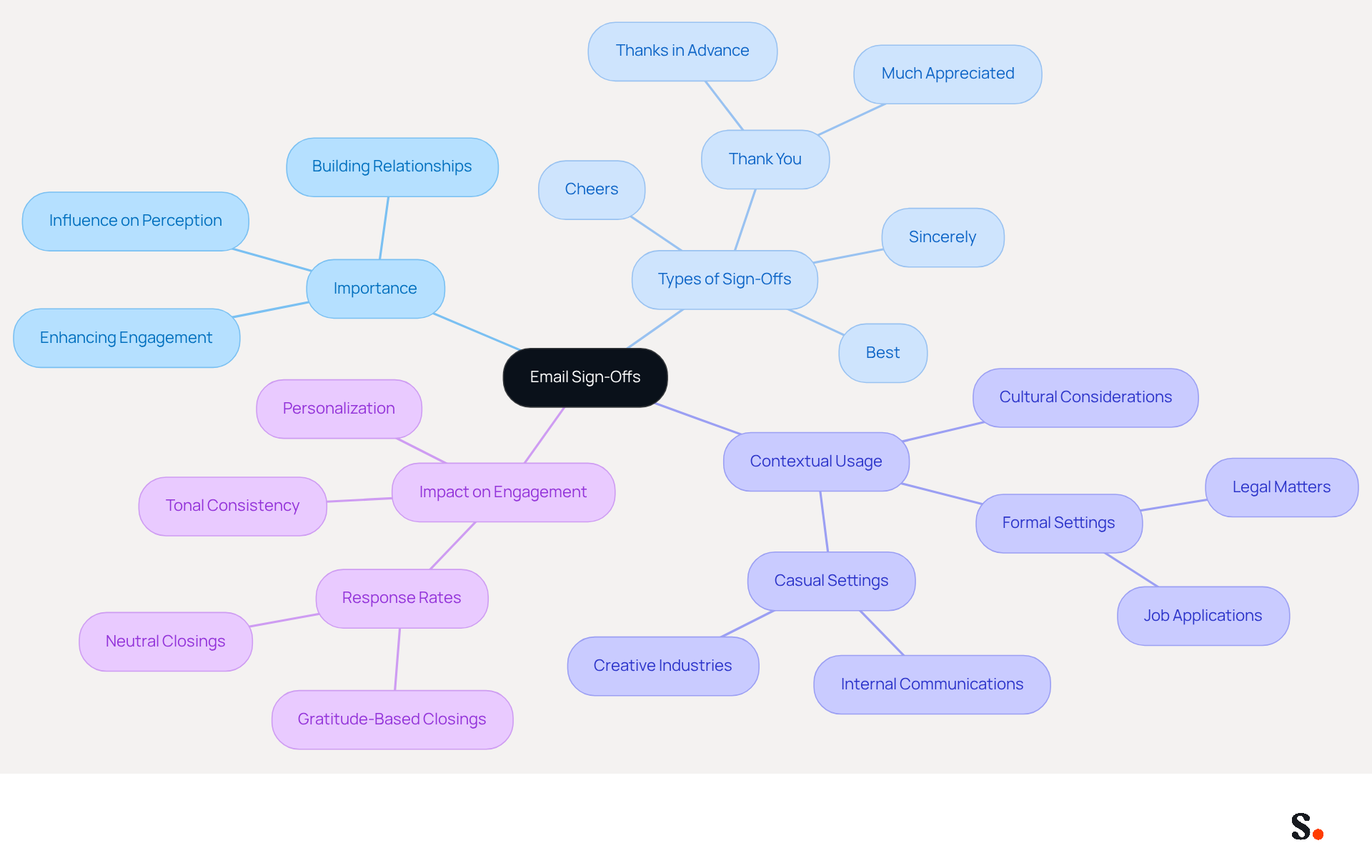
Email sign-offs are not just formalities; they play a crucial role in shaping the perception of digital communication. A well-selected closing can reinforce the email's tone, clarify intentions, and even drive engagement. For instance, a closing like 'Thank you' suggests a request for a response, while 'Best' communicates a more neutral or casual tone.
Studies by Boomerang show that emails expressing gratitude, like 'Thanks in advance,' receive response rates up to 65% higher than those without such closings. Understanding the nuances of sign-offs can be challenging for professionals striving to maintain effective interaction and cultivate positive relationships.
The choice of sign-off can significantly impact how the sender is perceived in professional settings. For example, using 'Sincerely' is important for job applications or legal matters, while 'Cheers' works well in creative fields or among colleagues.
Case studies focusing on networking and follow-up emails reveal that tailoring sign-offs to specific situations enhances interaction effectiveness, leaving a positive impression on recipients. Additionally, matching the recipient's sign-off style and ensuring proper punctuation and capitalization can further improve engagement and relationship-building efforts.
Ultimately, the right sign-off can enhance communication effectiveness and foster stronger professional relationships.
'All the Best' Sign-Off: Characteristics and Use Cases
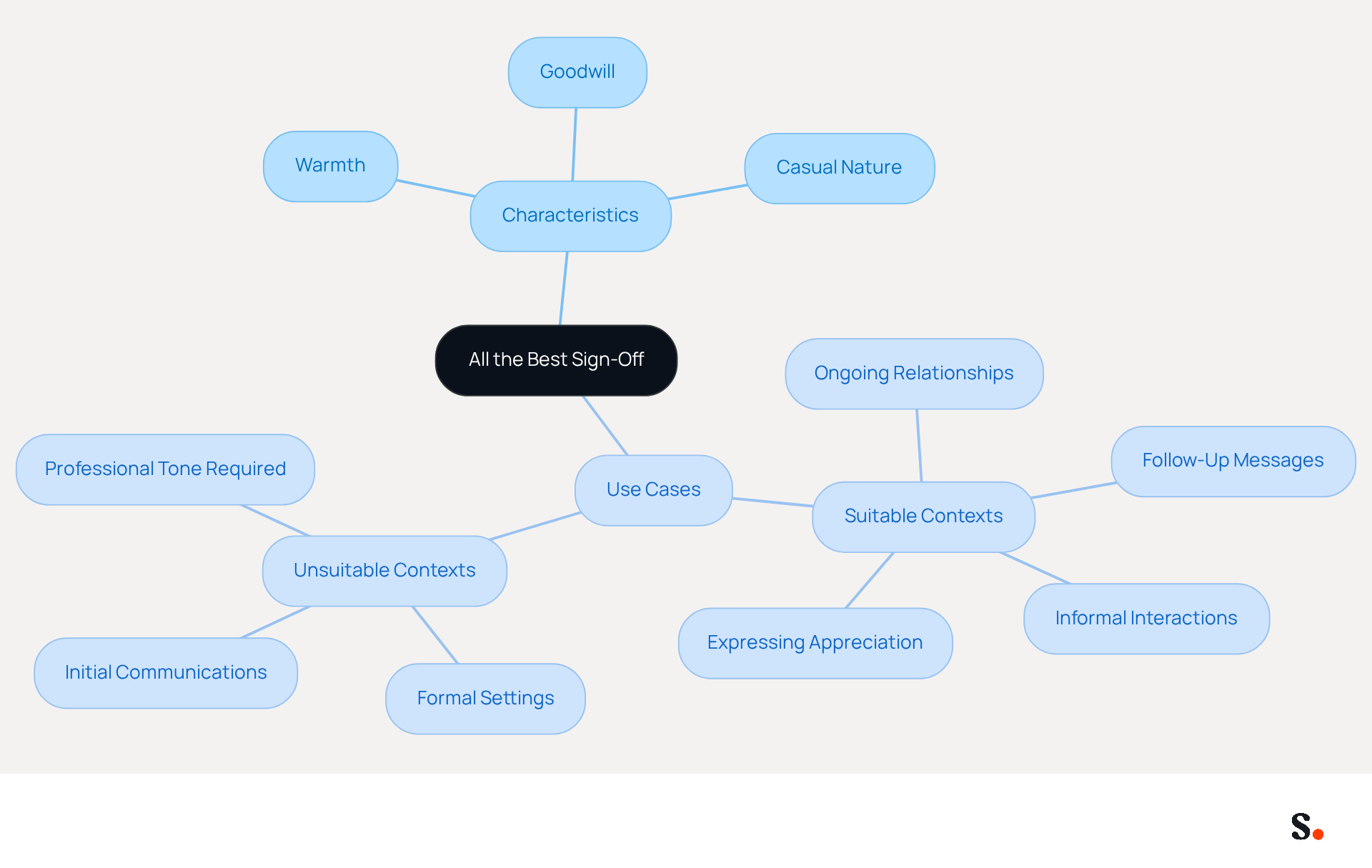
While the all the best sign-off conveys warmth, its appropriateness varies significantly across different professional contexts. It is often viewed as friendly, making it suitable for ongoing professional relationships or informal interactions. This sign-off conveys goodwill and positivity, which can be beneficial in maintaining rapport.
However, its casual nature might not suit more formal contexts, especially in initial communications with clients or stakeholders. Choosing the right sign-off can be challenging, especially in formal communications. It's important to know when to use the 'all the best sign-off' to ensure it fits the situation; it works well in follow-up messages or when expressing appreciation, but may fall short in situations requiring a more professional tone.
Research shows that sign-offs expressing gratitude, like 'Thank you', often lead to higher response rates than casual alternatives. Furthermore, context is crucial when choosing a message closing; if there’s any uncertainty about its suitability, it’s advisable to err on the side of caution. Cultural sensitivities should also be considered, as what is acceptable in one context may not be in another. Ultimately, the effectiveness of a sign-off hinges on the context and the relationship with the recipient.
Effective Alternatives to 'All the Best': Pros and Cons
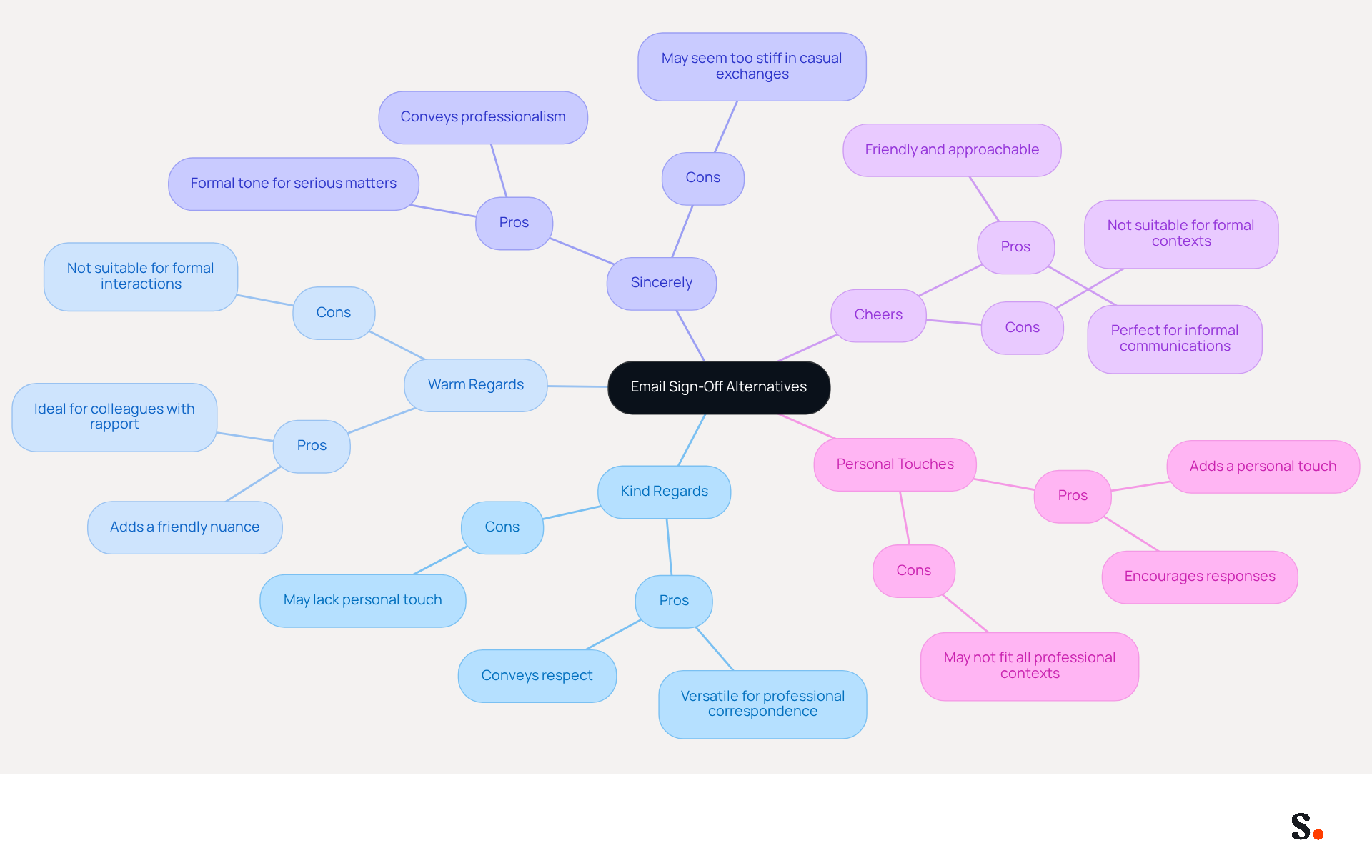
Choosing the right email sign-off can significantly impact the tone and effectiveness of your communication. Several alternatives to 'All the Best' can be effectively employed based on the context and relationship with the recipient. For example, 'Kind Regards' is a versatile option for professional correspondence, conveying respect without being excessively formal. It maintains a balance between professionalism and warmth, making it suitable for various business interactions. Yet, 'Kind Regards' might not always convey the personal touch needed in certain situations.
In contrast, 'Warm Regards' adds a friendly nuance, making it ideal for colleagues or clients with whom one shares a rapport. This sign-off fosters a sense of connection, enhancing the overall tone of the email. However, it may not be suitable for more formal interactions.
'Sincerely' is another option that carries a more formal tone, making it suitable for initial interactions or serious matters. It conveys professionalism and respect, but it may come across as too stiff in casual exchanges.
On the more casual side, 'Cheers' offers a friendly and approachable sign-off, perfect for informal communications with colleagues or external collaborators. However, its casual nature may not be suitable for all professional contexts, particularly when addressing senior individuals or in formal correspondence.
Furthermore, phrases like 'Have a nice evening' can add a personal touch when concluding messages with colleagues or external collaborators, while 'Hope to hear from you' is suitable for outreach to prospective clients or partners, encouraging responses. Research shows that sign-offs expressing gratitude, like 'Thank you' or 'Thanks in advance,' lead to higher engagement rates than neutral closings such as 'Best.' For instance, messages that end with 'Thanks in advance' can achieve a response rate of 65.7%, significantly surpassing more generic sign-offs. In contrast, messages ending with 'Best' have a reply rate of only 51.2%.
Ultimately, your choice of closing should align with your relationship with the recipient and the message's context. Tailoring the closing to suit the situation can enhance engagement and foster positive interactions.
Choosing the Right Sign-Off: Contextual Considerations
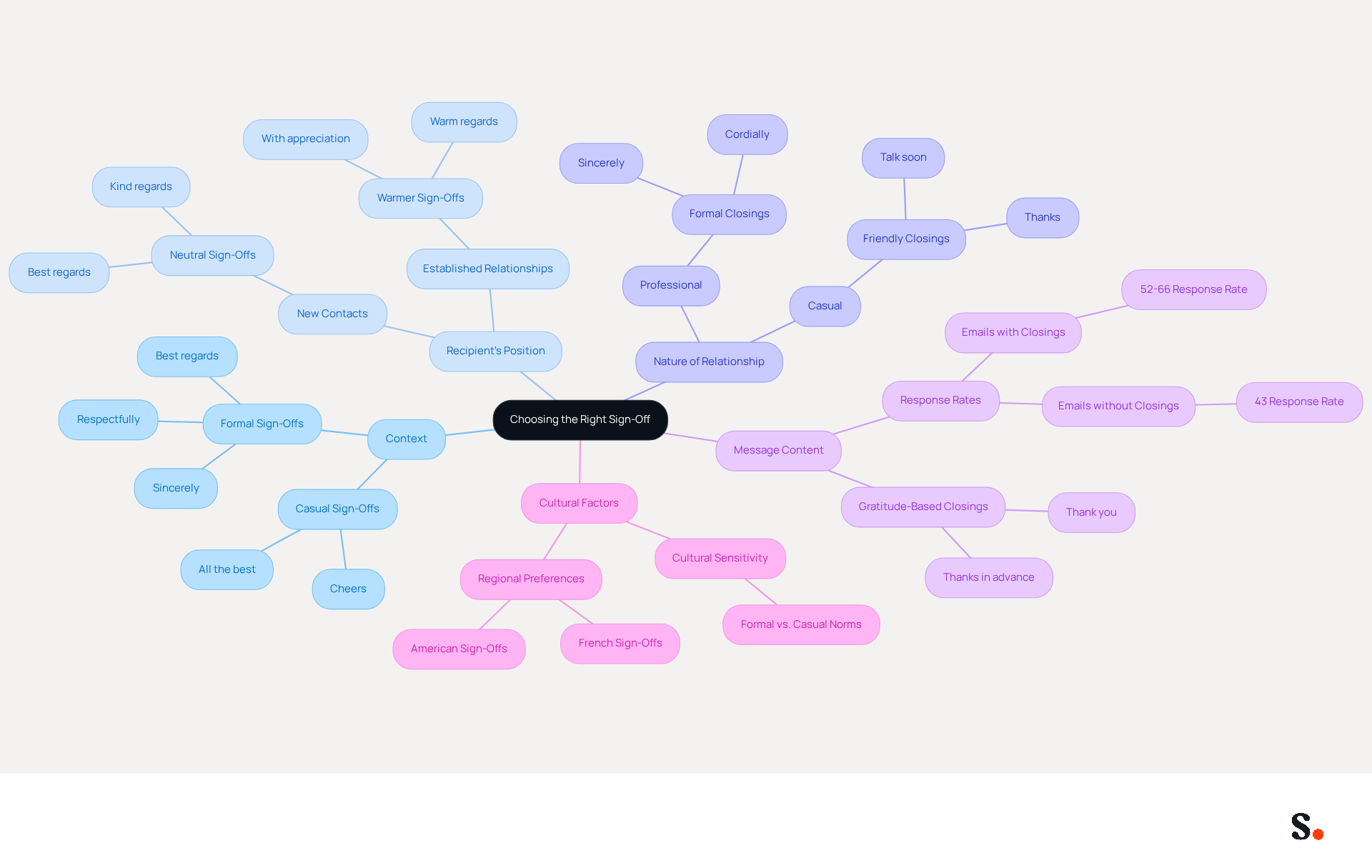
Selecting an appropriate sign-off is not merely a formality; it can significantly influence the effectiveness of your communication. When choosing a sign-off for correspondence, context is crucial. Factors such as the recipient's position, the nature of the relationship, and the message's content should guide the choice. For example, formal business correspondences benefit from sign-offs like 'Sincerely' or 'Best regards,' which convey professionalism and respect. In contrast, more casual exchanges may be better suited to sign-offs such as 'all the best sign-off' or 'Cheers.'
Cultural factors matter too; what works in one culture might not fly in another. For instance, while 'Best wishes' is widely accepted in educational contexts, it may not resonate the same way in corporate settings.
Studies indicate that messages with suitable closings see response rates of 52% to 66%, while those without only reach 43%. This highlights how crucial a thoughtful closing is for effective communication. Additionally, gratitude-based closings, such as 'Thank you' or 'Thanks in advance,' can lead to a 36% relative increase in response rates, reinforcing positive relationships and encouraging engagement. The psychological recency effect indicates that recipients recall the final tone of an email long after reading it, making the appropriate closing essential.
Ultimately, incorporating the right all the best sign-off can transform your correspondence, enhancing both engagement and professional relationships.
Conclusion
The choice of email sign-off plays a pivotal role in shaping communication outcomes. While the 'All the Best' sign-off conveys warmth and friendliness, its appropriateness varies depending on the context and the relationship with the recipient. Understanding when to use this sign-off, along with exploring effective alternatives, can be challenging, as it requires an understanding of context and relationship dynamics.
Throughout the article, key insights highlight the importance of tailoring sign-offs to specific situations. Alternatives such as 'Kind Regards,' 'Warm Regards,' and 'Sincerely' each carry distinct connotations that can either enhance or detract from the intended message. Studies show that gratitude-based closings can lead to a 20% increase in response rates, emphasizing the need for thoughtful consideration in sign-off choices. Additionally, cultural sensitivities and the nature of the relationship play pivotal roles in determining the most suitable closing.
In the end, picking the right sign-off is not just a formality; it can really shape how we connect with others. By getting a grip on the nuances of various sign-offs and their contextual implications, professionals can improve their communication effectiveness. Embracing this knowledge not only enhances individual interactions but also contributes to a more positive and productive professional environment.
Frequently Asked Questions
What is the importance of email sign-offs?
Email sign-offs play a crucial role in shaping the perception of digital communication, reinforcing the email's tone, clarifying intentions, and driving engagement.
How can different sign-offs affect response rates?
Studies by Boomerang show that emails with gratitude expressions, such as 'Thanks in advance,' receive response rates up to 65% higher than those without such closings.
What are some examples of appropriate sign-offs for different contexts?
'Sincerely' is important for job applications or legal matters, while 'Cheers' is suitable for creative fields or among colleagues.
How can tailoring sign-offs enhance email effectiveness?
Tailoring sign-offs to specific situations can enhance interaction effectiveness and leave a positive impression on recipients.
What factors should be considered when choosing a sign-off?
Factors include matching the recipient's sign-off style, ensuring proper punctuation and capitalization, and the context of the email.
What is the overall impact of using the right sign-off?
The right sign-off can enhance communication effectiveness and foster stronger professional relationships.
List of Sources
- Understanding Email Sign-Offs: Importance and Impact
- Master the Take Care Email Sign-Off: Best Practices for Impact (https://scribe-mail.com/en-US/blog/master-the-take-care-email-sign-off-best-practices-for-impact)
- Is 'Best' a Good Way to End an Email? Compare Sign-Offs Here (https://scribe-mail.com/en-US/blog/is-best-a-good-way-to-end-an-email-compare-sign-offs-here)
- Email Sign Offs Professional: Best Practices for Business Emails (https://mailwarm.com/blog/professional-email-sign-offs-best-practices)
- 75 Best Email Sign-Offs for Any Situation - All-in-One Marketing Automation Toolset | FosterFlow (https://fosterflow.ai/75-best-email-sign-offs-for-any-situation)
- Email Sign Offs for Every Industry and Situation | Mailchimp (https://mailchimp.com/resources/email-sign-offs)
- 'All the Best' Sign-Off: Characteristics and Use Cases
- 49 Top Email Marketing Statistics (https://forbes.com/advisor/business/software/email-marketing-statistics)
- 100 Compelling Email Statistics for 2026 | PGM Solutions (https://porchgroupmedia.com/blog/100-compelling-email-statistics-to-inform-your-strategy-in-2023)
- The 37 best ways to close emails (https://signitic.com/en/resources/email-sign-offs)
- How to Sign Off on an Email Correctly | Rocketseed (https://rocketseed.com/blog/correct-way-to-sign-off-emails)
- 89 Ways To Sign Off On An Email (https://forbes.com/sites/susanadams/2014/10/08/89-ways-to-sign-off-on-an-email)
- Effective Alternatives to 'All the Best': Pros and Cons
- How to End an Email: 43 Ways to Sign Off on an Email (2026) (https://respona.com/blog/how-to-end-an-email)
- Is 'Best' a Good Way to End an Email? Compare Sign-Offs Here (https://scribe-mail.com/en-US/blog/is-best-a-good-way-to-end-an-email-compare-sign-offs-here)
- The Best (and Worst) Ways To Sign an Email | Robert H. Smith School of Business (https://rhsmith.umd.edu/research/best-and-worst-ways-sign-email)
- Choosing the Right Sign-Off: Contextual Considerations
- Email Sign Offs for Every Industry and Situation | Mailchimp (https://mailchimp.com/resources/email-sign-offs)
- Mastering Professional Email Sign-Offs in 2026 (https://linkedin.com/pulse/mastering-professional-email-sign-offs-2026-bulksignature-qsr4e)
- Closing Salutations for Emails: Data-Backed Guide (2026) (https://prospeo.io/s/closing-salutations-for-emails)
- 12 Email Sign-Offs That Get Responses [2026 Data] (https://lagrowthmachine.com/email-sign-offs-get-responses)
- The beautiful ways different cultures sign emails (https://bbc.com/worklife/article/20190508-why-the-way-you-close-your-emails-is-causing-confusion)
Get started with Scribe
See why teams switch to Scribe
Free 14-day trial — no credit card.