Comparing Traditional and Digital Ink: Which is Right for You?
As businesses and artists navigate the evolving landscape of ink technology, they face a critical decision: traditional ink or digital ink? Each type offers
Sophie Grant
Email Signature Specialist, Scribe

Introduction
As businesses and artists navigate the evolving landscape of ink technology, they face a critical decision: traditional ink or digital ink? Each type offers distinct characteristics and applications that cater to different needs, from the tangible qualities of traditional ink versus the adaptability and speed of digital solutions.
As industries evolve, businesses often find it challenging to decide which ink type fits their needs best. This article delves into the advantages and disadvantages of both traditional and digital ink, guiding readers through the decision-making process to find the perfect fit for their unique requirements.
Ultimately, the right choice can significantly impact operational efficiency and brand perception.
Get started with Scribe
See why teams switch to Scribe
Free 14-day trial — no credit card.
Define Traditional Ink and Digital Ink
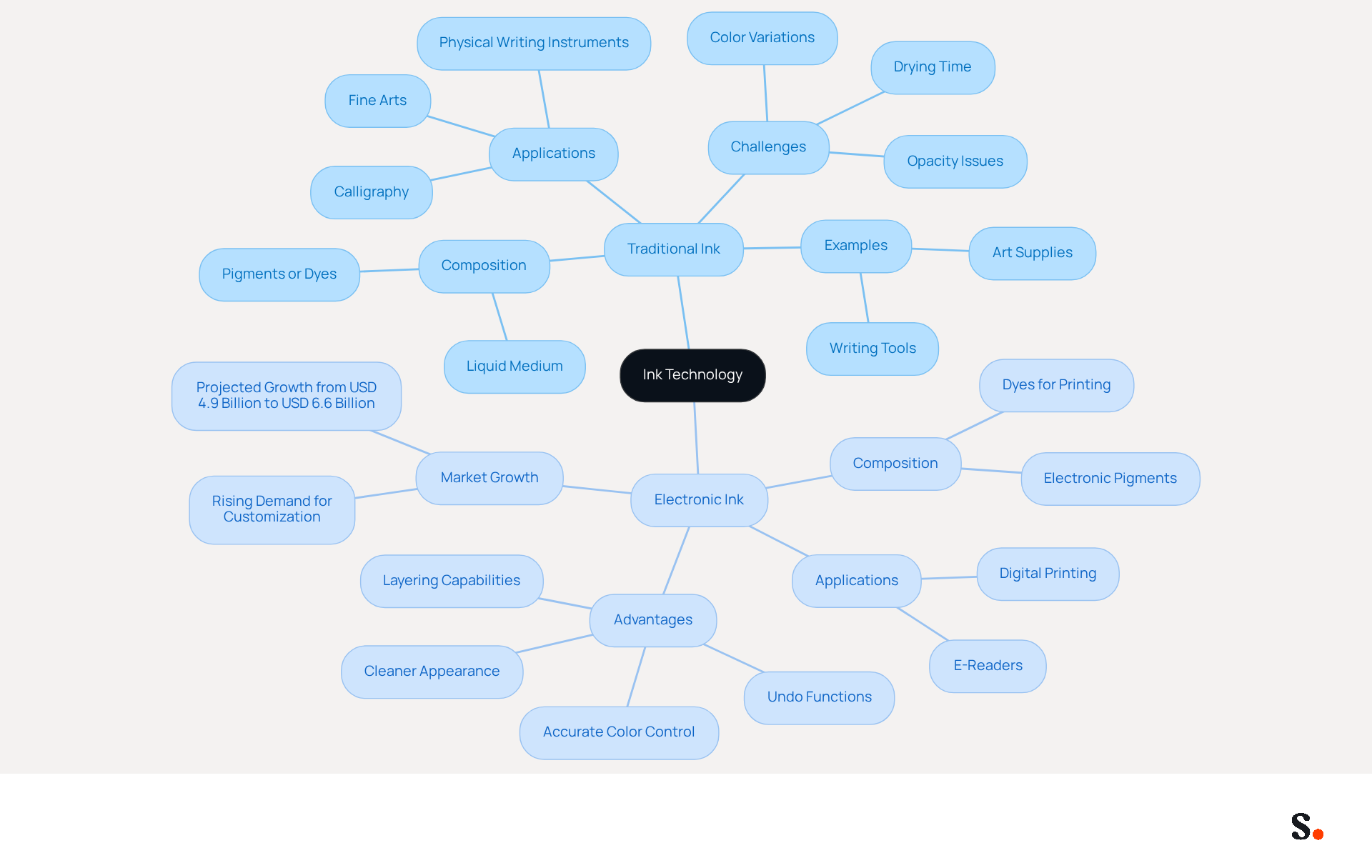
The evolution of ink technology reveals significant differences between traditional and electronic ink, with each type showcasing unique characteristics and applications. Traditional ink is primarily composed of pigments or dyes suspended in a liquid medium, commonly utilized in physical writing instruments such as pens and brushes. The tactile nature of traditional ink and its interaction with paper greatly affect how artwork or text appears. Achieving the desired effects with traditional ink can be challenging due to variations in color, opacity, and drying time. For example, traditional pigments are widely utilized in fine arts and calligraphy, where the quality of the material can greatly influence the overall aesthetic of the work.
In contrast, electronic ink encompasses the technology utilized in electronic devices to produce text and images on screens. This includes various types of electronic pigments, such as those found in e-readers, as well as dyes utilized in printing processes. Recent advancements, like biodegradable inks and AI integration in production, have really boosted the versatility and application of ink across various industries. Digital ink offers accurate control over color and design, featuring capabilities like layering and undo functions that conventional methods cannot provide. While the quality of electronic ink can differ based on the technology employed, this shift towards electronic ink highlights its advantages in providing a cleaner and more consistent appearance compared to conventional ink. Moreover, the digital inks market is anticipated to expand from USD 4.9 billion in 2026 to USD 6.6 billion by 2031, indicating the rising demand for customization and personalization in digital applications. As industries increasingly adopt digital solutions, understanding these differences will be crucial for leveraging the benefits of both traditional and electronic inks.
Explore Business Applications of Traditional and Digital Ink
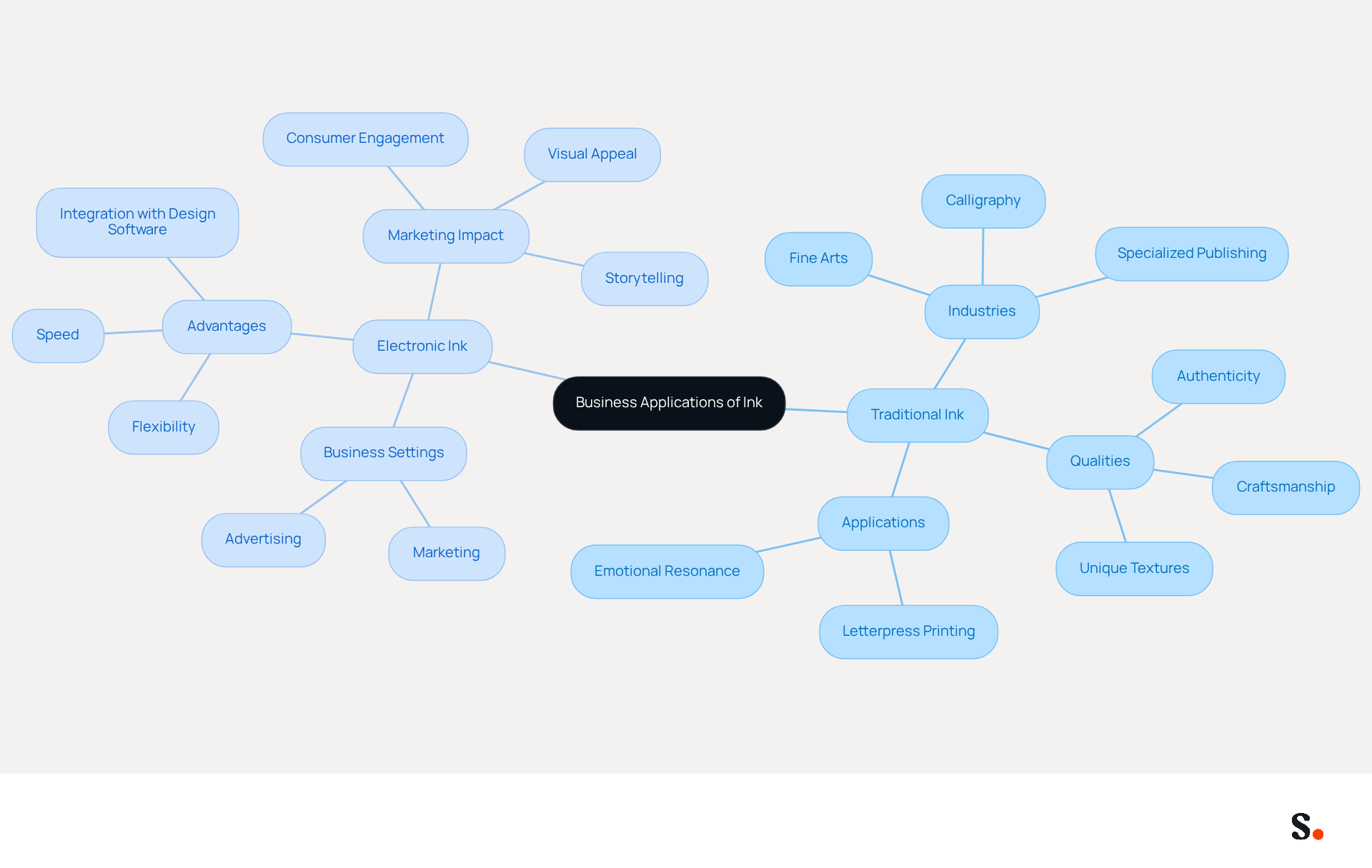
While traditional ink remains a symbol of authenticity and craftsmanship, it faces challenges in the fast-paced world of modern marketing. Traditional ink continues to be favored in industries that prioritize these qualities, such as fine arts, calligraphy, and specialized publishing. Artists and writers often choose classic ink for its unique textures and organic feel, which can significantly enhance the emotional resonance of their creations. This preference is particularly evident in letterpress printing, where the tactile quality of the printed material plays a crucial role in the overall experience. This trust in traditional media underscores the enduring value of x ink in marketing contexts.
Conversely, electronic ink has become increasingly prevalent in contemporary business settings, especially within marketing and advertising sectors. Its ability to quickly produce high-quality materials, like brochures and flyers, is essential for businesses needing flexibility and speed. The seamless integration of electronic ink with design software allows for quick revisions, catering to the fast-paced nature of modern marketing. In e-commerce and online marketing, the visual appeal of ink significantly influences consumer behavior, effectively driving engagement and conversions. As highlighted by Siddharth Nanda, storytelling is a powerful tool that marketers can utilize to forge emotional connections with audiences, further underscoring the significance of both conventional and x ink in creating compelling narratives. Ultimately, businesses must navigate the choice between traditional and x ink to align their marketing strategies with both heritage and innovation.
Compare Efficiency, Cost, and Branding Impact
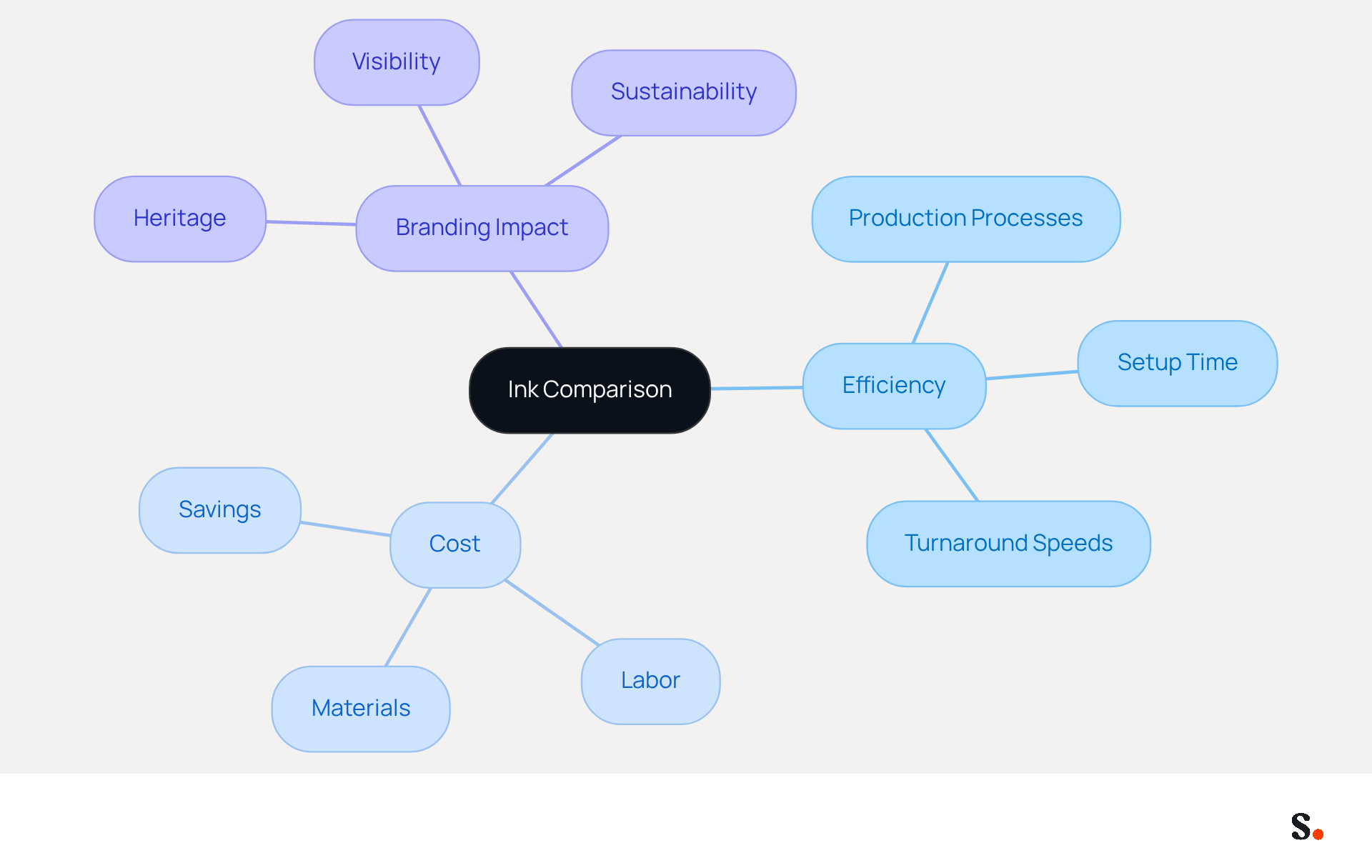
X ink offers a distinct advantage in efficiency, streamlining production processes and minimizing waste through precise application. This technology enables high-quality prints with less setup time, which is especially beneficial for businesses needing to adapt quickly to market demands. For instance, electronic printing can achieve turnaround speeds of up to 400 feet per minute, facilitating rapid responses to customer needs, a necessity in the current market landscape.
Managing costs with traditional ink can be challenging due to the materials and labor involved. While it may attract niche markets that appreciate craftsmanship, x ink typically leads to lower per-unit costs, especially for smaller print runs. Research indicates that this shift towards x ink can lead to significant savings for businesses, particularly in low-volume projects, making it an appealing choice for those aiming to optimize their budgets while preserving quality.
Branding impact is another essential consideration. Traditional ink can evoke a sense of heritage and quality, appealing to consumers who appreciate artisanal products. On the other hand, x ink boosts brand visibility with its vibrant colors and sharp details, aligning well with modern marketing strategies that prioritize eye-catching visuals. Furthermore, electronic printing minimizes waste and reduces the consumption of x ink, aiding in more sustainable practices. Ultimately, aligning the choice of ink with branding goals and operational needs can significantly enhance a business's market position.
Guide to Choosing Between Traditional and Digital Ink
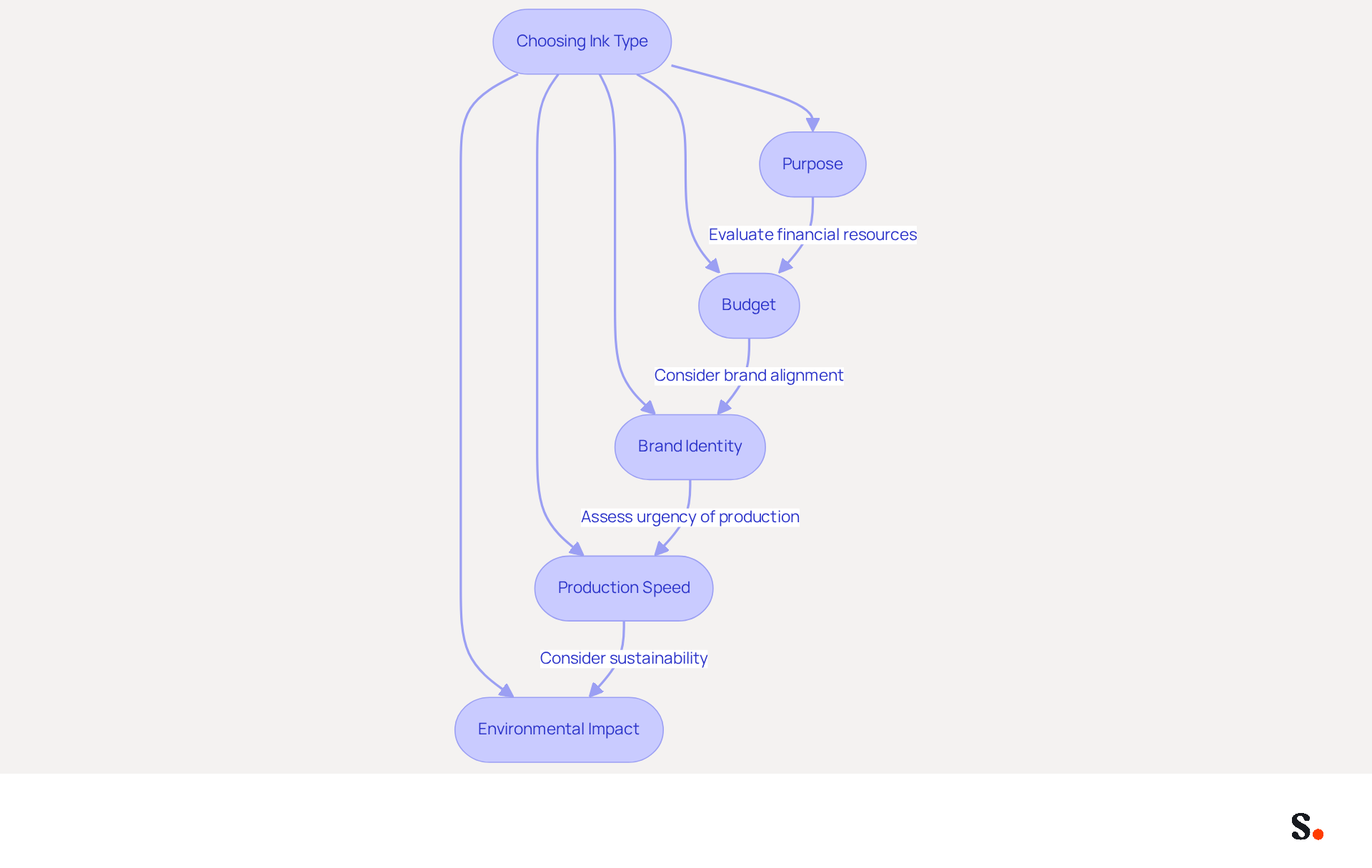
Choosing the right x ink type can be daunting, given the numerous factors that influence the decision. When deciding between traditional and digital ink, several key factors should be considered:
- Purpose: Determine the primary application of the ink. Traditional ink is often preferred for fine art or handcrafted products, where texture and depth are essential. In contrast, digital ink is ideal for marketing materials and digital content, offering versatility and efficiency.
- Budget: Evaluate your financial resources for materials and production. While conventional ink may involve higher initial costs due to setup and materials, it is important to note that conventional printing is not cost-effective for fewer than 500 copies. X ink can lead to significant savings over time, particularly for larger print runs, with businesses reporting up to 30% lower production costs compared to traditional methods.
- Brand Identity: Reflect on how each ink type aligns with your brand's image. Traditional ink can enhance an artisanal aesthetic, appealing to customers who value craftsmanship. Conversely, digital ink conveys a modern and innovative brand persona, suitable for businesses aiming to project a forward-thinking image.
- Production Speed: Assess the urgency of your production needs. Digital x ink technology can really speed things up, which is essential in fast-paced settings where getting marketing materials out quickly can make a big difference. The production process can take less than 30 seconds from ink application to finished packaging, making it an efficient choice for businesses.
- Environmental Impact: Consider the sustainability of your choice. Digital printing typically results in less waste and lower emissions compared to traditional methods, as it uses only the necessary amount of x ink for each project. This aspect is increasingly important for businesses looking to appeal to environmentally conscious consumers.
By carefully weighing these factors, businesses and artists can make informed decisions that align with their operational goals and brand values. Ultimately, the right choice can enhance both operational efficiency and brand identity.
Conclusion
Choosing the right ink type can significantly impact a business's marketing effectiveness and artistic expression. Traditional ink embodies craftsmanship and authenticity, making it ideal for fine arts and specialized publishing. In contrast, digital ink provides efficiency and flexibility, catering to the fast-paced demands of modern marketing and advertising. Businesses often struggle to balance the authenticity of traditional ink with the efficiency of digital options, making it essential to understand these differences for informed decision-making.
Key insights from the comparison reveal that:
- Traditional ink excels in artistic applications, where texture and depth are paramount.
- Digital ink shines in its ability to produce high-quality materials quickly and cost-effectively.
The branding impact of each type also plays a crucial role; traditional ink can evoke heritage and quality, whereas digital ink enhances visibility and aligns with contemporary marketing strategies. Factors such as production speed, budget, and environmental impact further influence the decision-making process, highlighting the importance of aligning ink choices with operational and brand objectives.
To make the best choice, businesses need to weigh their artistic goals against practical considerations like budget and production speed. By considering these factors, organizations can leverage the strengths of each ink type to enhance their marketing strategies and operational efficiency. A well-informed ink choice can be the difference between standing out in a crowded market and blending in with the competition.
Frequently Asked Questions
What is traditional ink?
Traditional ink is primarily composed of pigments or dyes suspended in a liquid medium, used in physical writing instruments like pens and brushes. Its tactile nature and interaction with paper significantly affect the appearance of artwork or text.
What are the challenges associated with traditional ink?
Achieving desired effects with traditional ink can be challenging due to variations in color, opacity, and drying time, which can influence the overall aesthetic of the work, especially in fine arts and calligraphy.
What is electronic ink?
Electronic ink refers to the technology used in electronic devices to produce text and images on screens, including various types of electronic pigments found in e-readers and dyes used in printing processes.
What are the advantages of digital ink over traditional ink?
Digital ink offers accurate control over color and design, capabilities like layering and undo functions, and provides a cleaner and more consistent appearance compared to traditional ink.
How is the digital inks market expected to grow?
The digital inks market is anticipated to expand from USD 4.9 billion in 2026 to USD 6.6 billion by 2031, indicating a rising demand for customization and personalization in digital applications.
Why is it important to understand the differences between traditional and electronic inks?
Understanding these differences is crucial for leveraging the benefits of both traditional and electronic inks as industries increasingly adopt digital solutions.
List of Sources
- Define Traditional Ink and Digital Ink
- Exploring Cutting-Edge Innovations & Trends in Digital Printing (https://graphtech.us/the-future-of-print-exploring-digital-printing-trends-and-innovations)
- Digital Inks Market Size, Share, Growth & Research Report, 2031 (https://mordorintelligence.com/industry-reports/digital-ink-market)
- Technology Landscape, Trends and Opportunities in Textile Digital Printing Machine Market, 2025-2031 - ResearchAndMarkets.com (https://businesswire.com/news/home/20251211908053/en/Technology-Landscape-Trends-and-Opportunities-in-Textile-Digital-Printing-Machine-Market-2025-2031---ResearchAndMarkets.com)
- Explore Business Applications of Traditional and Digital Ink
- How Print & Digital Marketing Can Make Marketing Campaigns More Effective (https://mimakiusa.com/blog/reasons-to-integrate-print-and-digital-marketing)
- Top digital marketing trends for 2026: What professionals need to know (https://ie.edu/uncover-ie/master-in-digital-marketing-trends)
- Digital Marketing Archives (https://digitalinkco.com/blog/category/digital-marketing)
- The Transformation of Marketing in the Digital Age | AACSB (https://aacsb.edu/insights/articles/2025/02/the-transformation-of-marketing-in-the-digital-age)
- Compare Efficiency, Cost, and Branding Impact
- Offset Printing vs. Digital Printing (https://kaocollins.com/inktank/offset-vs-digital-printing)
- Allied Business Academies (https://abacademies.org/articles/digital-branding-antecedents-and-consequences-17470.html)
- Offset vs Digital: How to Choose the Right Commercial Printing Method in 2026 - Next Page (https://gonextpage.com/offset-vs-digital-how-to-choose-the-right-commercial-printing-method-in-2026)
- THE IMPACT OF DIGITAL BRAND COMMUNICATION ON E-BRANDING: AN EMPIRICAL RESEARCH | SCIENCE International Journal (https://scienceij.com/index.php/sij/article/view/151)
- Is Digital Ink Technology Cost-Effective for Small Businesses? (https://dpi-supply.com/blogs/news/is-digital-ink-technology-cost-effective-for-small-businesses?srsltid=AfmBOopZIJr8XPSQgt8e2tjltlKPWL1t9YxodfM7YLmfywC_JnykrtQU)
- Guide to Choosing Between Traditional and Digital Ink
- Is Digital Ink Technology Cost-Effective for Small Businesses? (https://dpi-supply.com/blogs/news/is-digital-ink-technology-cost-effective-for-small-businesses?srsltid=AfmBOopULWTT3p8EkQUb6et6yxZ4OhHD2us5CCb5IQPu16EZuWb41EgU)
- Differences Between Digital and Traditional Newspaper Printing Explained - Newspaper Club (https://newspaperclub.com/choose/paper-types/digital-or-traditional)
- The Importance of Choosing the Right Digital Ink - Inkcups (https://inkcups.com/blog/the-importance-of-choosing-the-right-digital-ink)
- Students Choose Digital Over Print, But At What Cost? | NEA (https://nea.org/nea-today/all-news-articles/students-choose-digital-over-print-what-cost)
- Digital Newsroom vs Traditional Press Page: Which Drives Better Results? (https://dna.online/blog/digital-newsroom-vs-traditional-press-page-key-differences-features-and-impact)
Get started with Scribe
See why teams switch to Scribe
Free 14-day trial — no credit card.