Craft an Effective Invitation Letter for Meeting in 4 Steps
Crafting an effective invitation letter for a meeting is crucial; it serves as a strategic tool to engage participants and foster productive discussions. By
Sophie Grant
Email Signature Specialist, Scribe
Introduction
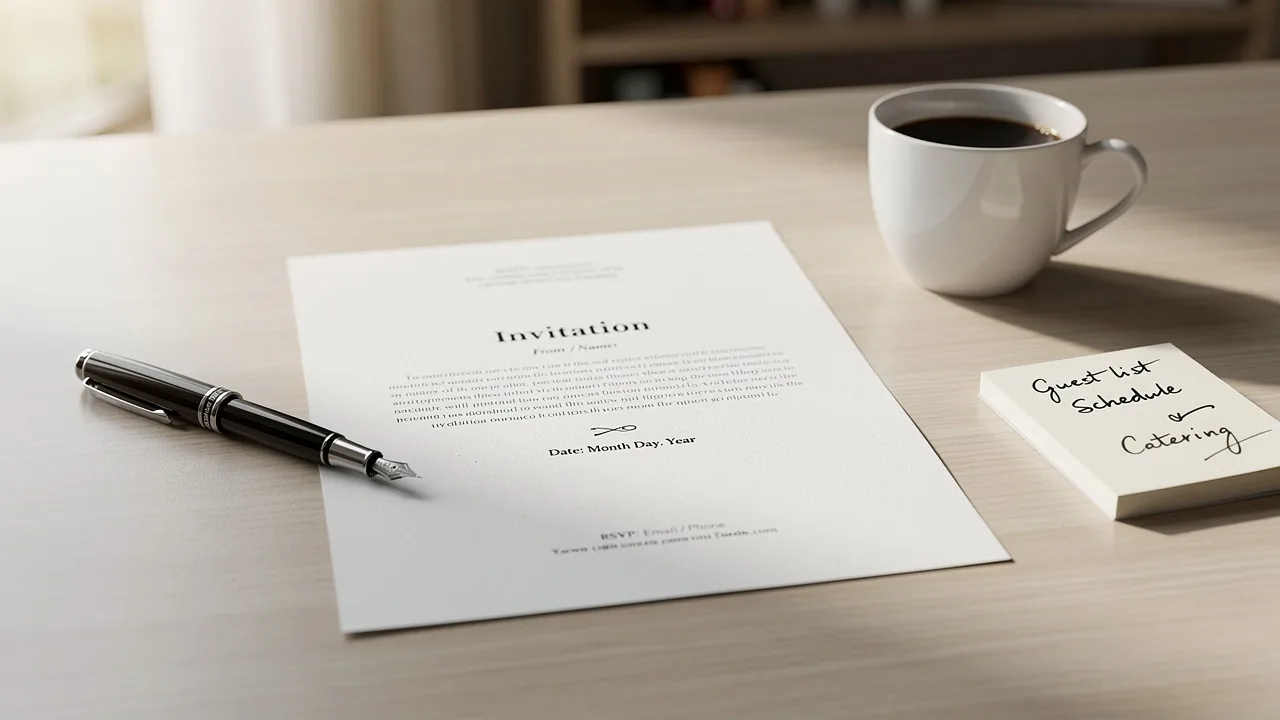
Crafting an effective invitation letter for a meeting is crucial; it serves as a strategic tool to engage participants and foster productive discussions. By focusing on key components and employing best practices, professionals can enhance clarity and professionalism, ultimately leading to higher attendance rates. An ineffective invitation can lead to disengagement and missed opportunities for collaboration.
In this guide, I’ll share essential steps to help you create compelling meeting invitations that not only inform but also inspire recipients to participate actively. By mastering the art of invitation writing, professionals can significantly enhance engagement and ensure that meetings yield valuable outcomes.
Get started with Scribe
See why teams switch to Scribe
Free 14-day trial — no credit card.
Identify Key Components of an Invitation Letter
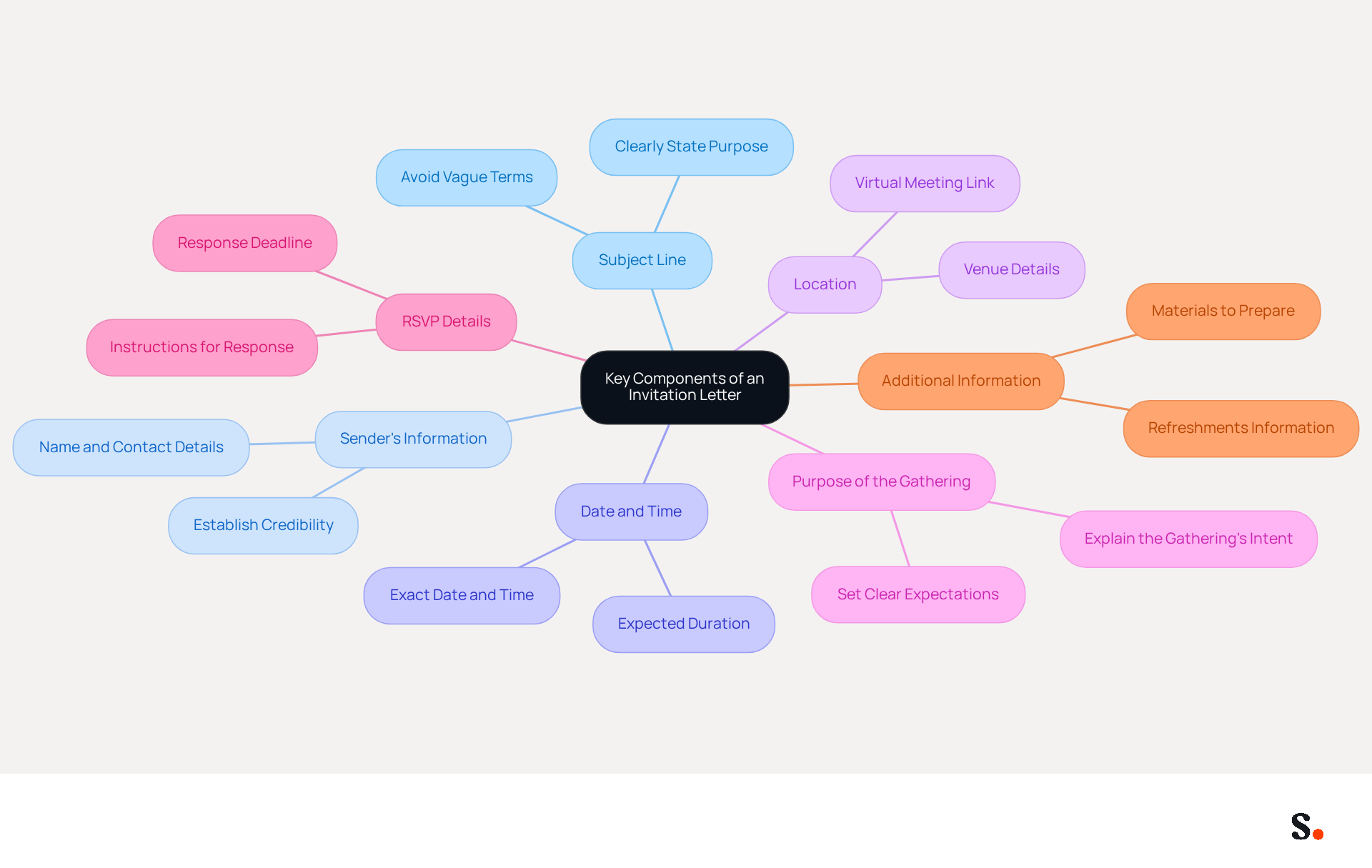
Crafting an effective invitation letter for a meeting requires careful consideration of several key components to ensure clarity and professionalism.
- Subject Line: Clearly state the purpose of the gathering to capture attention immediately.
- Sender's Information: Include the sender's name and contact details to establish credibility and help recipients identify who is inviting them.
- Date and Time: Specify the exact date and time, including the expected duration, to facilitate planning.
- Location: Provide venue details or a link for virtual gatherings, ensuring easy access for all participants.
- Purpose of the Gathering: Briefly explain why the gathering is being held, which helps set clear expectations and context.
- RSVP Details: Include instructions on how recipients should respond, which is crucial for managing attendance effectively.
- Additional Information: Mention any materials to prepare or bring, and indicate if refreshments will be served. This ensures that attendees are well-informed and prepared for the meeting.
Getting these components right can really boost the professionalism of your announcements and help you get better responses. Research shows that clearly articulated requests lead to higher attendance rates, making it essential to focus on clarity and specificity. For example, case studies demonstrate that messages emphasizing the advantages of attending can draw more favorable responses, thus enhancing engagement and participation. Furthermore, reviewing the document is essential to remove mistakes that could compromise professionalism and clarity.
Structure Your Invitation Letter Effectively
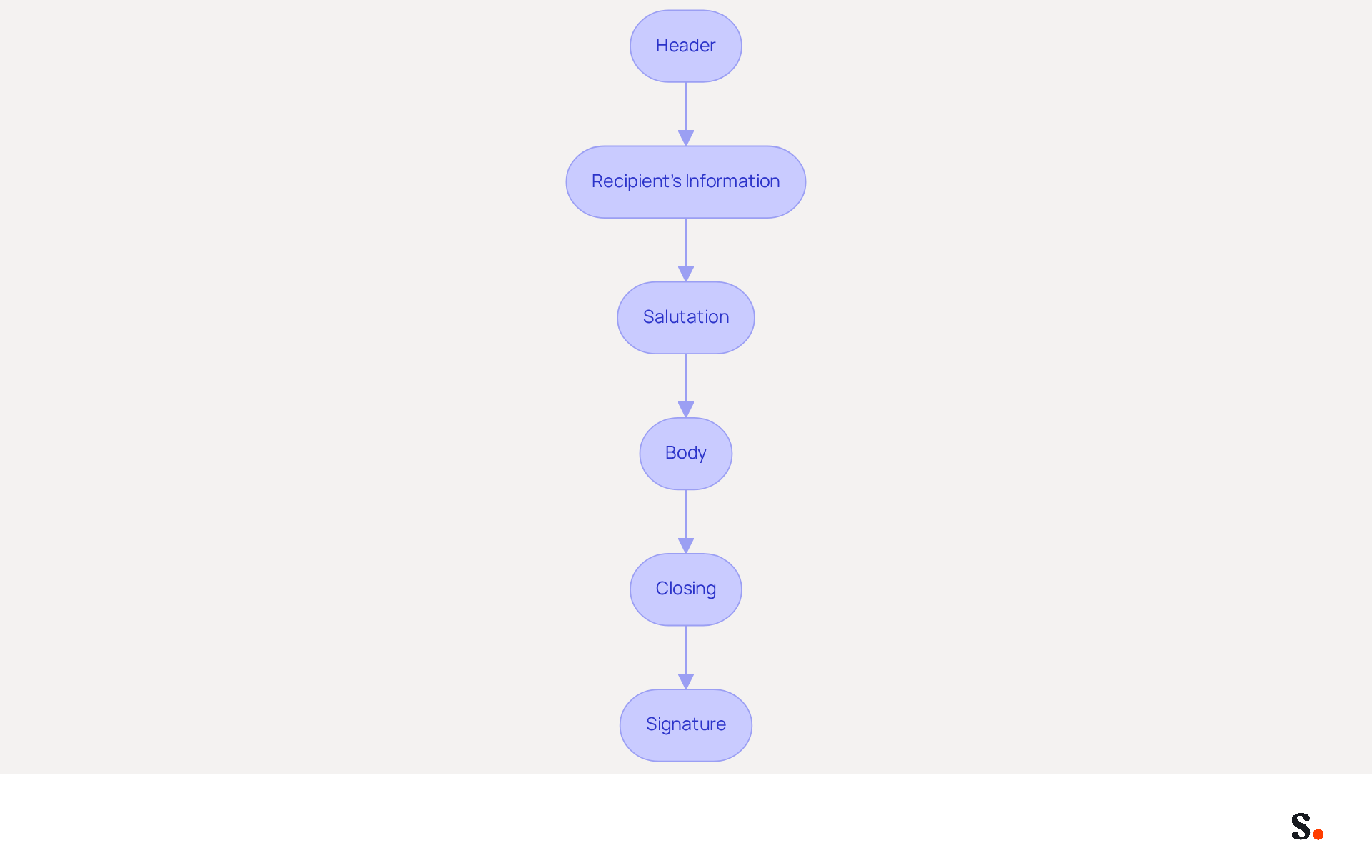
An effective request should follow a clear format to ensure professionalism and clarity. Here’s how to structure your invitation letter effectively:
- Header: Start with your name, address, and the date at the top of the correspondence. This establishes a formal tone and provides context.
- Recipient's Information: Address the recipient formally, using their title and last name. This shows respect and acknowledges their position.
- Salutation: Use a polite greeting, such as 'Dear [Recipient's Name],'. This sets a courteous tone for the correspondence.
- Body: Begin with the purpose of the letter, clearly stating the reason for the gathering. Follow this with essential meeting details, including the date, time, and location. Incorporate any additional relevant information, such as discussion topics or agenda items, to prepare the individual adequately.
- Closing: Conclude with a courteous closing statement, expressing your anticipation of their attendance. This reinforces the importance of their participation.
- Signature: Sign off with your name and title, which reinforces your professional identity and adds a personal touch.
These elements enhance your request's professionalism and boost the chances of a positive response. For example, a well-organized request can significantly enhance attendance rates, as effective subject lines and clear communication are essential in capturing the recipient's attention. Research shows that personalized subject lines significantly improve email open rates, enhancing engagement.
Furthermore, case studies emphasize the effect of organized requests. For example, a corporate gala announcement that clearly outlines the event's purpose and details fosters relationships and encourages attendance. Similarly, requests for strategic meetings that include a brief agenda lead to better preparation and engagement from participants, making the meeting more productive.
By following this structured approach, you can create correspondence that conveys essential information while reflecting your brand's identity, ultimately boosting guest participation. Furthermore, consider the type of letter you are sending-whether handwritten, printed, or digital-as this can influence the tone and reception of your message. Remember to proofread your announcement to avoid errors and include a request for RSVP to ensure you have an accurate headcount for your event. Lastly, incorporating appealing phrases and visual design can make your card more engaging and memorable.
Personalize Your Invitation for Greater Impact
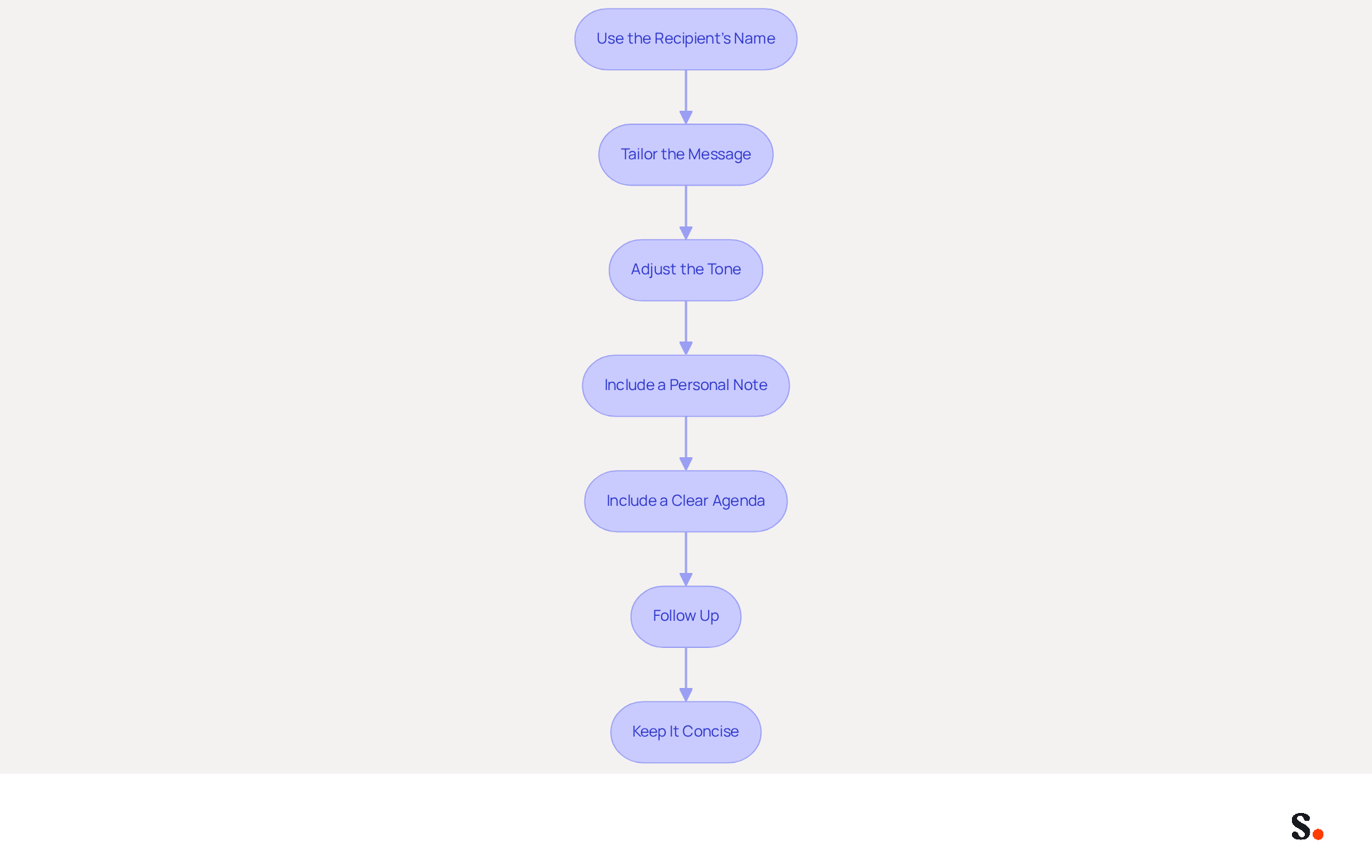
To personalize your invitation effectively:
- Use the Recipient's Name: Addressing the recipient directly fosters a connection and increases engagement. Personalization can lead to a 47% greater likelihood of the email being opened compared to vague subject lines, making it essential for event requests.
- Tailor the Message: Reference any previous interactions or shared interests to make the request more relevant. Research shows that 76% of consumers feel valued when brands personalize their communications. This increases the chances of engagement in meetings.
- Adjust the Tone: How you phrase your request can really change how the recipient responds - be formal for business associates and more casual for familiar colleagues. This consideration can significantly influence how the request is received.
- Include a Personal Note: A brief sentence expressing your enthusiasm for their participation can make a significant difference. Personal touches in the invitation letter for meetings create a positive atmosphere, encouraging attendees to approach gatherings with an open mindset.
- Include a Clear Agenda: Make sure to list the topics you'll cover in the session. This assists participants in preparing and grasping the purpose of the gathering, ensuring a more productive discussion.
- Follow Up: Sending a reminder message closer to the meeting date reinforces the request and demonstrates your commitment. A well-timed follow-up can affirm participation and provide additional value, ensuring that attendees are prepared and engaged.
- Keep It Concise: Aim for a maximum of 100-150 words in the email body for clarity. This helps maintain the recipient's attention and ensures that all essential details are communicated effectively.
Finalize and Proofread Your Invitation Letter
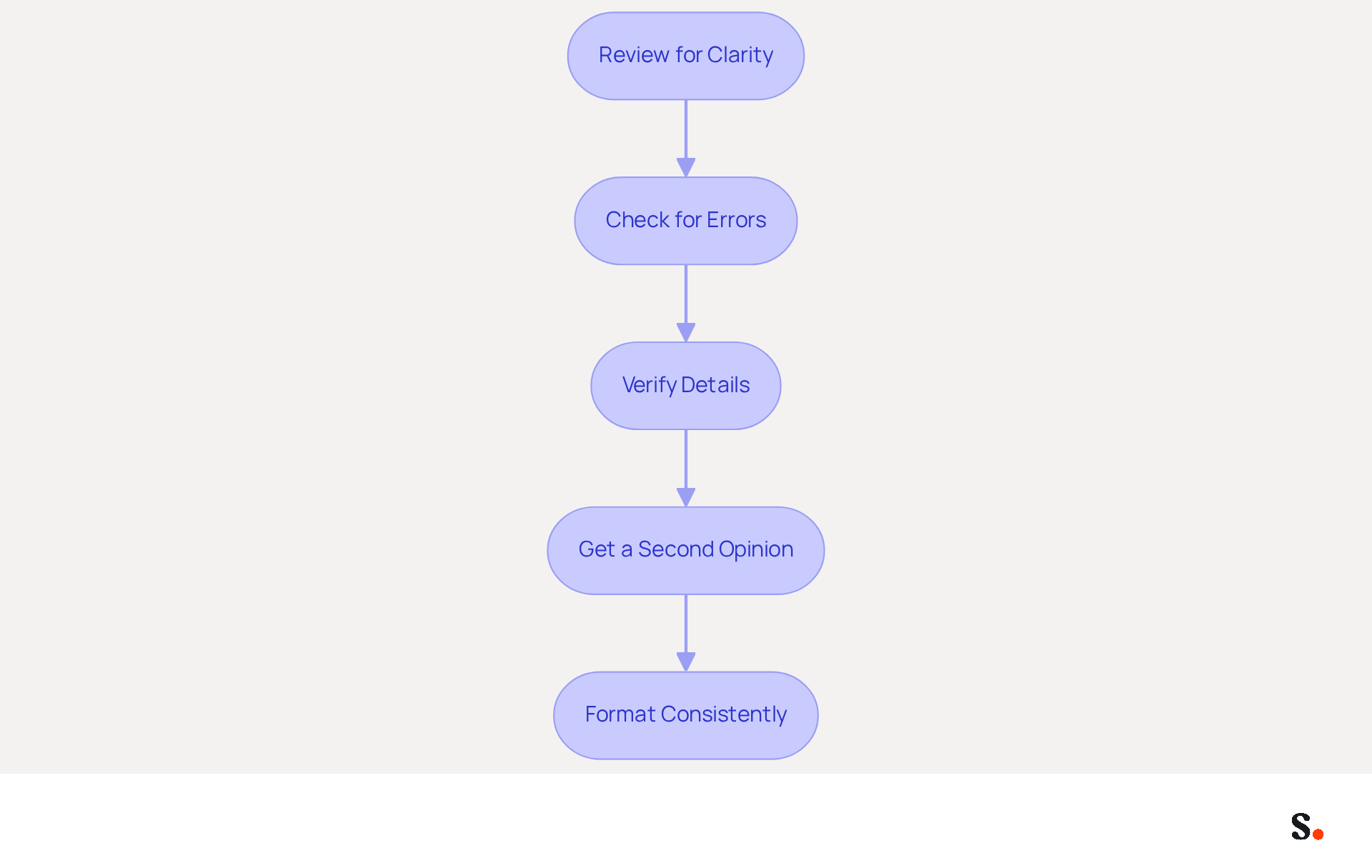
Before sending your invitation letter, ensure it reflects the highest standards of professionalism:
- Review for Clarity: Ensure that your message is clear and concise. Avoid jargon or overly complex language, as clarity is essential for effective communication. Research indicates that clear communication enhances understanding and engagement, leading to improved morale and reduced confusion in organizations that prioritize clarity.
- Check for Errors: Look for spelling, grammar, and punctuation mistakes that could detract from your professionalism. Unclear messages can undermine your credibility and lead to costly misunderstandings. Research indicates that unclear communication can cost U.S. businesses up to $1.2 trillion annually.
- Verify Details: Double-check all meeting details, including date, time, and location. To avoid confusion and ensure that all recipients are aligned, an invitation letter for meeting must contain accurate information.
- Get a Second Opinion: Consider asking a colleague to review the document for feedback. A fresh set of eyes can catch errors you might have overlooked and provide valuable insights. Research shows that clear expectations are crucial for effective communication.
- Format Consistently: Ensure that the formatting is uniform throughout the document, including font size and style. A well-formatted document not only appears professional but also improves readability.
Incorporating these steps can lead to more effective communication, as clear and concise messages are linked to higher employee engagement and productivity. Ultimately, these steps can transform your communication, fostering stronger connections with your audience.
Conclusion
An effective invitation letter is not just a formality; it is a strategic tool that can significantly influence meeting attendance and engagement. By focusing on key components like the subject line, sender's information, date and time, location, purpose, RSVP details, and additional information, the invitation helps set clear expectations and fosters engagement. A well-structured letter conveys essential information and reflects the sender's brand identity, enhancing the likelihood of a positive response.
This article outlines a systematic approach to structuring the invitation letter, emphasizing the importance of personalization and clarity. Key insights include:
- The necessity of addressing recipients by name
- Tailoring messages to their interests
- Maintaining a concise format
Additionally, proofreading and verifying details are crucial steps to uphold professionalism and avoid misunderstandings. Implementing these best practices, such as personalizing messages and ensuring clarity, can greatly enhance communication effectiveness and strengthen audience connections.
Mastering the art of invitation letters can truly make a difference in how productive meetings are and how relationships are built. Emphasizing clarity, personalization, and professionalism not only boosts attendance but also reflects a commitment to engaging stakeholders meaningfully. Failing to adopt these strategies may result in ineffective meetings and diminished stakeholder engagement. Ultimately, the effectiveness of meetings hinges on the quality of communication, making the mastery of invitation letters a critical skill for any organization.
Frequently Asked Questions
What are the key components of an invitation letter for a meeting?
The key components include a subject line, sender's information, date and time, location, purpose of the gathering, RSVP details, and additional information.
Why is a clear subject line important in an invitation letter?
A clear subject line captures attention immediately and states the purpose of the gathering.
What information should be included in the sender's information section?
The sender's name and contact details should be included to establish credibility and help recipients identify who is inviting them.
How should the date and time be presented in the invitation letter?
The exact date and time should be specified, including the expected duration, to facilitate planning for the recipients.
What details should be provided regarding the location of the meeting?
Venue details or a link for virtual gatherings should be provided to ensure easy access for all participants.
Why is it important to explain the purpose of the gathering?
Briefly explaining the purpose helps set clear expectations and context for the meeting.
What should be included in the RSVP details?
Instructions on how recipients should respond should be included, which is crucial for managing attendance effectively.
What additional information might be helpful for attendees?
Mentioning any materials to prepare or bring, and indicating if refreshments will be served, ensures that attendees are well-informed and prepared.
How can clarity and specificity in an invitation letter impact attendance?
Clearly articulated requests lead to higher attendance rates, as they enhance engagement and participation.
Why is it important to review the invitation letter before sending it?
Reviewing the document is essential to remove mistakes that could compromise professionalism and clarity.
List of Sources
- Identify Key Components of an Invitation Letter
- Meeting Invitation Email: 6 Templates, Steps, and Tips | Otter.ai (https://otter.ai/blog/meeting-invitation-email)
- Best Practices for Crafting an Effective Invitation Letter Business (https://scribe-mail.com/en-US/blog/best-practices-for-crafting-an-effective-invitation-letter-business)
- “Is It Worth the Cost? The Use of a Survey Invitation Letter to Increase Response to an Email Survey” | Market Decisions Research (https://marketdecisions.com/papers/is-it-worth-the-cost-the-use-of-a-survey-invitation-letter-to-increase- response-to-an-email-survey)
- Master Your Invitation for Meeting: Best Practices 2026 (https://speaknotes.io/blog/invitation-for-meeting)
- Structure Your Invitation Letter Effectively
- 21 Internal Communication Statistics (https://oak.com/blog/internal-communications-statistics)
- Examples of a Good Invitation Letter for an Important Business Meeting | Newoldstamp - NEWOLDSTAMP (https://newoldstamp.com/blog/examples-of-a-good-invitation-letter-for-an-important-business-meeting)
- Invitation Letter for Event: Samples, Templates and Examples (https://glueup.com/blog/invitation-letter-events)
- Internal communications statistics from Axios HQ 2025 annual report (https://axioshq.com/insights/internal-communications-statistics)
- Personalize Your Invitation for Greater Impact
- Top 10 Meeting Invitation Email Tips and Templates for Success (https://investglass.com/top-10-meeting-invitation-email-tips-and-templates-for-success)
- 5 meeting invite templates to get your attendees prepped (https://ringcentral.com/us/en/blog/meeting-invite-templates)
- Crafting Effective Meeting Invitations for Clients (https://linkedin.com/top-content/project-management/strategies-for-client-project-meetings/crafting-effective-meeting-invitations-for-clients)
- The value of getting personalization right—or wrong—is multiplying (https://mckinsey.com/capabilities/growth-marketing-and-sales/our-insights/the-value-of-getting-personalization-right-or-wrong-is-multiplying)
- Finalize and Proofread Your Invitation Letter
- 21 Internal Communication Statistics (https://oak.com/blog/internal-communications-statistics)
- Why Clarity Is Critical To Effective Leadership (https://forbes.com/councils/forbesbusinesscouncil/2025/07/18/why-clarity-is-critical-to-effective-leadership)
- The 3 C’s of Effective Business Communication: How to be Clear, Concise and Complete (https://business.purdue.edu/daniels-insights/posts/2025/how-to-be-clear-concise-and-complete.php)
- Why Business Communication Matters For Success (https://erieit.edu/importance-of-business-communication)
- Why Clarity Wins: The Business Case for Clear Communication — stevewoodruff.com (https://stevewoodruff.com/blog/roiofclarity)
Get started with Scribe
See why teams switch to Scribe
Free 14-day trial — no credit card.