Craft an Effective Letter for Meeting Invitation: Key Best Practices
Crafting an effective meeting invitation letter is crucial for maximizing attendance and engagement. It sets the tone for the gathering and can significantly
Sophie Grant
Email Signature Specialist, Scribe
Introduction
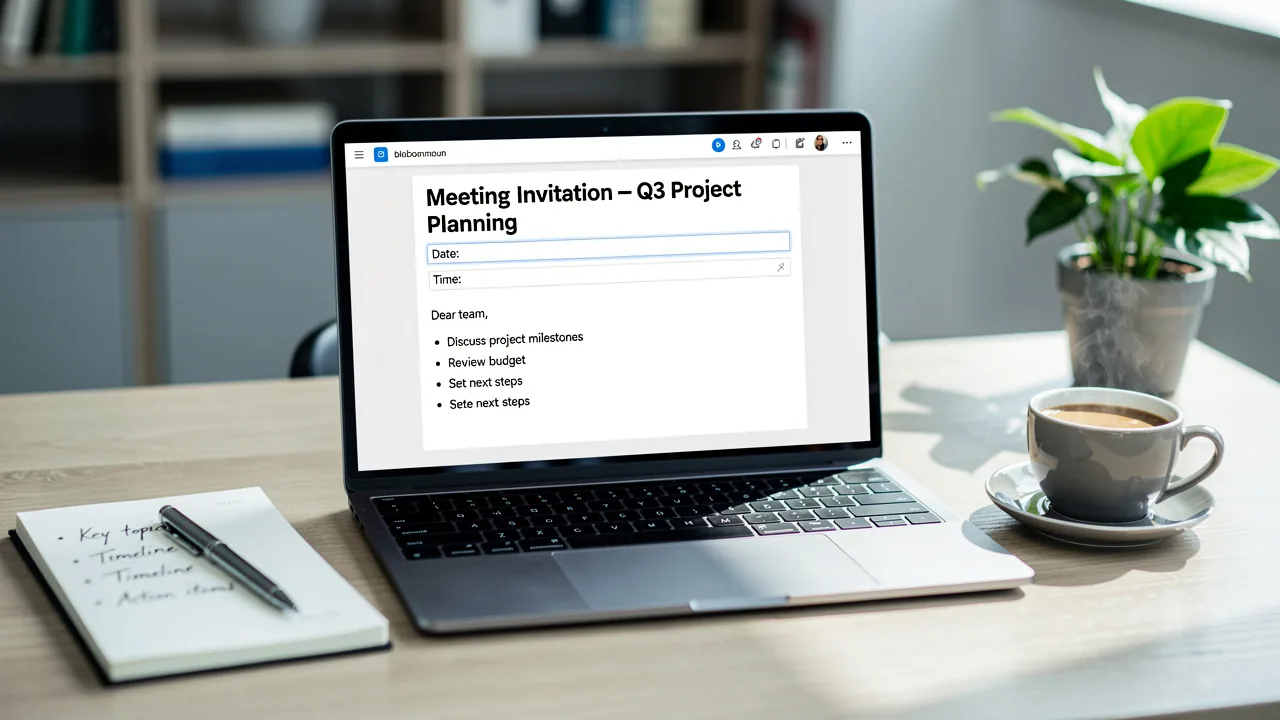
Crafting an effective meeting invitation letter is crucial for maximizing attendance and engagement. It sets the tone for the gathering and can significantly influence participation. By incorporating essential components such as a clear agenda, RSVP requests, and a professional tone, organizations can enhance the effectiveness of their communications.
What strategies can organizations use to make these invitations not just informative but also engaging? This article outlines proven strategies for crafting meeting invitations that engage recipients and promote collaboration.
Get started with Scribe
See why teams switch to Scribe
Free 14-day trial — no credit card.
Identify Essential Components of a Meeting Invitation Letter
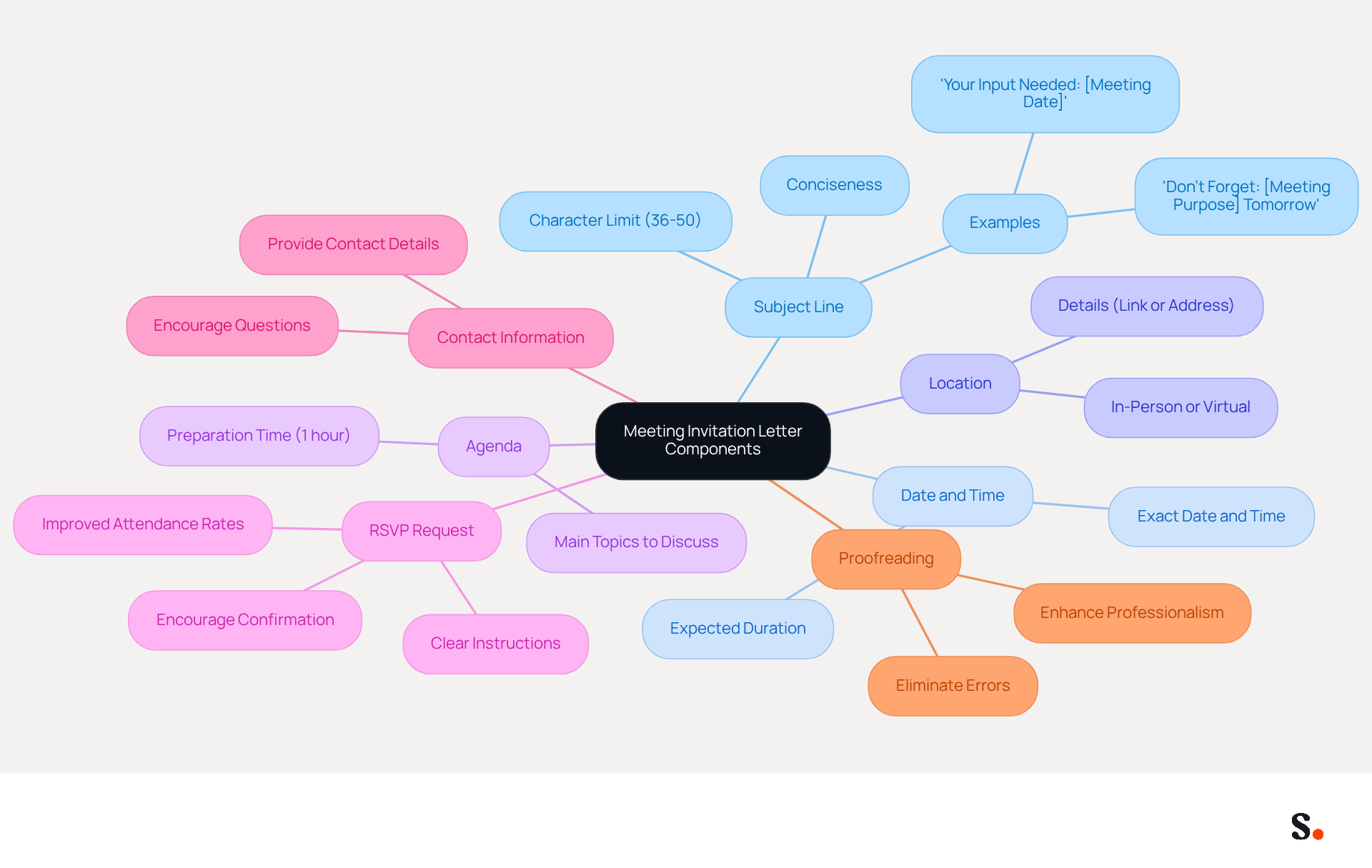
To ensure clarity and professionalism, an effective meeting invitation letter must include several essential components:
- Subject Line: Create a clear and concise subject line that accurately reflects the purpose of the gathering, such as 'Project Kickoff - [Date]'. Studies show that concise subject lines, ideally between 36 and 50 characters, lead to higher open rates.
- Date and Time: Clearly specify the exact date and time of the gathering, including the expected duration. This helps avoid confusion and ensures all participants are aligned on the schedule.
- Location: Indicate whether the gathering will be held in person or virtually, providing necessary details such as a link or physical address. Including this information upfront is essential for participant preparation.
- Agenda: Outline the main topics to be discussed. Clear agendas are crucial, as employees typically spend about an hour preparing for each discussion. This not only establishes expectations but also assists participants in preparing adequately, enhancing overall productivity.
- RSVP Request: Encourage recipients to confirm their attendance by including a clear RSVP request. This assists in planning and logistics, ensuring that the gathering is organized based on anticipated participation. Organizations that clearly state the meeting's purpose and include RSVP requests have seen improved attendance rates, with statistics supporting this claim.
- Contact Information: Include your contact details for any questions or clarifications. This fosters open communication and allows attendees to reach out if they need further information.
- Proofreading: Before sending the message, ensure that the email is proofread to eliminate errors and enhance professionalism. Without a well-crafted announcement, attendees may feel unprepared and dissatisfied.
Including these elements in your letter for meeting invitation helps ensure professionalism and paves the way for more productive discussions. By implementing these strategies, you can significantly enhance the effectiveness of your meetings and ensure participant engagement.
Adopt an Engaging Tone and Style
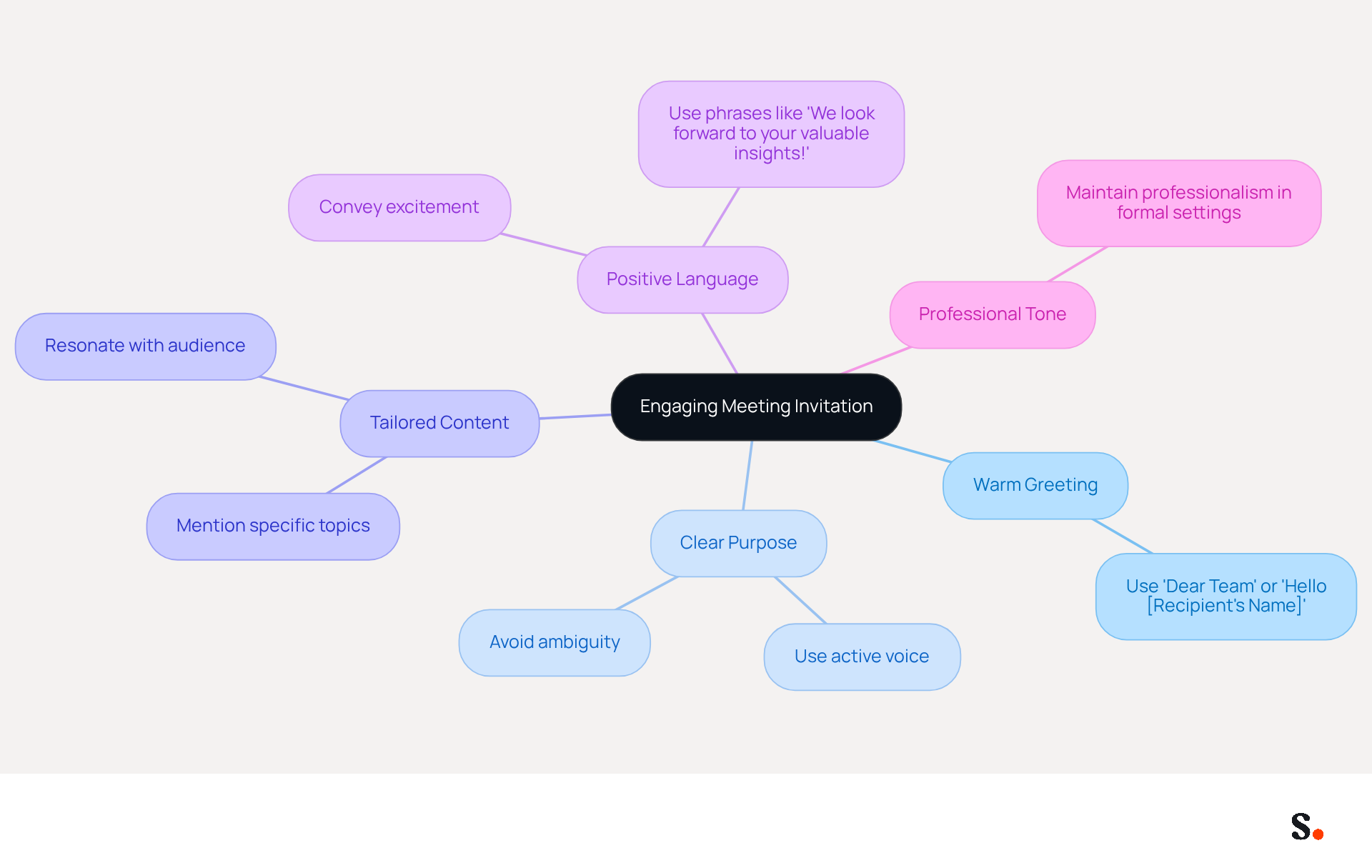
Crafting an engaging letter for meeting invitation is essential for ensuring high attendance and participation. Begin with a warm greeting to set a positive tone, such as 'Dear Team' or 'Hello [Recipient's Name].' Clearly state the purpose and details of the gathering using active voice and straightforward language to avoid ambiguity. Tailor your invitation to resonate with your audience by mentioning specific topics relevant to them, which can increase their interest. Convey excitement about the gathering with positive language, such as 'We look forward to your valuable insights!' Ensure the tone remains professional, especially in formal settings. Implementing these strategies can transform your letter for meeting invitation into effective tools for engagement.
Incorporate Practical Tips for Effective Invitations
To maximize the impact of your meeting invitations, it is essential to adopt effective strategies that ensure clarity and engagement:
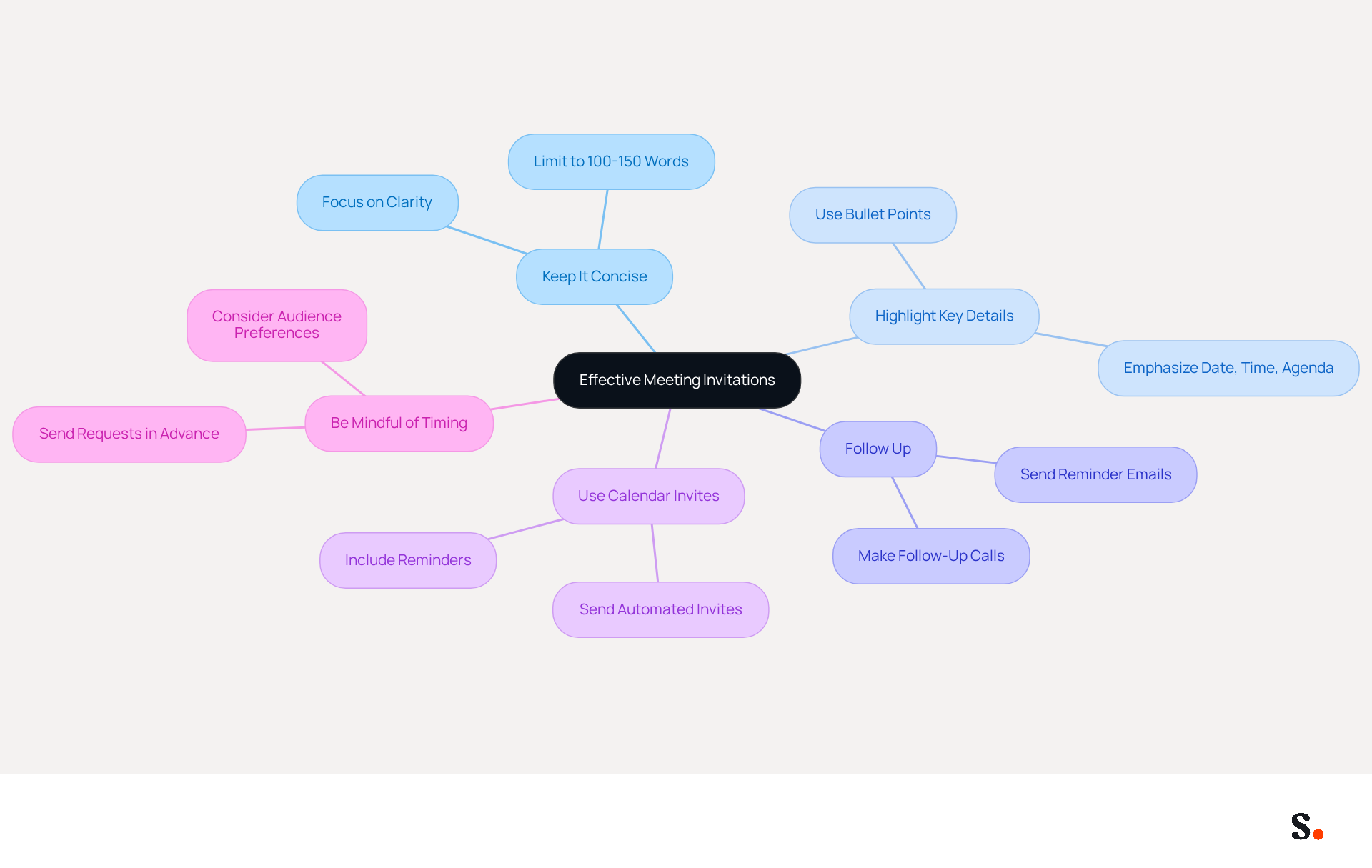
- Keep It Concise: Limit the length of your invitation to ensure that key information is easily digestible. Aim for clarity over verbosity, ideally keeping the email body to 100-150 words, as this length has been shown to improve comprehension.
- Highlight Key Details: Use bullet points or bold text to emphasize important information such as date, time, and agenda items. This approach improves clarity and comprehension, making it easier for recipients to grasp essential details quickly.
- Follow Up: If you haven’t received responses, consider sending a polite reminder a few days prior to the gathering. Studies show that sending follow-up emails can really help increase attendance, and making a quick phone call can boost participation even more.
- Use Calendar Invites: Whenever possible, send a calendar invite along with the email to help recipients easily add the meeting to their schedules. Automated calendar invites can enhance the attendee experience by ensuring they receive reminders and know what to expect.
- Be Mindful of Timing: Send requests well in advance to give attendees ample time to prepare and adjust their schedules. Research indicates that earlier requests result in higher response rates, especially among older participants who tend to engage more with timely communications.
Implementing these strategies not only boosts attendance but also fosters a culture of collaboration and engagement, which can be highlighted in a letter for meeting invitation. For instance, using standardized templates for gathering requests can greatly enhance collaboration and ensure everyone is on the same page. According to research, the overall response rate for emailed requests was 34.8%, compared to 25.8% for posted requests, underscoring the effectiveness of email as a communication tool.
Finalize and Proofread for Professionalism
To ensure your meeting invitation is taken seriously, follow these essential steps:
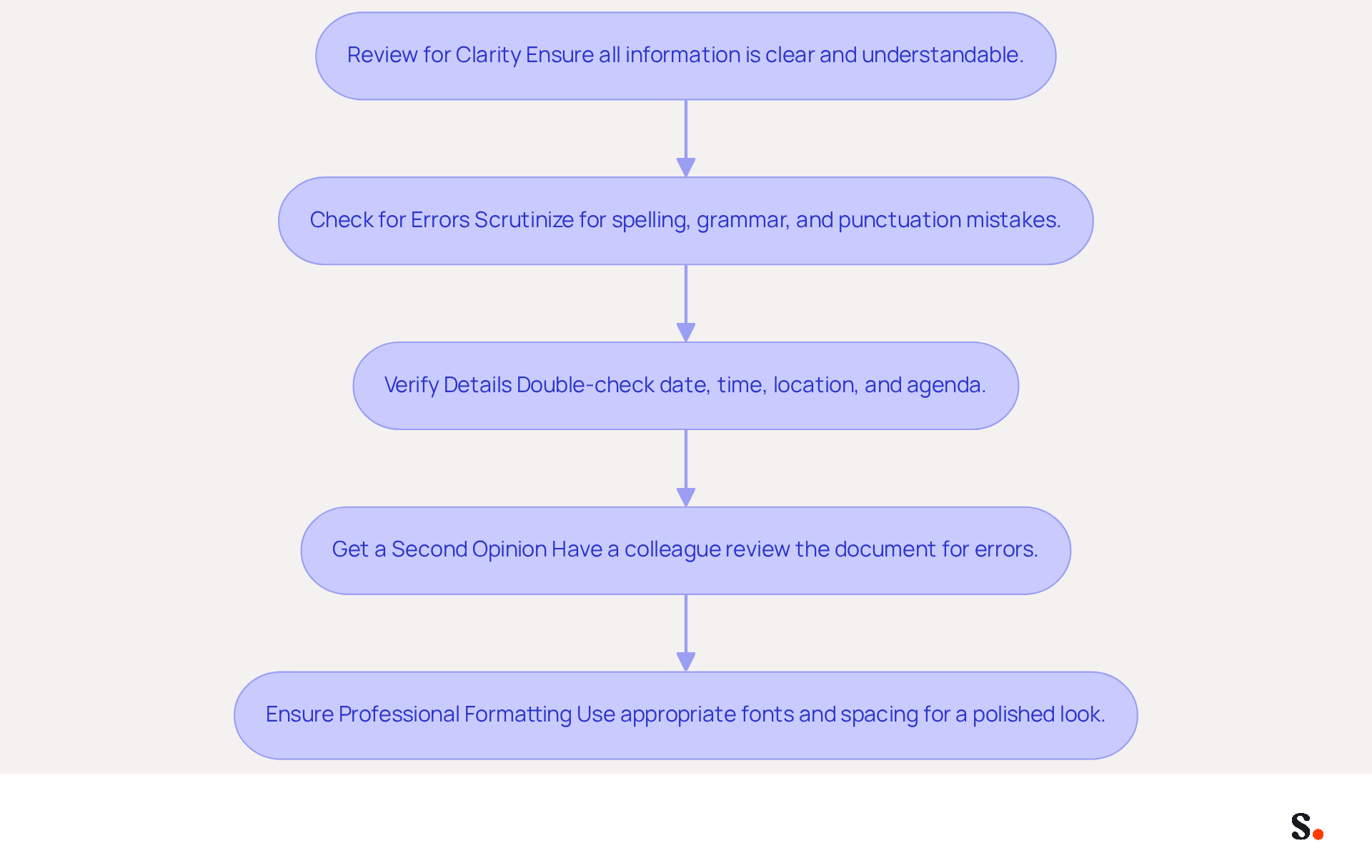
- Review for Clarity: Carefully read through the notice to confirm that all information is clear and easily understandable. Miscommunication can lead to costly mistakes. Research shows that 49% of respondents say poor communication hurts productivity.
- Check for Errors: Scrutinize the letter for meeting invitation for any spelling, grammar, and punctuation mistakes. Poorly crafted documents can undermine your professionalism and may lead to lost opportunities, as 59% of respondents would avoid doing business with companies that have obvious errors in their marketing materials.
- Verify Details: Double-check all session specifics, including the date, time, location, agenda, and the letter for meeting invitation. Mistakes in these details can lead to confusion and reduce the perceived significance of the gathering. Studies indicate that clear meeting requests lead to higher engagement and less confusion.
- Get a Second Opinion: If possible, have a colleague review the document to catch any errors you might have missed. Having a colleague proofread your letter for meeting invitation can really help catch any mistakes and improve clarity.
- Ensure that the letter for meeting invitation uses professional formatting, making it well-structured and visually appealing with appropriate fonts and spacing. A well-formatted message not only appears professional but also honors the recipient's time and intelligence.
Ultimately, clear and professional communication can open doors to new opportunities.
Conclusion
Crafting effective meeting invitations is not just a formality; it is a strategic necessity that can significantly influence attendance and engagement. By incorporating a clear subject line, a detailed agenda, and a warm tone, the invitation sets the stage for productive discussions. Emphasizing professionalism through careful proofreading and formatting further enhances the credibility of the communication, making it more likely that recipients will respond positively.
The article outlines several best practices, including the importance of clarity, conciseness, and timely follow-ups. Highlighting key details and utilizing calendar invites can significantly improve the likelihood of attendance. Additionally, adopting an engaging tone tailored to the audience can spark interest and encourage participation. These strategies boost the effectiveness of invitations and help build a collaborative culture in organizations.
In a world where effective communication is paramount, mastering the art of meeting invitations can lead to more successful gatherings and stronger team dynamics. By applying these best practices, professionals can transform their meetings into essential gatherings that drive collaboration and innovation. Ultimately, the effectiveness of your meetings hinges on the quality of your invitations, making them a critical element in achieving organizational success.
Frequently Asked Questions
What are the essential components of a meeting invitation letter?
An effective meeting invitation letter must include the following components: a clear subject line, date and time, location, agenda, RSVP request, contact information, and proofreading.
How should the subject line of a meeting invitation be structured?
The subject line should be clear and concise, accurately reflecting the purpose of the gathering, ideally between 36 and 50 characters to achieve higher open rates.
Why is it important to specify the date and time in a meeting invitation?
Clearly specifying the date and time, including the expected duration, helps avoid confusion and ensures all participants are aligned on the schedule.
What information should be included regarding the location of the meeting?
The invitation should indicate whether the meeting will be held in person or virtually, providing necessary details such as a link for virtual meetings or a physical address for in-person gatherings.
Why is outlining an agenda important in a meeting invitation?
Outlining the main topics to be discussed establishes expectations and assists participants in preparing adequately, enhancing overall productivity.
What is the purpose of including an RSVP request in the invitation?
An RSVP request encourages recipients to confirm their attendance, which assists in planning and logistics, leading to improved attendance rates.
What contact information should be included in a meeting invitation?
The invitation should include the sender's contact details for any questions or clarifications, fostering open communication.
Why is proofreading important before sending a meeting invitation?
Proofreading eliminates errors and enhances professionalism, ensuring that attendees feel prepared and satisfied with the communication.
List of Sources
- Identify Essential Components of a Meeting Invitation Letter
- Best Practices for Crafting an Effective Invitation Letter Business (https://scribe-mail.com/en-US/blog/best-practices-for-crafting-an-effective-invitation-letter-business)
- 7 Meeting Invitation Email Samples That Drive Responses (https://youcanbook.me/blog/meeting-invitation-email)
- 40 Meeting Statistics You Need to Know | Rev (https://rev.com/blog/meeting-statistics)
- Effective meeting invitation emails [+3 Templates] (https://trueconf.com/blog/reviews-comparisons/meeting-invitation)
- Anatomy of the perfect meeting invitation email [includes templates] - The Lucid Meetings Blog (https://blog.lucidmeetings.com/blog/anatomy-of-the-perfect-meeting-invitation-email)
- Adopt an Engaging Tone and Style
- Effective meeting invitation emails [+3 Templates] (https://trueconf.com/blog/reviews-comparisons/meeting-invitation)
- Meeting invitation email templates and tips | Calendly (https://calendly.com/blog/meeting-invitation-email)
- Meeting Statistics – Better Meetings (https://bettermeetings.expert/meeting-statistics)
- Meeting Invitation Email: 6 Templates, Steps, and Tips | Otter.ai (https://otter.ai/blog/meeting-invitation-email)
- Meeting Statistics 2026: 100 Data Points on Time, Cost, Productivity (https://flowtrace.co/collaboration-blog/50-meeting-statistics)
- Incorporate Practical Tips for Effective Invitations
- Meeting invitation email templates and tips | Calendly (https://calendly.com/blog/meeting-invitation-email)
- Comparison of response rates on invitation mode of a web-based survey on influenza vaccine adverse events among healthcare workers: a pilot study - PMC (https://pmc.ncbi.nlm.nih.gov/articles/PMC6011252)
- Top Tips for Increasing Business Meeting Attendance (https://liveabout.com/top-tips-for-increasing-business-meeting-attendance-1223656)
- The Effectiveness of Mailed Invitations for Web Surveys and the Representativeness of Mixed-Mode versus Internet-only Samples | Published in Survey Practice (https://surveypractice.org/article/2863-the-effectiveness-of-mailed-invitations-for-web-surveys-and-the-representativeness-of-mixed-mode-versus-internet-only-samples)
- Top 10 Meeting Invitation Email Tips and Templates for Success (https://investglass.com/top-10-meeting-invitation-email-tips-and-templates-for-success)
- Finalize and Proofread for Professionalism
- Effective meeting invitation emails [+3 Templates] (https://trueconf.com/blog/reviews-comparisons/meeting-invitation)
- Why is proofreading important in business communication? (https://proofcommunications.com.au/why-is-proofreading-so-important-in-business-communications)
- Why We Must Improve Business Writing (https://wordrake.com/resources/why-we-must-improve-business-writing)
- Meeting Invitation Email, Writing Tips & Template | Cal.com | Cal.com - Scheduling Software for Online Bookings (https://cal.com/blog/how-to-write-a-meeting-invitation-email-that-gets-a-response)
- Top 10 Meeting Invitation Email Tips and Templates for Success (https://investglass.com/top-10-meeting-invitation-email-tips-and-templates-for-success)
Get started with Scribe
See why teams switch to Scribe
Free 14-day trial — no credit card.