Define V/R: A Step-by-Step Guide for Marketing Managers
Virtual Reality (V/R) presents both opportunities and challenges for marketing managers in today's dynamic landscape. This technology enables brands to create
Sophie Grant
Email Signature Specialist, Scribe
Introduction
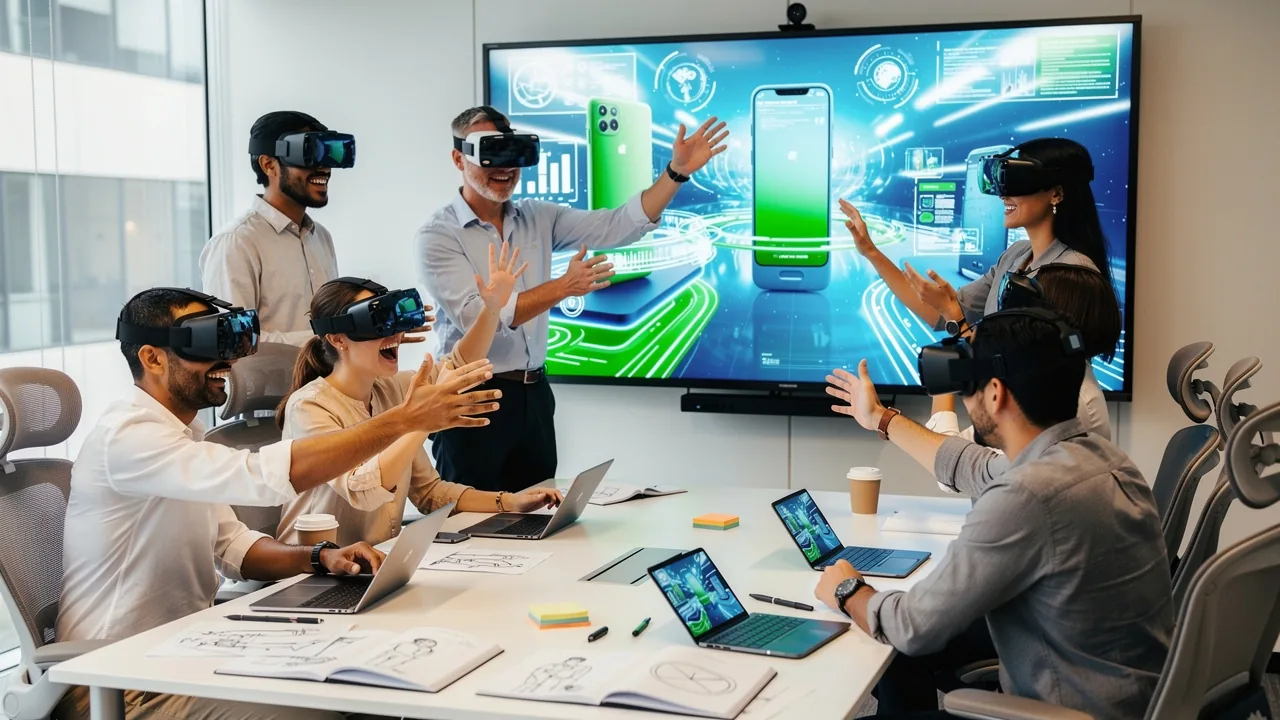
Virtual Reality (V/R) presents both opportunities and challenges for marketing managers in today's dynamic landscape. This technology enables brands to create immersive experiences that engage consumers in new and impactful ways. Marketing managers are on the lookout for innovative strategies to truly engage their audiences, and understanding V/R can unlock significant opportunities for brand storytelling and customer interaction.
Despite the potential benefits, many marketing managers struggle to adapt to the fast-paced changes in V/R technology. Without effectively navigating these complexities, marketing managers risk missing out on valuable opportunities for engagement and brand growth.
Define V/R: Understanding the Concept
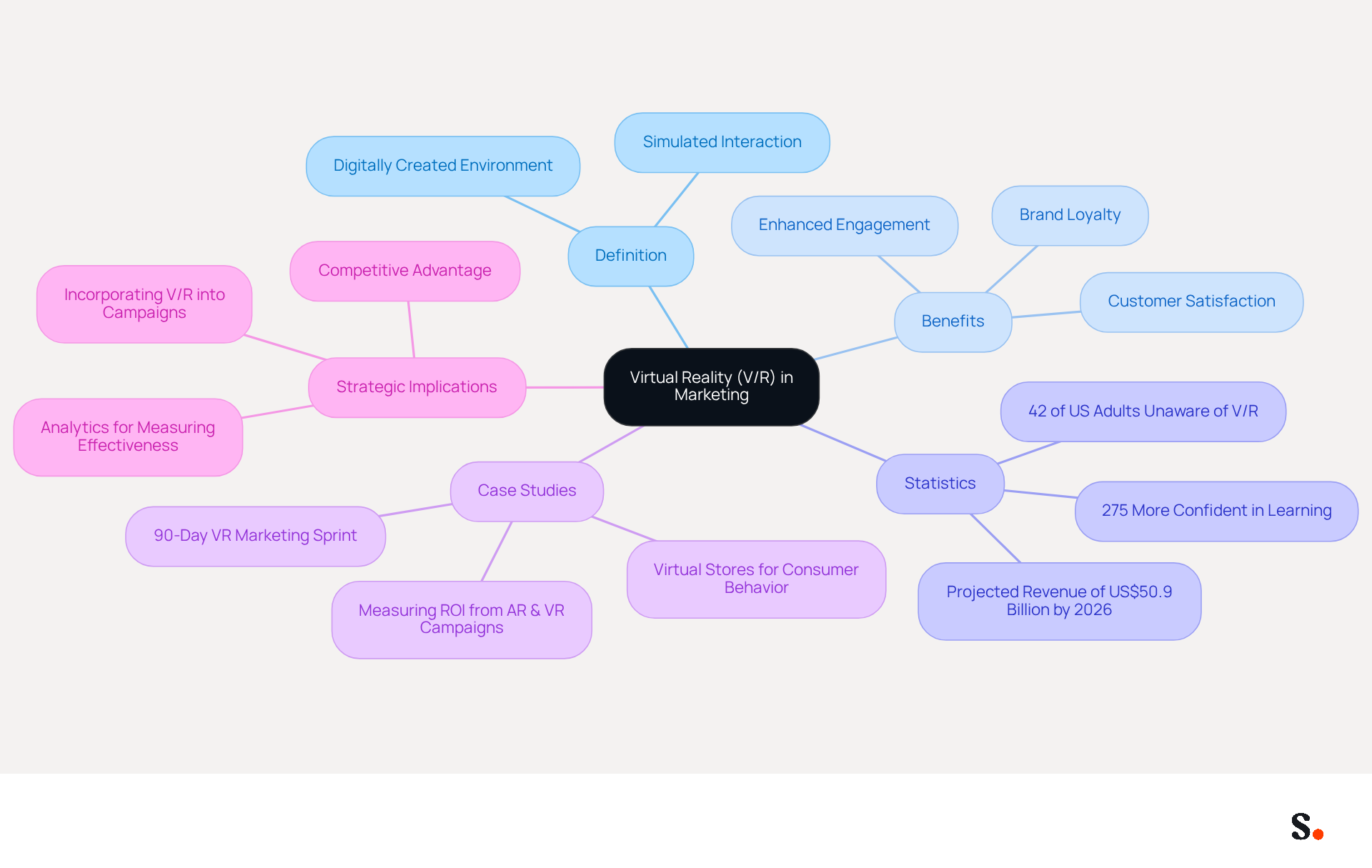
Virtual Reality (V/R) represents a pivotal shift in how brands engage with consumers, yet many managers overlook its potential. To define V/R, it denotes a simulated interaction that immerses users in a digitally created environment. In marketing, V/R is leveraged to create engaging and interactive experiences that captivate audiences. For instance, companies can use V/R to allow customers to explore products in a virtual space, enhancing their understanding and emotional connection to the company. This technology captures attention and creates memorable interactions, boosting brand loyalty and sales. Recognizing the potential to define V/R is crucial for managers to leverage innovative avenues for customer engagement and storytelling.
The impact of defining V/R in promotion is significant, as it opens new ways for brands to engage customers and tell their stories. Recent statistics indicate that immersive interactions can significantly enhance customer memory and brand recall, with users being 275% more confident in their learning decisions after engaging with V/R content. Furthermore, the market for V/R is projected to reach a revenue of US$50.9 billion by 2026, with an annual growth rate of 10.50% expected from 2026 to 2030. Notably, 42% of US adults haven’t heard of V/R, highlighting the current awareness and adoption challenges of this technology.
Case studies demonstrate the effectiveness of V/R in various promotional strategies. For instance, companies have successfully used V/R to create virtual stores that simulate real-world shopping experiences, allowing for the observation of consumer behavior in controlled settings. This approach not only improves customer satisfaction but also aids in identifying purchasing habits and product preferences.
As V/R technology continues to advance, managers must define V/R in terms of its strategic fit within their campaigns. By incorporating V/R into their promotional strategies, companies can enhance engagement depth and drive measurable outcomes. This shift in strategy can lead to a significant competitive advantage in the marketplace. Additionally, implementing analytics to track interactions and measure the effectiveness of V/R campaigns will be crucial for optimizing these strategies. Without embracing V/R, companies risk falling behind in an increasingly competitive landscape where customer engagement is paramount.
Apply V/R in Marketing Strategies: Practical Steps
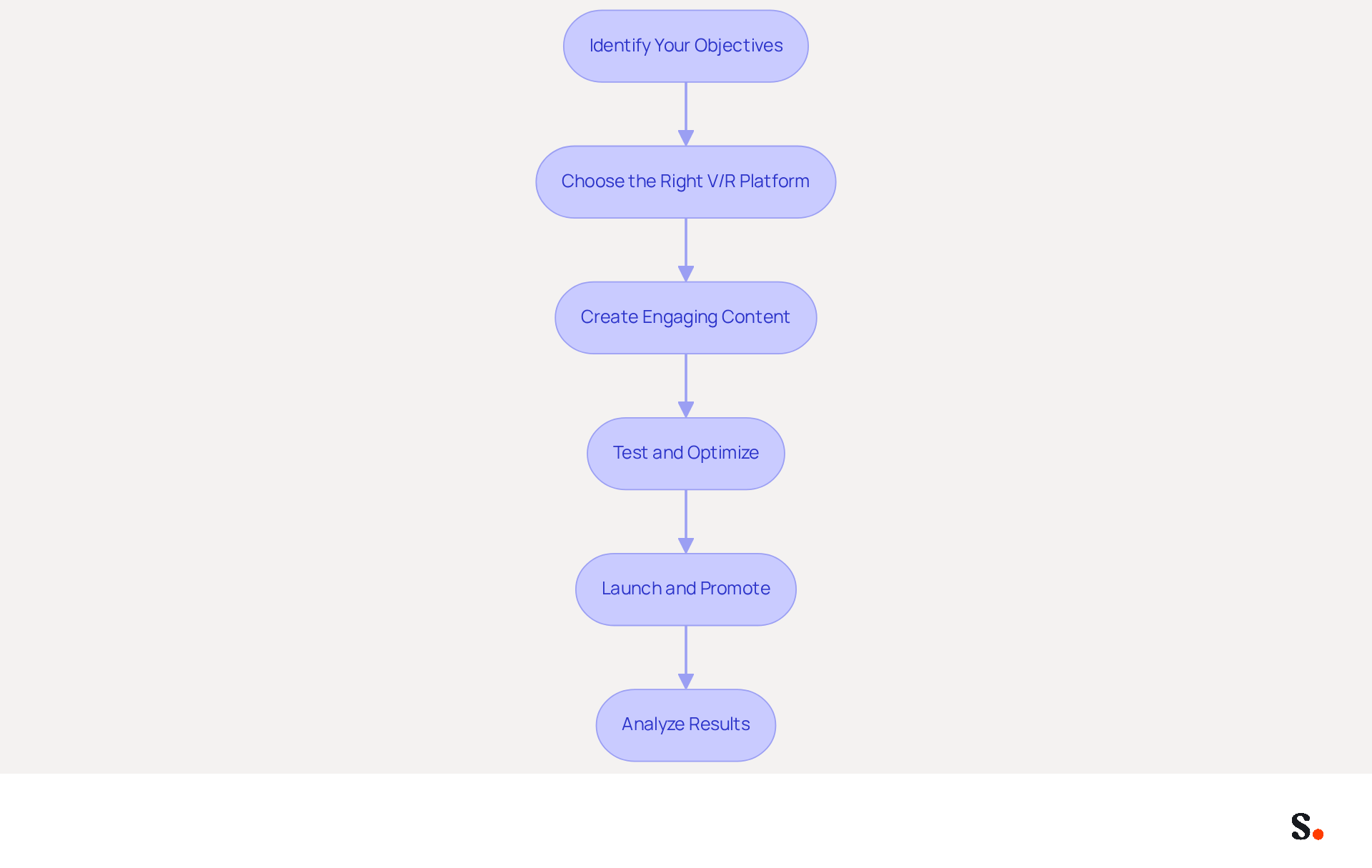
To successfully leverage V/R in your marketing strategies, it is essential to follow a structured approach that aligns with your objectives:
- Identify Your Objectives: Clearly define V/R what you aim to achieve, including increasing awareness, enhancing customer engagement, or driving sales. Establishing specific goals will guide your campaign's direction.
- Choose the Right V/R Platform: Research and select a V/R platform that aligns with your objectives. Consider factors like ease of use, integration capabilities, and audience reach to ensure it meets your needs.
- Create Engaging Content: Develop V/R content that resonates with your target audience. This could encompass virtual product demonstrations, immersive storytelling activities, or interactive brand showcases that captivate users and encourage interaction.
- Test and Optimize: Make sure to test your V/R campaign thoroughly before launch to guarantee a smooth user experience. Gather feedback from test users and make necessary adjustments to optimize performance and engagement.
- Launch and Promote: Once your V/R project is ready, introduce it across your promotional channels. Promote it through social media, email campaigns, and your website to maximize reach and visibility.
To understand the concept, we need to define V/R.
- Analyze Results: After the campaign, analyze performance metrics to assess the effectiveness of your strategy to define V/R. Utilize insights acquired to enhance future campaigns, ensuring ongoing improvement and alignment with your promotional objectives.
Research shows that immersive experiences boost memory recall by 70% compared to traditional media, highlighting V/R's effectiveness in enhancing brand recognition. Case studies, such as L'Oréal's successful implementation of V/R in their Makeup Genius app, demonstrate how virtual try-ons can significantly improve customer engagement and reduce purchase hesitation. Implementing these steps will enable you to integrate V/R into your promotional strategy, ultimately enhancing your marketing effectiveness. Failing to analyze your results may prevent you from refining future campaigns and reaching your marketing objectives.
Utilize Tools for Effective V/R Implementation
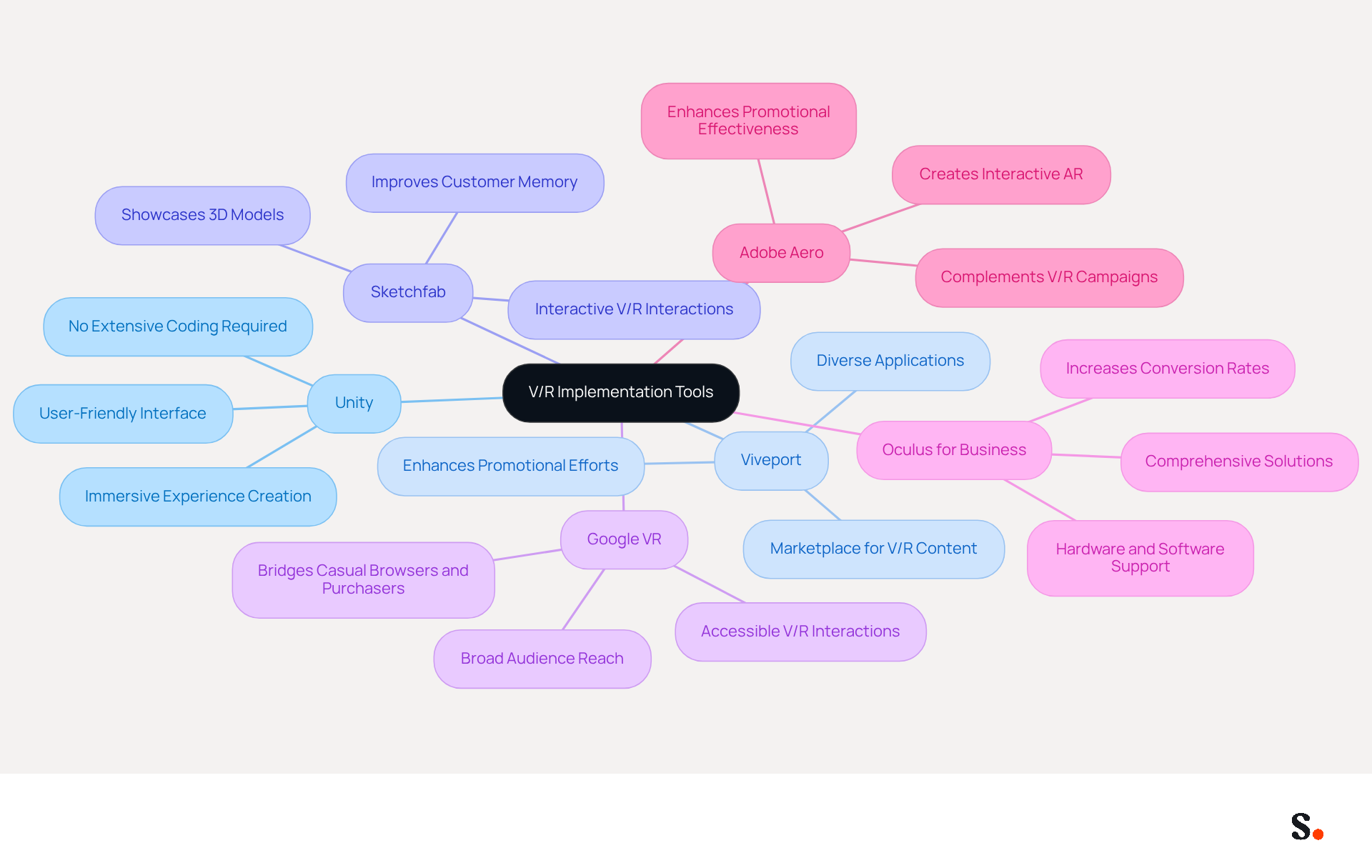
To effectively engage customers in an increasingly competitive market, marketers must adopt innovative strategies that define v/r. Consider utilizing the following tools:
- Unity: As immersive technology evolves, Unity's user-friendly interface will become essential for marketers aiming to effectively engage their customers. This powerful platform allows marketers to create immersive experiences without requiring extensive coding skills.
- Viveport: This platform provides a marketplace for V/R content, offering access to a diverse array of applications that can enhance promotional efforts. With the expected increase in conversion rates associated with marketing that define v/r, Viveport can serve as a valuable resource for innovative content.
- Sketchfab: Ideal for showcasing 3D models, Sketchfab enables companies to create interactive V/R interactions that visually captivate customers. Research indicates that immersive interactions can greatly improve customer memory and brand recall, making it a strategic choice for marketers.
- Google VR: With tools like Google Cardboard and Daydream, marketers can create accessible V/R interactions that reach a broader audience. As AR and define v/r become more mainstream, these tools will help bridge the gap between casual browsers and serious purchasers.
- Oculus for Business: This platform offers comprehensive solutions for companies aiming to incorporate V/R into their promotional strategies, including hardware and software support. Companies that implement strategies to define v/r can increase conversion rates and establish credibility, making Oculus a key player in this space.
- Adobe Aero: For those interested in augmented reality (AR) alongside V/R, Adobe Aero enables marketers to create interactive AR interactions that can complement V/R campaigns. As AR evolves from a novelty to a practical growth tool, integrating it with V/R strategies will enhance overall promotional effectiveness.
By leveraging these tools, managers can define v/r to streamline their implementation process and create compelling experiences that resonate with their audience. Furthermore, by prioritizing ethical practices in V/R promotion, companies can not only enhance customer engagement but also foster long-term loyalty and trust.
Troubleshoot Common V/R Challenges
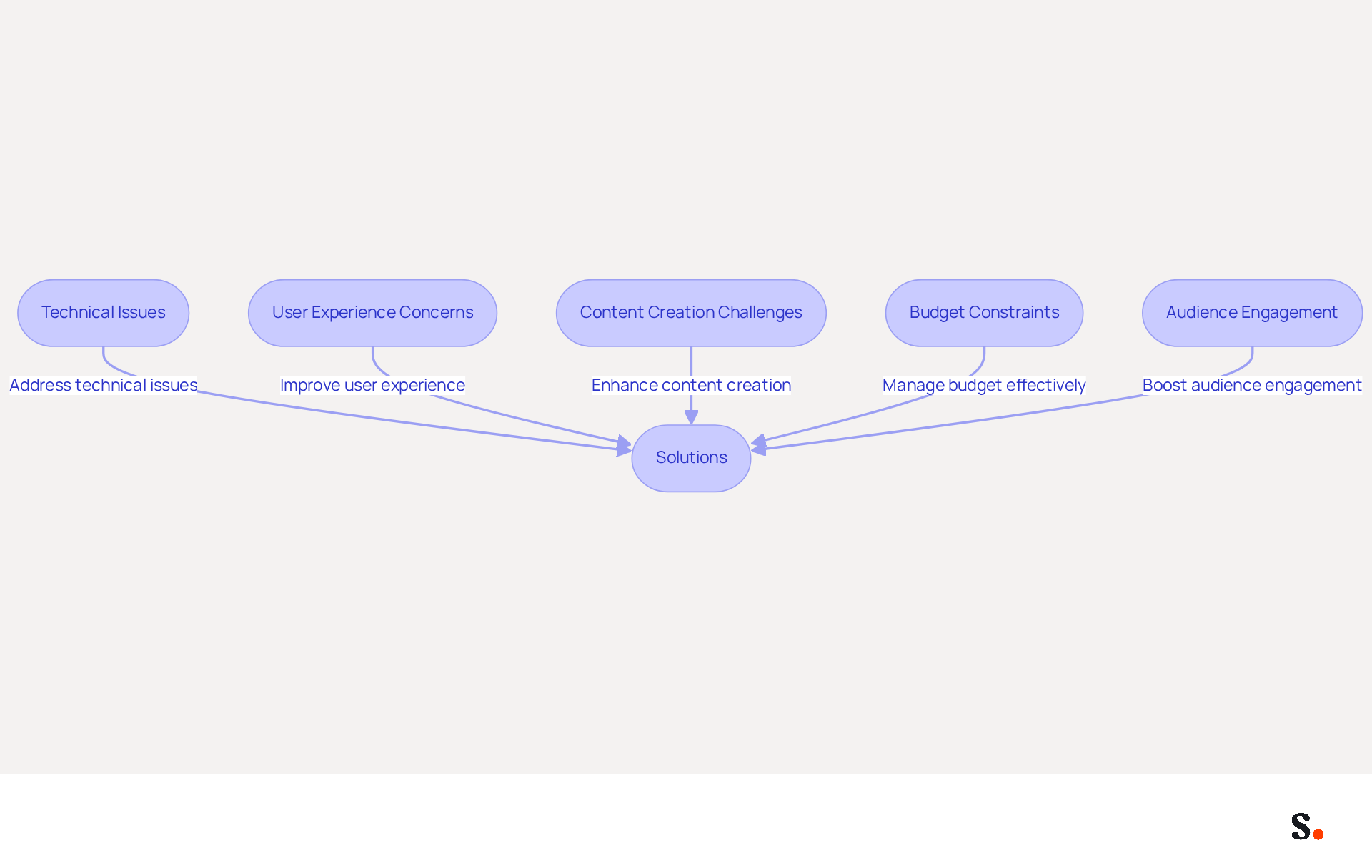
Implementing marketing strategies that define v/r presents several challenges that require careful consideration and proactive solutions.
- Technical Issues: Ensure that your hardware and software are compatible with the platform you are using to define v/r. Regularly update your systems and conduct tests to identify any potential glitches before launching your campaign. Research shows that 27% of organizations struggle with content offerings, highlighting the importance of thorough preparation. According to Tajammul Pangarkar, CMO at Prudour Pvt Ltd, addressing technical issues is crucial for user satisfaction, making it essential to tackle them proactively.
- User Experience Concerns: If users report discomfort or confusion while using your content, it is essential to define v/r, gather feedback, and make necessary adjustments. Research indicates that 57.8% of the population has experienced motion sickness at least once, which can affect user satisfaction. By addressing user feedback, you can significantly enhance user satisfaction and engagement. Successful campaigns have shown that simplifying navigation and providing clear instructions can lead to improved user experiences.
- Content Creation Challenges: Creating compelling content that can define v/r often requires significant resources and expertise. Consider collaborating with V/R specialists or agencies to ensure your content meets industry standards and effectively engages your audience. Recent research highlights that utilizing expert insights can lead to interactions that resonate with users, ultimately improving brand awareness.
- Budget constraints highlight the need to define v/r, as its implementation can be costly, with investments in V/R training projected to reach $4.1 billion in 2024. To keep your budget in check, focus on your key objectives and consider starting with a minimum viable product (MVP) that you can test and improve over time. This approach allows for iterative enhancements without overspending.
- Audience Engagement: If your campaign does not effectively define v/r and is not generating the expected engagement, analyze your target audience and adjust your content to better align with their interests and preferences. Successful V/R activations have demonstrated that tailored experiences can lead to higher engagement and brand recognition.
By proactively addressing these challenges, marketing managers can enhance the effectiveness of their V/R strategies and ensure successful campaign execution. As the V/R market continues to expand, overcoming these challenges will be crucial for maintaining competitive advantage.
Conclusion
Understanding V/R in marketing goes beyond technology; it’s about harnessing its potential to engage consumers and build brand loyalty. By immersing users in a digitally created environment, V/R offers brands a unique opportunity to create memorable experiences that resonate deeply with their audiences. As marketing managers adopt this innovative approach, they position themselves to leverage V/R as a strategic tool for storytelling and customer interaction.
Throughout this guide, we have shared key insights on effectively implementing V/R in marketing strategies. From identifying clear objectives and selecting the right platforms to creating engaging content and addressing common challenges, each step is crucial for maximizing the impact of V/R campaigns. Analytics play a crucial role in measuring success and refining future efforts, ensuring marketing strategies align with changing consumer preferences.
As the V/R market expands, marketing managers must embrace this technology to stay competitive. By integrating V/R into promotional strategies, brands can enhance customer engagement and drive measurable outcomes that contribute to overall marketing success. The ability to create immersive experiences through V/R will define the future of marketing, making it essential for brands to adapt and innovate.
Frequently Asked Questions
What is Virtual Reality (V/R)?
Virtual Reality (V/R) is a simulated interaction that immerses users in a digitally created environment, allowing for engaging and interactive experiences.
How is V/R used in marketing?
In marketing, V/R is leveraged to create engaging experiences that captivate audiences, such as allowing customers to explore products in a virtual space, enhancing their understanding and emotional connection to the brand.
What are the benefits of using V/R for brands?
V/R captures attention, creates memorable interactions, boosts brand loyalty, and can lead to increased sales by enhancing customer engagement.
What impact does V/R have on customer memory and brand recall?
Immersive interactions through V/R significantly enhance customer memory and brand recall, with users being 275% more confident in their learning decisions after engaging with V/R content.
What is the projected market growth for V/R?
The market for V/R is projected to reach a revenue of US$50.9 billion by 2026, with an expected annual growth rate of 10.50% from 2026 to 2030.
What challenges does V/R face in terms of awareness and adoption?
Currently, 42% of US adults have not heard of V/R, indicating challenges in awareness and adoption of this technology.
Can you provide an example of V/R in promotional strategies?
Companies have successfully used V/R to create virtual stores that simulate real-world shopping experiences, allowing for the observation of consumer behavior in controlled settings.
How can V/R improve customer satisfaction?
By simulating real-world experiences, V/R can enhance customer satisfaction and help identify purchasing habits and product preferences.
Why is it important for managers to define V/R in their campaigns?
Defining V/R in terms of its strategic fit within campaigns allows companies to enhance engagement depth, drive measurable outcomes, and gain a competitive advantage in the marketplace.
What role do analytics play in V/R campaigns?
Implementing analytics to track interactions and measure the effectiveness of V/R campaigns is crucial for optimizing these strategies and ensuring successful outcomes.
List of Sources
- Define V/R: Understanding the Concept
- How are brands using virtual reality in their marketing? - ClickZ (https://clickz.com/how-are-brands-using-virtual-reality-in-their-marketing/112778)
- Marketing Agent Blog (https://marketingagent.blog/2025/10/31/vr-marketing-in-2026-a-field-guide-for-cmos-growth-teams-and-creators)
- AR & VR - Worldwide | Statista Market Forecast (https://statista.com/outlook/amo/ar-vr/worldwide?srsltid=AfmBOopSoKrA4ylmera7GhIvREy3Uy8Lxx1cXHI6DPqlcNdWReTlZr3r)
- AR & VR in Marketing 2026: Real Examples, Trends & Benefits (https://esignwebservices.com/blog/ar-and-vr-in-marketing-real-use-cases-2026)
- Virtual and Augmented Reality: The Future Of Market Research? (https://fuelcycle.com/blog/virtual-and-augmented-reality-the-future-of-market-research)
- Apply V/R in Marketing Strategies: Practical Steps
- AR & VR in Marketing 2026: Real Examples, Trends & Benefits (https://esignwebservices.com/blog/ar-and-vr-in-marketing-real-use-cases-2026)
- Virtual Reality (VR) Marketing: The Complete Guide for 2026 (https://peertopeermarketing.co/vr-marketing)
- The Augmented Reality and Virtual Reality Industry 2026 (https://blog.shayaikehassan.com/the-augmented-reality-and-virtual-reality-industry-an-in-depth-overview-in-2026)
- Immersive Marketing: How VR And AR Can Transform Customer Experiences (https://forbes.com/councils/forbesbusinesscouncil/2025/10/28/immersive-marketing-how-vr-and-ar-can-transform-customer-experiences)
- Marketing Agent Blog (https://marketingagent.blog/2025/10/31/vr-marketing-in-2026-a-field-guide-for-cmos-growth-teams-and-creators)
- Utilize Tools for Effective V/R Implementation
- AR & VR in Marketing 2026: Real Examples, Trends & Benefits (https://esignwebservices.com/blog/ar-and-vr-in-marketing-real-use-cases-2026)
- The State of VR at GDC 2026: Building a Sustainable Future (https://developers.meta.com/horizon/blog/gdc-2026-state-of-vr)
- AR & VR - Worldwide | Statista Market Forecast (https://statista.com/outlook/amo/ar-vr/worldwide?srsltid=AfmBOoqTQ0_GiPqgcO-YM-DMJaJctkhHolFOKgRWCevBhRaChQNB0ypi)
- Marketing Agent Blog (https://marketingagent.blog/2025/10/31/vr-marketing-in-2026-a-field-guide-for-cmos-growth-teams-and-creators)
- Marketing Tech Trends for 2026 (https://fiercecreativesolutions.com/blog/emerging-technologies-shaping-marketing-strategy-in-2026)
- Troubleshoot Common V/R Challenges
- (PDF) The Challenges and Opportunities of Virtual Reality in Marketing and Advertising (https://researchgate.net/publication/370806084_The_Challenges_and_Opportunities_of_Virtual_Reality_in_Marketing_and_Advertising)
- Immersive Marketing: How VR And AR Can Transform Customer Experiences (https://forbes.com/councils/forbesbusinesscouncil/2025/10/28/immersive-marketing-how-vr-and-ar-can-transform-customer-experiences)
- Marketing Agent Blog (https://marketingagent.blog/2025/10/31/vr-marketing-in-2026-a-field-guide-for-cmos-growth-teams-and-creators)
- Virtual Reality Statistics By Entertainment, Technology, Devices (2026) (https://scoop.market.us/virtual-reality-statistics)
- Casting: Monitor, Guide, and Troubleshoot for Users in Virtual Reality - ArborXR (https://arborxr.com/blog/remote-view-monitor-guide-and-troubleshoot-for-users-in-virtual-reality)
Get started with Scribe
Signatures for every role on your team
Free 14-day trial — no credit card.