How to Automate Email Signatures for Effective Marketing Campaigns
Despite their often-overlooked role, email signatures can significantly impact marketing effectiveness. By automating email signatures, organizations can
Sophie Grant
Email Signature Specialist, Scribe

On this page
- Introduction
- Understand the Importance of Email Signatures in Marketing
- Prepare for Automation: Audit and Define Governance
- Integrate Email Signatures with Existing Systems
- Create and Standardize Email Signature Templates
- Test and Roll Out Automated Email Signatures
- Conclusion
- Frequently Asked Questions
- List of Sources
Introduction
Despite their often-overlooked role, email signatures can significantly impact marketing effectiveness. By automating email signatures, organizations can transform each correspondence into a consistent marketing opportunity, ensuring that every message reinforces brand identity and promotes key initiatives. Many organizations find it challenging to navigate the complexities of email signature automation. This guide will walk through the essential steps to automate email signatures, highlighting best practices and integration strategies that can elevate marketing campaigns and drive measurable results.
Understand the Importance of Email Signatures in Marketing
Despite their potential, many businesses overlook the marketing power of email footers. Each message sent acts as a medium to strengthen your identity and promote current offerings. Consider the following key aspects:
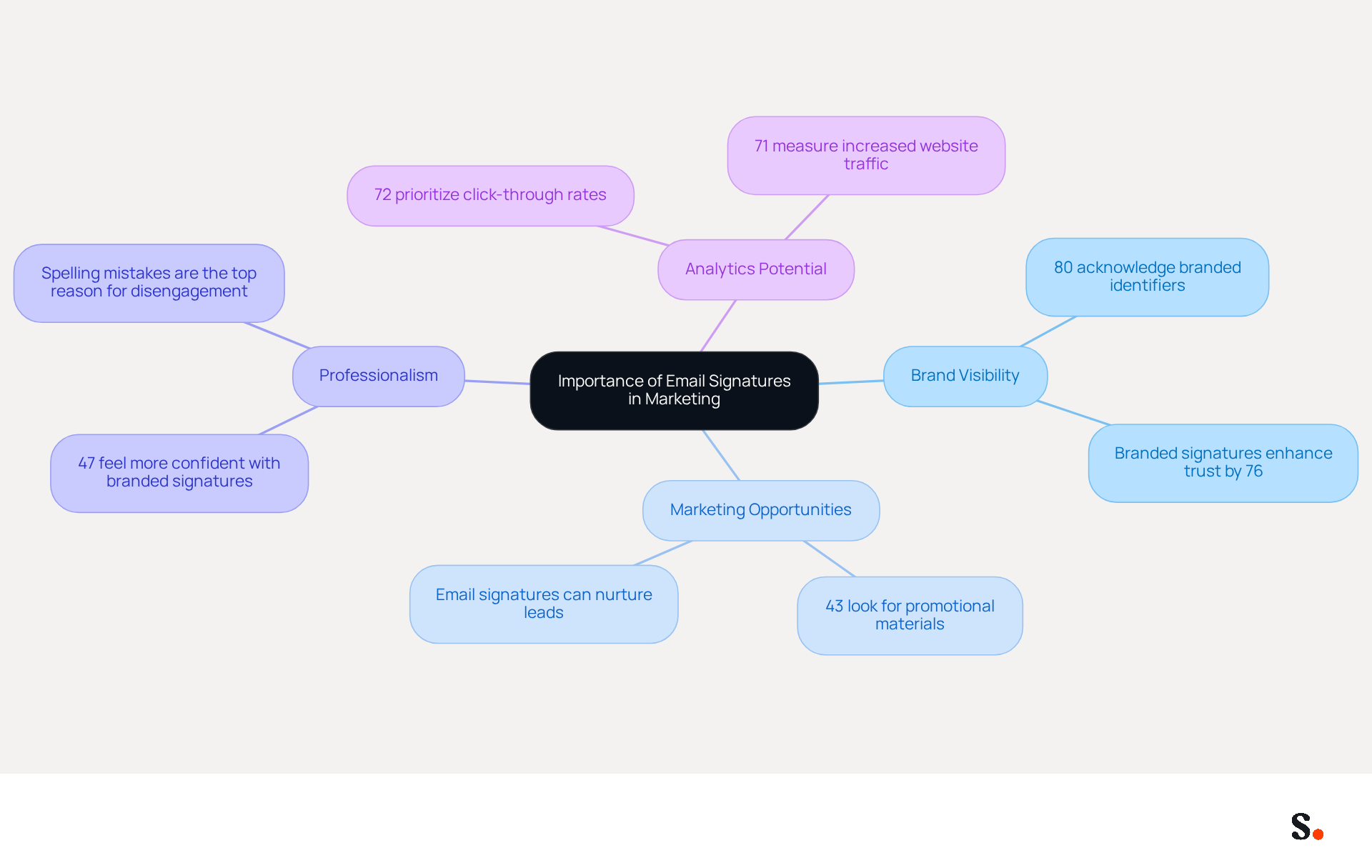
- Brand Visibility: Every email signature functions as a mini-advertisement for your brand. Incorporating your logo, brand colors, and a consistent design improves brand recognition, with 80% of respondents acknowledging that a branded digital identifier is essential for a company's identity.
- Marketing Opportunities: Signatures can feature links to your latest promotions, social media channels, or a compelling call-to-action (CTA) that encourages further engagement. Interestingly, 43% of consumers actually look for promotional materials in digital formats, highlighting just how effective email footers can be.
- Professionalism: A well-crafted communication footer adds professionalism to your interactions, enhancing your business's credibility and trustworthiness. Research indicates that messages with professionally branded identifiers enhance consumer trust by 47% and positively affect brand perception for 43% of recipients.
- Analytics Potential: Monitoring clicks on links within your correspondence provides valuable insights into customer engagement and preferences, enabling more focused promotional efforts. Click-through rates are an essential metric, with 72% of marketers prioritizing this indicator to assess the effectiveness of their communications.
By incorporating these components into your correspondence strategy, you can greatly enhance your promotional campaigns. By using Scribe to automate email signatures, we ensure consistency and efficiency, transforming each message into a powerful promotional opportunity. With Scribe's automated synchronization of contact details from your business phone system, such as Aircall, you can maintain brand consistency effortlessly. Furthermore, Scribe's SOC 2 Type II compliance ensures that your data is managed securely, offering reassurance as you utilize digital branding for marketing success. By neglecting this aspect of communication, businesses risk losing valuable engagement opportunities that could enhance their marketing efforts.
Prepare for Automation: Audit and Define Governance
Before automating digital identifiers, a thorough audit and governance framework are crucial for success. Follow these steps:
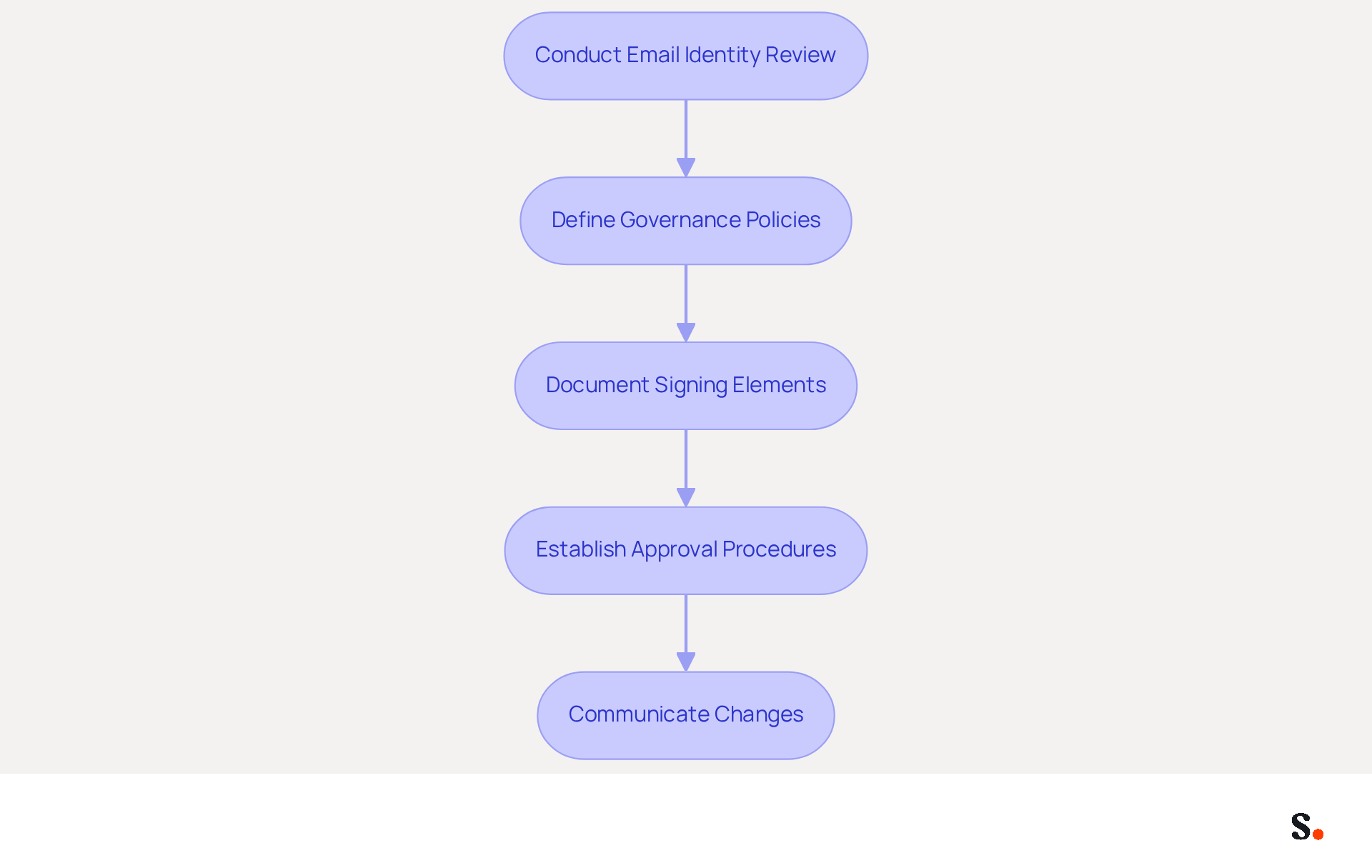
- Conduct an Email Identity Review: Examine existing digital identities across your organization to identify inconsistencies in design, branding, and information. This evaluation highlights areas that need standardization; 28.7% of firms use electronic identifiers primarily to enhance branding and awareness.
- Define Governance Policies: Establish clear guidelines on who can create, modify, and approve digital identifiers. This includes defining roles for marketing, IT, and compliance teams to ensure adherence to brand standards and legal requirements. Fragmented decision-making can result in significant delays in updating digital identifiers. Regular reviews of these policies should occur at least annually to maintain relevance and compliance.
- Document Signing Elements: Create a comprehensive list of required components for your messages, such as logos, disclaimers, and contact information. This documentation will act as a reference for creating standardized templates, ensuring that every endorsement includes essential components like first name, surname, job title, company name, and legal disclaimers.
- Establish Approval Procedures: Implement a streamlined approval process for any modifications to digital identifiers. This ensures that all updates are vetted and align with your messaging and compliance needs.
- Communicate Changes: Notify all employees regarding the new governance policies and the significance of utilizing standardized digital identifiers. This communication fosters brand consistency in all communications, as 52% of professionals believe a strong digital identifier is essential for establishing trust and interaction with clients.
By implementing these strategies, organizations can significantly enhance their branding and client engagement. With Scribe's one-click synchronization, you can easily connect with your service provider, ensuring that all changes made in your directory are automatically updated in Scribe. This not only saves time but also enhances security compliance, as Scribe is SOC 2 Type II compliant. Additionally, consider joining Scribe's Affiliate Program to earn a 50% commission while promoting brand consistency across your organization.
Integrate Email Signatures with Existing Systems
Integrating automated messaging identifiers with existing systems is crucial for maximizing efficiency and effectiveness. Here’s how to achieve this:
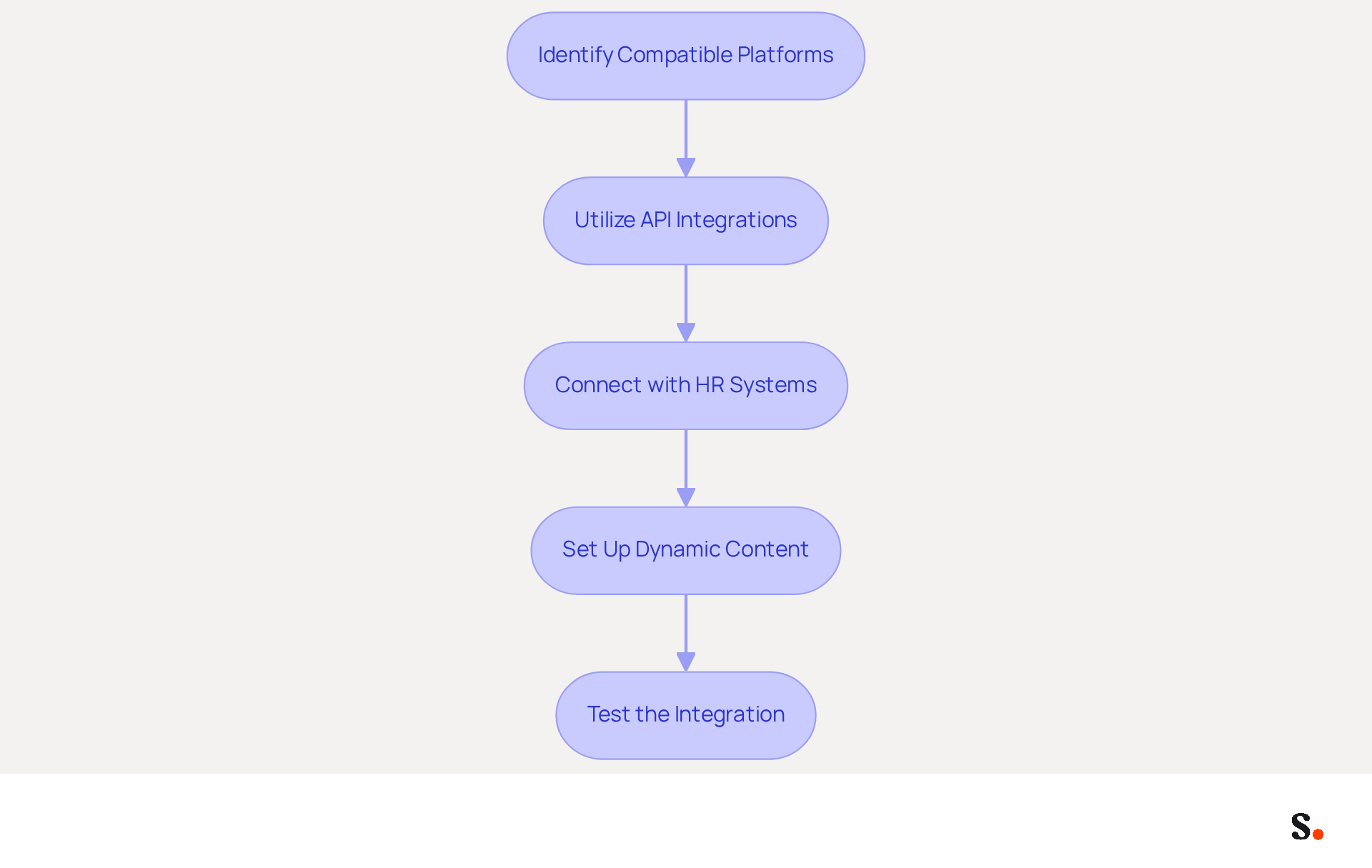
- Identify Compatible Platforms: Assess the communication clients and systems your organization utilizes, such as Google Workspace and Microsoft 365. Confirm that your Scribe management tool is compatible with these platforms to ensure seamless functionality.
- Utilize API Integrations: Many management tools, including Scribe, offer APIs that enable seamless integration with existing systems. Utilize these APIs to automate the synchronization of employee data and update processes, enhancing efficiency. This integration also includes Aircall, allowing changes in Google Workspace-like moving teammates or updating their information-to be automatically reflected in Scribe.
- Connect with HR Systems: Integrate your messaging tool with HR and identity management systems to keep employee information up to date. This integration aids in preserving consistency and precision in your digital identifiers, which is essential for brand integrity. Scribe's compliance with SOC 2 Type II, GDPR, and CCPA ensures that your data remains secure and compliant.
- Set Up Dynamic Content: Implement dynamic fields in your correspondence to automatically populate relevant information, such as employee names, titles, and contact details. This ensures that each mark is personalized and accurate, enhancing engagement with recipients. Notably, Scribe achieves an average click-through rate of 12% on branded banners, illustrating the effectiveness of well-integrated identifiers.
- Test the Integration: Before deploying automated identifiers organization-wide, conduct thorough testing to ensure smooth integration across all platforms. Integration challenges can arise, making it crucial to identify and resolve any discrepancies during testing.
When you integrate your digital identifiers with existing systems, you not only streamline management processes but also boost the effectiveness of your marketing campaigns. This means that a company with 100 employees can generate approximately 60,000-80,000 branded impressions each month, showcasing the potential reach of effective digital identifiers. Moreover, 70% of marketers anticipate that up to half of their communication operations will be AI-driven by 2026, highlighting the significance of embracing advanced technologies in managing digital identities. Additionally, 42% of organizations will not monitor digital branding performance, emphasizing a notable gap in assessing engagement. As George El-Hage observes, 'Including a LinkedIn link and a digital business card link provides recipients a quick way to confirm your identity and save your information,' underscoring the importance of professional branded identifiers.
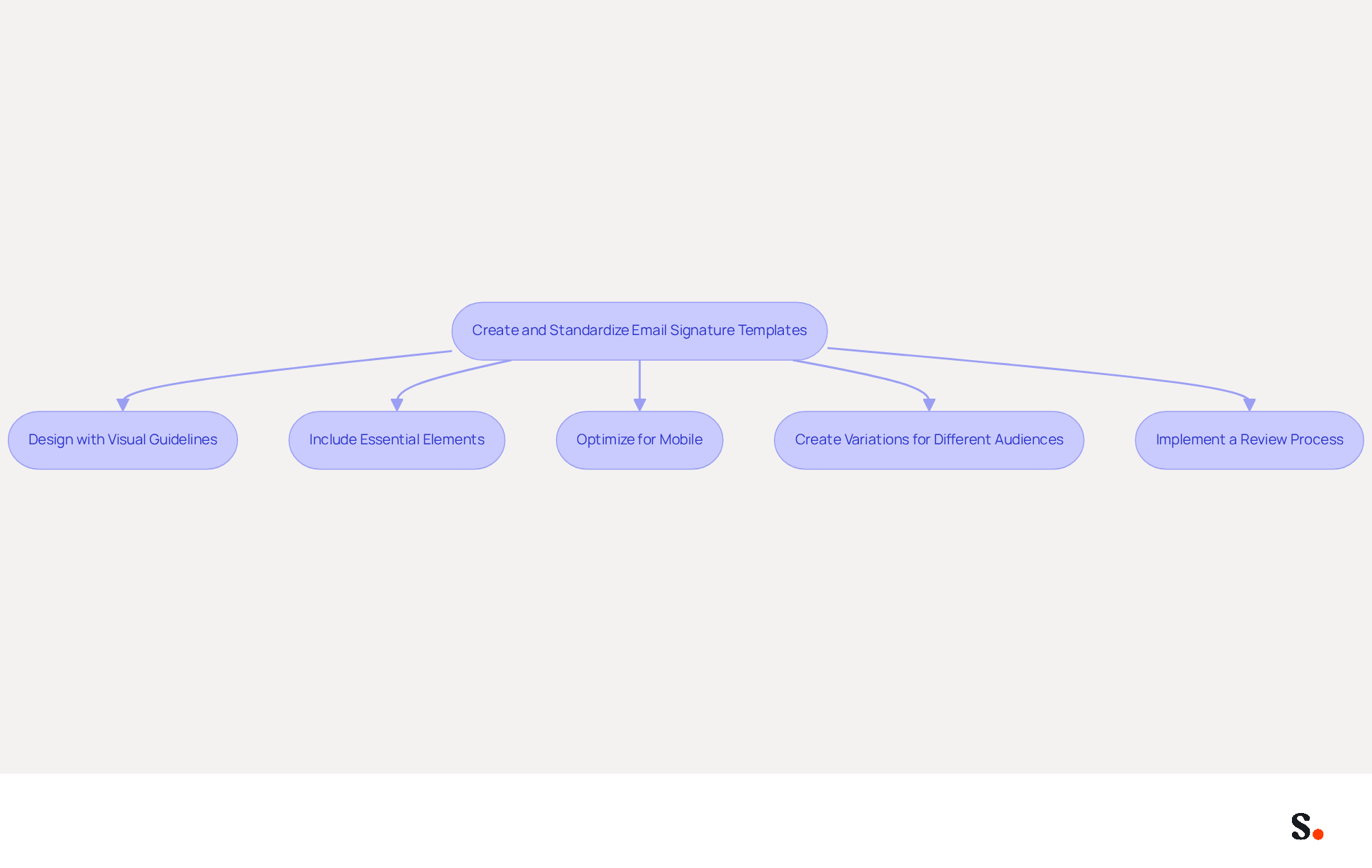
Create and Standardize Email Signature Templates
Establishing governance and integrating systems sets the stage for the critical task of standardizing correspondence templates. Follow these guidelines:
- Design with Visual Guidelines: Ensure that your templates align with your organization's visual identity. Consistent application of colors, fonts, and logos strengthens brand recognition, with 28.7% of companies primarily utilizing digital formats to enhance branding and awareness.
- Include Essential Elements: Each sign-off should feature key components such as the sender's name, job title, company name, contact information, and links to social media profiles. Incorporating a call-to-action (CTA) or promotional banner can greatly enhance engagement, as 52% of professionals believe a strong digital identifier is essential for establishing trust.
- Optimize for Mobile: With 46% of all emails opened on mobile devices in 2023, ensuring that your email footers are mobile-friendly is crucial. Test designs across various devices to maintain readability and functionality.
- Create Variations for Different Audiences: Customize templates for various target audiences. For example, sales teams might benefit from endorsements that emphasize promotions, while support teams should concentrate on clear contact information.
- Implement a Review Process: Before finalizing templates, have them reviewed by relevant stakeholders to ensure compliance with branding and legal standards. Without a review process, branding and legal compliance issues may arise, as 79% of companies monitor the effectiveness of their messaging campaigns using click tracking.
By creating standardized templates for your correspondence, you help ensure that every message reflects your brand's professionalism and marketing goals, boosting engagement and lead generation. Standardized templates not only reflect your brand's professionalism but also foster trust and engagement with your audience.
Test and Roll Out Automated Email Signatures
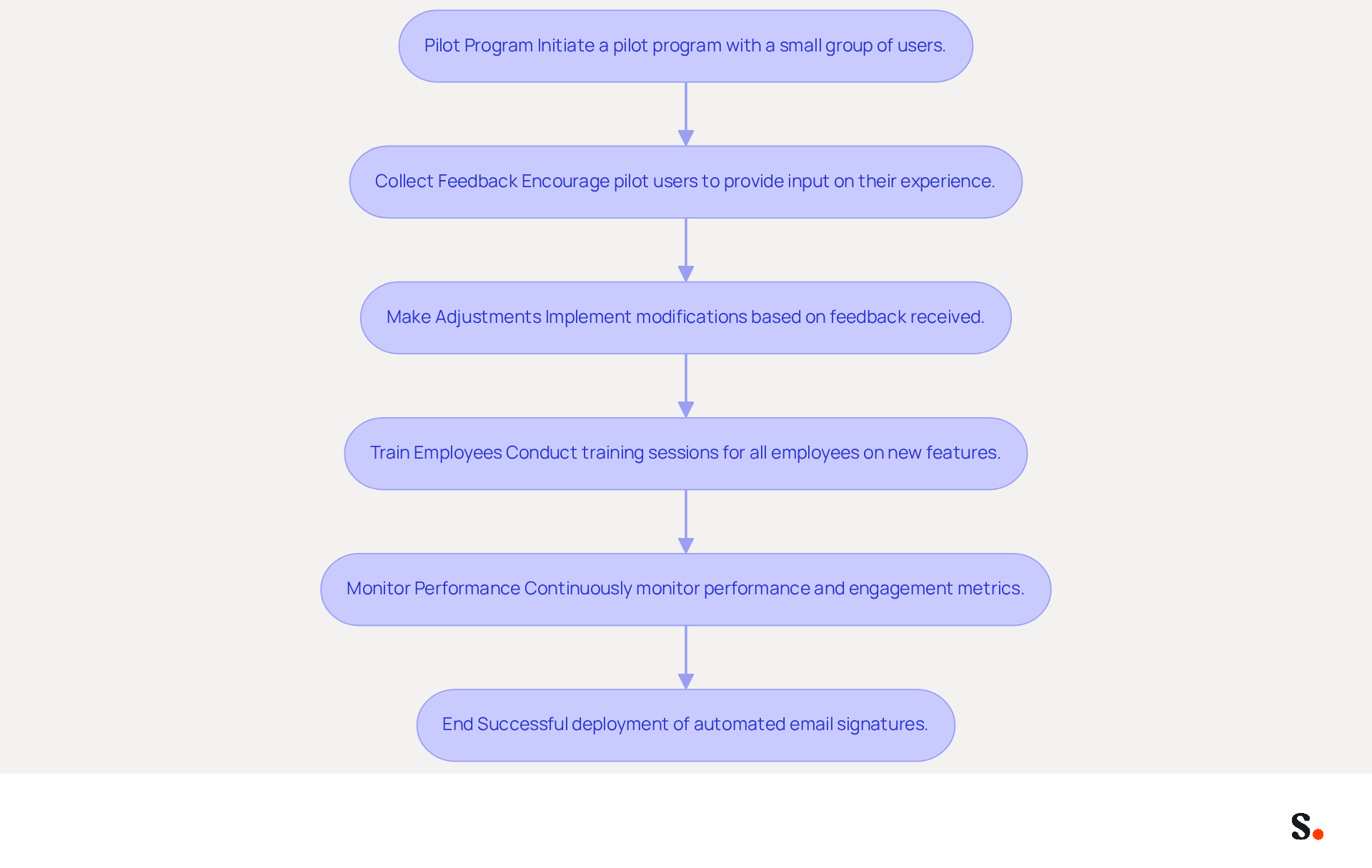
To ensure the successful implementation of automated formats, a structured testing approach is vital.
- Pilot Program: Initiate a pilot program with a small group of users. This allows for real-world testing of the automated messaging formats, helping you gather valuable feedback and spot any potential issues before a full rollout. Organizations that utilize pilot programs can streamline their rollout process, achieving a unified email template quickly, particularly during significant organizational changes.
- Collect Feedback: Actively encourage pilot users to provide input on their experience with the new identifiers. Pay close attention to any technical issues, design concerns, or usability challenges they may encounter. Without this feedback, the final product may not meet user expectations. Syncing your Google Workspace with Scribe ensures that any changes, such as moving teammates or updating their information, are automatically reflected in the email footers, saving time and enhancing consistency.
- Make Adjustments: Utilize the feedback collected to implement necessary modifications to the email identifiers. This may involve tweaking the design, addressing technical glitches, or refining the content to better meet user needs. Incorporating insights from experts can further enhance the effectiveness of these adjustments.
- Train Employees: After finalizing the approvals, it's important to conduct thorough training sessions for all employees. Ensure they comprehend how to utilize the new features effectively and provide resources and support to facilitate a smooth transition. Training is essential to maximize the benefits of automation and ensure compliance with branding standards.
- Monitor Performance: After the full rollout, continuously monitor the performance of the automated email signatures. Utilize analytics to monitor engagement metrics, such as click-through rates on links, to evaluate the effectiveness of your promotional campaigns. This ongoing evaluation will assist you in refining your approach and showing how to automate email signatures to demonstrate the ROI of your promotional activities.
Implementing these steps will assist in ensuring a successful deployment of automated message identifiers, which will help to automate email signatures, enhance your promotional efforts, and maintain consistency in your identity. By prioritizing feedback and training, organizations can unlock the full potential of their ability to automate email signatures.
Conclusion
Automating email signatures represents a pivotal strategy for enhancing marketing effectiveness and ensuring brand consistency. By leveraging tools like Scribe, organizations can transform every email into a powerful marketing channel, ensuring that each communication reinforces brand identity while promoting key messages and offers.
Throughout this guide, the importance of email signatures as marketing tools has been highlighted. From enhancing brand visibility and professionalism to providing valuable analytics, the benefits of well-managed digital identifiers are clear. Key steps such as:
- Auditing existing signatures
- Defining governance policies
- Integrating with existing systems
- Creating standardized templates
are essential for a successful automation process. Moreover, the emphasis on testing and training ensures that the transition to automated signatures is smooth and effective, maximizing engagement and ROI.
Without automation, organizations risk inconsistent branding and missed marketing opportunities. By adopting best practices and utilizing Scribe's capabilities, organizations can achieve 100% brand consistency and measurable marketing results. Consider how email signatures can become a crucial part of your marketing strategy, and position your organization for sustained growth and competitive advantage.
Frequently Asked Questions
Why are email signatures important in marketing?
Email signatures serve as mini-advertisements for your brand, enhancing brand visibility, providing marketing opportunities, adding professionalism, and offering analytics potential to track customer engagement.
How do email signatures improve brand visibility?
Incorporating your logo, brand colors, and a consistent design in email signatures improves brand recognition, with 80% of respondents acknowledging that a branded digital identifier is essential for a company's identity.
What marketing opportunities can be included in email signatures?
Email signatures can feature links to promotions, social media channels, or compelling calls-to-action (CTAs) that encourage further engagement, as 43% of consumers look for promotional materials in digital formats.
How do professional email signatures affect business credibility?
A well-crafted email signature enhances professionalism, which increases consumer trust by 47% and positively affects brand perception for 43% of recipients.
What is the significance of analytics in email signatures?
Monitoring clicks on links within email signatures provides insights into customer engagement and preferences, with 72% of marketers prioritizing click-through rates to assess communication effectiveness.
How can Scribe help with email signature management?
Scribe automates email signatures to ensure consistency and efficiency, synchronizing contact details from your business phone system and maintaining brand consistency effortlessly.
What steps should be taken before automating digital identifiers?
Conduct an email identity review, define governance policies, document signing elements, establish approval procedures, and communicate changes to ensure successful automation.
What is involved in conducting an email identity review?
It involves examining existing digital identities across the organization to identify inconsistencies in design, branding, and information, highlighting areas needing standardization.
Why is it important to define governance policies for digital identifiers?
Clear guidelines on who can create, modify, and approve digital identifiers help ensure adherence to brand standards and legal requirements, preventing delays in updates.
What should be included in the documentation of signing elements?
A comprehensive list of required components such as logos, disclaimers, and contact information should be created to ensure standardized templates for email signatures.
How can organizations communicate changes in governance policies?
Organizations should notify all employees about new governance policies and the importance of using standardized digital identifiers to foster brand consistency.
What benefits does Scribe offer regarding security compliance?
Scribe is SOC 2 Type II compliant, ensuring that data is managed securely while automating email signature updates and enhancing security compliance.
How can one benefit from Scribe's Affiliate Program?
By joining Scribe's Affiliate Program, individuals can earn a 50% commission while promoting brand consistency across their organization.
List of Sources
- Understand the Importance of Email Signatures in Marketing
- Why Email Signatures Must Be In Your 2026 Marketing Plan | Rocketseed (https://rocketseed.com/blog/2026-marketing-plan-email-signatures)
- Research Recap: Branded Email Signatures Increase Company Recognition, Trust - Demand Gen Report (https://demandgenreport.com/industry-news/research-recap-branded-email-signatures-increase-company-recognition-trust/47252)
- Email Signature Trends 2026: Centralized Control & Automation | SIGNandGO posted on the topic | LinkedIn (https://linkedin.com/posts/signngo_email-signature-trends-to-watch-in-2026-activity-7401523471786217473-zAVL)
- Using Email Signatures for Marketing | CloudM (https://cloudm.io/blog/using-email-signatures-for-marketing-how-every-email-can-boost-your-brand)
- Why Are Email Signatures Key to Brand Awareness? | QuickMail (https://quickmail.com/role-of-email-signatures-in-brand-awareness)
- Prepare for Automation: Audit and Define Governance
- Email signature statistics: Why every business should optimize their email signatures — Stripo.email (https://stripo.email/blog/email-signature-statistics-why-every-business-should-optimize-their-email-signatures)
- Email signature charter: universal template and best practices (https://signitic.com/en/resources/email-signature-charter-the-complete-guide-to-creating-a-template-)
- Email Signature Governance in Organizations - Signite (https://signite.io/learn/advanced-strategic-topics/email-signature-governance-in-organizations)
- Letsignit Email Signature Management for Enterprises (https://letsignit.com/blog/email-signature-solution-large-companies)
- Email Signature Policy: How to Build and Enforce It (https://wisestamp.com/guides/how-to-create-email-signature-policy)
- Integrate Email Signatures with Existing Systems
- 40+ Email Signature Statistics for 2026 (Data + Insights) (https://wavecnct.com/blogs/email-signature-statistics)
- How to integrate an email signature API (https://signitic.com/en/resources/how-to-integrate-an-email-signature-api)
- The Ultimate Guide for Integrating your Email Signature to Google Workspace - Signite (https://signite.io/blog/the-ultimate-guide-for-integrating-your-email-signature-to-google-workspace)
- Top Rated Email Signature Software with Google workspace 2026 (https://getapp.com/it-communications-software/email-signature/w/google-workspace)
- Create and Standardize Email Signature Templates
- Email signature statistics and trends in 2024 (https://wisestamp.com/blog/email-signature-statistics)
- 20 best email signature design examples for 2026 — Stripo.email (https://stripo.email/blog/10-best-email-signature-design-examples)
- Email signature statistics: Why every business should optimize their email signatures — Stripo.email (https://stripo.email/blog/email-signature-statistics-why-every-business-should-optimize-their-email-signatures)
- Test and Roll Out Automated Email Signatures
- Automating Email Signatures: How IT Teams Streamline Processes & Reduce Risk (https://exclaimer.com/blog/streamlining-it-processes-automated-email-signatures)
- How to collect user feedback with email signature surveys (https://mail-signatures.com/articles/use-email-signature-surveys)
- How to get fast customer feedback through the use of email signature solutions | Advantage Business Systems (https://advantage.co.uk/intelligence-hub/the-frontline/how-to-get-fast-customer-feedback-through-the-use-of-email-signature-solutions)
Get started with Scribe
Manage signatures across your whole team
Free 14-day trial — no credit card.