How to End Email with Thank You: 4 Steps for Professionals
Crafting an effective email closing is crucial for shaping the recipient's perception and fostering ongoing dialogue. A thoughtful closing not only reinforces
Sophie Grant
Email Signature Specialist, Scribe

Introduction
Crafting an effective email closing is crucial for shaping the recipient's perception and fostering ongoing dialogue. A thoughtful closing not only reinforces the message but also establishes professionalism and encourages ongoing communication. Many professionals find it challenging to craft email closings that resonate with varied recipients. This guide provides practical steps and tailored phrases to enhance email closings and foster stronger professional relationships.
Get started with Scribe
See why teams switch to Scribe
Free 14-day trial — no credit card.
Understand the Importance of a Professional Email Closing
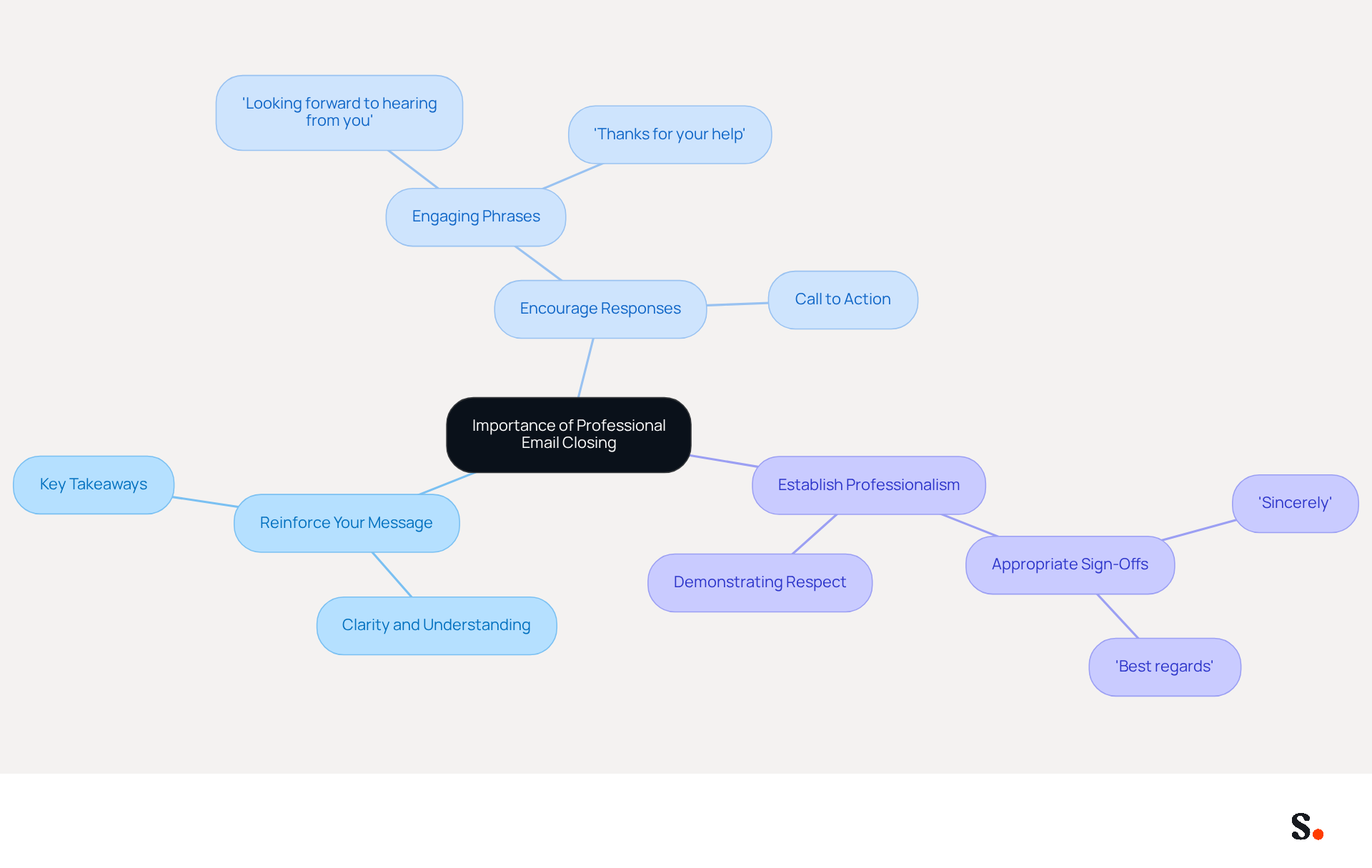
It is crucial to end email with thank you, as the conclusion of your professional message significantly shapes the recipient's perception of your communication. A well-crafted closing can:
- Reinforce Your Message: A strong closing reiterates the main points of your email, ensuring clarity and understanding. This is essential as it aids the audience in grasping the key takeaways, improving the overall effectiveness of your communication.
- Encourage Responses: A polite and engaging closing invites the recipient to reply, fostering ongoing communication. For instance, phrases like 'Looking forward to hearing from you' or 'Thanks for your help' can prompt a response, making it easier to maintain dialogue.
- Establish Professionalism: Utilizing appropriate sign-offs demonstrates your understanding of correspondence etiquette, which is essential for maintaining a professional image. Sign-offs such as 'Sincerely' or 'Best regards' convey respect and formality, reinforcing your credibility.
Including a considerate conclusion is important, so remember to end email with thank you to greatly improve the impact of your messages and make it an essential part of your communication strategy. Research indicates that using a well-crafted concluding line and sign-off can enhance the professionalism of your message. Furthermore, case studies show that effective closings lead to higher response rates and enhanced engagement; utilizing these sign-offs can help maintain professionalism and convey gratitude in communication. Payman Taei, Co-founder at Respona, emphasizes, 'Always take a moment to conclude your messages with a proper sign-off.' So, taking the time to craft thoughtful message endings isn't just a formality; it can really enhance your professional interactions.
Choose Appropriate Thank You Phrases for Your Email
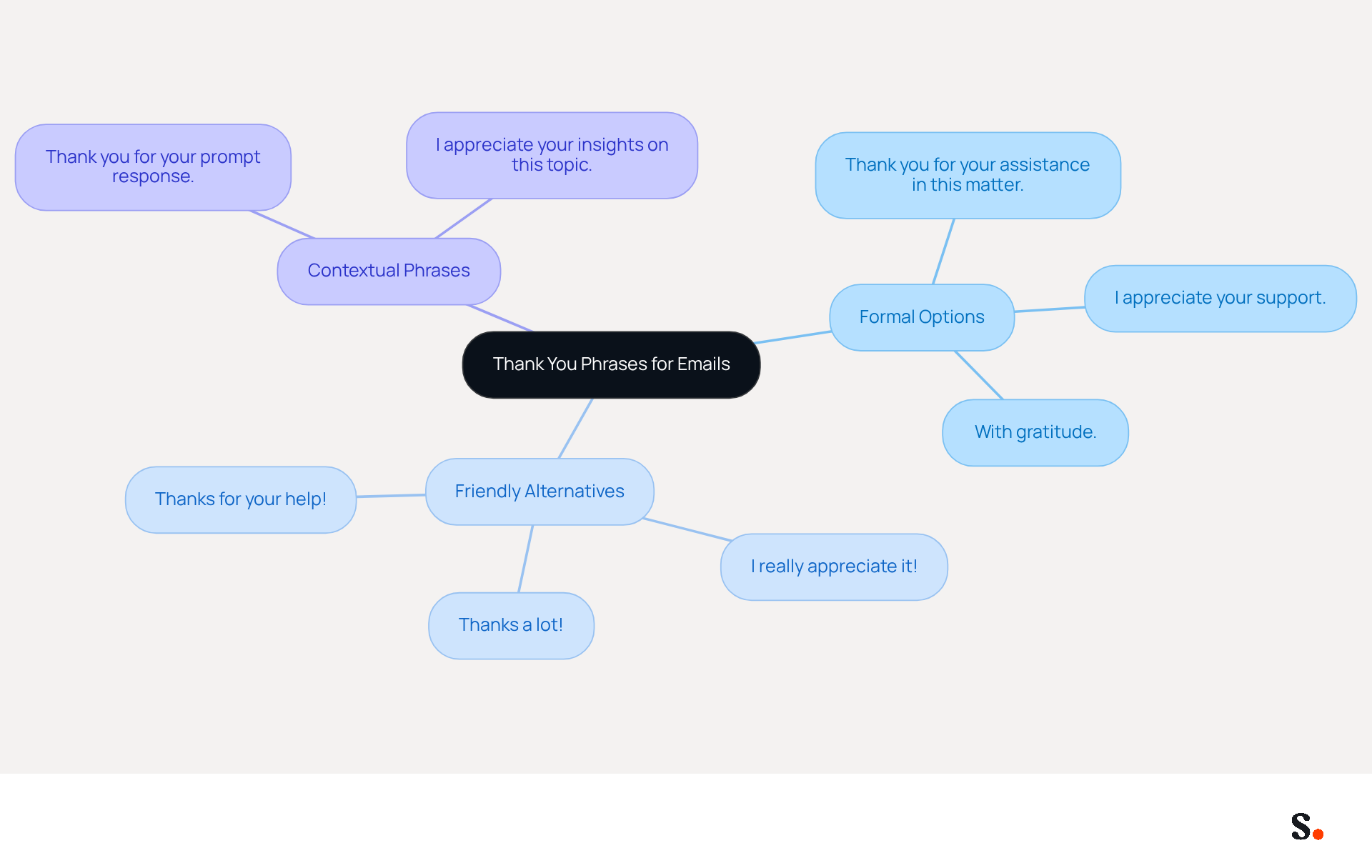
Selecting the right thank you phrase is crucial for conveying sincerity and professionalism in your communication. Here are some suitable options:
-
Formal Options:
- "Thank you for your assistance in this matter."
- "I appreciate your support."
- "With gratitude."
-
Friendly Alternatives:
- "Thanks a lot!"
- "I really appreciate it!"
- "Thanks for your help!"
-
Contextual Phrases:
- "Thank you for your prompt response."
- "I appreciate your insights on this topic."
Tailoring your message to fit the context and your relationship with the recipient enhances the sincerity of your gratitude. Ultimately, the right phrase can enhance your message and strengthen your professional relationships.
Tailor Your Closing Based on Recipient Relationship
Understanding your relationship with the recipient is crucial for crafting an effective email conclusion, which is why you should end email with thank you. Here’s how to tailor your closing:
-
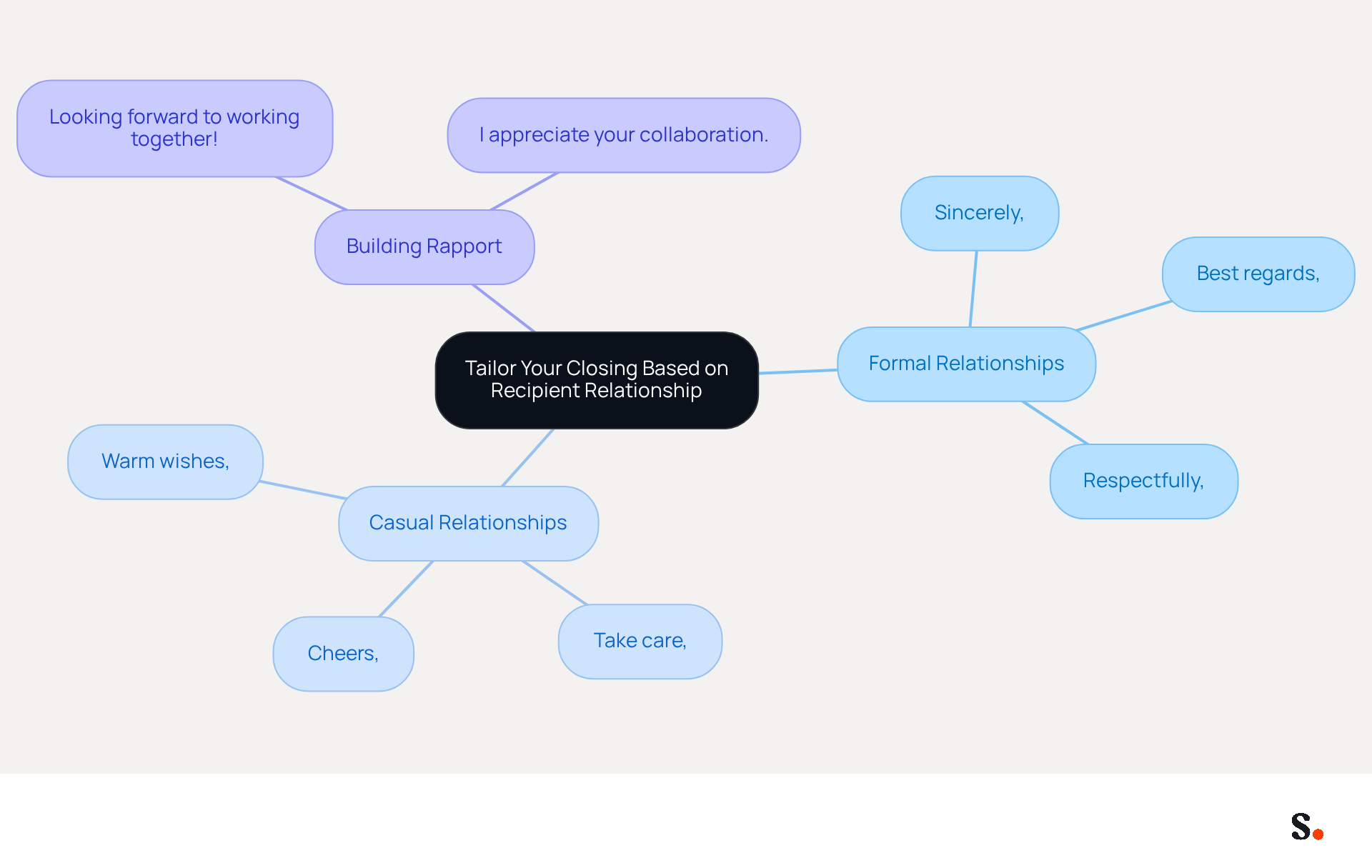
Formal Relationships: For clients, superiors, or unfamiliar contacts, opt for formal closings that convey professionalism:
- "Sincerely,"
- "Best regards,"
- "Respectfully,"
-
Casual Relationships: For colleagues or friends, you may adopt a more casual tone:
- "Cheers,"
- "Take care,"
- "Warm wishes,"
-
Building Rapport: If you’re trying to establish a connection, consider using a closing that reflects your appreciation:
- "Looking forward to working together!"
- "I appreciate your collaboration."
By adjusting your conclusion based on the recipient's relationship, you can enhance the effectiveness of your communication and remember to end email with thank you to foster stronger connections. Emails with suitable sign-offs can achieve engagement rates as high as 65.7%, especially with phrases like 'Thanks in advance.' In contrast, messages lacking a sign-off average a mere 43% response rate, highlighting the importance of including a thoughtful farewell. Furthermore, reviewing your sign-offs is essential to prevent typos, which can diminish professionalism. Tailoring your conclusion not only enhances communication but can also lead to improved engagement and potentially higher ROI. Ultimately, a well-considered sign-off that emphasizes how to end email with thank you can transform your email communication and drive better engagement outcomes.
Integrate Thank You Closings into Your Email Structure
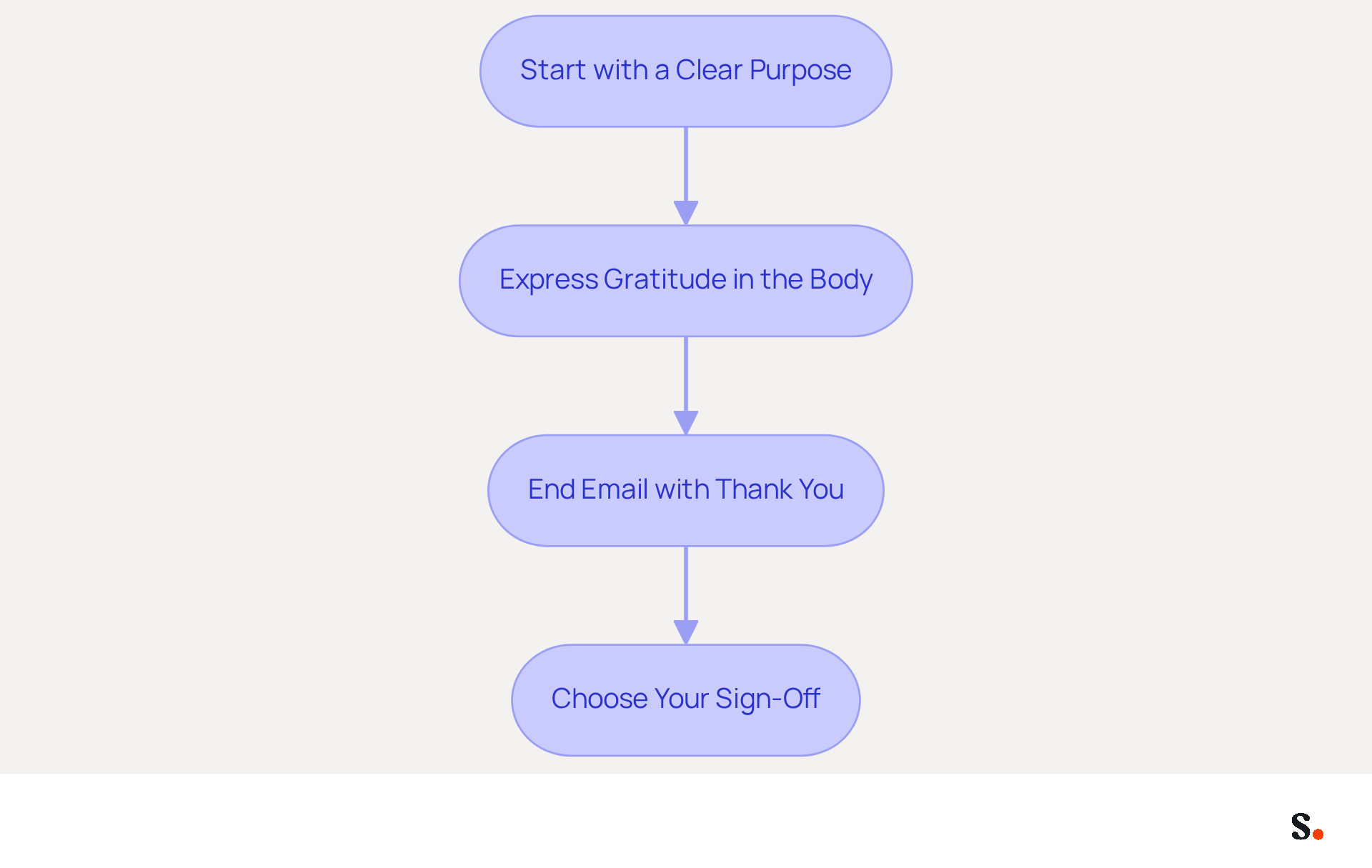
To maximize the effectiveness of your email communications, integrating thank you closings is essential:
- Start with a Clear Purpose: Clearly state the intention of your message in the opening lines. This establishes the context for your conclusion and helps the recipient understand the intent behind your message.
- Express Gratitude in the Body: Mention specific reasons for your gratitude within the email body. For example, saying, "I appreciate your feedback on the project," personalizes your message and reinforces your appreciation.
- Please remember to end email with thank you: As you wrap up, make sure to end email with thank you to reinforce your appreciation with a closing phrase. For instance, "Thank you for your time and consideration," leaves a positive impression and encourages a response.
- Choose Your Sign-Off: Select an appropriate sign-off that aligns with the tone of your message. Options like "Best regards," or "Warm wishes," can be tailored based on your relationship with the recipient.
Expressions of gratitude enhance the professionalism of your emails and significantly boost engagement rates. Studies show that emails with expressions of appreciation, like 'thanks in advance,' see a reply rate of 62%. Moreover, messages with expressions of gratitude had an average engagement rate of 62 percent, in contrast to 46 percent for those lacking. By following this structured approach, you ensure that your thank you conclusion feels intentional and impactful, potentially leading to a 6% increase in average response rates. Personalization is also key; 80% of people are more likely to make a purchase from a personalized email. Neglecting to personalize your thank you closings could result in diminished engagement and lost opportunities.
Conclusion
Ending an email with a thoughtful thank you can transform a simple message into a powerful communication tool. A well-crafted closing not only reinforces the message but also encourages responses and enhances professionalism, positively influencing how the recipient perceives the sender. By incorporating a sincere thank you, the email concludes on a positive note and strengthens the relationship between the sender and the recipient.
Throughout the article, we have discussed key strategies for effective email closings. Selecting appropriate thank you phrases tailored to the recipient's relationship, integrating gratitude into the email structure, and understanding the importance of a professional sign-off are all essential components. These practices not only improve engagement rates but also foster a culture of appreciation in professional settings. Research shows that emails expressing gratitude can increase response rates by up to 30%, underscoring the value of thoughtful communication.
Many professionals find that mastering email closings can truly set them apart in their communication efforts. By consistently applying these techniques, individuals can enhance their email etiquette and build stronger connections. Ultimately, the practice of expressing gratitude in emails can open doors to new opportunities and strengthen professional ties.
Frequently Asked Questions
Why is it important to have a professional email closing?
A professional email closing is crucial as it shapes the recipient's perception of your communication, reinforces your message, encourages responses, and establishes professionalism.
How does a strong closing reinforce the message of an email?
A strong closing reiterates the main points of your email, ensuring clarity and understanding, which aids the audience in grasping the key takeaways.
What phrases can encourage responses in email closings?
Phrases like 'Looking forward to hearing from you' or 'Thanks for your help' can invite the recipient to reply, fostering ongoing communication.
What are some appropriate sign-offs to use in professional emails?
Appropriate sign-offs include 'Sincerely' and 'Best regards,' which convey respect and formality, reinforcing your credibility.
How can a considerate conclusion improve the impact of emails?
Ending an email with a thank you and a thoughtful closing can greatly improve the impact of your messages and is an essential part of your communication strategy.
What does research indicate about effective email closings?
Research indicates that using a well-crafted concluding line and sign-off can enhance the professionalism of your message, leading to higher response rates and enhanced engagement.
Who emphasizes the importance of proper email sign-offs?
Payman Taei, Co-founder at Respona, emphasizes the importance of concluding messages with a proper sign-off to enhance professional interactions.
List of Sources
- Understand the Importance of a Professional Email Closing
- How to End an Email Professionally (With Examples) (https://iconnect.isenberg.umass.edu/blog/2024/07/10/how-to-end-an-email-professionally-with-examples)
- How to End an Email: 43 Ways to Sign Off on an Email (2026) (https://respona.com/blog/how-to-end-an-email)
- Tips for Closing Emails. Sincerely, Garden Media - Garden Media Group (https://gardenmediagroup.com/tips-for-closing-emails-sincerely-garden-media)
- Tailor Your Closing Based on Recipient Relationship
- How to Sign Off on an Email Correctly | Rocketseed (https://rocketseed.com/blog/correct-way-to-sign-off-emails)
- 12 Email Sign-Offs That Get Responses [2026 Data] (https://lagrowthmachine.com/email-sign-offs-get-responses)
- Email Sign Offs for Every Industry and Situation | Mailchimp (https://mailchimp.com/resources/email-sign-offs)
- The best ways to end an email professionally | Adobe Acrobat (https://adobe.com/acrobat/resources/how-to-end-an-email-professionally.html)
- Generic vs Personalized Email Stats (https://linkedin.com/top-content/marketing/personalization-in-marketing/generic-vs-personalized-email-stats)
- Integrate Thank You Closings into Your Email Structure
- 40 Best Email Practices Backed by Statistics (https://getmailbird.com/best-email-practices-backed-by-statistics)
- 49 Top Email Marketing Statistics (https://forbes.com/advisor/business/software/email-marketing-statistics)
- Use These Words At The End Of Your Emails To Increase Your Chance Of Getting A Reply (https://fastcompany.com/3069126/use-these-words-at-the-end-of-your-emails-to-increase-your-chance-of-getting-a-re)
- 110 Best Ways to Sign Off an Email Correctly - Warmup Inbox (https://warmupinbox.com/blog/email-marketing/email-sign-offs)
- You've Probably Been Signing Your Emails the Wrong Way (https://time.com/4685731/best-email-signature)
Get started with Scribe
See why teams switch to Scribe
Free 14-day trial — no credit card.