How to Include Pronouns in Your Email Signature: A Step-by-Step Guide
Resistance to change can hinder the adoption of inclusive practices in professional settings, particularly regarding the use of gender pronouns in
Sophie Grant
Email Signature Specialist, Scribe
Introduction
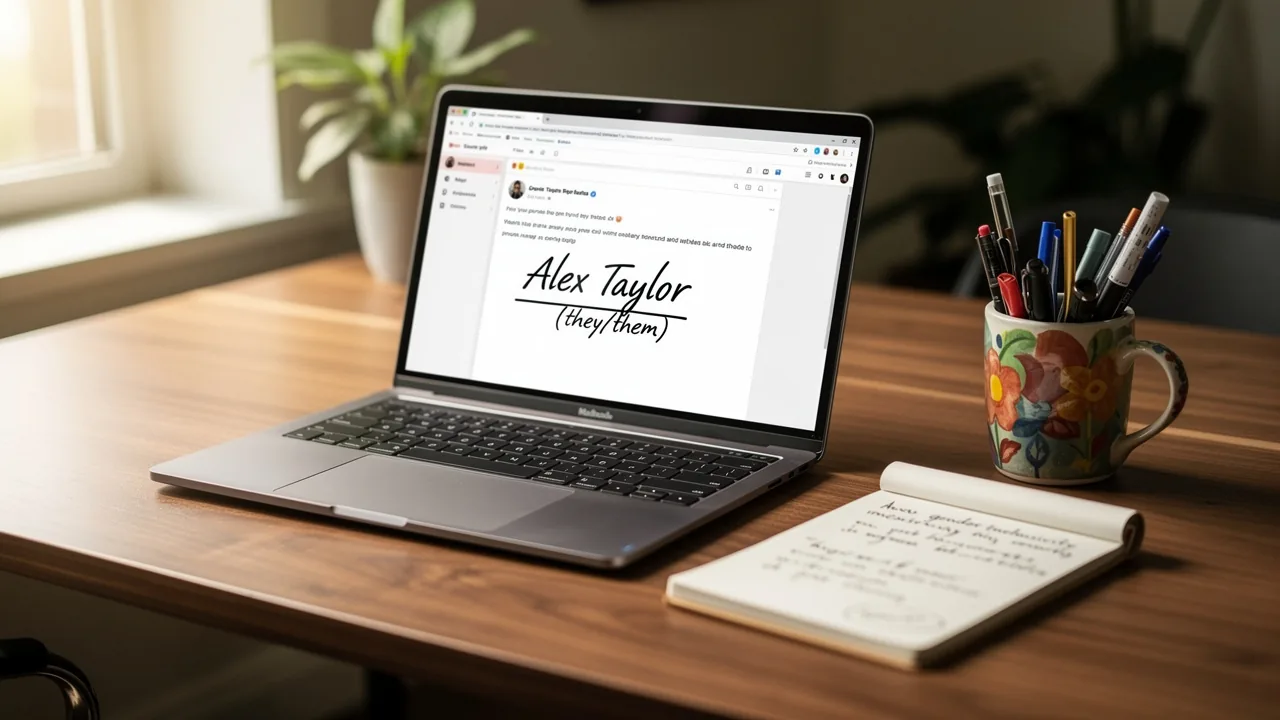
Resistance to change can hinder the adoption of inclusive practices in professional settings, particularly regarding the use of gender pronouns in communication. Incorporating gender pronouns into email signatures affirms individual identities and fosters a culture of respect within organizations. However, organizations may face challenges in implementing this practice effectively, particularly regarding potential resistance or misunderstanding.
This guide provides a step-by-step approach for integrating pronouns into email signatures. This ensures that all communications reflect a commitment to diversity and inclusion.
Get started with Scribe
See why teams switch to Scribe
Free 14-day trial — no credit card.
Understand Gender Pronouns and Their Importance
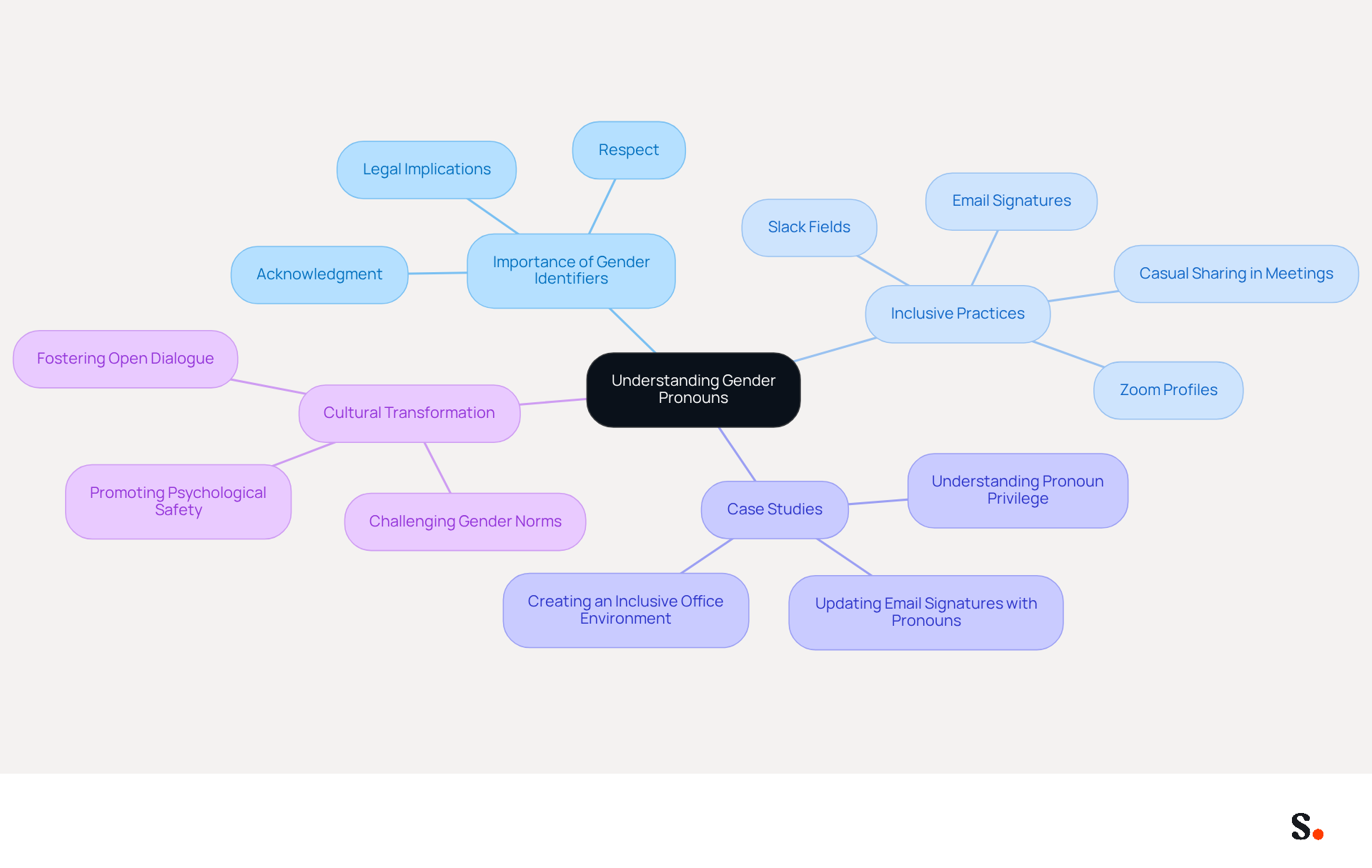
Incorporating gender identifiers is not just a trend; it is a crucial step towards fostering an inclusive workplace. Gender identifiers, such as he/him, she/her, and they/them, are essential for ensuring individuals feel respected and acknowledged. The growing trend of including gender identifiers in digital correspondence reflects a wider dedication to diversity and inclusivity. By normalizing gendered terms, this practice also helps reduce the risk of misgendering, which can be seen as a form of disrespect for transgender, queer, or non-binary individuals.
Research shows that organizations implementing inclusive practices, such as learning how to include pronouns in email signatures, contribute to a culture of acceptance and open dialogue about gender identity. For example, the Self-Employed Segment Culture Club at Intuit established fields in Slack for gender identifiers and name pronunciation, fostering an environment where employees feel secure to express their identities.
Furthermore, using appropriate terms is essential for showing respect and acknowledgment of individual identities. This is particularly important in light of the potential legal implications for employers who fail to address misgendering, which can perpetuate a culture of silence and discomfort. By sharing their identifiers, employees not only affirm their identities but also encourage colleagues to do the same, fostering a culture of acceptance.
Case studies illustrate the positive impact of this practice. For instance, organizations that have normalized the sharing of gender identifiers during meetings and in digital communications report enhanced visibility and acceptance of diverse gender identities. This shift in focus from biological identity to gender-based identity is vital for creating equitable workplaces.
Ultimately, embracing gender identifiers can transform workplace culture, making it more inclusive and respectful for everyone. As Nancy Geenen states, "Using gender pronouns is a great signal to the world that this workplace recognizes and acknowledges people’s identities.
Add Pronouns to Your Email Signature: Step-by-Step Instructions
A straightforward yet impactful way to promote inclusivity in professional communication is to learn how to include pronouns in email signature.
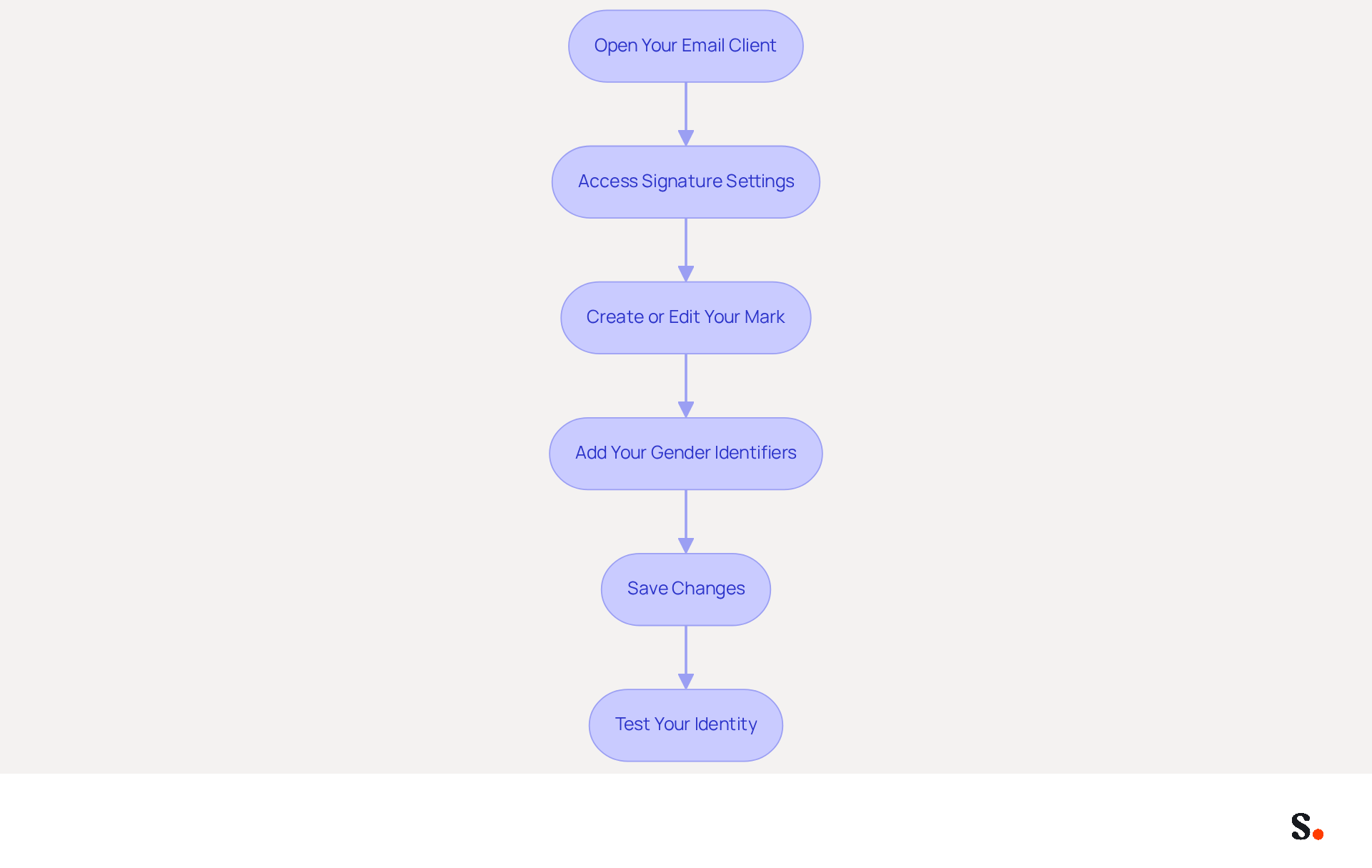
- Open Your Email Client: Launch the email application you use, such as Outlook or Gmail.
- Access Signature Settings: Navigate to the settings or options menu and locate the 'Signatures' or 'Email Signature' section.
- Create or Edit Your Mark: If you have an existing mark, select it to modify. If not, create a new signature.
- Add Your Gender Identifiers: Position your identifiers directly after your name. For example, format it as 'John Doe (he/him)' or 'Jane Smith (she/her)'. This practice is gaining traction as part of broader efforts to include LGBTQ+ individuals, promoting a culture of acceptance.
- Save Changes: Ensure you save your changes before exiting the settings menu.
- Test Your Identity: Send a trial message to yourself or a colleague to verify that your identity appears correctly with the added identifiers.
Following these steps allows you to effectively integrate how to include pronouns in email signature into your email footer, thereby enhancing communication and promoting inclusivity. Such a simple addition can greatly enhance how recipients view your dedication to fostering an inclusive workplace. Significantly, 76% of consumers have confidence in branded identifiers, and incorporating personal references can further boost that confidence. Furthermore, 42% of consumers have a negative perception of businesses that lack a branded identity, highlighting the significance of upholding a professional appearance in all communications. Considering that 89.9% of professionals utilize only one email signature, modifying it to include gender identifiers is a straightforward yet impactful method to show acceptance.
Navigate Challenges and Best Practices for Implementation
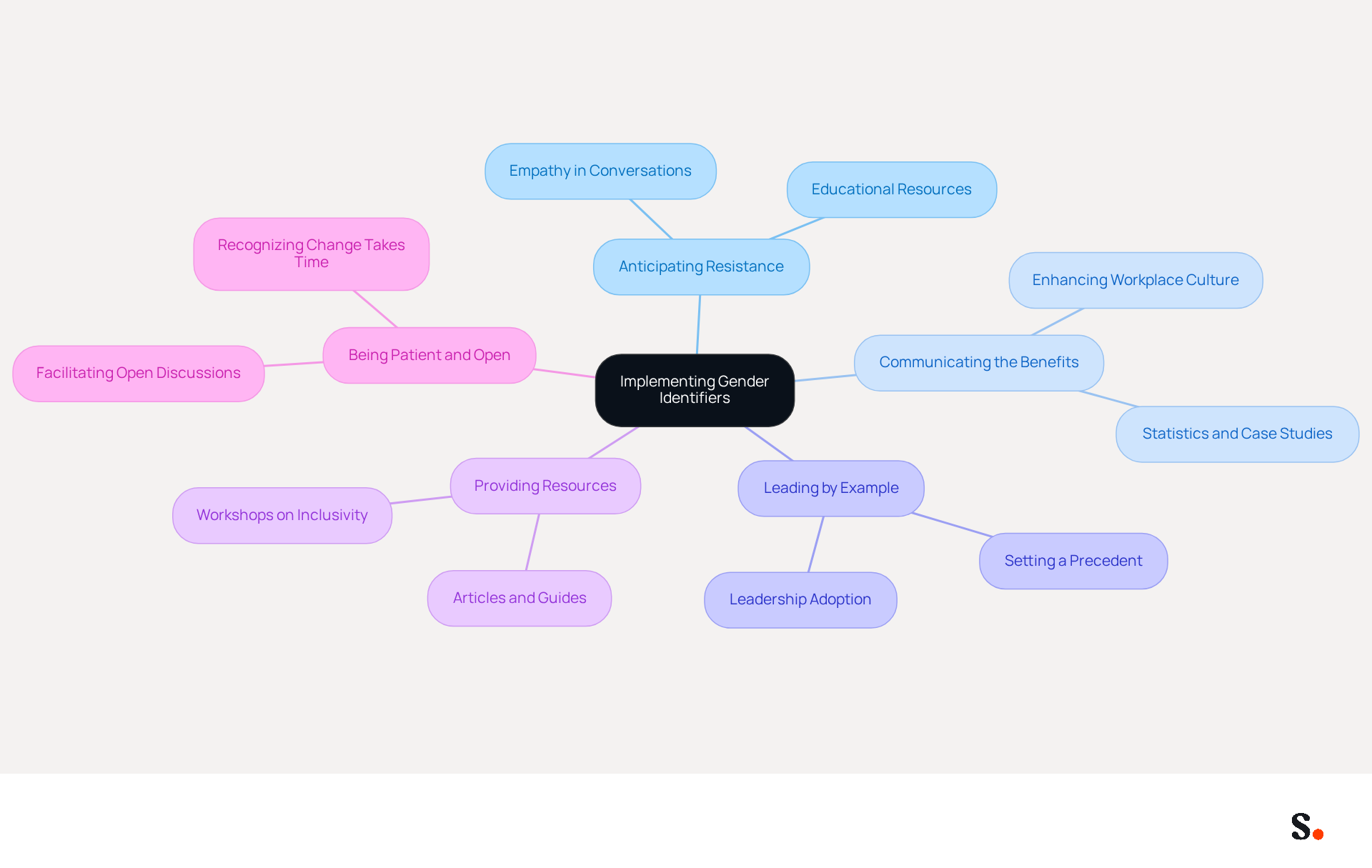
- Anticipating Resistance: Some colleagues may resist the adoption of gender identifiers due to a lack of understanding or awareness of their importance. Approach these conversations with empathy and provide educational resources to foster understanding.
- Communicating the Benefits: Including gender identifiers can significantly enhance workplace culture by reducing misgendering and promoting acceptance among team members. Sharing statistics or case studies that demonstrate the positive impact of this practice can further substantiate its value.
- Leading by Example: Leadership should take the initiative to adopt gender identifiers, setting a positive example for the rest of the team. When leaders share their gender identifiers, it establishes a precedent and motivates others to do the same.
- Providing Resources: Offering resources such as articles, guides, and workshops on gender inclusivity can help colleagues understand the significance of personal identifiers. This can create a more informed and supportive environment.
- Being Patient and Open: Recognizing that change takes time is essential, and being open to discussions can facilitate a smoother transition to this new practice. Be patient as your colleagues adjust to this new approach.
Explore Tools and Resources for Effective Implementation
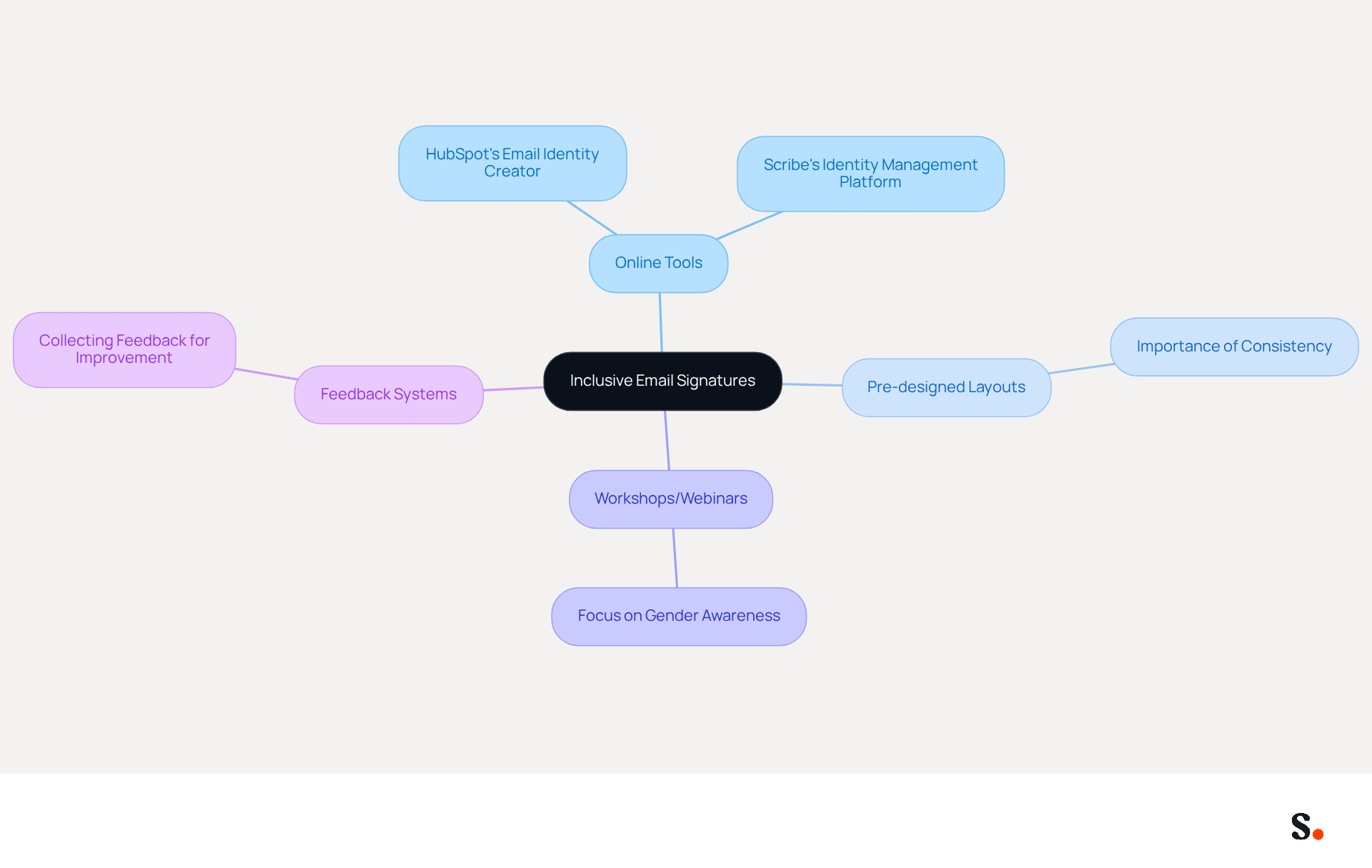
Understanding how to include pronouns in email signature is essential for creating inclusive email signatures that foster a respectful workplace environment. Utilize online tools like HubSpot's Email Identity Creator or Scribe's identity management platform to create and manage your identities easily. These tools often include fields for personal identifiers, streamlining the process.
Utilize pre-designed layouts that include sections for personal identifiers. This approach saves time and ensures consistency across your organization.
Seek out workshops or webinars centered on gender awareness and the application of terms in professional environments. These resources provide valuable insights and foster a culture of understanding.
Implement a system for collecting feedback on the use of pronouns in email signatures. Many organizations struggle with effectively implementing inclusive practices, particularly in understanding how to include pronouns in email signatures. By actively seeking feedback, organizations can enhance their inclusivity and foster a more supportive workplace culture. Ultimately, prioritizing inclusivity in email signatures can significantly impact workplace culture and employee satisfaction.
Conclusion
Incorporating gender pronouns into email signatures represents a crucial advancement in fostering an inclusive workplace culture. This practice acknowledges individual identities and promotes respect among colleagues. By normalizing the use of gender identifiers, organizations can significantly reduce the risk of misgendering, thereby creating a more supportive environment for all employees.
The article outlines a clear, step-by-step guide on how to effectively add pronouns to email signatures, emphasizing the importance of this practice in enhancing communication. Key insights include:
- The need for leadership to set an example
- The value of educational resources to address resistance
- The benefits of using tools like Scribe to streamline the implementation process
Adopting these strategies, such as providing training and resources, helps organizations embrace diversity and inclusivity.
The inclusion of gender pronouns in email signatures is a vital evolution in professional communication, reflecting a commitment to respect for all identities. Organizations are encouraged to take proactive steps in this direction, not only to enhance workplace culture but also to align with broader societal movements towards inclusivity. By embracing this practice, organizations can not only enhance their workplace culture but also contribute meaningfully to the ongoing dialogue around inclusivity.
Frequently Asked Questions
What are gender identifiers and why are they important?
Gender identifiers, such as he/him, she/her, and they/them, are essential for ensuring individuals feel respected and acknowledged in the workplace. They foster inclusivity and help reduce the risk of misgendering, which can be disrespectful to transgender, queer, or non-binary individuals.
How does including gender identifiers contribute to workplace inclusivity?
Including gender identifiers in digital correspondence reflects a commitment to diversity and inclusivity. It normalizes the use of gendered terms and encourages open dialogue about gender identity, contributing to a culture of acceptance.
Can you provide an example of how organizations implement inclusive practices regarding gender identifiers?
An example is the Self-Employed Segment Culture Club at Intuit, which established fields in Slack for gender identifiers and name pronunciation. This initiative fosters an environment where employees feel secure to express their identities.
What are the potential legal implications of misgendering in the workplace?
Employers who fail to address misgendering may face legal implications, as it can perpetuate a culture of silence and discomfort. Using appropriate terms is essential for showing respect and acknowledgment of individual identities.
How does sharing gender identifiers impact workplace culture?
Sharing gender identifiers enhances visibility and acceptance of diverse gender identities. Organizations that normalize this practice report a positive shift in focus from biological identity to gender-based identity, creating more equitable workplaces.
What is the overall benefit of embracing gender identifiers in the workplace?
Embracing gender identifiers can transform workplace culture, making it more inclusive and respectful for everyone, as it signals recognition and acknowledgment of people's identities.
List of Sources
- Understand Gender Pronouns and Their Importance
- How Talking about Personal Pronouns Can Build a More Inclusive Environment (https://gladstone.org/news/how-talking-about-personal-pronouns-can-build-more-inclusive-environment)
- The Importance of Gender Pronouns in the Workplace | Intuit (https://intuit.com/blog/social-responsibility/he-she-they-why-pronouns-in-the-workplace-matter)
- Using gender pronouns in the workplace: Why it matters (https://linkedin.com/pulse/using-gender-pronouns-workplace-why-matters-nancy-geenen)
- Whiteford, Taylor & Preston LLP | The Importance of Pronouns in the Workplace (https://whitefordlaw.com/news-events/the-importance-of-pronouns-in-the-workplace)
- Add Pronouns to Your Email Signature: Step-by-Step Instructions
- 40+ Email Signature Statistics for 2026 (Data + Insights) (https://wavecnct.com/blogs/email-signature-statistics)
- Email signature statistics: Why every business should optimize their email signatures — Stripo.email (https://stripo.email/blog/email-signature-statistics-why-every-business-should-optimize-their-email-signatures)
- Pronouns in email signatures: workplace inclusion guide (https://inclusiveemployers.co.uk/blog/why-we-use-pronouns-in-signatures)
- Should your email say if you're he, she or they? (https://bbc.com/news/business-51331571)
- Email signature statistics and trends in 2024 (https://wisestamp.com/blog/email-signature-statistics)
- Navigate Challenges and Best Practices for Implementation
- How to implement inclusive email signatures in the workplace (https://b2bmarketing.net/how-to-implement-inclusive-email-signatures-in-the-workplace)
- Best Practices for Including Pronouns in Email Signatures (https://scribe-mail.com/en-US/blog/best-practices-for-including-pronouns-in-email-signatures)
- Sharing Gender Pronouns in Employee Bios, Email Signatures Helps Attract LGBTQ+ Applicants, Study Finds – Stories (https://stories.butler.edu/sharing-gender-pronouns-in-employee-bios-email-signatures-helps-attract-lgbtq-applicants-study-finds)
- Organizations embrace equity by sharing gender pronouns in email signatures (https://internationalwomensday.com/Missions/19523/Organizations-embrace-equity-by-sharing-gender-pronouns-in-email-signatures)
- Explore Tools and Resources for Effective Implementation
- Email signature statistics: Why every business should optimize their email signatures — Stripo.email (https://stripo.email/blog/email-signature-statistics-why-every-business-should-optimize-their-email-signatures)
- 40+ Email Signature Statistics for 2026 (Data + Insights) (https://wavecnct.com/blogs/email-signature-statistics)
- How to implement inclusive email signatures in the workplace (https://b2bmarketing.net/how-to-implement-inclusive-email-signatures-in-the-workplace)
- Sharing Gender Pronouns in Employee Bios, Email Signatures Helps Attract LGBTQ+ Applicants, Study Finds – Stories (https://stories.butler.edu/sharing-gender-pronouns-in-employee-bios-email-signatures-helps-attract-lgbtq-applicants-study-finds)
- Organizations embrace equity by sharing gender pronouns in email signatures (https://internationalwomensday.com/Missions/19523/Organizations-embrace-equity-by-sharing-gender-pronouns-in-email-signatures)
Get started with Scribe
See why teams switch to Scribe
Free 14-day trial — no credit card.