Implement Preferred Pronouns in Email Signatures: A Step-by-Step Approach
Incorporating preferred pronouns into email signatures is not merely a trend; it is a crucial step toward fostering a truly inclusive workplace. When
Sophie Grant
Email Signature Specialist, Scribe
On this page
- Introduction
- Understand the Importance of Gender Pronouns in Email Signatures
- Set Up Preferred Pronouns in Email Signatures: Step-by-Step Process
- Address Challenges and Solutions for Implementing Pronouns
- Utilize Tools and Resources for Effective Implementation
- Conclusion
- Frequently Asked Questions
- List of Sources
Introduction
Incorporating preferred pronouns into email signatures is not merely a trend; it is a crucial step toward fostering a truly inclusive workplace. When individuals state how they prefer to be addressed, it helps create a culture of respect and understanding, reducing the risk of misgendering and boosting employee morale. Despite the clear benefits, many organizations struggle to adopt this practice due to internal resistance and technical barriers. Addressing these challenges is essential for ensuring that every employee feels valued and respected in their communications.
Get started with Scribe
See why teams switch to Scribe
Free 14-day trial — no credit card.
Understand the Importance of Gender Pronouns in Email Signatures
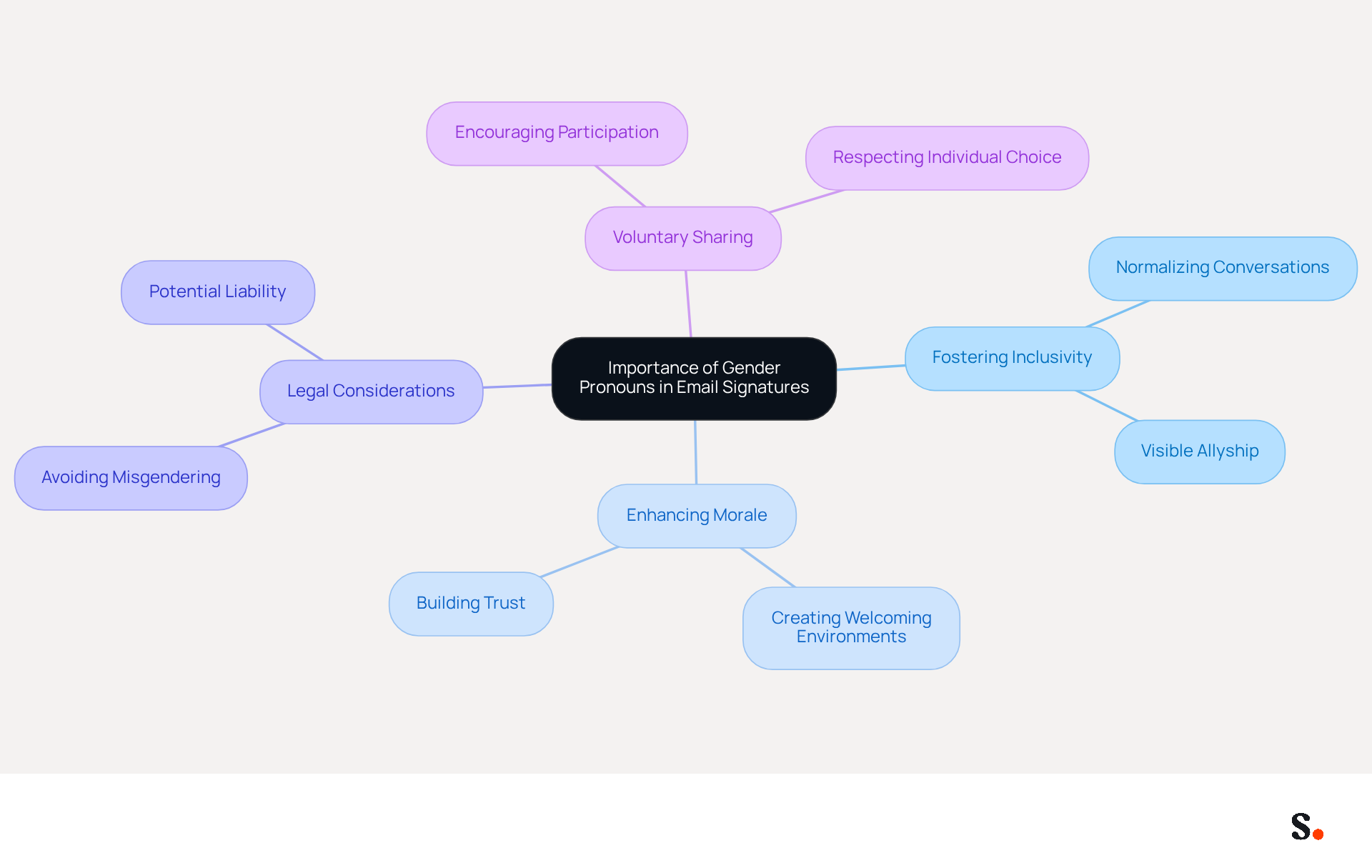
Incorporating gender identifiers in email signatures is a crucial step toward fostering inclusivity in professional settings. By clearly stating how individuals prefer to be addressed, organizations can cultivate a culture of respect and understanding. This practice minimizes misgendering and shows that the organization values diversity and inclusion.
For instance, when an employee includes their pronouns, such as 'John Doe (he/him)' or 'Jane Smith (she/her)', it normalizes the conversation around gender identity and encourages others to do the same. This simple act can significantly enhance morale and create a more welcoming environment for everyone, particularly for those who identify as non-binary or gender non-conforming. Furthermore, it demonstrates allyship and support from colleagues, which is crucial for building trust and collaboration within teams. Visible allyship from senior management further reinforces this commitment to inclusivity.
Notably, about 25% of LGBTQ+ youth identify with terms beyond the traditional gender binary, underscoring the need for inclusivity. Organizations that adopt the practice of using preferred pronouns in email signatures not only enhance their inclusivity efforts but also improve overall employee well-being and morale. Moreover, failing to use appropriate terms can result in potential liability for employers, making this practice a matter of respect and a legal consideration.
Case studies indicate that companies adopting this practice have undergone cultural changes, where sharing identifiers becomes standard behavior, fostering open conversations about gender identity and reducing assumptions based on appearance. Experts stress that while sharing gender identifiers should be encouraged, it must remain a voluntary choice for employees. Clear communication about the optional nature of this practice is vital for successful implementation, ensuring that all employees feel comfortable and respected in expressing their identities. By embracing this practice, organizations not only enhance their inclusivity but also mitigate potential legal risks associated with misgendering.
Set Up Preferred Pronouns in Email Signatures: Step-by-Step Process
A straightforward yet impactful way to promote inclusivity is by setting up preferred pronouns in your email signature.
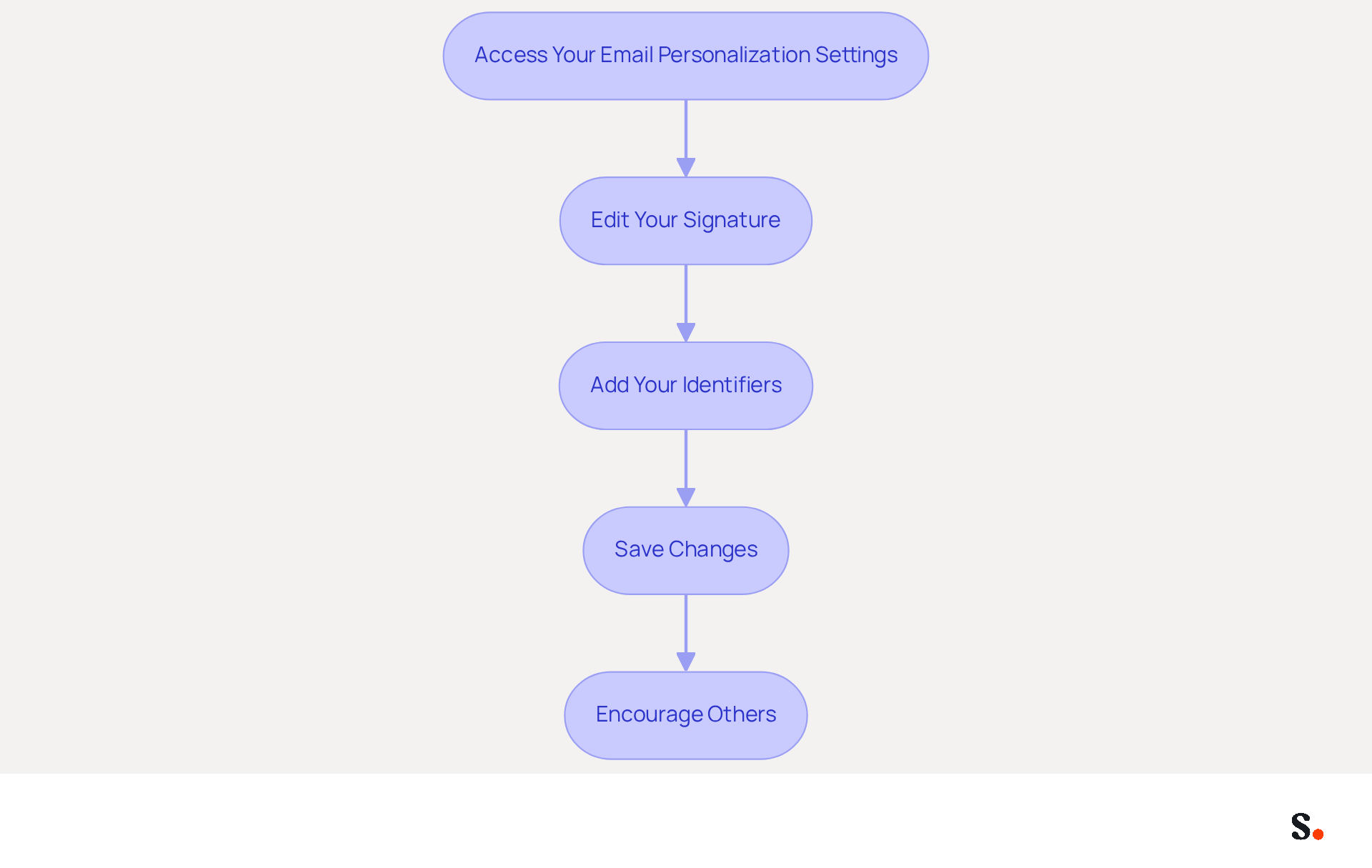
- Access Your Email Personalization Settings: Depending on your client (e.g., Outlook, Gmail), navigate to the settings or options menu where you can edit your personalization.
- Edit Your Signature: Locate the section for your signature. Here, you can add or modify the text that appears at the bottom of your emails.
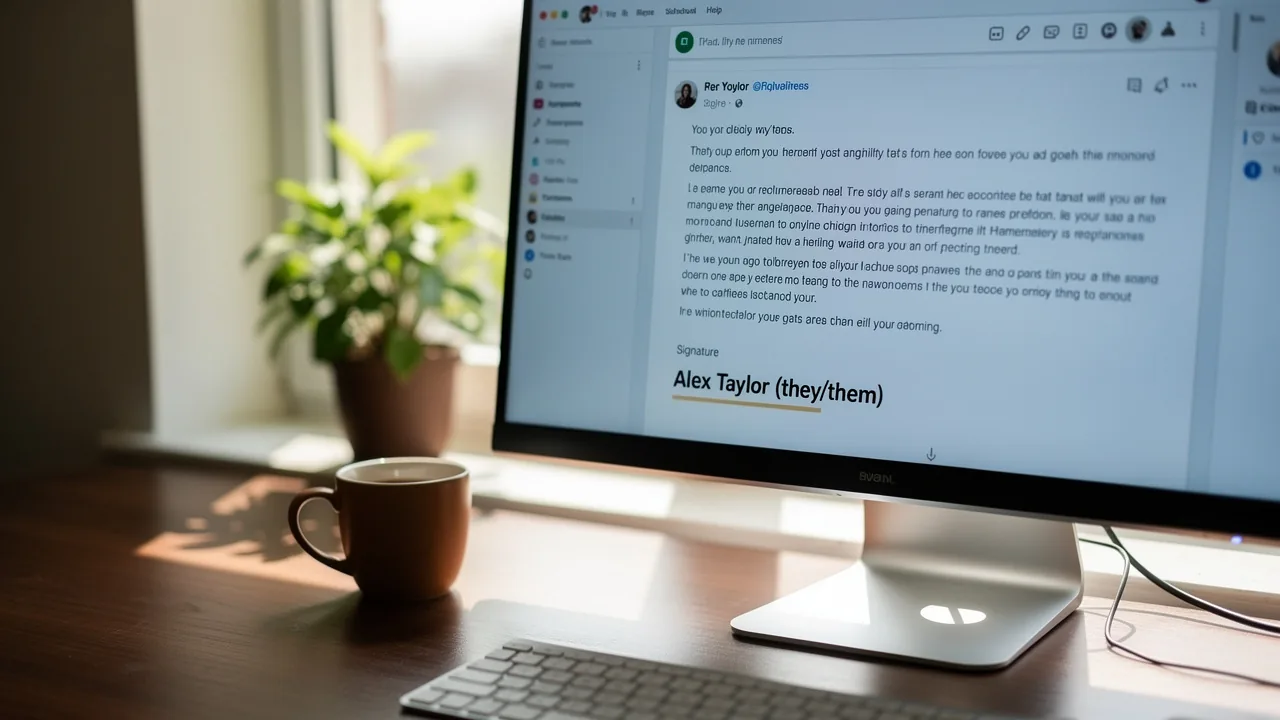
- Add Your Identifiers: Position your identifiers directly after your name for maximum visibility. For example, format it as 'John Doe (he/him)' or 'Jane Smith (she/her)'. This placement allows recipients to see your identifiers immediately, which helps eliminate confusion and reduces the risk of mis-gendering.
- Save Changes: After adding your identifiers, make sure to save your changes. Without testing, you risk sending emails with incorrect signatures, which could lead to misunderstandings. Send a test email to yourself or a colleague to confirm that the signature appears as intended.
- Encourage Others: Encourage your colleagues to adopt this practice too; it’s a simple way to foster inclusivity together. This collective effort actively promotes the normalization of gender identifiers in your workplace, fostering an inclusive environment.
By integrating Scribe with Google Workspace, you can streamline this process significantly. When your teammates' data is synced with Scribe, any changes in Google Workspace-such as updates to job positions or group assignments-are automatically reflected in their contact details. This means you save time and ensure consistency across your organization without manual updates. Including personal identifiers in professional correspondence demonstrates a dedication to inclusivity and builds trust in workplace communications. Research indicates that branded digital identifiers, which may incorporate personal identifiers, enhance response rates by over 22% and elevate trust by 76%. By adopting this practice, your organization not only enhances communication but also sets a standard for inclusivity that others may follow.
Address Challenges and Solutions for Implementing Pronouns
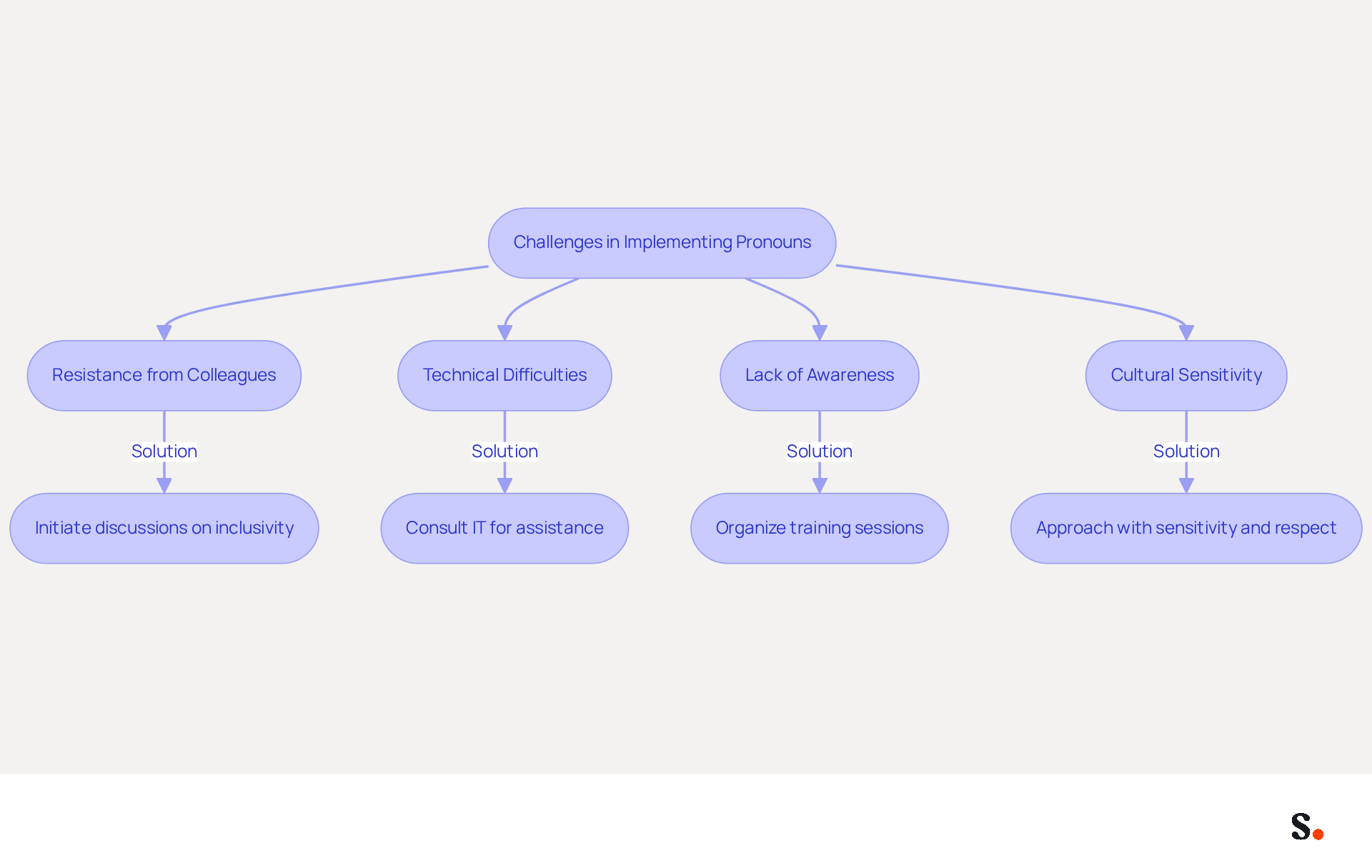
While using preferred pronouns in email signatures promotes inclusivity, it often encounters various challenges. Here are common issues along with effective solutions:
- Resistance from Colleagues: Some team members may be reluctant to adopt this practice. To tackle this, initiate discussions that highlight the importance of inclusivity and the use of preferred pronouns in email signatures to foster a respectful workplace. Sharing resources that outline the benefits of this practice can also help shift perspectives. Significantly, 83% of individuals state that the use of gendered terms at work enhances their sense of belonging, which can motivate colleagues to embrace this important change.
- Technical Difficulties: If you encounter issues while adding personal identifiers to your signature, consult your client’s help section or reach out to your IT department for assistance. Many email platforms provide straightforward guides to help with this process.
- Lack of Awareness: Employees may not fully understand the importance of including gender identifiers. Organizing brief training sessions or workshops can educate staff on gender identity and the significance of inclusive language in promoting inclusivity, effectively addressing knowledge gaps. It's essential to recognize that failing to use the correct preferred pronouns in email signatures can create potential liability for employers, making education on this topic even more critical.
- Cultural Sensitivity: In certain environments, discussing gender identity may face cultural resistance. Approach this topic with sensitivity and respect, emphasizing the goal of creating a supportive environment for all employees. Acknowledging diverse perspectives can facilitate a more open dialogue. Additionally, understanding the concept of 'pronoun privilege' can help foster empathy among colleagues, as it highlights the importance of recognizing and respecting each individual's identity.
Addressing these challenges thoughtfully can cultivate a culture of respect and inclusivity that benefits everyone.
Utilize Tools and Resources for Effective Implementation
To effectively integrate pronouns into email signatures, organizations must utilize the right tools and resources:
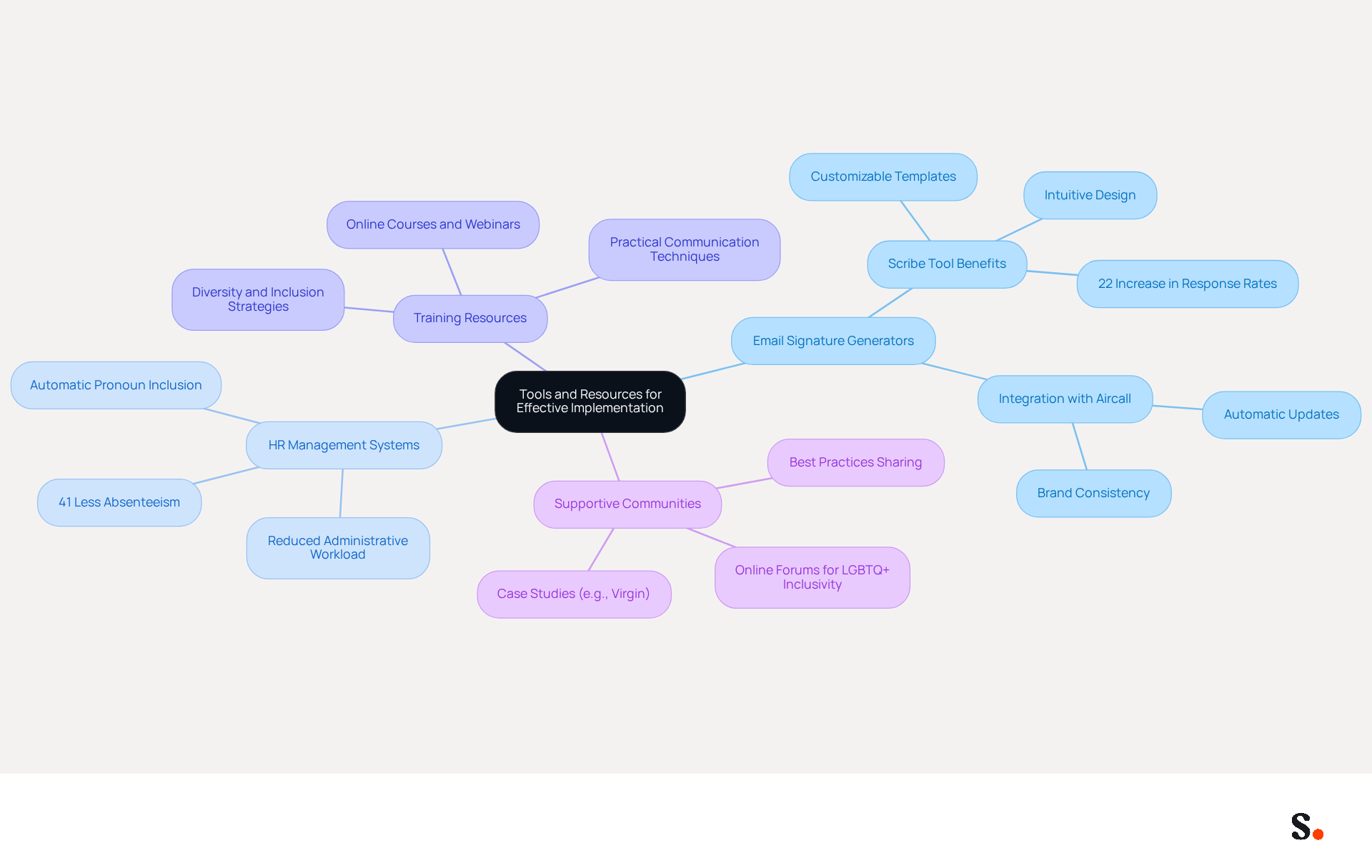
- Email Signature Generators: Scribe offers an intuitive tool that simplifies the creation and management of digital signatures, including the integration of pronouns. These generators offer customizable templates that ensure brand consistency throughout the organization. Notably, organizations that use branded footers have seen a 22% increase in response rates, highlighting the effectiveness of Scribe in managing footers. Furthermore, every modification made in your Aircall configuration will automatically be reflected in your Scribe branding, ensuring that your identity remains consistent and current.
- HR Management Systems: If your organization utilizes an HR management system, explore its capabilities for automatically incorporating preferred pronouns in email signatures. This feature can significantly reduce administrative workload and ensure that all signatures remain current. Furthermore, inclusive environments report 41% less absenteeism, indicating a positive effect on organizational culture. Adopting inclusive practices not only enhances workplace culture but also boosts employee morale.
- Training Resources: Seek out online courses or webinars that emphasize diversity and inclusion in professional settings. These resources help clarify the importance of personal references and offer practical communication strategies for their use. As Sophie Grant, an Identifier Specialist, states, "Incorporating gender identifiers in identifiers is a straightforward yet powerful strategy to promote inclusivity in professional environments."
- Supportive Communities: Participate in online forums or communities dedicated to LGBTQ+ inclusivity. These platforms can provide valuable assistance, share best practices, and offer additional resources for successfully implementing pronouns in correspondence. For instance, case studies like Virgin's initiative to include preferred pronouns in email signatures reveal that companies prioritizing this practice cultivate a culture of respect and acceptance, leading to improved employee relationships and overall workplace satisfaction.
Ultimately, embracing inclusive practices in email signatures can lead to a more engaged and satisfied workforce.
Conclusion
Incorporating preferred pronouns into email signatures is essential for cultivating an inclusive workplace culture. By normalizing gender identifiers, organizations show their commitment to diversity. This creates an environment where all employees feel respected and valued. This approach helps reduce the chances of misgendering and improves how we communicate, ultimately contributing to a more harmonious workplace.
The article outlines a clear, step-by-step process for implementing preferred pronouns in email signatures, emphasizing the importance of accessibility and ease of use. Key insights include:
- The necessity of encouraging colleagues to adopt this practice.
- Challenges organizations may face, including resistance from employees and technical hurdles during implementation.
By leveraging resources and fostering open discussions, organizations can effectively promote inclusivity and mitigate potential legal risks associated with misgendering.
Embracing the use of preferred pronouns in email signatures is not just a matter of etiquette; it is a significant move towards creating a supportive and respectful workplace. Organizations are encouraged to take action by implementing these practices and utilizing tools that facilitate this transition. By doing so, they not only enhance their internal culture but also set a standard for inclusivity that can inspire others in the industry. This shift not only fosters a more inclusive environment but also enhances overall employee satisfaction and productivity.
Frequently Asked Questions
Why is it important to include gender pronouns in email signatures?
Including gender pronouns in email signatures fosters inclusivity in professional settings, minimizes misgendering, and shows that the organization values diversity and inclusion.
How does stating pronouns in email signatures benefit the workplace?
Stating pronouns normalizes conversations around gender identity, enhances morale, and creates a welcoming environment, particularly for non-binary or gender non-conforming individuals.
What impact does visible allyship have in the workplace?
Visible allyship from colleagues and senior management reinforces commitment to inclusivity, builds trust, and encourages collaboration within teams.
What percentage of LGBTQ+ youth identify with terms beyond the traditional gender binary?
About 25% of LGBTQ+ youth identify with terms beyond the traditional gender binary, highlighting the need for inclusivity.
What are the potential legal implications of not using appropriate gender terms?
Failing to use appropriate terms can result in potential liability for employers, making the practice of using preferred pronouns a matter of respect and legal consideration.
How have companies that adopt this practice changed culturally?
Companies that adopt the practice of sharing gender identifiers have seen cultural changes where it becomes standard behavior, fostering open conversations about gender identity and reducing assumptions based on appearance.
Is sharing gender pronouns in email signatures mandatory for employees?
Sharing gender pronouns should be encouraged but must remain a voluntary choice for employees, with clear communication about its optional nature being vital for successful implementation.
What are the overall benefits of embracing the practice of using preferred pronouns in email signatures?
Embracing this practice enhances inclusivity, improves employee well-being and morale, and mitigates potential legal risks associated with misgendering.
List of Sources
- Understand the Importance of Gender Pronouns in Email Signatures
- How to List Pronouns in Your Email Signature: A Step-by-Step Guide (https://scribe-mail.com/en-US/blog/how-to-list-pronouns-in-your-email-signature-a-step-by-step-guide)
- Sharing Gender Pronouns in Employee Bios, Email Signatures Helps Attract LGBTQ+ Applicants, Study Finds – Stories (https://stories.butler.edu/sharing-gender-pronouns-in-employee-bios-email-signatures-helps-attract-lgbtq-applicants-study-finds)
- Whiteford, Taylor & Preston LLP | The Importance of Pronouns in the Workplace (https://whitefordlaw.com/news-events/the-importance-of-pronouns-in-the-workplace)
- Pronouns in email signatures: workplace inclusion guide (https://inclusiveemployers.co.uk/blog/why-we-use-pronouns-in-signatures)
- Organizations embrace equity by sharing gender pronouns in email signatures (https://internationalwomensday.com/Missions/19523/Organizations-embrace-equity-by-sharing-gender-pronouns-in-email-signatures)
- Set Up Preferred Pronouns in Email Signatures: Step-by-Step Process
- 40+ Email Signature Statistics for 2026 (Data + Insights) (https://wavecnct.com/blogs/email-signature-statistics)
- Should your email say if you're he, she or they? (https://bbc.com/news/business-51331571)
- Organizations embrace equity by sharing gender pronouns in email signatures (https://internationalwomensday.com/Missions/19523/Organizations-embrace-equity-by-sharing-gender-pronouns-in-email-signatures)
- Address Challenges and Solutions for Implementing Pronouns
- The Importance of Using Pronouns in the Workplace — Talkspace (https://business.talkspace.com/articles/pronouns-in-the-workplace)
- Whiteford, Taylor & Preston LLP | The Importance of Pronouns in the Workplace (https://whitefordlaw.com/news-events/the-importance-of-pronouns-in-the-workplace)
- Organizations embrace equity by sharing gender pronouns in email signatures (https://internationalwomensday.com/Missions/19523/Organizations-embrace-equity-by-sharing-gender-pronouns-in-email-signatures)
- Sharing Gender Pronouns in Employee Bios, Email Signatures Helps Attract LGBTQ+ Applicants, Study Finds – Stories (https://stories.butler.edu/sharing-gender-pronouns-in-employee-bios-email-signatures-helps-attract-lgbtq-applicants-study-finds)
- States Are Banning Preferred Pronouns at Work, but Federal Guidelines Promote Inclusion. What Should HR Do? (https://shrm.org/topics-tools/news/inclusion-diversity/states-are-banning-preferred-pronouns-at-work-but-federal-guidelines-promote-inclusion)
- Utilize Tools and Resources for Effective Implementation
- Sharing Gender Pronouns in Employee Bios, Email Signatures Helps Attract LGBTQ+ Applicants, Study Finds – Stories (https://stories.butler.edu/sharing-gender-pronouns-in-employee-bios-email-signatures-helps-attract-lgbtq-applicants-study-finds)
- Organizations embrace equity by sharing gender pronouns in email signatures (https://internationalwomensday.com/Missions/19523/Organizations-embrace-equity-by-sharing-gender-pronouns-in-email-signatures)
- Put the Pronouns Back in the Email: A Step-by-Step Guide (https://scribe-mail.com/en-US/blog/put-the-pronouns-back-in-the-email-a-step-by-step-guide)
- Gender pronouns in email signatures - how to use them and why (https://codetwo.com/blog/using-gender-pronouns-in-email-signatures)
- Pronouns in email signatures: workplace inclusion guide (https://inclusiveemployers.co.uk/blog/why-we-use-pronouns-in-signatures)
Get started with Scribe
See why teams switch to Scribe
Free 14-day trial — no credit card.