Implement Pronoun Email Signatures in 4 Simple Steps
Many organizations recognize the importance of gender pronouns, yet struggle to implement them effectively in the workplace. Understanding and respecting
Sophie Grant
Email Signature Specialist, Scribe

Introduction
Many organizations recognize the importance of gender pronouns, yet struggle to implement them effectively in the workplace. Understanding and respecting gender pronouns is essential for fostering an inclusive workplace. By incorporating pronouns into email signatures, companies not only affirm individual identities but also promote a culture of respect and openness.
How can organizations make this process smooth and respectful while encouraging employees to share their preferences? Let’s explore four straightforward steps to help you implement pronoun email signatures:
- Educate employees about the importance of gender pronouns.
- Encourage employees to include their pronouns in their email signatures.
- Provide examples of how to format email signatures with pronouns.
- Foster an open dialogue about gender identity and pronouns.
By following these steps, organizations can create a more inclusive and respectful workplace.
Understand Gender Pronouns and Their Importance
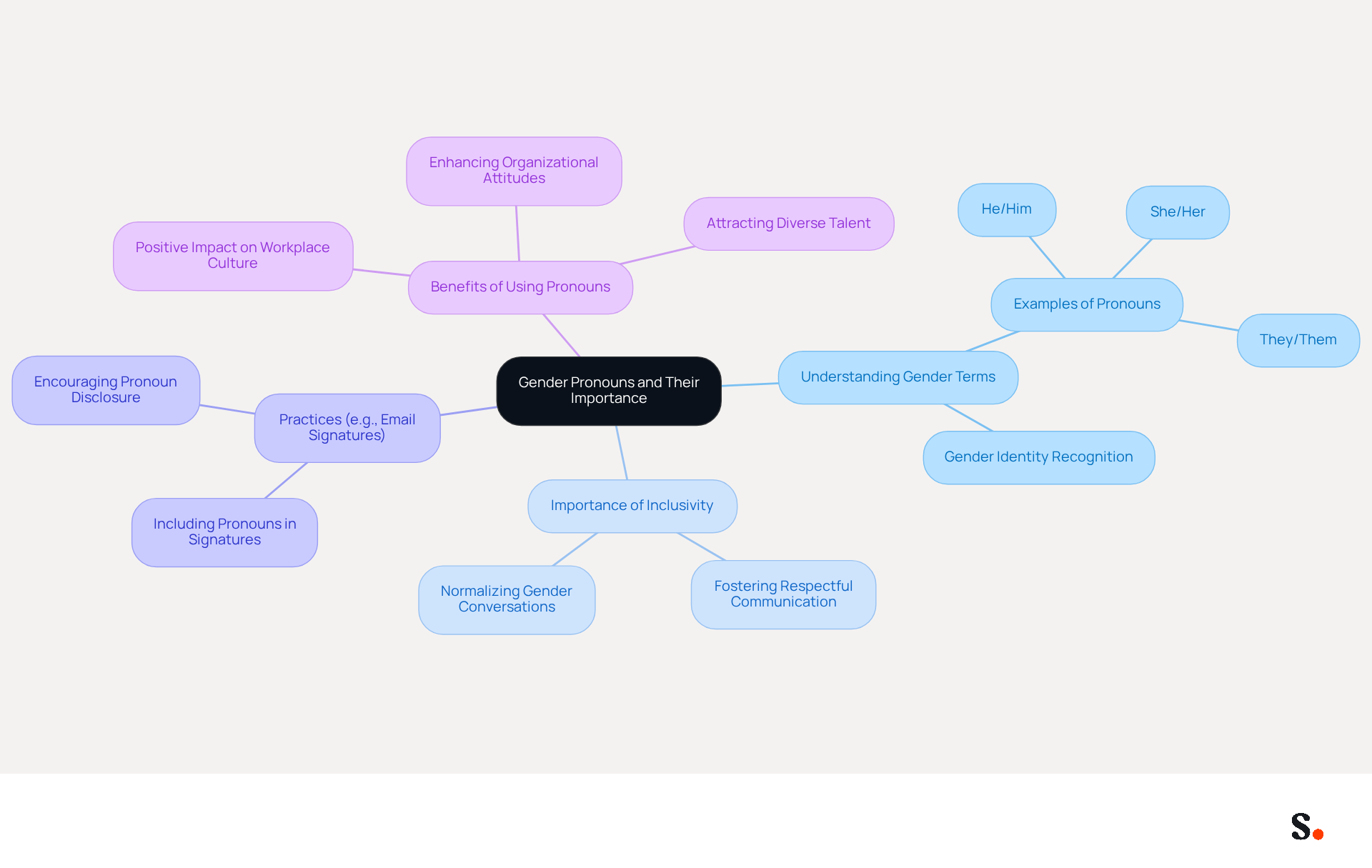
Understanding and using appropriate gender terms is crucial for creating an inclusive workplace environment. Gender terms are words used to refer to individuals in place of their names, such as he/him, she/her, and they/them. Comprehending and utilizing these terms fosters an inclusive atmosphere, acknowledging and honoring individuals' identities.
When you include gender identifiers in your pronoun email signature, it shows your colleagues and clients that your organization truly values diversity and respects everyone. This practice not only affirms the identities of those who identify outside the traditional gender binary but also encourages others to share their gender identifiers, normalizing the conversation around gender identity in the workplace.
By recognizing the significance of personal references, you establish the foundation for a more inclusive and respectful communication culture. By embracing this practice, organizations can lead the way in fostering a culture of respect and inclusivity that benefits everyone.
Collect Employee Pronoun Preferences Effectively
To create a truly inclusive workplace, organizations must actively seek to understand and respect the pronoun email signature preferences of their employees.
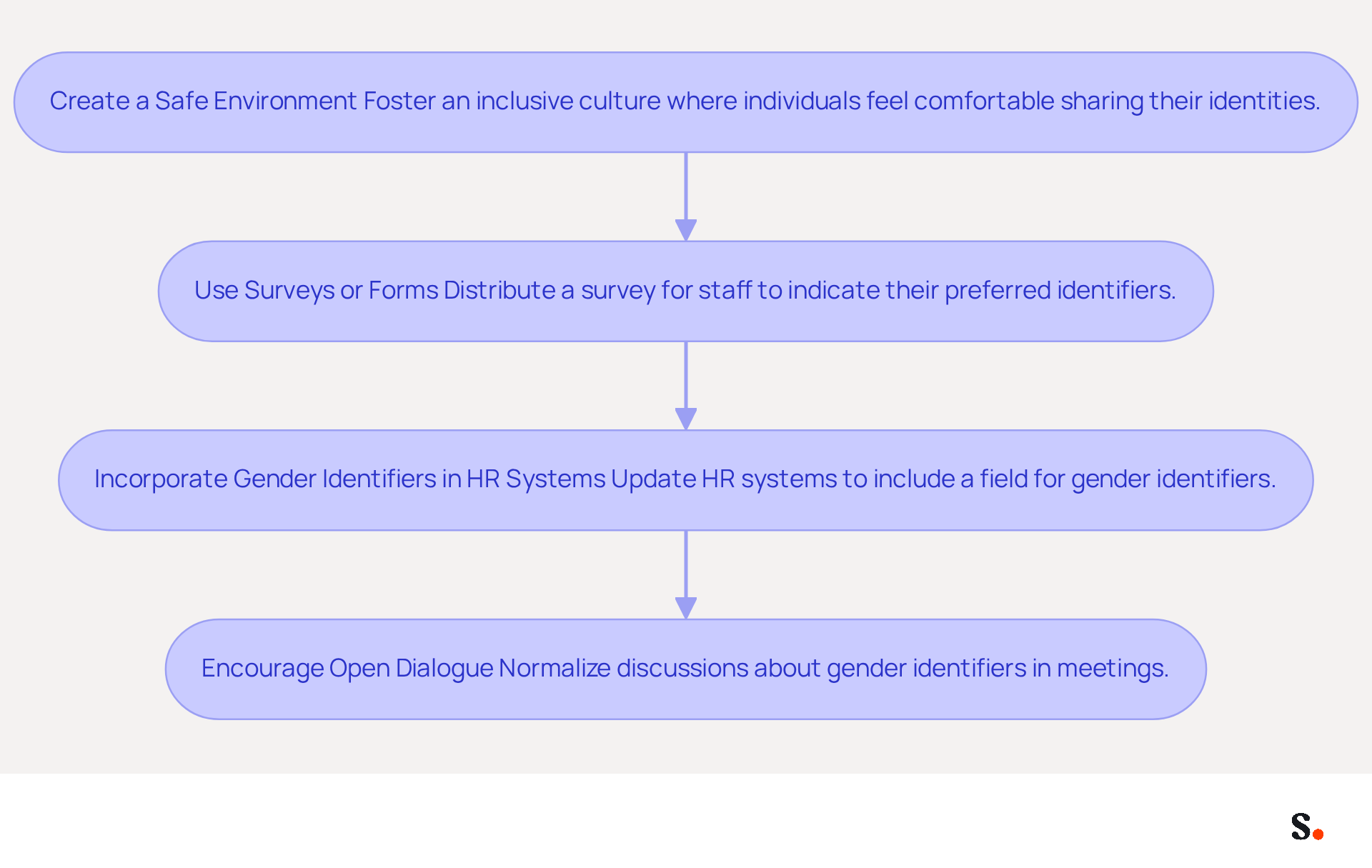
- Create a Safe Environment: Foster an inclusive culture where individuals feel comfortable sharing their identities. Clearly communicate that sharing is voluntary and respected, which can significantly enhance comfort levels among staff. Many employees may hesitate to share their pronoun preferences due to fear of judgment or misunderstanding. Remember, success in adopting gender identities does not require 100% participation; even one positive interaction can be valuable.
- Use Surveys or Forms: Distribute a straightforward survey or form for staff to indicate their preferred identifiers. This can be integrated into the onboarding process or regular staff check-ins, ensuring that everyone has the opportunity to participate. This makes it simple for employees to update their preferences, ensuring accurate and respectful communication.
- Incorporate Gender Identifiers in HR Systems: Update your HR systems to include a designated field for gender identifiers. This allows employees to easily update their preferences in their pronoun email signature, which promotes accuracy and respect in communications.
- Encourage Open Dialogue: Normalize discussions about gender identifiers in team meetings or training sessions. As CV Viverito suggests, meetings are valuable chances to socialize identities, which not only encourages sharing but also reinforces the significance of inclusivity in the workplace.
By implementing these steps, organizations can gather and honor staff preferences, leading to a more inclusive and supportive work environment, as evidenced by studies showing increased employee satisfaction in inclusive workplaces. Furthermore, maintaining precise records of employees' names and their preferred terms ensures appropriate usage in communications, fostering respect and recognition of their identities. Ultimately, honoring pronoun preferences is not just about respect; it’s about fostering a culture where every employee feels valued and recognized.
Add Pronouns to Email Signatures: Formatting and Placement
To ensure clarity and professionalism in email signatures, it is crucial to follow specific guidelines for incorporating pronouns:
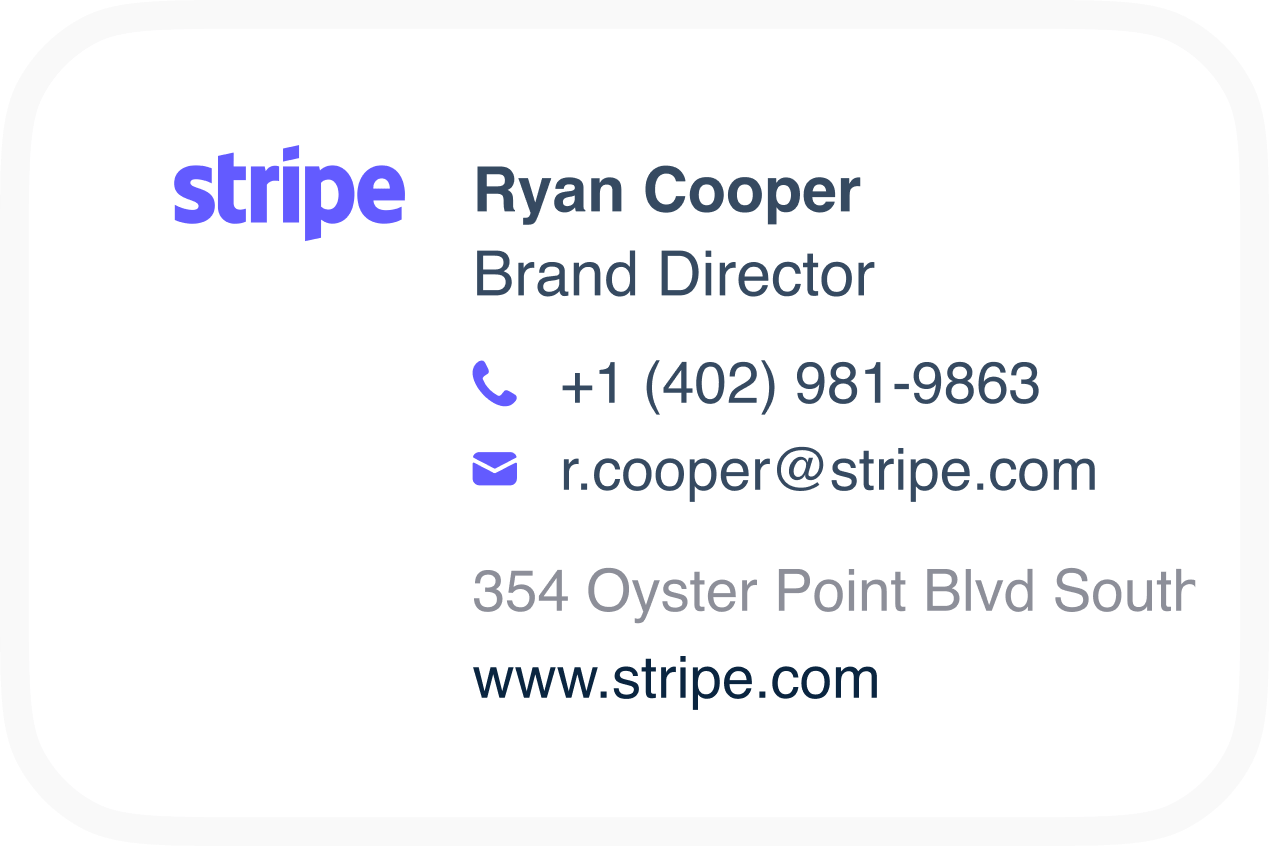
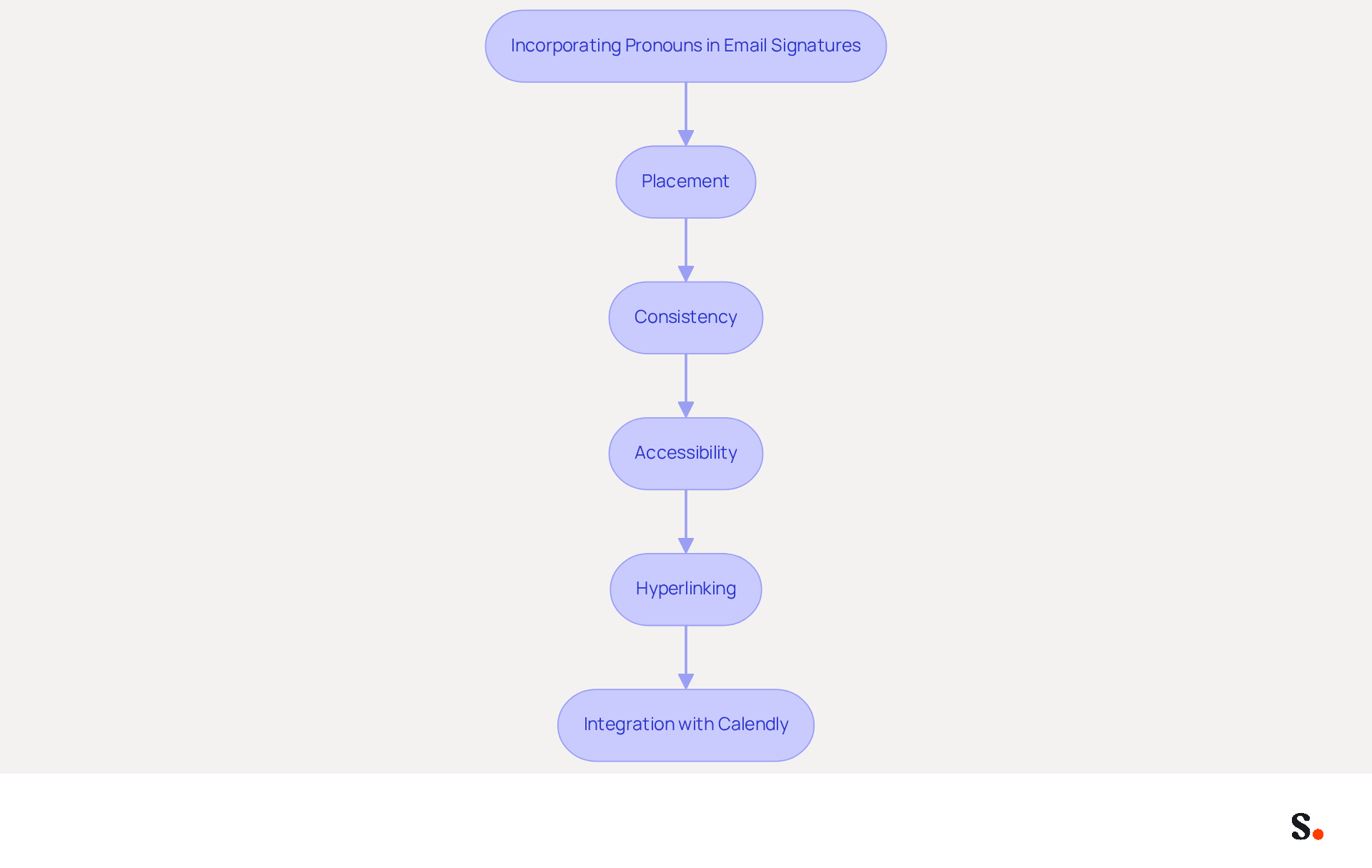
- Placement: Position the pronouns immediately after the name for maximum visibility. For instance, format it as
John Doe (he/him)orJane Smith (she/her). This placement ensures clarity and reduces the chances of misgendering. - Consistency: Maintain uniformity in formatting across the organization. Use the same font, size, and style as the rest of the closing to uphold a professional appearance. Without consistent formatting, recipients may question the professionalism of the communication. This practice not only fosters trust but also enhances overall communication effectiveness, especially when using a pronoun email signature.
- Accessibility: Keep the display of personal identifiers straightforward and clear. Avoid cluttering the sign-off with excessive information, which can detract from the primary message. A clean design promotes better engagement and understanding.
- Hyperlinking: Consider hyperlinking the references to a resource that explains their significance, providing additional context for recipients. This approach not only educates but also demonstrates the organization's commitment to inclusivity.
- Integration with Calendly: By utilizing Scribe, any changes made to your Calendly configuration will automatically sync with your email footers. This integration keeps your identifiers and signature elements current, ensuring brand consistency in all communications. Additionally, Scribe's SOC 2 Type II compliance and adherence to GDPR and CCPA ensure secure data handling, further enhancing trust.
By adhering to these guidelines, organizations can ensure that gender identifiers are presented clearly and professionally in their pronoun email signature, which fosters a more inclusive workplace culture. Companies like Nike and Notion have adopted similar practices, resulting in enhanced staff engagement and reduced miscommunication, highlighting the importance of respectful and accurate representation in professional settings. Ultimately, these practices not only promote inclusivity but also strengthen the organization's reputation in the eyes of clients and partners.
Maintain and Update Pronouns in Email Signatures
To maintain accurate pronouns in email signatures, organizations must adopt effective strategies that respect individual identities and promote inclusivity:
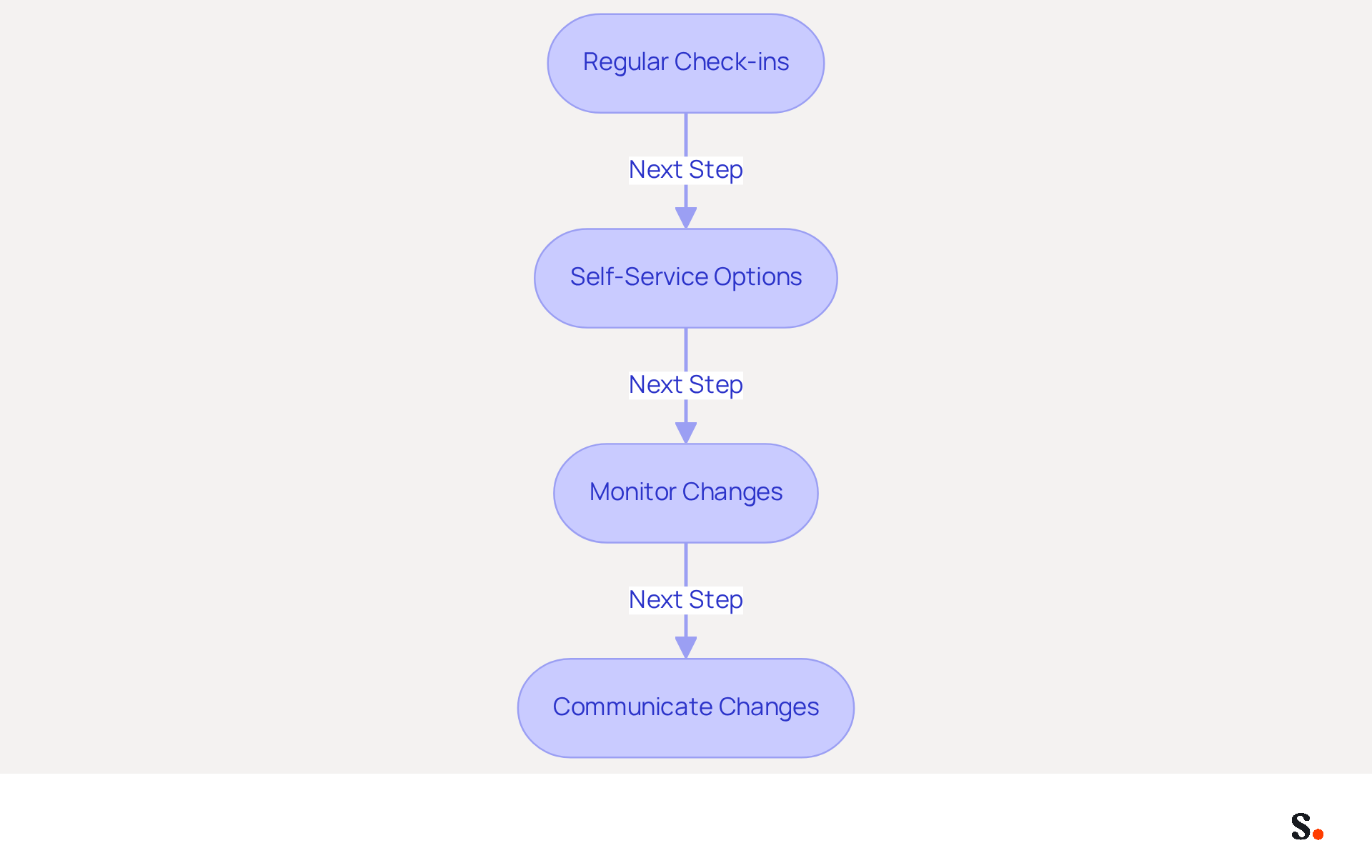
- Regular Check-ins: Schedule consistent check-ins with staff to confirm their pronoun preferences, particularly during performance reviews or team meetings. This practice respects individual identities and fosters a culture of open communication. Research indicates that inclusive workplaces see 41% less absenteeism, highlighting the importance of engagement.
- Self-Service Options: Establish a self-service portal that enables staff to update their pronouns easily, without needing to navigate through HR. This empowers individuals to take control of their personal information, ensuring accuracy and timeliness. Notably, 53% of Gen Z workers seek learning opportunities to advance in their careers, underscoring the necessity of enabling individuals to manage their personal information efficiently.
- Monitor Changes: Actively track modifications in staff status, such as transitions or new hires, to ensure that references are updated accordingly. This proactive approach prevents misgendering, a painful experience for many, and shows a strong commitment to inclusivity.
- Communicate Changes: When an employee updates their identifiers, promptly communicate this change to the team. This practice fosters understanding and respect among colleagues, reinforcing a supportive workplace environment. A case study on implementing gender identifiers in pronoun email signatures shows how normalizing these practices can positively shift workplace culture.
These steps ensure that the pronoun email signature accurately reflects employees' identities, ultimately fostering a more inclusive workplace culture.
Conclusion
Implementing pronoun email signatures is a vital step toward fostering an inclusive workplace culture. By recognizing and respecting individual identities through the use of gender pronouns, organizations not only affirm the diversity of their workforce but also promote a sense of belonging among employees. Encouraging open dialogue about gender identity fosters a more respectful and supportive workplace environment.
The article outlines essential steps for effectively implementing pronoun email signatures, including:
- Creating a safe space for employees to share their preferences
- Utilizing surveys for data collection
- Ensuring consistent formatting in email signatures
Additionally, maintaining and updating these signatures through regular check-ins and self-service options empowers employees to manage their identities accurately. Companies like Nike and Notion exemplify the positive impact of these practices, demonstrating how inclusivity can enhance employee engagement and communication.
In conclusion, adopting pronoun email signatures is not merely a trend but a necessary evolution in workplace communication. Organizations that proactively implement these practices will cultivate a culture of respect and inclusivity, enhancing overall workplace dynamics. By prioritizing the acknowledgment of gender identities, businesses can create an environment where every employee feels valued and recognized, ultimately leading to improved morale and productivity.
Frequently Asked Questions
What are gender pronouns?
Gender pronouns are words used to refer to individuals in place of their names, such as he/him, she/her, and they/them.
Why is it important to understand and use appropriate gender terms?
Understanding and using appropriate gender terms is crucial for creating an inclusive workplace environment, as it acknowledges and honors individuals' identities.
How can including gender identifiers in email signatures benefit the workplace?
Including gender identifiers in email signatures shows that the organization values diversity and respects everyone, affirming the identities of those who identify outside the traditional gender binary and encouraging others to share their gender identifiers.
What impact does recognizing personal references have on workplace communication?
Recognizing personal references establishes a foundation for a more inclusive and respectful communication culture, fostering a culture of respect and inclusivity that benefits everyone.
List of Sources
- Understand Gender Pronouns and Their Importance
- Organizations embrace equity by sharing gender pronouns in email signatures (https://internationalwomensday.com/Missions/19523/Organizations-embrace-equity-by-sharing-gender-pronouns-in-email-signatures)
- Virgin Just Added Gender Pronouns to Email Signatures. Should Your Company Do the Same? (https://inc.com/jessica-stillman/virgin-just-added-gender-pronouns-to-email-signatures-should-your-company-do-same.html)
- Sharing Gender Pronouns in Employee Bios, Email Signatures Helps Attract LGBTQ+ Applicants, Study Finds – Stories (https://stories.butler.edu/sharing-gender-pronouns-in-employee-bios-email-signatures-helps-attract-lgbtq-applicants-study-finds)
- Advancing Inclusivity: The Power of Pronouns at Work - GHJ (https://ghjadvisors.com/ghj-insights/advancing-inclusivity-the-power-of-pronouns-at-work)
- Collect Employee Pronoun Preferences Effectively
- Sharing pronouns and inclusive workplace culture (https://riba.org/work/insights-and-resources/sharing-pronouns-and-inclusive-workplace-culture)
- Best Practices for Using Pronouns in the Workplace and Everyplace! (https://adp.com/spark/articles/2021/06/best-practices-for-using-pronouns-in-the-workplace-and-everyplace.aspx)
- 11 steps leaders can take for respecting employees’ pronouns at work | SAP (https://sap.com/germany/blogs/respecting-employees-pronouns-11-steps)
- How Talking about Personal Pronouns Can Build a More Inclusive Environment (https://gladstone.org/news/how-talking-about-personal-pronouns-can-build-more-inclusive-environment)
- Add Pronouns to Email Signatures: Formatting and Placement
- 40+ Email Signature Statistics for 2026 (Data + Insights) (https://wavecnct.com/blogs/email-signature-statistics)
- Should your email say if you're he, she or they? (https://bbc.com/news/business-51331571)
- Pronouns in Email Signatures: Prioritizing an Inclusive Workplace (https://letsignit.com/blog/pronouns-in-email-signatures)
- Email signature statistics: Why every business should optimize their email signatures — Stripo.email (https://stripo.email/blog/email-signature-statistics-why-every-business-should-optimize-their-email-signatures)
- Pronouns in some reporters' email signatures get a stony response from Trump administration (https://nbcnews.com/nbc-out/out-politics-and-policy/pronouns-reporters-email-signatures-get-stony-response-trump-administr-rcna200838)
- Maintain and Update Pronouns in Email Signatures
- 7 Employee Engagement Statistics Worth Considering (https://custominsight.com/blog/7-employee-engagement-statistics-worth-considering.asp)
- 15 Employee Engagement Statistics That Matter in 2026 (https://yourthoughtpartner.com/blog/employee-engagement-statistics)
- Pronouns in email signatures: workplace inclusion guide (https://inclusiveemployers.co.uk/blog/why-we-use-pronouns-in-signatures)
- How Regular Check-Ins Can Improve Employee Engagement and Satisfaction | Blog | Insights on Healthcare Innovation & Employee Benefits (https://healthcompassinc.com/blog/how-regular-check-ins-can-improve-employee-engagement-and-satisfaction)
- Employees can now self-identify gender, pronouns - Office for Access & Equity (https://oae.illinois.edu/post/employees-can-now-self-identify-gender-pronouns)
Get started with Scribe
Build a professional email signature
Free 14-day trial — no credit card.