Master Closing Email Thank You: Best Practices for Professionals
Expressing gratitude in professional emails serves as a vital strategy for enhancing relationships and fostering collaboration. By incorporating thoughtful
Sophie Grant
Email Signature Specialist, Scribe
Introduction
Expressing gratitude in professional emails serves as a vital strategy for enhancing relationships and fostering collaboration. By incorporating thoughtful 'thank you' phrases into email closings, professionals can create a lasting positive impression and cultivate a culture of appreciation within their organizations. Yet, many professionals struggle to determine the appropriate moments for expressing gratitude in their correspondence. Understanding the nuances of expressing gratitude can significantly impact professional interactions and collaboration.
Understand the Importance of 'Thank You' in Email Closings
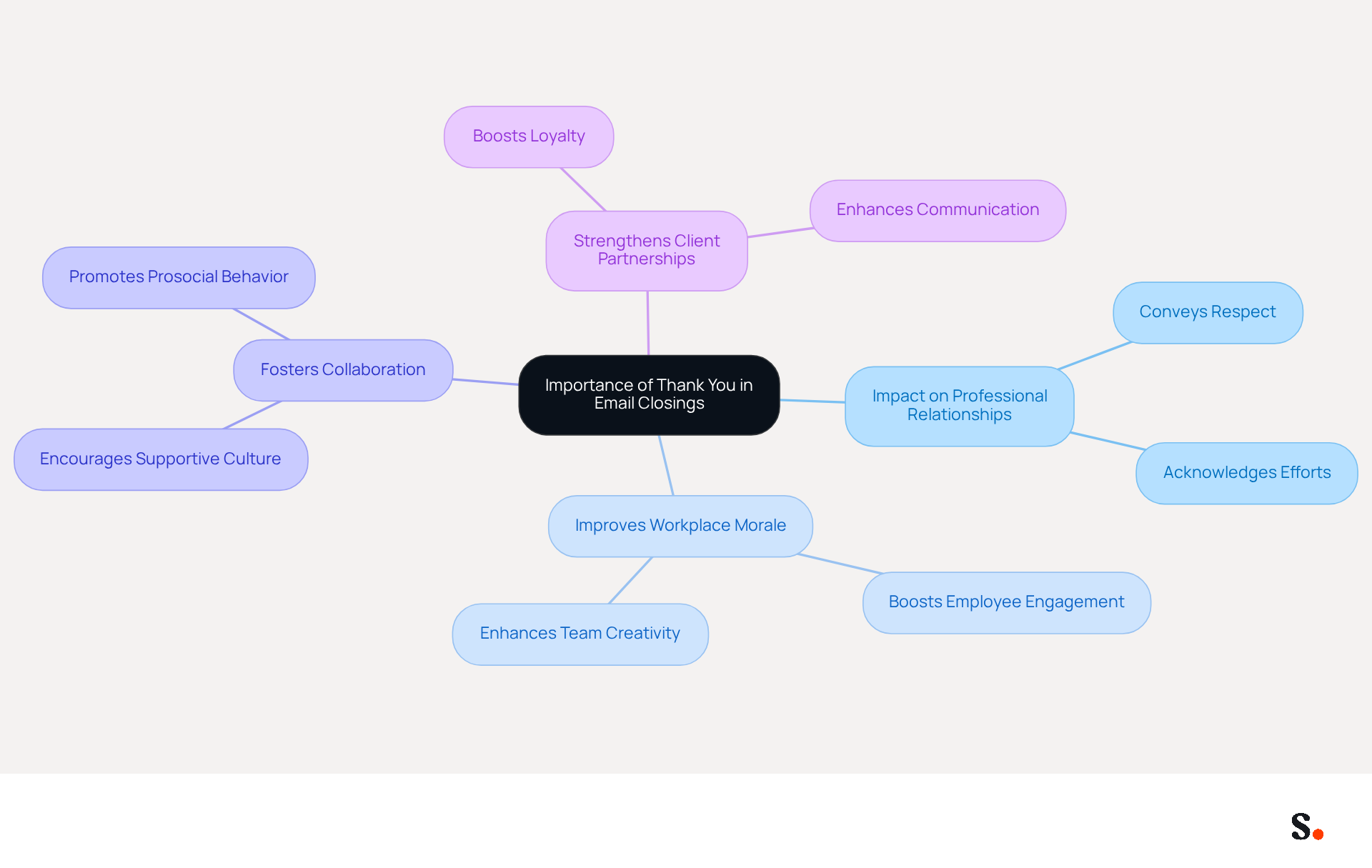
Expressing appreciation through a closing email thank you can significantly impact professional relationships, yet many overlook its importance. A simple 'thank you' conveys respect and acknowledges the recipient's efforts. Research shows that appreciation improves workplace morale and fosters collaboration. Including 'thank you' in your closing email thank you sign-offs creates a positive impression and fosters a culture of appreciation in your organization. This practice is especially beneficial in client communications, as it strengthens partnerships and boosts loyalty.
Explore Effective 'Thank You' Closing Phrases
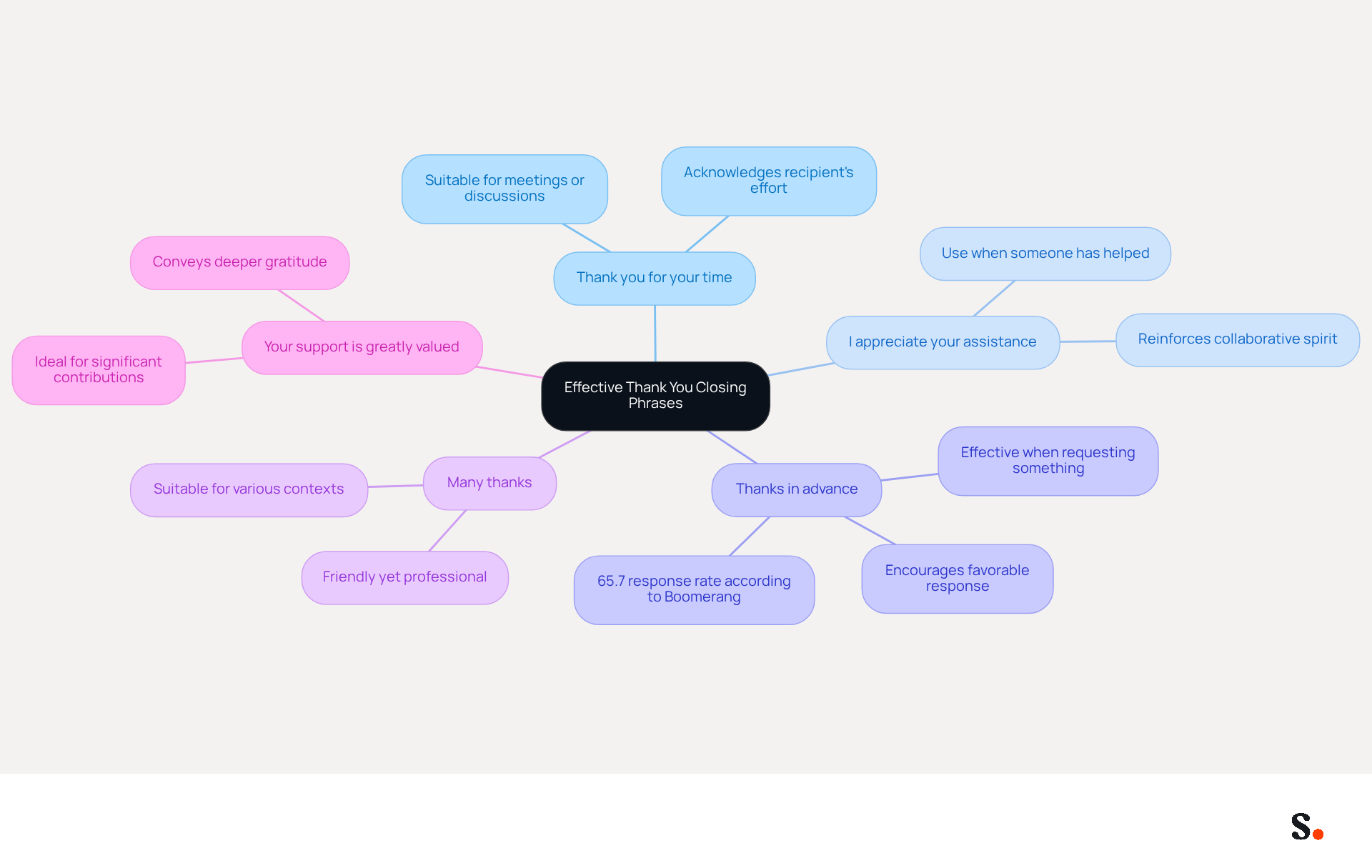
Selecting the right closing email thank you statement is essential for establishing the appropriate tone in professional emails. Here are some effective 'thank you' closing phrases to consider:
- Thank you for your time: This phrase is suitable for meetings or discussions, acknowledging the recipient's effort and fostering goodwill.
- I appreciate your assistance: Use this when someone has helped you with a task or provided valuable information, reinforcing a collaborative spirit.
- Thanks in advance: This phrase is effective when requesting something, as it sets a positive tone and encourages a favorable response. According to research conducted by Boomerang, this closing phrase has been shown to yield a response rate of 65.7%.
- Many thanks: A friendly yet professional way to express appreciation without being overly formal, making it suitable for various contexts.
- Your support is greatly valued and contributes significantly to our collaborative efforts: This expression conveys a deeper level of gratitude, ideal for significant contributions, and can enhance the recipient's perception of your professionalism.
When choosing a concluding statement, it's crucial to align the degree of formality with your relationship to the recipient. Excessively informal expressions may be misinterpreted in international communication, so it's wise to choose your words carefully. Research indicates that messages that include a closing email thank you significantly enhance engagement, highlighting the significance of considerate closings in professional communication. Ultimately, the right closing statement can significantly impact the effectiveness of your communication.
Identify Contexts for Using 'Thank You' in Professional Emails
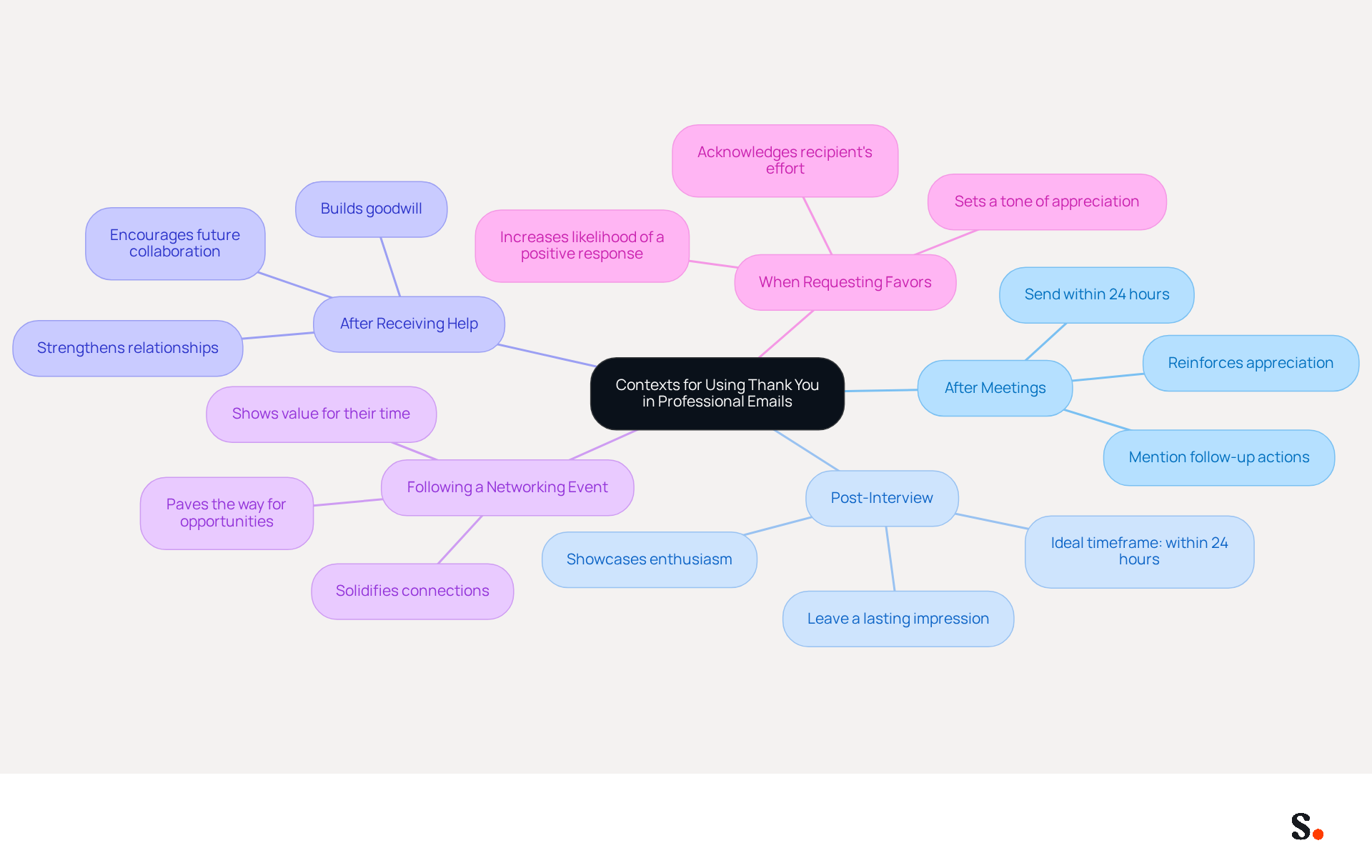
Knowing when to express gratitude in professional correspondence can significantly enhance communication effectiveness. Here are some contexts where expressing gratitude is particularly beneficial:
- After Meetings: Sending a thank-you email after a meeting reinforces appreciation for the time and insights shared. Timely follow-ups, ideally within 24 hours, help maintain momentum and demonstrate professionalism. Delaying your follow-up can diminish the impact of your gratitude. A note sent more than 72 hours later loses its significance.
- Post-Interview: A thank-you message sent after an interview can leave a lasting impression, showcasing enthusiasm for the position. Research indicates that candidates who send thank-you notes within 24 hours tend to leave a more favorable impression on hiring managers. A well-timed closing email thank you demonstrates that you respect the other person’s time and presence.
- After Receiving Help: When you acknowledge help from colleagues or clients, it builds goodwill and opens the door for future collaboration. Showing appreciation can strengthen professional relationships and enhance team dynamics.
- Following a Networking Event: Sending a thank-you note to new contacts can solidify connections and show that you value their time. This practice can pave the way for stronger connections and new opportunities.
- When Requesting Favors: Including a 'thank you' in requests can increase the likelihood of a positive response, as it sets a tone of appreciation. Acknowledging the recipient's effort can make them more inclined to assist.
By recognizing these contexts, professionals can effectively integrate appreciation into their communications, enhancing their relationships and professional image. However, it is essential to avoid common pitfalls such as sending generic or vague messages, which can detract from the sincerity of your appreciation. Ultimately, thoughtful thank-you messages can transform professional interactions into lasting partnerships.
Avoid Common Mistakes in 'Thank You' Closings
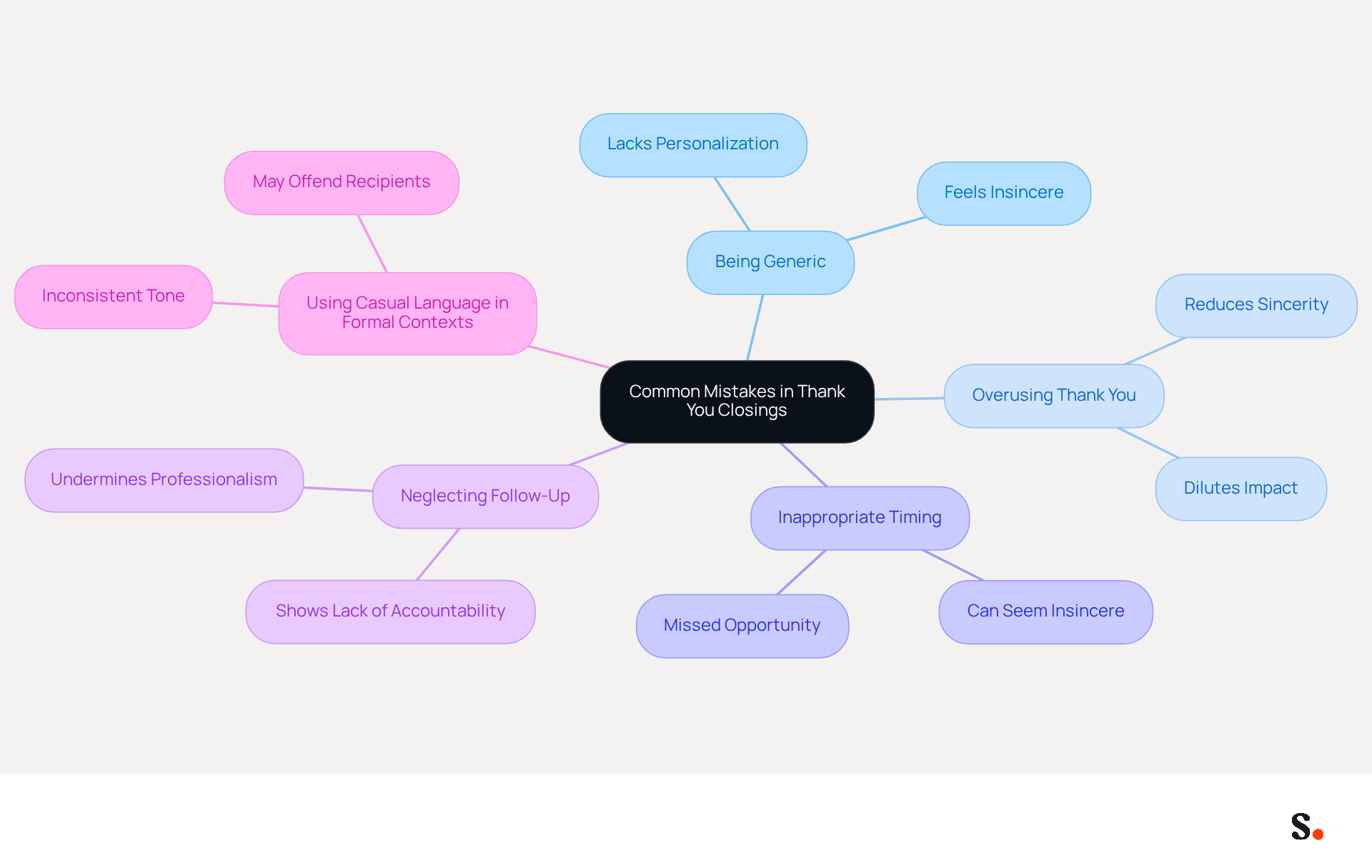
To convey gratitude effectively, it is crucial to avoid common pitfalls that can diminish the sincerity of your message:
- Being Generic: Avoid using overly generic phrases like 'thanks' without context. Personalizing your message makes it more meaningful.
- Overusing 'Thank You': Using 'thank you' too frequently can dilute its impact. Reserve it for moments that truly warrant appreciation.
- Inappropriate Timing: Sending a thank-you message too late can come off as insincere. Aim to send your message within 24 hours of the interaction.
- Neglecting Follow-Up: If you promised to follow up on a matter, ensure you do so in your thank-you message. This shows accountability and reinforces your professionalism.
- Using Casual Language in Formal Contexts: Ensure your closing aligns with the tone of your message. In formal communications, avoid casual phrases like 'cheers' or 'later'.
Avoiding these mistakes can significantly improve your email communication and ensure that your closing email thank you is perceived as sincere. Ultimately, mastering the art of gratitude in communication can significantly impact your professional relationships and reputation.
Conclusion
Expressing gratitude through closing email thank yous is a strategic approach that can significantly enhance professional relationships. By incorporating a simple 'thank you' into email sign-offs, professionals risk diminishing the value of their interactions and relationships. This simple gesture conveys respect and acknowledges the efforts of colleagues and clients, ultimately leading to improved collaboration and loyalty.
Throughout the article, key insights were shared on the importance of:
- Selecting appropriate closing phrases
- Recognizing contexts for expressing gratitude
- Avoiding common pitfalls that can undermine sincerity
Using effective phrases like "Thank you for your time" or "I appreciate your assistance" at the right moments - like after meetings or networking events - can greatly improve how you communicate. Additionally, being mindful of common mistakes, such as using generic phrases or neglecting timely follow-ups, ensures that gratitude is conveyed genuinely.
Incorporating thoughtful thank-you messages into professional correspondence can really change the way you interact and build strong partnerships. By prioritizing gratitude in communication, professionals can unlock new opportunities for collaboration and success.
Frequently Asked Questions
Why is expressing appreciation important in email closings?
Expressing appreciation through a closing email thank you significantly impacts professional relationships by conveying respect and acknowledging the recipient's efforts.
What effect does appreciation have on workplace morale?
Research shows that appreciation improves workplace morale and fosters collaboration among team members.
How does including 'thank you' in email sign-offs affect impressions?
Including 'thank you' in your closing email sign-offs creates a positive impression and fosters a culture of appreciation within an organization.
Why is it particularly beneficial to use 'thank you' in client communications?
Using 'thank you' in client communications strengthens partnerships and boosts loyalty between the organization and its clients.
List of Sources
- Understand the Importance of 'Thank You' in Email Closings
- The power of gratitude in the workplace | Legal Blog (https://legal.thomsonreuters.com/blog/the-power-of-gratitude-in-the-workplace)
- Gratitude in the Workplace (https://newswire.ciras.iastate.edu/2024/12/06/gratitude-in-the-workplace)
- Is Gratitude the Missing Link in Your Workplace Culture? (https://health.calm.com/resources/blog/is-gratitude-the-missing-link-in-your-workplace-culture)
- The Power of Workplace Gratitude - HRWatchdog (https://hrwatchdog.calchamber.com/2025/11/the-power-of-workplace-gratitude)
- Explore Effective 'Thank You' Closing Phrases
- How to End an Email Professionally (With Examples) (https://iconnect.isenberg.umass.edu/blog/2024/07/10/how-to-end-an-email-professionally-with-examples)
- 110 Best Ways to Sign Off an Email Correctly - Warmup Inbox (https://warmupinbox.com/blog/email-marketing/email-sign-offs)
- 11 Ways to Say “Thank You” Over Email, and 3 “Thank You” Mistakes to Avoid (https://grammarly.com/blog/writing-tips/thank-you)
- 50 Email Closing Lines That Leave Lasting Impressions (https://instantly.ai/blog/email-closing-lines)
- 32 Professional Thank You Email Templates for Any Occasion (https://respona.com/blog/thank-you-email)
- Identify Contexts for Using 'Thank You' in Professional Emails
- How to Send a Thank You Email That Gets Noticed [With Examples] | Jamie (https://meetjamie.ai/blog/thank-you-email)
- When to Send a Thank-you Email After an Interview | The Muse (https://themuse.com/advice/when-to-send-thank-you-email-after-interview)
- Thank-You Email After Meeting: Guide & Template | Noota (https://noota.io/en/thank-you-email-after-meeting-guide)
- Timing for Sending a Thank You Email Post-Interview (https://linkedin.com/top-content/career/how-to-write-a-thank-you-email-after-an-interview/timing-for-sending-a-thank-you-email-post-interview)
- Avoid Common Mistakes in 'Thank You' Closings
- Generic vs Personalized Email Stats (https://linkedin.com/top-content/marketing/personalization-in-marketing/generic-vs-personalized-email-stats)
- What Not to Say in a Thank-you Email After an Interview (https://careers.newark.rutgers.edu/blog/2025/03/28/what-not-to-say-in-a-thank-you-email-after-an-interview)
- 100 Compelling Email Statistics for 2026 | PGM Solutions (https://porchgroupmedia.com/blog/100-compelling-email-statistics-to-inform-your-strategy-in-2023)
- 10 Mistakes to Avoid With a Job Interview Thank-You Email (https://careers.usnews.com/advice/articles/mistakes-to-avoid-on-a-thank-you-email)
Get started with Scribe
Build a professional email signature
Free 14-day trial — no credit card.