Master Effective Closing Email Statements for Marketing Success
While the content of an email is crucial, the way it concludes can make or break its effectiveness. A well-crafted closing statement not only reinforces brand
Sophie Grant
Email Signature Specialist, Scribe

Introduction
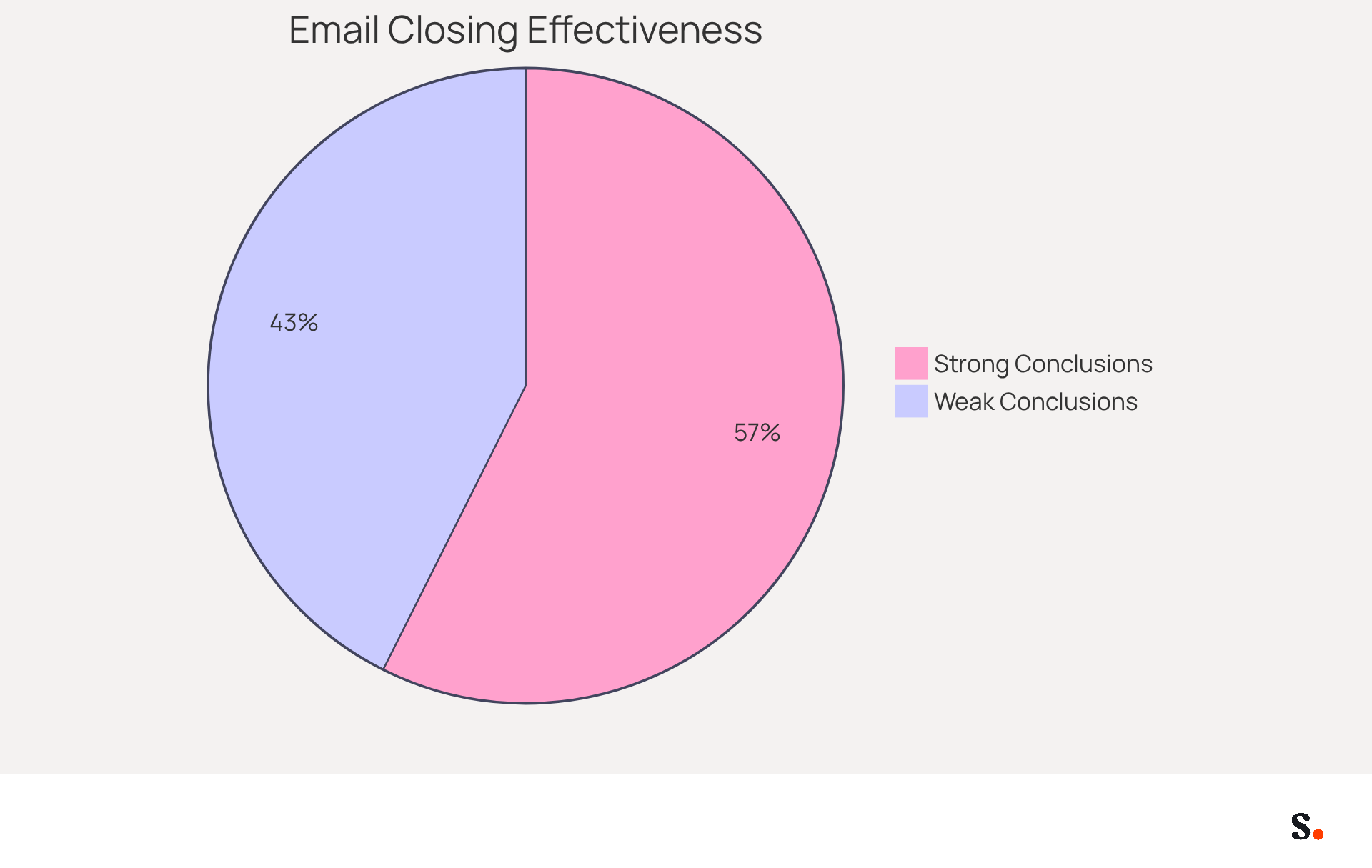
While the content of an email is crucial, the way it concludes can make or break its effectiveness. A well-crafted closing statement not only reinforces brand identity but also enhances engagement, making it a vital component of marketing success. As studies reveal, emails with strong conclusions can lead to response rates soaring as high as 62%, underscoring the importance of mastering this often-neglected aspect.
So, what can marketers do to make sure their email conclusions truly resonate and prompt action?
Understand the Importance of Effective Email Closings
Effective message conclusions serve as crucial touchpoints that not only convey courtesy but also reinforce brand identity and foster audience connections. A well-crafted conclusion can significantly influence how the recipient perceives your message and their likelihood of taking action.
Studies show that messages with strong conclusions lead to higher engagement rates, making it essential for marketers to focus on this element in their communications. For example, messages that conclude with appreciation see a 62% response rate, compared to just 46% for those without such a closing.
Additionally, including a clear call to action can guide recipients toward the desired response, whether it’s scheduling a meeting, making a purchase, or providing feedback. Custom sign-offs have been shown to enhance engagement and response rates, underscoring the importance of aligning conclusions with the message's tone and purpose.
By recognizing the importance of closing email statements, marketers can refine their communication strategies and achieve better results.
Implement Strategies for Crafting Impactful Closing Lines
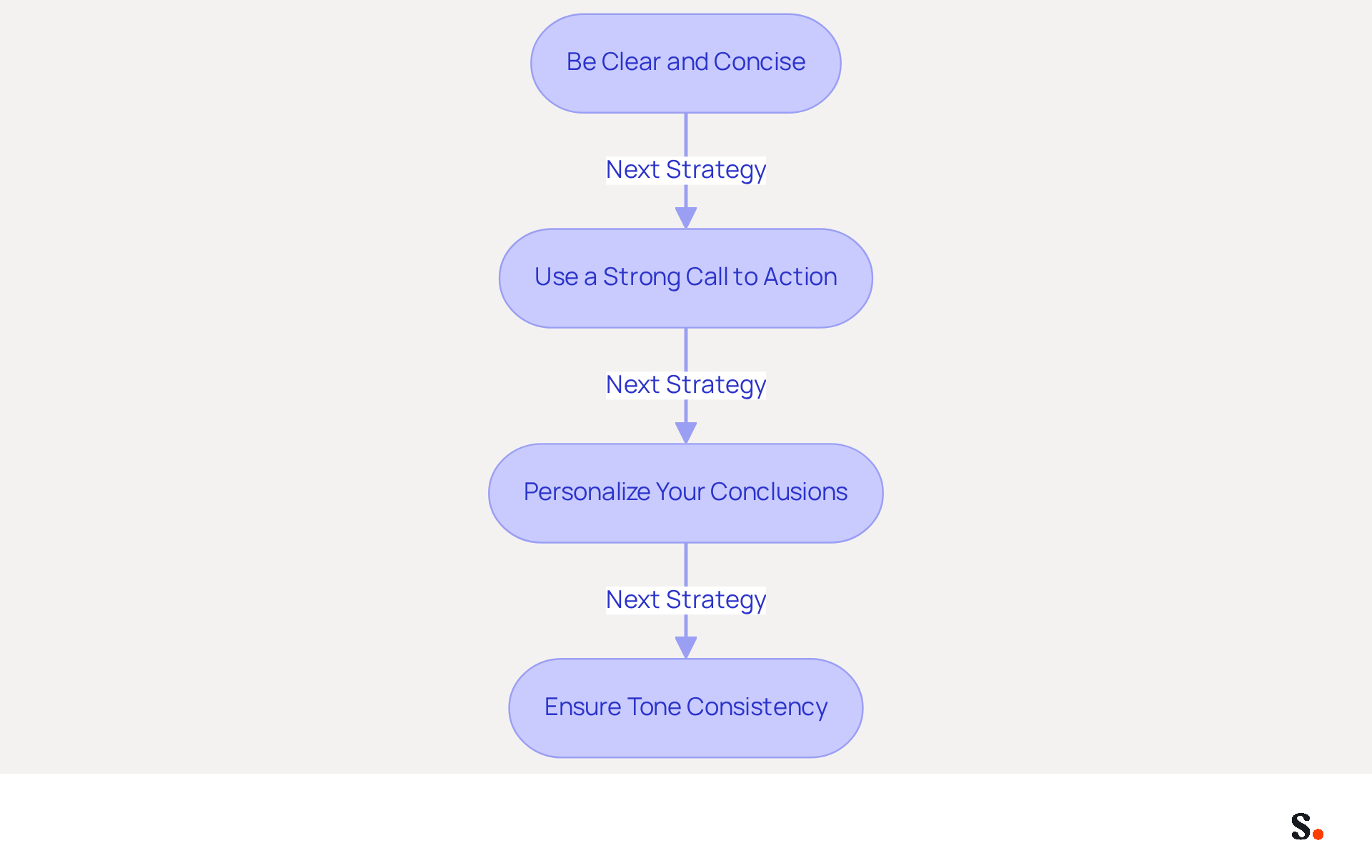
To craft impactful closing lines, marketers must prioritize clarity and action:
- Be Clear and Concise: Lengthy or convoluted closings can dilute the message. A straightforward statement that summarizes the message's purpose or reiterates the call to action is more effective. For example, replace 'I hope to hear from you soon' with 'Please confirm your attendance by Friday.'
- Use a Strong Call to Action (CTA): Encourage the recipient to take a specific action. Phrases like 'Schedule a call today' or 'Download your free guide now' create urgency and clarity. Studies show that emails featuring clear CTAs can increase click-through rates significantly, by as much as 371%, making them essential for driving engagement. Furthermore, interest-based CTAs have been demonstrated to double the success rate compared to aggressive concluding lines, emphasizing their effectiveness.
- Personalize Your Conclusions: Tailoring your conclusion to the recipient's needs or interests can significantly enhance response rates. Personalization fosters a sense of value, increasing the likelihood of engagement. For instance, messages with gratitude-based sign-offs achieve over 62% response rates, demonstrating the impact of a personalized touch. Jude Neilson, Business Development Manager at Callbox Inc., notes that a personalized conclusion fosters connection and shows genuine understanding.
- Ensure that the conclusion aligns with the overall tone of the message. A formal message should include a professional sign-off, while a more casual correspondence can allow for a friendly farewell. Inconsistent tone can confuse readers and reduce the likelihood of a response, emphasizing the need for coherence throughout the message. Neilson also emphasizes, 'Clear closing email statements eliminate confusion, making it easy for the recipient to take the next step.'
By implementing these strategies, marketers can enhance the effectiveness of their communications and drive better engagement, ultimately leading to improved marketing success.
Avoid Common Mistakes in Email Closings
Common pitfalls in email closings can significantly undermine a marketer's effectiveness:
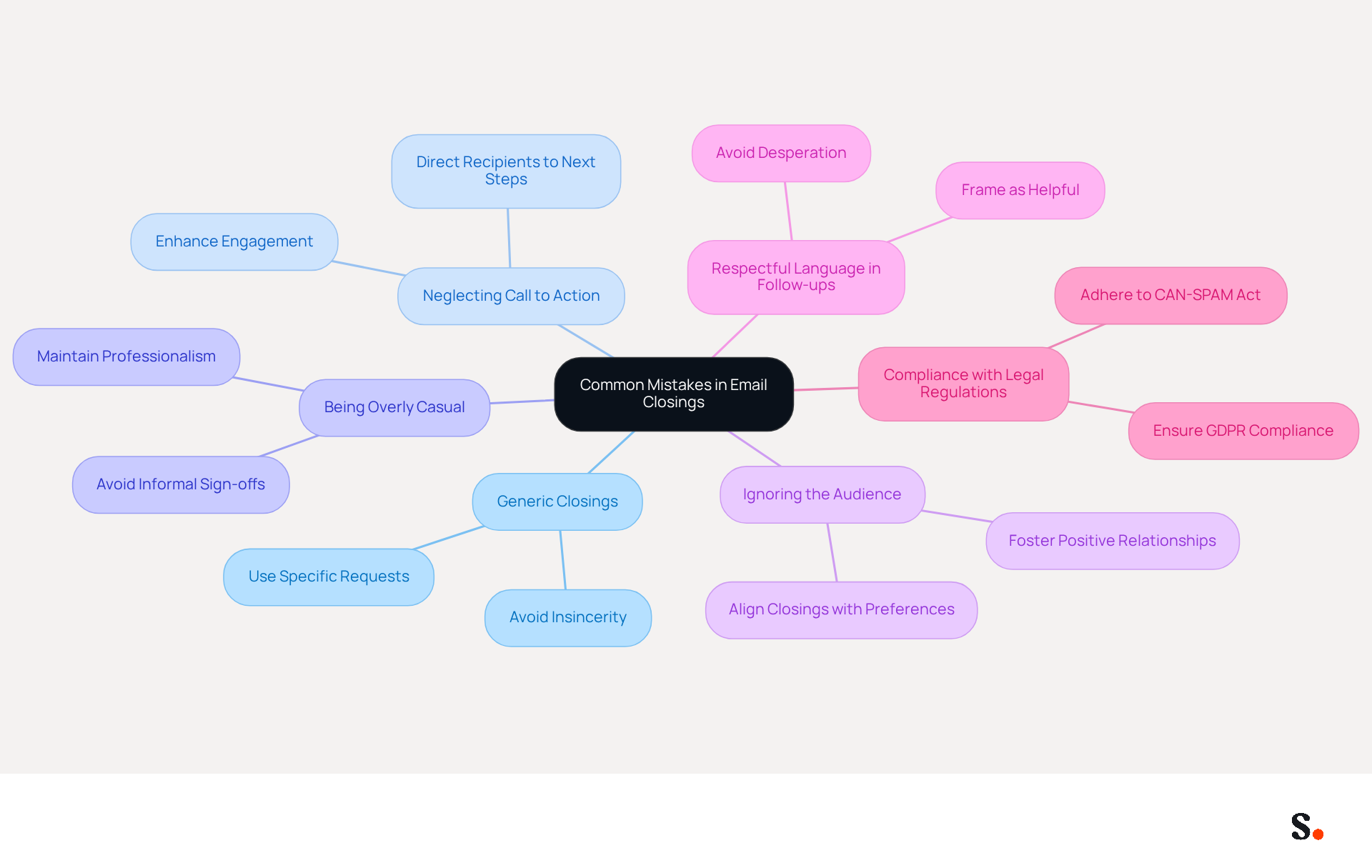
- Generic Closings: Generic closings, like 'Looking forward to hearing from you,' often come across as insincere. Instead, opt for specific requests that encourage action, enhancing the likelihood of a response.
- Neglecting the Call to Action: A clear call to action is crucial; without it, recipients may be uncertain about the next steps. Always direct them toward the desired action to maintain engagement and clarity. This is particularly significant given that the average office worker receives around 121 messages daily, making it essential for your correspondence to stand out.
- Being Overly Casual: A friendly tone is beneficial, but overly casual language can undermine credibility. Avoid informal sign-offs like 'Cheers' in formal communications to maintain professionalism.
- Ignoring the Audience: Aligning your conclusion with the recipient's preferences is essential for engagement. An ending that resonates with the audience can significantly boost engagement and foster positive relationships.
- In follow-up messages, use respectful language to avoid appearing desperate or aggressive. Instead, frame your conclusion as helpful and respectful, allowing recipients to feel comfortable in their response.
- Compliance with Legal Regulations: Compliance with legal regulations, such as the CAN-SPAM Act and GDPR, is essential for maintaining professionalism. This not only builds trust with your audience but also ensures your messaging practices are sound.
Avoiding these pitfalls not only enhances communication but also strengthens professional relationships.
Leverage Email Signatures to Enhance Closing Statements
Many professionals underestimate the impact of email footers on communication effectiveness. Here are effective strategies to leverage them:
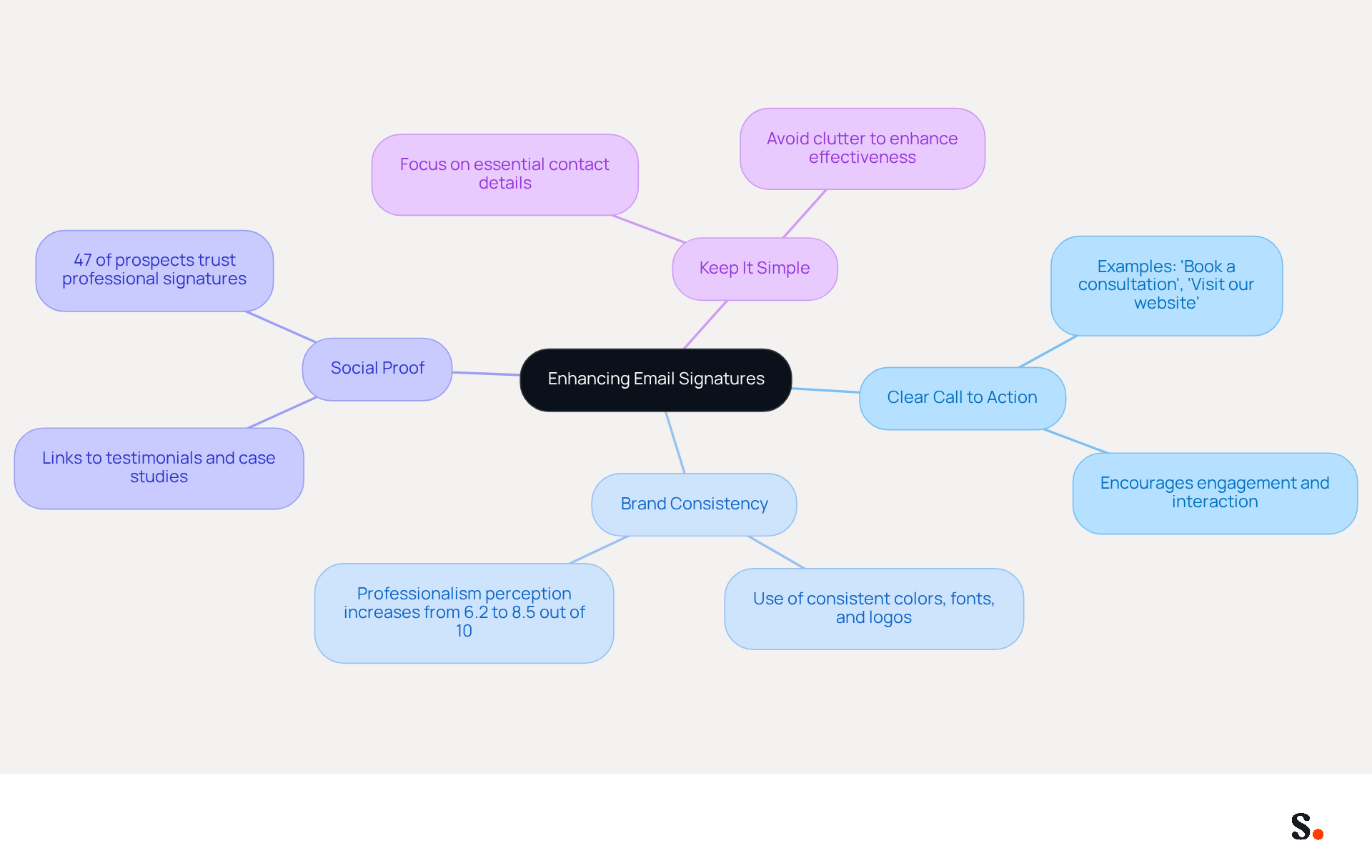
- Include a Clear Call to Action: Integrate a compelling CTA in your email footer, such as 'Book a consultation' or 'Visit our website for more information.' This encourages recipients to engage further with your brand, driving higher interaction rates.
- Maintain Brand Consistency: Ensure your email footer reflects your brand's identity through consistent use of colors, fonts, and logos. Consistent branding in email footers can elevate professionalism, with studies showing a perception increase from 6.2 to 8.5 out of 10.
- Utilize Social Proof: Incorporate links to testimonials, case studies, or recent achievements within your email footer. This establishes credibility and can encourage recipients to take action, as 47% of prospects indicate that professional email footers enhance their trust in the sender.
- Keep It Simple: While it may be tempting to include extensive information, a clean and concise closing is more effective. Focus on essential contact details and a single, impactful message. Overloading identifiers can lead to clutter, diminishing their effectiveness.
By using these strategies, you can enhance your closing email statements, which will lead to better engagement and trust from your recipients.
Conclusion
Crafting effective email closing statements is crucial for marketers seeking to enhance engagement and drive action. Thoughtful conclusions allow marketers to express courtesy, reinforce their brand identity, and encourage recipients to take action. A well-structured closing is essential for shaping the recipient's perception and response.
Throughout the article, key strategies for creating impactful email closings have been highlighted. These include:
- Being clear and concise
- Utilizing strong calls to action
- Personalizing messages
- Ensuring tone consistency
Additionally, avoiding common mistakes such as generic closings and neglecting audience preferences is crucial for maintaining professionalism and fostering positive relationships. Leveraging email signatures effectively can further enhance these closing statements, driving higher engagement and reinforcing brand consistency.
However, many marketers struggle to create impactful email closings that resonate with their audience. When marketers incorporate these best practices into their email communications, they often see measurable success. Ultimately, refining email closing strategies can transform communication efforts and yield significant marketing results.
Frequently Asked Questions
Why are effective email closings important?
Effective email closings serve as crucial touchpoints that convey courtesy, reinforce brand identity, and foster audience connections, significantly influencing how recipients perceive the message and their likelihood of taking action.
How do strong email conclusions impact engagement rates?
Studies show that messages with strong conclusions lead to higher engagement rates. For instance, messages that conclude with appreciation have a 62% response rate, compared to just 46% for those without such a closing.
What role does a call to action play in email closings?
Including a clear call to action in email closings guides recipients toward the desired response, such as scheduling a meeting, making a purchase, or providing feedback.
How can custom sign-offs affect email engagement?
Custom sign-offs enhance engagement and response rates, highlighting the importance of aligning conclusions with the message's tone and purpose.
What should marketers consider when crafting email conclusions?
Marketers should recognize the importance of closing email statements to refine their communication strategies and achieve better results.
List of Sources
- Understand the Importance of Effective Email Closings
- 4 Best Practices for Effective Email Closings in Marketing (https://scribe-mail.com/en-US/blog/4-best-practices-for-effective-email-closings-in-marketing)
- 100 Compelling Email Statistics for 2026 | PGM Solutions (https://porchgroupmedia.com/blog/100-compelling-email-statistics-to-inform-your-strategy-in-2023)
- 8 Email Marketing Statistics to Reinforce Your Strategy | Mailjet (https://mailjet.com/blog/email-best-practices/stats-email-marketing)
- Your Emails Are 36 Percent More Likely to Get a Reply If You End Them This Way (https://inc.com/jessica-stillman/your-emails-are-36-percent-more-likely-to-get-a-reply-if-you-close-them-this-way.html)
- How to End an Email: 10+ Examples & Tips | Mailchimp (https://mailchimp.com/resources/how-to-end-an-email)
- Implement Strategies for Crafting Impactful Closing Lines
- 50 Email Closing Lines That Leave Lasting Impressions (https://instantly.ai/blog/email-closing-lines)
- 4 Best Practices for Effective Email Ending Lines (https://scribe-mail.com/en-US/blog/4-best-practices-for-effective-email-ending-lines)
- Best Email Closing Lines for Closing Deals (https://callboxinc.com/email-marketing/best-email-closing-lines-for-closing-deals)
- How To Master Email Sales Closing Lines To Seal Your Sales Immediately - NEWOLDSTAMP (https://newoldstamp.com/blog/how-to-master-email-sales-closing-lines-to-seal-your-sales-immediately)
- Avoid Common Mistakes in Email Closings
- How to End Your Marketing Emails Professionally? - Inboxroad (https://inboxroad.com/email-strategy/how-to-end-your-marketing-emails-professionally)
- 5 Common Email Closing Mistakes and How to Avoid Them (https://intentamplify.com/blog/5-common-email-closing-mistakes-and-how-to-avoid-them)
- The 12 Most Common Email Mistakes Professionals Make (https://businessinsider.com/common-email-mistakes-professionals-make-2014-7)
- The Best (and Worst) Ways To Sign an Email | Robert H. Smith School of Business (https://rhsmith.umd.edu/research/best-and-worst-ways-sign-email)
- How to Sign Off on an Email Correctly | Rocketseed (https://rocketseed.com/blog/correct-way-to-sign-off-emails)
- Leverage Email Signatures to Enhance Closing Statements
- Using Email Signatures as a Marketing Tool: Ideas for Generating Leads and Promoting Business (https://blog.ringostat.com/en/using-email-signatures-as-a-marketing-tool-ideas-for-generating-leads-and-promoting-business)
- Using Email Signatures for Marketing | CloudM (https://cloudm.io/resources/blog/using-email-signatures-for-marketing-how-every-email-can-boost-your-brand)
- The Quantifiable Marketing Value of Email Signatures (https://ama.org/2022/06/20/the-quantifiable-marketing-value-of-email-signatures)
- The impact of email signatures on your branding (https://signitic.com/en/resources/the-impact-of-email-signatures-on-your-branding)
Get started with Scribe
Signatures for every role on your team
Free 14-day trial — no credit card.