Master the Professional Way to End an Email for Impact
Despite their critical role, many professionals fail to recognize the impact of email closings on communication effectiveness. A well-crafted email closing not
Sophie Grant
Email Signature Specialist, Scribe

On this page
- Introduction
- Understand the Importance of Professional Email Closings
- Craft Effective Email Closings: Key Components to Include
- Explore Sign-Off Options: Formal, Friendly, and Contextual Choices
- Enhance Your Email with a Professional Signature: Best Practices
- Conclusion
- Frequently Asked Questions
- List of Sources
Introduction
Despite their critical role, many professionals fail to recognize the impact of email closings on communication effectiveness. A well-crafted email closing not only conveys professionalism but also enhances clarity and fosters positive relationships. Mastering impactful email sign-offs is essential for ensuring effective communication and leaving a lasting impression. This article delves into the essential components of professional email closings, providing actionable strategies and evidence-based insights to enhance email interactions in various business contexts.
Understand the Importance of Professional Email Closings
Many professionals overlook the significance of a professional way to end an email, yet it plays a crucial role in shaping communication outcomes. A well-crafted email sign-off is a professional way to end an email, conveying professionalism and leaving a lasting impression on the recipient. Here are key reasons why professional email closings matter:
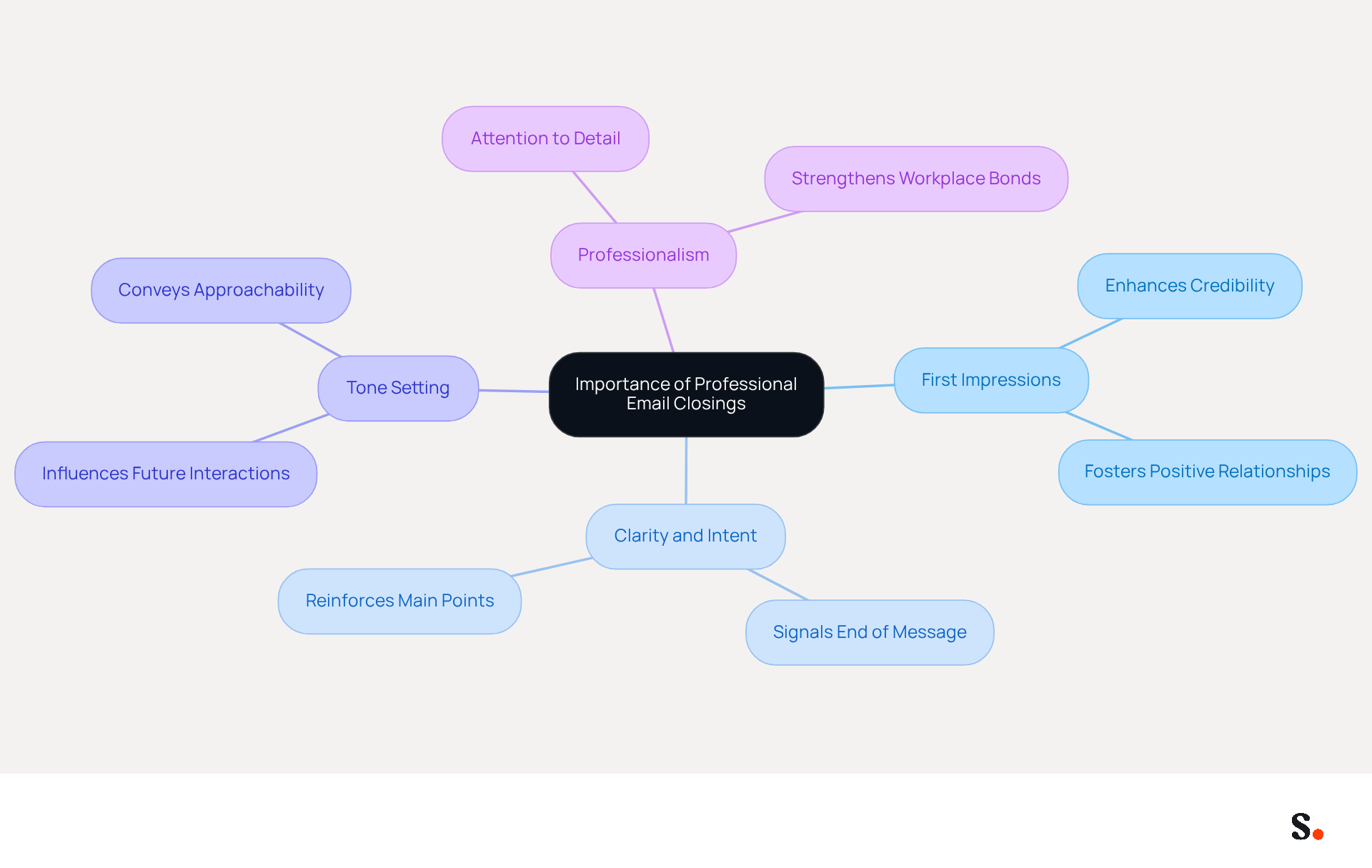
- First Impressions: The way you end an email can shape the recipient's perception of you. A thoughtful conclusion serves as a professional way to end an email, enhancing your credibility and fostering a positive relationship.
- Clarity and Intent: A distinct conclusion signals the end of your message and reinforces your main points or calls to action, ensuring that the audience knows what to expect next. Research shows that a professional way to end an email can significantly influence the recipient's response and subsequent actions.
- Tone Setting: The final phrase you choose can set the tone for future interactions, whether formal or friendly, and can influence how approachable you appear. For instance, using phrases like "Looking forward to hearing from you" or "Thank you for your time" can convey a sense of eagerness and appreciation.
- Professionalism: Consistently utilizing formal sign-offs shows attention to detail and regard for the individual, which is particularly crucial in business communications. As Itamar Haim observes, expressing gratitude in sign-offs can strengthen workplace bonds and improve social relationships.
Clear and appropriate sign-offs help ensure that recipients understand what to do next, boosting engagement and clarity in workplace communications. Neglecting the nuances of a professional way to end an email can result in missed opportunities and a diminished professional rapport.
Craft Effective Email Closings: Key Components to Include
Using a professional way to end an email can significantly influence recipient engagement and response rates. To craft these closings, consider incorporating the following key components:
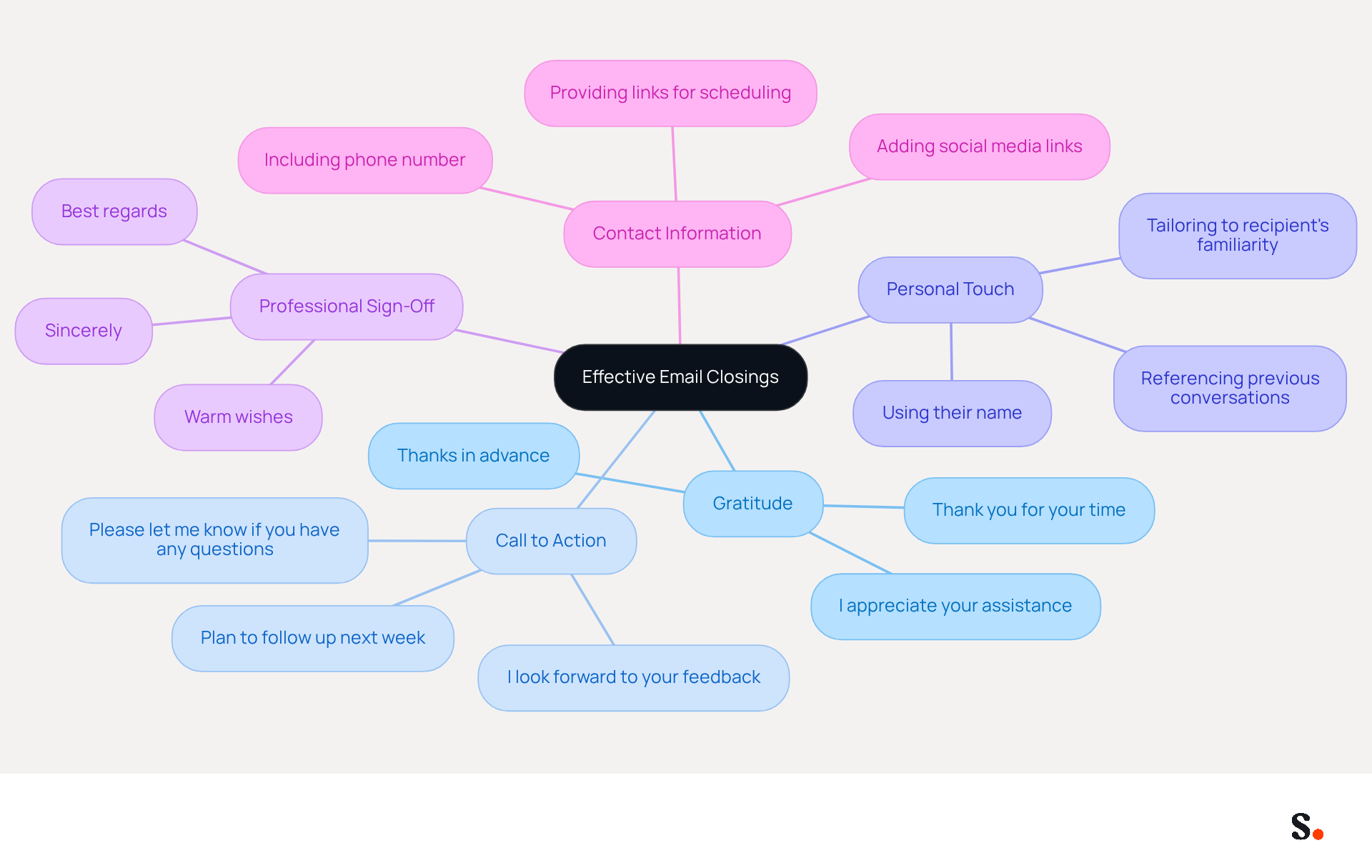
- Gratitude: Expressing thanks fosters goodwill and enhances the recipient's perception of your message. Phrases like "Thank you for your time" or "I appreciate your assistance" can leave a positive impression.
- Call to Action: Clearly state any expected responses or actions. For instance, use phrases like "I look forward to your feedback" or "Please let me know if you have any questions" to encourage engagement. Furthermore, promoting prompt action can generate a sense of urgency, leading to faster responses from those involved.
- Personal Touch: Customizing your farewell to the individual adds a personal element. Using their name or referencing previous conversations can strengthen the connection and make your message feel more thoughtful. Matching your closing style to the recipient's can make your message feel more personal and engaging.
- Professional Sign-Off: Choose a sign-off that matches the tone of your message. Options such as "Sincerely," "Best regards," or "Warm wishes" convey professionalism while maintaining an approachable tone.
- Contact Information: Including your contact details in the conclusion facilitates further communication, making it easier for the recipient to reach out with questions or feedback.
In a case study involving a marketing team, implementing these strategies led to a 30% increase in response rates within three months. This illustrates the concrete advantages of well-crafted message sign-offs. Furthermore, research shows that expressing gratitude in sign-offs can greatly improve engagement, with 'Thanks in advance' resulting in a response rate of 65.7%. However, be cautious with this phrase, as it can create a reciprocity trap. This shift in approach can lead to more meaningful interactions and improved communication outcomes. Focusing on these components can transform your email interactions, providing a professional way to end an email and enhancing communication and collaboration.
Explore Sign-Off Options: Formal, Friendly, and Contextual Choices
Choosing the right sign-off is essential for effective communication and relationship building in business settings, as it reflects a professional way to end an email. Here’s a breakdown of effective sign-off options categorized by formality:
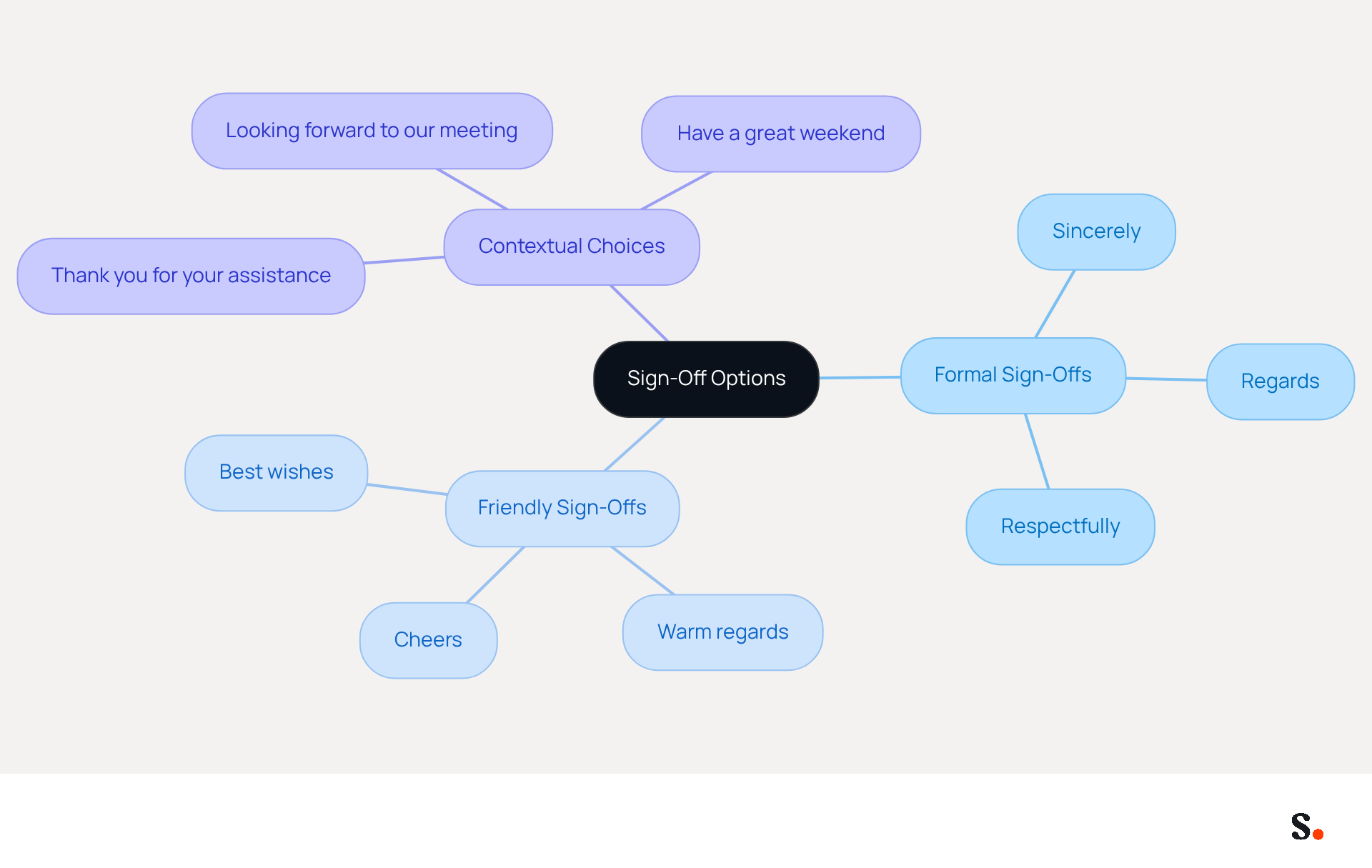
Formal Sign-Offs: These are best used in professional settings or when addressing someone you don’t know well:
- Sincerely
- Regards
- Respectfully
Respectful sign-offs in formal emails maintain professionalism and reinforce the email's main message. For instance, 'Sincerely' is often viewed as a standard choice, while 'Respectfully' may come across as overly formal in some contexts.
Friendly Sign-Offs: Suitable for colleagues or clients with whom you have a rapport, these options can create a more relaxed tone:
- Best wishes
- Warm regards
- Cheers
Casual sign-offs can strengthen relationships and make the recipient feel valued, provided they are appropriate for the context. However, it's important to avoid overly casual phrases like 'Cya' or 'Bye' in workplace communications, as they may lead to misunderstandings about the seriousness of the conversation.
Contextual Choices: Tailor your sign-off based on the email's content or your relationship with the recipient:
- Thank you for your assistance (after a request)
- Looking forward to our meeting (before a scheduled meeting)
- Have a great weekend (if sending on a Friday)
Studies show that sign-offs expressing gratitude, like 'Thank you for your assistance,' significantly increase response rates. By choosing the suitable sign-off, you can reinforce the message's tone and strengthen your professional relationships, ultimately enhancing the effectiveness of your communications by using a professional way to end an email. Additionally, remember that a well-crafted signature complements your sign-off, acting as a digital business card that reinforces your professionalism. Scribe makes it easy to sync your Google Workspace, keeping your signatures current and saving you time while ensuring brand consistency.
Enhance Your Email with a Professional Signature: Best Practices
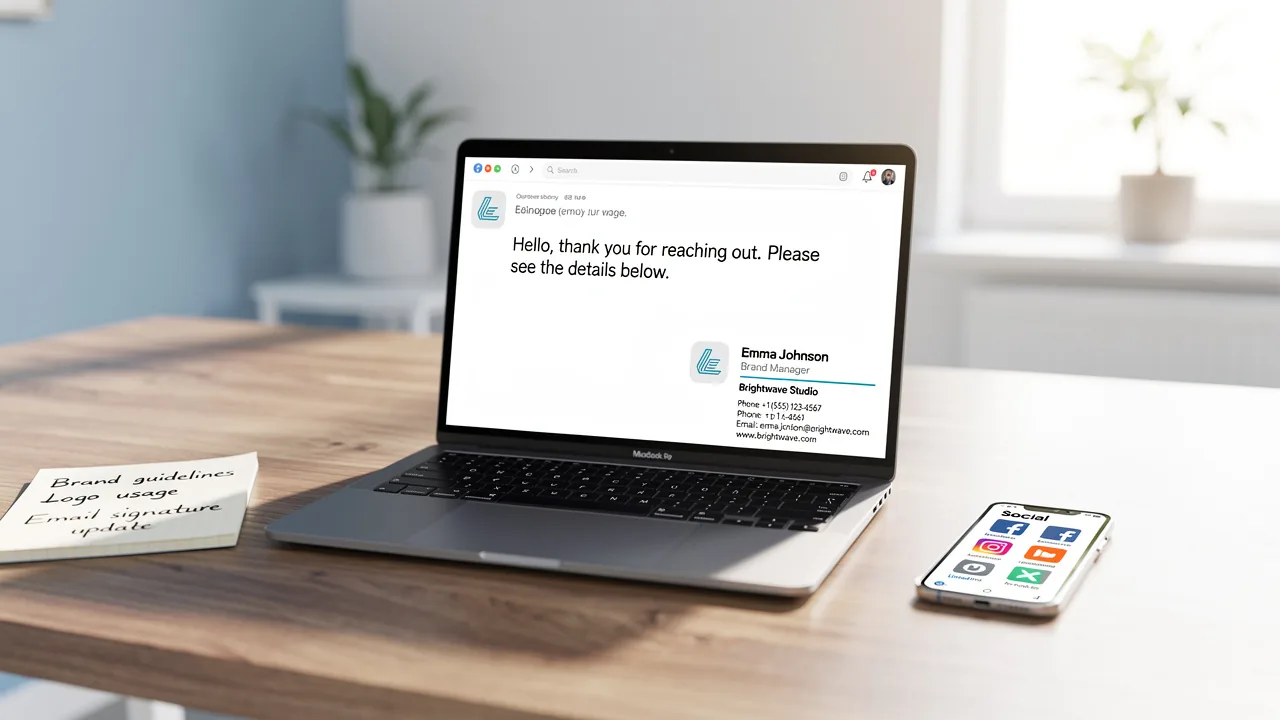
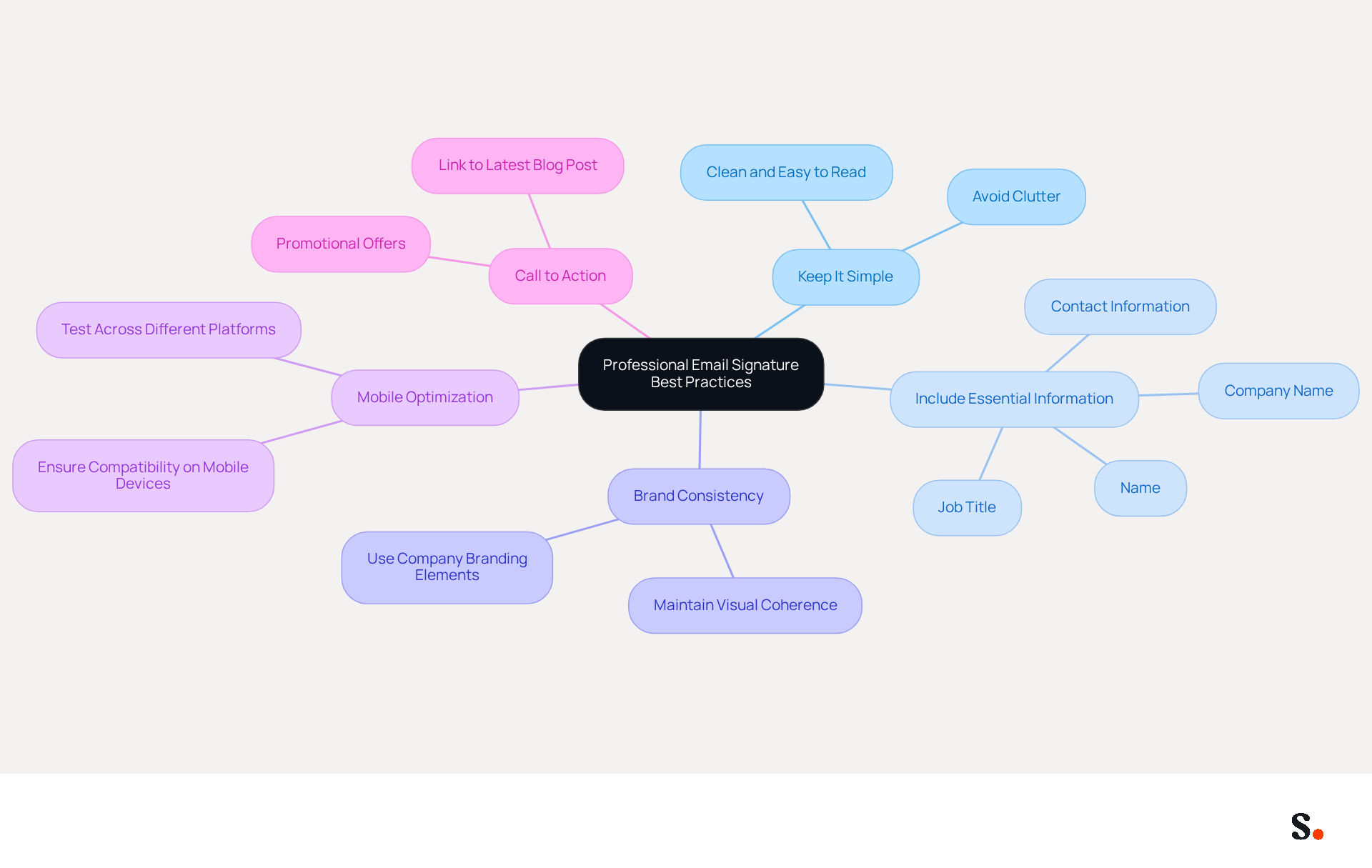
A professional email signature is not just a formality; it is a vital element of effective communication that can impact your professional image. Here are best practices to consider:
- Keep It Simple: Your signature should be clean and easy to read. Avoid cluttering it with excessive information or graphics.
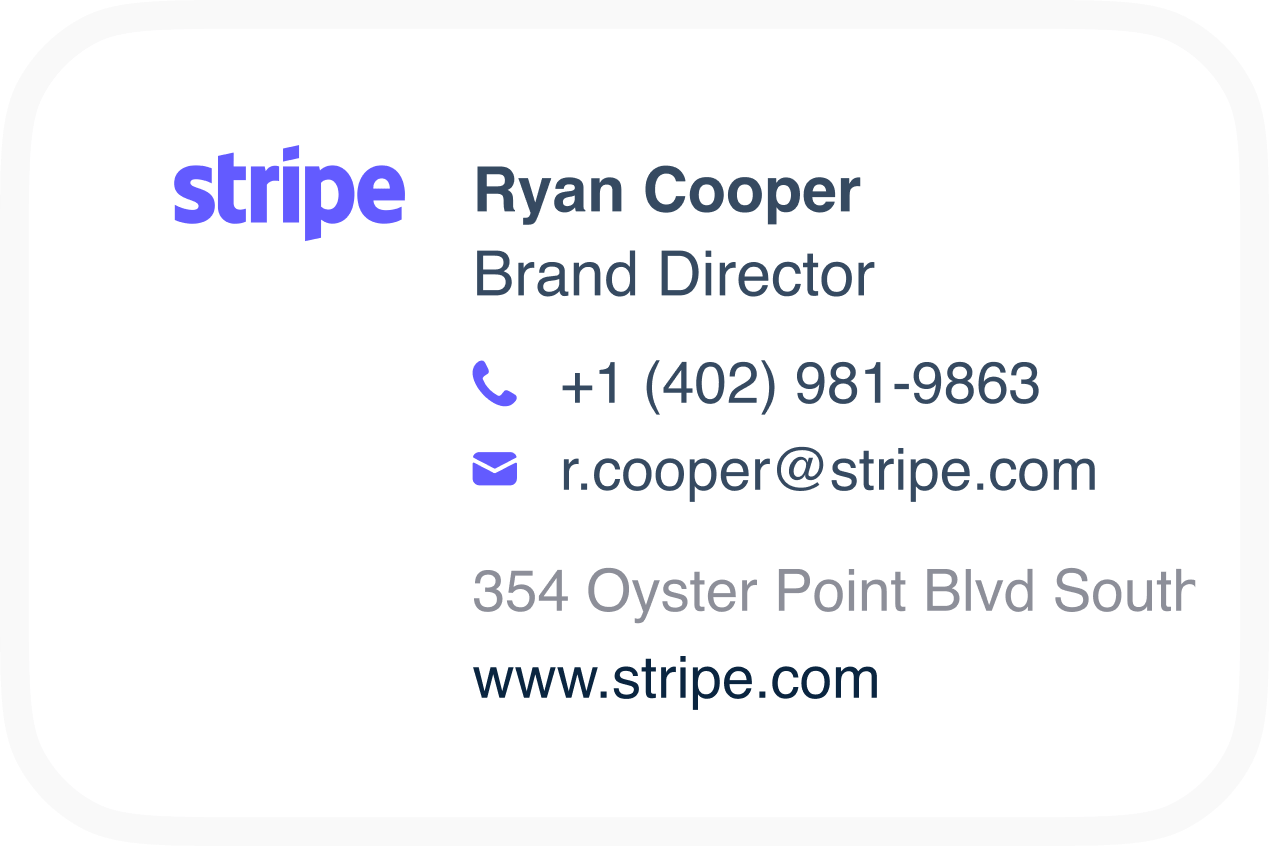
- Include Essential Information: At a minimum, your signature should contain your name, job title, company name, and contact information. This way, recipients can quickly get in touch with you.
- Brand Consistency: Use your company’s branding elements, such as logos and colors, to maintain consistency across communications. This reinforces brand identity. With Scribe, you can manage signatures centrally across multiple clients and brands, ensuring 100% brand consistency.
- Mobile Optimization: Ensure your signature appears well on mobile devices, as many messages are read on smartphones. Test your signature across different platforms.
- Call to Action: Consider including a call to action, such as a link to your latest blog post or a promotional offer, to leverage your signature as a marketing tool.
By implementing these best practices and leveraging Scribe's efficient synchronization and automated management, you can develop a professional email signature that not only enhances communication but also aligns with branding efforts and meets security standards such as SOC 2 Type II, GDPR, and CCPA. Ultimately, a well-crafted email signature can be the difference between a lasting impression and being overlooked in a crowded inbox.
Conclusion
Many professionals often overlook the impact of their email closings, leading to missed opportunities for connection and clarity. A well-thought-out sign-off not only enhances the professionalism of your correspondence but also leaves a lasting impression on the recipient. By mastering these techniques, professionals can transform their email interactions into opportunities for stronger relationships and clearer communication.
Throughout the article, we discussed key components of effective email closings, including:
- The significance of expressing gratitude
- Providing clear calls to action
- Personalizing sign-offs to match the recipient's context
The exploration of various sign-off options - ranging from formal to friendly - demonstrates how the right choice can set the tone for future interactions. Additionally, we highlighted the importance of a professional email signature, emphasizing its role in reinforcing brand consistency and professionalism.
When you incorporate these strategies into your daily communication, you’ll likely see better engagement and response rates. As organizations strive for effective communication, leveraging tools like Scribe can streamline the management of email signatures, ensuring brand consistency while adhering to security standards such as SOC 2 Type II, GDPR, and CCPA. Ultimately, prioritizing professional email closings can redefine communication strategies and foster lasting professional relationships.
Frequently Asked Questions
Why are professional email closings important?
Professional email closings are important because they shape the recipient's perception, enhance credibility, and foster positive relationships.
How do email closings affect first impressions?
A thoughtful email conclusion serves as a professional way to end an email, which can significantly influence how the recipient perceives you.
What role do email closings play in clarity and intent?
A distinct conclusion signals the end of your message and reinforces main points or calls to action, ensuring the recipient knows what to expect next.
How can the tone of an email closing influence future interactions?
The final phrase you choose can set the tone for future interactions, affecting whether they are perceived as formal or friendly, and influencing your approachability.
What is the significance of using formal sign-offs in business communications?
Consistently using formal sign-offs demonstrates attention to detail and respect for the recipient, which is crucial in business communications.
How can expressing gratitude in email sign-offs impact workplace relationships?
Expressing gratitude in sign-offs can strengthen workplace bonds and improve social relationships, as noted by Itamar Haim.
What are the consequences of neglecting professional email closings?
Neglecting professional email closings can lead to missed opportunities and a diminished professional rapport, as clear sign-offs help ensure recipients understand what to do next.
List of Sources
- Understand the Importance of Professional Email Closings
- 50 Best Email Sign-Offs to End an Email Properly in [year] (https://elementor.com/blog/best-email-sign-offs)
- How to End an Email Professionally (With Examples) (https://iconnect.isenberg.umass.edu/blog/2024/07/10/how-to-end-an-email-professionally-with-examples)
- How to end an email: Best sign-offs for every business situation | Proton (https://proton.me/business/blog/how-to-end-an-email)
- Craft Effective Email Closings: Key Components to Include
- How to Sign Off on an Email Correctly | Rocketseed (https://rocketseed.com/blog/correct-way-to-sign-off-emails)
- How to End Any Professional Email (Plus a List of Sign-Offs for When You’re Tired of Saying “Best”) (https://careerservices.upenn.edu/blog/2021/01/08/how-to-end-any-professional-email-plus-a-list-of-sign-offs-for-when-youre-tired-of-saying-best)
- 20 email closings that reinforce your brand + cheat sheet (https://siteground.com/academy/email-closings)
- Best Email Closing Lines for Closing Deals (https://callboxinc.com/email-marketing/best-email-closing-lines-for-closing-deals)
- How to End an Email Professionally (With Examples) (https://iconnect.isenberg.umass.edu/blog/2024/07/10/how-to-end-an-email-professionally-with-examples)
- Explore Sign-Off Options: Formal, Friendly, and Contextual Choices
- email sign-offs (https://wisestamp.com/signature-examples/email-sign-offs)
- Forget “Best” or “Sincerely,” This Email Closing Gets the Most Replies – The Boomerang Blog (https://blog.boomerangapp.com/2017/01/how-to-end-an-email-email-sign-offs)
- The Best (and Worst) Ways To Sign an Email | Robert H. Smith School of Business (https://rhsmith.umd.edu/research/best-and-worst-ways-sign-email)
- How to Sign Off on an Email Correctly | Rocketseed (https://rocketseed.com/blog/correct-way-to-sign-off-emails)
- 89 Ways To Sign Off On An Email (https://forbes.com/sites/susanadams/2014/10/08/89-ways-to-sign-off-on-an-email)
- Enhance Your Email with a Professional Signature: Best Practices
- Email signature statistics: Why every business should optimize their email signatures — Stripo.email (https://stripo.email/blog/email-signature-statistics-why-every-business-should-optimize-their-email-signatures)
- The impact of email signatures on your branding (https://signitic.com/en/resources/the-impact-of-email-signatures-on-your-branding)
- Email Signature Statistics: A Closer Look at Email Signatures in 2026 (https://mysignature.io/blog/email-signature-statistics)
- Why Are Email Signatures Key to Brand Awareness? | QuickMail (https://quickmail.com/role-of-email-signatures-in-brand-awareness)
- Exclaimer Research: 67% of Marketers Expect Email Signatures to Support With Lead Gen In 2023 (https://businesswire.com/news/home/20230612141095/en/Exclaimer-Research-67-of-Marketers-Expect-Email-Signatures-to-Support-With-Lead-Gen-In-2023)
Get started with Scribe
Manage signatures across your whole team
Free 14-day trial — no credit card.