Warm Regards vs Best Regards: Choosing the Right Sign-Off
The choice of email sign-off can significantly impact professional relationships and communication effectiveness. Recognizing the differences between "Warm
Sophie Grant
Email Signature Specialist, Scribe
Introduction
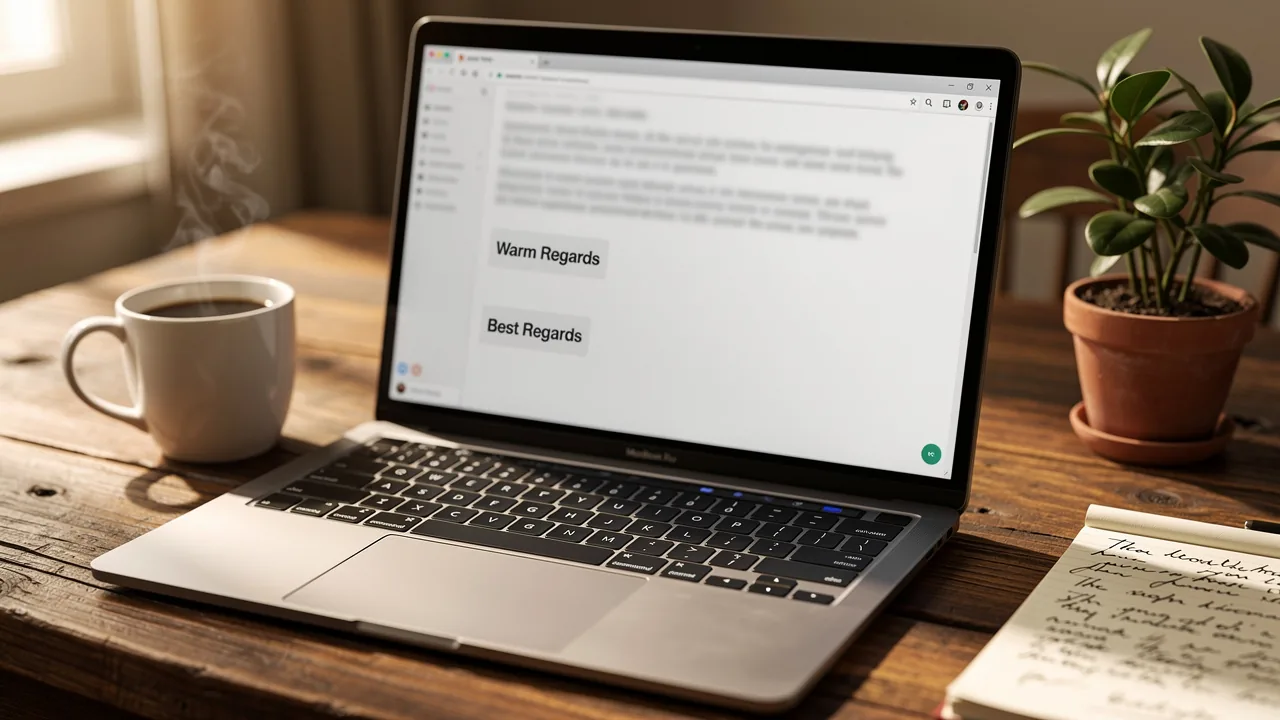
The choice of email sign-off can significantly impact professional relationships and communication effectiveness. Recognizing the differences between "Warm Regards" and "Best Regards" can provide insights into how these phrases affect tone and perception in different situations. Many professionals wonder how choosing the right sign-off can boost engagement and strengthen connections.
Exploring this comparison reveals not only the distinct characteristics of each closing but also the strategic advantages they offer in various professional scenarios. By mastering the art of email sign-offs, professionals can transform how they connect and communicate.
Define 'Warm Regards' and 'Best Regards'
The choice between warm regards vs best regards as an email closing can significantly impact professional relationships and communication effectiveness.
-
'Warm Wishes' is a semi-formal closing that conveys friendliness, appreciation, and a degree of familiarity.
- It is particularly effective in emails to colleagues or clients with whom a rapport has been established, signaling a warmer, more personal connection.
- This closing is ideal for ongoing discussions, especially after positive interactions, as it fosters a personal connection.
-
In contrast, 'Best Wishes' is a neutral and widely accepted closing that maintains professionalism while still being friendly.
- It is suitable for both formal and informal contexts, making it a versatile choice for various types of correspondence.
- This closing conveys respect and professionalism without presuming familiarity, making it suitable for initial emails or formal correspondence.
Studies indicate that emails with friendly closings, like 'Kind Regards,' can garner up to 22% more responses compared to those that are overly formal.
Additionally, thoughtful sign-offs can increase engagement and response rates by up to 20%.
Understanding the differences between 'warm regards vs best regards' can greatly influence the effectiveness of professional interactions, strengthening relationships and promoting collaboration.

Identify Appropriate Contexts for Each Sign-Off
Choosing between warm regards vs best regards as an email sign-off is crucial for effective communication in professional settings.
- 'Warm Wishes' is particularly effective in emails where a personal touch is essential, such as:
- Follow-up messages after meetings
- Correspondence with colleagues
- Interactions with clients who have established relationships
This sign-off is particularly effective in informal settings, where a friendly tone fosters stronger connections. Research indicates that thoughtful sign-offs can boost response rates significantly, enhancing engagement.
- On the other hand, 'Best Wishes' is more appropriate for:
- Initial communications
- Formal requests
- Addressing higher-level executives
It strikes a balance between professionalism and friendliness, making it suitable for a wide range of business interactions. Understanding these contexts ensures that the chosen sign-off, such as warm regards vs best regards, aligns with the intended message and relationship dynamics.
For instance, the choice between 'warm regards vs best regards' can humanize the sender and foster trust, while 'best regards' maintains a respectful distance in more formal exchanges. Additionally, cultural sensitivity plays a vital role in choosing the right sign-off, as preferences may vary across different professional environments.
Ultimately, the right sign-off can transform a simple email into a powerful tool for building lasting professional relationships.

Analyze Tone and Perception in Professional Communication
The effectiveness of communication in professional emails can be significantly impacted by choosing the right sign-off, like warm regards vs best regards. The tone of 'Warm Wishes' is typically perceived as approachable and friendly, encouraging open and friendly communication. This sign-off invites recipients to respond similarly, fostering a friendly environment that encourages collaboration.
In contrast, 'Best Wishes' is viewed as more formal and respectful, making it suitable for situations where professionalism is essential. It conveys esteem for the recipient while maintaining a degree of distance, which is particularly important in formal business contexts.
Understanding these tonal differences, such as warm regards vs best regards, is crucial for professionals in the workplace. Research shows that using thoughtful sign-offs can boost engagement significantly, with warm tones receiving up to 22% more responses (Sophie Grant, Email Signature Specialist, Scribe).
Furthermore, using 'Kind Wishes' in follow-up emails can greatly enhance response rates, strengthening positive connections and improving professional relationships. By mastering the nuances of these sign-offs, professionals can effectively tailor their communication to foster better interactions and outcomes.
It's important to note that using 'Kind Wishes' too often in formal emails can cause confusion, making it crucial to assess the context and recipient's expectations.

Address Common Misconceptions and Mistakes
Many professionals mistakenly believe that 'Kind Wishes' is too informal for business communications, which can lead to missed opportunities for connection. When used appropriately, 'Kind Wishes' can enhance relationships and convey warmth in professional settings. Research indicates that messages with warm, professional tones receive up to 22% more responses, highlighting the effectiveness of 'Warm Wishes' in fostering engagement. Conversely, the choice between 'Warm Regards vs Best Regards' in overly casual contexts may create a barrier in communication, making interactions feel less genuine.
Aligning your sign-off with the email's tone and your relationship with the recipient is essential for effective communication. Case studies show that using 'Kind Wishes' after positive interactions can lead to higher response rates, reinforcing its value in professional communication. Additionally, being aware of cultural sensitivities when considering 'warm regards vs best regards' can prevent misunderstandings and improve communication effectiveness.

Conclusion
The choice of email sign-off can significantly influence the tone and effectiveness of professional communication. Each closing carries its own implications, shaping how messages are received and relationships are built. Understanding these nuances allows professionals to tailor their correspondence effectively, ensuring that their sign-offs align with the context and the nature of their relationship with the recipient.
Throughout the discussion, it has been highlighted that:
- 'Warm Regards' is best suited for informal interactions where a personal touch is beneficial.
- 'Best Regards' maintains a level of professionalism appropriate for formal communications.
Research shows that friendly sign-offs can lead to higher response rates and stronger connections. Misunderstandings regarding the use of 'Warm Regards' can create barriers in professional interactions, making it essential to recognize when each sign-off is most effective.
Mastering email sign-offs can really change how routine messages are perceived and make them more meaningful. By thoughtfully selecting between 'Warm Regards' and 'Best Regards,' professionals can enhance their communication strategies, build rapport, and create a more engaging work environment. This mastery not only enhances individual exchanges but also contributes to a culture of effective communication within organizations.
Frequently Asked Questions
What does "Warm Regards" mean in email communication?
"Warm Regards" is a semi-formal closing that conveys friendliness, appreciation, and a degree of familiarity. It is effective in emails to colleagues or clients with whom a rapport has been established, signaling a warmer, more personal connection.
When is it appropriate to use "Warm Regards"?
"Warm Regards" is ideal for ongoing discussions, especially after positive interactions, as it fosters a personal connection.
What does "Best Regards" signify in emails?
"Best Regards" is a neutral and widely accepted closing that maintains professionalism while still being friendly. It is suitable for both formal and informal contexts.
In what situations should I use "Best Regards"?
"Best Regards" is a versatile choice for various types of correspondence, making it suitable for initial emails or formal communication, as it conveys respect and professionalism without presuming familiarity.
How do email closings affect response rates?
Studies indicate that emails with friendly closings, like "Kind Regards," can garner up to 22% more responses compared to those that are overly formal. Thoughtful sign-offs can increase engagement and response rates by up to 20%.
Why is it important to understand the differences between "Warm Regards" and "Best Regards"?
Understanding the differences can greatly influence the effectiveness of professional interactions, strengthening relationships and promoting collaboration.
List of Sources
- Define 'Warm Regards' and 'Best Regards'
- Best Regards or Kind Regards: Choosing the Right Email Closing (https://scribe-mail.com/en-US/blog/best-regards-or-kind-regards-choosing-the-right-email-closing)
- Warm Regards vs Best Regards: Choosing the Right Email Sign-Off (https://oppora.ai/blog/warm-regards-vs-best-regards)
- What Does 'Warm Regards' Mean? Master Email Sign-Offs Today (https://scribe-mail.com/en-US/blog/what-does-warm-regards-mean-master-email-sign-offs-today)
- Warm Regards vs Best Regards vs Kind Regards: Choosing the Right Email Sign-Off (https://salesforge.ai/blog/warm-regards-vs-best-regards-vs-kind-regards)
- 105 Alternatives to “Best Regards” for Your Email Sign-Off (https://wisestamp.com/blog/best-regard-alternatives)
- Identify Appropriate Contexts for Each Sign-Off
- Email Etiquette: Best Practices for Professional Communication (https://memberportal.gfwc.org/news/communications-public-relations/111/111-Email-Etiquette-Best-Practices-for-Professional-Communication)
- Warm Regards Meaning: Understanding the Significance of This Common Email Sign-Off (https://serchen.com/blog/warm-regards-meaning)
- Warm Regards vs Best Regards vs Kind Regards: Choosing the Right Email Sign-Off (https://salesforge.ai/blog/warm-regards-vs-best-regards-vs-kind-regards)
- Best Regards or Kind Regards: Choosing the Right Email Closing (https://scribe-mail.com/en-US/blog/best-regards-or-kind-regards-choosing-the-right-email-closing)
- What Does 'Warm Regards' Mean? Master Email Sign-Offs Today (https://scribe-mail.com/en-US/blog/what-does-warm-regards-mean-master-email-sign-offs-today)
- Analyze Tone and Perception in Professional Communication
- Is 'Best' a Good Way to End an Email? Compare Sign-Offs Here (https://scribe-mail.com/en-US/blog/is-best-a-good-way-to-end-an-email-compare-sign-offs-here)
- What Does 'Warm Regards' Mean? Master Email Sign-Offs Today (https://scribe-mail.com/en-US/blog/what-does-warm-regards-mean-master-email-sign-offs-today)
- Warm Regards vs Best Regards vs Kind Regards: Choosing the Right Email Sign-Off (https://salesforge.ai/blog/warm-regards-vs-best-regards-vs-kind-regards)
- Cold Email Statistics (2026): 60+ Data Points from 2M+ Real Emails (https://sales.co/research/cold-email-statistics)
- How Your Email Tone Impacts Email Marketing Results | Email in Detail: view, archive and process emails with ease! (https://emailindetail.com/blog/how-your-email-tone-impacts-email-marketing-results?srsltid=AfmBOopwlOexlSrMwgjNI0ocJeGChPuLP4wXJ9ppcEN-z8WTkOnzXeC_)
- Address Common Misconceptions and Mistakes
- Warm Regards vs Best Regards vs Kind Regards: Choosing the Right Email Sign-Off (https://salesforge.ai/blog/warm-regards-vs-best-regards-vs-kind-regards)
- Email Etiquette in the Workplace (https://adminvc.ucla.edu/news/email-etiquette-workplace)
- What Does 'Warm Regards' Mean? Master Email Sign-Offs Today (https://scribe-mail.com/en-US/blog/what-does-warm-regards-mean-master-email-sign-offs-today)
- Top 5 Email Mistakes to Avoid at Work (https://popl.co/blogs/all/top-5-email-mistakes-to-avoid-at-work-1?srsltid=AfmBOoqQhCfn9OXdsNDxRqqbixIVXDxRA3J2zZHKHnhMxo8m9Fe05Vb4)
- The Best Email Sign-Offs for Professional Messages (https://bulksignature.com/blog/the-best-email-sign-offs-for-professional-messages)
Get started with Scribe
Build a professional email signature
Free 14-day trial — no credit card.