What Email Signatures Really Mean for Your Marketing Strategy
Despite their evolution into vital marketing tools, many organizations still overlook the full potential of email signatures. These digital identifiers convey
Sophie Grant
Email Signature Specialist, Scribe

On this page
- Introduction
- Define Email Signatures: Essential Components and Functions
- Trace the Evolution of Email Signatures: From Simple Sign-offs to Marketing Tools
- Identify Best Practices: Crafting Effective Email Signatures for Marketing Success
- Explore the Marketing Significance: How Email Signatures Enhance Brand Image and Drive Engagement
- Conclusion
- Frequently Asked Questions
- List of Sources
Introduction
Despite their evolution into vital marketing tools, many organizations still overlook the full potential of email signatures. These digital identifiers convey essential contact information and serve as powerful branding tools that can significantly enhance customer engagement and brand recognition. As businesses navigate the complexities of digital communication, the question arises: how can email signatures be transformed into effective marketing assets that drive measurable results? Understanding and harnessing this potential can redefine how brands connect with their audiences in a digital-first world.
Get started with Scribe
See why teams switch to Scribe
Free 14-day trial — no credit card.
Define Email Signatures: Essential Components and Functions
In an increasingly digital world, understanding what email signatures really mean extends beyond mere contact information. A message footer is a block of text automatically added at the end of a message, typically containing the sender's name, job title, company name, contact details, and often a logo or social media links. While the main purpose of an electronic message footer is to provide essential contact information, it also acts as a powerful branding tool that reinforces what email signatures really mean for the sender's identity and Scribe's image with every message sent. A well-crafted emblem enhances professionalism and leaves a lasting impression, making it essential to any marketing strategy.
Recent studies reveal that:
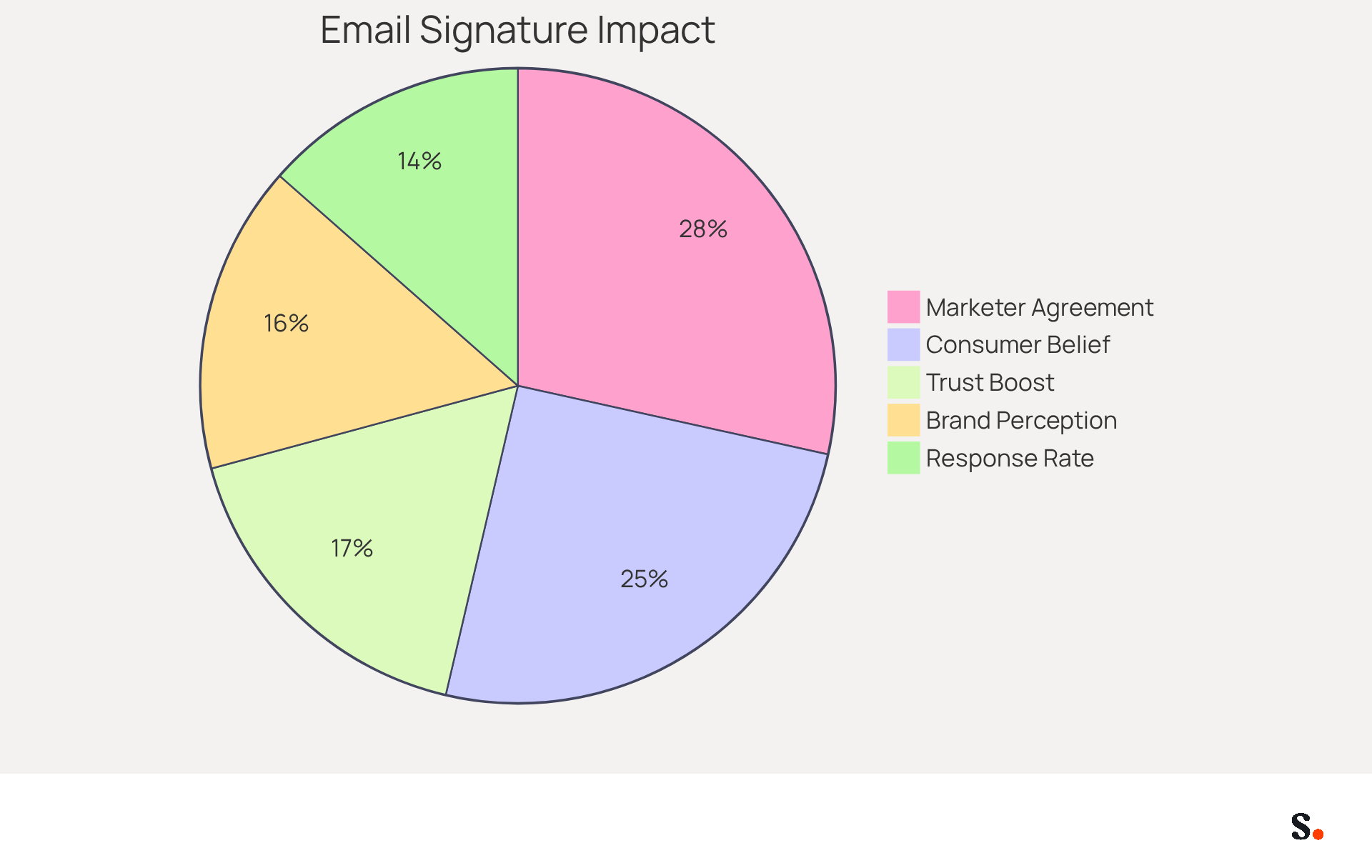
- 69% of consumers believe a consistent, professional footer is crucial for companies.
- 78% of marketers concur that branded footers across all company communications are essential.
- Messages with professionally branded identifiers can boost consumer trust by 47%.
- Professionally branded identifiers positively affect brand perception by 43%.
- Professionally branded identifiers improve the chances of response by 37%.
Consider what email signatures really mean regarding the impact of electronic identifiers in branding, as shown by research. A multinational corporation that aligned its branding experienced a 25% increase in traffic to specific landing pages, demonstrating how standardized branding can drive engagement. Furthermore, 57% of consumers view branded electronic identifiers as essential for brand identity, emphasizing the necessity for businesses to uphold high standards in their communications.
As digital identifiers become more crucial, businesses that fail to adapt may fall behind their competitors. As we move through 2026, the significance of digital identifiers in branding continues to increase, particularly as 70% of marketers anticipate that half of their digital communications will be AI-driven. This change allows for more advanced tracking and optimization of digital identifiers, ensuring they continue to be a high-impact promotional tool. By strategically aligning digital identifiers with promotional calendars and integrating them with CRM systems, businesses can unlock tens of thousands of branded impressions monthly, maximizing their promotional effectiveness. With Scribe, managers can handle email branding independently after the initial IT setup, ensuring brand consistency and efficiency.
Trace the Evolution of Email Signatures: From Simple Sign-offs to Marketing Tools
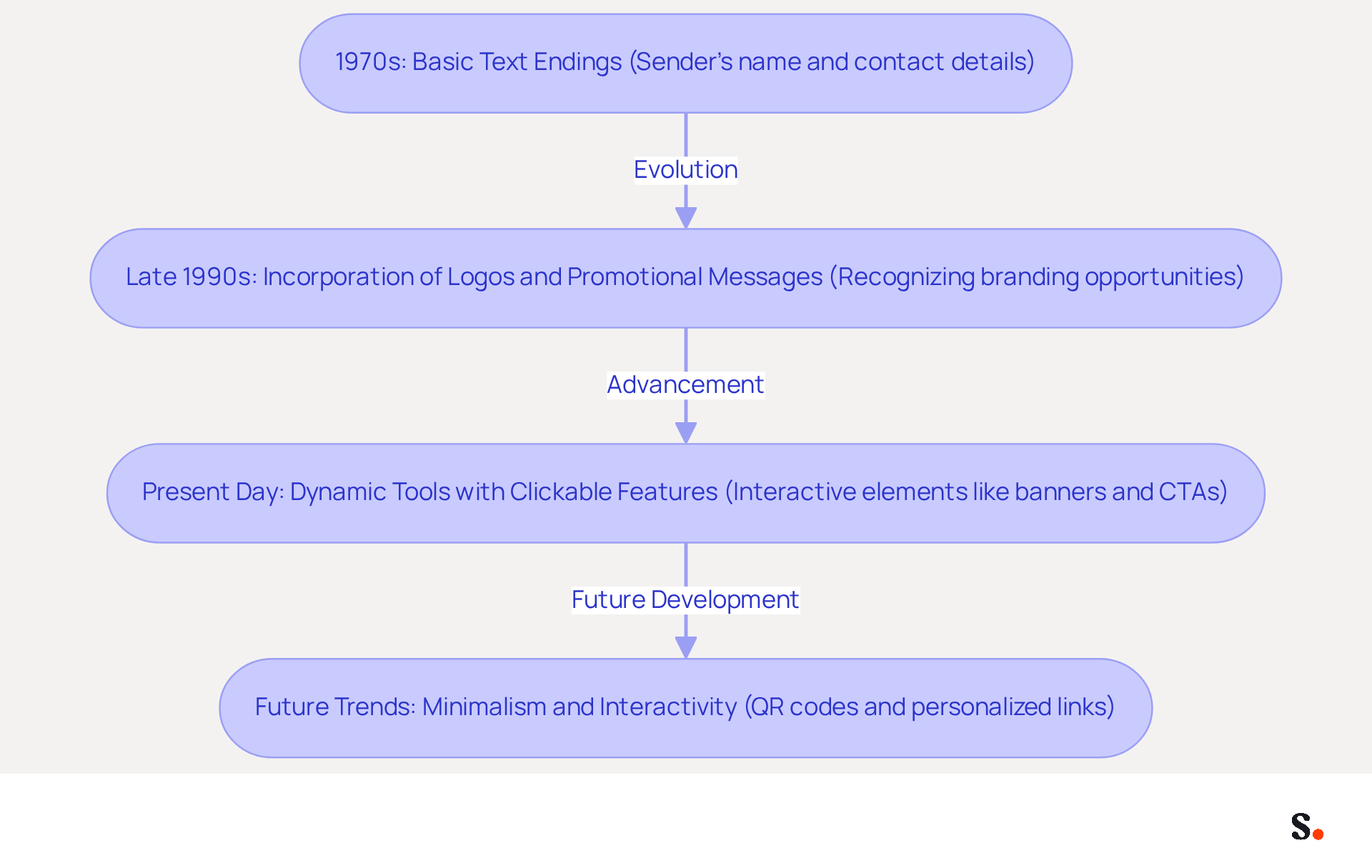
Email sign-offs have evolved significantly since the 1970s, transforming from basic text endings into powerful marketing tools that enhance brand identity. Initially, identifiers included only the sender's name and basic contact details. However, as electronic mail became a cornerstone of business communication, the significance of branding became clear. By the late 1990s, organizations began to incorporate logos and promotional messages into their communications, recognizing each message as an opportunity to reinforce brand identity.
Today, electronic identifiers serve as dynamic tools, featuring clickable banners, calls-to-action, and links to social media profiles. This evolution reflects a broader trend in digital promotion, where every interaction with a customer is viewed as a chance to enhance engagement and drive conversions. Many consumers express frustration when brands neglect to use electronic footers, which can lead to missed opportunities for engagement. Moreover, 37% of consumers are more inclined to engage with messages that include branded identifiers, highlighting their effectiveness as a marketing channel.
With Scribe, every modification made in your Aircall setup will automatically be reflected in your digital identifiers, ensuring seamless synchronization and improved consistency. Additionally, the integration with Calendly enables automatic updates to digital identifiers, further optimizing the process and preserving company integrity. Real-world examples show how well-managed digital identifiers can boost brand consistency and foster customer trust. For instance, businesses that utilize digital identifiers effectively can improve customer relationships and create lasting impressions, treating each message as a virtual handshake. As digital identifiers continue to develop, they are anticipated to adopt minimalism and interactivity, incorporating features like QR codes and personalized links to further engage recipients. This ongoing evolution positions digital identifiers as essential tools for modern marketing strategies, capable of driving brand awareness and customer engagement.
Identify Best Practices: Crafting Effective Email Signatures for Marketing Success
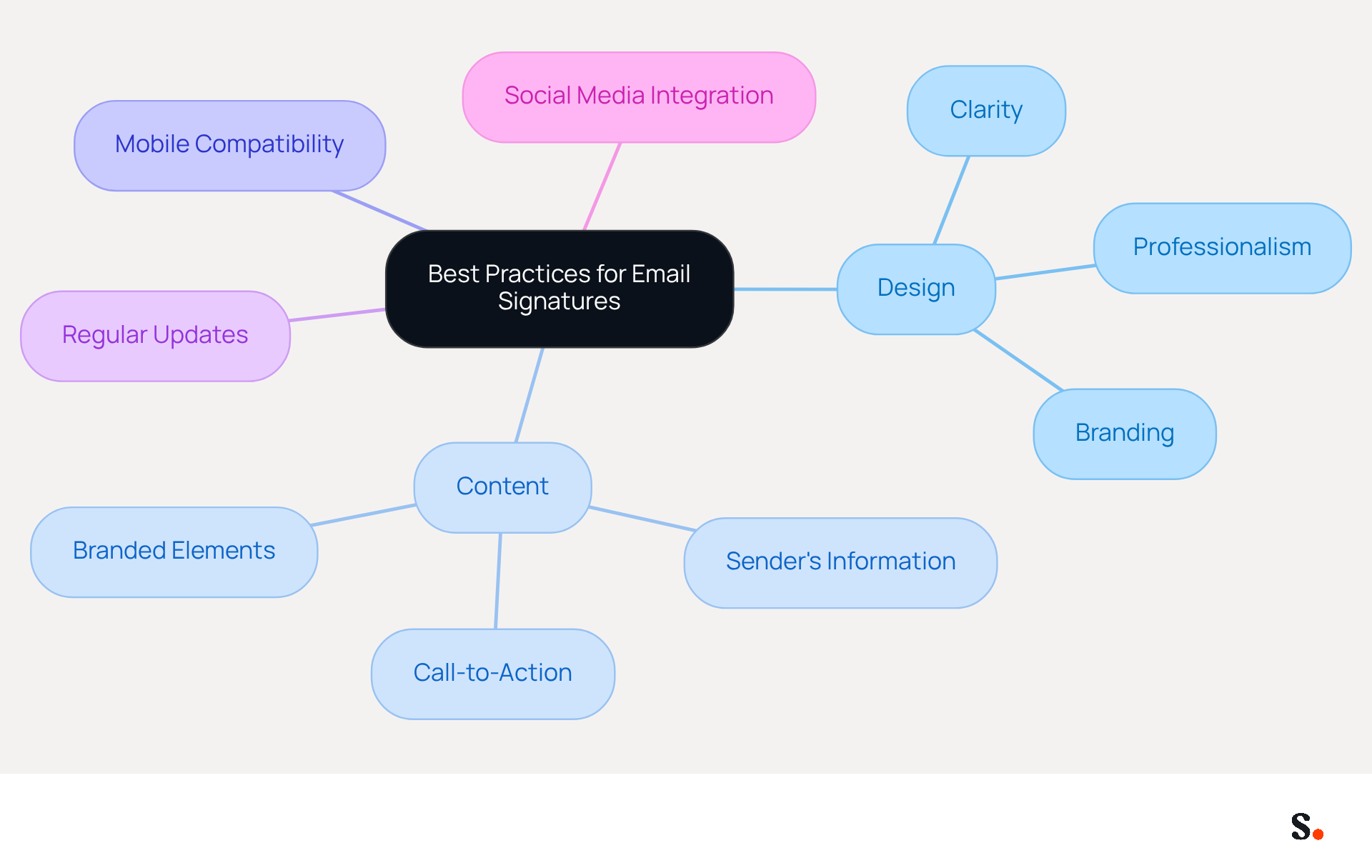
To create impactful digital identifiers, businesses must prioritize clarity and professionalism in their design. A clean and professional design is essential, aligning with the company's branding to foster recognition. Key components such as the sender's name, title, and contact information must be included, while avoiding clutter that can diminish the effectiveness of the closing. Incorporating a call-to-action (CTA) is crucial; for instance, linking to a current promotion or upcoming event can significantly drive traffic and conversions. Messages featuring branded elements see a 22% higher response rate, underscoring the importance of a well-crafted closing for boosting engagement.
Furthermore, ensuring that the sign-off is compatible with mobile devices is crucial, as a large segment of recipients access messages through smartphones. Without regular updates, businesses risk losing touch with their audience. Scribe streamlines this process with one-click synchronization to Google Workspace, automatically updating identifiers based on changes in the provider directory. This efficiency translates into enhanced customer engagement and brand consistency. Scribe's SOC 2 Type II compliance guarantees that your data remains secure during automated management. Data shows that 44.4% of professionals refresh their contact details 2-4 times a year, emphasizing the necessity for proactive management. Additionally, including social media icons can increase engagement on platforms like LinkedIn, Facebook, Twitter, and Instagram, and Scribe facilitates their seamless integration. By following these optimal methods and utilizing Scribe's automated management of digital signatures, businesses can convert their email identifiers into effective marketing tools that strengthen identity and enhance customer engagement, which reflects what email signatures really mean.
Explore the Marketing Significance: How Email Signatures Enhance Brand Image and Drive Engagement
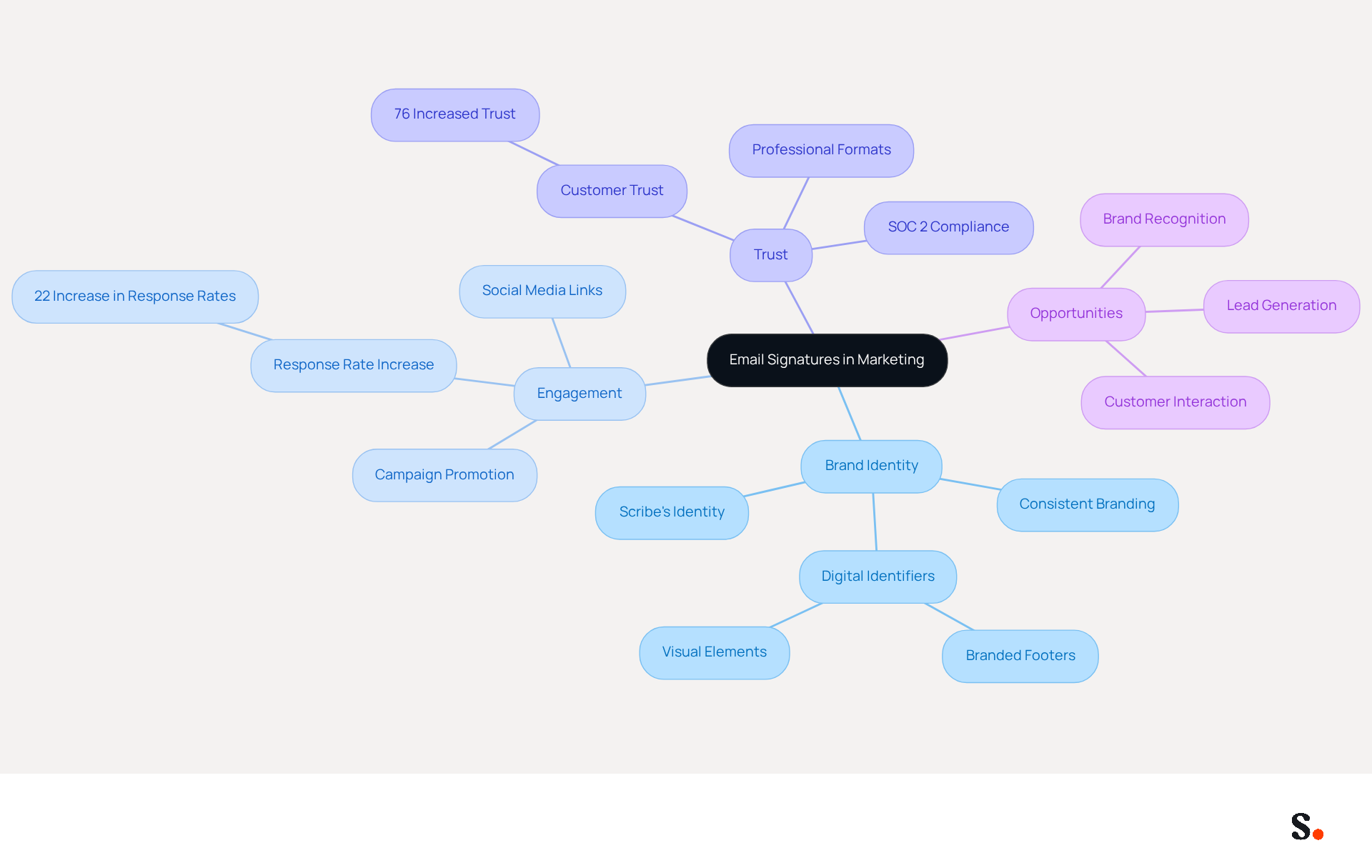
Despite their potential, many businesses overlook the strategic importance of email footers in their marketing efforts. Email footers serve as a consistent branding element in every communication, reinforcing Scribe's identity and values. Research indicates that emails with branded footers can enhance response rates by up to 22%, underscoring their effectiveness as a marketing tool.
Furthermore, with Scribe's automated synchronization with Aircall, any changes made in your Aircall configuration will be automatically reflected in your Scribe branding, ensuring brand consistency across all communications. Email footers can also be programmed for specific events, promote campaigns, share social media links, or direct recipients to the Scribe website, providing opportunities for deeper customer interaction.
Neglecting digital identifiers can lead to missed opportunities for brand recognition and customer trust, as businesses can utilize this frequently overlooked resource to foster trust, enhance recognition, and ultimately boost sales. In fact, 80% of businesses consider branded electronic identifiers crucial for branding, and 76% of recipients indicate heightened trust in senders who utilize them.
The influence of digital identifiers extends beyond aesthetics; consistent visual components assist recipients in quickly identifying and recalling companies, thereby boosting overall engagement. Additionally, Scribe's SOC 2 Type II compliance ensures secure data handling, further enhancing trust.
Case studies reveal that companies utilizing professional communication formats not only observe enhanced response rates but also witness an increase in customer loyalty and business opportunities. Recognizing what email signatures really mean can transform them from a mere afterthought into a powerful marketing asset.
Conclusion
Email signatures are often underestimated, yet they hold significant potential for enhancing brand identity and customer engagement. They enhance brand identity, build customer trust, and drive engagement with each email. By understanding the multifaceted role of email signatures, businesses can leverage them to create a consistent and professional image that resonates with their audience.
As we've explored, well-crafted email signatures play a crucial role in effective marketing. From their historical evolution from simple sign-offs to dynamic marketing tools, to best practices for design and functionality, it is clear that email signatures can significantly impact marketing outcomes. Research shows that branded footers can boost response rates by up to 30% and significantly enhance consumer trust, while tools like Scribe enable seamless management and synchronization, ensuring that every communication reflects the brand's identity.
In a landscape where digital communication is paramount, the strategic use of email signatures cannot be overlooked. Organizations are encouraged to embrace this often-underestimated asset, recognizing its potential to enhance brand recognition and customer engagement. Failing to utilize email signatures effectively can lead to missed opportunities in brand engagement. Recognizing and harnessing the power of email signatures can redefine how businesses connect with their audience and drive growth.
Frequently Asked Questions
What is an email signature?
An email signature is a block of text automatically added at the end of an email message, typically containing the sender's name, job title, company name, contact details, and often a logo or social media links.
What are the main purposes of an email signature?
The main purposes of an email signature are to provide essential contact information and to serve as a powerful branding tool that reinforces the sender's identity and Scribe's image with every message sent.
How does a well-crafted email signature impact professionalism?
A well-crafted email signature enhances professionalism and leaves a lasting impression, making it essential to any marketing strategy.
What do recent studies reveal about the importance of email signatures?
Recent studies show that 69% of consumers believe a consistent, professional email signature is crucial for companies, and 78% of marketers agree that branded signatures across all communications are essential.
How do professionally branded email signatures affect consumer trust and brand perception?
Messages with professionally branded email signatures can boost consumer trust by 47% and positively affect brand perception by 43%.
What impact do branded email signatures have on response rates?
Professionally branded email signatures improve the chances of response by 37%.
What is the significance of standardized branding in email signatures?
Standardized branding in email signatures can drive engagement, as demonstrated by a multinational corporation that experienced a 25% increase in traffic to specific landing pages after aligning its branding.
How do consumers view branded electronic identifiers?
57% of consumers view branded electronic identifiers as essential for brand identity, highlighting the necessity for businesses to maintain high standards in their communications.
What is the future trend regarding digital identifiers in branding?
As we move through 2026, the significance of digital identifiers in branding is expected to increase, particularly as 70% of marketers anticipate that half of their digital communications will be AI-driven.
How can businesses maximize the effectiveness of their email branding?
Businesses can maximize the effectiveness of their email branding by strategically aligning digital identifiers with promotional calendars and integrating them with CRM systems, potentially unlocking tens of thousands of branded impressions monthly.
How does Scribe assist in managing email branding?
With Scribe, managers can handle email branding independently after the initial IT setup, ensuring brand consistency and efficiency.
List of Sources
- Define Email Signatures: Essential Components and Functions
- 40+ Email Signature Statistics for 2026 (Data + Insights) (https://wavecnct.com/blogs/email-signature-statistics)
- The Importance Of Email Signatures | Email Marketing Blog | Mail Blaze (https://mailblaze.com/thinking/email-signatures-in-email-marketing)
- Research Recap: Branded Email Signatures Increase Company Recognition, Trust - B2BMX INSIGHTS (https://demandgenreport.com/industry-news/research-recap-branded-email-signatures-increase-company-recognition-trust/47252)
- Why Email Signatures Must Be In Your 2026 Marketing Plan | Rocketseed (https://rocketseed.com/blog/2026-marketing-plan-email-signatures)
- The impact of email signatures on your branding (https://signitic.com/en/resources/the-impact-of-email-signatures-on-your-branding)
- Trace the Evolution of Email Signatures: From Simple Sign-offs to Marketing Tools
- Research Recap: Branded Email Signatures Increase Company Recognition, Trust - B2BMX INSIGHTS (https://demandgenreport.com/industry-news/research-recap-branded-email-signatures-increase-company-recognition-trust/47252)
- The Evolution of Email Signatures | Rocketseed (https://rocketseed.com/blog/email-signature-evolution)
- The Evolution of Email Signatures: From Plain Text to Marketing Tool (https://chillisign.io/blog/evolution-signatures)
- The History of Email Signatures: From Simple Sign-Offs to Smart Branding (https://digicomm360.com/history-of-email-signatures)
- Identify Best Practices: Crafting Effective Email Signatures for Marketing Success
- Email signature statistics: Why every business should optimize their email signatures — Stripo.email (https://stripo.email/blog/email-signature-statistics-why-every-business-should-optimize-their-email-signatures)
- Email Signature Best Practices - NEWOLDSTAMP (https://newoldstamp.com/blog/email-signature-best-practices)
- Cost effective email signature marketing | Rocketseed (https://rocketseed.com/blog/email-signature-marketing-cost-effectiveness)
- 40+ Email Signature Statistics for 2026 (Data + Insights) (https://wavecnct.com/blogs/email-signature-statistics)
- Explore the Marketing Significance: How Email Signatures Enhance Brand Image and Drive Engagement
- The impact of email signatures on your branding (https://signitic.com/en/resources/the-impact-of-email-signatures-on-your-branding)
- Research Recap: Branded Email Signatures Increase Company Recognition, Trust - B2BMX INSIGHTS (https://demandgenreport.com/industry-news/research-recap-branded-email-signatures-increase-company-recognition-trust/47252)
- 15 Ways Email Signatures Can Boost Your Brand | Rocketseed (https://rocketseed.com/blog/15-ways-email-signature-branding-can-boost-your-brand)
- Why Are Email Signatures Key to Brand Awareness? | QuickMail (https://quickmail.com/role-of-email-signatures-in-brand-awareness)
Get started with Scribe
See why teams switch to Scribe
Free 14-day trial — no credit card.