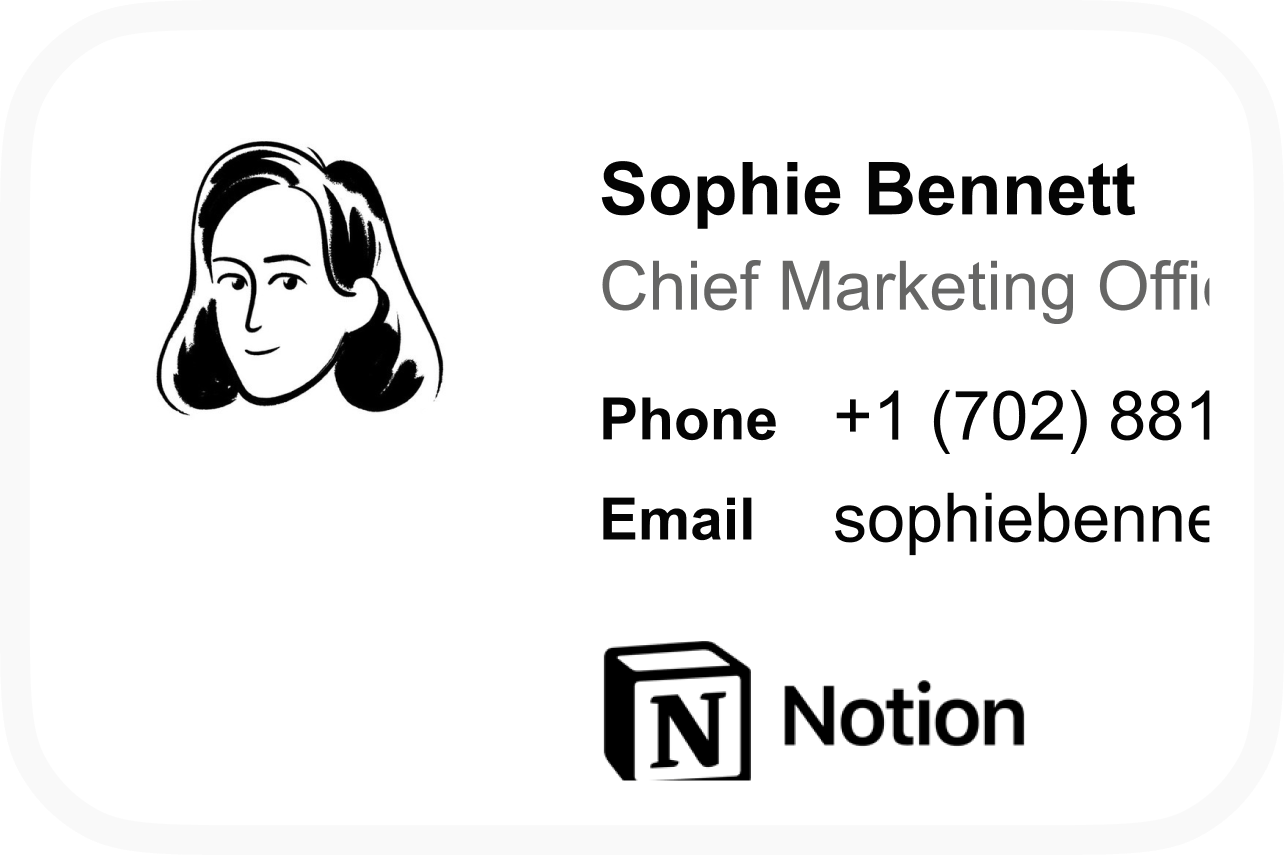
4 Best Practices for a Proper Email Signature That Boosts Branding
In a digital landscape where first impressions matter, an effective email signature can be the difference between a fleeting interaction and a lasting
Sophie Grant
Email Signature Specialist, Scribe

On this page
Introduction
In a digital landscape where first impressions matter, an effective email signature can be the difference between a fleeting interaction and a lasting connection. Crafting an effective email signature is more than just a digital formality; it serves as a powerful branding tool that can significantly enhance a company's professional image. By integrating key elements and following best practices, organizations can craft signatures that effectively communicate vital information while strengthening their brand identity.
Businesses often find it challenging to adapt their email signatures to evolving branding and compliance standards. This can lead to inconsistencies in brand representation and missed opportunities for engagement.
Let’s delve into four best practices that can turn email signatures into strategic assets, driving engagement and consistency across all communications.
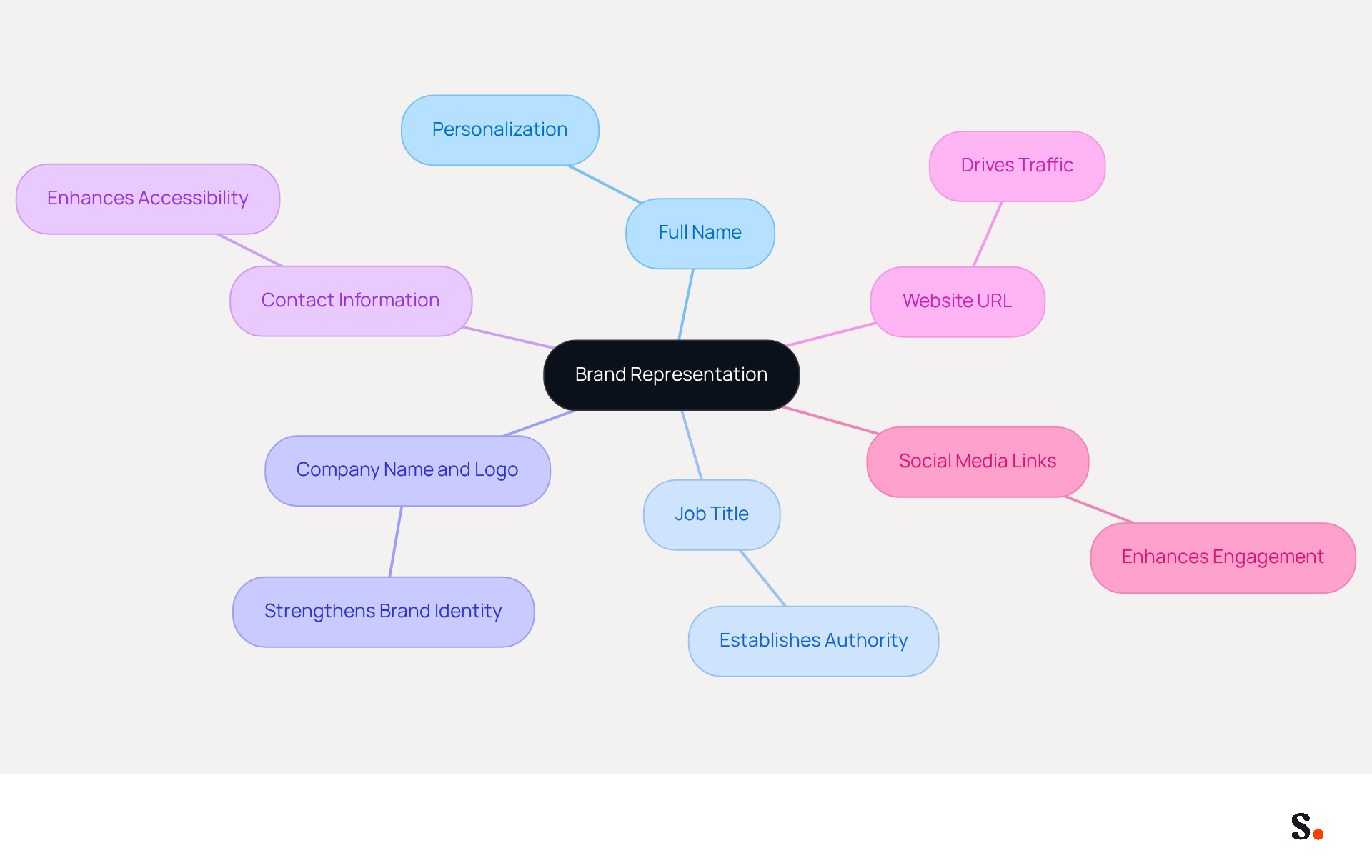
Incorporate Essential Elements for Brand Representation
To effectively establish a digital identity that resonates with your audience, incorporating essential elements is vital. These components are crucial for enhancing professionalism and strengthening brand recognition:
- Full Name: Clearly stating the sender's name personalizes the communication, making it more relatable.
- Job Title: Including the sender's position in a proper email signature helps establish authority and provides context for the recipient.
- Company Name and Logo: Prominently displaying the company name and logo in a proper email signature strengthens brand identity, which is essential, as a recent survey indicates that 80% of professionals consider a proper email signature crucial for reinforcing a company's identity.
- Contact Information: Including a proper email signature with direct contact details, such as a phone number and electronic address, facilitates easy communication and enhances accessibility.
- Website URL: A proper email signature that links to the company website drives traffic and offers recipients additional information about your services or products.
- Social Media Links: Including links to relevant social media profiles in a proper email signature can enhance engagement, as 43% of consumers anticipate promotional assets in digital correspondence.
Furthermore, it is crucial to frequently refresh electronic correspondences to align with branding revisions, product introductions, or policy modifications. Failure to update your identifiers can lead to miscommunication and a weakened brand image. With Scribe, changes made in your Aircall configuration will automatically sync with your email identifiers, eliminating the need for manual updates. This automated management not only saves time but also ensures that your team's identification information is always current and compliant with SOC 2 Type II standards, safeguarding your data. By ensuring these elements are present, including a proper email signature, businesses can cultivate a professional image that resonates with recipients. Studies show that when brands maintain consistent elements, they build greater trust and recognition among consumers, leading to increased engagement and a stronger market presence.
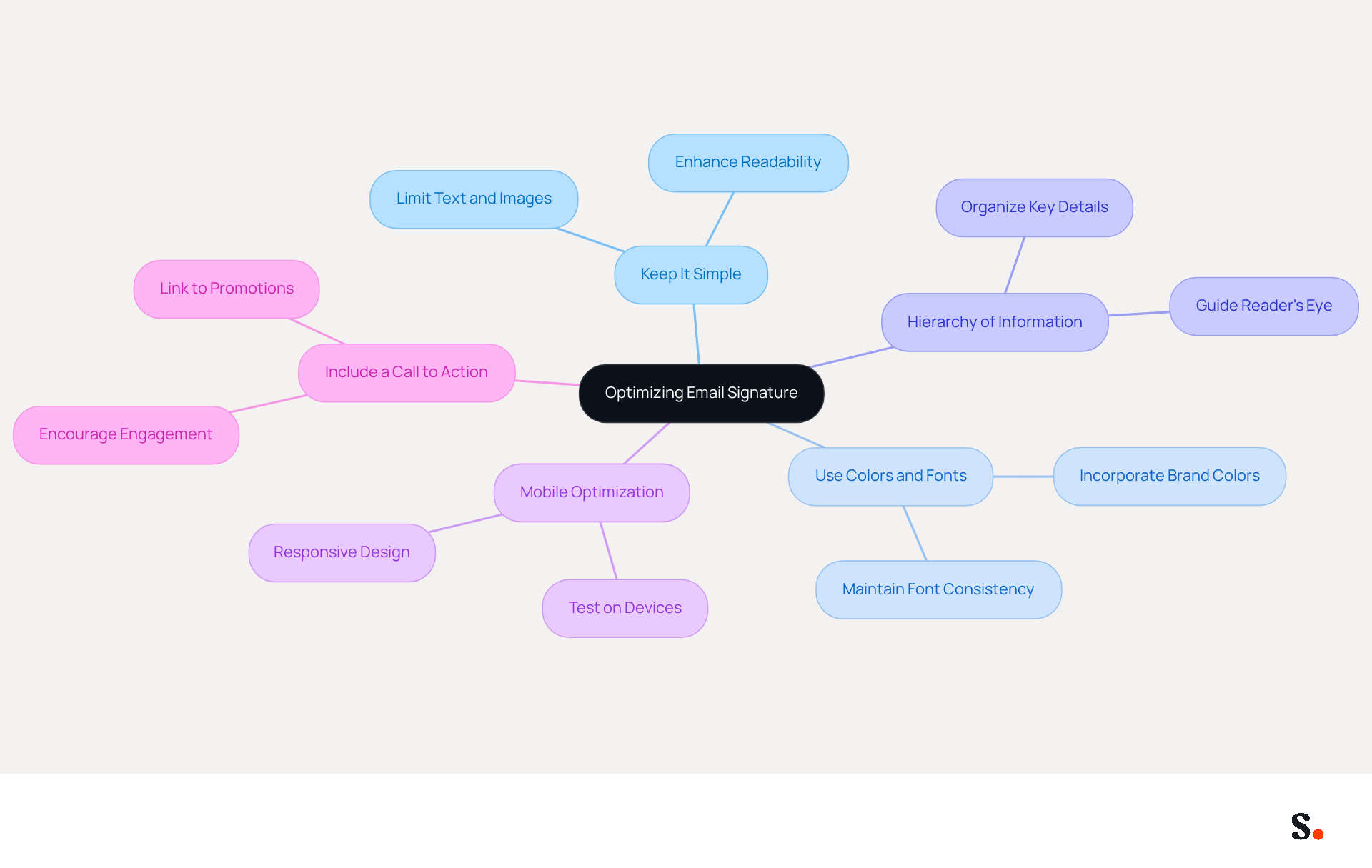
Design for Impact: Optimize Layout and Aesthetics
A proper email signature is not just a digital identifier; it is a crucial element of your branding strategy. Here are some best practices for optimizing layout and aesthetics:
- Keep It Simple: Avoid clutter by limiting the amount of text and images. A clean design enhances readability and ensures that key information stands out.
- Use Colors and Fonts: Incorporate your organization's color palette and fonts to maintain consistency across all marketing materials. This reinforces brand identity and helps recipients recognize your communications instantly.
- Hierarchy of Information: Organize information to guide the reader's eye, placing the most important details-such as name, title, and contact information-at the top. This way, clarity improves, and essential information becomes easy to find.
- Mobile Optimization: Ensure that the branding is adaptable and visually appealing on mobile devices, as over half of all messages are opened on smartphones. A mobile-friendly design ensures that all elements, including promotions and banners, look good on any device.
- Include a Call to Action: Adding a subtle call to action, such as a link to a recent blog post or a promotional offer, can encourage engagement. Research shows that this approach can lead to higher click rates, making email footers not just informative but also effective marketing tools.
By implementing these best practices, businesses can significantly elevate their email communications by using a proper email signature and enhance their brand presence. Furthermore, with Scribe's automated synchronization with Aircall, any modifications made in your Aircall settings will automatically reflect in your communications, ensuring brand consistency across all interactions. For example, companies that adopted single-column layouts and streamlined their branding reported increased engagement and higher click rates, demonstrating the effectiveness of these best practices.
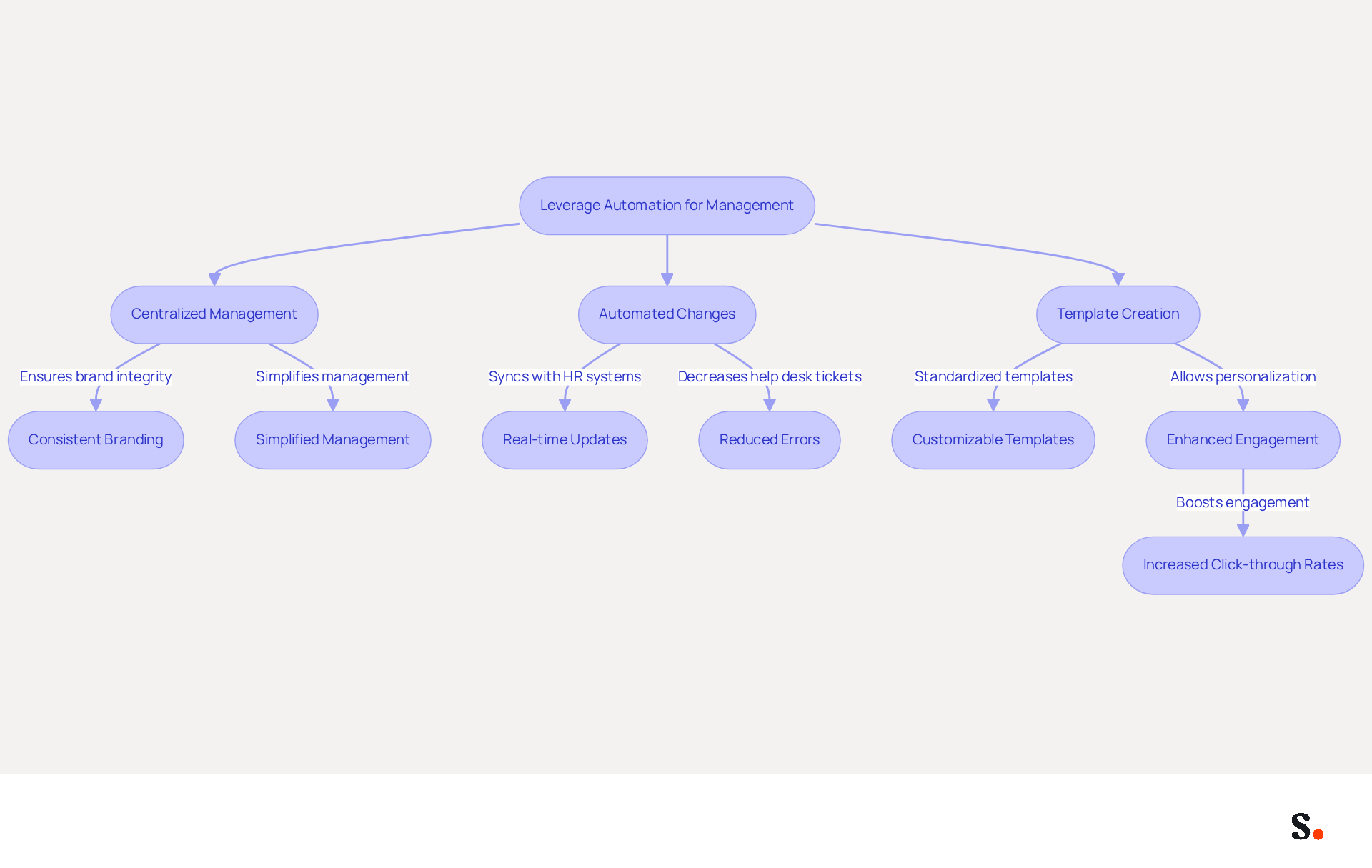
Leverage Automation for Consistent and Efficient Management
Managing digital identifiers can be a complex task, but automation offers a streamlined solution that enhances branding efforts. Here are some best practices for leveraging automation effectively:
- Centralized Management: Utilizing a platform like Scribe allows organizations to manage email signatures from a single location, ensuring consistent branding across all communications. This centralized approach enhances brand integrity and simplifies management, especially as companies grow. In 2026, organizations are prioritizing centralized control, automated campaigns, GEO-based variations, analytics, and compliance-driven modifications for electronic communications.
- Automated Changes: Implementing automated modifications ensures that communication identifiers reflect real-time adjustments in personnel, branding, or marketing campaigns without requiring manual intervention. For instance, syncing Scribe with Google Workspace enables automatic modifications of teammate information, saving time and reducing errors. Additionally, integrating Scribe with Aircall enhances this process by ensuring that all communication channels reflect the latest branding and personnel changes. For example, during rapid growth, this capability ensures that communications remain accurate and professional. Automating message identifiers can also decrease help desk tickets related to identifier problems, enabling IT teams to concentrate on more strategic initiatives.
By connecting email management tools with HR systems, organizations can automatically update the proper email signature based on employee data. This integration reduces mistakes and guarantees that all approvals are up to date, which is crucial for compliance and consistency. Research indicates that integrating digital identifiers with CRM systems can lead to a 15% increase in leads, further emphasizing the effectiveness of centralized management.
- Template Creation: Creating standardized templates that can be easily customized for different departments or campaigns helps maintain brand consistency while allowing for personalization. This flexibility allows teams to modify their branding for specific marketing initiatives, enhancing engagement and effectiveness. Incorporating Call-to-Actions (CTAs) in electronic correspondence can greatly enhance click-through rates, with Scribe reporting an average increase of 12% on banner displays, highlighting their effectiveness in engaging recipients.
By adopting these automation strategies, organizations can work more efficiently and ensure that every message strengthens their brand identity, leading to better engagement and a stronger market presence.
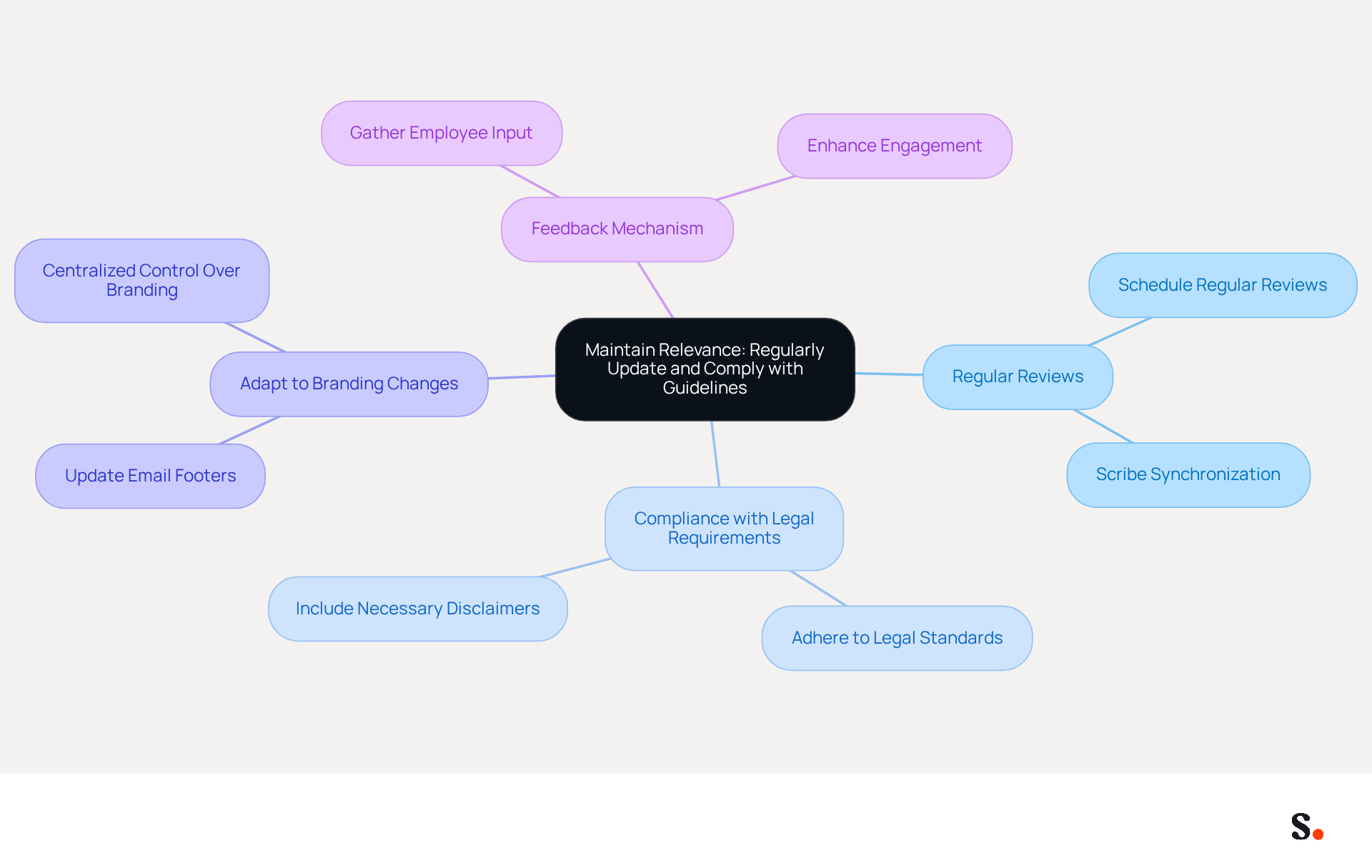
Maintain Relevance: Regularly Update and Comply with Guidelines
To maintain effective electronic correspondence identifiers, regular evaluations and updates are crucial. Here are key best practices to follow:
- Schedule Regular Reviews: Establish a routine for reviewing email signatures to ensure they reflect current branding and personnel changes. Regular audits help maintain consistency and professionalism. Scribe offers streamlined one-click synchronization, allowing you to manage updates across your organization efficiently. This ensures that all approvals remain current and compliant. To enable synchronization, grant Scribe permission to connect with your provider, which requires Super Admin access.
- Compliance with Legal Requirements: Ensure that email footers adhere to relevant legal standards, including necessary disclaimers or confidentiality notices. This is crucial for mitigating legal risks and maintaining transparency. As Dave Willis, Senior Content Manager, states, "Email compliance shouldn’t ever be viewed as merely a design task. It’s actually a risk management challenge to be taken seriously." Scribe's SOC 2 Type II compliance ensures that your data is secure while you manage these requirements.
- Adapt to Branding Changes: Promptly update email footers to reflect any branding changes, such as new logos or color schemes. This ensures that all communications are visually aligned with the company's current identity. Scribe allows for flexible workspace management, enabling centralized control over electronic communications across multiple clients and brands. Changes made in your provider directory will be automatically synced with Scribe daily at your local time.
- Feedback Mechanism: Implement a system for gathering employee input on the effectiveness of electronic correspondence identifiers. This input can guide adjustments and improvements, enhancing overall engagement.
Interestingly, statistics reveal that 44.4% of professionals update their contact details 2-4 times a year, while 31.6% do so only once every few years. Regular updates not only enhance branding but also ensure compliance with evolving regulations. Without a reliable audit trail, managing digital identities manually can lead to compliance challenges, highlighting the significance of centralized control. By adopting these practices, organizations can turn proper email signatures into strategic assets that reinforce their brand and ensure compliance.
Conclusion
Effective email signatures are not just a formality; they are crucial for establishing a strong brand identity and facilitating professional communication. Organizations can create a digital identity that resonates with their audience by integrating key elements like full names, job titles, company logos, and contact information. Maintaining a proper email signature is essential for effective communication, as it serves not only as a point of contact but also as a powerful branding tool that fosters trust and recognition among consumers.
The article outlines several best practices for optimizing email signatures, including:
- Design simplicity
- Mobile optimization
- The use of calls to action
Leveraging automation through platforms like Scribe allows for centralized management, ensuring that email signatures remain consistent and compliant with legal standards. Regular updates and adherence to compliance guidelines are crucial for maintaining relevance and professionalism in digital communications. By implementing these strategies, organizations can significantly enhance their branding efforts and improve engagement with their audience.
A well-crafted email signature is more than just an aesthetic choice; it serves as a strategic asset that drives engagement and reinforces brand consistency. Organizations are encouraged to adopt these best practices and utilize tools like Scribe to streamline their email signature management. By prioritizing email signature management, organizations can transform every email into a powerful branding opportunity that resonates with their audience.
Frequently Asked Questions
What are the essential elements for effective brand representation in digital communication?
The essential elements include the sender's full name, job title, company name and logo, contact information, website URL, and social media links.
Why is including a full name in communication important?
Including a full name personalizes the communication, making it more relatable to the recipient.
How does a job title contribute to brand representation?
A job title establishes authority and provides context for the recipient, enhancing the professionalism of the communication.
What role does the company name and logo play in an email signature?
Prominently displaying the company name and logo strengthens brand identity, which is crucial for reinforcing a company's image.
Why is contact information important in an email signature?
Including direct contact details, such as a phone number and email address, facilitates easy communication and enhances accessibility for recipients.
How can a website URL in an email signature benefit a business?
A website URL drives traffic to the company website and offers recipients additional information about services or products.
What is the significance of including social media links in an email signature?
Social media links can enhance engagement, as many consumers expect promotional assets in digital correspondence.
Why is it important to frequently refresh electronic correspondences?
Regular updates align with branding revisions, product introductions, or policy modifications, preventing miscommunication and maintaining a strong brand image.
How does Scribe assist with managing email identifiers?
Scribe automatically syncs changes made in Aircall configuration with email identifiers, ensuring that identification information is always current and compliant with SOC 2 Type II standards.
What are the benefits of maintaining consistent branding elements?
Consistent branding builds greater trust and recognition among consumers, leading to increased engagement and a stronger market presence.
List of Sources
- Incorporate Essential Elements for Brand Representation
- Research Recap: Branded Email Signatures Increase Company Recognition, Trust - Demand Gen Report (https://demandgenreport.com/industry-news/research-recap-branded-email-signatures-increase-company-recognition-trust/47252)
- Why Email Signatures Must Be In Your 2026 Marketing Plan | Rocketseed (https://rocketseed.com/blog/what-are-the-biggest-email-trends-for-2026)
- Email Signature Branding: Consistency and Impact | Crossware365 (https://crossware365.com/blog/mastering-email-signature-branding-market-presence)
- Why Are Email Signatures Key to Brand Awareness? | QuickMail (https://quickmail.com/role-of-email-signatures-in-brand-awareness)
- The benefits of a branded email signature (https://bybrand.io/blog/branded-email-signature)
- Design for Impact: Optimize Layout and Aesthetics
- Email Signature Best Practices - NEWOLDSTAMP (https://newoldstamp.com/blog/email-signature-best-practices)
- Top 10+ best practices for email signatures design in 2026 (https://mysignature.io/blog/email-signature-best-practices)
- 20 best email signature design examples for 2026 — Stripo.email (https://stripo.email/blog/10-best-email-signature-design-examples)
- 2026 Email Signature Trends: Centralized Control & Automation | SIGNandGO posted on the topic | LinkedIn (https://linkedin.com/posts/signngo_email-signature-trends-to-watch-in-2026-activity-7401523471786217473-zAVL)
- Email Signature Trends 2026: What Designers Are Actually Using (https://markaplugin.com/blog/email-signature-trends-2026)
- Leverage Automation for Consistent and Efficient Management
- 2026 Email Signature Trends: Centralized Control & Automation | SIGNandGO posted on the topic | LinkedIn (https://linkedin.com/posts/signngo_email-signature-trends-to-watch-in-2026-activity-7401523471786217473-zAVL)
- When Email Signature Management Saves IT Time Instead of Creating More Work - GIS user technology news (https://gisuser.com/2026/07/when-email-signature-management-saves-it-time-instead-of-creating-more-work)
- Maximize Your Email Signature Program with These 4 Best Practices (https://scribe-mail.com/en-US/blog/maximize-your-email-signature-program-with-these-4-best-practices)
- Automating Email Signatures: How IT Teams Streamline Processes & Reduce Risk (https://exclaimer.com/blog/streamlining-it-processes-automated-email-signatures)
- Maintain Relevance: Regularly Update and Comply with Guidelines
- Email signature statistics: Why every business should optimize their email signatures — Stripo.email (https://stripo.email/blog/email-signature-statistics-why-every-business-should-optimize-their-email-signatures)
- Email Signature Compliance: What IT & Legal Needs to Know (https://exclaimer.com/blog/email-signature-compliance-what-it-and-legal-teams-need-to-know)
- Email Signature Compliance for Government Agencies (IT Guide) (https://wisestamp.com/guides/how-to-ensure-email-signature-compliance-for-government-agencies)
- How do I ensure my email signature complies with international laws and regulations (e.g., GDPR, CAN-SPAM)? | Email Signature Rescue Blog (https://emailsignaturerescue.com/blog/how-do-i-ensure-my-email-signature-complies-with-international-laws-and-regulations)
- University Email Signature Standards (https://k-state.edu/communications-marketing/brand-style/resources/email-signature)
Get started with Scribe
Manage signatures across your whole team
Free 14-day trial — no credit card.