4 Best Practices for Crafting an Effective Confidentiality Footer
In professional email communication, a confidentiality footer is essential for protecting sensitive information and maintaining trust. Implementing best
Sophie Grant
Email Signature Specialist, Scribe

Introduction
In professional email communication, a confidentiality footer is essential for protecting sensitive information and maintaining trust. Implementing best practices for confidentiality footers helps organizations protect their data while boosting credibility and trust with clients and partners. Many organizations fail to recognize the legal implications of inadequate email communication practices. This oversight can result in significant legal liabilities and damage to professional relationships. Understanding the key elements of an effective confidentiality footer is crucial for organizations to avoid unnecessary risks.
Get started with Scribe
Keep every signature compliant
Free 14-day trial — no credit card.
Understand the Purpose of a Confidentiality Footer
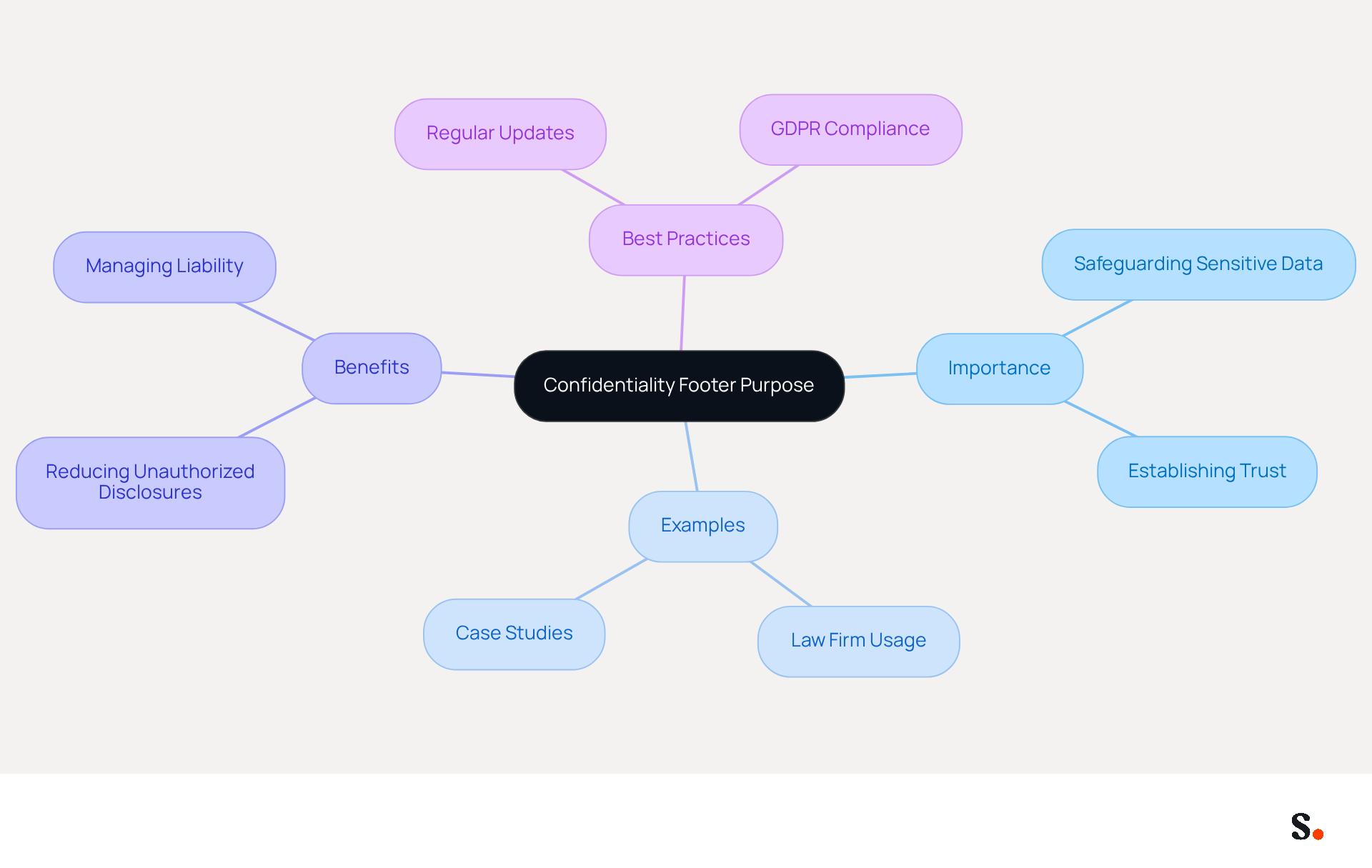
A privacy disclaimer is not just a formality; it is a critical component of responsible email communication. The confidentiality footer plays a vital role in safeguarding sensitive data, such as client details and proprietary business strategies. By incorporating a privacy notice, businesses can significantly reduce the risk of unauthorized disclosures and underscore the importance of privacy in their communications. This practice establishes clear expectations for recipients to manage the data with care and fosters trust and professionalism in business relationships.
For example, a law firm may employ a privacy notice to safeguard client information, ensuring that sensitive discussions remain private. Case studies have demonstrated that organizations using privacy disclaimers enhance their professionalism and brand trust, as these notices clarify the organization's responsibility regarding the email's content. Research indicates that businesses with privacy disclaimers are more effective in managing liability and adhering to industry standards, especially in regulated fields like law and finance.
Experts agree that even though confidentiality statements aren't legally binding, they are vital for reinforcing privacy expectations and showcasing professionalism. A well-designed section can remind recipients to delete messages received in error and manage confidential information with care, thereby reducing potential risks linked to data breaches. Regularly reviewing and updating the confidentiality footer ensures it remains relevant and effective, reflecting current practices and legal requirements.
With Scribe's SAML Single Sign-On integration, organizations can enhance their security while managing signatures effortlessly. Scribe's dedication to GDPR adherence and its SOC 2 Type II certification further guarantee that sensitive data is managed securely, making it an ideal solution for businesses aiming to uphold privacy in their communications.
Include Key Elements in Your Confidentiality Footer
To maintain professionalism and safeguard sensitive information in email communications, an effective confidentiality footer must include several essential elements:
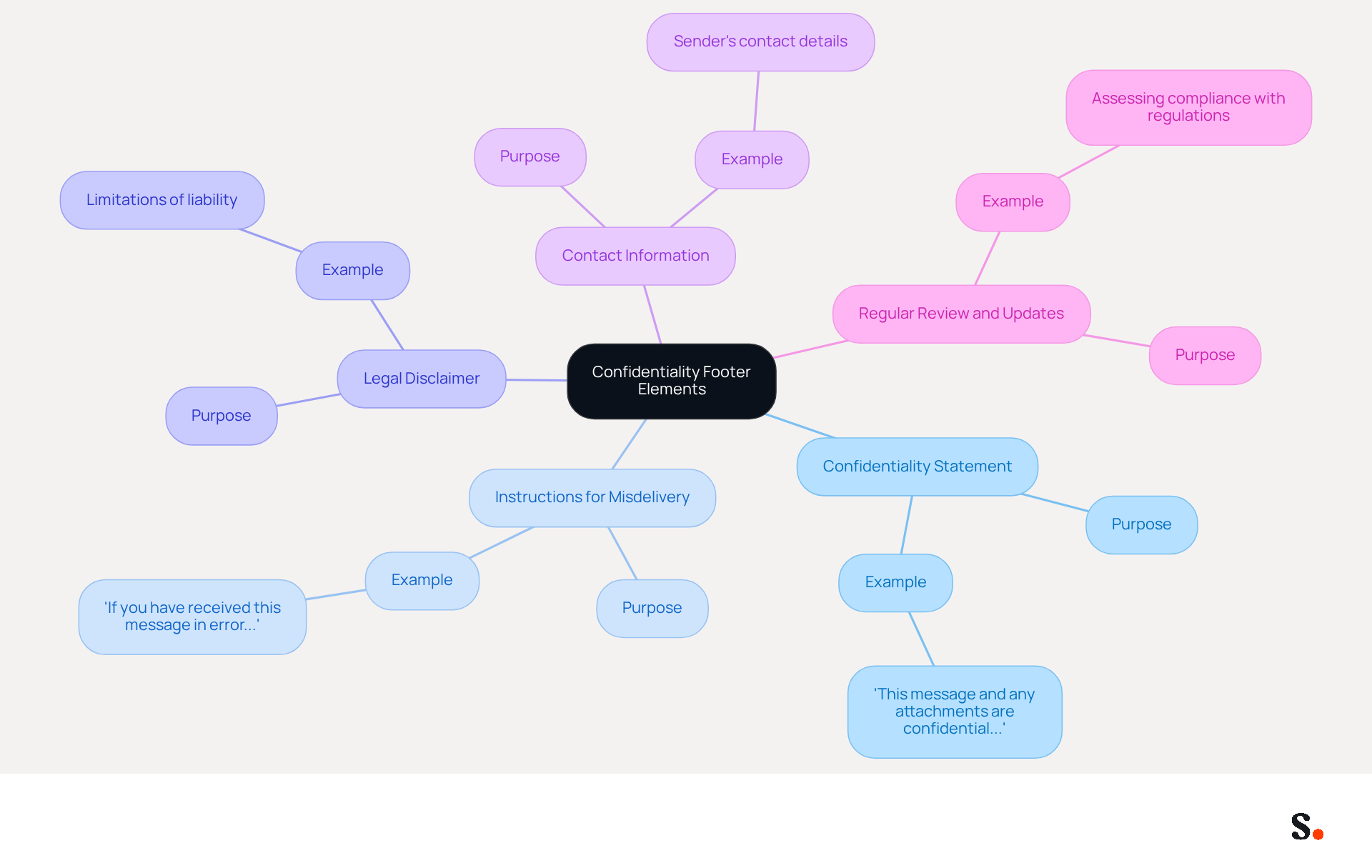
- Confidentiality Statement: Clearly articulate that the message and its contents are confidential and intended solely for the recipient. For instance, a declaration such as 'This message and any attachments are confidential and intended solely for the use of the individual or entity to whom they are addressed' establishes the expectation of privacy.
- Instructions for Misdelivery: Include clear guidance on actions to take if the message is received in error. A suggested instruction could be, 'If you have received this message in error, please notify the sender and delete it promptly.' This helps keep sensitive information safe and reminds everyone to follow proper email etiquette.
- Legal Disclaimer: Incorporate a brief legal disclaimer that outlines the limitations of liability regarding the privacy notice. This can help mitigate potential legal repercussions, especially in industries where sensitive data is frequently exchanged, such as healthcare and finance. Without a well-crafted confidentiality statement, organizations risk facing legal challenges, underscoring the importance of this element.
- Contact Information: Ensure that the sender's contact information is included, allowing recipients to reach out for clarification if needed. This fosters open communication and enhances trust.
- Regular Review and Updates: Consistently assessing and refreshing these sections is essential to keep up with changing regulations and cybersecurity risks. Organizations that prioritize effective privacy statements have been shown to build trust and encourage customer loyalty, significantly impacting their bottom line. A relevant case study shows that implementing these notices effectively builds trust in business relationships.
By incorporating these components, businesses can establish a strong privacy statement that effectively conveys the significance of personal data protection. Furthermore, it is crucial to steer clear of typical mistakes such as excessive use or ambiguous language, which can reduce the impact of privacy disclaimers. Ultimately, a well-designed confidentiality footer protects sensitive information and enhances the organization's credibility.
Recognize the Legal Risks of Omitting a Confidentiality Footer
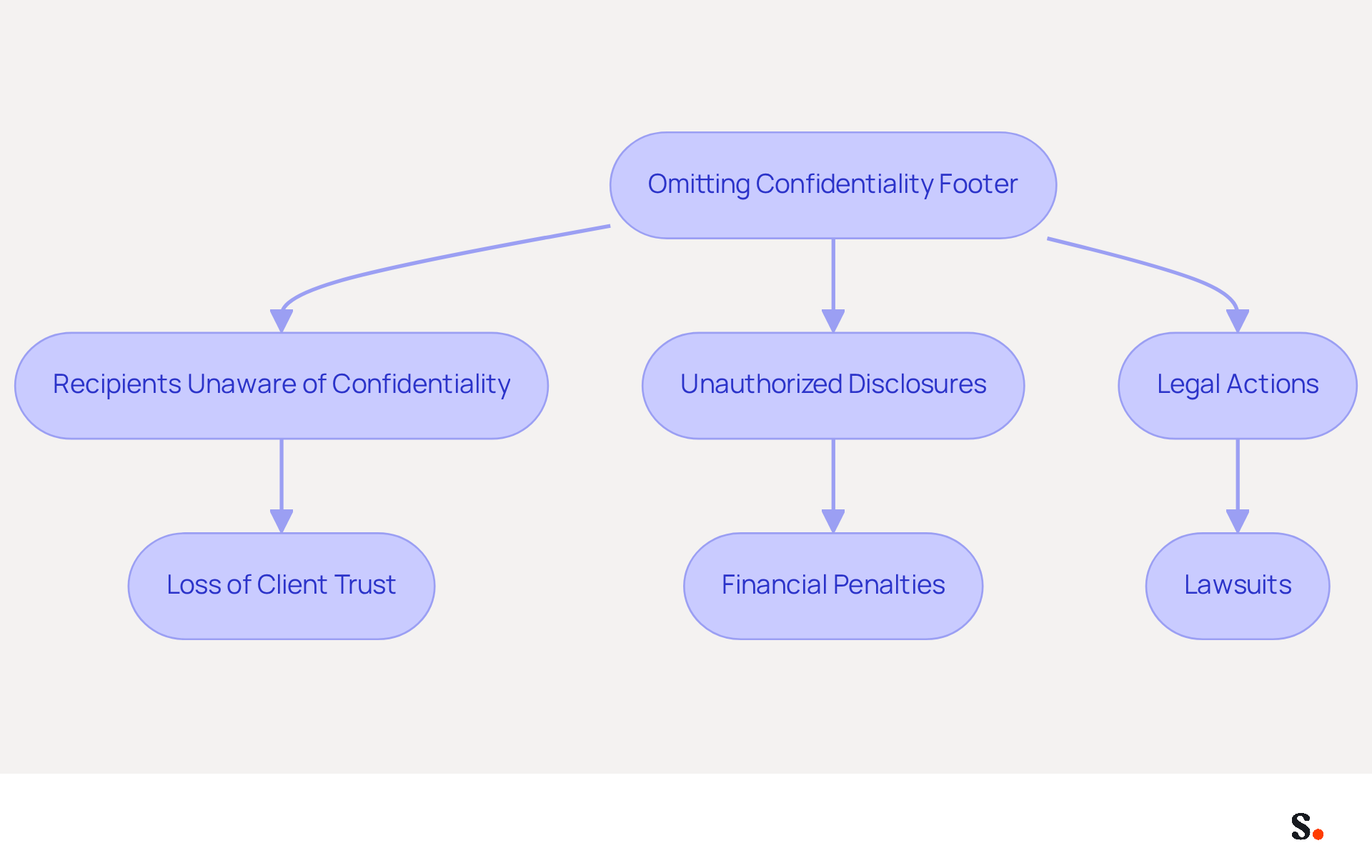
Neglecting to include a confidentiality footer in emails exposes businesses to serious legal risks that can have far-reaching consequences. Without a clear confidentiality footer, recipients may not recognize that the shared details are confidential, which could lead to unauthorized disclosures. These oversights can lead to legal actions, loss of client trust, and substantial financial penalties.
For instance, a company that unintentionally shares sensitive client information without a privacy notice could face lawsuits for breach of trust or violations of data protection regulations. Regulatory bodies may also impose hefty fines for non-compliance with laws like GDPR or HIPAA. Statistics show that neglecting email disclaimers can cost companies millions in fines. In some cases, settlements have exceeded $1 million due to this oversight.
Therefore, including a confidentiality footer is essential for protecting both the business and its clients from potential legal repercussions. Case studies have demonstrated that in situations where privacy disclaimers were absent, courts have ruled against companies, emphasizing the significance of the confidentiality footer in protecting sensitive information and ensuring compliance with legal standards.
Moreover, with Scribe's SAML Single Sign-On integration, organizations can guarantee secure access to signature management, highlighting the importance of privacy in communications. Regularly reviewing and updating privacy disclaimers is crucial to ensure they remain effective and relevant, as emphasized by experts in the field. Scribe's commitment to GDPR compliance further underscores the necessity of secure practices in managing email signatures, ensuring that businesses can confidently communicate while protecting sensitive information.
Design Effective and Visible Confidentiality Footers
To effectively safeguard privacy, it’s crucial to ensure that the confidentiality footer is both visible and clear. Here are best practices for designing your confidentiality footer:
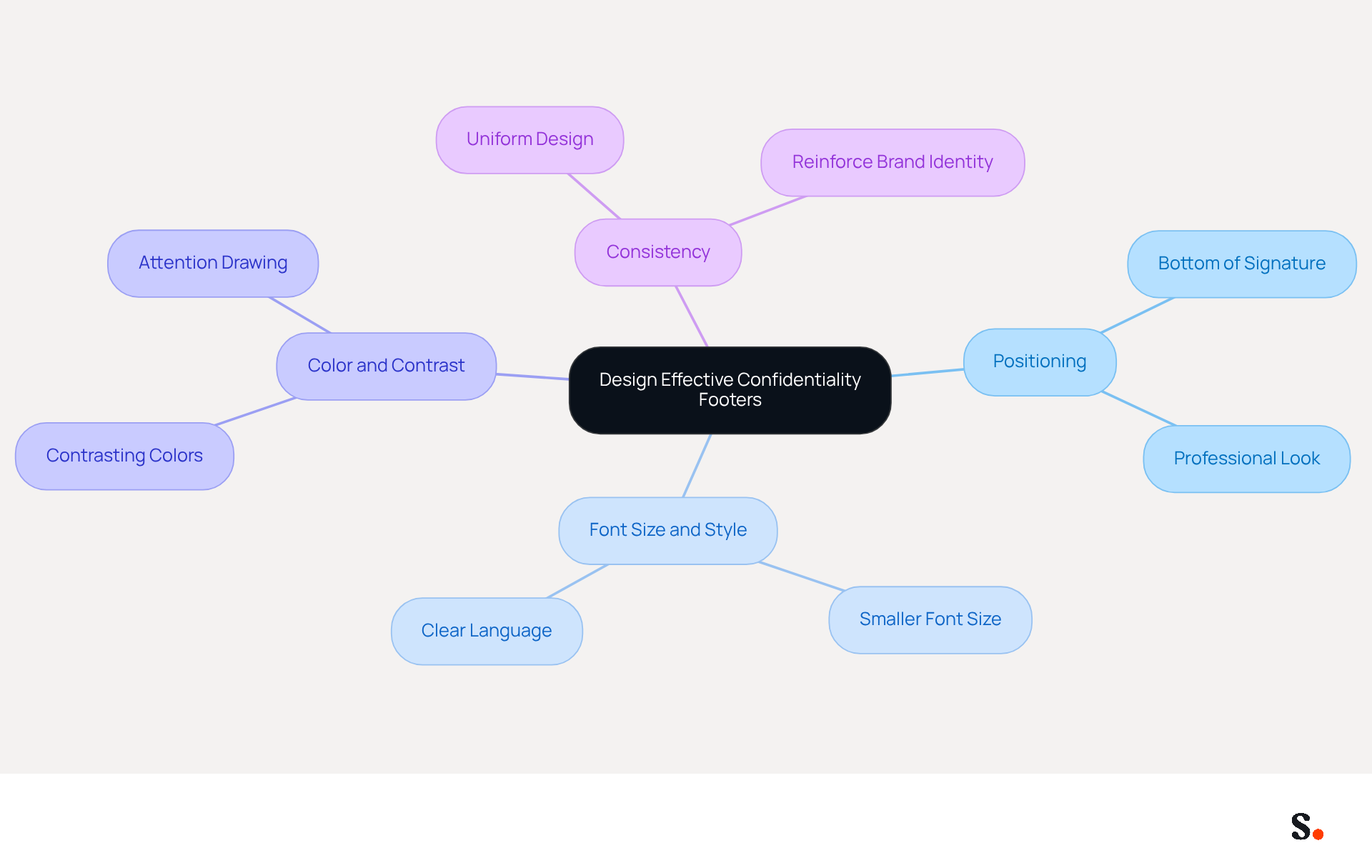
- Position the confidentiality statement at the bottom of the signature. This makes it visible without being intrusive, keeping a professional look while sharing important information.
- Font Size and Style: Use a smaller font size than the main body text, ensuring legibility. Avoid complex legal jargon; instead, opt for clear and direct language to enhance understanding.
- Color and Contrast: Utilize contrasting colors to make the footer stand out from the rest of the message content. Using contrasting colors effectively draws attention to the privacy notice, ensuring it is noticed without distracting from the main content.
- Consistency: Maintain a consistent design across all email communications to reinforce brand identity. This ensures that your professional correspondence recognizes the confidentiality footer as an integral part.
Implementing these design principles not only protects sensitive information but also boosts your professional image. Failing to adhere to legal guidelines can lead to significant reputational damage and legal repercussions. Furthermore, with a substantial proportion of messages containing sensitive information, protection of privacy is crucial for maintaining data integrity. Neglecting regular updates can expose organizations to compliance risks and potential data breaches, ensuring that your communications remain trustworthy and effective.
With Scribe, you can automate signature management, ensuring that your teammates' signatures are always synced with your business phone system without any action needed from them. This real-time synchronization not only saves time but also ensures that your privacy indicators are consistently updated, aligning with your organization's compliance requirements. As Sophie Grant, an Email Signature Specialist, emphasizes, 'The confidentiality footer in emails is essential for protecting sensitive data and maintaining client trust.' By prioritizing privacy in email signatures, organizations not only protect their data but also enhance their credibility in the eyes of clients and partners.
Conclusion
Incorporating a confidentiality footer is not just a best practice; it is a critical safeguard against legal repercussions. This practice not only protects client data but also establishes clear expectations for recipients regarding the handling of confidential information. By emphasizing the importance of privacy, organizations can foster trust and enhance their credibility in business relationships.
Key elements of a confidentiality footer include:
- A clear confidentiality statement
- Instructions for misdelivery
- A legal disclaimer
- The sender's contact information
Regularly reviewing and updating these components ensures compliance with evolving regulations and reinforces the organization's commitment to data protection. Ignoring this practice can lead to severe repercussions for businesses, including costly lawsuits and financial penalties.
Ultimately, prioritizing the design and visibility of confidentiality footers not only protects sensitive data but also enhances the overall professional image of an organization. Utilizing automated signature management tools ensures that confidentiality footers are consistently updated and compliant with legal standards. Organizations that overlook this essential component risk not only their reputation but also their financial stability.
Frequently Asked Questions
What is the purpose of a confidentiality footer in emails?
A confidentiality footer is a critical component of responsible email communication that safeguards sensitive data, such as client details and proprietary business strategies, and helps reduce the risk of unauthorized disclosures.
How does a confidentiality footer benefit businesses?
By incorporating a privacy notice, businesses can underscore the importance of privacy, establish clear expectations for recipients, foster trust and professionalism, and enhance their brand trust.
Can you provide an example of how a confidentiality footer is used?
A law firm may use a privacy notice to protect client information, ensuring that sensitive discussions remain private and reinforcing the organization's responsibility regarding the email's content.
Are confidentiality statements legally binding?
No, confidentiality statements are not legally binding, but they are important for reinforcing privacy expectations and showcasing professionalism.
What are the risks associated with not using a confidentiality footer?
Without a confidentiality footer, there is an increased risk of unauthorized disclosures and potential data breaches, as recipients may not be reminded to manage confidential information with care.
How can organizations ensure their confidentiality footer remains effective?
Organizations should regularly review and update their confidentiality footer to ensure it reflects current practices and legal requirements.
How does Scribe enhance security in email communications?
Scribe offers SAML Single Sign-On integration, which enhances security while managing signatures effortlessly, and is dedicated to GDPR adherence and holds a SOC 2 Type II certification for secure data management.
List of Sources
- Understand the Purpose of a Confidentiality Footer
- Email notices and email footers (https://pinsentmasons.com/out-law/guides/email-notices-and-email-footers)
- How to Use an Email Confidentiality Notice | Mailchimp (https://mailchimp.com/resources/email-confidentiality-notice)
- 20 good email disclaimer examples - get your own email disclaimer (https://mail-signatures.com/articles/email-disclaimer-examples)
- The Importance of Email Disclaimers for Businesses - Tyler Law LLP (https://tylerlawllp.com/blog-posts/the-importance-of-email-disclaimers-for-businesses)
- Include Key Elements in Your Confidentiality Footer
- The Importance of Email Disclaimers for Businesses - Tyler Law LLP (https://tylerlawllp.com/blog-posts/the-importance-of-email-disclaimers-for-businesses)
- Confidential Email Disclaimers (Examples and Template Included!) (https://clio.com/blog/confidential-email-disclaimer)
- Email Disclaimers: Tips for Business Communication | Mailchimp (https://mailchimp.com/resources/email-disclaimer)
- 20 good email disclaimer examples - get your own email disclaimer (https://mail-signatures.com/articles/email-disclaimer-examples)
- Best Practices for Using Confidentiality Notice Emails in Marketing (https://scribe-mail.com/en-US/blog/best-practices-for-using-confidentiality-notice-emails-in-marketing)
- Recognize the Legal Risks of Omitting a Confidentiality Footer
- Email Disclaimer: What It Is, When Do You Need It + Examples | iubenda (https://iubenda.com/en/blog/email-disclaimer)
- Best Practices for Using Confidentiality Notice Emails in Marketing (https://scribe-mail.com/en-US/blog/best-practices-for-using-confidentiality-notice-emails-in-marketing)
- Email Disclaimer Guide With 12 Templates & Examples - Termly (https://termly.io/resources/articles/email-disclaimers)
- EMAIL CONFIDENTIALITY/DISCLAIMERS – use, or don’t use? - Barna, Guzy & Steffen, LTD. (https://bgs.com/blog/2018/07/02/email-confidentiality-disclaimers-use-or-dont-use)
- Email Confidentiality Notice Austin TX - Cenkus Law (https://cenkuslaw.com/annoying-email-confidentiality-disclaimers)
- Design Effective and Visible Confidentiality Footers
- Best Practices for Using Confidentiality Notice Emails in Marketing (https://scribe-mail.com/en-US/blog/best-practices-for-using-confidentiality-notice-emails-in-marketing)
- We are introducing disclaimers to email footers | Inside UNSW (https://inside.unsw.edu.au/campus-life/we-are-introducing-disclaimers-email-footers)
- TOP 18 CONFIDENTIALITY QUOTES | A-Z Quotes (https://azquotes.com/quotes/topics/confidentiality.html)
Get started with Scribe
Keep every signature compliant
Free 14-day trial — no credit card.