Best Practices for a Professional Outlook Signature That Drives Engagement
While a professional email signature may seem like a simple digital sign-off, it holds significant potential for enhancing communication and brand identity. By
Sophie Grant
Email Signature Specialist, Scribe

Introduction
While a professional email signature may seem like a simple digital sign-off, it holds significant potential for enhancing communication and brand identity. By incorporating essential elements such as:
- Contact information
- Company branding
- Legal disclaimers
organizations can enhance their visibility and engagement with recipients. Many organizations struggle to balance professionalism with legal compliance in their email signatures, which can hinder brand consistency. Navigating these complexities is crucial for maximizing the impact of email signatures on client relationships and brand perception.
Identify Essential Elements of a Professional Email Signature
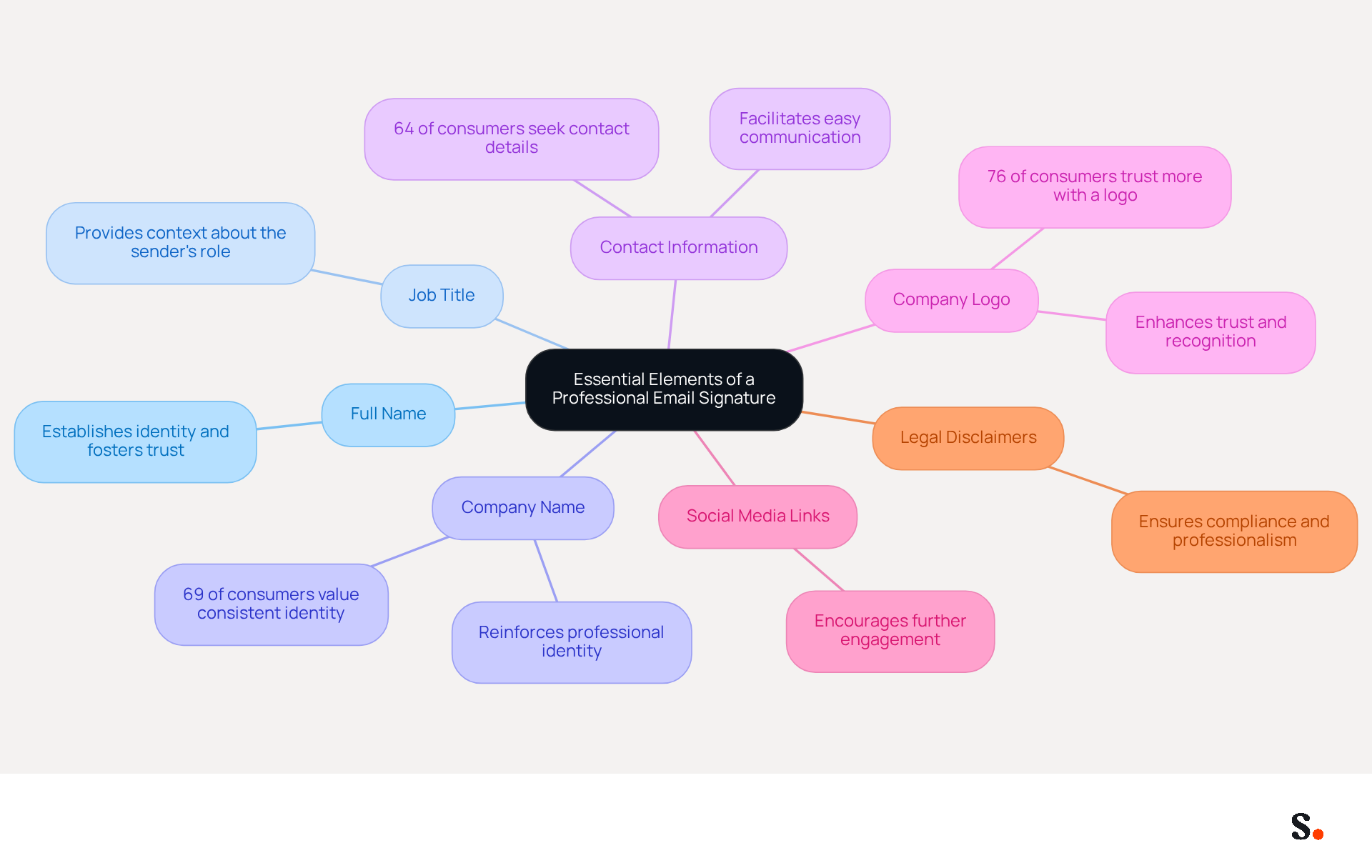
A professional outlook signature is not just a formality; it is a vital component of effective communication and brand representation. It should encompass several essential elements to ensure clarity and professionalism:
- Full Name: Clearly stating your full name establishes who the recipient is communicating with, fostering trust and recognition.
- Job Title: Including your current position provides context about your role within the organization, enhancing credibility.
- Company Name: Mentioning your company’s name reinforces identity. Research indicates that 69% of UK consumers consider a consistent professional identity essential for trust and recognition.
- Contact Information: Providing at least one method of contact, such as a phone number or email address, facilitates easy communication. Moreover, 64% of consumers actively look for contact details in correspondence, highlighting the importance of providing this information.
- Company Logo: Including your company logo can enhance trust, as 76% of consumers feel more confident in a sender when a logo is present in the email footer.
- Social Media Links: If applicable, including links to professional social media profiles allows recipients to connect further, increasing engagement opportunities.
- Legal Disclaimers: Depending on your industry, including legal disclaimers or confidentiality notices is necessary to comply with regulations, ensuring professionalism and protecting the organization.
By integrating these elements, you create an identity that not only seems like a professional outlook signature but also serves as a strategic communication tool, significantly influencing visibility and engagement. In fact, organizations that enhance their electronic correspondences can see a 22% increase in clicks and improved marketing ROI, underscoring the necessity of a well-crafted email signature in today’s business landscape. With Scribe, every modification made in your Aircall settings will automatically be shown in your correspondence identifiers, ensuring effortless updates and improved brand consistency across all communications. This automated synchronization simplifies management and supports Scribe's commitment to providing secure data handling in compliance with SOC 2 Type II standards.
Apply Design Principles for Maximum Impact
To create an impactful email signature, it is essential to adhere to key design principles that enhance professionalism and brand identity:
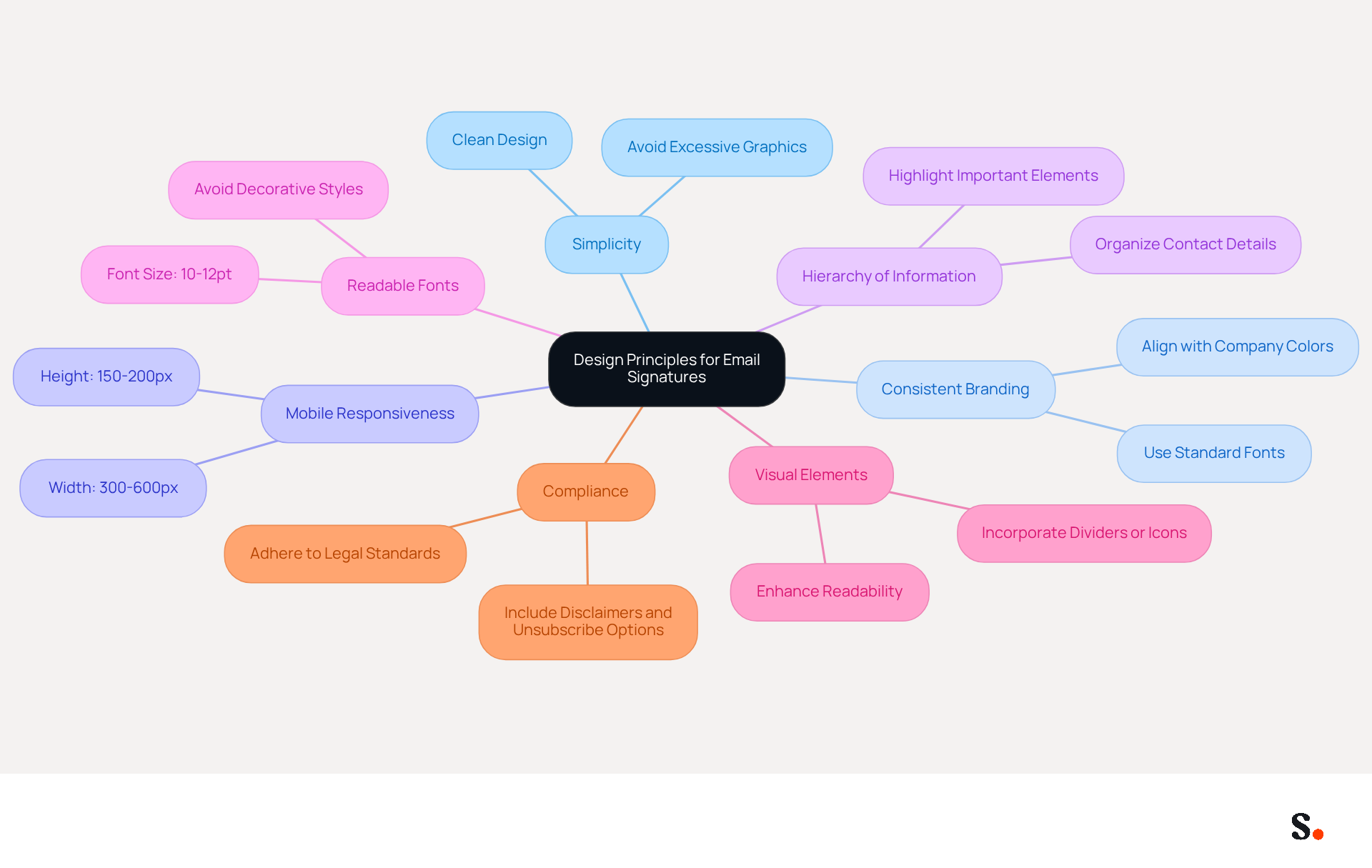
- Simplicity: Simplicity is key; maintaining a clean and uncluttered design is essential. Avoid excessive graphics or text that can distract from the main message, ensuring that the mark remains straightforward and effective.
- Consistent Branding: Utilize colors, fonts, and styles that align with your company’s branding. When you maintain this consistency, it helps build trust and recognition among your recipients.
- Mobile Responsiveness: Given that a significant 81% of business communications are accessed on smartphones, it is crucial to enhance your branding for mobile devices. Aim for a width of 300-600 pixels and a height of 150-200 pixels to ensure proper display on various screens.
- Hierarchy of Information: Organize information to highlight the most important elements first, such as your name and title, followed by contact details. This organization not only improves clarity but also enhances the recipient's experience.
- Readable Fonts: Select standard, easy-to-read fonts and avoid overly decorative styles. A font size of 10-12 points is typically suggested for clarity, ensuring that your name is readable across various messaging platforms.
- Visual Elements: Incorporate visual components like dividers or icons to separate different sections of the document. This enhances readability and allows for a more organized presentation of information.
- Compliance: Navigating the complexities of compliance can be challenging for many organizations. Ensure that your electronic correspondence footer adheres to regulatory and legal standards pertinent to your organization, including necessary disclaimers and unsubscribe options. Scribe's SOC 2 Type II compliance ensures that your data is managed securely, offering peace of mind as you handle your email branding.
By implementing these principles, you not only elevate your professional outlook signature but also enhance your brand's credibility and engagement with recipients.
Leverage Email Signatures as Marketing Opportunities
Email signatures can serve as effective marketing tools when they include a professional outlook signature. Implementing the following strategies can significantly improve their impact:
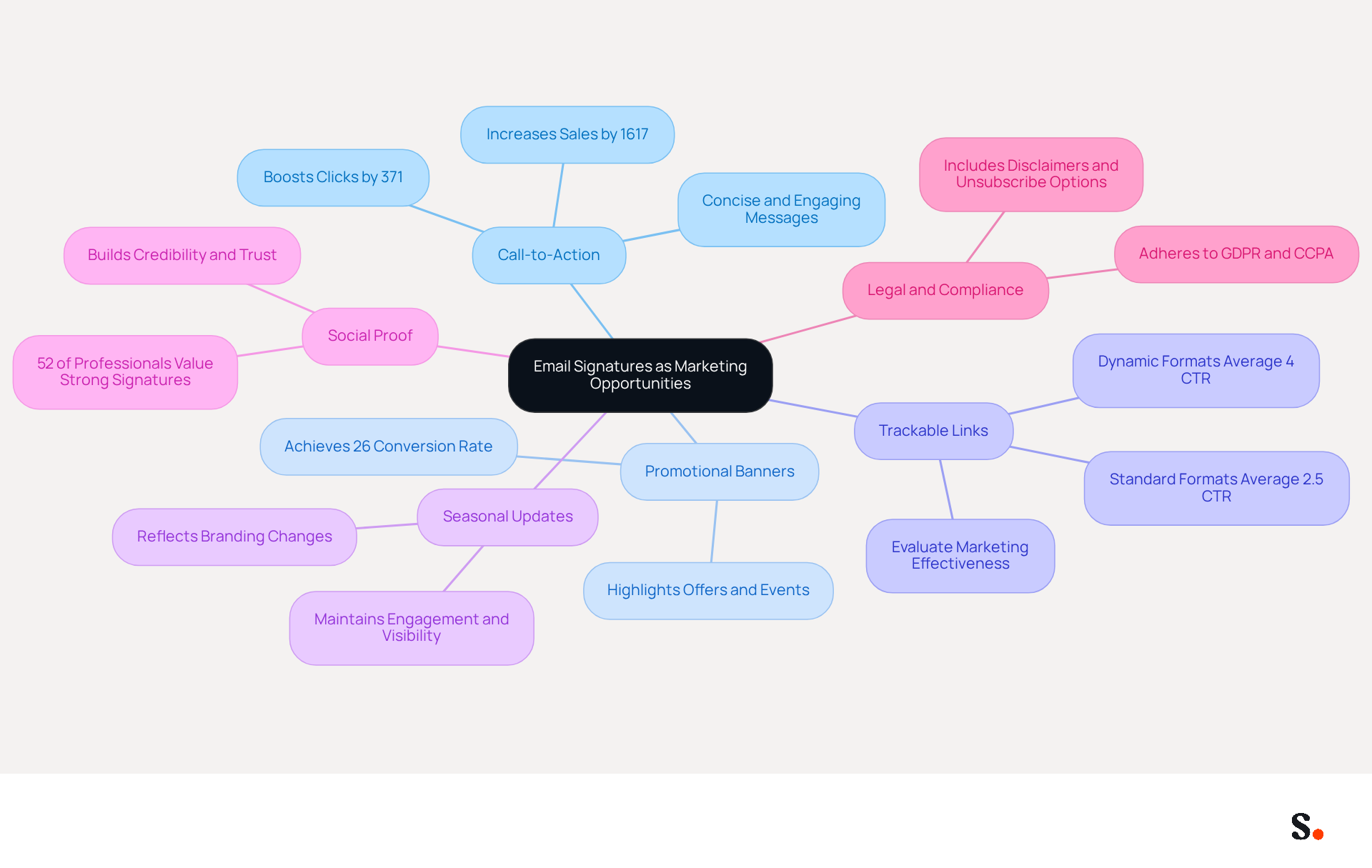
- Call-to-Action (CTA): Including a CTA can boost clicks by 371% and sales by 1617%, so crafting concise and engaging messages is crucial.
- Promotional Banners: Use visually appealing banners to highlight special offers, upcoming events, or new products. Research shows that messages sent with a banner achieve a conversion rate of 26%, demonstrating the value of adding promotional elements to your email signature.
- Trackable Links: Incorporate trackable links to assess the effectiveness of your marketing efforts related to your correspondence. This enables you to evaluate click-through rates, which average 4% for dynamic formats compared to 2.5% for standard marketing communications, allowing you to modify strategies accordingly.
- Seasonal Updates: Regularly refreshing your branding to reflect seasonal promotions or campaigns is essential. Without regular updates, organizations risk losing engagement and visibility.
- Social Proof: Including testimonials or awards in your email footer builds credibility and trust with recipients. This can lead to increased trust and stronger client relationships, as 52% of professionals believe that a professional outlook signature is a robust communication tool essential for establishing connections with clients.
- Legal and Compliance Considerations: Ensure that your correspondence complies with relevant legal standards, including the inclusion of disclaimers and unsubscribe options where necessary. Scribe's SOC 2 Type II certification and adherence to GDPR and CCPA further enhance your organization's credibility and protect it legally.
Implementing these strategies not only enhances your email signatures but also strengthens your overall marketing impact.
Ensure Consistency and Compliance in Signature Management
To achieve consistency and compliance in email signature management, organizations must adopt strategic best practices:
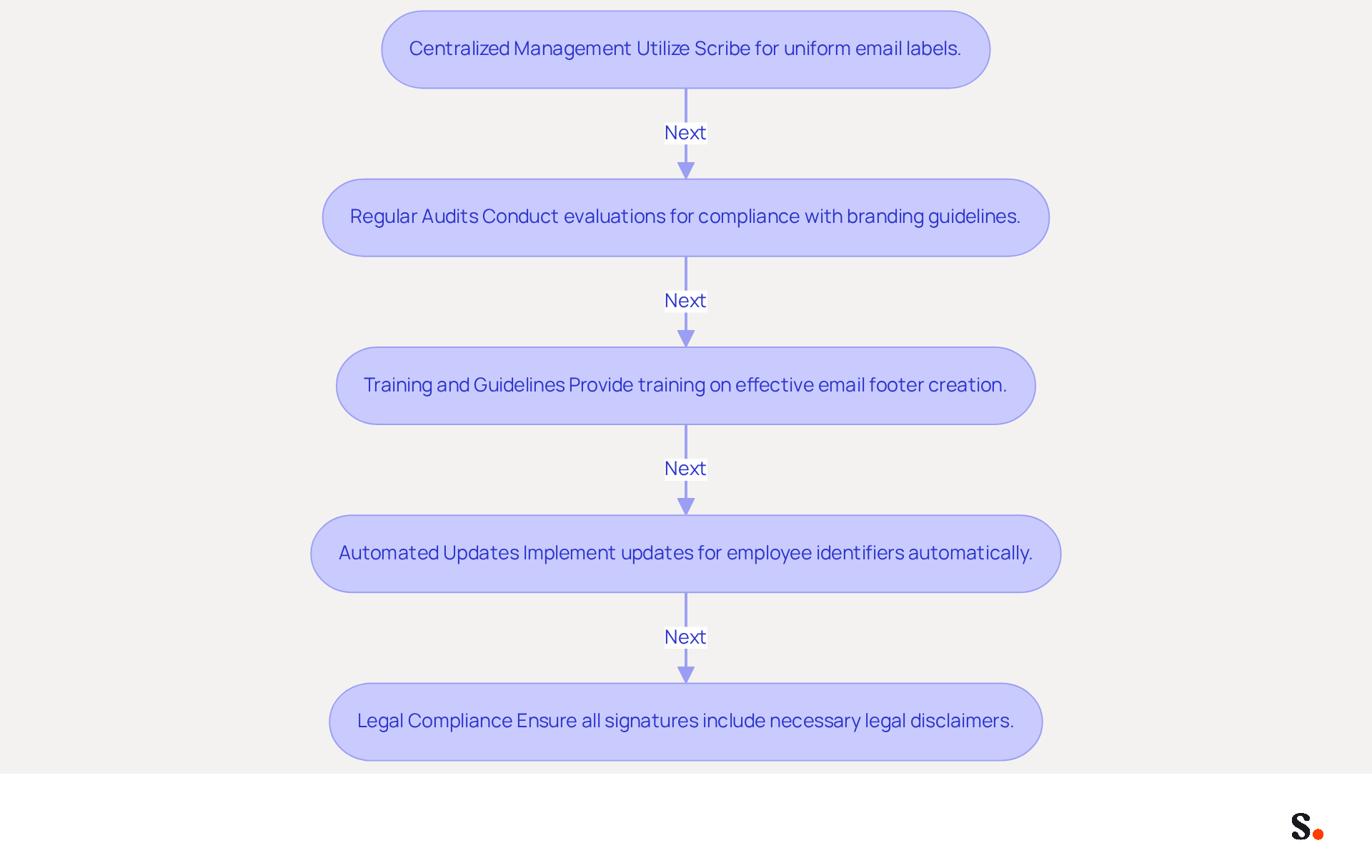
- Centralized Management: Utilize Scribe to oversee email labels across your organization. This method ensures uniformity and keeps all marks current, which is essential since 78% of marketers recognize the importance of consistent branding. With Scribe, you can auto-fill your teammates' identification information, saving time and ensuring accuracy.
- Regular Audits: Conduct periodic evaluations of electronic communications to verify compliance with branding guidelines and legal requirements. This involves checking for outdated information or missing disclaimers, as inconsistent email signatures can lead to confusion and diminish client confidence.
- Training and Guidelines: Provide comprehensive training for employees on effective email footer creation and usage. Establish clear guidelines on essential elements, such as including the sender's full name, job title, and company logo, which are essential for building a recognizable brand and gaining client trust, as demonstrated by numerous case studies.
- Automated Updates: Implement automated updates for employee identifiers to ensure that any changes in contact information or branding are reflected promptly across all staff identifiers. By syncing your Google Workspace with Scribe, any updates-such as moving teammates between groups or altering job positions-are automatically reflected in their profiles, preventing missed marketing opportunities due to outdated details.
- Legal Compliance: Ensure that all endorsements include necessary legal disclaimers and adhere to regulations such as GDPR and CCPA. This protects your organization from potential legal issues, as 83% of IT leaders reported experiencing at least one email-related security incident in the past year. Scribe's SOC 2 Type II compliance further enhances your security posture.
By following these practices, organizations can create a professional outlook signature that is consistent and compliant, which ultimately boosts their brand image and communication effectiveness.
Conclusion
A professional email signature serves as a crucial element in effective communication and brand representation, yet many organizations fail to leverage its full potential. Incorporating essential elements like your full name, job title, company name, and contact information, along with visual branding such as logos and social media links, allows organizations to create a signature that conveys professionalism and builds trust with recipients.
The article outlines key design principles that elevate email signatures, emphasizing:
- Simplicity
- Consistent branding
- Mobile responsiveness
- Compliance with legal standards
Additionally, leveraging email signatures as marketing opportunities through strategic calls-to-action, promotional banners, and trackable links can significantly boost engagement and conversion rates. By ensuring consistency and compliance through centralized management and regular audits, organizations can maintain a strong brand image while adhering to necessary regulations.
By adopting these best practices, organizations can enhance the effectiveness of their email signatures and position themselves for greater marketing success. As email signatures continue to play a crucial role in professional communication, strategically managing their design and implementation can lead to improved brand visibility and stronger client relationships. Embrace the potential of your email signatures today and transform them into a vital component of your marketing strategy.
Frequently Asked Questions
What is the purpose of a professional email signature?
A professional email signature is vital for effective communication and brand representation, establishing clarity and professionalism in correspondence.
What essential elements should be included in a professional email signature?
A professional email signature should include the following elements: Full Name, Job Title, Company Name, Contact Information, Company Logo, Social Media Links, and Legal Disclaimers.
Why is it important to include your full name in an email signature?
Including your full name establishes who the recipient is communicating with, fostering trust and recognition.
How does including a job title in an email signature enhance credibility?
Including your job title provides context about your role within the organization, which enhances your credibility.
What impact does mentioning the company name have in an email signature?
Mentioning the company name reinforces identity, and research indicates that 69% of UK consumers consider a consistent professional identity essential for trust and recognition.
Why is it important to provide contact information in an email signature?
Providing contact information, such as a phone number or email address, facilitates easy communication, as 64% of consumers actively look for contact details in correspondence.
How does including a company logo in an email signature affect trust?
Including a company logo can enhance trust, as 76% of consumers feel more confident in a sender when a logo is present in the email footer.
What is the benefit of including social media links in an email signature?
Including links to professional social media profiles allows recipients to connect further, increasing engagement opportunities.
Are legal disclaimers necessary in an email signature?
Yes, depending on your industry, including legal disclaimers or confidentiality notices is necessary to comply with regulations and ensure professionalism.
How can a well-crafted email signature influence business outcomes?
A well-crafted email signature can significantly influence visibility and engagement, with organizations potentially seeing a 22% increase in clicks and improved marketing ROI.
How does Scribe assist with email signature management?
With Scribe, every modification made in your Aircall settings will automatically be shown in your correspondence identifiers, ensuring effortless updates and improved brand consistency across all communications.
List of Sources
- Identify Essential Elements of a Professional Email Signature
- What to Include in a Business Email Signature (https://rocketseed.com/blog/email-signature-what-to-include)
- 20 Examples of Professional Email Signatures | Letsignit (https://letsignit.com/blog/professional-email-signature)
- 4 Best Practices for Your Company Email Signature Strategy (https://scribe-mail.com/en-US/blog/4-best-practices-for-your-company-email-signature-strategy)
- 20 best email signature design examples for 2026 — Stripo.email (https://stripo.email/blog/10-best-email-signature-design-examples)
- Email Signature Best Practices for 2026 (+ 15 Pro Examples) (https://wavecnct.com/blogs/email-signature-best-practices-2026)
- Apply Design Principles for Maximum Impact
- 10 Essential Email Signature Marketing Principles | Rocketseed (https://rocketseed.com/blog/10-essential-email-signature-marketing-principles)
- Email Signature Design Guide: Best Practices and Examples (https://designmodo.com/email-signature)
- Best Practices Designing Email Signatures - Lynne Golodner (https://lynnegolodner.com/articles/best-practices-designing-email-signatures)
- Email signature design guide: elements, layout & tips (https://exclaimer.com/email-signature-handbook/email-signature-design)
- Email Signature Best Practices Guide With Examples - MailerLite (https://mailerlite.com/blog/email-signature-best-practices)
- Leverage Email Signatures as Marketing Opportunities
- The ultimate guide to email signatures in 2026 (https://signitic.com/en/resources/email-signature)
- Why Email Signatures Must Be In Your 2026 Marketing Plan | Rocketseed (https://rocketseed.com/blog/2026-marketing-plan-email-signatures)
- 4 Best Practices for Your Outlook Signature Line in Marketing (https://scribe-mail.com/en-US/blog/4-best-practices-for-your-outlook-signature-line-in-marketing)
- The Ultimate Guide to Email Signature Call-to-Action - NEWOLDSTAMP (https://newoldstamp.com/blog/the-ultimate-guide-to-email-signature-call-to-action)
- Email signature statistics: Why every business should optimize their email signatures — Stripo.email (https://stripo.email/blog/email-signature-statistics-why-every-business-should-optimize-their-email-signatures)
- Ensure Consistency and Compliance in Signature Management
- 5 Benefits of Using Centrally Managed Email Signatures | Crossware365 (https://crossware365.com/blog/5-benefits-of-using-centrally-managed-email-signatures)
- Company-Wide Email Signature Management | CloudM (https://cloudm.io/resources/blog/optimize-your-process-with-company-wide-email-signature-management)
- 4 Best Practices for Your Company Email Signature Strategy (https://scribe-mail.com/en-US/blog/4-best-practices-for-your-company-email-signature-strategy)
- Exclaimer Research: 67% of Marketers Expect Email Signatures to Support With Lead Gen In 2023 (https://businesswire.com/news/home/20230612141095/en/Exclaimer-Research-67-of-Marketers-Expect-Email-Signatures-to-Support-With-Lead-Gen-In-2023)
Get started with Scribe
Create your signature in minutes
Free 14-day trial — no credit card.