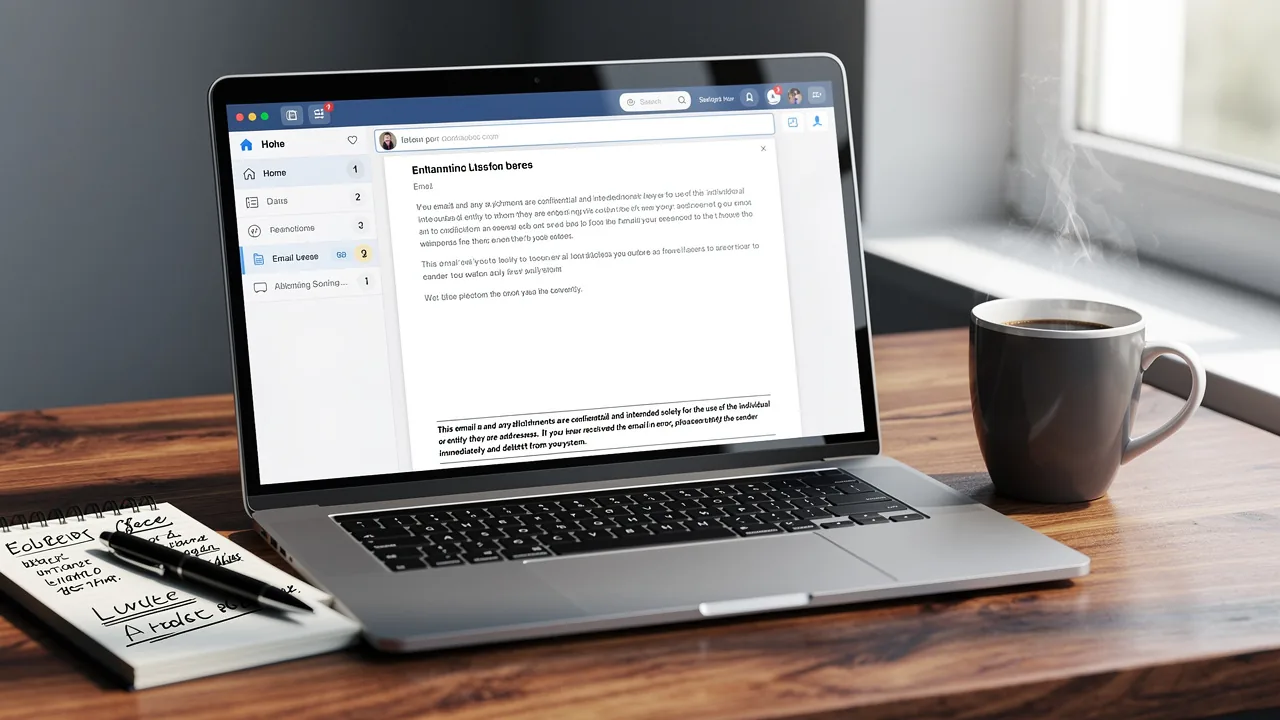
Best Practices for Using Confidentiality Notice Emails in Marketing
In the marketing landscape, confidentiality notice emails are essential for protecting sensitive information and maintaining client trust. These notices not
Sophie Grant
Email Signature Specialist, Scribe

On this page
- Introduction
- Define Confidentiality Notice Emails and Their Importance in Marketing
- Highlight Benefits of Confidentiality Notices in Email Marketing
- Implement Best Practices for Adding Confidentiality Notices to Email Signatures
- Avoid Common Mistakes in Implementing Confidentiality Notices
- Conclusion
- Frequently Asked Questions
- List of Sources
Introduction
In the marketing landscape, confidentiality notice emails are essential for protecting sensitive information and maintaining client trust. These notices not only safeguard proprietary data but also enhance brand professionalism, making them indispensable for organizations aiming to uphold client confidence. Many organizations struggle to implement confidentiality notices effectively, risking confusion among recipients. Businesses must ensure their confidentiality notices are impactful and compliant to maintain client trust.
Define Confidentiality Notice Emails and Their Importance in Marketing
Confidentiality notice emails are not merely formalities; they are essential for safeguarding sensitive information and maintaining client trust. These notices play a key role in marketing by protecting sensitive data, establishing professionalism, and reducing legal risks. In a marketing context, they reinforce the brand's commitment to privacy and responsible communication, which significantly enhances trust with clients and partners. By clearly outlining the extent of privacy, businesses risk losing client trust and damaging their brand image.
The significance of privacy alerts is underscored by the fact that 80% of consumers are more inclined to purchase from businesses that offer a customized experience, which includes transparent communication regarding data management. Additionally, industries such as healthcare and finance have stringent regulatory requirements, making the confidentiality notice email crucial for ensuring compliance. Case studies show that organizations implementing effective privacy statements not only safeguard sensitive information but also build trust and encourage customer loyalty and repeat business.
Regularly reviewing and updating these disclaimers is crucial to keep pace with evolving regulations and cybersecurity threats. This proactive approach not only enhances legal protection but also reinforces the brand's integrity in the eyes of its audience. By incorporating robust privacy alerts into their marketing strategies, businesses can effectively reduce risks while cultivating a reliable brand image.
With Scribe, marketing teams can automate email signature management, ensuring that privacy statements are consistently applied across all communications. Scribe's integration with business phone systems allows for real-time synchronization of signature information, making updates effortless and ensuring compliance with SOC 2 Type II standards. This indicates that as regulations change, Scribe can assist in preserving the integrity of confidentiality statements while improving the overall security of client communications.
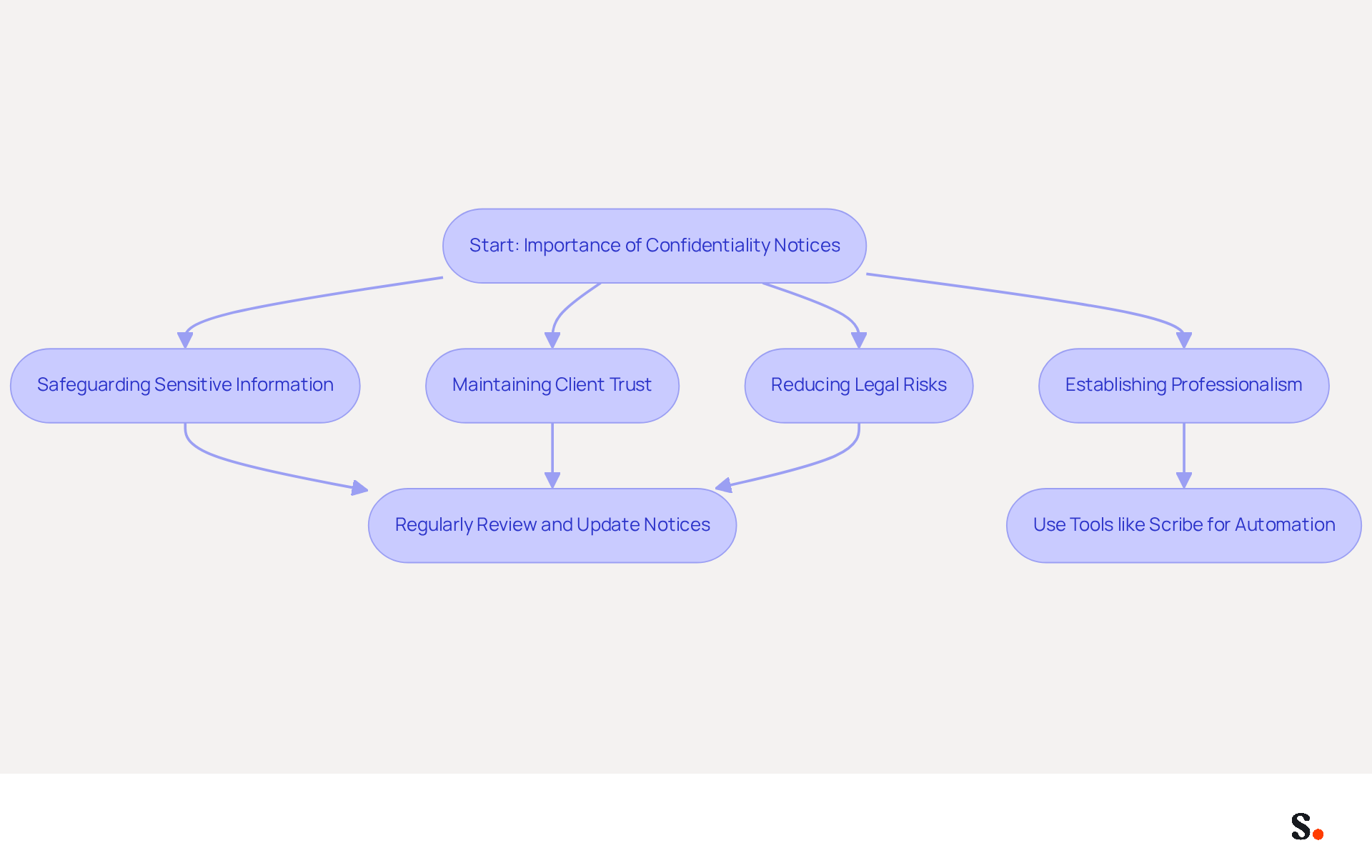
Highlight Benefits of Confidentiality Notices in Email Marketing
Confidentiality notice emails in marketing are not just formalities; they are essential tools for protecting sensitive information and fostering trust.
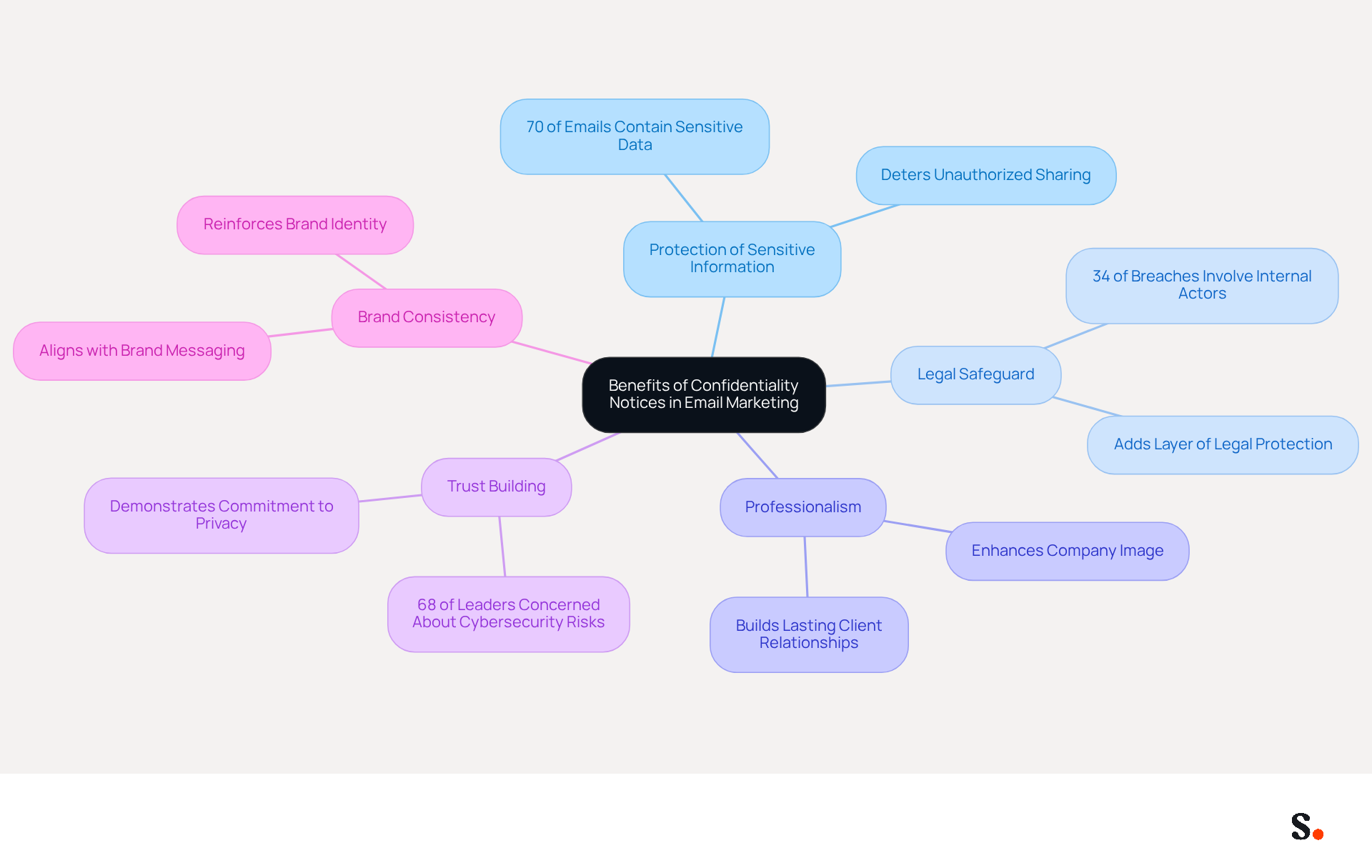
- Protection of Sensitive Information: Clearly stating that the message content is confidential helps deter unauthorized sharing and safeguards proprietary data. With 70% of messages containing sensitive data, this protection is essential for preserving data integrity.
- Legal Safeguard: Including a privacy statement adds a layer of legal protection, signaling the sender's intent to keep the information private. This is particularly important given that 34% of breaches involve internal actors, highlighting the need for robust safeguards.
- Professionalism: A strong privacy statement not only enhances a company's image but also helps in building lasting relationships with clients. This professionalism reflects a company's commitment to ethical practices, positively influencing client perceptions.
- Trust Building: In a landscape where 68% of business leaders express concerns about rising cybersecurity risks, trust becomes a critical factor in maintaining strong relationships. By demonstrating a commitment to privacy, businesses can build trust with clients and partners.
- Brand Consistency: Incorporating confidentiality notices into communication signatures ensures that all interactions align with the brand's messaging and values. This consistency reinforces brand identity across all touchpoints, which is vital for effective marketing.
For instance, one case study highlights how companies that prioritize email etiquette training significantly reduce the risk of misdirected emails, which can include a confidentiality notice email. This proactive approach not only protects sensitive information but also enhances overall communication safety.
Ultimately, neglecting privacy alerts can expose businesses to significant risks, undermining client trust and jeopardizing sensitive information.
Implement Best Practices for Adding Confidentiality Notices to Email Signatures
Implementing effective confidentiality notice emails in email signatures is crucial for protecting sensitive information. To effectively implement confidentiality notices in email signatures, consider the following best practices:
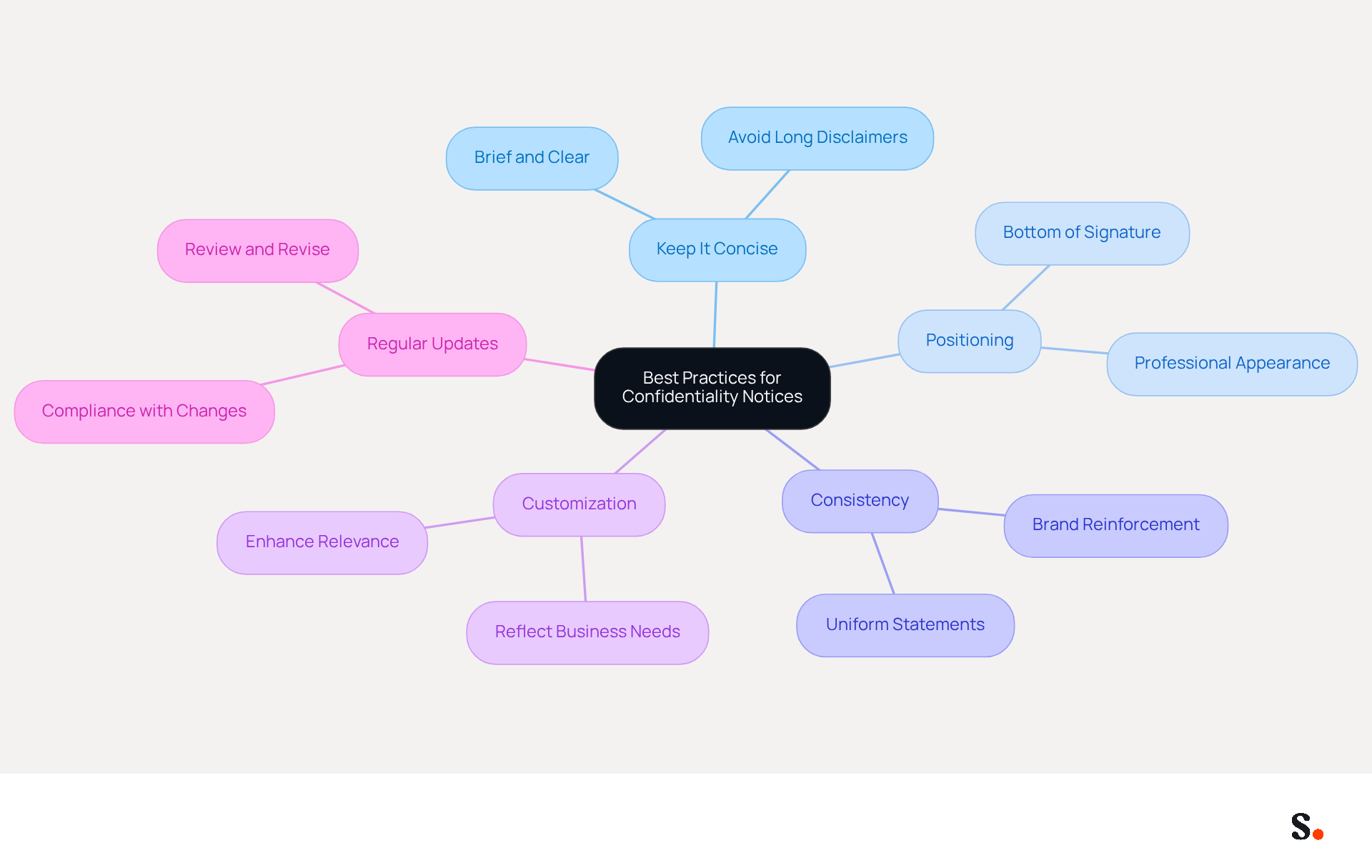
- Keep It Concise: Ensure that the announcement is brief and to the point. Long disclaimers risk being ignored, undermining their purpose, so clarity and simplicity are essential.
- Positioning: Place the privacy statement at the bottom of the signature, ensuring visibility without being intrusive. This maintains a professional appearance in communications.
- Consistency: Use the same privacy statement across all email signatures within the organization to reinforce the message and maintain brand consistency.
- Customization: Adapt the announcement to reflect the specific requirements of your business and the nature of the content being conveyed. This enhances its relevance and effectiveness.
- Regular Updates: Periodically review and revise the privacy statement to ensure it remains compliant with any changes in legal requirements or company policies.
By implementing these strategies, organizations can enhance the effectiveness of privacy alerts in digital signatures, which can be included in a confidentiality notice email, protecting sensitive data and minimizing liability. Organizations that adhere to legal guidelines in their signatures can prevent legal issues and enhance their professional reputation. A well-crafted privacy statement not only sets clear expectations for discretion but also showcases professionalism, particularly in fields like healthcare and finance. As companies increasingly concentrate on data-driven marketing, monitoring the effectiveness of these communications through metrics like engagement rates will become crucial for optimizing messaging strategies. Neglecting these practices could expose your organization to unnecessary risks and diminish trust in your communications.
Avoid Common Mistakes in Implementing Confidentiality Notices
To ensure confidentiality notices are effective, organizations must avoid common pitfalls that undermine their purpose:
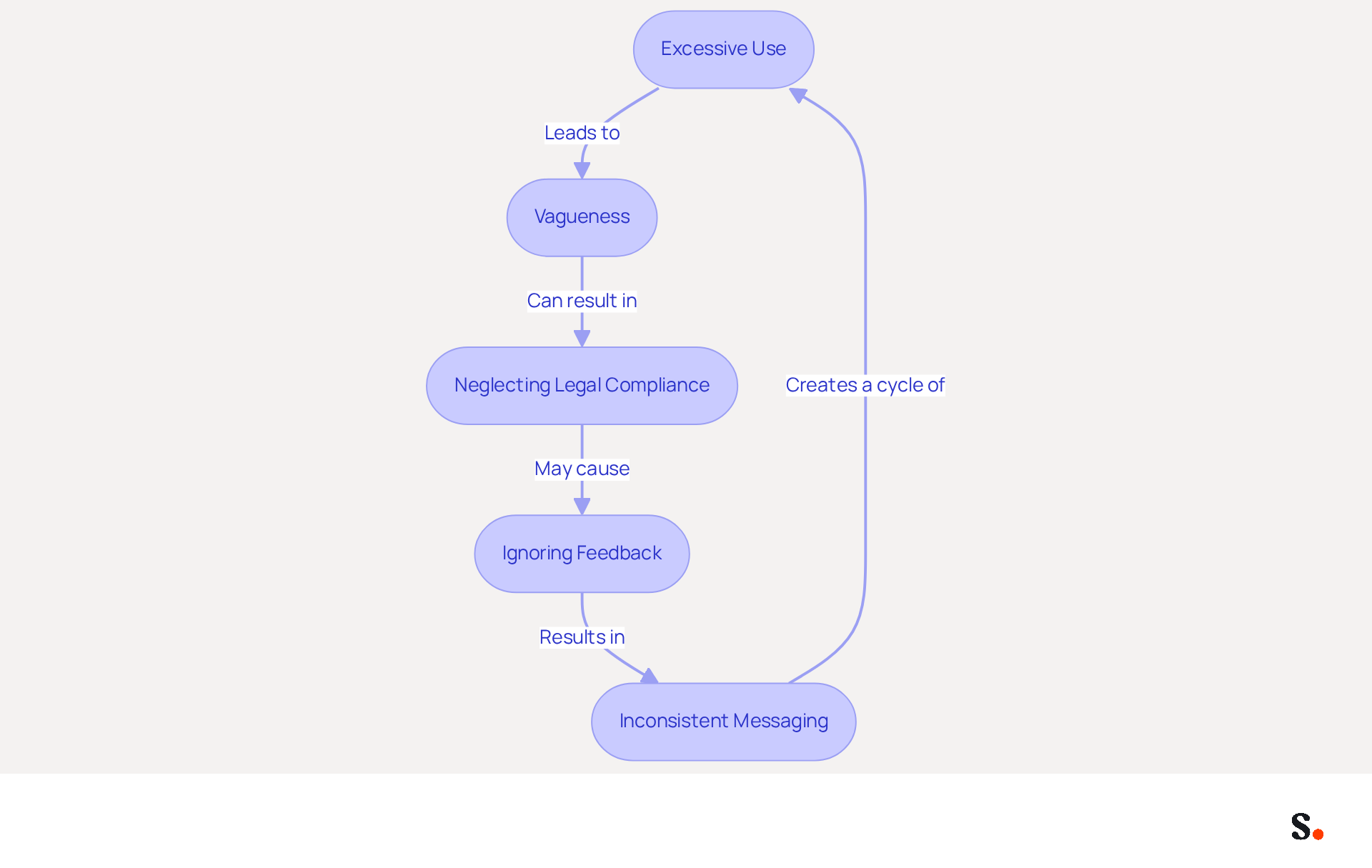
- Excessive use of a confidentiality notice email can diminish its effectiveness; it should be included selectively in emails containing sensitive content. Overusing them may lead recipients to ignore the notice altogether, as boilerplate disclaimers can dilute their impact.
- Vagueness is another issue to avoid. Unclear language fails to convey the privacy of the details effectively. Specificity is key; organizations should clearly define what constitutes confidential information to enhance understanding. Phrases like 'This message is intended only for the recipient' can reinforce the message of privacy.
- Neglecting legal compliance can lead to serious consequences for the business. It is essential to ensure that the confidentiality statement adheres to relevant laws and regulations. Non-compliance can expose the business to legal risks, making it crucial to stay updated on applicable legal standards.
- Organizations should actively seek and consider recipient feedback on the confidentiality notice. If recipients find it confusing or unnecessary, revising it to enhance clarity and relevance can significantly improve its effectiveness.
- Inconsistent messaging can create confusion. It is essential to ensure that all employees utilize the same privacy statement to avoid mixed signals and uphold brand uniformity. Regular training and reminders can reinforce this practice, ensuring that everyone is aligned in their communication efforts. Furthermore, placing the privacy footer at the top of messages containing sensitive information can improve visibility.
By addressing these common pitfalls, organizations can enhance the clarity and effectiveness of their confidentiality notice email, ultimately safeguarding sensitive information and upholding professional standards in communication.
Conclusion
Confidentiality notice emails are not just a legal formality; they are crucial for establishing trust in business relationships. These notices play a vital role in the marketing landscape, ensuring the protection of sensitive information while fostering trust between businesses and their clients. When organizations implement these notices effectively, they comply with legal standards and show their commitment to privacy and responsible communication. This proactive approach helps maintain a professional image and protects brand integrity.
The article highlights several key benefits of confidentiality notices, including:
- The protection of sensitive data
- Legal safeguards
- The enhancement of professionalism and trust
By adopting best practices such as:
- Concise messaging
- Consistent application
- Regular updates
Businesses can maximize the effectiveness of their confidentiality notices. Additionally, avoiding common pitfalls - like excessive use and vagueness - ensures that these notices remain impactful and relevant.
Ultimately, the significance of confidentiality notice emails extends beyond mere compliance; they are integral to building lasting relationships with clients and partners. As organizations navigate an increasingly data-driven marketing environment, prioritizing the implementation of robust privacy alerts will not only mitigate risks but also enhance overall communication effectiveness. In a landscape where data breaches are increasingly common, prioritizing privacy can set an organization apart from its competitors.
Frequently Asked Questions
What are confidentiality notice emails?
Confidentiality notice emails are formal communications that safeguard sensitive information and maintain client trust, playing a crucial role in marketing by protecting data and establishing professionalism.
Why are confidentiality notice emails important in marketing?
They protect sensitive data, reinforce the brand's commitment to privacy, reduce legal risks, and enhance trust with clients and partners.
How do confidentiality notice emails affect consumer behavior?
80% of consumers are more inclined to purchase from businesses that provide a customized experience, which includes transparent communication about data management.
Which industries particularly benefit from confidentiality notice emails?
Industries such as healthcare and finance benefit significantly due to their stringent regulatory requirements, making these emails crucial for compliance.
What are the benefits of implementing effective privacy statements?
Effective privacy statements safeguard sensitive information, build trust, encourage customer loyalty, and promote repeat business.
Why is it important to regularly review and update confidentiality notice emails?
Regular reviews and updates are essential to keep pace with evolving regulations and cybersecurity threats, enhancing legal protection and reinforcing brand integrity.
How can Scribe assist with confidentiality notice emails?
Scribe can automate email signature management, ensuring that privacy statements are consistently applied across all communications and allowing for real-time synchronization of signature information.
What compliance standards does Scribe help maintain?
Scribe helps maintain compliance with SOC 2 Type II standards, ensuring that confidentiality statements remain intact as regulations change.
List of Sources
- Define Confidentiality Notice Emails and Their Importance in Marketing
- The Importance of Email Disclaimers for Businesses - Tyler Law LLP (https://tylerlawllp.com/blog-posts/the-importance-of-email-disclaimers-for-businesses)
- 49 Top Email Marketing Statistics (https://forbes.com/advisor/business/software/email-marketing-statistics-jul-26)
- 100 Compelling Email Statistics for 2026 | PGM Solutions (https://porchgroupmedia.com/blog/100-compelling-email-statistics-to-inform-your-strategy-in-2023)
- Email Disclaimers: Tips for Business Communication | Mailchimp (https://mailchimp.com/resources/email-disclaimer)
- Highlight Benefits of Confidentiality Notices in Email Marketing
- 17 Data Security Stats on Protecting & Sharing Sensitive Data | Virtru (https://virtru.com/blog/email-security/statistics)
- How to Use an Email Confidentiality Notice | Mailchimp (https://mailchimp.com/resources/email-confidentiality-notice)
- What is the value in adding an email confidentiality notice? (https://law.stackexchange.com/questions/577/what-is-the-value-in-adding-an-email-confidentiality-notice)
- Email Confidentiality Notice Austin TX - Cenkus Law (https://cenkuslaw.com/annoying-email-confidentiality-disclaimers)
- Implement Best Practices for Adding Confidentiality Notices to Email Signatures
- Email Disclaimer: What It Is, When Do You Need It + Examples | iubenda (https://iubenda.com/en/blog/email-disclaimer)
- Email signature statistics: Why every business should optimize their email signatures — Stripo.email (https://stripo.email/blog/email-signature-statistics-why-every-business-should-optimize-their-email-signatures)
- Email signature statistics and trends in 2024 (https://wisestamp.com/blog/email-signature-statistics)
- Email signatures | University Marketing and Communications | Illinois State (https://universitymarketing.illinoisstate.edu/identity/editorial/email-signatures)
- How to Use an Email Confidentiality Notice | Mailchimp (https://mailchimp.com/resources/email-confidentiality-notice)
- Avoid Common Mistakes in Implementing Confidentiality Notices
- Proposed email disclaimer law would create new problems rather than solve old ones, says expert (https://pinsentmasons.com/out-law/analysis/proposed-email-disclaimer-law-would-create-new-problems-rather-than-solve-old-ones-says-expert)
- How to Use an Email Confidentiality Notice | Mailchimp (https://mailchimp.com/resources/email-confidentiality-notice)
- EMAIL CONFIDENTIALITY/DISCLAIMERS – use, or don’t use? - Barna, Guzy & Steffen, LTD. (https://bgs.com/blog/2018/07/02/email-confidentiality-disclaimers-use-or-dont-use)
- Email Confidentiality Notice Austin TX - Cenkus Law (https://cenkuslaw.com/annoying-email-confidentiality-disclaimers)
Get started with Scribe
Keep every signature compliant
Free 14-day trial — no credit card.