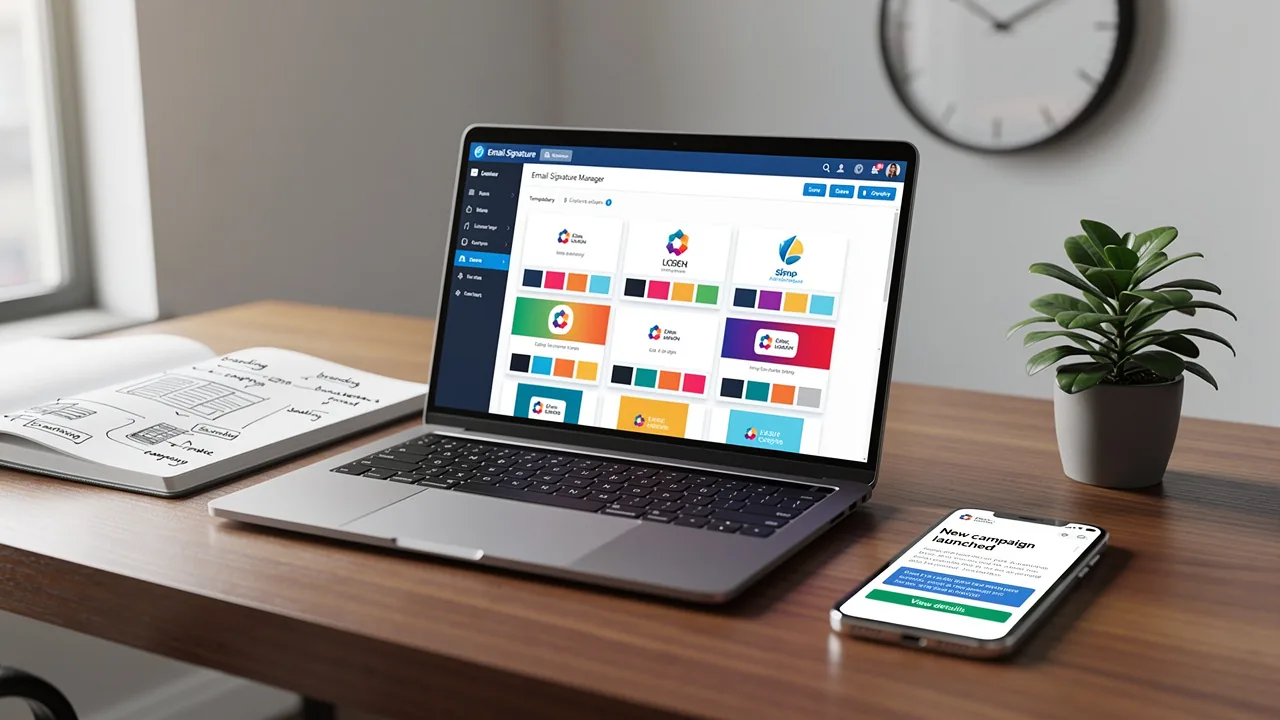
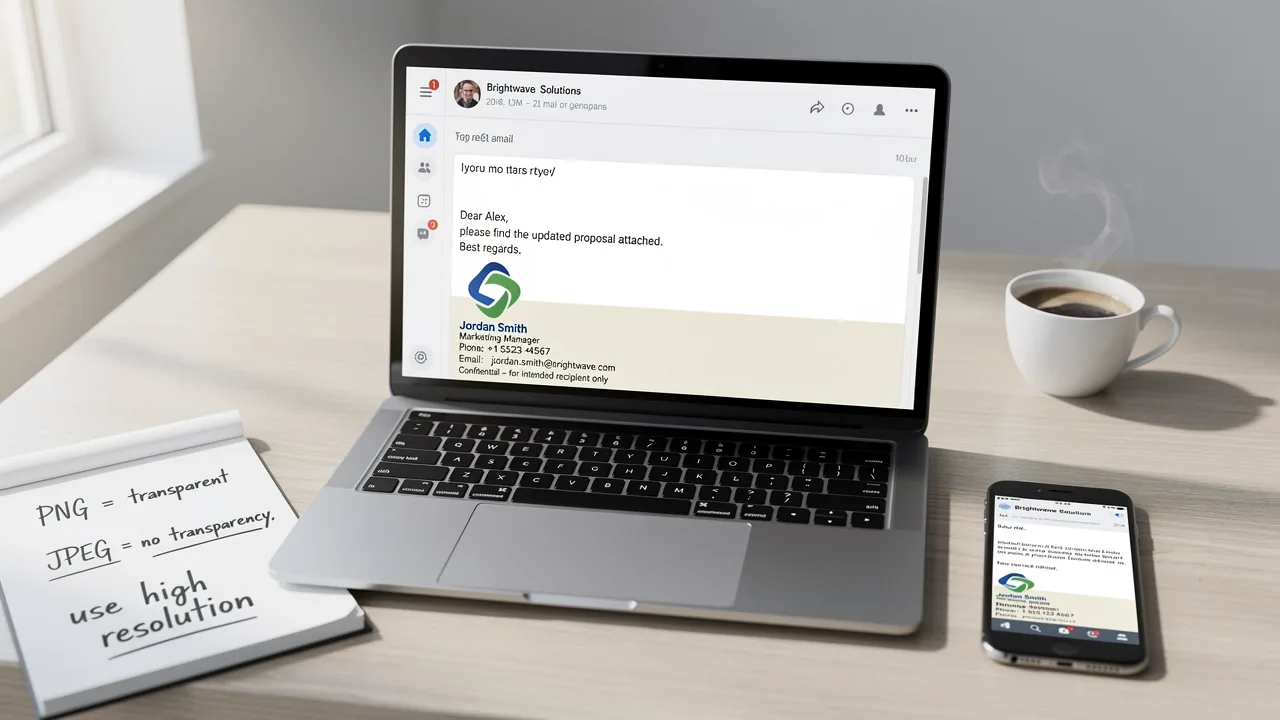
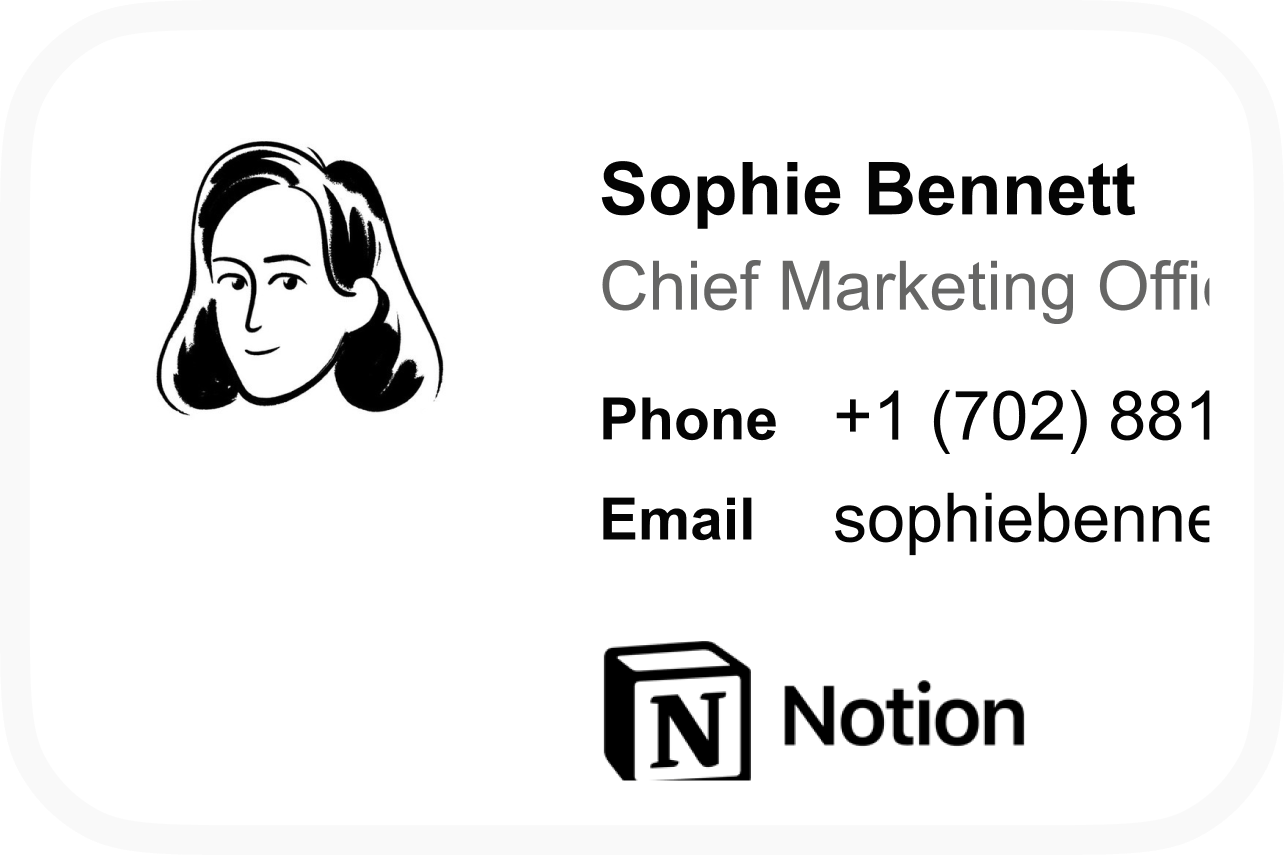
Compare Email Signature Structure: Best Practices vs. Common Mistakes
Establishing a professional email signature is crucial for enhancing brand recognition and communication effectiveness. By understanding the best practices for
Sophie Grant
Email Signature Specialist, Scribe

Introduction
Establishing a professional email signature is crucial for enhancing brand recognition and communication effectiveness. By understanding the best practices for structuring email signatures and recognizing common design mistakes, organizations can significantly enhance their professional image and engagement rates.
Organizations often struggle to balance essential information with brand identity in their email signatures. This oversight can lead to a diluted brand image and reduced engagement rates.
This article examines the key components of effective email signatures, highlighting best practices and common pitfalls to assist organizations in optimizing their digital communication strategies.
Key Elements of Effective Email Signatures
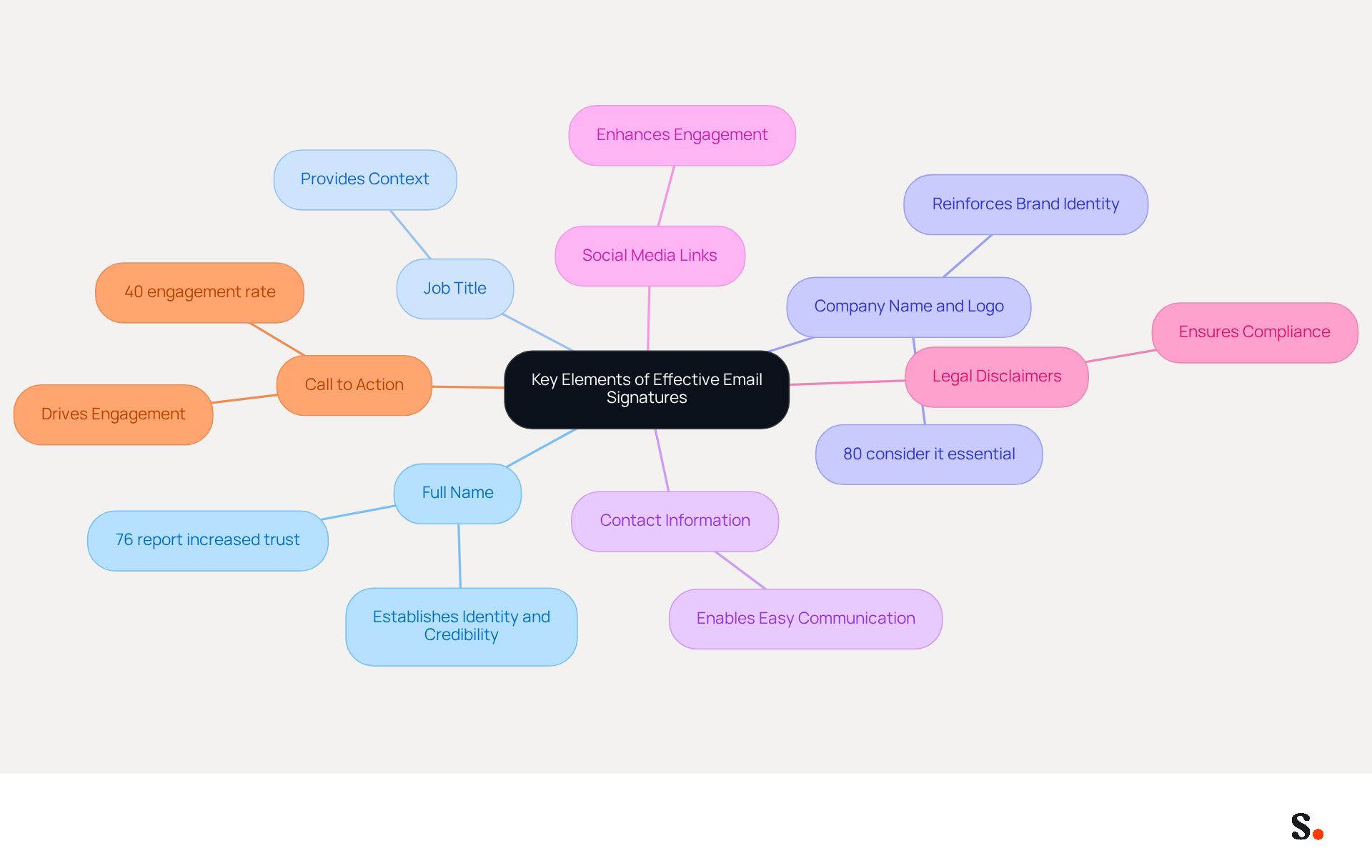
An effective email signature structure is crucial for establishing professionalism and enhancing brand recognition. These components include:
- Full Name: Clearly stating the sender's name establishes identity and credibility, which is crucial for building trust; 76% of individuals report that branded email signatures increase their trust in the sender.
- Job Title: Including the job title helps individuals understand the sender's role within the organization, adding context to the communication.
- Company Name and Logo: This reinforces brand identity and provides a visual cue for recognition, contributing to a consistent brand image that 80% of businesses consider essential.
- Contact Information: Vital details such as phone number and contact address enable easy communication, ensuring that individuals can reach out without barriers.
- Social Media Links: Links to professional social media profiles can enhance engagement, allowing recipients to connect through various platforms.
- Legal Disclaimers: Depending on the industry, including legal disclaimers may be necessary to comply with regulations, ensuring that communications are both professional and compliant.
- Call to Action: A subtle prompt, such as a link to a recent blog post or a promotional offer, can drive engagement; messages have an engagement rate of 40%, significantly higher than traditional campaigns.
Incorporating these elements into the email signature structure allows businesses to create identifiers that convey essential information and serve as effective marketing tools. Regular updates and adherence to best practices, such as using Arial or Helvetica fonts at 14-16px for readability, are essential for maintaining the effectiveness of digital identifiers. Furthermore, with Scribe's automated synchronization of contact details with Aircall, any modifications made in your Aircall settings will be automatically reflected in your Scribe configurations. This integration keeps your brand consistent across all communications and makes it easier for users to manage updates. This strategic investment in digital identifiers ensures they remain a powerful asset in communication strategies.
Best Practices for Structuring Email Signatures
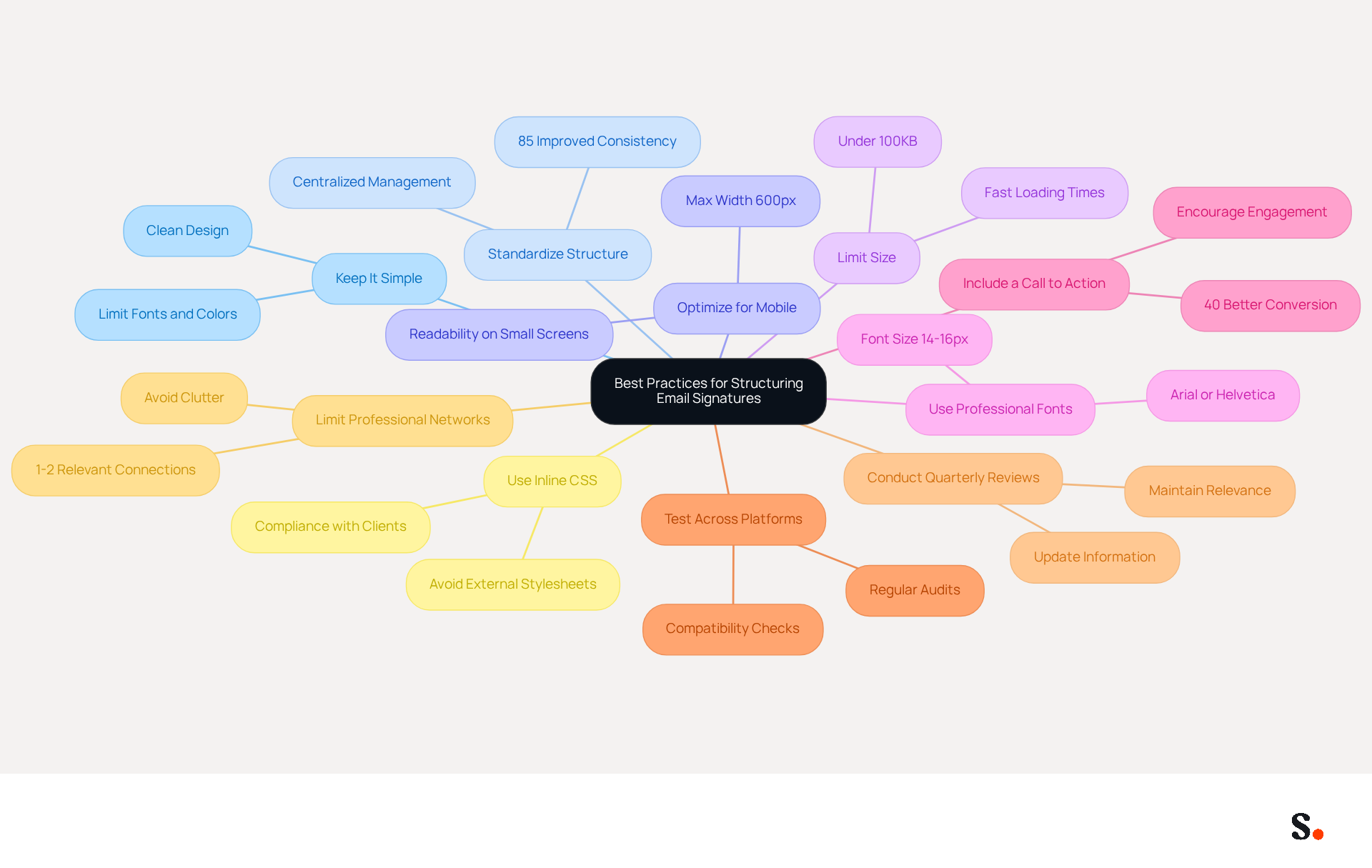
To create an effective email signature structure, businesses must prioritize clarity and consistency in their design.
- Keep It Simple: A clean and uncluttered design enhances visual appeal and readability. Limiting the number of fonts and colors maintains consistency and professionalism.
- Standardizing the email signature structure across the organization ensures consistency and professionalism in all communications. Organizations that utilize centralized management of digital identifiers often face challenges in maintaining consistent branding and engagement. However, those that do experience 85% improved consistency in their identity and three times greater engagement in campaigns. Scribe ensures that any changes in your Aircall settings are instantly updated in your email signatures, maintaining brand integrity. Scribe can be deployed quickly, allowing all users to manage their signatures easily within a day.
- Optimize for Mobile: Since more than 60% of business communications happen on mobile devices, it’s crucial that your signatures are easy to read on smaller screens. Aim for a maximum width of 600 pixels to avoid display issues.
- Limit Size: Keep the total size of the message footer under 100KB to ensure fast loading times and proper display across various clients.
- Use Professional Fonts: Stick to standard fonts like Arial or Helvetica at 14-16px for body text, ensuring readability and alignment with the brand's image.
- Include a Call to Action: Encourage engagement by adding a strategic call to action, such as a link to a company resource or social media page. Effective CTAs in message footers can convert 40% better than generic links.
- Test Across Platforms: Ensure that the identifier displays correctly across various messaging clients and devices to avoid formatting issues. Regular audits and testing can help identify and rectify any discrepancies.
- Conduct Quarterly Reviews: Regularly assessing and updating digital identifiers is essential to maintain accuracy and relevance. This practice ensures that all information is current and reflects any changes in roles or contact details. Scribe's automated management of digital identifiers enables real-time synchronization from your business phone systems, reducing the necessity for manual updates.
- Limit Professional Networks: Include only 1-2 relevant professional connections in contact details to avoid clutter and enhance professionalism.
- Use Inline CSS: Ensure compliance with client requirements by using inline CSS for styling, as modern CSS and JavaScript may not function in most clients.
By implementing these best practices, businesses can significantly enhance their communication effectiveness and brand representation through an improved email signature structure. With Scribe's SOC 2 Type II compliance, you can trust that your data is secure while managing digital identifiers independently after the initial IT setup. Furthermore, over 10,000 marketing and IT teams globally depend on Scribe for their management needs related to electronic correspondence.
Common Mistakes in Email Signature Design
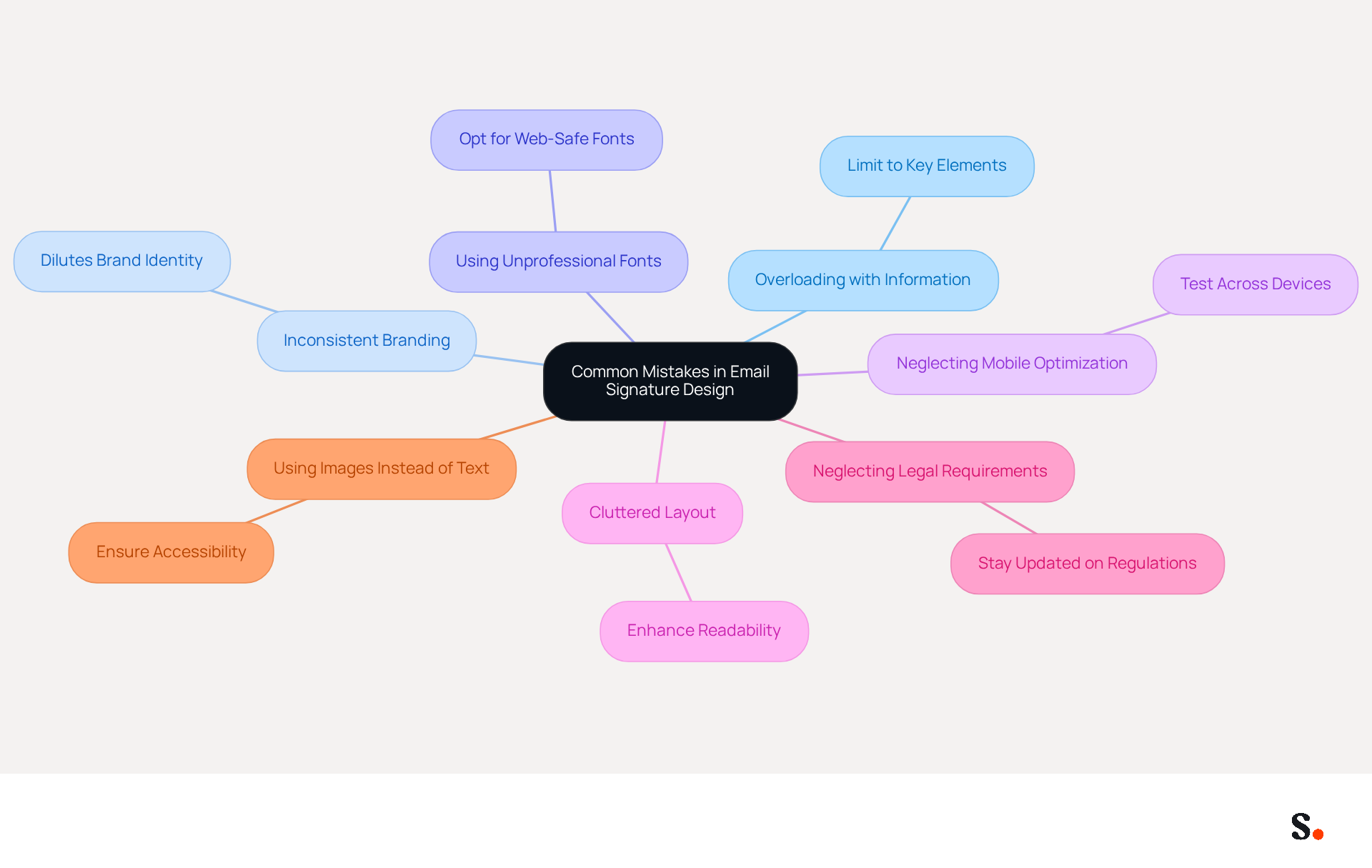
While email footers are crucial for professional communication, many businesses overlook common design pitfalls that diminish their impact. Here are some prevalent mistakes to avoid:
- Overloading with Information: Limit sign-offs to key elements: name, title, company, and one or two contact methods to ensure clarity.
- Inconsistent Branding: A lack of standardized marks across the organization can confuse recipients and dilute brand identity. Consistency is crucial for building trust and presenting a unified image.
- Using Unprofessional Fonts: Non-standard or overly decorative fonts can detract from the professionalism of the mark. Opting for web-safe fonts like Arial or Helvetica ensures readability and a polished appearance.
- Neglecting Mobile Optimization: With over 60% of messages accessed on mobile devices, identifiers that aren't tailored for these platforms may appear distorted or difficult to read. Testing identifiers across various devices is essential for ensuring proper display.
- Cluttered Layout: A cluttered design can hinder effective communication. Keeping the layout simple enhances readability and engagement.
- Neglecting Legal Requirements: Staying updated on legal requirements for digital signatures is essential, particularly in regulated industries.
- Using Images Instead of Text: Relying solely on images for contact information can create accessibility issues and may not display correctly in all messaging clients. Text-based information is more reliable and ensures that recipients can easily access your contact details.
Addressing these common pitfalls not only enhances communication but also strengthens brand representation.
Impact of Brand Consistency on Email Signatures
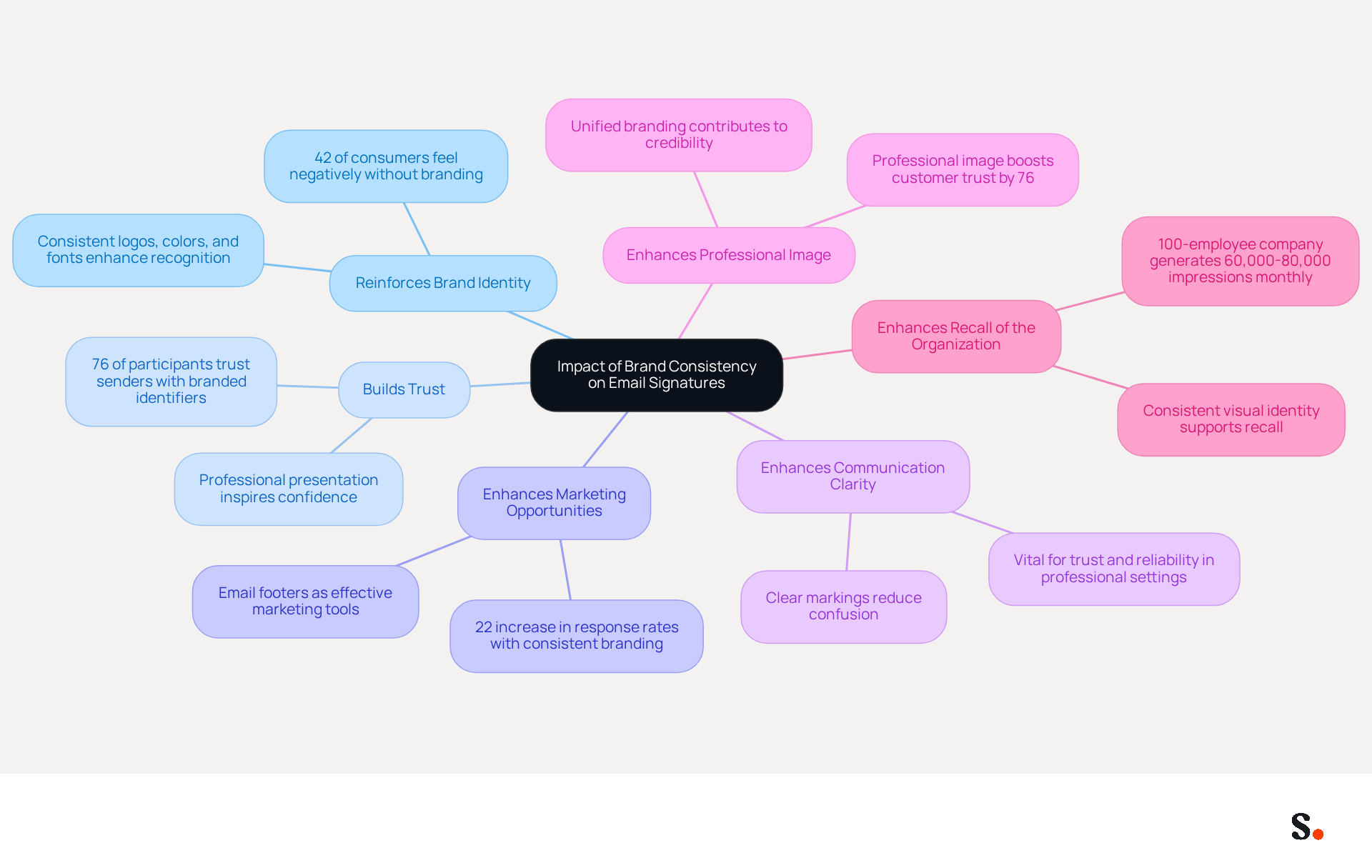
Digital footers play a pivotal role in shaping customer perceptions and enhancing an organization's overall image. The impacts are significant:
- Reinforces Brand Identity: Consistent application of logos, colors, and fonts across digital communications enables viewers to quickly recognize the sender's organization, thereby strengthening brand awareness. When businesses lack branded elements, 42% of consumers report feeling negatively, which underscores the critical need for visual consistency.
- Builds Trust: A professional and uniform mark fosters trust among recipients, reflecting a commitment to quality and attention to detail. Research indicates that 76% of participants have greater trust in senders when messages include branded identifiers, highlighting the importance of consistency in building credibility.
- Enhances Marketing Opportunities: Well-structured email footers can serve as effective marketing tools, promoting campaigns or driving traffic to websites and social media. By adopting consistent email branding, organizations can see over a 22% increase in response rates, showcasing the marketing power of well-crafted email footers.
- Enhances Communication Clarity: Consistent markings ensure that individuals receive clear and accurate information, reducing confusion and improving communication effectiveness. This clarity is vital in professional settings where trust and reliability are paramount.
- Enhances Professional Image: A unified branding across all communications contributes to a professional image, making the organization seem more credible and trustworthy. Consistent branding can boost customer trust by as much as 76%, making it a strategic asset for businesses.
- Enhances Recall of the Organization: Consistent visual identity in digital communications supports recall, making it easier for recipients to remember the organization and its offerings. A company with 100 employees produces around 60,000-80,000 branded impressions each month, demonstrating the visibility and influence of well-managed digital signatures.
Focusing on brand consistency in email signature structure goes beyond aesthetics; it’s a strategic move that can greatly impact customer trust and engagement. Thus, a strategic focus on brand consistency in email signature structure can lead to improved customer engagement and trust.
Conclusion
An effective email signature structure is crucial for enhancing professionalism and reinforcing brand identity. By understanding the key components that make up a successful email signature, organizations can create a powerful tool that conveys important information and serves as a marketing asset. The emphasis on clarity, consistency, and strategic design ensures that email signatures are not just an afterthought but a vital part of communication strategies.
Throughout the article, best practices for structuring email signatures were highlighted, including the importance of:
- Simplicity
- Mobile optimization
- The use of professional fonts
Organizations often struggle with creating effective email signatures due to common pitfalls like:
- Information overload
- Lack of mobile optimization
Furthermore, the importance of brand consistency in shaping customer perception was highlighted, revealing how a unified approach can significantly enhance trust and engagement.
Ultimately, prioritizing email signature design is a strategic move that can enhance communication and strengthen customer trust. Organizations should leverage tools like Scribe to ensure that their email signatures are compliant with industry standards and reflect their brand consistently across all communications. By leveraging effective email signature tools, businesses can turn their signatures into a strategic marketing asset that enhances engagement and builds lasting client relationships.
Frequently Asked Questions
What are the key elements of an effective email signature?
The key elements include the sender's full name, job title, company name and logo, contact information, social media links, legal disclaimers, and a call to action.
Why is including a full name in an email signature important?
Including a full name establishes identity and credibility, which is crucial for building trust; 76% of individuals report that branded email signatures increase their trust in the sender.
How does a job title in an email signature benefit communication?
A job title helps individuals understand the sender's role within the organization, adding context to the communication.
What role does a company name and logo play in an email signature?
The company name and logo reinforce brand identity and provide a visual cue for recognition, contributing to a consistent brand image that 80% of businesses consider essential.
Why is contact information necessary in an email signature?
Contact information, such as phone number and address, enables easy communication, ensuring that individuals can reach out without barriers.
How can social media links enhance an email signature?
Links to professional social media profiles can enhance engagement, allowing recipients to connect through various platforms.
Are legal disclaimers important in email signatures?
Yes, including legal disclaimers may be necessary to comply with regulations, ensuring that communications are both professional and compliant.
What is the purpose of a call to action in an email signature?
A call to action, such as a link to a recent blog post or promotional offer, can drive engagement; messages with calls to action have an engagement rate of 40%, significantly higher than traditional campaigns.
What best practices should be followed for email signature design?
Best practices include using Arial or Helvetica fonts at 14-16px for readability and regularly updating the signature to maintain its effectiveness.
How does Scribe integrate with Aircall for email signatures?
Scribe's automated synchronization with Aircall ensures that any modifications made in Aircall settings are automatically reflected in Scribe configurations, keeping the brand consistent across all communications.
List of Sources
- Key Elements of Effective Email Signatures
- Email Signature Best Practices for 2026 (+ 15 Pro Examples) (https://wavecnct.com/blogs/email-signature-best-practices-2026)
- Why Email Signatures Must Be In Your 2026 Marketing Plan | Rocketseed (https://rocketseed.com/blog/what-are-the-biggest-email-trends-for-2026)
- The impact of email signatures on your branding (https://signitic.com/en/resources/the-impact-of-email-signatures-on-your-branding)
- Research Recap: Branded Email Signatures Increase Company Recognition, Trust - Demand Gen Report (https://demandgenreport.com/industry-news/research-recap-branded-email-signatures-increase-company-recognition-trust/47252)
- Best Practices for Structuring Email Signatures
- Email signature statistics: Why every business should optimize their email signatures — Stripo.email (https://stripo.email/blog/email-signature-statistics-why-every-business-should-optimize-their-email-signatures)
- Why Email Signatures Must Be In Your 2026 Marketing Plan | Rocketseed (https://rocketseed.com/blog/what-are-the-biggest-email-trends-for-2026)
- Email Signature Best Practices for 2026 (+ 15 Pro Examples) (https://wavecnct.com/blogs/email-signature-best-practices-2026)
- Email Signature Best Practices Guide With Examples - MailerLite (https://mailerlite.com/blog/email-signature-best-practices)
- Common Mistakes in Email Signature Design
- 11 Common Email Signature Mistakes to Avoid - Gimmio (https://blog.gimm.io/email-signature-mistakes)
- 10 Email Signature Mistakes Hurting Your Brand (2026) | Signkit (https://beta.signkit.io/blog/email-signature-mistakes)
- CodaBears | Email Signature Mistakes That Hurt Your Brand (https://codabears.com/en/product/blog/10-email-signature-mistakes-how-to-fix-them--10_Email_Signature_Mistakes)
- Email Signature Best Practices for 2026 (+ 15 Pro Examples) (https://wavecnct.com/blogs/email-signature-best-practices-2026)
- Impact of Brand Consistency on Email Signatures
- Master Corporate Email Signature Management for Brand Consistency (https://scribe-mail.com/en-US/blog/master-corporate-email-signature-management-for-brand-consistency)
- 40+ Email Signature Statistics for 2026 (Data + Insights) (https://wavecnct.com/blogs/email-signature-statistics)
- The impact of email signatures on your branding (https://signitic.com/en/resources/the-impact-of-email-signatures-on-your-branding)
- Brand Consistency Builds Consumer Trust (https://socalnewsgroup.com/2023/11/17/brand-consistency-builds-consumer-trust-and-revenue)
- Why Email Signatures Must Be In Your 2026 Marketing Plan | Rocketseed (https://rocketseed.com/blog/2026-marketing-plan-email-signatures)
Get started with Scribe
See why teams switch to Scribe
Free 14-day trial — no credit card.