How to End an Email Formally: Steps for Professional Communication
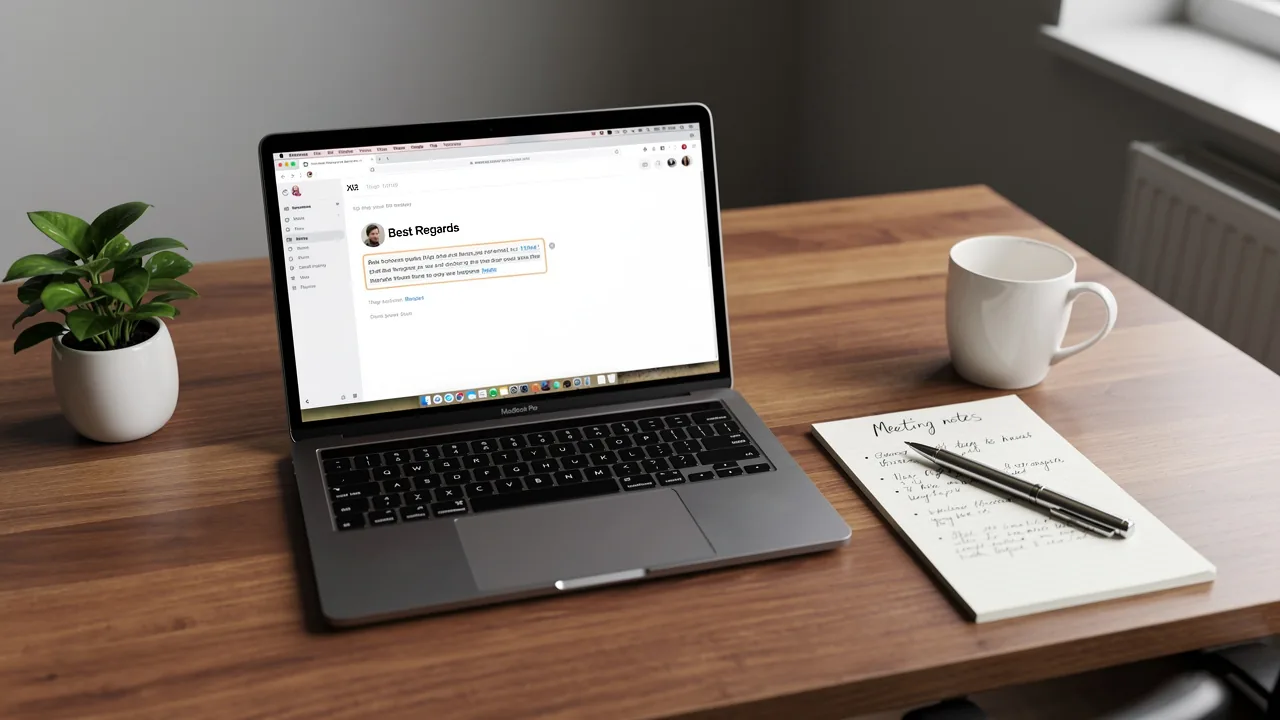
In the professional world, the way you conclude an email can shape perceptions and influence relationships. Understanding how to end an email formally is
Sophie Grant
Email Signature Specialist, Scribe
Introduction
In the professional world, the way you conclude an email can shape perceptions and influence relationships. Understanding how to end an email formally is crucial in today's landscape, where first impressions can significantly impact relationships. A well-crafted email closing shows respect and reinforces your brand identity, making it a vital skill for effective communication.
However, many professionals find it challenging to navigate the nuances of formal email endings, including the appropriate phrases, maintaining professionalism, and ensuring consistent formatting. Mastering the art of email closings can enhance clarity and strengthen connections.
Understand the Importance of Formal Email Endings
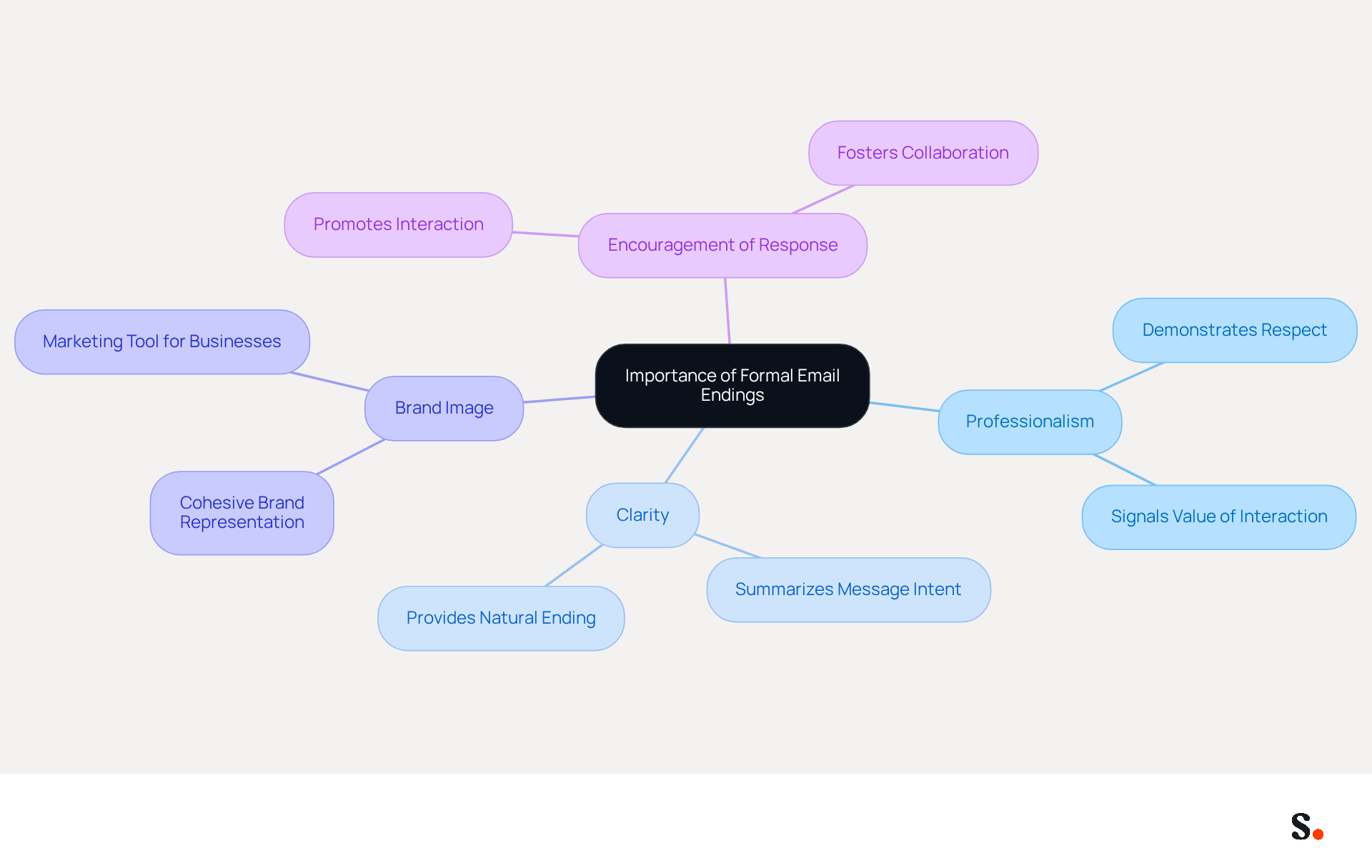
Formal message endings are essential for establishing professionalism and influencing perceptions in communication. A well-crafted conclusion enhances professionalism and leaves a lasting impression. The following reasons illustrate the importance of formal email endings:
- Professionalism: A formal conclusion demonstrates respect for the recipient and the context of the communication, signaling that you value the interaction.
- Clarity: A concise conclusion summarizes the message's intent and provides a natural ending, making it easier for the recipient to understand your communication.
- Brand Image: Consistent and professional message endings contribute to a cohesive brand image, particularly for businesses like Scribe, where each correspondence can serve as a marketing tool.
- Encouragement of Response: A courteous conclusion can encourage the recipient to reply, promoting better interaction and collaboration.
Recognizing these aspects demonstrates just how important it is to understand how to end an email formally. Research indicates that understanding how to end an email formally, with closings such as 'Sincerely' or 'Respectfully,' is particularly effective in establishing professionalism, especially in initial interactions or exchanges with senior executives. Case studies demonstrate that using appropriate sign-offs enhances clarity and effectiveness, leaving a positive impression and fostering stronger connections. By prioritizing formal message endings, you not only enhance your communication but also open doors to future opportunities.
Craft Effective Closing Phrases for Professional Emails
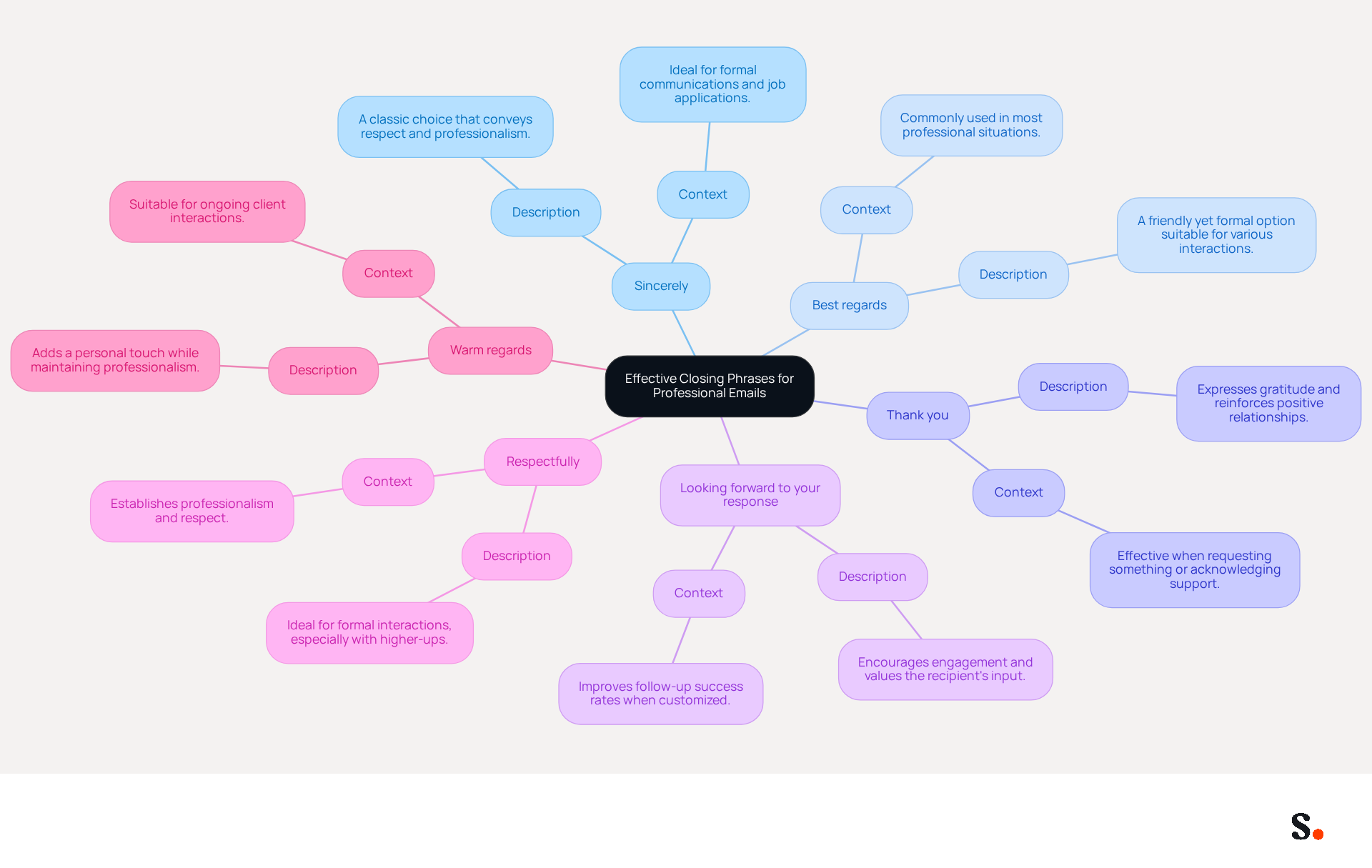
Understanding how to end an email formally can significantly shape the tone and effectiveness of your email. Here are some effective closing phrases to consider:
- Sincerely: A classic choice that conveys respect and professionalism.
- Best regards: A friendly yet formal option suitable for a wide range of professional interactions.
- Thank you: Expresses gratitude and is particularly effective when requesting something, reinforcing positive relationships.
- Looking forward to your response: Encourages engagement and indicates that you value the recipient's input, which has been shown to improve follow-up success rates by 25% when appropriately customized.
- Respectfully: Ideal for formal interactions, especially when addressing higher-ups or clients, establishing professionalism and respect.
- Warm regards: Adds a personal touch while maintaining professionalism, suitable for ongoing client interactions.
When considering how to end an email formally, take into account the relationship with the recipient and the context of the message. Tailoring your closing remarks is essential for maximizing the impact of your communication, as shown by a marketing manager who experienced a 30% rise in engagement rates after incorporating clear conclusions in their correspondence. Moreover, standardized email formats provided by Scribe can significantly boost brand recall by 15%, highlighting the significance of consistency in email interactions. With Scribe's automated synchronization with Aircall, any modifications made in your Aircall configuration will automatically reflect in your Scribe signatures, ensuring brand consistency across all interactions. Scribe also adheres to SOC 2 Type II compliance, ensuring secure data handling, which is crucial for maintaining trust in professional correspondence. Knowing how to end an email formally is essential, as effective closing remarks not only provide closure but also encourage action, making them a crucial element of professional interaction. Remember to avoid overly casual or passive-aggressive phrases to maintain professionalism in your correspondence.
Incorporate Professional Signatures and Formatting
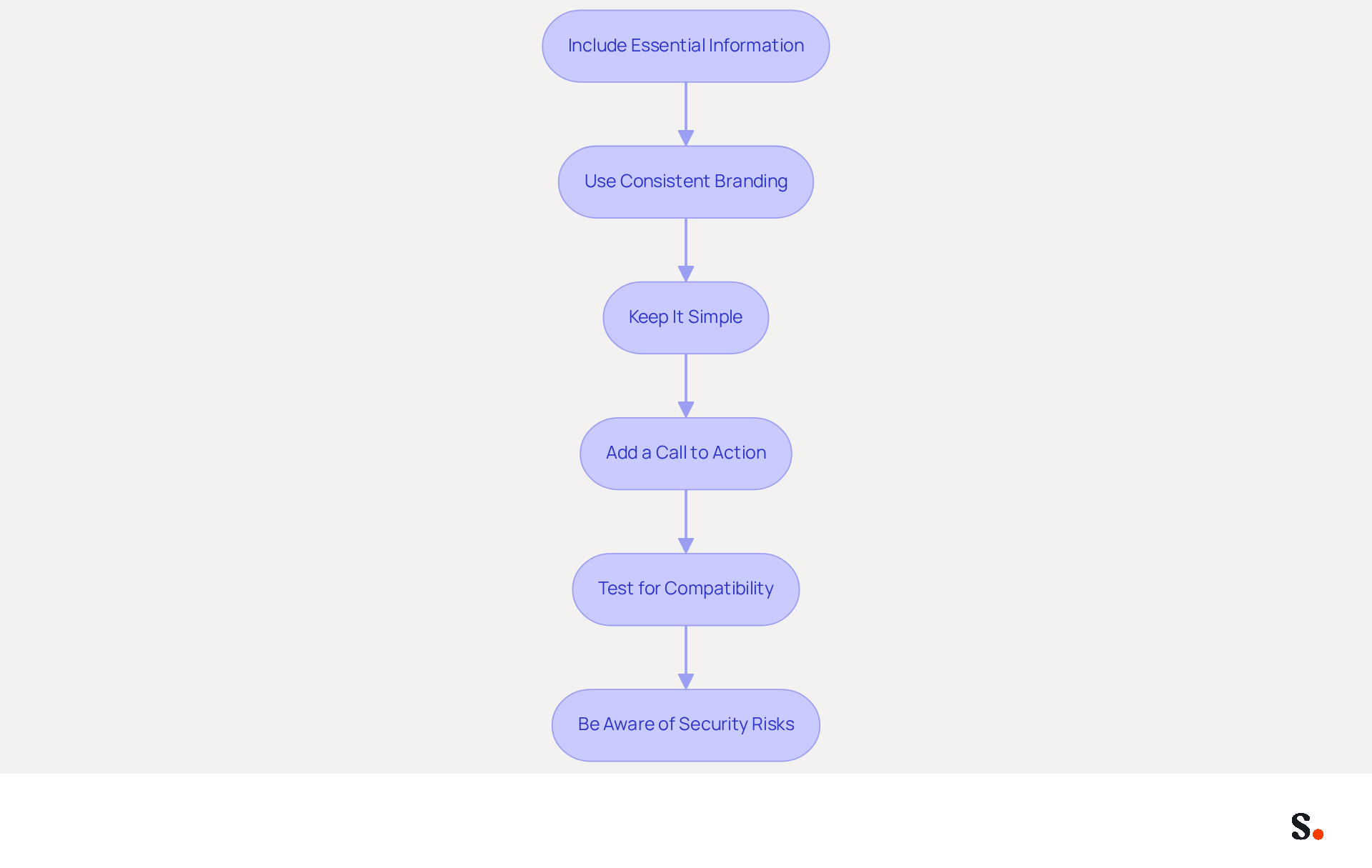
A professional communication footer is essential for effective correspondence, as it not only provides contact details but also reinforces brand identity. Here’s how to create an impactful email signature:
- Include Essential Information: Your name should feature your full name, job title, company name, and contact details. This ensures recipients can easily reach you, enhancing communication efficiency.
- Use Consistent Branding: Incorporate your company logo and utilize brand colors to create a cohesive appearance. Consistent branding is vital for companies like Scribe, where maintaining a unified image is key to building trust and recognition. Scribe automatically syncs with your business phone system, keeping your teammates' identifiers up to date and saving time while enhancing brand consistency.
- Keep It Simple: Avoid cluttering your sign-off with excessive information or graphics. A clean, straightforward design enhances readability and professionalism.
- Add a Call to Action: Consider including a link to your company’s website or a recent project. This can drive engagement and further promote your brand, as notably, businesses with consistent signatures see a 22% increase in response rates, underscoring the importance of a well-designed signature.
- Test for Compatibility: Ensure that your mark displays correctly across various messaging clients and devices. This aids in upholding professionalism, regardless of how the recipient perceives your message.
- Be Aware of Security Risks: Poorly managed electronic identifiers can lead to significant security vulnerabilities, necessitating regular audits and updates. With Scribe's SOC 2 Type II compliance, you can confidently manage your data without compromising safety.
Following these guidelines helps you craft a professional communication footer that enhances your interactions and strengthens your brand identity.
Troubleshoot Common Challenges in Email Closings
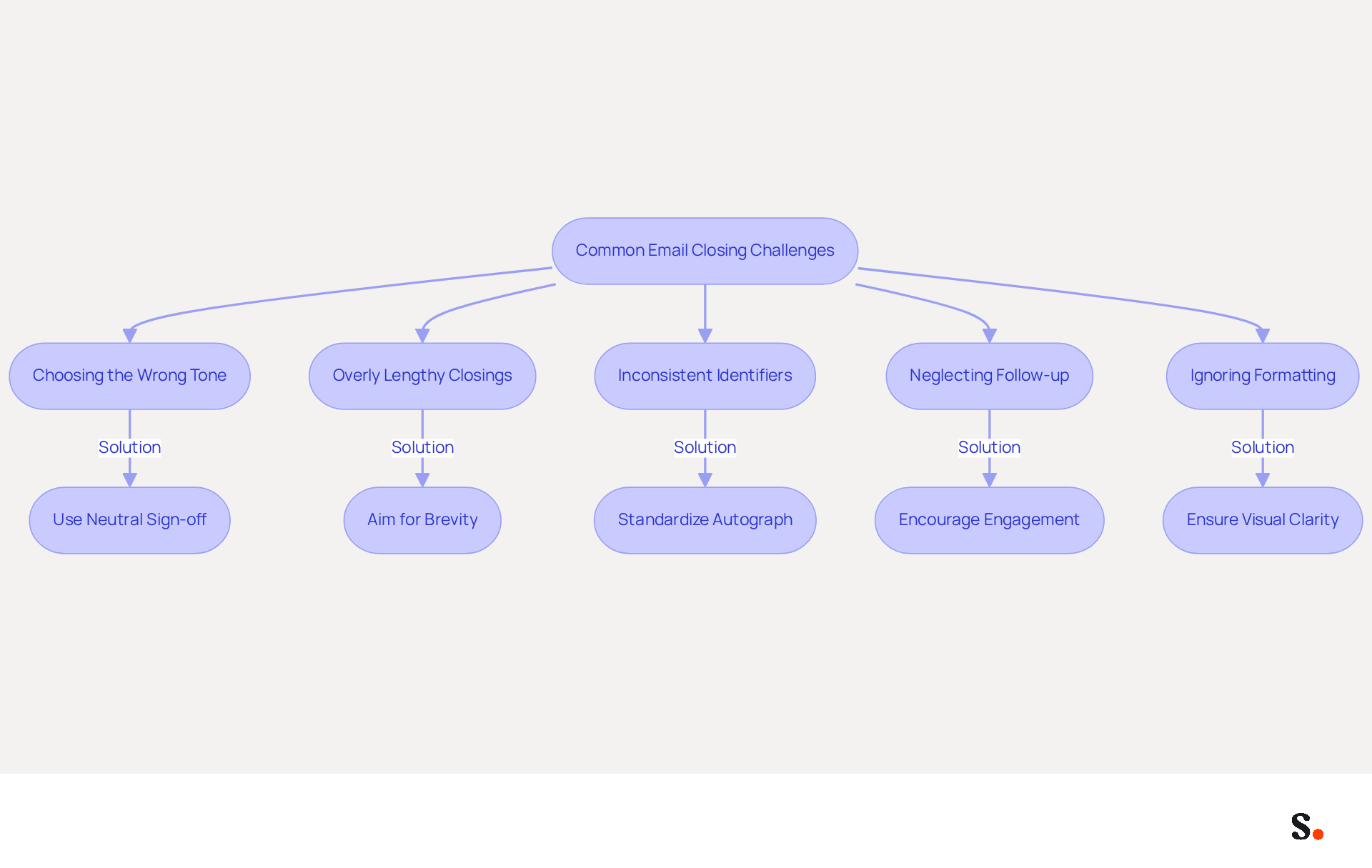
Even seasoned professionals often grapple with understanding how to end an email formally in effective email communication. Here are some common issues and how to address them:
- Choosing the Wrong Tone: A conclusion that feels too casual or overly formal can misrepresent your intent. To avoid this, it is important to know how to end an email formally by considering the recipient and the context of your email. When uncertain, you can refer to how to end an email formally by choosing a neutral sign-off like 'Best regards.'
- Overly Lengthy Closings: Long-winded closings can dilute your message. Aim for brevity and clarity; a simple "Thank you" or "Looking forward to your response" is often sufficient.
- Inconsistent Identifiers: Variations in your correspondence identifier can confuse recipients. Standardize your autograph to maintain professionalism and brand consistency, which is crucial for effective communication. Scribe allows you to sync your Google Workspace, so any updates to your team's information are automatically reflected in your emails. This not only boosts your credibility but also strengthens your brand identity, aligning with Scribe's mission to streamline signature management. Additionally, Scribe's SOC 2 Type II certification and compliance with GDPR and CCPA ensure secure data handling, making it a reliable choice for organizations.
- Neglecting follow-up can be detrimental; if your message requires a response, make sure your sign-off demonstrates how to end an email formally to encourage engagement. Phrases like "I look forward to hearing from you" can prompt a reply and enhance interaction.
- Ignoring Formatting: Poor formatting can make your message look unprofessional. Ensure your conclusion is visually distinct and easy to read, using appropriate spacing and font size to enhance clarity. A tidy electronic footer should contain your full name, job title, contact details, and pertinent links, ensuring that your interactions are both professional and effective.
By refining your email closings, you not only enhance clarity but also foster stronger connections with your recipients. Leveraging Scribe's automated synchronization capabilities with tools like Aircall further ensures brand consistency and compliance, making your email signatures not just a formality but a powerful marketing tool.
Conclusion
Ending an email effectively is essential for upholding professionalism and ensuring clear communication. A clear closing shows respect and improves clarity while reinforcing your brand. Mastering formal email endings can lead to more effective communication and a stronger impression on recipients.
Throughout the article, key insights were shared on the importance of formal email closings, effective phrases to use, and best practices for crafting professional signatures. The discussion highlighted how a thoughtful conclusion can encourage responses, strengthen relationships, and contribute to a cohesive brand image. Additionally, the role of tools like Scribe in ensuring consistent and compliant email signatures was emphasized, showcasing how they can streamline the process and enhance overall communication effectiveness.
In a world where digital communication is paramount, the significance of formal email endings cannot be overstated. By implementing the strategies outlined, you can elevate your email correspondence, making each interaction polished and impactful. Ultimately, the way you conclude your emails can define your professional reputation and influence future interactions.
Frequently Asked Questions
Why are formal email endings important?
Formal email endings are important because they establish professionalism, enhance clarity, contribute to a cohesive brand image, and encourage responses from recipients.
How do formal email endings demonstrate professionalism?
A formal conclusion shows respect for the recipient and the context of the communication, signaling that you value the interaction.
What role do formal email endings play in clarity?
A concise conclusion summarizes the message's intent and provides a natural ending, making it easier for the recipient to understand the communication.
How do formal email endings affect brand image?
Consistent and professional message endings contribute to a cohesive brand image, particularly for businesses like Scribe, where each correspondence can serve as a marketing tool.
Can formal email endings encourage responses?
Yes, a courteous conclusion can encourage the recipient to reply, promoting better interaction and collaboration.
What are some effective formal email closings?
Effective formal email closings include phrases such as 'Sincerely' or 'Respectfully,' which are particularly effective in establishing professionalism.
What does research indicate about formal email endings?
Research indicates that using appropriate sign-offs enhances clarity and effectiveness, leaving a positive impression and fostering stronger connections, especially in initial interactions or exchanges with senior executives.
How can prioritizing formal message endings benefit future opportunities?
By prioritizing formal message endings, you enhance your communication, which can open doors to future opportunities.
List of Sources
- Understand the Importance of Formal Email Endings
- How to End an Email Professionally (Closings, Sign-Offs & Examples) | Sequenzy (https://sequenzy.com/blog/how-to-end-an-email-professionally)
- Email Sign Offs for Every Industry and Situation | Mailchimp (https://mailchimp.com/resources/email-sign-offs)
- Email Etiquette: Best Practices for Professional Communication (https://memberportal.gfwc.org/news/communications-public-relations/111/111-Email-Etiquette-Best-Practices-for-Professional-Communication)
- Master Business Sign-Off Emails: Best Practices for Impactful Communication (https://scribe-mail.com/en-US/blog/master-business-sign-off-emails-best-practices-for-impactful-communication)
- The best ways to end an email professionally | Adobe Acrobat (https://adobe.com/acrobat/resources/how-to-end-an-email-professionally.html)
- Craft Effective Closing Phrases for Professional Emails
- Master Closing Email Remarks: Best Practices for Marketing Managers (https://scribe-mail.com/en-US/blog/master-closing-email-remarks-best-practices-for-marketing-managers)
- How to end an email: 70+ professional sign-offs & examples (https://blog.superhuman.com/how-to-end-an-email)
- Best Email Closing Lines for Closing Deals (https://callboxinc.com/email-marketing/best-email-closing-lines-for-closing-deals)
- How to End an Email Professionally (With Examples) (https://iconnect.isenberg.umass.edu/blog/2024/07/10/how-to-end-an-email-professionally-with-examples)
- Incorporate Professional Signatures and Formatting
- Research Recap: Branded Email Signatures Increase Company Recognition, Trust - Demand Gen Report (https://demandgenreport.com/industry-news/research-recap-branded-email-signatures-increase-company-recognition-trust/47252)
- The impact of email signatures on your branding (https://signitic.com/en/resources/the-impact-of-email-signatures-on-your-branding)
- Email signature statistics: Why every business should optimize their email signatures — Stripo.email (https://stripo.email/blog/email-signature-statistics-why-every-business-should-optimize-their-email-signatures)
- How to Write an Email Signature That Boosts Your Brand (https://scribe-mail.com/en-US/blog/how-to-write-an-email-signature-that-boosts-your-brand)
- Troubleshoot Common Challenges in Email Closings
- How to Sign Off on an Email Correctly | Rocketseed (https://rocketseed.com/blog/correct-way-to-sign-off-emails)
- How to End Any Professional Email (Plus a List of Sign-Offs for When You’re Tired of Saying “Best”) (https://careerservices.upenn.edu/blog/2021/01/08/how-to-end-any-professional-email-plus-a-list-of-sign-offs-for-when-youre-tired-of-saying-best)
- 89 Ways To Sign Off On An Email (https://forbes.com/sites/susanadams/2014/10/08/89-ways-to-sign-off-on-an-email)
- How to End an Email: 43 Ways to Sign Off on an Email (2026) (https://respona.com/blog/how-to-end-an-email)
- Master Business Email Closing: 4 Best Practices for Marketing Managers (https://scribe-mail.com/en-US/blog/master-business-email-closing-4-best-practices-for-marketing-managers)
Get started with Scribe
Build a professional email signature
Free 14-day trial — no credit card.