How to List Pronouns in Your Email Signature: A Step-by-Step Guide
Incorporating gender pronouns into email signatures is essential for promoting inclusivity and respect in professional communication. Clearly stating how
Sophie Grant
Email Signature Specialist, Scribe

On this page
- Introduction
- Understand the Importance of Gender Pronouns in Email Signatures
- Implement Gender Pronouns in Your Email Signature: Step-by-Step Process
- Follow Best Practices for Pronoun Placement in Signatures
- Address Challenges and Solutions for Using Pronouns in Signatures
- Conclusion
- Frequently Asked Questions
- List of Sources
Introduction
Incorporating gender pronouns into email signatures is essential for promoting inclusivity and respect in professional communication. Clearly stating how individuals prefer to be addressed fosters a welcoming environment that values diversity and enhances team dynamics. Yet, many professionals wonder about the significance of this practice and how to integrate it effectively.
How can professionals navigate the challenges of listing pronouns in their email signatures while ensuring clarity and respect for all identities? Navigating these challenges can lead to a more respectful and inclusive workplace culture.
Understand the Importance of Gender Pronouns in Email Signatures
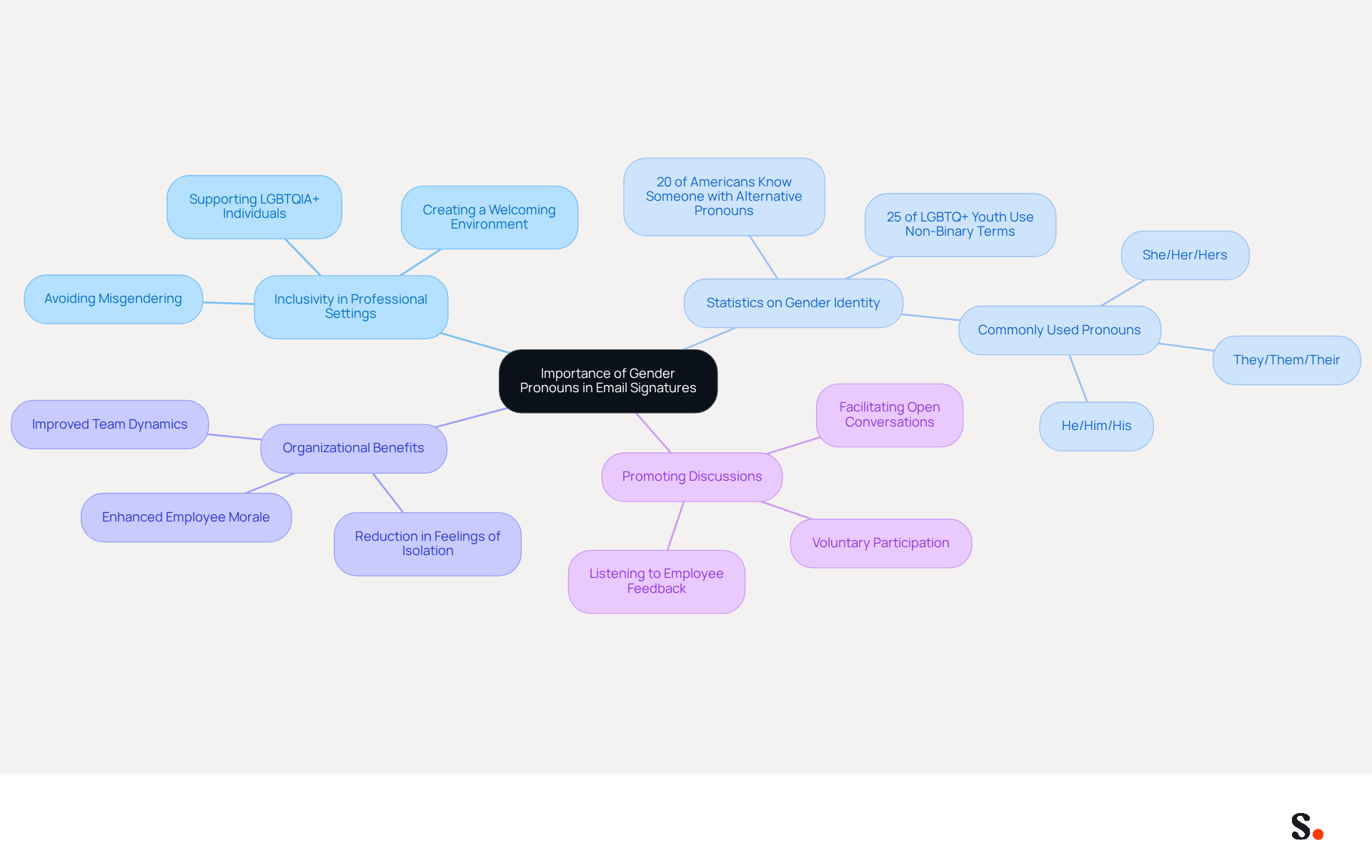
Incorporating gender identifiers in email signatures is a straightforward yet impactful strategy for fostering inclusivity in professional settings. By clearly stating how individuals prefer to be addressed, this practice helps avoid misgendering and creates a more welcoming environment. It not only supports LGBTQIA+ individuals but also conveys to colleagues and clients that your organization prioritizes diversity and inclusion. Standardizing the use of personal references contributes to a culture where everyone feels valued and acknowledged, enhancing team dynamics and boosting overall morale.
Research indicates that about 25% of LGBTQ+ youth use terms beyond the traditional gender binary, and approximately 20% of Americans report knowing someone who prefers a term other than 'he' or 'she.' This highlights the critical need to acknowledge and respect diverse identities. Moreover, organizations that adopt awareness of gendered terms report enhanced employee well-being and morale, as appropriate usage of these terms promotes a respectful workplace environment. For example, organizations that have adopted inclusive approaches, such as learning how to list pronouns in email signatures, will experience a notable decrease in feelings of isolation among staff, especially those who identify as transgender or non-binary.
The conversation around gender pronouns is increasingly relevant in the corporate sector, with experts noting that discussions about personal pronoun policies occur frequently. Corie Pauling, chief inclusion and diversity officer at TIAA, emphasizes that organizations should adopt inclusive approaches from a values-based standpoint. This shift shows that inclusivity is increasingly seen as both a social responsibility and a business necessity. By adopting this approach, organizations can enhance communication clarity and demonstrate a commitment to respecting individual identities, ultimately leading to a more cohesive and productive workplace. It is crucial to promote discussions about gender identities and listen to employee feedback, ensuring that involvement in this practice remains voluntary.
Implement Gender Pronouns in Your Email Signature: Step-by-Step Process
Understanding how to list pronouns in email signature is not just a trend; it’s a crucial step towards fostering inclusivity and clarity in communication.
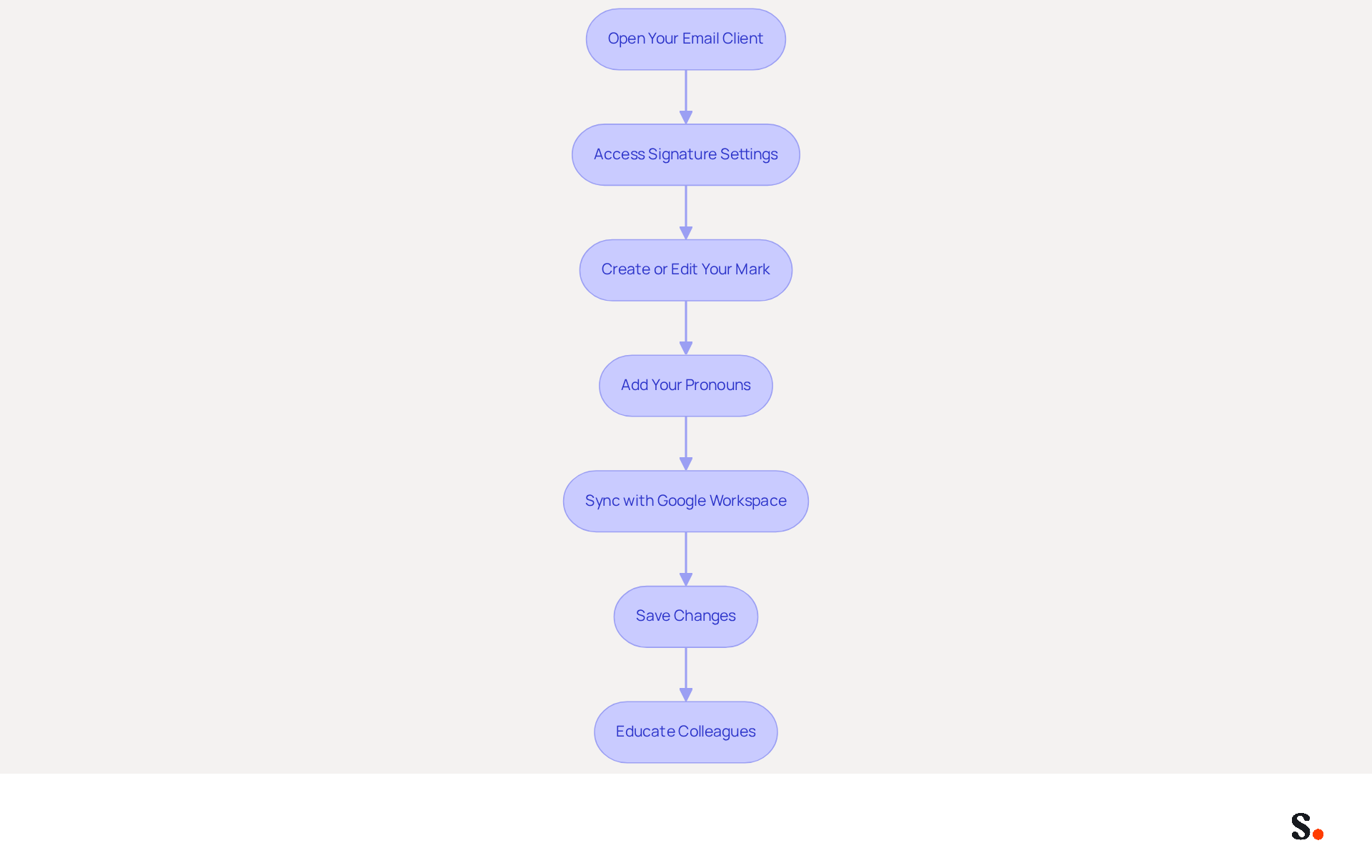
- Open Your Email Client: Launch the email application you use, such as Outlook, Gmail, or Apple Mail.
- Access Signature Settings: Navigate to the settings or preferences menu. Look for the 'Signatures' or 'Email Signature' section.
- Create or Edit Your Mark: If you already have a mark, select it for editing. If not, create a new sign.
- Add Your Pronouns: To understand how to list pronouns in email signature, position your pronouns immediately after your name. For example, format it as 'John Doe (he/him)'. Ensure that the font, size, and color align with the rest of your mark for a cohesive look. This practice is recognized as essential for building trust, with 52% of professionals believing a strong digital identifier is crucial for developing client relationships. Moreover, businesses utilizing branded digital identifiers experience a 15% rise in website click-through rates, further highlighting the marketing advantages of this approach.
- Sync with Google Workspace: By syncing your Google Workspace with Scribe, you can save time as your teammates' data will be automatically updated in Scribe. This means that any changes, such as relocating teammates from one group to another or updating their details, will be reflected in their contact information without any manual input. Scribe also ensures adherence to SOC 2 Type II, GDPR, and CCPA, enhancing the security and reliability of your management of digital identifiers.
- Save Changes: After learning how to list pronouns in email signature, save the changes to your signature. Test it by sending a test email to yourself to ensure it appears correctly.
- Educate Colleagues: Encourage your team members to adopt this practice as well, fostering a culture of inclusivity across your organization. As Yuliia Savchuk, a content writer at Stripo, observes, 'Email footer statistics are very important for businesses,' emphasizing the importance of tracking engagement metrics. Ultimately, adopting this practice can significantly enhance your brand's reputation and broaden your audience reach.
Follow Best Practices for Pronoun Placement in Signatures
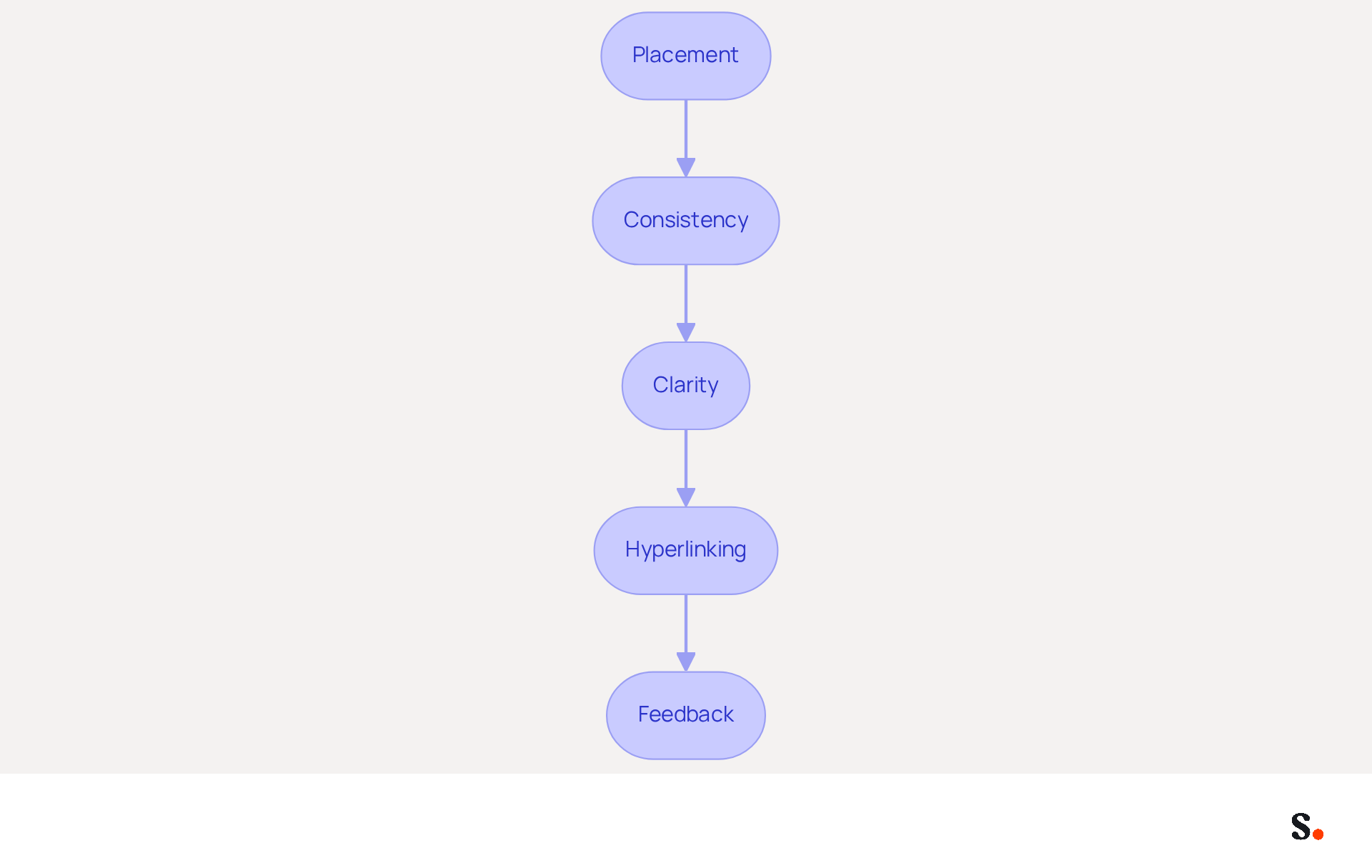
To effectively communicate your identity in email signatures, it is crucial to follow best practices for pronoun usage:
-
Placement: Position your personal identifiers directly after your name or below it. This placement makes them visible and clearly linked to your identity. For example:
- John Doe (he/him)
- Jane Smith (she/her)
-
Consistency: Use the same font, size, and color as the rest of your signature to maintain a professional appearance. This consistency reinforces your brand identity.
-
Clarity: Use the standard format for listing personal references, such as 'he/him/his', 'she/her/hers', or 'they/them/theirs', which is also relevant for understanding how to list pronouns in email signature. Avoid using overly complex or non-standard formats that may confuse recipients.
-
Hyperlinking: Hyperlink your gendered terms to a resource that explains their significance, helping educate recipients about the importance of using such terms.
-
Feedback: After incorporating your identifiers, seek input from colleagues to ensure that your mark is clear and effective in conveying your identity. By implementing these strategies, you enhance clarity and foster an inclusive environment in your communications.
Address Challenges and Solutions for Using Pronouns in Signatures
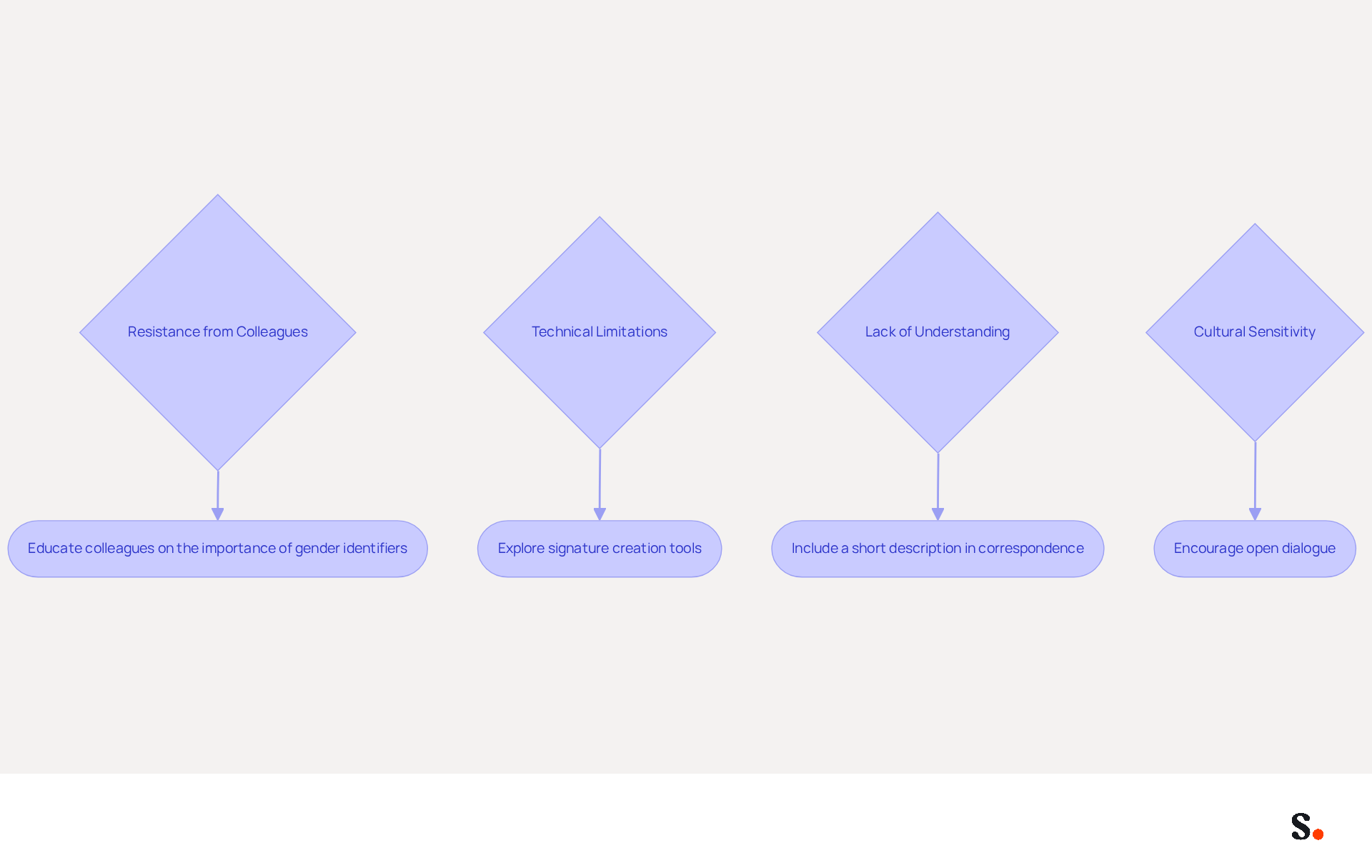
Implementing gender identifiers in email signatures presents both opportunities and challenges that require careful navigation. While incorporating these identifiers is a significant step toward fostering inclusivity, several challenges may arise. Here are common issues along with effective solutions:
- Resistance from Colleagues: Some team members may be hesitant to embrace this approach. Educating colleagues on the importance of gender identifiers is crucial for fostering an inclusive workplace. Sharing resources that highlight the benefits of this practice can help shift perspectives.
- Technical Limitations: Certain messaging clients may impose restrictions on formatting, complicating the integration of personal identifiers. To overcome this, explore signature creation tools that seamlessly integrate personal identifiers. Check your email client's documentation to see what options are available.
- There may be individuals who do not understand the importance of using these terms. Including a short description in your correspondence or during introductions can clarify that sharing identifiers contributes to a respectful atmosphere.
- Cultural Sensitivity: Discussing gender identity can be sensitive in some cultures. It is essential to approach the topic with care and respect, considering the cultural context of your workplace. Encouraging open dialogue can foster understanding and acceptance.
By anticipating these challenges and preparing thoughtful solutions, you can confidently learn how to list pronouns in email signature, thereby contributing to a more inclusive workplace. Ultimately, fostering an inclusive environment through gender identifiers can significantly enhance workplace culture and employee satisfaction.
Conclusion
Incorporating gender pronouns in email signatures is essential for promoting inclusivity and clarity in professional communication. When individuals state their preferred pronouns, they actively foster a respectful environment that values diversity and recognizes the identities of all team members. This practice addresses the challenge of misgendering, while also enhancing team dynamics and morale, leading to a more cohesive workplace.
The article outlines a comprehensive step-by-step process for implementing pronouns in email signatures, emphasizing the importance of placement, consistency, and clarity. Key insights include:
- The necessity of educating colleagues about the significance of gender identifiers
- Addressing potential challenges, such as resistance or technical limitations
Following best practices and fostering open dialogue can transform organizational culture into one that embraces inclusivity and respect.
Embracing the use of gender pronouns in email signatures is a powerful way to demonstrate commitment to diversity and inclusion. As organizations increasingly recognize the importance of fostering an inclusive workplace, adopting this practice can significantly enhance communication and employee satisfaction. Taking these steps allows individuals and teams to foster a respectful professional environment, ensuring that everyone feels recognized and valued.
Frequently Asked Questions
Why is it important to include gender pronouns in email signatures?
Including gender pronouns in email signatures fosters inclusivity, helps avoid misgendering, and creates a welcoming environment, supporting LGBTQIA+ individuals and demonstrating an organization's commitment to diversity and inclusion.
How does the use of gender pronouns in email signatures affect workplace culture?
Standardizing the use of personal references, such as gender pronouns, contributes to a culture where everyone feels valued and acknowledged, enhancing team dynamics and boosting overall morale.
What percentage of LGBTQ+ youth use terms beyond the traditional gender binary?
Research indicates that about 25% of LGBTQ+ youth use terms beyond the traditional gender binary.
What impact does acknowledging diverse identities have on employee well-being?
Organizations that adopt awareness of gendered terms report enhanced employee well-being and morale, as appropriate usage promotes a respectful workplace environment and decreases feelings of isolation among staff, particularly those who identify as transgender or non-binary.
How are discussions about gender pronouns evolving in the corporate sector?
Discussions about personal pronoun policies are increasingly relevant in the corporate sector, with experts noting that organizations should adopt inclusive approaches as a social responsibility and business necessity.
What is the role of employee feedback in the practice of using gender pronouns?
It is crucial to promote discussions about gender identities and listen to employee feedback, ensuring that involvement in this practice remains voluntary.
List of Sources
- Understand the Importance of Gender Pronouns in Email Signatures
- Organizations embrace equity by sharing gender pronouns in email signatures (https://internationalwomensday.com/Missions/19523/Organizations-embrace-equity-by-sharing-gender-pronouns-in-email-signatures)
- Should your email say if you're he, she or they? (https://bbc.com/news/business-51331571)
- Why sharing gender pronouns is important in the workplace | Culture Amp (https://cultureamp.com/blog/gender-pronouns-in-workplace)
- Why Pronouns Are Important In The Workplace | Harding Evans (https://hardingevans.com/news/2023/10/18/international-pronouns-day-why-pronouns-are-important-in-the-workplace)
- Pronouns in email signatures: workplace inclusion guide (https://inclusiveemployers.co.uk/blog/why-we-use-pronouns-in-signatures)
- Implement Gender Pronouns in Your Email Signature: Step-by-Step Process
- Email signature statistics: Why every business should optimize their email signatures — Stripo.email (https://stripo.email/blog/email-signature-statistics-why-every-business-should-optimize-their-email-signatures)
- Email signature statistics and trends in 2024 (https://wisestamp.com/blog/email-signature-statistics)
- 40+ Email Signature Statistics for 2026 (Data + Insights) (https://wavecnct.com/blogs/email-signature-statistics)
- Should your email say if you're he, she or they? (https://bbc.com/news/business-51331571)
- Follow Best Practices for Pronoun Placement in Signatures
- 40+ Email Signature Statistics for 2026 (Data + Insights) (https://wavecnct.com/blogs/email-signature-statistics)
- Email signature statistics and trends in 2024 (https://wisestamp.com/blog/email-signature-statistics)
- Trans Day of Visibility: Requiring Pronouns In Email Signatures - Three Ears Media (https://threeearsmedia.com/requiring-pronouns-email-signature)
- Considerations When Employees Pronounce Their Pronouns in Email Signatures - HR Daily Advisor (https://hrdailyadvisor.hci.org/2022/09/01/considerations-when-employees-pronounce-their-pronouns-in-email-signatures)
- Pronouns in email signatures: workplace inclusion guide (https://inclusiveemployers.co.uk/blog/why-we-use-pronouns-in-signatures)
- Address Challenges and Solutions for Using Pronouns in Signatures
- How Gender Pronouns Can Create Inclusivity and Allyship in the Workplace (https://wellright.com/resources/blog/how-gender-pronouns-can-create-inclusivity-allyship-in-the-workplace)
- The Importance of Using Pronouns in the Workplace — Talkspace (https://business.talkspace.com/articles/pronouns-in-the-workplace)
- Organizations embrace equity by sharing gender pronouns in email signatures (https://internationalwomensday.com/Missions/19523/Organizations-embrace-equity-by-sharing-gender-pronouns-in-email-signatures)
- 59 Change Management Statistics | Pollack Peacebuilding Systems (https://pollackpeacebuilding.com/blog/change-management-statistics)
- How to Put Pronouns in Email Signature: A Step-by-Step Guide (https://scribe-mail.com/en-US/blog/how-to-put-pronouns-in-email-signature-a-step-by-step-guide)
Get started with Scribe
See why teams switch to Scribe
Free 14-day trial — no credit card.