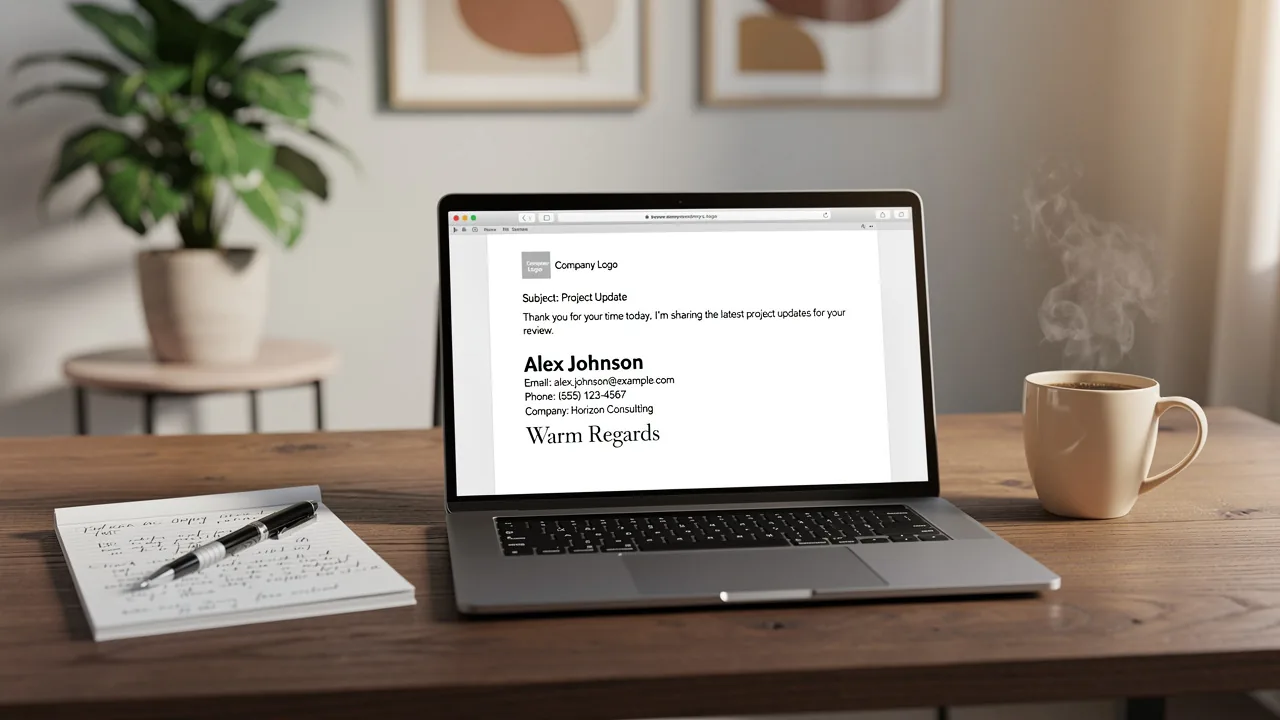
Master Email Ending Regards: Best Practices for Professional Sign-Offs
The conclusion of an email is pivotal, as it shapes the recipient's final impression of the sender. This final impression is crucial in professional
Sophie Grant
Email Signature Specialist, Scribe
Introduction
The conclusion of an email is pivotal, as it shapes the recipient's final impression of the sender. This final impression is crucial in professional communication. Mastering the art of email sign-offs not only enhances professionalism but also fosters stronger relationships and encourages engagement. This oversight can result in lost connections and diminished clarity in communication. Identifying best practices for effective email sign-offs is essential for resonating with recipients and projecting a polished image.
Understand the Importance of Email Endings
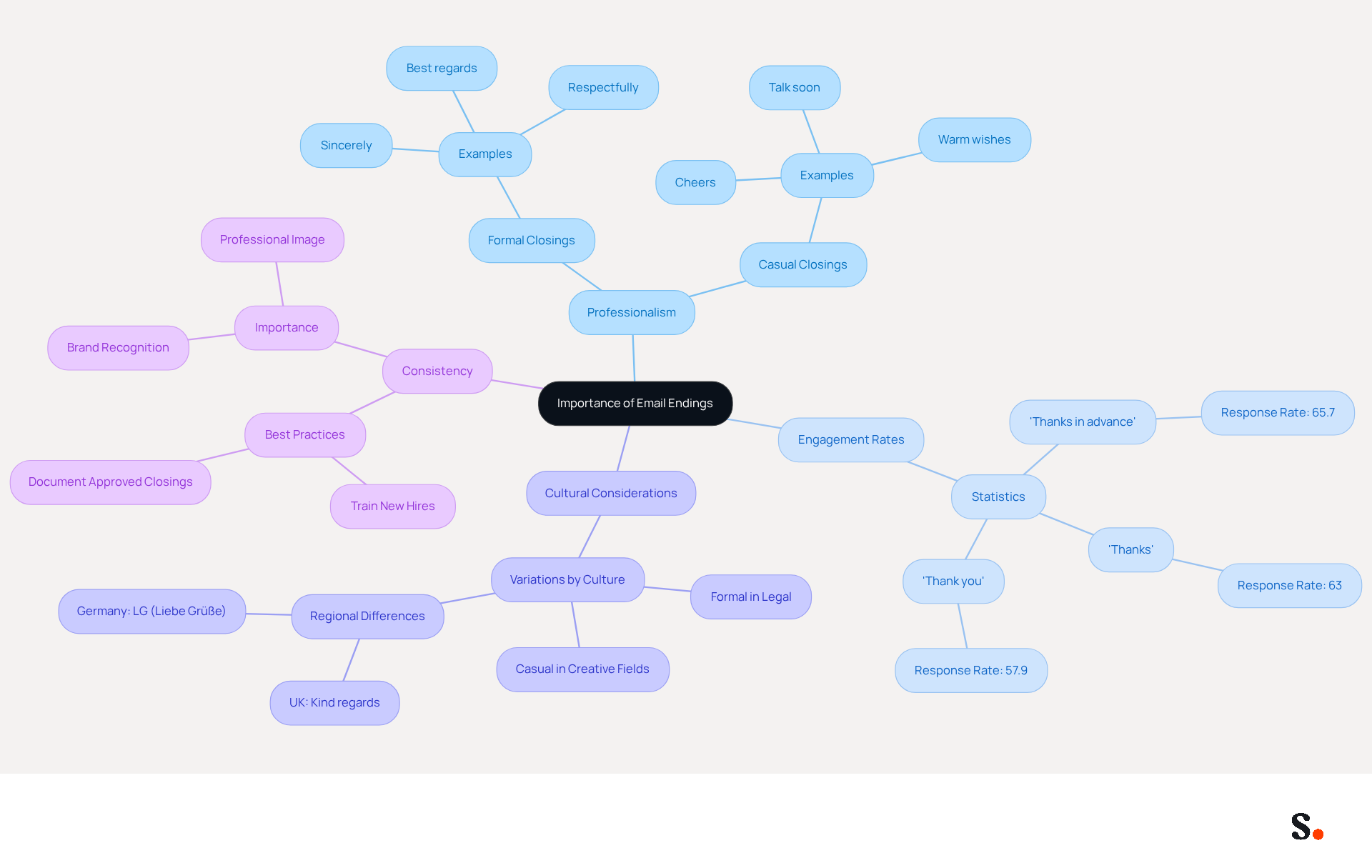
The way you conclude a message, such as with an email ending regards, can significantly shape the recipient's perception of your professionalism. A well-considered email ending regards demonstrates respect and reinforces your professionalism, acting as a final touchpoint that can strengthen or weaken your relationship with the recipient.
For instance, using formal closings like 'Sincerely' or 'email ending regards' enhances credibility in business interactions. In contrast, casual endings may be appropriate for informal situations but can risk undermining professionalism in more formal environments.
Emails that include an email ending regards with expressions of gratitude, like 'Thanks in advance', see a response rate of 65.7%, underscoring the importance of thoughtful closings for engagement. Additionally, aligning your sign-off with the recipient's tone and the context of the communication is essential for fostering positive interactions.
Cultural considerations also play a significant role; different cultures may perceive casual versus formal closures differently, impacting how your message is received. Moreover, maintaining consistency in email ending regards contributes to a professional image and brand recognition.
By syncing your Google Workspace with Scribe, you can streamline signature management, ensuring that any updates to your teammates' information, including auto-filling their signature details through our attribute feature, are automatically reflected in their signatures. This streamlining enhances the professionalism of your communications.
Studies show that organizations using consistent and appropriate email ending regards often enjoy better professional relationships and higher engagement rates, illustrating the considerable influence of this frequently neglected element of electronic correspondence.
As Othman Katim, a marketing specialist, observes, 'Professional message closures do much more than merely finish your communication; they establish the tone, build trust, and direct what occurs next.
Explore Effective Email Sign-Off Examples
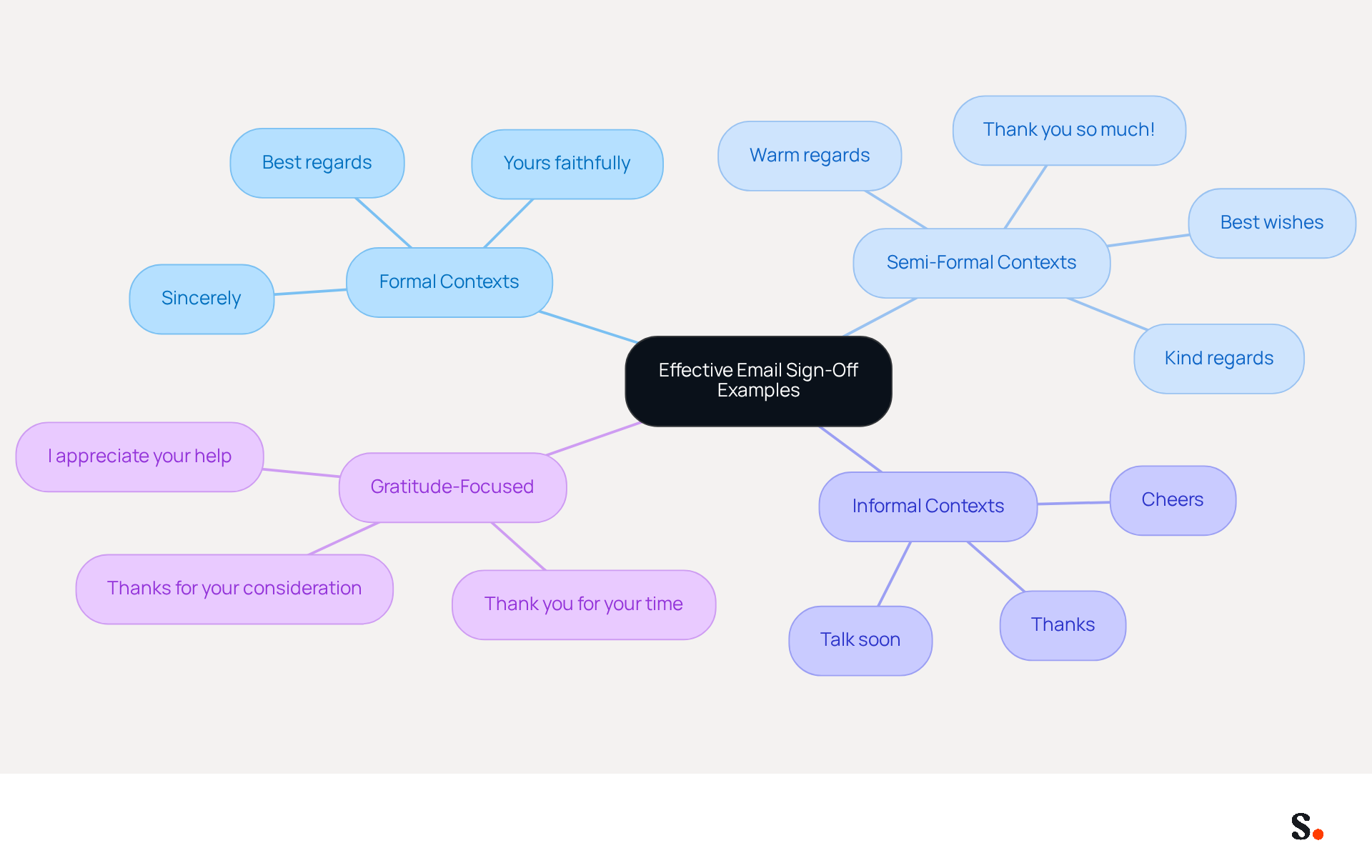
Here are some effective email sign-off examples tailored for different contexts:
- Formal Contexts: Use sign-offs like 'Sincerely', 'Yours faithfully', and 'Best regards' for formal communications, such as job applications or legal correspondence. These options convey professionalism and respect. Itamar Haim observes that the manner in which you conclude a message engages something known as the primacy and recency effect, making these formal closures particularly influential.
- Semi-Formal Contexts: For business interactions that require a friendly tone, consider 'Kind regards', 'Warm regards', or 'Best wishes'. These phrases strike a balance between formality and friendliness, making them suitable for various professional interactions. According to research, adding a simple phrase like 'Thank you so much!' can double the response rate for requests for help, emphasizing the importance of gratitude in semi-formal contexts.
- Informal Contexts: In casual emails among colleagues or friends, phrases like 'Cheers', 'Thanks', or 'Talk soon' are appropriate. These informal closings create a more approachable communication style. It is important to recognize that informal sign-offs in formal contexts can create confusion about the seriousness of the communication.
- Gratitude-Focused: Expressing appreciation can enhance relationships. Use phrases such as 'Thank you for your time', 'I appreciate your help', or 'Thanks for your consideration' to convey gratitude and encourage goodwill. Research indicates that gratitude-focused sign-offs can significantly improve social relationships and encourage pro-social behavior.
Choosing the appropriate email ending regards enhances the professionalism of your message and encourages a favorable response from the recipient. Effective message endings can greatly influence outcomes, reinforcing the main point and leaving a lasting impression.
Identify Common Mistakes in Email Closings
Recognizing common pitfalls in message closings is essential for enhancing communication effectiveness. Here are some pitfalls to watch out for:
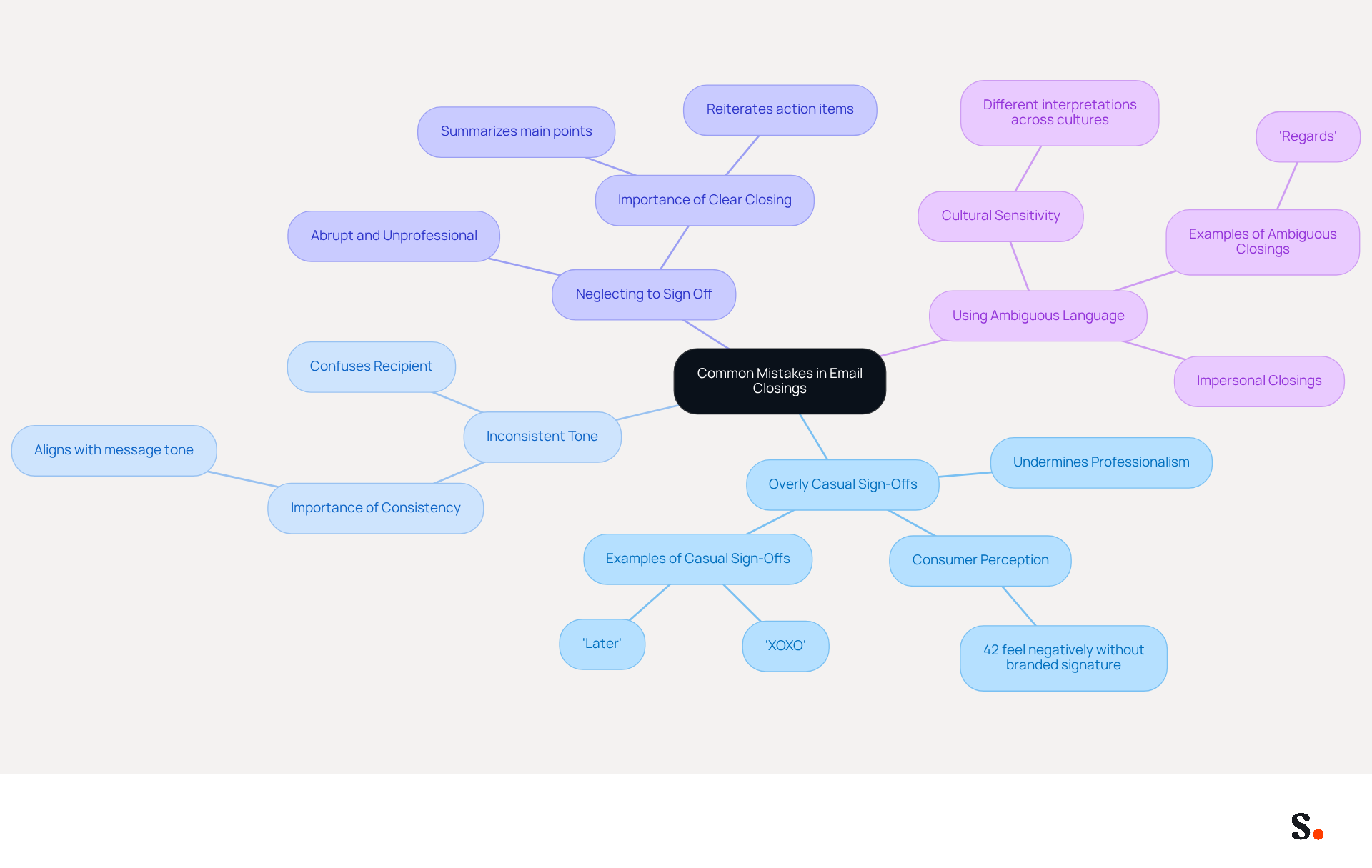
- Overly Casual Sign-Offs: Informal sign-offs like 'Later' or 'XOXO' can undermine professionalism in business emails. Casual phrases can undermine the seriousness of your message. Indeed, 42% of consumers indicate feeling negatively toward a business when they receive a message lacking a branded identifier, highlighting the importance of a professional tone. By syncing your Google Workspace with Scribe, you ensure that your signatures are always up-to-date, reflecting your brand consistently and saving time on manual updates.
- Inconsistent Tone: Ensure that your sign-off aligns with the tone of your message. A formal message should not conclude with a casual sign-off, as this inconsistency can confuse the recipient about your intent. Smith points out that a consistent tone is vital for clear communication. With Scribe, any modifications in your Google Workspace, such as updates to team members' information, are automatically reflected in your correspondence identifiers, helping maintain that consistency effortlessly.
- Neglecting to Sign Off: Omitting a sign-off can make your message feel abrupt and unprofessional. Always conclude with a proper closing, like an email ending regards, to maintain a courteous tone. A clear closing statement summarizes the main point of the message or reiterates action items, clarifying expectations. Scribe's automatic syncing feature ensures that your signature is always included, reinforcing professionalism in every message.
- Using Ambiguous Language: Vague closings like 'Regards' without a qualifier can come across as impersonal. Instead, opt for phrases like 'Best regards' or 'Kind regards' as your email ending regards to convey warmth and professionalism. Additionally, be mindful of cultural differences in sign-offs, as certain phrases may be interpreted differently across cultures. By utilizing Scribe, you can manage your correspondence identifiers independently, ensuring that they are not only professional but also culturally appropriate for your audience.
By addressing these pitfalls, you can significantly improve the clarity and professionalism of your communications.
Leverage Email Signatures for Professional Impact
Email identifiers are not merely formalities; they are strategic assets that can elevate your professional presence. Here are some best practices for leveraging email signatures effectively:
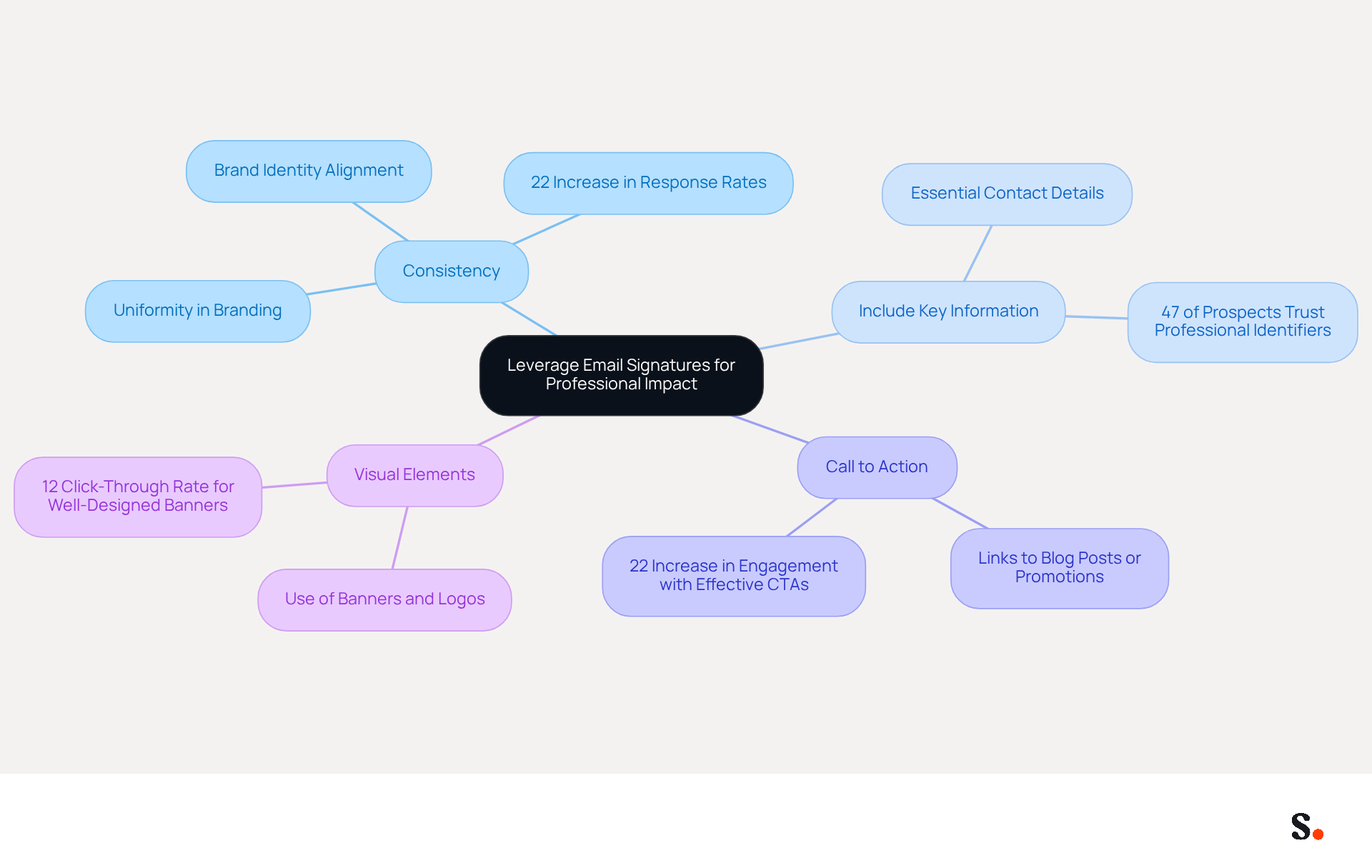
- Consistency: Maintain uniformity across all communications by using the same fonts, colors, and logos that align with your brand identity. Consistent digital identifiers can lead to a 22% increase in response rates and a rise in website click rates from 3% to 15%. With Scribe's automated synchronization with Aircall, any modifications made in your Aircall configuration will automatically reflect in your email branding, ensuring brand consistency across all platforms.
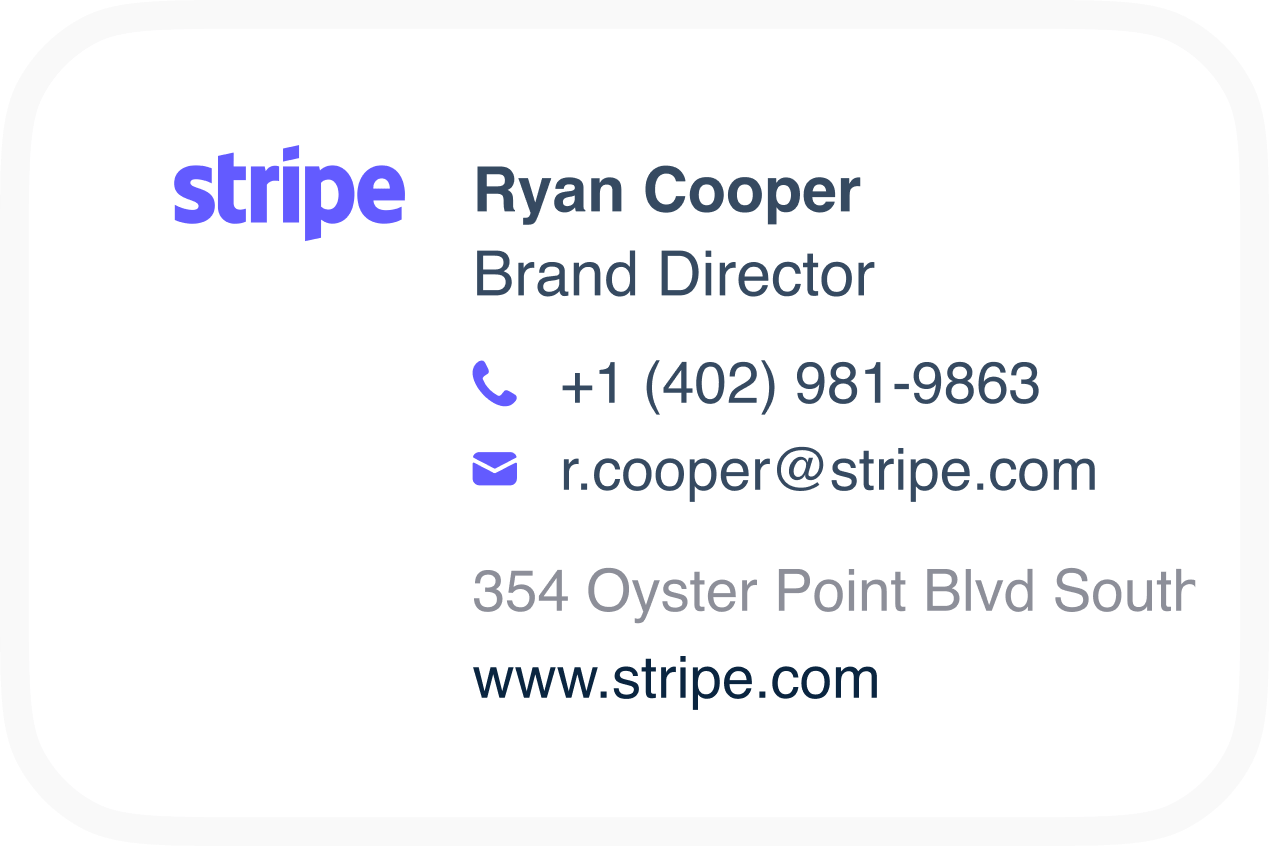
- Include Key Information: Including key contact details - like your name, title, company name, and phone number - in your email footer is crucial for seamless communication and builds trust, as 47% of prospects feel that professional identifiers increase their trust.
- Call to Action: Incorporate a clear call to action (CTA) in your email footer, such as a link to your latest blog post or a promotional offer. This strategy can drive engagement and traffic to your website, with effective CTAs potentially increasing response rates by 22%. Case studies indicate that incorporating promotional material in email footers can significantly enhance engagement.
- Visual Elements: Use visual components like banners or logos to make your mark stand out. Ensure these elements are professionally designed and not overly distracting. Well-designed promotional banners can lead to a click-through rate of 12%, outperforming typical marketing efforts.
By leveraging these strategies, you can turn every email into a powerful marketing tool that resonates with your audience.
Conclusion
The conclusion of an email can significantly influence how professionalism is perceived by the recipient. A thoughtful email ending not only reinforces the message but also serves as a crucial touchpoint that can enhance or diminish the relationship with the recipient. Choosing the appropriate sign-off can significantly impact how your intent is perceived and can foster positive interactions.
Throughout the article, key insights have been shared regarding the importance of email sign-offs. Effective sign-offs can significantly influence response rates, with expressions of gratitude leading to higher engagement. These common mistakes can lead to misunderstandings and a lack of respect in professional communication. Additionally, leveraging email signatures as strategic assets can enhance brand consistency and trust, ultimately driving better communication outcomes.
Neglecting this skill can hinder the development of strong professional connections. By implementing these best practices, you can ensure your email communications are effective and reflect your professionalism. Embracing tools like Scribe can further streamline this process, allowing for consistent and impactful email signatures that resonate with recipients and elevate overall communication effectiveness.
Frequently Asked Questions
Why are email endings important?
Email endings are important because they shape the recipient's perception of your professionalism and can strengthen or weaken your relationship with them.
What are some examples of formal email endings?
Formal email endings include phrases like 'Sincerely' and 'email ending regards', which enhance credibility in business interactions.
When might casual email endings be appropriate?
Casual email endings may be appropriate in informal situations, but they can risk undermining professionalism in more formal environments.
How do expressions of gratitude in email endings affect response rates?
Emails that include expressions of gratitude, such as 'Thanks in advance', see a response rate of 65.7%, highlighting the importance of thoughtful closings for engagement.
Why is it important to align your email sign-off with the recipient's tone?
Aligning your sign-off with the recipient's tone and the context of the communication is essential for fostering positive interactions.
How do cultural considerations impact email endings?
Different cultures may perceive casual versus formal closures differently, which can impact how your message is received.
What role does consistency in email endings play?
Maintaining consistency in email endings contributes to a professional image and brand recognition.
How can Scribe help with email signature management?
By syncing Google Workspace with Scribe, you can streamline signature management, ensuring that updates to teammates' information are automatically reflected in their signatures.
What benefits do organizations experience from using consistent email endings?
Organizations that use consistent and appropriate email endings often enjoy better professional relationships and higher engagement rates.
List of Sources
- Understand the Importance of Email Endings
- Email Sign Offs Professional: Best Practices for Business Emails (https://mailwarm.com/blog/professional-email-sign-offs-best-practices)
- Email Sign Offs for Every Industry and Situation | Mailchimp (https://mailchimp.com/resources/email-sign-offs)
- How to Sign Off on an Email Correctly | Rocketseed (https://rocketseed.com/blog/correct-way-to-sign-off-emails)
- What impact does your email sign-off have on the recipients perception? (https://linkedin.com/advice/1/what-impact-does-your-email-sign-off-have-qhluc)
- Forget “Best” or “Sincerely,” This Email Closing Gets the Most Replies – The Boomerang Blog (https://blog.boomerangapp.com/2017/01/how-to-end-an-email-email-sign-offs)
- Explore Effective Email Sign-Off Examples
- 89 Ways To Sign Off On An Email (https://forbes.com/sites/susanadams/2014/10/08/89-ways-to-sign-off-on-an-email)
- How to Sign Off on an Email Correctly | Rocketseed (https://rocketseed.com/blog/correct-way-to-sign-off-emails)
- email sign-offs (https://wisestamp.com/signature-examples/email-sign-offs)
- 50 Best Email Sign-Offs to End an Email Properly in [year] (https://elementor.com/blog/best-email-sign-offs)
- Identify Common Mistakes in Email Closings
- How to Sign Off on an Email Correctly | Rocketseed (https://rocketseed.com/blog/correct-way-to-sign-off-emails)
- 4 Best Practices for Effective Professional Email Closings (https://scribe-mail.com/en-US/blog/4-best-practices-for-effective-professional-email-closings)
- Email Etiquette: Dos and Don’ts of Professional Emails (https://businessnewsdaily.com/8262-email-etiquette-tips.html)
- 40+ Email Signature Statistics for 2026 (Data + Insights) (https://wavecnct.com/blogs/email-signature-statistics)
- The 12 Most Common Email Mistakes Professionals Make (https://businessinsider.com/common-email-mistakes-professionals-make-2014-7)
- Leverage Email Signatures for Professional Impact
- 4 Best Practices for a Winning Business Email Signature Example (https://scribe-mail.com/en-US/blog/4-best-practices-for-a-winning-business-email-signature-example)
- The impact of email signatures on your branding (https://signitic.com/en/resources/the-impact-of-email-signatures-on-your-branding)
- Email Signature Best Practices - NEWOLDSTAMP (https://newoldstamp.com/blog/email-signature-best-practices)
- Email Signature Best Practices Guide With Examples - MailerLite (https://mailerlite.com/blog/email-signature-best-practices)
Get started with Scribe
Build a professional email signature
Free 14-day trial — no credit card.