Best Regards or Kind Regards: Choosing the Right Email Closing
Choosing the right email closing can be more challenging than it appears, as the subtle differences between phrases like 'Best Regards' and 'Kind Regards' can
Sophie Grant
Email Signature Specialist, Scribe
On this page
- Introduction
- Distinguishing 'Best Regards' and 'Kind Regards': Key Differences
- Appropriate Contexts for 'Best Regards' and 'Kind Regards'
- Impact on Professional Communication: Tone and Perception
- Alternatives to 'Best Regards' and 'Kind Regards': Expanding Your Options
- Conclusion
- Frequently Asked Questions
- List of Sources
Introduction
Choosing the right email closing can be more challenging than it appears, as the subtle differences between phrases like 'Best Regards' and 'Kind Regards' can significantly impact professional communication. This article explores the nuances of these common sign-offs, examining their contexts and impacts on professionalism, and how they can enhance or hinder communication. Professionals must consider various factors when choosing between these two phrases, as the right choice can foster stronger workplace relationships.
Distinguishing 'Best Regards' and 'Kind Regards': Key Differences
Choosing the right email sign-off can significantly influence the tone and effectiveness of professional communication. The phrases 'Best Wishes' and 'Warm Salutations' are frequently used email sign-offs, but they express different tones and levels of formality.
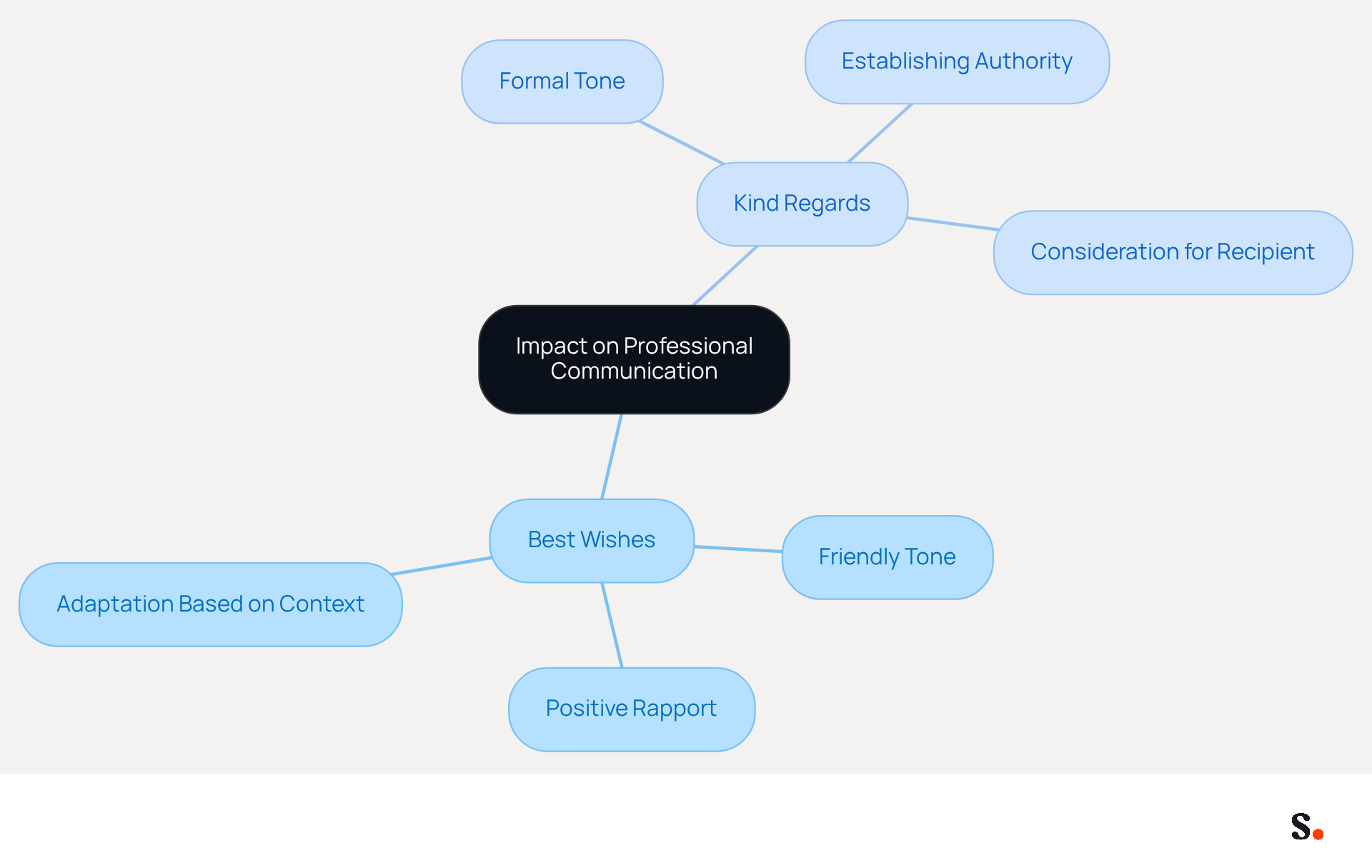
- 'Best Wishes' is often viewed as a friendly yet professional closing, suitable for ongoing correspondence or when a degree of familiarity exists between the sender and recipient. It strikes a balance between formality and warmth, making it versatile for various contexts. It is commonly used in daily business interactions, and statistics indicate that it is slightly more popular than 'Best Wishes' among American professionals.
- On the other hand, 'Best Wishes' is regarded as somewhat more formal and courteous, typically used in contexts where the sender intends to convey a greater degree of respect or professionalism. This phrase is particularly effective in formal business interactions or when addressing someone with whom the sender has a less familiar relationship. For example, in client interactions or formal requests, 'Best Wishes' maintains a professional tone while valuing the relationship.
- Additionally, 'Kind Regards' is widely accepted in international business interactions, especially with European contacts, making it a suitable choice for global correspondence.
Experts suggest that selecting the right sign-off can influence how the recipient perceives the sender's intent and the message's tone, as seen in various studies. Research shows that thoughtful sign-offs can increase engagement and response rates, underscoring the importance of choosing the right closing based on the context. Understanding these nuances can lead to more effective communication and stronger professional relationships.
Appropriate Contexts for 'Best Regards' and 'Kind Regards'
The choice of sign-off in professional correspondence can significantly influence the tone and effectiveness of communication.
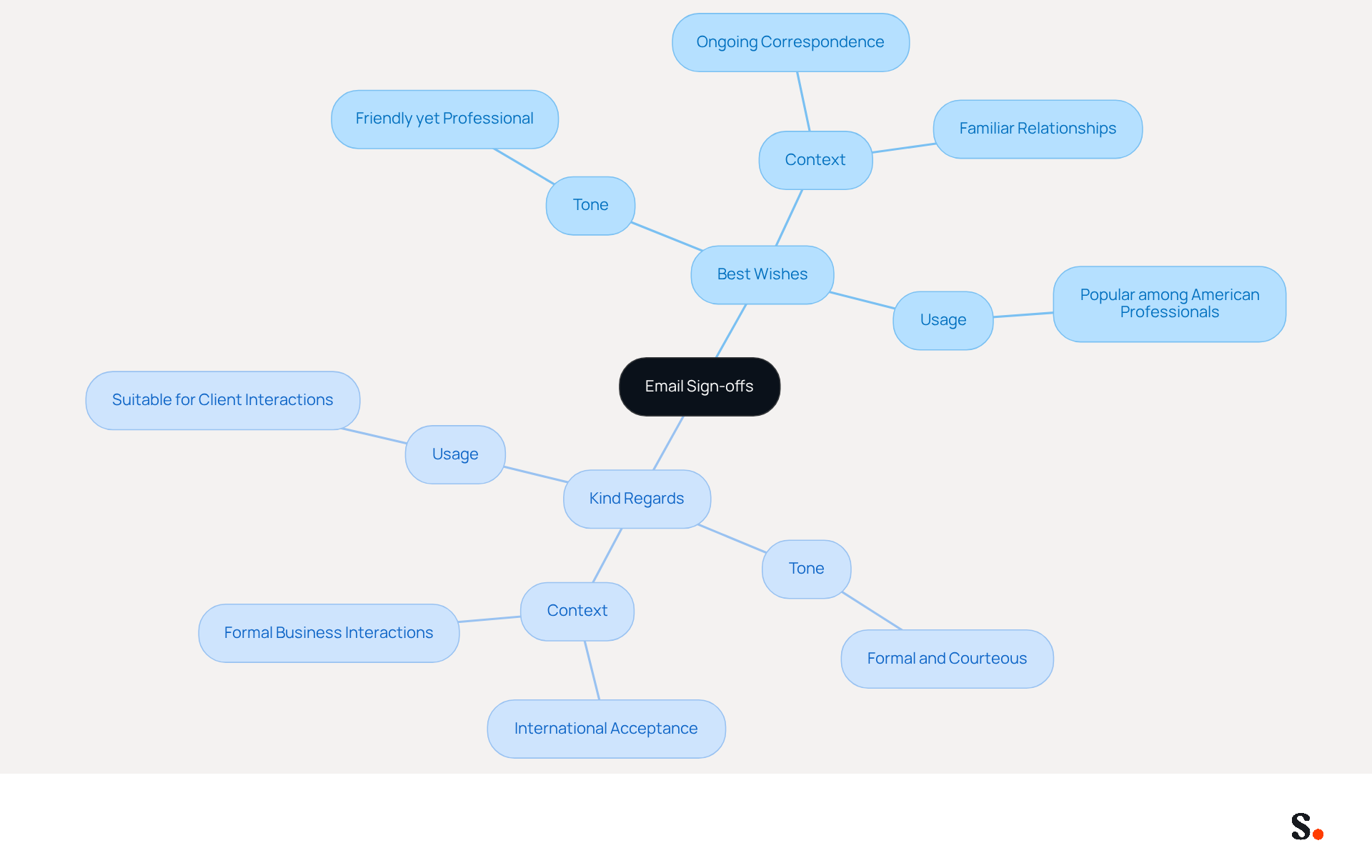
'Best Wishes' is most effective in messages where the sender has an established rapport with the recipient, such as colleagues, clients, or partners with whom they have frequent communication. It is particularly suitable for follow-up emails, project updates, or casual business discussions, allowing for a friendly yet professional tone. A recent poll shows that 'Best Wishes' is widely accepted in both formal and informal contexts. This versatility makes it a popular choice among professionals.
In contrast, 'Best Wishes' is more appropriate for formal situations, such as initial introductions, formal requests, or interactions with superiors or clients with whom the sender has limited engagement. This sign-off conveys professionalism and respect, making it ideal for formal business correspondence, job applications, or when addressing individuals in positions of authority. As noted by communication expert Erwann Lefevre, 'Best Wishes' effectively balances professionalism with approachability, which is crucial in maintaining effective communication.
For example, in a case study involving follow-up emails after meetings, using 'Warm Wishes' helped maintain a professional tone while documenting action items. Likewise, in job applications, 'Best Wishes' was found to leave a polished impression without being excessively formal. However, in crises or emergencies, using 'Best Wishes' can seem tone-deaf, highlighting the need for a more direct approach. This understanding can lead to more effective written correspondence, particularly in diverse cultural contexts where mirroring the recipient's closing demonstrates respect and awareness.
Impact on Professional Communication: Tone and Perception
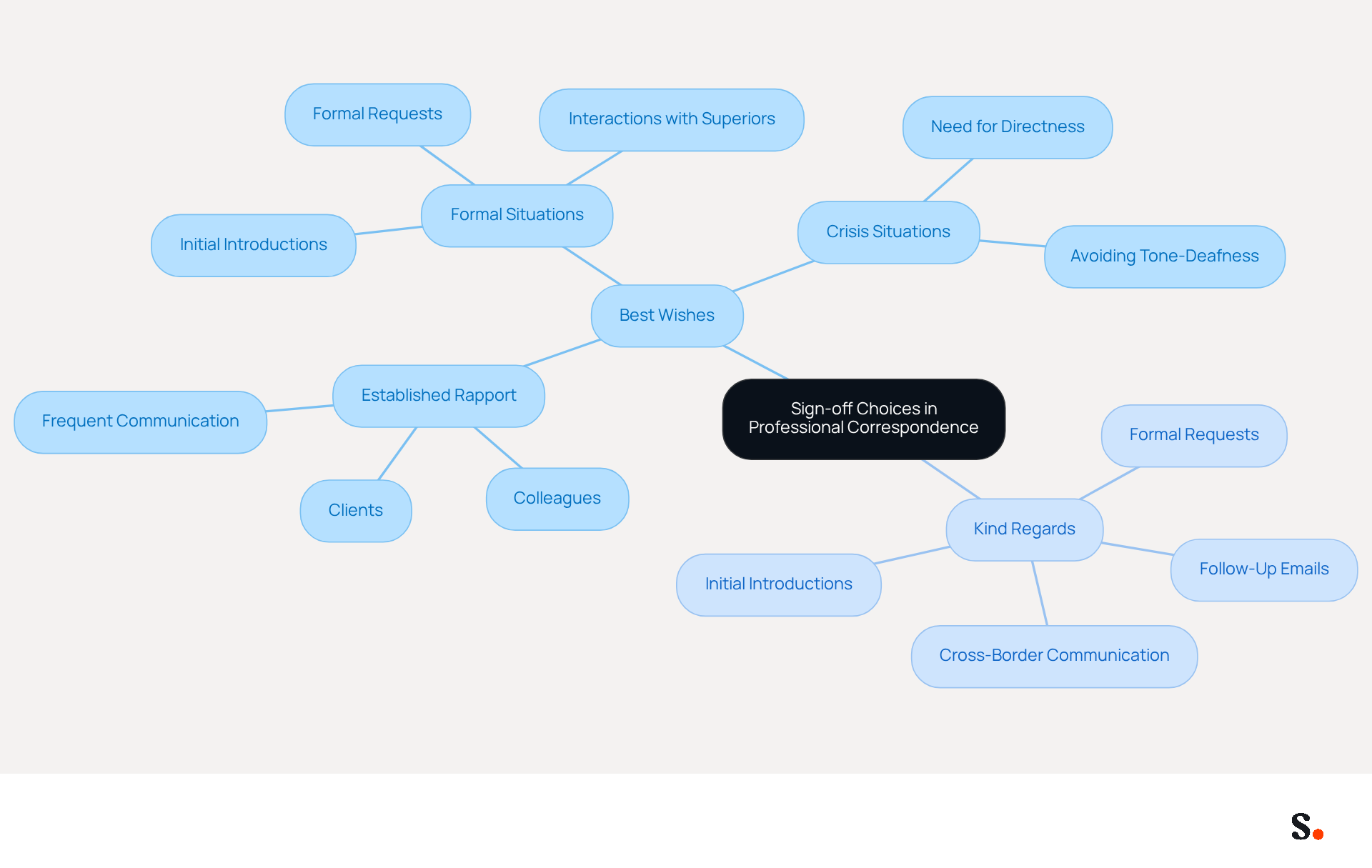
The choice between 'Best Wishes' and 'Kind Regards' can profoundly affect the tone of an email and the dynamics of professional relationships. 'Best Wishes' usually expresses a friendly and approachable attitude, indicating that the sender is receptive to further interaction and collaboration. This tone can foster positive rapport, particularly in ongoing professional interactions. For instance, adapting sign-offs based on the relationship context can enhance communication effectiveness, as shown in various studies highlighting the positive impact of tailored sign-offs on relationship dynamics. Using casual sign-offs in formal emails can create misunderstandings and diminish the sender's credibility.
Conversely, 'Kind Regards' projects a more formal and respectful tone, beneficial for establishing authority and professionalism. It signals to the recipient that the sender values the relationship and is considerate of their position. Interestingly, research shows that emails with a warm, professional tone get 22% more responses than those that are cold and formal, reinforcing the idea that tone plays a crucial role in shaping perceptions and fostering trust. Furthermore, gratitude-based sign-offs can result in response rates up to 65% higher, emphasizing the significance of considerate interaction. Grasping these subtleties enables professionals to customize their interactions effectively, aligning with their goals and the nature of their relationships. Ultimately, mastering the nuances of email sign-offs can significantly enhance professional interactions and foster trust.
Alternatives to 'Best Regards' and 'Kind Regards': Expanding Your Options
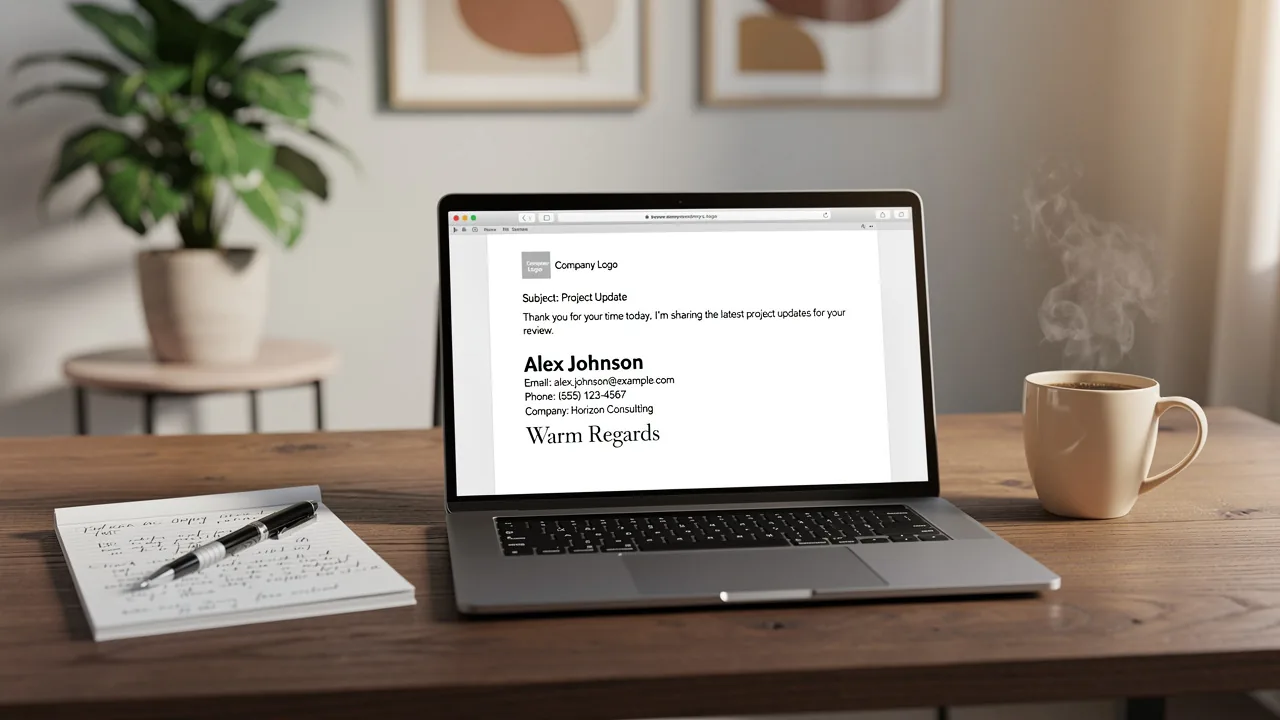
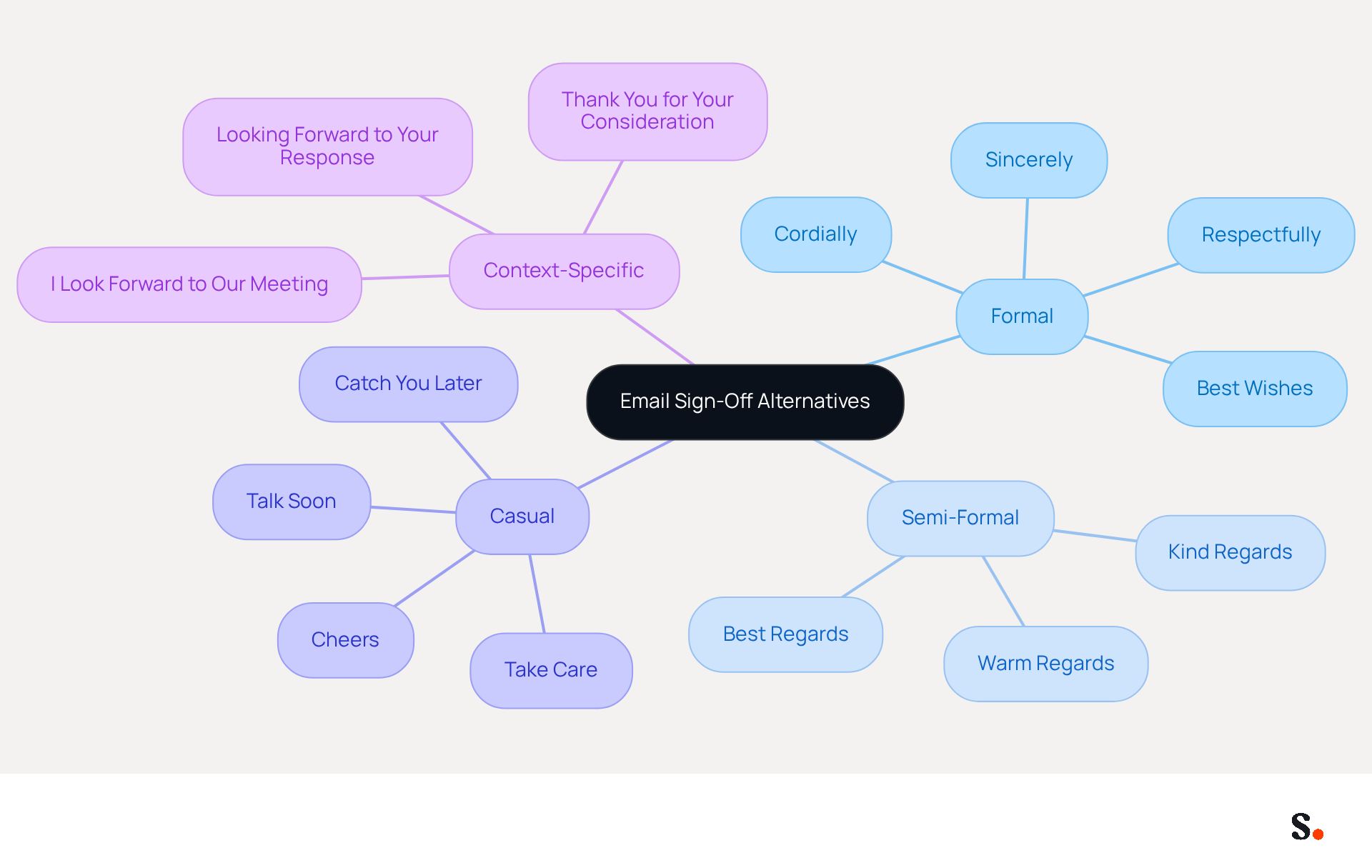
While 'Best Wishes' and 'Kind Wishes' are common, the choice of sign-off should reflect the context and relationship with the recipient. For instance, 'Warm Regards' adds a touch of friendliness while maintaining professionalism, making it suitable for semi-formal interactions.
Alternatives include 'Sincerely,' which is more formal and often used in official correspondence, and 'Thanks' or 'Thank you,' which can convey appreciation and gratitude. Studies indicate that sign-offs expressing gratitude, like 'Thank you,' can boost response rates by as much as 65%. In more casual settings, sign-offs such as 'Cheers' or 'Take care' are often suitable, especially among colleagues or friends.
Customizing sign-offs for specific contexts, such as using 'Looking forward to your response' for follow-ups, enhances communication effectiveness. Additionally, matching the tone of your sign-off to the recipient's style is crucial for maintaining professionalism. However, using overly casual sign-offs in formal communications can undermine your credibility. By diversifying their sign-offs, professionals can better express their personality and adapt to the tone of their communication, ultimately fostering stronger relationships and improving overall email marketing strategies.
Conclusion
The choice of an email closing can significantly influence the perception of professionalism in communication. The distinctions between 'Best Regards' and 'Kind Regards' highlight the importance of context and relationship dynamics in email interactions. However, many professionals struggle to choose the right sign-off, often unsure of how to convey the right tone.
Key insights reveal that:
- 'Best Regards' is ideal for friendly yet professional exchanges, particularly among colleagues or familiar contacts.
- 'Kind Regards' serves as a more formal option, suitable for initial introductions or interactions with superiors.
This oversight can lead to misunderstandings and missed opportunities in professional interactions. Studies show that thoughtful sign-offs can increase response rates by up to 20%, reinforcing the need for careful consideration in professional correspondence.
Mastering the art of email sign-offs can truly strengthen professional relationships and enhance collaboration. By tailoring sign-offs to fit the context and recipient, professionals can foster trust and enhance their overall communication strategy. Ultimately, the right sign-off can transform a simple email into a powerful tool for building professional rapport.
Frequently Asked Questions
What is the significance of choosing the right email sign-off?
Choosing the right email sign-off can significantly influence the tone and effectiveness of professional communication.
How does 'Best Wishes' differ from 'Kind Regards'?
'Best Wishes' is viewed as a friendly yet professional closing, suitable for ongoing correspondence or when familiarity exists, while 'Kind Regards' is more widely accepted in international business interactions, especially with European contacts.
In what contexts is 'Best Wishes' appropriate to use?
'Best Wishes' is appropriate for daily business interactions and is commonly used when there is a degree of familiarity between the sender and recipient.
When should 'Kind Regards' be used?
'Kind Regards' is suitable for global correspondence and is particularly effective in international business interactions.
What tone does 'Best Wishes' convey in professional communication?
'Best Wishes' conveys a balance between formality and warmth, making it versatile for various contexts while maintaining a professional tone.
Why is it important to select the right sign-off?
Selecting the right sign-off can influence how the recipient perceives the sender's intent and the message's tone, potentially increasing engagement and response rates.
What does research indicate about email sign-offs?
Research shows that thoughtful sign-offs can enhance engagement and response rates, highlighting the importance of choosing the right closing based on the context.
List of Sources
- Distinguishing 'Best Regards' and 'Kind Regards': Key Differences
- Warm Regards vs Best Regards vs Kind Regards: Choosing the Right Email Sign-Off (https://salesforge.ai/blog/warm-regards-vs-best-regards-vs-kind-regards)
- The Ultimate Email Sign-Offs Guide | Exclaimer (https://exclaimer.com/email-signature-handbook/email-sign-offs-guide)
- Kind Regards: Meaning, When to Use & Alternatives [2026] (https://lagrowthmachine.com/kind-regards)
- Email signature statistics: Why every business should optimize their email signatures — Stripo.email (https://stripo.email/blog/email-signature-statistics-why-every-business-should-optimize-their-email-signatures)
- The beautiful ways different cultures sign emails (https://bbc.com/worklife/article/20190508-why-the-way-you-close-your-emails-is-causing-confusion)
- Appropriate Contexts for 'Best Regards' and 'Kind Regards'
- Are people misinterpreting your email sign-off? (https://bbc.com/worklife/article/20180413-best-wishes-kind-regards-or-an-icy-yrs)
- Best regards, Kind regards, Best wishes, Yours sincerely - which to use and when | Email Signature Rescue Blog (https://emailsignaturerescue.com/blog/best-regards-kind-regards-best-wishes-yours-sincerely-which-to-use-and-when)
- Kind Regards: Meaning, When to Use & Alternatives [2026] (https://lagrowthmachine.com/kind-regards)
- 89 Ways To Sign Off On An Email (https://forbes.com/sites/susanadams/2014/10/08/89-ways-to-sign-off-on-an-email)
- Impact on Professional Communication: Tone and Perception
- 4 Best Practices for Effective Professional Email Closings (https://scribe-mail.com/en-US/blog/4-best-practices-for-effective-professional-email-closings)
- Your Tone Is Ruining Your Emails – Here’s How To Fix It (https://lucilleossai.com/blog/2022/05/31/your-tone-is-ruining-your-emails-heres-how-to-fix-it)
- 75 Best Email Sign-Offs for Any Situation - All-in-One Marketing Automation Toolset | FosterFlow (https://fosterflow.ai/75-best-email-sign-offs-for-any-situation)
- Email Tone Matters More Than You Think — Here's Why (https://simaraguard.com/blog/tone-matters-professional-communication)
- email sign-offs (https://wisestamp.com/signature-examples/email-sign-offs)
- Alternatives to 'Best Regards' and 'Kind Regards': Expanding Your Options
- 50 Best Email Sign-Offs to End an Email Properly in [year] (https://elementor.com/blog/best-email-sign-offs)
- Best Regards Alternative & Kind Regards: Email Sign-Offs - NEWOLDSTAMP (https://newoldstamp.com/blog/best-regards-alternatives)
- 105 Alternatives to “Best Regards” for Your Email Sign-Off (https://wisestamp.com/blog/best-regard-alternatives)
- Email Sign Offs for Every Industry and Situation | Mailchimp (https://mailchimp.com/resources/email-sign-offs)
- 75 Best Email Sign-Offs for Any Situation - All-in-One Marketing Automation Toolset | FosterFlow (https://fosterflow.ai/75-best-email-sign-offs-for-any-situation)
Get started with Scribe
Build a professional email signature
Free 14-day trial — no credit card.