Master Email Signature Best Practices to Boost Your Marketing Strategy
While often overlooked, email signatures hold significant potential for businesses aiming to enhance their marketing strategies. By understanding the key
Sophie Grant
Email Signature Specialist, Scribe

On this page
Introduction
While often overlooked, email signatures hold significant potential for businesses aiming to enhance their marketing strategies. By understanding the key components and design principles of effective email signatures, organizations can turn these digital identifiers into powerful marketing tools that enhance brand visibility and foster customer interaction.
Many organizations find it difficult to ensure their email signatures are uniform and compliant with branding guidelines. Without effective email signatures, businesses risk missing valuable opportunities for brand engagement and customer conversion.
Identify Essential Components of an Effective Email Signature
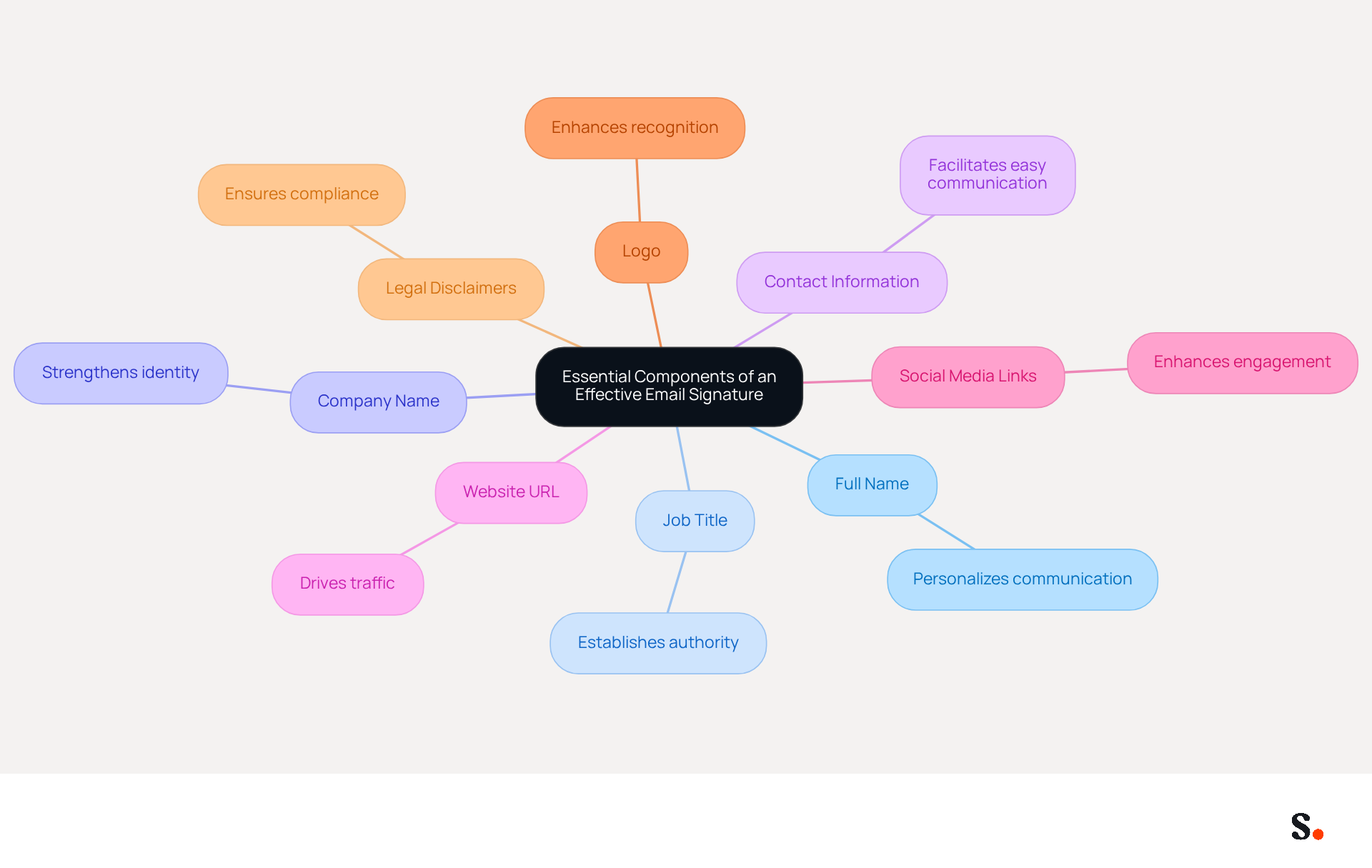
To truly harness the power of email signatures as branding tools, it’s essential to include several key components:
- Full Name: Clearly stating the sender's full name personalizes communication, making it relatable to recipients.
- Job Title: Including the sender's job title establishes authority and provides context, enhancing the professional image.
- Company Name: Clearly stating the company name strengthens identity, which is essential as 80% of businesses consider a branded signature crucial for marketing.
- Contact Information: Providing a phone number and contact address facilitates easy communication, ensuring recipients can reach out without hassle.
- Website URL: Linking to the company website drives traffic and offers recipients more information about services or products.
- Social Media Links: Including icons that link to professional social media profiles enhances engagement and connectivity, allowing recipients to explore the identity further.
- Logo: Integrating the Scribe logo enhances recognition, as visual components greatly improve the professional look of communications.
- Legal Disclaimers: Adding necessary legal disclaimers ensures compliance with regulations, protecting the organization and enhancing credibility.
Incorporating these elements ensures that your email signature adheres to email signature best practices, making it look professional while also driving engagement and response rates. Research indicates that companies that follow email signature best practices, including the use of branded footers, see a 22% increase in response rates, underscoring the importance of a well-structured email format for enhancing brand visibility and credibility.
With Scribe, managing these approvals is streamlined through automated synchronization with your business phone system, such as Aircall. This means you won’t have to worry about keeping your team’s information updated manually. Moreover, Scribe's SOC 2 Type II compliance ensures that your data is managed securely, offering peace of mind as you improve your messaging strategy. This integration not only guarantees that your email identifiers are consistent and professional but also aligns with the growing trend of mobile communication usage, as 60% of business messages are accessed on mobile devices.
Implement Design Principles for Engaging Email Signatures
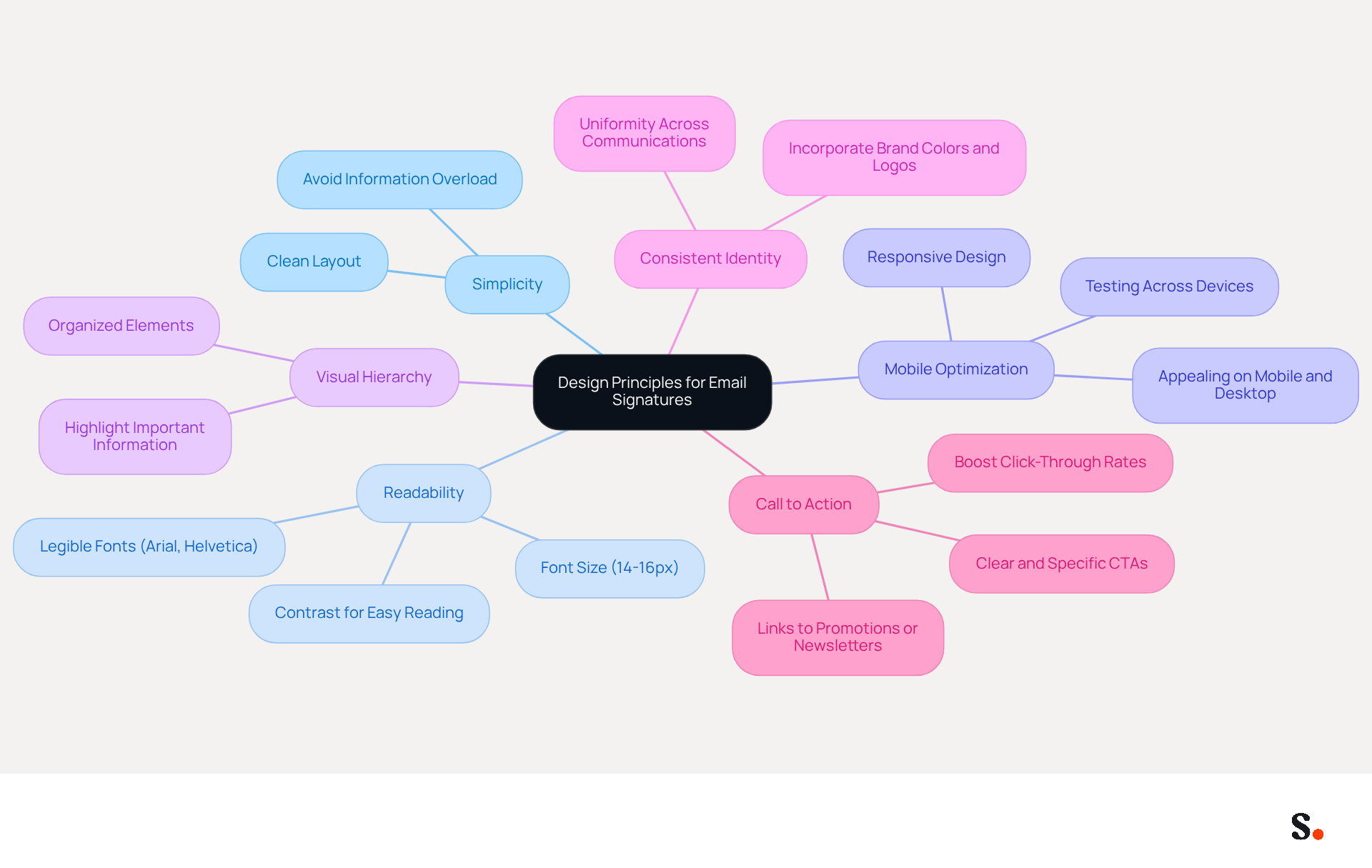
To create effective email signatures, it is crucial to adhere to key design principles that enhance clarity and engagement:
- Simplicity: Maintain a clean and uncluttered layout. Too much information can lead to confusion and disengagement.
- Readability: Utilize legible fonts such as Arial or Helvetica at sizes between 14-16px. Ensure there is sufficient contrast between the text and background to facilitate easy reading.
- Mobile Optimization: Given that over 60% of business correspondence is opened on mobile, it is essential to ensure an appealing appearance on both desktop and mobile.
- Visual Hierarchy: Organize elements to guide the reader's eye effectively. Use size and color strategically to highlight important information, such as the sender's name and job title.
- Consistent Identity: Incorporate colors and logos to maintain uniformity across all communications. This consistency strengthens identity and improves recognition, which can enhance engagement and recognition. Scribe automatically synchronizes your identifiers with your phone system and Aircall, ensuring real-time updates to your identity elements for enhanced consistency. Furthermore, Scribe's SOC 2 Type II compliance guarantees that your information is secure, offering reassurance as you manage your digital identifiers.
- Call to Action: Include a clear call to action (CTA), such as links to current promotions or newsletter signups. Effective CTAs can boost click-through rates by up to 5%, encouraging greater engagement.
By adopting email signature best practices, businesses can significantly improve their communication effectiveness and brand perception.
Leverage Email Signatures as Powerful Marketing Tools
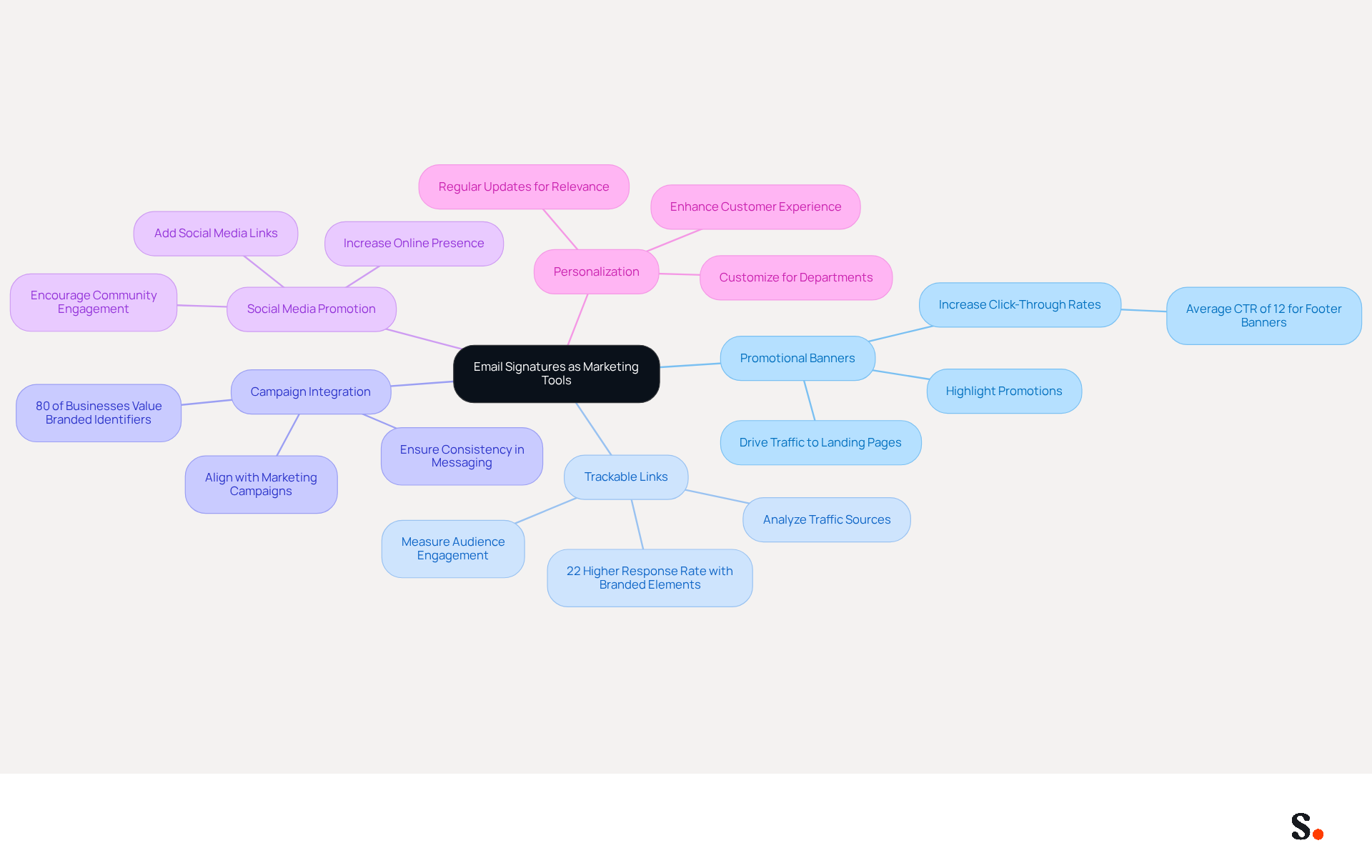
Email signatures often go unnoticed, yet they hold untapped potential for marketing effectiveness. By implementing the following strategies, businesses can transform their email signatures into powerful marketing tools:
- Promotional Banners: Incorporate banners that highlight current promotions, events, or new products. This approach captures the recipient's attention and drives traffic to specific landing pages, enhancing engagement. Research shows that incorporating a marketing banner in your message footer can greatly enhance click-through rates, with Scribe users experiencing an average click-through rate of 12% on footer banners.
- Trackable Links: Consider using trackable links to get a better sense of how engaged your audience is. This enables businesses to examine which components of the branding are driving traffic and conversions, offering valuable insights for future campaigns. Messages containing branded elements experience a 22% greater response rate, highlighting the significance of well-designed digital identifiers.
- Campaign Integration: Align email identifiers with ongoing marketing campaigns. For example, if Scribe is promoting a new service, the email footer can include a link to a dedicated landing page, ensuring consistency in messaging. This alignment is crucial, as 80% of businesses consider branded electronic identifiers essential for branding. With Scribe, any modifications made in your Aircall configuration will automatically be reflected in your email identifiers, ensuring consistency across all communications.
- Social Media Promotion: Why not invite your recipients to connect with Scribe on social media by adding links in your email footer? This strategy helps grow the company's online presence and fosters community engagement, reinforcing the brand's identity.
- Personalization: Customize identifiers for different departments or campaigns to ensure relevance. For example, sales teams might include links to product demos, while support teams could link to FAQs or help resources, enhancing the overall customer experience. Regular updates to communication identifiers are essential to sustain audience engagement and ensure that the information stays up to date. Scribe's automated management of digital signatures allows for effortless updates, ensuring that your identifiers are consistently current and compliant with SOC 2 Type II standards for secure data handling, as well as GDPR and CCPA regulations.
By utilizing digital identifiers in these ways, businesses can enhance their marketing efforts and transform every message into a potential lead generation opportunity. By neglecting email signature best practices, businesses risk missing out on valuable engagement opportunities that could drive growth.
Ensure Consistency and Compliance in Email Signature Management
To achieve effective email signature management, organizations must adopt a structured approach that emphasizes consistency and compliance.
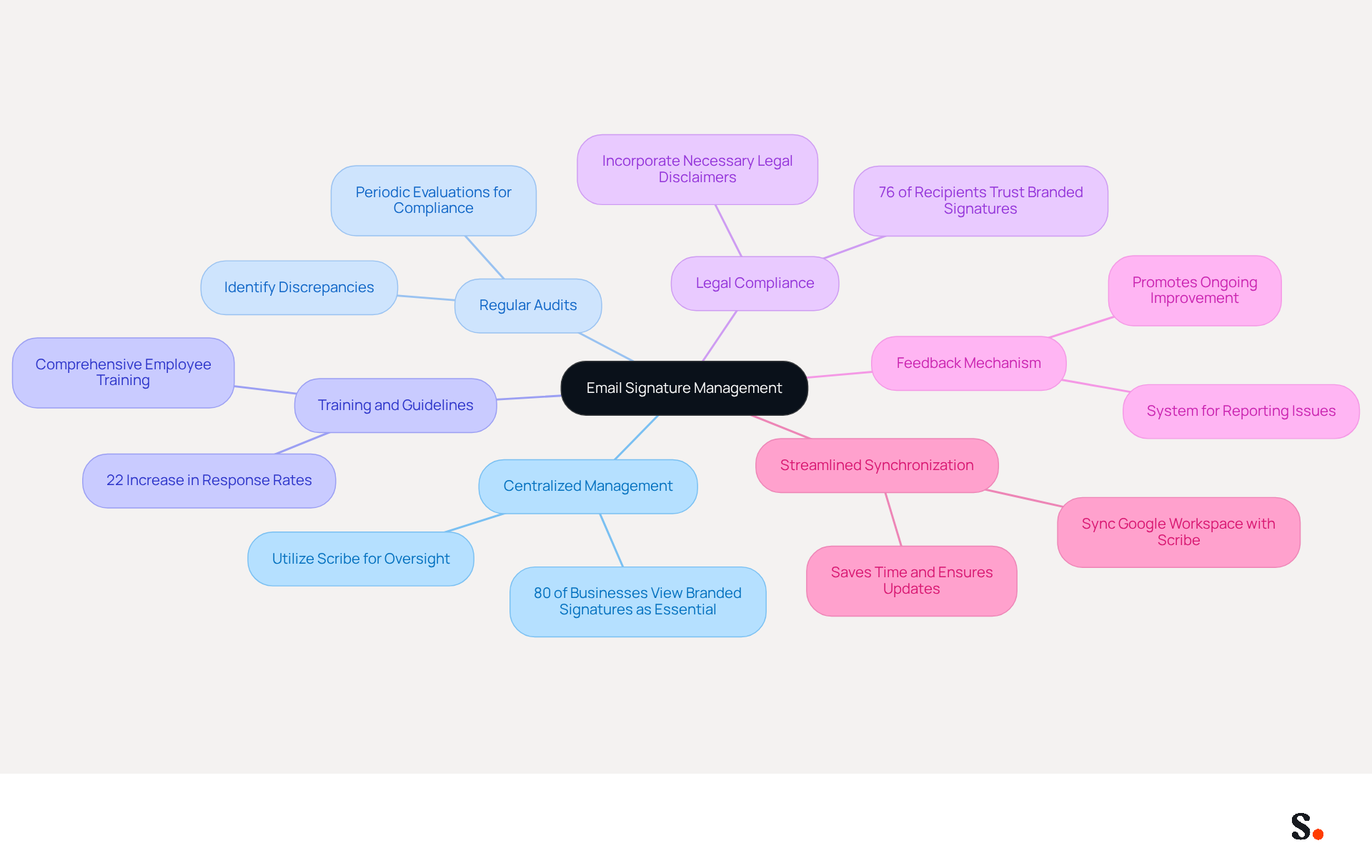
- Centralized Management: Utilize Scribe to oversee communication identifiers across the organization. This method guarantees consistency and keeps all identifiers up to date. In fact, 80% of businesses view branded digital identifiers as essential for maintaining a professional image.
- Regular Audits: Conduct periodic evaluations of digital identifiers to verify adherence to branding guidelines and legal requirements. Regular checks help identify discrepancies and ensure compliance, reducing the risk of litigation from non-compliant endorsements.
- Training and Guidelines: Provide comprehensive training for employees on creating and maintaining their digital identifiers. Clear guidelines can prevent inconsistencies and ensure that all marks accurately reflect the brand, contributing to a 22% increase in response rates for those using consistent marks.
- Legal Compliance: Ensure that all endorsements incorporate necessary legal disclaimers and comply with regulations such as GDPR and CCPA. By ensuring legal compliance, organizations not only protect themselves but also enhance their credibility with clients, as 76% of recipients report heightened confidence in senders with branded identifiers.
- Feedback Mechanism: Establish a feedback system for employees to report issues or suggest enhancements regarding digital identifiers. This promotes ongoing improvement and compliance with optimal methods, ultimately converting digital identifiers into powerful marketing instruments that can attract leads and strengthen brand loyalty.
- Streamlined Synchronization: Syncing your Google Workspace with Scribe not only saves time but also ensures that any updates to your team’s information - like job positions or group assignments - are automatically reflected in their contact details. This auto-filling feature improves efficiency and guarantees that all approvals remain up to date without manual input. Additionally, Scribe's SOC 2 Type II certification ensures that your data is handled securely, providing peace of mind regarding compliance and security.
By implementing these strategies, businesses can ensure that they follow email signature best practices to maintain consistency, compliance, and reflect their brand identity. Ultimately, a well-managed email signature can serve as a strategic asset that enhances brand perception and fosters trust among clients.
Conclusion
Mastering email signature best practices is essential for organizations aiming to enhance their marketing strategies and brand visibility. Organizations often overlook the potential of email signatures as a strategic marketing tool. Utilizing email signatures effectively can turn a basic communication tool into a significant marketing asset that enhances engagement and drives growth.
Key components such as:
- Full names
- Job titles
- Company branding
- Contact information
are crucial for establishing a professional image. Additionally, adhering to design principles ensures clarity and readability, while leveraging email signatures for marketing-through promotional banners and trackable links-can significantly boost engagement rates. Consistency and compliance are paramount, with centralized management and regular audits helping to maintain brand integrity and legal adherence.
These best practices not only improve communication but also make email signatures effective tools for generating leads. Organizations are encouraged to embrace these strategies, making each email a chance to strengthen brand identity and engage with the audience. By doing so, businesses can unlock the full potential of their email signatures, driving measurable marketing ROI and fostering lasting relationships with clients. Embracing these strategies can lead to significant improvements in marketing effectiveness and client engagement.
Frequently Asked Questions
What are the essential components of an effective email signature?
The essential components of an effective email signature include the sender's full name, job title, company name, contact information, website URL, social media links, logo, and legal disclaimers.
Why is it important to include a full name in an email signature?
Including a full name personalizes communication, making it more relatable to recipients.
How does a job title in an email signature enhance communication?
A job title establishes authority and provides context, enhancing the professional image of the sender.
What role does the company name play in an email signature?
Clearly stating the company name strengthens identity, which is crucial as 80% of businesses consider a branded signature important for marketing.
Why should contact information be included in an email signature?
Providing a phone number and contact address facilitates easy communication, ensuring recipients can reach out without hassle.
How does linking to a website in an email signature benefit the sender?
Linking to the company website drives traffic and offers recipients more information about services or products.
What is the advantage of including social media links in an email signature?
Including icons that link to professional social media profiles enhances engagement and connectivity, allowing recipients to explore the sender's identity further.
Why is it beneficial to integrate a logo into an email signature?
Integrating the Scribe logo enhances recognition, as visual components greatly improve the professional look of communications.
What is the purpose of adding legal disclaimers to an email signature?
Adding necessary legal disclaimers ensures compliance with regulations, protecting the organization and enhancing credibility.
How can following email signature best practices impact response rates?
Research indicates that companies that follow email signature best practices, including the use of branded footers, see a 22% increase in response rates.
How does Scribe assist in managing email signatures?
Scribe streamlines the management of email signatures through automated synchronization with business phone systems, ensuring team information is updated without manual effort.
What compliance does Scribe offer regarding data management?
Scribe's SOC 2 Type II compliance ensures that data is managed securely, providing peace of mind while improving messaging strategies.
Why is consistency in email identifiers important?
Consistency in email identifiers guarantees a professional appearance and aligns with the growing trend of mobile communication usage, as 60% of business messages are accessed on mobile devices.
List of Sources
- Identify Essential Components of an Effective Email Signature
- 4 Best Practices for a Modern Email Signature That Engages (https://scribe-mail.com/en-US/blog/4-best-practices-for-a-modern-email-signature-that-engages)
- Email Signature Best Practices for 2026 (+ 15 Pro Examples) (https://wavecnct.com/blogs/email-signature-best-practices-2026)
- 12 email signature marketing examples that drive clicks (2026) (https://signitic.com/en/resources/12-email-signature-marketing-examples-that-actually-drive-clicks)
- Best Practices for a Correct Email Signature That Boosts Branding (https://scribe-mail.com/en-US/blog/best-practices-for-a-correct-email-signature-that-boosts-branding)
- 20 best email signature design examples for 2026 — Stripo.email (https://stripo.email/blog/10-best-email-signature-design-examples)
- Implement Design Principles for Engaging Email Signatures
- Email Signature Best Practices - NEWOLDSTAMP (https://newoldstamp.com/blog/email-signature-best-practices)
- Email Signature Best Practices for 2026 (+ 15 Pro Examples) (https://wavecnct.com/blogs/email-signature-best-practices-2026)
- Email signature statistics: Why every business should optimize their email signatures — Stripo.email (https://stripo.email/blog/email-signature-statistics-why-every-business-should-optimize-their-email-signatures)
- Email Signature Design Trends in 2026: What Works and What to Drop (https://bulksignature.com/blog/email-signature-design-trends)
- 4 Best Practices for a Modern Email Signature That Engages (https://scribe-mail.com/en-US/blog/4-best-practices-for-a-modern-email-signature-that-engages)
- Leverage Email Signatures as Powerful Marketing Tools
- What Email Signatures Really Mean for Your Marketing Strategy (https://scribe-mail.com/en-US/blog/what-email-signatures-really-mean-for-your-marketing-strategy)
- Email signature marketing: Triple your conversions with signature marketing (https://mailbutler.io/blog/email/signature-marketing)
- Using Email Signatures as a Marketing Tool: Ideas for Generating Leads and Promoting Business (https://blog.ringostat.com/en/using-email-signatures-as-a-marketing-tool-ideas-for-generating-leads-and-promoting-business)
- Why Email Signatures Must Be In Your 2026 Marketing Plan | Rocketseed (https://rocketseed.com/blog/what-are-the-biggest-email-trends-for-2026)
- The Quantifiable Marketing Value of Email Signatures (https://ama.org/2022/06/20/the-quantifiable-marketing-value-of-email-signatures)
- Ensure Consistency and Compliance in Email Signature Management
- The impact of email signatures on your branding (https://signitic.com/en/resources/the-impact-of-email-signatures-on-your-branding)
- 5 Benefits of Using Centrally Managed Email Signatures | Crossware365 (https://crossware365.com/blog/5-benefits-of-using-centrally-managed-email-signatures)
- Email signature statistics: Why every business should optimize their email signatures — Stripo.email (https://stripo.email/blog/email-signature-statistics-why-every-business-should-optimize-their-email-signatures)
- Company-Wide Email Signature Management | CloudM (https://cloudm.io/resources/blog/optimize-your-process-with-company-wide-email-signature-management)
Get started with Scribe
Manage signatures across your whole team
Free 14-day trial — no credit card.