Master Funny Sign-Offs: Best Practices for Professional Emails
Effective email communication hinges not only on the message itself but also on the sign-off. Humorous sign-offs can create a friendly atmosphere and boost
Sophie Grant
Email Signature Specialist, Scribe
Introduction
Effective email communication hinges not only on the message itself but also on the sign-off. Humorous sign-offs can create a friendly atmosphere and boost engagement among team members. Yet, figuring out when and how to use humor without being unprofessional can be tricky.
What best practices can guide the effective use of humor in professional emails, ensuring that a light-hearted sign-off is well-received?
Understand the Role of Humor in Professional Emails
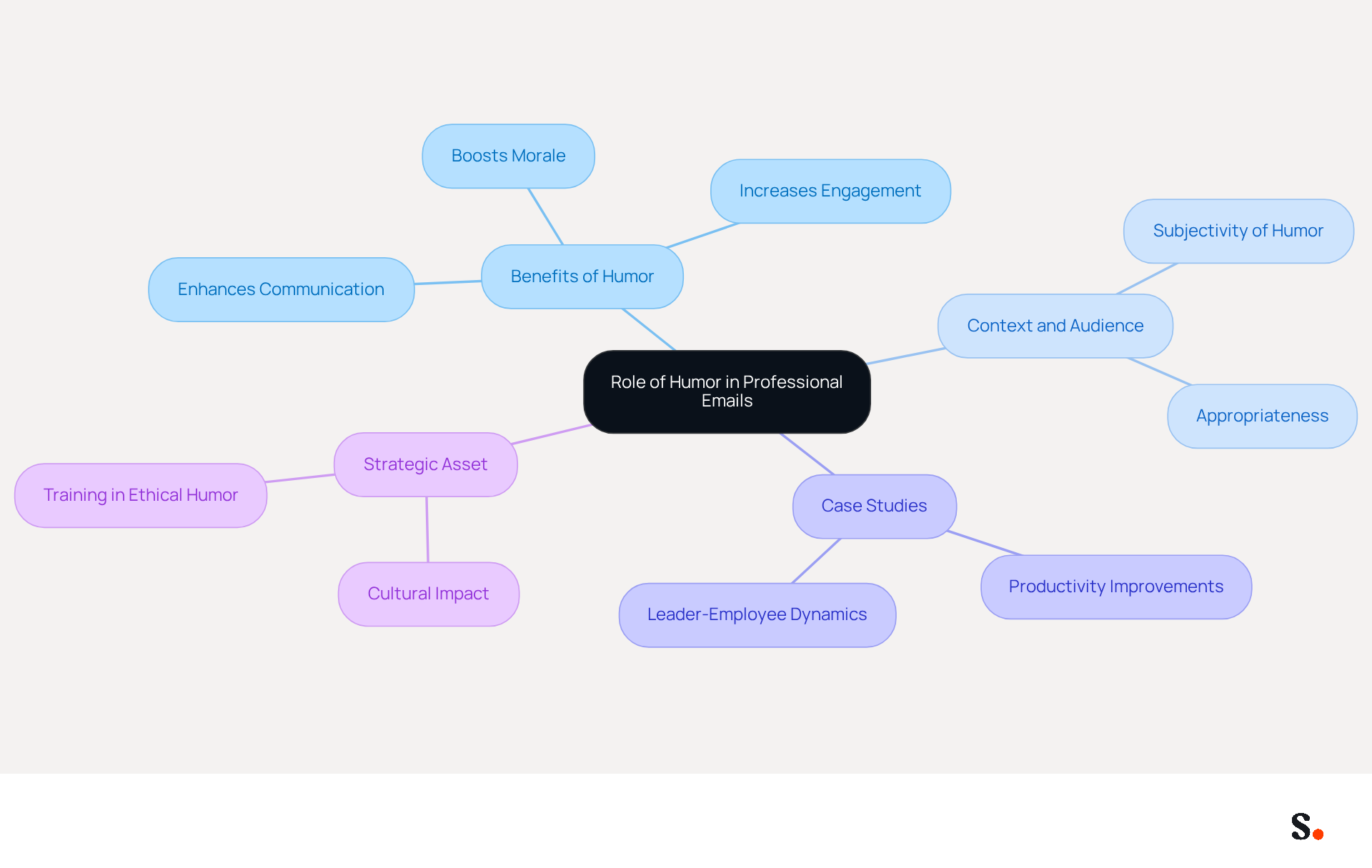
While humor, such as funny sign-offs, can enhance communication in professional emails, its effectiveness hinges on context and audience understanding. When used appropriately, it can lighten the mood, foster camaraderie, and even enhance creativity. Studies indicate that laughter boosts workplace morale and increases team engagement. A meta-analysis of 49 studies involving over 8,500 participants found that positive wit significantly enhances individual resilience and group cohesion, leading to better overall performance (source needed).
However, it is essential to recognize that comedy is subjective; what one individual finds amusing, another may not. Therefore, understanding your audience is key. For instance, a light-hearted joke may be well-received among colleagues but could be inappropriate in formal communications with clients or superiors. Striking the right balance means ensuring that humor adds to the message while keeping professionalism intact.
Case studies further illustrate this point. A study involving 351 leader-employee pairs revealed that leaders who utilized wit effectively reduced perceived workloads and increased employee creativity, demonstrating how lightheartedness can soften hierarchies and make leaders more relatable and trustworthy. This encourages open communication and faster iteration within teams.
Incorporating funny sign-offs into professional emails can also lead to substantial productivity improvements. Organizations that adopt a culture of laughter report reduced absenteeism and increased engagement, with turnover decreasing by up to 20%. Moreover, focused training in ethical wit and connection-building can result in productivity increases of 5-15%. As such, humor is not merely a tool for lightening the atmosphere; it is a strategic asset that can enhance workplace dynamics and drive business success. If not used thoughtfully, humor can backfire, resulting in lower morale and productivity.
Identify Appropriate Situations for Funny Sign-Offs
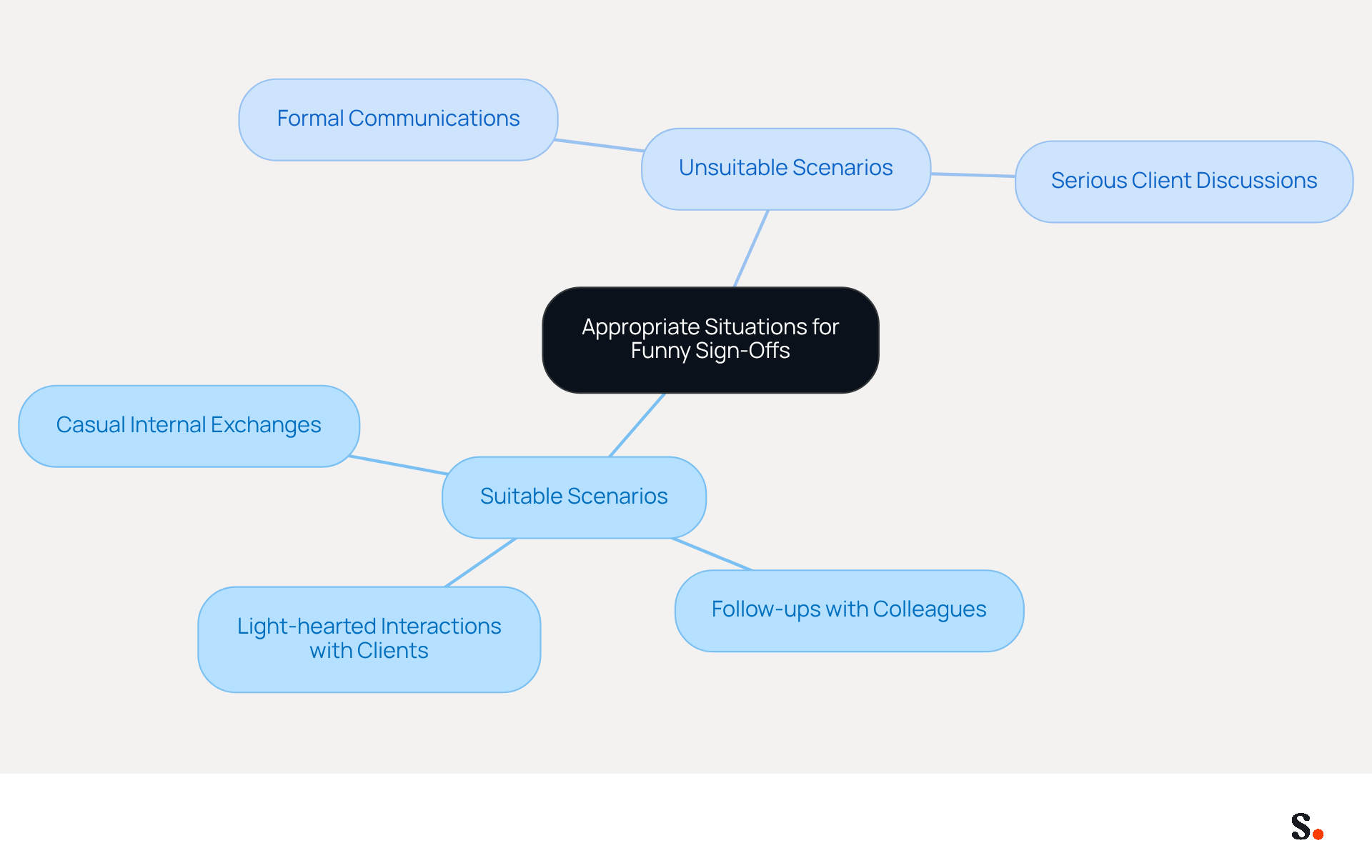
While humor can enhance communication, its effectiveness hinges on the context and timing. Suitable scenarios for funny sign-offs include:
- Casual internal exchanges
- Follow-ups with colleagues after a successful project
- Light-hearted interactions with familiar clients
For instance, a phrase like 'Cheers to our success!' can strengthen camaraderie among team members. Conversely, avoid jokes in formal communications, such as job applications or serious client discussions, where a more traditional sign-off is expected. It is essential to assess your relationship with the recipient and the overall tone of your message before integrating humor.
Craft Effective and Contextual Funny Sign-Offs
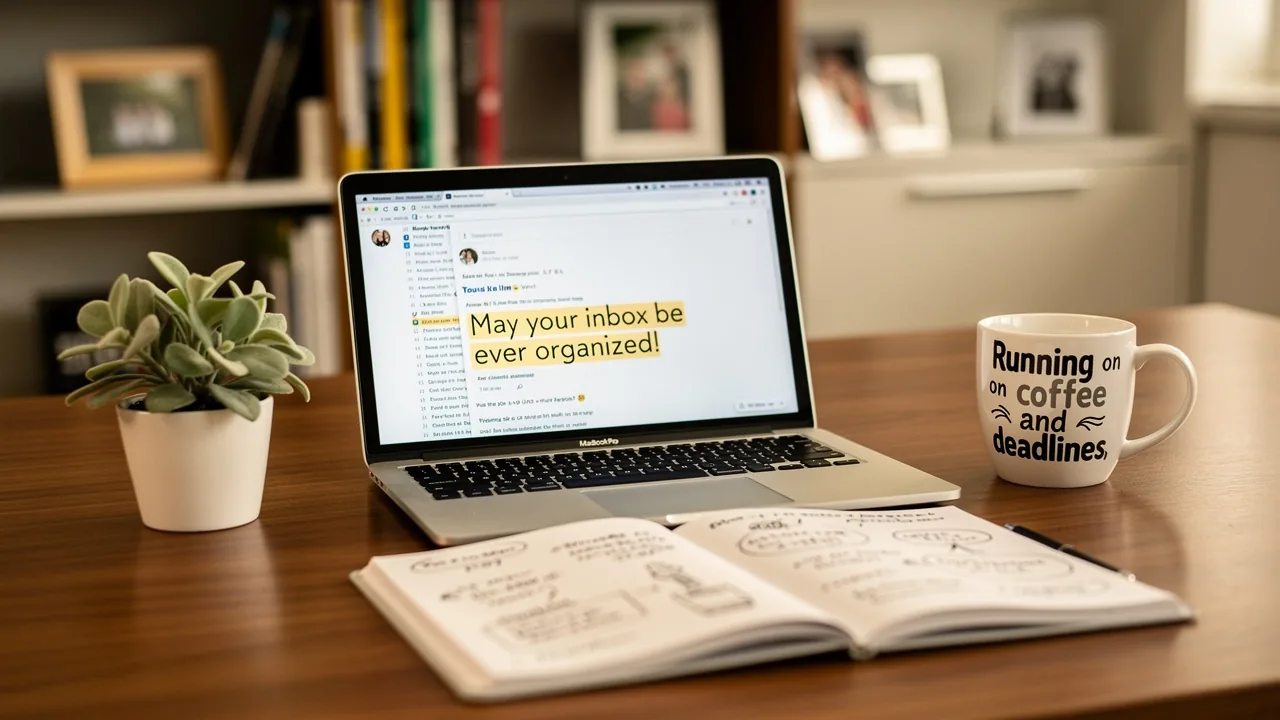
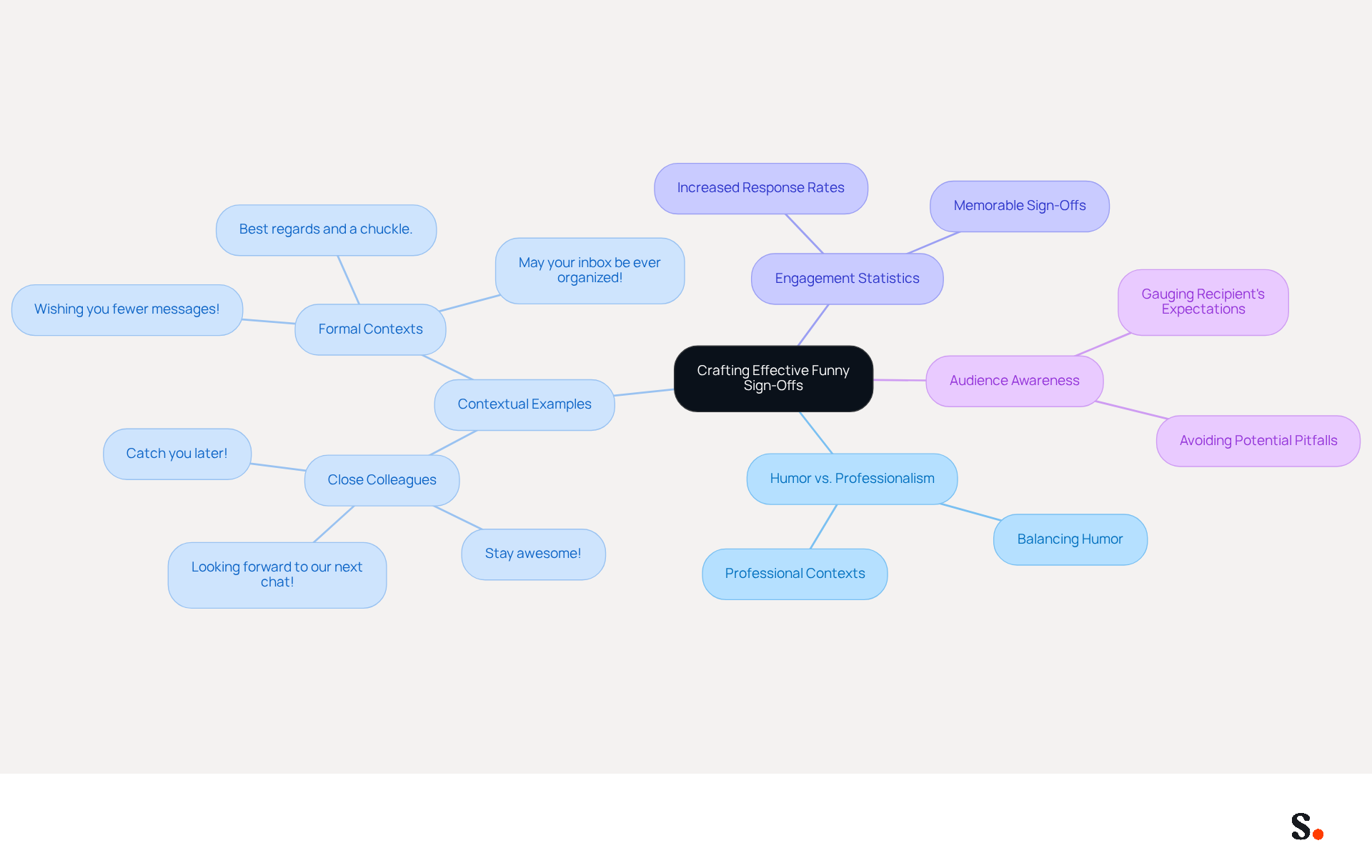
Crafting effective sign-offs that are funny requires a careful balance between humor and professionalism. Start by brainstorming light-hearted phrases that reflect your personality while remaining professional. For example, when communicating with a close colleague, consider using phrases like 'Stay awesome!' or 'Looking forward to our next chat!' In more formal contexts, playful yet professional options such as 'Wishing you fewer messages!' or 'May your inbox be ever organized' can be appropriate. Moreover, referencing shared experiences can strengthen connections and enhance the relatability of your message.
Statistics indicate that using funny sign-offs in your emails can enhance engagement, making them more memorable. For instance, a humorous sign-off like 'Error 404: Signature not found' not only adds a touch of wit but also encourages recipients to respond. Furthermore, case studies show that sign-offs such as 'Pandemically yours' during the pandemic effectively captured the unique challenges of the time while adding a light-hearted tone to communications.
Always ensure that the wit aligns with the overall tone of your message and is suitable for the recipient. An effectively crafted funny sign-off can help differentiate your emails in a crowded inbox, facilitating a more engaging and relaxed dialogue. However, humor can backfire if not aligned with the recipient's expectations, so it's essential to gauge your audience well to avoid any potential pitfalls. Ultimately, a well-considered sign-off can transform your email from mundane to memorable, fostering better connections.
Avoid Common Mistakes with Funny Sign-Offs
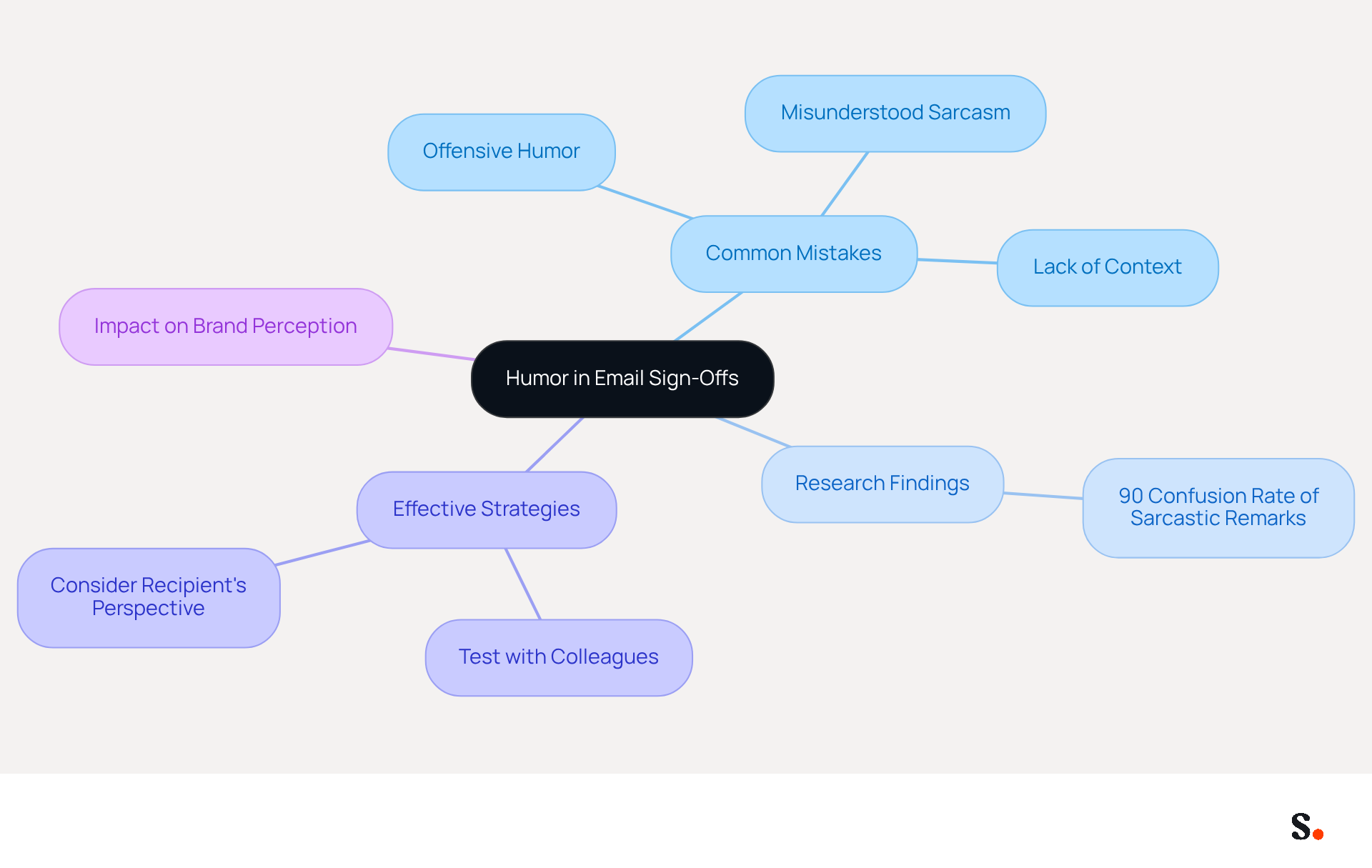
While humor can enrich communication, it also carries the risk of misinterpretation in professional emails. Common errors include using comedy that may be perceived as offensive or inappropriate, such as jokes about sensitive topics or overly sarcastic remarks. Furthermore, steer clear of humor that might be misunderstood without the context of tone or facial expressions, as written communication lacks these cues. For instance, a sarcastic closing like Thanks for all the help! could be taken literally if the recipient is unaware of the context.
Research shows that nearly 90% of sarcastic remarks in email sign-offs can cause confusion, highlighting the risks of misinterpretation in email communication. To mitigate these risks, always err on the side of caution and consider the recipient's perspective. Testing your wit with a trusted colleague before sending can also help ensure it lands as intended.
For example, companies that use humor effectively often see improved brand perception and stronger connections with their audience. The humorous use of funny sign-offs like Sent from Your Deceased Grandmother's Rotary Phone adds a quirky touch that elicits laughter and surprise, making the message memorable. With Scribe, you can create captivating email sign-offs that embody your brand's voice while maintaining consistency across communications. Ultimately, the right balance of wit can elevate your communication, leaving a lasting impression without compromising professionalism.
Conclusion
Incorporating humor into professional emails can be a double-edged sword, requiring careful consideration of context and audience. Thoughtfully used, humor can lighten the mood and strengthen relationships with colleagues and clients, making interactions more engaging.
Key insights from the article highlight the importance of understanding when humor is appropriate:
- Casual exchanges and celebratory communications are ideal for funny sign-offs.
- Formal contexts call for a more traditional approach.
- Effective sign-offs require a careful balance of wit and professionalism, often supported by examples of successful communications.
- Avoiding common pitfalls, such as sarcasm or potentially offensive jokes, is crucial to maintaining clarity and professionalism in communication.
Using humor in email sign-offs can turn ordinary messages into memorable ones, enhancing engagement and fostering stronger connections. Embracing this approach not only contributes to a more enjoyable work environment but also reinforces the importance of thoughtful communication in professional settings. By skillfully integrating humor into email sign-offs, professionals can not only enhance their communication but also create a lasting impact on their relationships.
Frequently Asked Questions
What is the role of humor in professional emails?
Humor in professional emails can enhance communication by lightening the mood, fostering camaraderie, and boosting creativity. When used appropriately, it can improve workplace morale and increase team engagement.
How does humor affect workplace morale and performance?
Studies indicate that laughter boosts workplace morale and enhances individual resilience and group cohesion, leading to better overall performance. A meta-analysis of 49 studies found that positive wit significantly contributes to these outcomes.
Why is understanding the audience important when using humor in emails?
Comedy is subjective; what one person finds funny, another may not. Understanding your audience is crucial to ensure that humor is appropriate and enhances the message without compromising professionalism.
Can humor in emails impact leadership and employee relationships?
Yes, case studies show that leaders who effectively use wit can reduce perceived workloads and increase employee creativity, making them more relatable and trustworthy, which encourages open communication.
What are the potential benefits of incorporating humor into workplace culture?
Organizations that embrace humor report reduced absenteeism, increased engagement, and a decrease in turnover by up to 20%. Training in ethical wit can also lead to productivity increases of 5-15%.
What are the risks of using humor in professional communication?
If not used thoughtfully, humor can backfire, resulting in lower morale and productivity. It is essential to strike the right balance to maintain professionalism while adding value to the message.
List of Sources
- Understand the Role of Humor in Professional Emails
- Benefits of Having a Good Sense of Humor (https://ardencoaching.com/why-so-serious-the-benefits-of-humor-at-work)
- Why laughter is serious business: The surprising outcomes of workplace humor (https://rbj.net/2025/11/05/why-laughter-is-serious-business-the-surprising-outcomes-of-workplace-humor)
- Gen Z is transforming office email etiquette — but it could backfire (https://businessinsider.com/gen-z-office-emails-etiquette-changing-backfire-experts-2024-7)
- Here’s Why Humor is So Important in the Workplace — and the Right Way to Use It - Thrive Global (https://community.thriveglobal.com/humor-laughter-workplace-office-well-being-success-benefits-tips)
- Make ’Em Laugh: How Humor Can Be the Secret Weapon in Your Communication (https://gsb.stanford.edu/insights/make-em-laugh-how-humor-can-be-secret-weapon-your-communication)
- Identify Appropriate Situations for Funny Sign-Offs
- Make ’Em Laugh: How Humor Can Be the Secret Weapon in Your Communication (https://gsb.stanford.edu/insights/make-em-laugh-how-humor-can-be-secret-weapon-your-communication)
- Using Humor in Emails To Get Noticed (In a Good Way) at Work (https://medium.com/the-haven/using-humor-in-emails-to-get-noticed-in-a-good-way-at-work-e1d38d0efde2)
- What is the role of humor in professional emails - when is it appropriate? (https://linkedin.com/advice/0/what-role-humor-professional-emails-when-mgupe)
- Funny Email Sign-Offs - Hilarious Ways to End Your Emails (https://mysignature.io/blog/funny-email-sign-offs)
- Best Practices for Crafting a Funny Email Signature That Engages (https://scribe-mail.com/en-US/blog/best-practices-for-crafting-a-funny-email-signature-that-engages)
- Craft Effective and Contextual Funny Sign-Offs
- 110 Completely Unhinged Email Sign Offs That People Have Actually Used Or Received At Work (https://buzzfeed.com/meganeliscomb/funny-email-sign-offs)
- 30 Funny Email Sign Offs | Brafton (https://brafton.com/blog/email-marketing/funny-email-sign-offs)
- 102 Funny Email Signature Sign-Off Examples (https://wisestamp.com/examples/funny-email-signature)
- Gen Z Email Sign-Offs: Funny Email Sign Offs - NEWOLDSTAMP (https://newoldstamp.com/blog/gen-z-sign-offs)
- Avoid Common Mistakes with Funny Sign-Offs
- 4 Fun Ways to Sign-Off an Email That Will Delight Your Colleagues (https://scribe-mail.com/en-US/blog/4-fun-ways-to-sign-off-an-email-that-will-delight-your-colleagues)
- 100+ Funny Email Sign-Offs for Every Situation (https://atomicmail.io/blog/funny-email-sign-offs-for-every-situation)
- 102 Funny Email Signature Sign-Off Examples (https://wisestamp.com/examples/funny-email-signature)
- Humor in (Email) Marketing: A Clever Trick or Laughable Idea? (https://smaily.com/humor-in-email-marketing)
- 110 Completely Unhinged Email Sign Offs That People Have Actually Used Or Received At Work (https://buzzfeed.com/meganeliscomb/funny-email-sign-offs)
Get started with Scribe
Build a professional email signature
Free 14-day trial — no credit card.