Master How to End an Email Informally with These Simple Steps
Finding the right tone in email sign-offs can significantly impact how your messages are perceived. Casual sign-offs like "Cheers" or "Take care" convey warmth
Sophie Grant
Email Signature Specialist, Scribe
Introduction
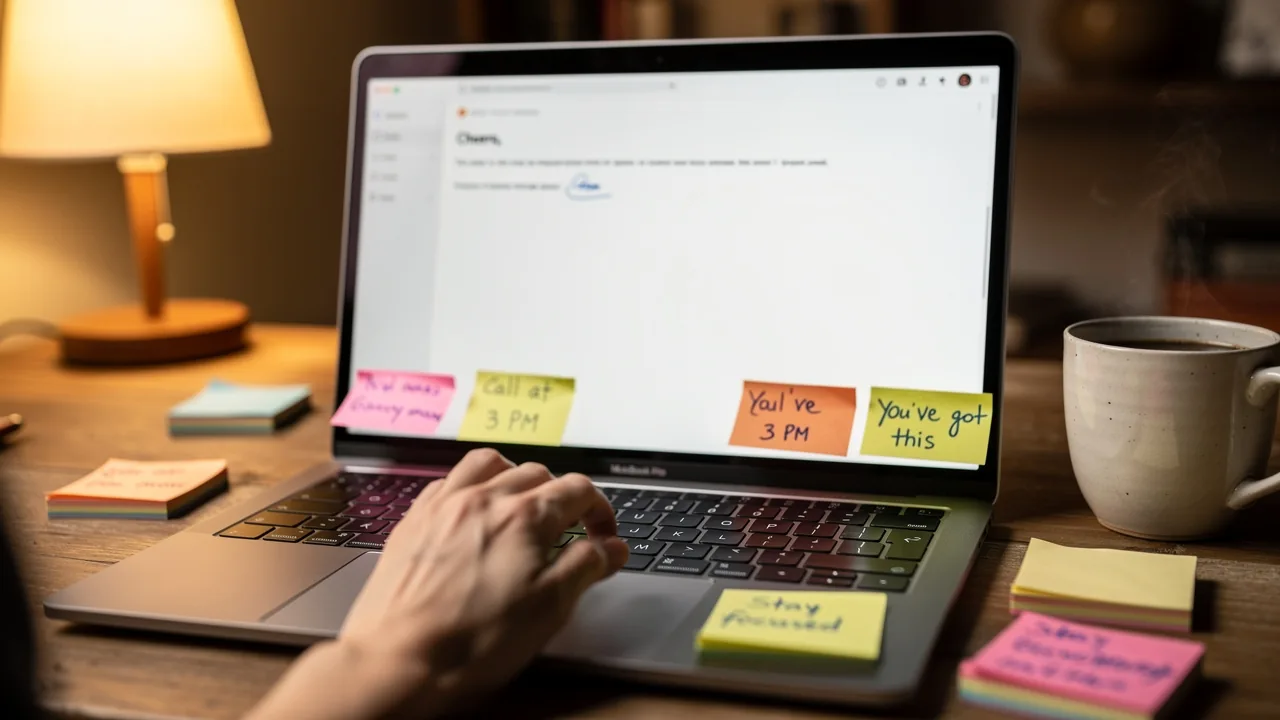
Finding the right tone in email sign-offs can significantly impact how your messages are perceived. Casual sign-offs like "Cheers" or "Take care" convey warmth and foster a sense of connection, making communication more engaging. However, finding the right tone can be tricky; using overly casual phrases may undermine your professionalism.
How can one navigate this nuanced landscape to ensure that their email closings enhance rather than hinder their communication?
Understand Informal Email Endings
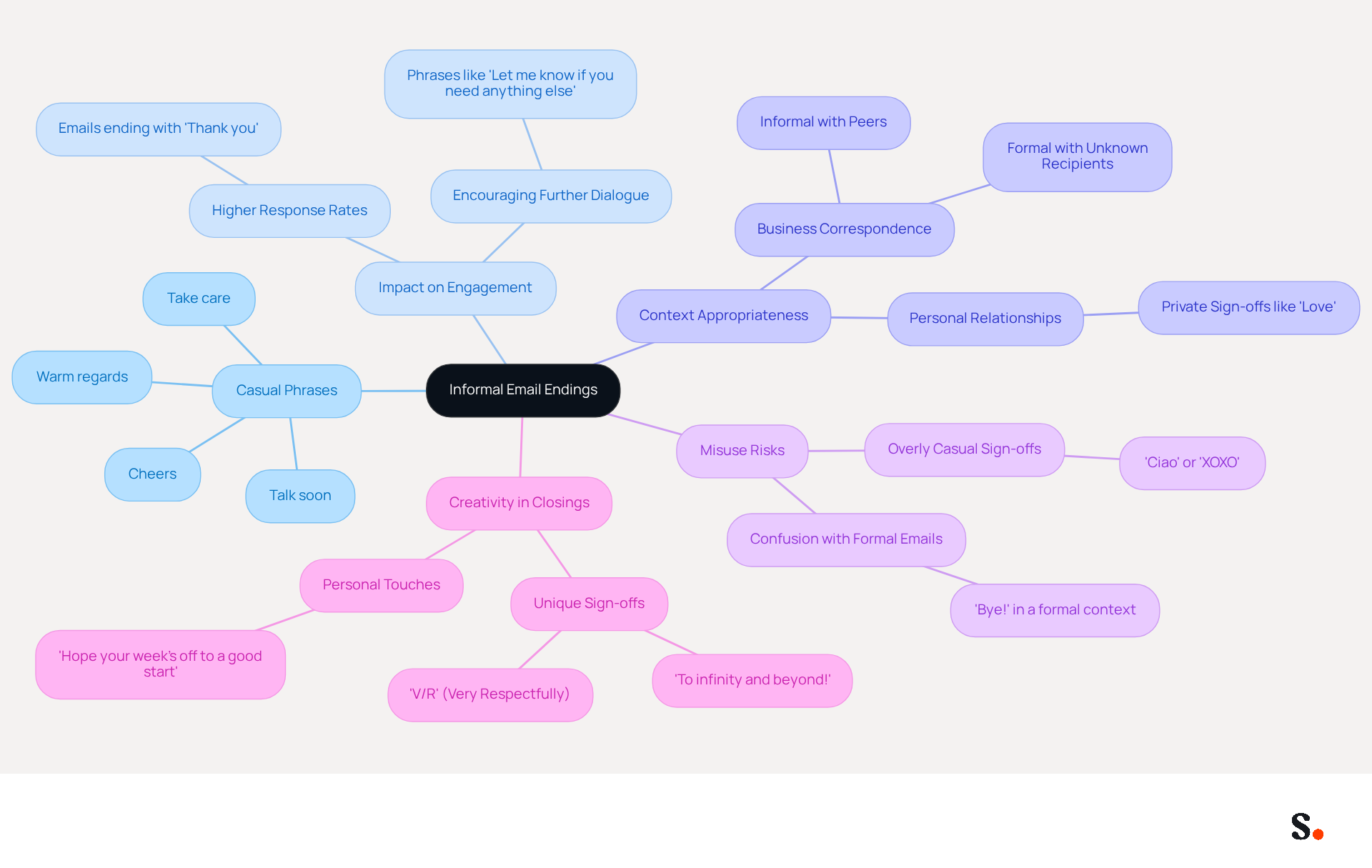
While understanding how to end an email informally can enhance communication, their appropriateness depends on the context. Casual phrases like 'Cheers' or 'Take care' can convey warmth and approachability, which is important when considering how to end an email informally, while 'Talk soon' suggests an ongoing relationship. Emails that end with a thank you tend to get more responses, showing how effective casual closings can be for engagement.
However, when learning how to end an email informally, misusing casual closings can lead to misunderstandings or a lack of professionalism. It's crucial to understand how to end an email informally. Understanding the nuances of casual endings can improve your communication and strengthen relationships.
Furthermore, utilizing diverse closings can demonstrate effort and creativity, making your messages more engaging. By carefully selecting your message endings, you can significantly impact how your communication is perceived.
Explore Examples of Informal Sign-Offs
Understanding how to end an email informally can significantly impact your communication effectiveness. Here are some popular informal email sign-offs you can use:
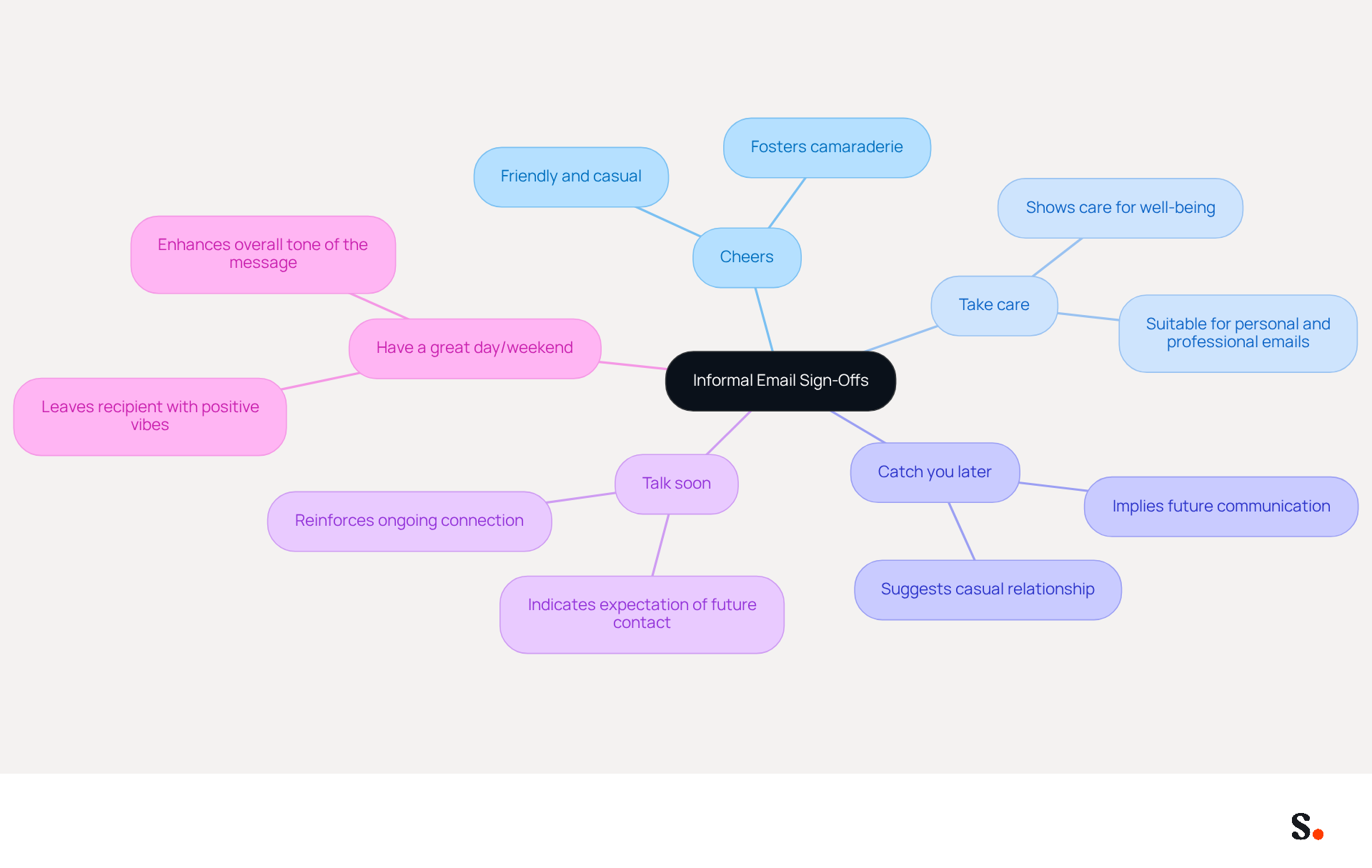
- Cheers: A friendly and casual way to end an email, suitable for colleagues and friends. This approval fosters a sense of camaraderie and is widely recognized.
- Take care: A warm closing that shows you care about the recipient's well-being, making it a thoughtful choice for both personal and professional correspondence, which is an example of how to end an email informally.
- Catch you later: This phrase suggests a casual relationship and implies future communication, which is a great example of how to end an email informally among peers.
- Talk soon: This phrase is an example of how to end an email informally, indicating that you expect to communicate again shortly and reinforcing a sense of ongoing connection.
- Have a great day/weekend: A positive farewell that leaves the recipient with good vibes, demonstrating how to end an email informally and enhancing the overall tone of your message.
Feel free to adjust these examples to match your style and your relationship with the recipient, especially when thinking about how to end an email informally. Studies show that informal sign-offs improve relatability and engagement, with gratitude-based closings yielding response rates of 54% to 66%. This underscores how a well-chosen sign-off can enhance interactions. Furthermore, case studies indicate that messages concluding with friendly phrases often elicit quicker responses, as they foster a welcoming environment for ongoing conversation. For example, a study indicated that emails ending with expressions of gratitude tend to receive higher response rates compared to those that do not include such closures. Incorporating informal sign-offs could teach you how to end an email informally, which may unlock better engagement in your email communications.
Apply Best Practices for Informal Sign-Offs
To effectively use informal sign-offs, consider the following best practices:
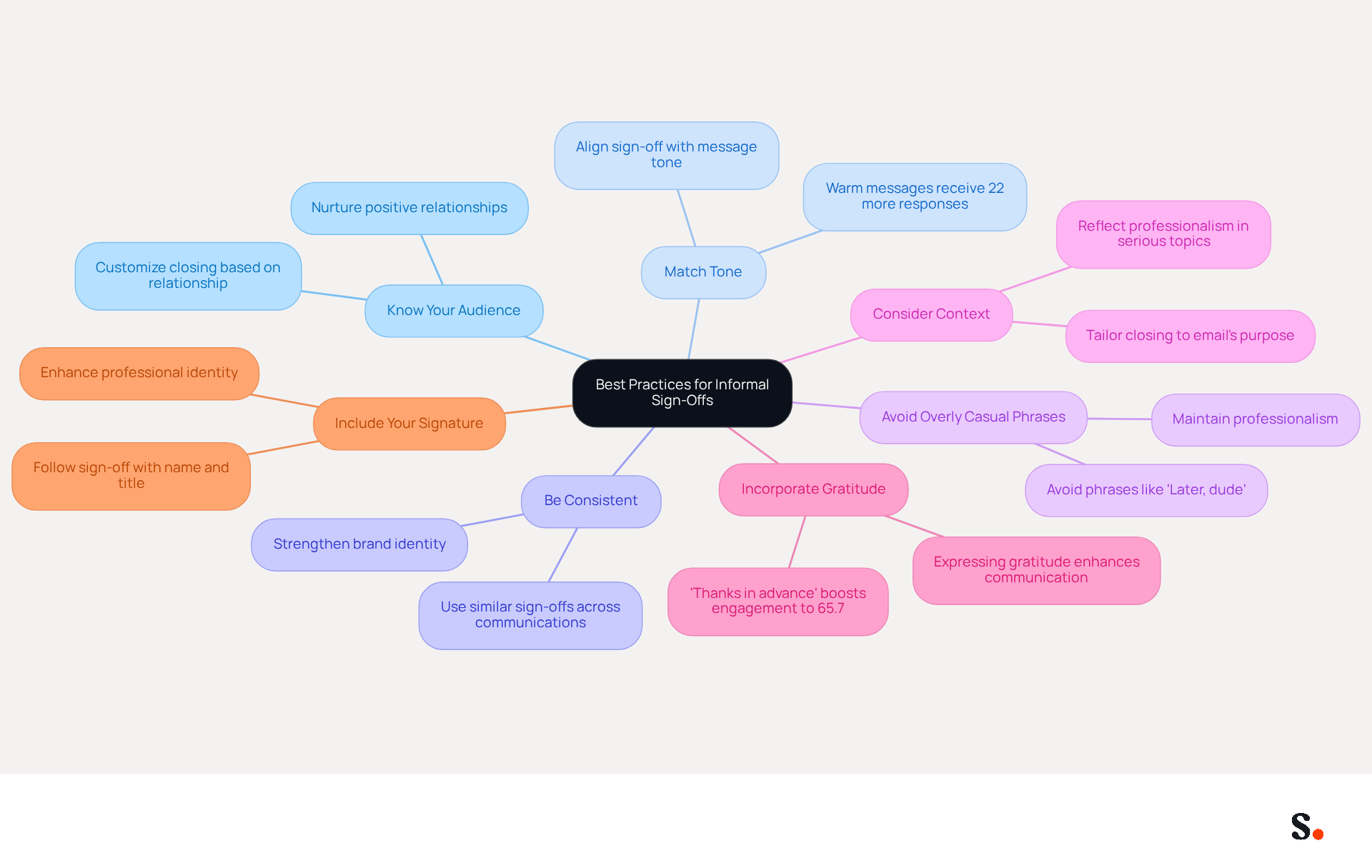
- Know Your Audience: Customize your closing based on your relationship with the recipient. For close colleagues, 'Cheers' may be appropriate, while 'Take care' might be better for acquaintances. Understanding the recipient's preferences can nurture positive relationships and boost engagement, which is important when considering how to end an email informally.
- Ensure your closing matches the tone of your message. If your message is light-hearted, you should consider how to end an email informally with a casual sign-off. Research shows that warm, professional messages get up to 22% more responses. This highlights how crucial context is in understanding how to end an email informally.
- Be Consistent: Use similar sign-offs across your communications to establish a recognizable tone. Consistency aids in strengthening your brand identity, which is vital as 76% of individuals trust senders with branded signatures.
- Avoid Overly Casual Phrases: Although relaxed, avoid phrases that may come off as unprofessional, such as 'Later, dude' or 'XOXO' in a business context. Maintaining professionalism is essential, especially in formal settings where casual closings can lead to misunderstandings.
- Consider the Context: If the message addresses a serious topic, even an informal sign-off should reflect a level of professionalism, such as 'Best wishes' instead of 'Catch you later'. Understanding how to end an email informally by tailoring your closing to the email's purpose can significantly enhance communication effectiveness and foster stronger professional relationships.
- Incorporate Gratitude: Sign-offs like 'Thanks in advance' can really boost engagement, with studies showing they lead to a response rate of 65.7%. This reinforces the importance of expressing gratitude in your communications.
- Include Your Signature: Always follow your sign-off with your name and title to maintain professionalism. A well-crafted signature not only enhances your professional identity but also provides necessary contact information.
Avoid Common Mistakes in Informal Email Endings
To ensure your informal email endings are effective, avoid these common mistakes:
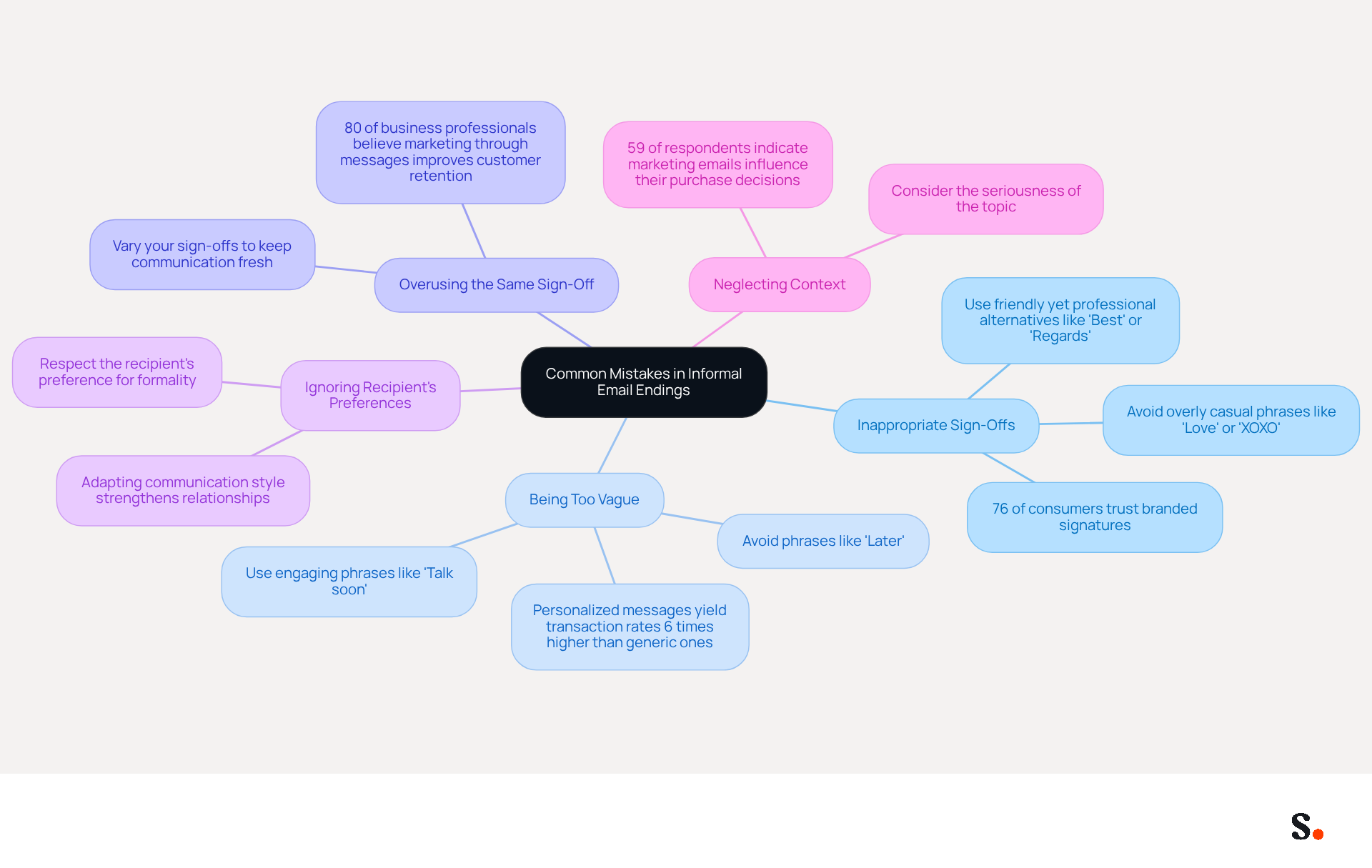
- Using Inappropriate Sign-Offs: Using overly casual phrases like 'Love' or 'XOXO' can appear unprofessional in business communications. Instead, choose friendly yet professional alternatives like 'Best' or 'Regards.' Statistics show that 76% of consumers trust branded signatures. This highlights the importance of professionalism in your sign-offs.
- Being Too Vague: Phrases like 'Later' can come across as dismissive. Instead, consider using engaging phrases like 'Talk soon' as a way to learn how to end an email informally while keeping the tone positive. Personalized messages can yield transaction rates six times higher than generic ones. This underscores the impact of thoughtful communication.
- Overusing the Same Sign-Off: Using the same sign-off repeatedly can make your messages feel monotonous. Varying your sign-offs is a great way to learn how to end an email informally, keeping communication fresh and engaging. This strategy can enhance your brand's image. In fact, 80% of business professionals believe that marketing through messages improves customer retention.
- Ignoring the Recipient's Preferences: Respecting a recipient's preference for formality, even in casual contexts, can strengthen relationships. Adapting your communication style can greatly affect how your message is perceived.
- Neglecting Context: It's essential to consider the context of your message. A casual sign-off may not be appropriate for serious topics, so adjust your tone accordingly to maintain professionalism. For example, 59% of respondents indicate that marketing emails influence their purchase decisions. This shows that even informal communication can affect business outcomes.
Conclusion
The conclusion of an email can significantly influence the recipient's perception and response. Choosing the right sign-off, like 'Cheers' or 'Take care,' helps convey warmth and approachability, making messages more engaging. Recognizing the subtleties of these casual closings can greatly impact communication effectiveness.
Throughout the article, various examples of informal sign-offs were explored, highlighting their effectiveness in different contexts. Best practices were also discussed, emphasizing the importance of knowing your audience, maintaining consistency, and incorporating gratitude into your sign-offs. Additionally, common mistakes to avoid were outlined, ensuring that informal endings remain professional and appropriate for the situation.
The conclusion of your email can leave a lasting impression on your recipient. Applying these insights can enhance your email communication, making it more relatable and effective. Embracing the right informal sign-offs can foster better engagement and create a welcoming environment for ongoing conversations, ultimately strengthening both personal and professional relationships.
Frequently Asked Questions
Why is it important to understand informal email endings?
Understanding informal email endings can enhance communication by conveying warmth and approachability, which is important for building relationships.
What are some examples of casual email endings?
Examples of casual email endings include phrases like 'Cheers', 'Take care', and 'Talk soon'.
How do casual email endings affect response rates?
Emails that end with a thank you tend to receive more responses, indicating that casual closings can be effective for engagement.
What risks are associated with misusing casual email endings?
Misusing casual closings can lead to misunderstandings or a lack of professionalism in communication.
How can diverse email endings improve communication?
Utilizing diverse closings can demonstrate effort and creativity, making messages more engaging and positively impacting how communication is perceived.
List of Sources
- Understand Informal Email Endings
- 100 Compelling Email Statistics for 2026 | PGM Solutions (https://porchgroupmedia.com/blog/100-compelling-email-statistics-to-inform-your-strategy-in-2023)
- Best email endings - best practices for closing an email (https://mail-signatures.com/articles/best-email-sign-offs)
- The 37 best ways to close emails (https://signitic.com/en/resources/email-sign-offs)
- Why Informally Written Emails Work Better: Some Hard Data (https://linkedin.com/pulse/why-informally-written-emails-work-better-some-hard-data-ian-brodie)
- Explore Examples of Informal Sign-Offs
- Study Shows the Most Savage Ways to Begin or End an Email (https://preply.com/en/blog/email-greetings-and-signoffs)
- 12 Email Sign-Offs That Get Responses [2026 Data] (https://lagrowthmachine.com/email-sign-offs-get-responses)
- Best Email Sign-Offs for Any Correspondence (https://wisestamp.com/examples/email-sign-offs)
- The 37 best ways to close emails (https://signitic.com/en/resources/email-sign-offs)
- Apply Best Practices for Informal Sign-Offs
- Is 'Best' a Good Way to End an Email? Compare Sign-Offs Here (https://scribe-mail.com/en-US/blog/is-best-a-good-way-to-end-an-email-compare-sign-offs-here)
- Email Sign Offs for Every Industry and Situation | Mailchimp (https://mailchimp.com/resources/email-sign-offs)
- Master Business Sign-Off Emails: Best Practices for Impactful Communication (https://scribe-mail.com/en-US/blog/master-business-sign-off-emails-best-practices-for-impactful-communication)
- The 37 best ways to close emails (https://signitic.com/en/resources/email-sign-offs)
- Avoid Common Mistakes in Informal Email Endings
- 100 Compelling Email Statistics for 2026 | PGM Solutions (https://porchgroupmedia.com/blog/100-compelling-email-statistics-to-inform-your-strategy-in-2023)
- 11 Common Email Mistakes Everyone Makes (https://linkedin.com/pulse/11-common-email-mistakes-everyone-makes-betty-liu)
- Email Etiquette: Dos and Don’ts of Professional Emails (https://businessnewsdaily.com/8262-email-etiquette-tips.html)
- 49 Top Email Marketing Statistics (https://forbes.com/advisor/business/software/email-marketing-statistics)
- 40+ Email Signature Statistics for 2026 (Data + Insights) (https://wavecnct.com/blogs/email-signature-statistics)
Get started with Scribe
Build a professional email signature
Free 14-day trial — no credit card.