Maximize Marketing ROI with Email Signature API Best Practices
While Email Signature APIs offer significant marketing potential, many businesses face challenges in their implementation. By integrating dynamic content and
Sophie Grant
Email Signature Specialist, Scribe

Introduction
While Email Signature APIs offer significant marketing potential, many businesses face challenges in their implementation. By integrating dynamic content and real-time updates, organizations can enhance engagement and visibility, turning routine communications into powerful marketing tools. Yet, companies often wonder how to implement these APIs effectively to ensure brand consistency and maximize ROI. This article delves into best practices for leveraging email signature APIs, offering insights that can help marketing teams unlock their full potential.
Get started with Scribe
Let AI build your signature — from a screenshot
Free 14-day trial — no credit card.
Understand the Role of Email Signature APIs in Marketing
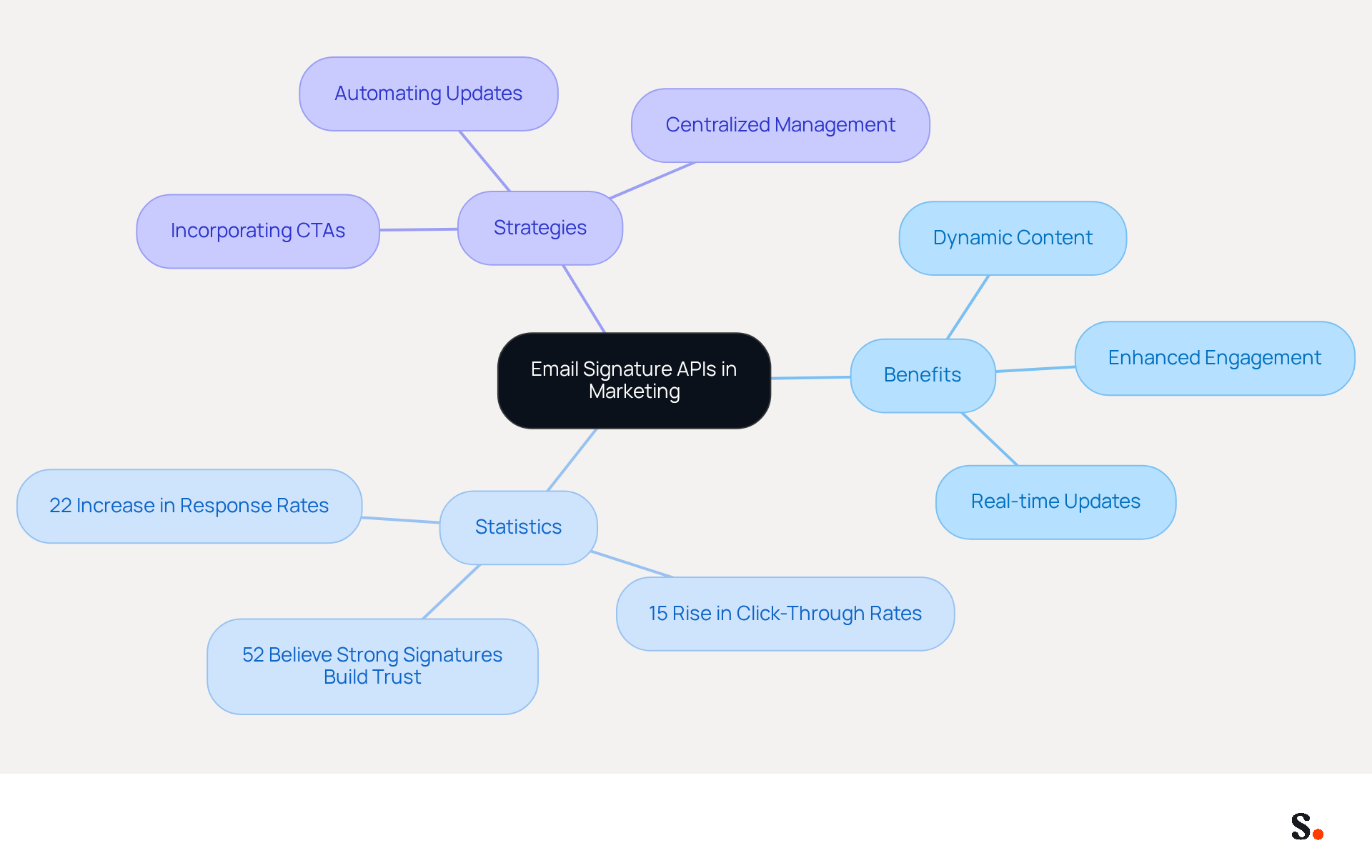
Email Signature APIs are essential tools that connect communication and marketing, allowing businesses to incorporate dynamic content in their emails. This integration allows businesses to turn every message into a promotional opportunity, enhancing visibility and engagement. For instance, integrating promotional banners or calls-to-action (CTAs) within email footers allows businesses to communicate promotional messages effortlessly to recipients. In 2026, brands that effectively leverage footer promotions report a 22% increase in response rates and a 15% boost in click-through rates to their websites, demonstrating the effectiveness of this approach.
Furthermore, APIs enable real-time updates, ensuring that promotional campaigns stay current and relevant. This capability is crucial for keeping the audience engaged and interested, as 44.4% of professionals refresh their electronic communication identifiers only 2-4 times a year, leading to missed opportunities for engagement. By utilizing the email signature API, companies can automate updates, ensuring that their promotional messages are always fresh and aligned with ongoing campaigns.
The effectiveness of electronic correspondence footer promotion is further supported by statistics indicating that 52% of professionals believe a strong electronic correspondence footer is essential for building trust with clients. Additionally, 52.6% of users incorporate a call-to-action in their email footers, reflecting the expectation for promotional elements in this communication channel. Research indicates that organizations utilizing branded digital identifiers experience a 15% rise in website click-through rates, highlighting the significance of incorporating promotional strategies into digital communications.
Incorporating an email signature API can fundamentally enhance marketing strategies, ensuring that every communication serves a dual purpose.
Implement Effective Integration Strategies for Email Signature APIs
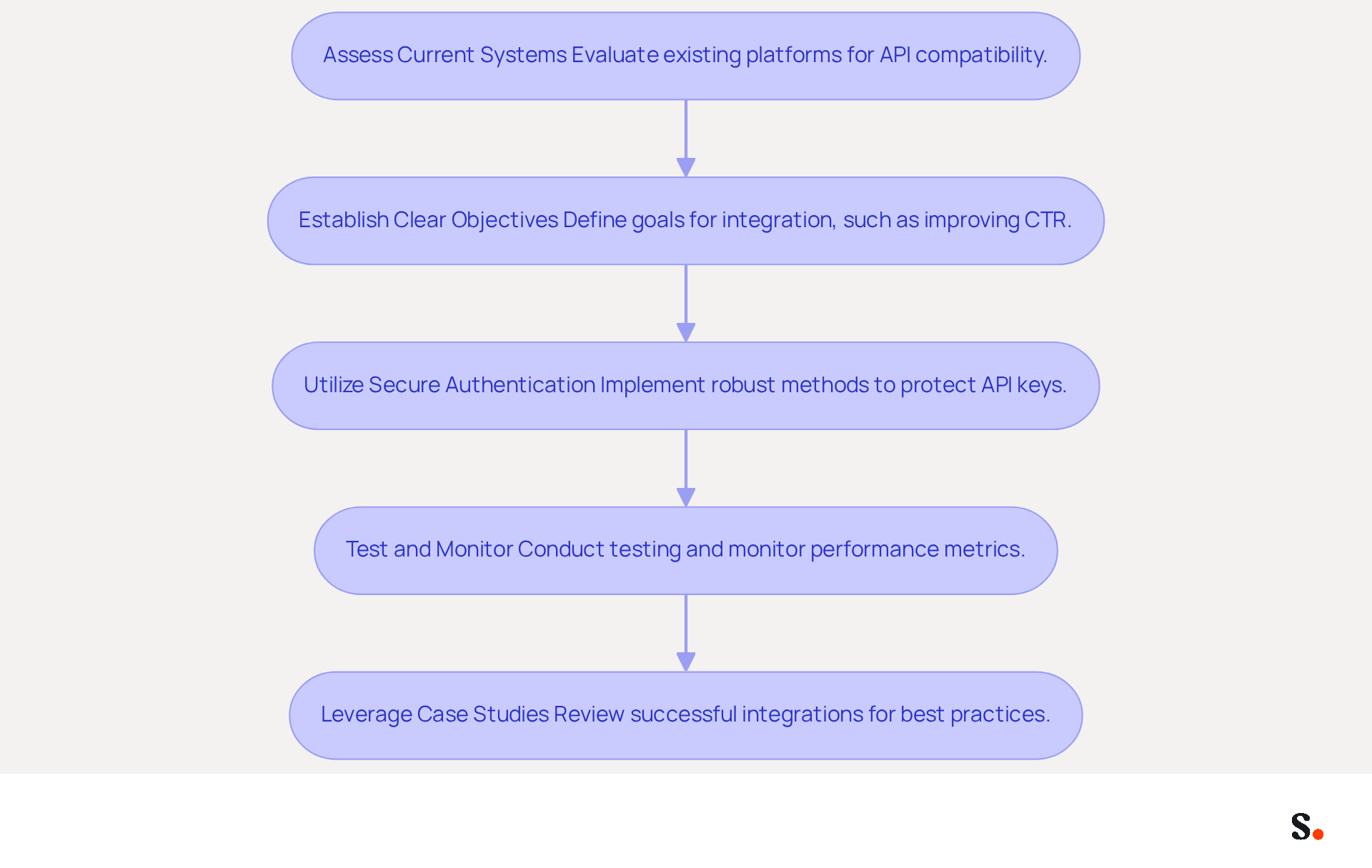
To successfully implement Email Signature APIs, businesses must follow a structured approach that ensures compatibility and effectiveness:
- Assess Current Systems: Begin by evaluating existing communication platforms, such as Google Workspace and Microsoft 365, to ensure compatibility with the selected API. This assessment ensures smooth integration and optimal functionality.
- Establish Clear Objectives: Clearly define the goals of the integration, whether it’s to boost click-through rates, enhance brand visibility, or streamline document management. By establishing clear objectives, businesses can streamline their integration efforts and achieve desired outcomes more effectively.
- Utilize Secure Authentication: Implement robust authentication methods to safeguard API keys and sensitive data. Utilizing OAuth tokens and ensuring that all communications are encrypted are essential practices to protect against unauthorized access.
- Test and Monitor: After integration, conduct comprehensive testing to verify that identifiers display correctly across various messaging clients. Regularly monitor performance metrics, such as click-through rates and engagement levels, to identify areas for improvement. Statistics show that dynamic digital identifiers can achieve a click-through rate of 4%, considerably higher than the 2.5% common for standard promotional messages, highlighting the significance of effective integration.
- Leverage Case Studies: Review successful integration case studies to understand best practices and common pitfalls. For example, organizations that have adopted branded digital identifiers report a 15% rise in website click-through rates, illustrating the potential influence of well-integrated digital identifiers on overall promotional effectiveness.
By following these methods, businesses can fully leverage the email signature API, transforming digital identifiers into effective marketing tools that enhance consistency and engagement.
Ensure Brand Consistency in Email Signatures
To maintain a cohesive brand image, businesses must implement effective strategies for email signature API management.
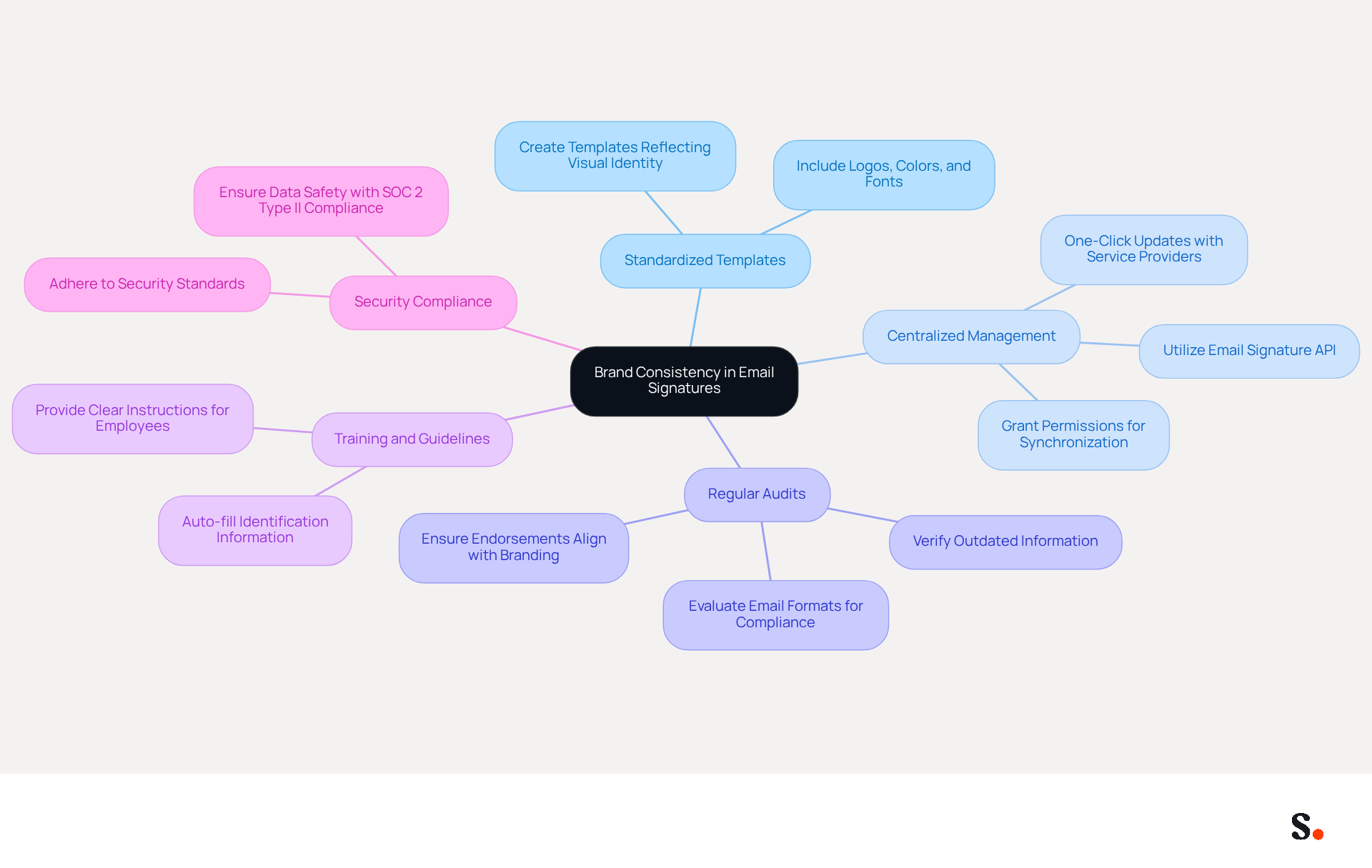
- Standardized Templates: Create standardized templates that reflect the visual identity of Scribe, including logos, colors, and fonts. This helps all employees showcase a consistent brand image.
- Centralized Management: Utilize Scribe's email signature API to control and update signatures across the organization. This stops individual changes that may cause inconsistencies and enables easy one-click updates with service providers, ensuring real-time changes. Note that to enable synchronization, you must grant Scribe permission to connect with your service provider, and you need to be a Super Admin to provide these permissions.
- Regular Audits: Conduct regular evaluations of email formats to ensure compliance with brand guidelines. This involves verifying outdated information and ensuring that all endorsements align with current branding strategies. Scribe's automated synchronization features, powered by the email signature API, assist in keeping current records effortlessly.
- Training and Guidelines: Provide employees with clear instructions on how to utilize electronic correspondence identifiers effectively, including what elements to include and how to maintain brand integrity. With Scribe, teams can auto-fill identification information, enhancing collaboration and ensuring consistency across all communications.
- Security Compliance: Ensure that your management practices for digital identifiers adhere to security standards. Scribe meets SOC 2 Type II standards, ensuring data safety and consistent branding. Furthermore, organizations utilizing Scribe have reported an average click-through rate of 12% on banner displays, illustrating the effectiveness of well-managed identifiers as promotional tools.
Ultimately, these practices not only safeguard brand integrity but also enhance client engagement and trust.
Measure and Optimize ROI from Email Signature Marketing
To effectively measure and optimize ROI from email signature marketing, businesses must focus on key performance metrics:
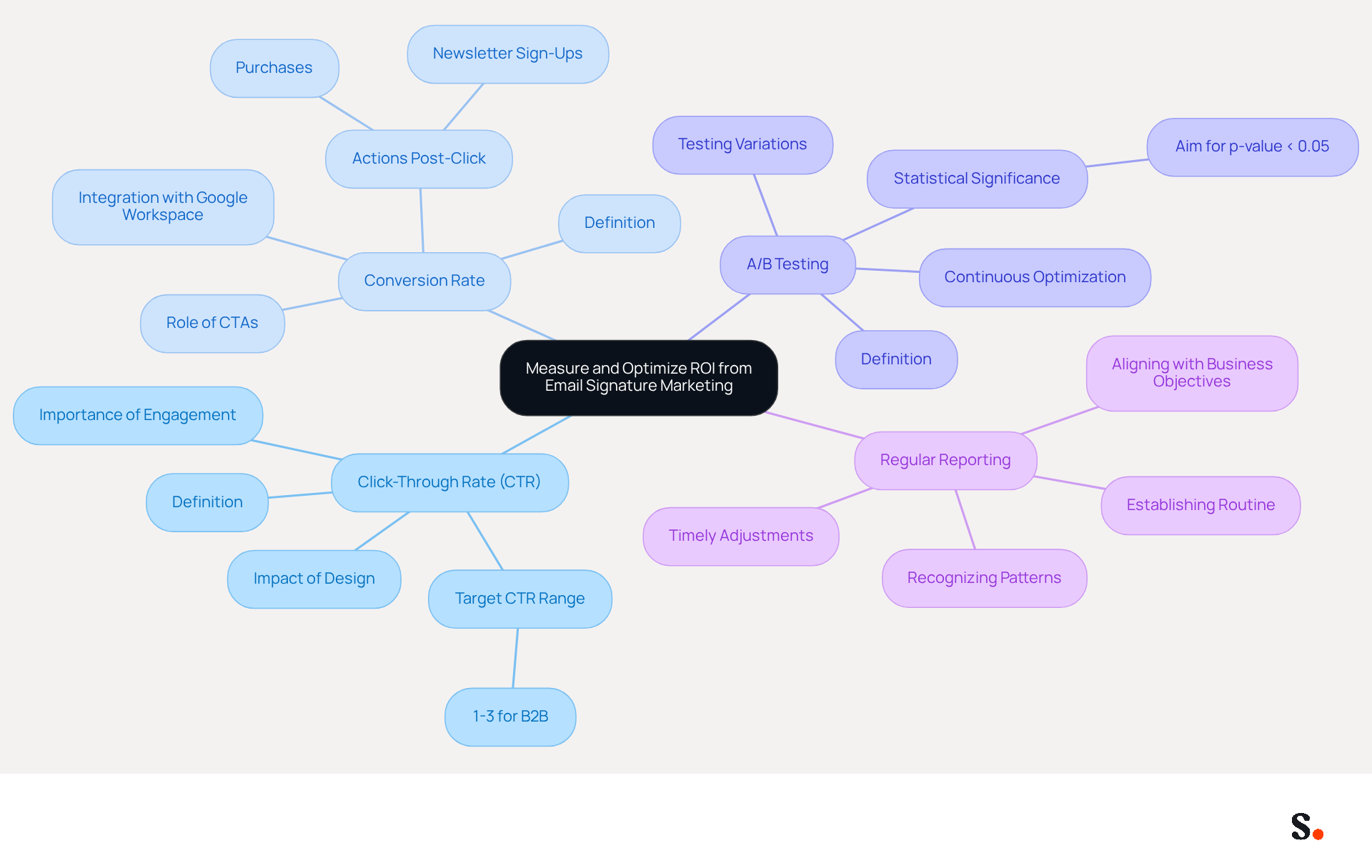
- Click-Through Rate (CTR): This metric measures how many recipients click on links in the email footer. A higher CTR signifies effective engagement with the marketing content, indicating that the branding is successfully capturing attention.
- Conversion Rate: Analyzing the actions taken by recipients after clicking on links-such as signing up for newsletters or making purchases-provides insight into the effectiveness of the calls-to-action (CTAs) used in email footers. This metric is essential for understanding how effectively the footer drives desired outcomes, particularly when paired with the automatic updates from syncing Google Workspace with Scribe, ensuring that the information is always relevant and up-to-date.
- A/B Testing: Implementing A/B testing for different design variations and content allows businesses to determine which options yield the best results. Continuous optimization based on real-world performance data is essential for enhancing engagement and conversion rates.
- Regular Reporting: Establishing a routine for reporting on these metrics enables timely adjustments to strategies based on performance data. Regular evaluation aids in recognizing patterns and opportunities for enhancement, ensuring that branding efforts stay aligned with overall business objectives.
This shows how crucial data-driven adjustments are for achieving marketing success. For example, organizations that have implemented systematic testing and optimization strategies have reported significant enhancements, with one SaaS firm experiencing a 20% increase in clicks and conversions after refining their message design. Additionally, the integration with Google Workspace not only streamlines the management of email signature API but also enhances the effectiveness of these metrics by ensuring that all team member information is current and accurate, ultimately contributing to better engagement and conversion rates. Ultimately, leveraging these insights can lead to substantial improvements in marketing effectiveness and business growth.
Conclusion
Integrating email signature APIs is not merely a trend; it is essential for businesses seeking to elevate their marketing communications. By integrating dynamic content into email signatures, organizations can transform every email into a powerful marketing tool, ensuring that promotional messages are consistently delivered and engaging to recipients.
The article highlights several key strategies for leveraging email signature APIs effectively. These include:
- Assessing current systems for compatibility
- Establishing clear objectives for integration
- Implementing secure authentication
- Regularly monitoring performance metrics
Additionally, maintaining brand consistency through standardized templates and centralized management is crucial for building trust and recognition among clients. Statistics show that effective email signature marketing can lead to significant increases in click-through rates and engagement levels, underscoring the potential impact of well-executed email signature marketing strategies.
In conclusion, the integration of email signature APIs represents a significant opportunity for organizations to enhance their marketing efforts and achieve measurable results. By adopting best practices and focusing on data-driven metrics, when businesses adopt best practices and focus on data-driven metrics, they can truly optimize their email signature marketing strategies, ensuring brand consistency and maximizing ROI. By neglecting to implement these strategies, organizations risk falling behind in a competitive market.
Frequently Asked Questions
What are Email Signature APIs and their role in marketing?
Email Signature APIs are tools that connect communication and marketing, allowing businesses to incorporate dynamic content in their emails, turning every message into a promotional opportunity.
How can businesses use Email Signature APIs to enhance visibility?
Businesses can integrate promotional banners or calls-to-action (CTAs) within email footers, enabling them to communicate promotional messages effortlessly to recipients.
What impact do footer promotions have on response and click-through rates?
In 2026, brands that effectively leverage footer promotions report a 22% increase in response rates and a 15% boost in click-through rates to their websites.
Why are real-time updates important for promotional campaigns?
Real-time updates ensure that promotional campaigns stay current and relevant, which is crucial for keeping the audience engaged, as many professionals refresh their electronic communication identifiers only 2-4 times a year.
How does the Email Signature API help with updates?
The Email Signature API automates updates, ensuring that promotional messages are always fresh and aligned with ongoing campaigns.
What percentage of professionals believe a strong email footer is essential for building trust?
52% of professionals believe a strong electronic correspondence footer is essential for building trust with clients.
How common is it for users to include calls-to-action in their email footers?
52.6% of users incorporate a call-to-action in their email footers, reflecting the expectation for promotional elements in this communication channel.
What is the effect of using branded digital identifiers in organizations?
Organizations utilizing branded digital identifiers experience a 15% rise in website click-through rates, highlighting the significance of incorporating promotional strategies into digital communications.
How can incorporating an email signature API enhance marketing strategies?
Incorporating an email signature API can fundamentally enhance marketing strategies by ensuring that every communication serves a dual purpose of conveying information and promoting engagement.
List of Sources
- Understand the Role of Email Signature APIs in Marketing
- 2026 Marketing Trends: Email Signatures as a Marketing Tool (https://bluechiptt.com/blog/5-marketing-trends-for-2026-and-how-your-email-signature-fits-in)
- 40+ Email Signature Statistics for 2026 (Data + Insights) (https://wavecnct.com/blogs/email-signature-statistics)
- 5 Marketing Trends for 2026 | Rocketseed (https://rocketseed.com/blog/5-marketing-trends-in-2026)
- What is email signature marketing? Complete B2B definition (2026) (https://signitic.com/en/resources/what-is-email-signature-marketing-a-complete-definition-for-b2b-teams)
- Email signature statistics: Why every business should optimize their email signatures — Stripo.email (https://stripo.email/blog/email-signature-statistics-why-every-business-should-optimize-their-email-signatures)
- Implement Effective Integration Strategies for Email Signature APIs
- Introducing Email Signatures for the Nylas Email API | Nylas (https://nylas.com/blog/email-signatures-api)
- Email signature statistics: Why every business should optimize their email signatures — Stripo.email (https://stripo.email/blog/email-signature-statistics-why-every-business-should-optimize-their-email-signatures)
- Email Marketing Trends 2026: Here's What to Keep an Eye on (https://mailjet.com/blog/email-best-practices/email-marketing-trends-2026)
- How to integrate an email signature API (https://signitic.com/en/resources/how-to-integrate-an-email-signature-api)
- Email Signature Trends 2026: Centralized Control & Automation | SIGNandGO posted on the topic | LinkedIn (https://linkedin.com/posts/signngo_email-signature-trends-to-watch-in-2026-activity-7401523471786217473-zAVL)
- Ensure Brand Consistency in Email Signatures
- The impact of email signatures on your branding (https://signitic.com/en/resources/the-impact-of-email-signatures-on-your-branding)
- 4 Best Practices for Brand Consistency in Email Signatures (https://scribe-mail.com/en-US/blog/4-best-practices-for-brand-consistency-in-email-signatures)
- Why Team Email Signatures Matter More Than You Think: The Hidden Impact on Brand Trust and Customer Experience (https://getmailbird.com/why-team-email-signatures-matter-brand-trust)
- Research Recap: Branded Email Signatures Increase Company Recognition, Trust - B2BMX INSIGHTS (https://demandgenreport.com/industry-news/research-recap-branded-email-signatures-increase-company-recognition-trust/47252)
- Why Email Signatures Must Be In Your 2026 Marketing Plan | Rocketseed (https://rocketseed.com/blog/2026-marketing-plan-email-signatures)
- Measure and Optimize ROI from Email Signature Marketing
- Best Practices for a Standard Email Signature That Boosts Marketing ROI (https://scribe-mail.com/en-US/blog/best-practices-for-a-standard-email-signature-that-boosts-marketing-roi)
- Why Email Signatures Must Be In Your 2026 Marketing Plan | Rocketseed (https://rocketseed.com/blog/2026-marketing-plan-email-signatures)
- Email ROI in 2026: what the data actually says – DDMA (https://ddma.nl/kennisbank/email-roi-in-2026-what-the-data-actually-says)
- How to Measure Email Marketing Agency ROI: A Complete 2026 Framework (https://hustlermarketing.com/how-to-measure-email-marketing-agency-roi-a-complete-2026-framework)
Get started with Scribe
Let AI build your signature — from a screenshot
Free 14-day trial — no credit card.