What is a Professional Email Sign-Off and Why It Matters
In professional communication, the nuances of an email sign-off can significantly influence relationship dynamics. A crucial yet often overlooked aspect is the
Sophie Grant
Email Signature Specialist, Scribe
Introduction
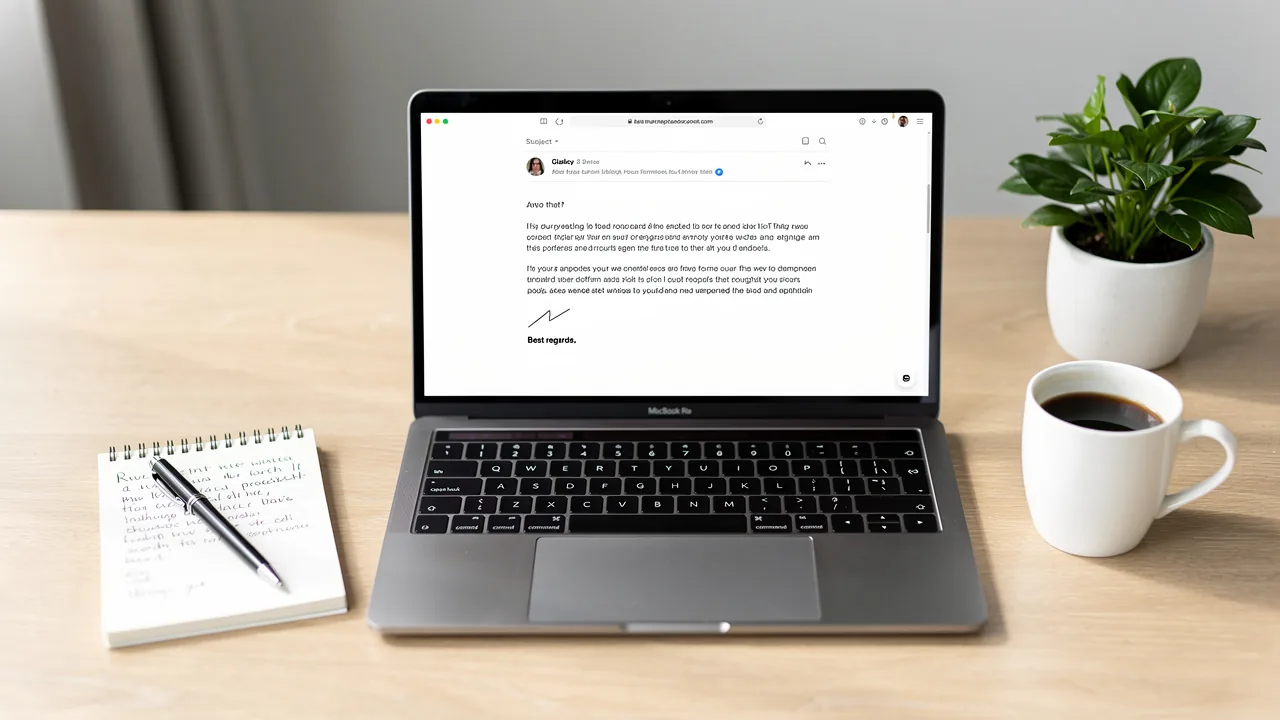
In professional communication, the nuances of an email sign-off can significantly influence relationship dynamics. A crucial yet often overlooked aspect is the email sign-off. A well-crafted sign-off not only concludes a message but also reinforces the sender's professionalism and intent, shaping the recipient's perception.
With so many options available, how do you choose a closing that truly resonates in a business setting? Recognizing the importance of email sign-offs can transform communication effectiveness, leading to stronger connections and more effective correspondence.
Define Professional Email Sign-Off
Effective communication hinges on the details, and a professional email sign-off is an essential component. Common examples include:
- 'Sincerely,'
- 'Best regards,'
- 'Thank you.'
Choosing the right sign-off not only wraps up your message nicely but also reinforces your intent. In a business context, a professional email sign-off can significantly enhance the overall impression of the email and reflect the sender's professionalism.
By integrating Google Workspace with Scribe, you streamline the management of email signature approvals. This integration not only saves time by automatically updating your teammates' signature information but also ensures that any changes in their roles or details are reflected without manual input. This capability enhances professionalism and ensures brand consistency across all interactions, as it allows for the auto-filling of signature information using our attribute feature, thereby maintaining a cohesive brand image.
Explain the Importance of Email Sign-Offs in Business
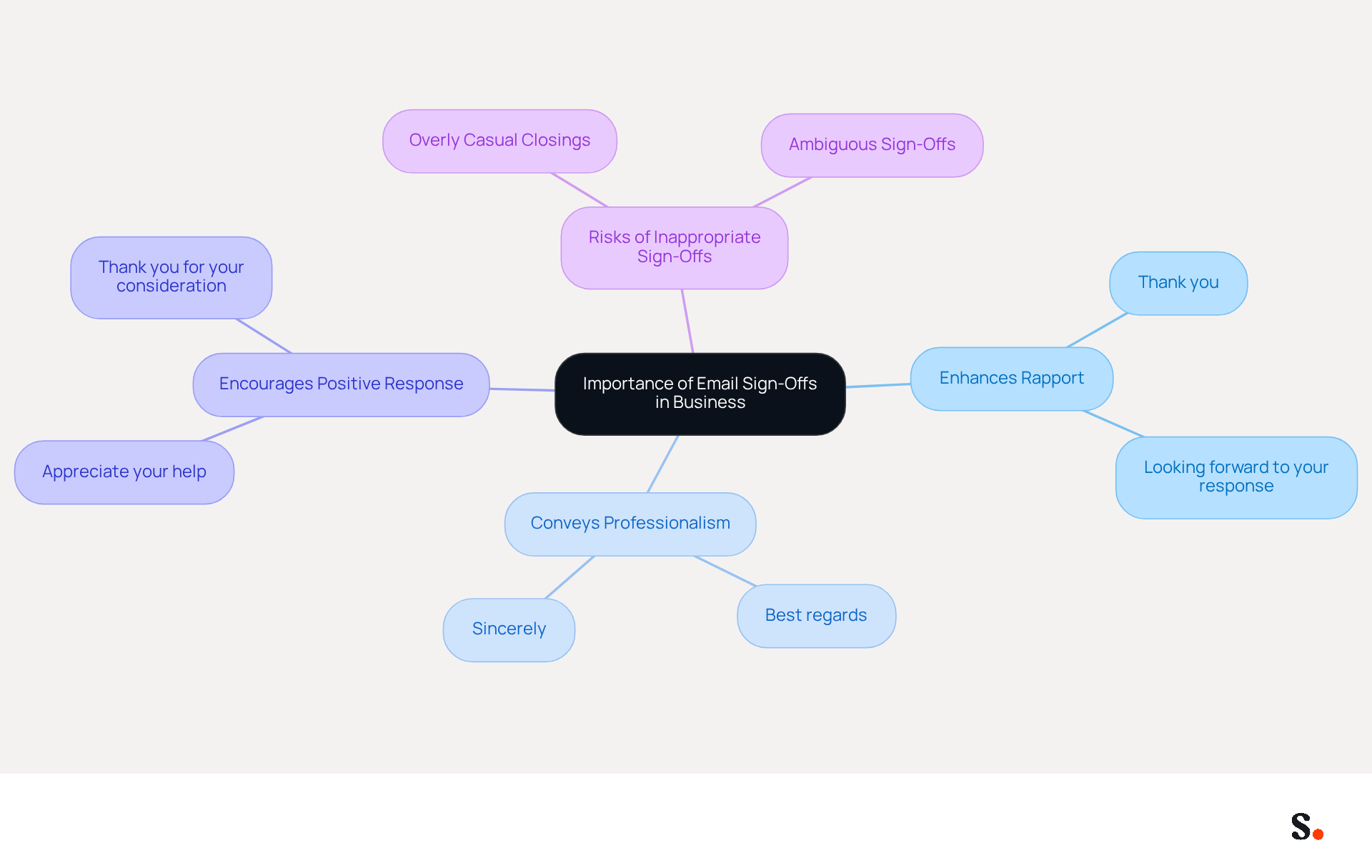
The choice of professional email sign-off significantly impacts business communication and the sender's image. A considerate professional email sign-off enhances rapport, conveys professionalism, and encourages a positive response. For instance, using 'Thank you' expresses appreciation and fosters goodwill, while 'Best regards' maintains a formal tone suitable for professional settings. Inappropriate or overly casual closings can lead to misunderstandings and damage professional relationships. Therefore, selecting the appropriate professional email sign-off can significantly enhance the effectiveness of communication and strengthen professional ties.
Explore Types and Examples of Professional Email Sign-Offs
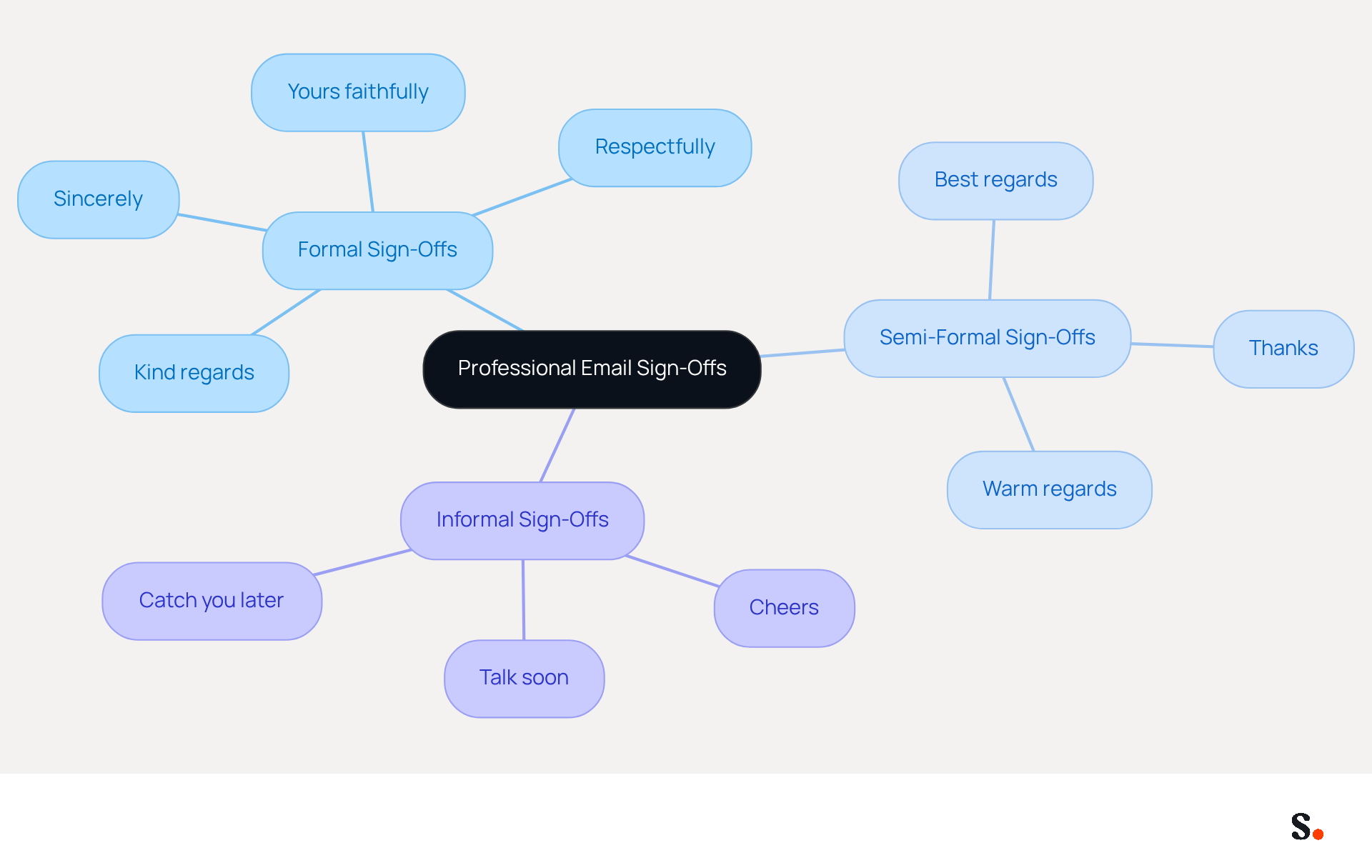
The choice of professional email sign-off plays a pivotal role in shaping professional interactions and perceptions. Professional email sign-off can be categorized into various types based on context and the relationship with the recipient. Common formal closures include 'Sincerely,' 'Yours faithfully,' and 'Respectfully,' which are ideal for official correspondence. Semi-formal options like 'Best regards,' 'Kind regards,' and 'Warm regards' are suitable for most business communications, striking a balance between professionalism and approachability. For more casual interactions, phrases such as 'Thanks,' 'Cheers,' or 'Talk soon' can be employed, provided the relationship allows for a less formal tone.
Research shows that 76% of individuals feel a branded signature boosts trust in the sender, highlighting the importance of a thoughtful sign-off. Furthermore, messages that express gratitude, such as 'thank you,' tend to garner more replies, underscoring the importance of a strategic closing. In fact, messages that include a form of 'thanks' receive significantly more replies, reinforcing the value of a well-chosen closing.
Examples of effective formal sign-offs include:
- 'Sincerely' for formal first contacts
- 'Respectfully' for communications with senior leadership
- 'Yours faithfully' for official correspondence
Conversely, informal sign-offs can foster a friendly atmosphere in less formal settings. Examples include:
- 'Cheers' for casual exchanges among colleagues
- 'Thanks' for quick responses or requests
- 'Talk soon' to imply ongoing communication
Selecting an appropriate sign-off is vital; it not only conveys the email's tone but also shapes the recipient's perception of the message. A well-crafted conclusion can improve effectiveness in conveying messages and strengthen professional relationships. As noted by BulkSignature, 'Your message's closing line is the last thing a reader sees before they decide what to do next,' emphasizing the importance of a professional email sign-off in influencing recipient behavior. Ultimately, the right sign-off can be the difference between a response and silence, making it a critical element of effective communication.
Identify Common Mistakes in Email Sign-Offs
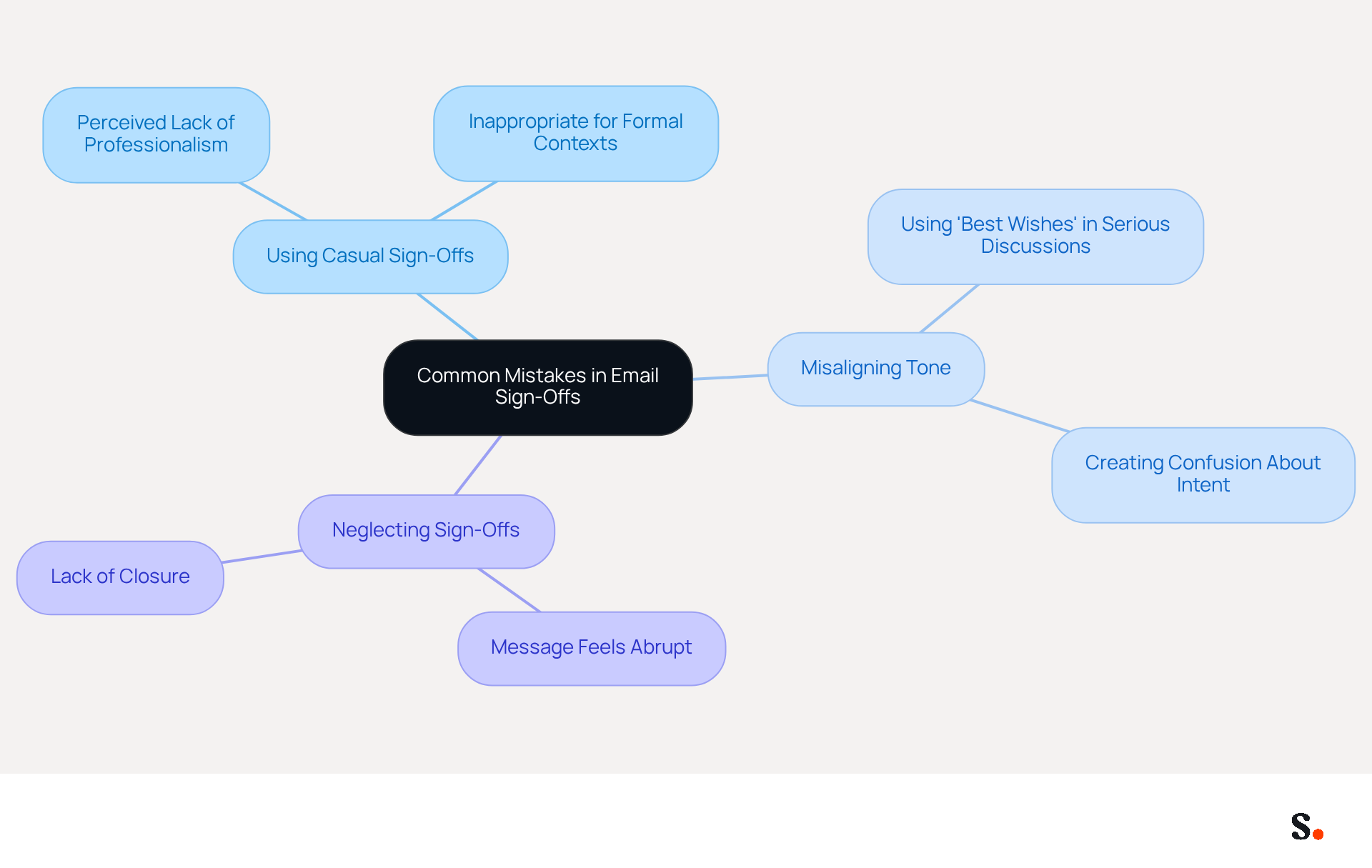
In professional communication, the choice of a professional email sign-off is critical to maintaining a polished image. A common mistake in professional communication is using casual sign-offs instead of a professional email sign-off in formal contexts such as business proposals. Additionally, failing to align your closing phrase with the message's tone can lead to perceptions of insincerity, such as using 'Best wishes' in serious discussions. Neglecting to include a sign-off can also render your message abrupt and unprofessional. Choosing a professional email sign-off that aligns with your email's content and your relationship with the recipient is crucial for maintaining credibility.
Conclusion
The way an email concludes can significantly shape the recipient's impression and the effectiveness of the communication. A professional email sign-off is essential for effective communication in business. The right sign-off encapsulates the intent of the email, reinforcing the sender's professionalism and enhancing the overall impression of the correspondence. Choosing the right sign-off can shape how recipients view the sender and strengthen professional ties.
Throughout the article, the importance of selecting the appropriate email sign-off has been emphasized, highlighting its impact on business communication. Various types of sign-offs, ranging from formal to informal, have been explored, along with examples that illustrate their appropriate use in different contexts. Common mistakes, such as using overly casual sign-offs in formal situations or neglecting to include a sign-off altogether, can lead to misunderstandings and diminish the sender's credibility. Understanding these nuances is essential for anyone looking to improve their email communication skills.
It's clear that a professional email sign-off plays a crucial role in communication. It is a powerful tool that can enhance rapport, convey professionalism, and encourage positive responses. As organizations strive for effective communication, adopting best practices for email sign-offs can lead to more positive responses and stronger connections. Embracing this small yet impactful detail can make a substantial difference in how messages are received and acted upon, reinforcing the importance of thoughtful communication in the business landscape.
Frequently Asked Questions
What is a professional email sign-off?
A professional email sign-off is a closing phrase used at the end of an email that conveys respect and professionalism. Common examples include "Sincerely," "Best regards," and "Thank you."
Why is a professional email sign-off important?
A professional email sign-off is important because it wraps up your message nicely and reinforces your intent. It can significantly enhance the overall impression of the email and reflect the sender's professionalism.
How can integrating Google Workspace with Scribe benefit email signature management?
Integrating Google Workspace with Scribe streamlines the management of email signature approvals, saves time by automatically updating teammates' signature information, and ensures that changes in their roles or details are reflected without manual input.
What advantage does the integration of Scribe provide in terms of brand consistency?
The integration of Scribe allows for the auto-filling of signature information using its attribute feature, which enhances professionalism and maintains a cohesive brand image across all interactions.
List of Sources
- Explore Types and Examples of Professional Email Sign-Offs
- Email Sign Offs for Every Industry and Situation | Mailchimp (https://mailchimp.com/resources/email-sign-offs)
- 40+ Email Signature Statistics for 2026 (Data + Insights) (https://wavecnct.com/blogs/email-signature-statistics)
- 100 Email Sign-Off Ideas (+10 Golden Rules for Marketing Pros) - MailerLite (https://mailerlite.com/blog/email-sign-offs)
- Mastering Professional Email Sign-Offs in 2026 (https://linkedin.com/pulse/mastering-professional-email-sign-offs-2026-bulksignature-qsr4e)
- 89 Ways To Sign Off On An Email (https://forbes.com/sites/susanadams/2014/10/08/89-ways-to-sign-off-on-an-email)
Get started with Scribe
Build a professional email signature
Free 14-day trial — no credit card.