Best Regards or Sincerely: Which Email Sign-Off Engages Better?
The choice of email sign-off plays a crucial role in shaping professional communication, yet its significance is often underestimated. This article examines
Sophie Grant
Email Signature Specialist, Scribe

Introduction
The choice of email sign-off plays a crucial role in shaping professional communication, yet its significance is often underestimated. This article examines two popular sign-offs - 'Best Regards' and 'Sincerely' - and discusses their definitions, suitable contexts, and their impact on reader engagement. Organizations must consider which sign-off can enhance connections and prompt responses in the fast-paced business environment.
Define 'Best Regards' and 'Sincerely' in Email Communication
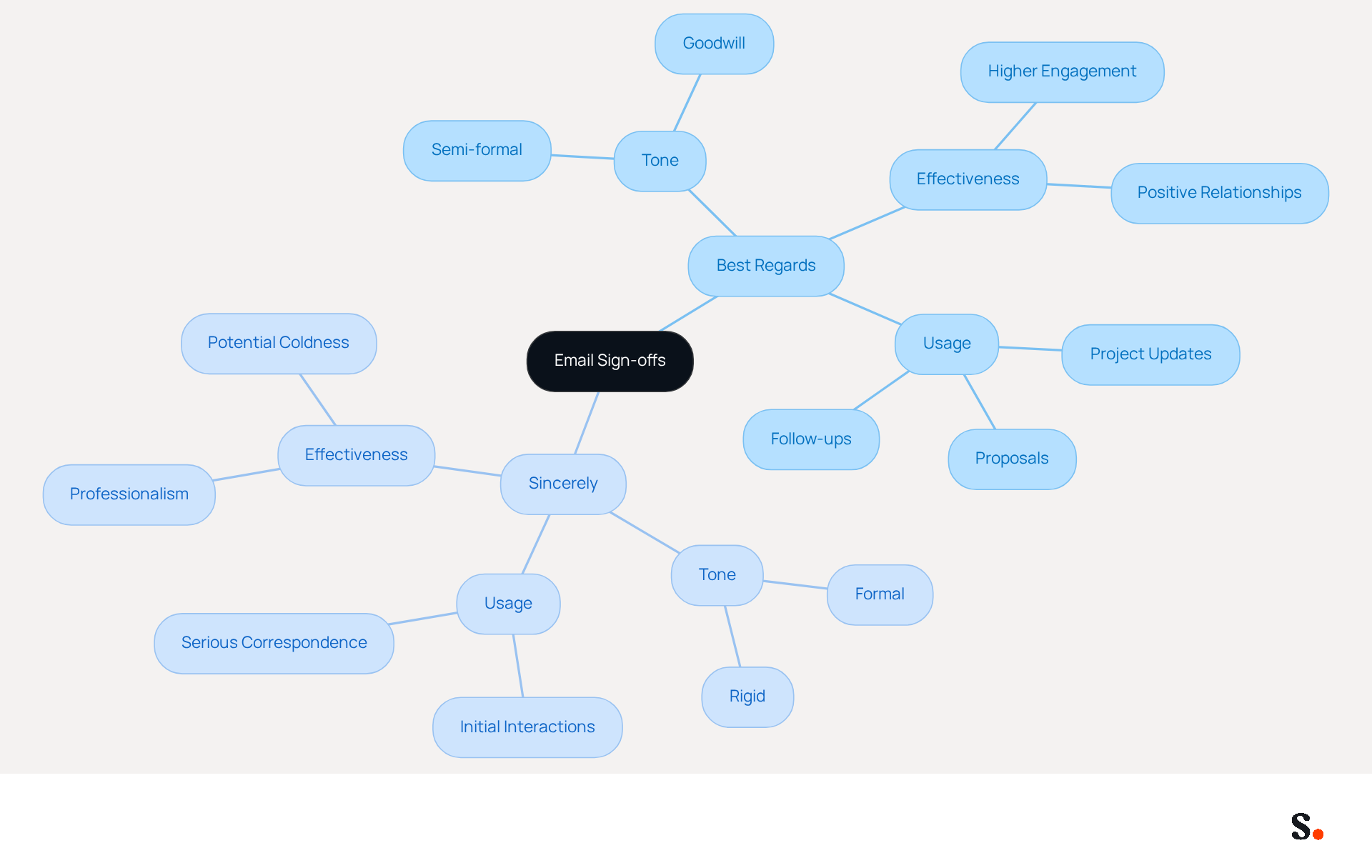
Choosing the right sign-off, whether it be best regards or sincerely, in business communications can significantly influence the tone and effectiveness of your message. 'Best regards or sincerely' is a semi-formal sign-off that conveys goodwill and respect while maintaining a friendly tone. It is frequently employed in business communications where a balance between professionalism and approachability is desired. You’ll find that this sign-off works well in follow-up messages, proposals, and project updates, as it fosters a sense of familiarity without sacrificing formality. Studies indicate that using 'Kind Wishes' can significantly boost engagement, with warmer messages receiving up to 22% more replies. Furthermore, 'Kind Wishes' is appropriate for emails aimed at colleagues, clients, and business partners following discussions that necessitate courteous closure, emphasizing its effectiveness in sustaining professional relationships.
However, 'best regards or sincerely' is a more traditional and formal closing that emphasizes honesty and respect, making it suitable for serious or official correspondence. This sign-off is often viewed as more rigid, making it suitable for initial interactions or formal requests. While 'Sincerely' upholds a degree of professionalism, it may hinder the warmth needed in modern business interactions, potentially affecting the recipient's view of the sender's approachability.
Case studies demonstrate the effectiveness of these sign-offs in business interactions. For example, organizations that consistently utilize 'Kind Wishes' in their signatures report improved rapport and professionalism, reinforcing brand identity. Grasping the subtleties of these sign-offs can ultimately enhance professional relationships and encourage collaboration, making the choice between them crucial for enhancing communication effectiveness.
Context and Appropriate Usage of Each Sign-Off
Understanding the appropriate use of sign-offs such as 'Best Regards' and 'Sincerely' is crucial for effective professional communication.
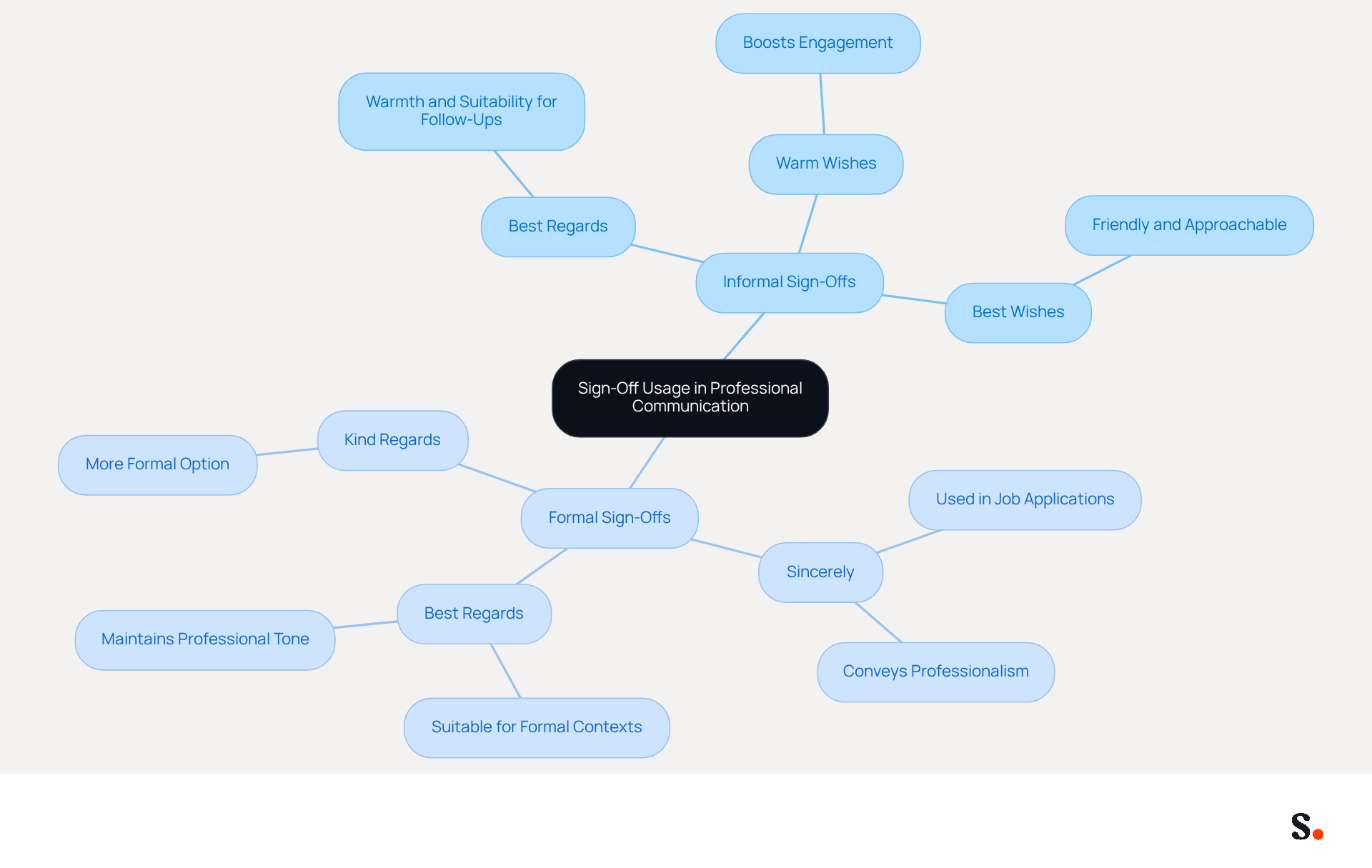
- 'Best Regards' is suitable for informal interactions, like follow-ups, as it conveys warmth while remaining professional.
- In contrast, 'Best Regards' or 'Sincerely' is best reserved for formal situations, including job applications, legal correspondence, or initial interactions with unfamiliar recipients.
- Using 'Best Regards' or 'Sincerely' in these contexts conveys professionalism and respect expected in formal exchanges.
- Studies indicate that ending messages with 'Best Regards' or 'Sincerely' can enhance the seriousness of communication, fostering trust.
- For instance, case studies show that using 'Best Regards' or 'Sincerely' in professional correspondence enhances clarity and professionalism, ensuring that the recipient recognizes the sender's commitment to effective communication.
- Understanding the nuances of these sign-offs is essential for tailoring messages to the context and relationship with the recipient, ultimately leading to more effective interactions.
- Ultimately, the right sign-off can significantly impact the perception of professionalism in your correspondence.
Evaluate the Impact of Sign-Offs on Reader Engagement
The choice of email sign-off plays a pivotal role in shaping reader engagement. Emails that end with 'Kind Wishes' tend to create a more approachable and friendly tone, which can lead to higher response rates in casual business interactions. Conversely, using 'best regards' or 'sincerely' often conveys formality, which may create distance in communication.
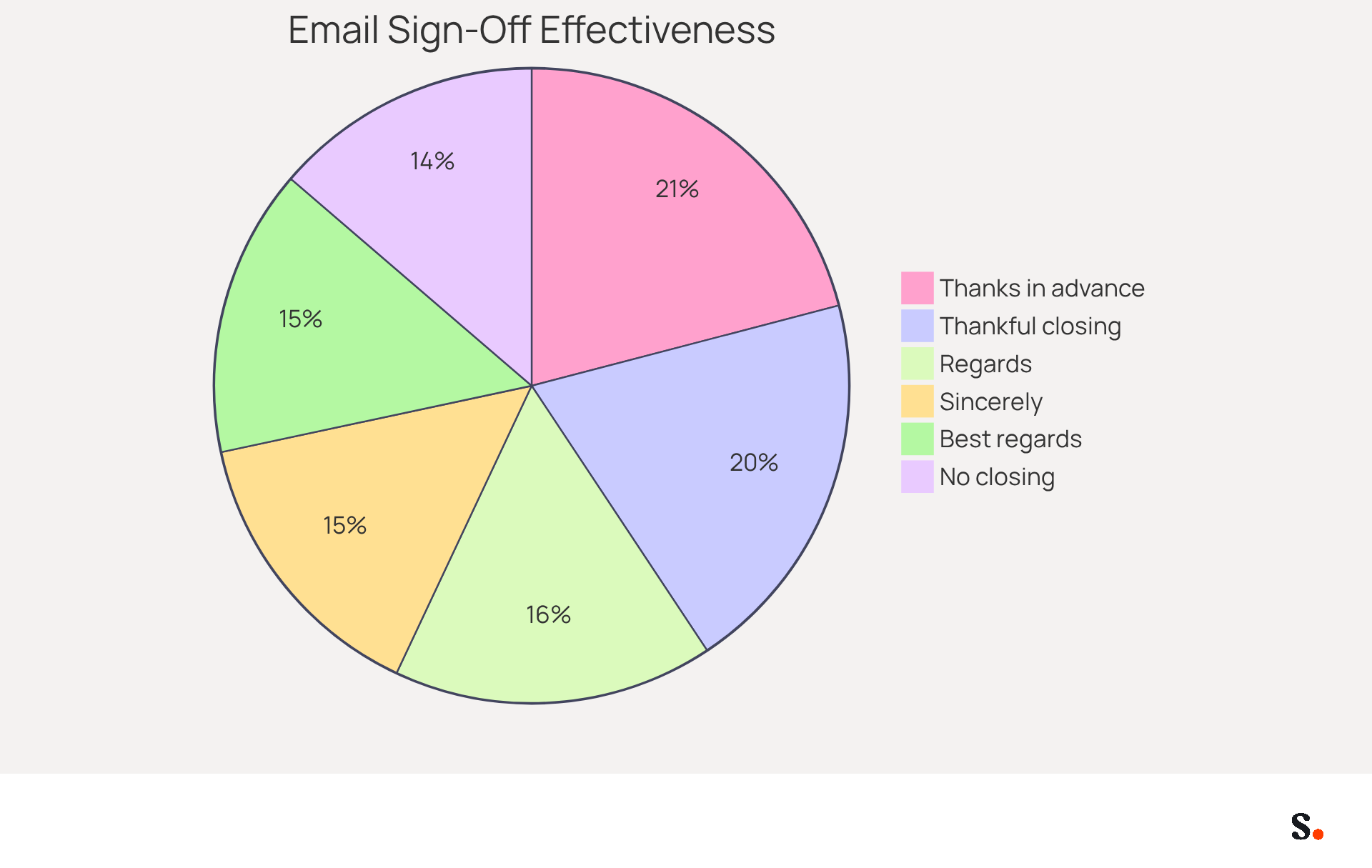
Studies indicate that emails with warm sign-offs such as 'Regards' can enhance response rates, but it is crucial to observe that emails featuring a thankful closing achieved a response rate of 62%, compared to only 46% for those devoid of gratitude, reflecting a 36% relative increase. Furthermore, messages ending with 'Thanks in advance' garnered the highest engagement rate at 65.7%, illustrating the effectiveness of expressing appreciation.
This highlights how tailoring sign-offs like 'best regards' or 'sincerely' can enhance interactions and foster better relationships. Additionally, messages without a closing average a 43% engagement rate, providing a useful benchmark for comparison. It is also worth noting that the sign-off 'Regards' has a lower response rate of 51.2%, which can come across as lacking warmth in certain situations. Therefore, understanding the nuances of different sign-offs is crucial for effective communication.
Practical Examples of Each Sign-Off in Use
Selecting the right email sign-off is crucial for effective communication. For instance, consider the example: 'Hi John, I hope this message finds you well.' I wanted to follow up on our last meeting.
- Best regards or sincerely, Jane. This sign-off conveys a friendly tone while maintaining professionalism.
- However, finding the right balance between friendliness and professionalism can be challenging, making it suitable for ongoing conversations.
In contrast, an example of 'Sincerely' might be: 'Dear Mr. Smith, I am writing to formally apply for the position of Marketing Manager.
- Best regards or sincerely, Jane Doe. Here, 'Sincerely' emphasizes the seriousness of the application and conveys respect for the recipient, making it ideal for formal correspondence.
Additionally, 'Kind regards' serves as a dependable all-purpose sign-off, suitable for various contexts, including initial cold contacts.
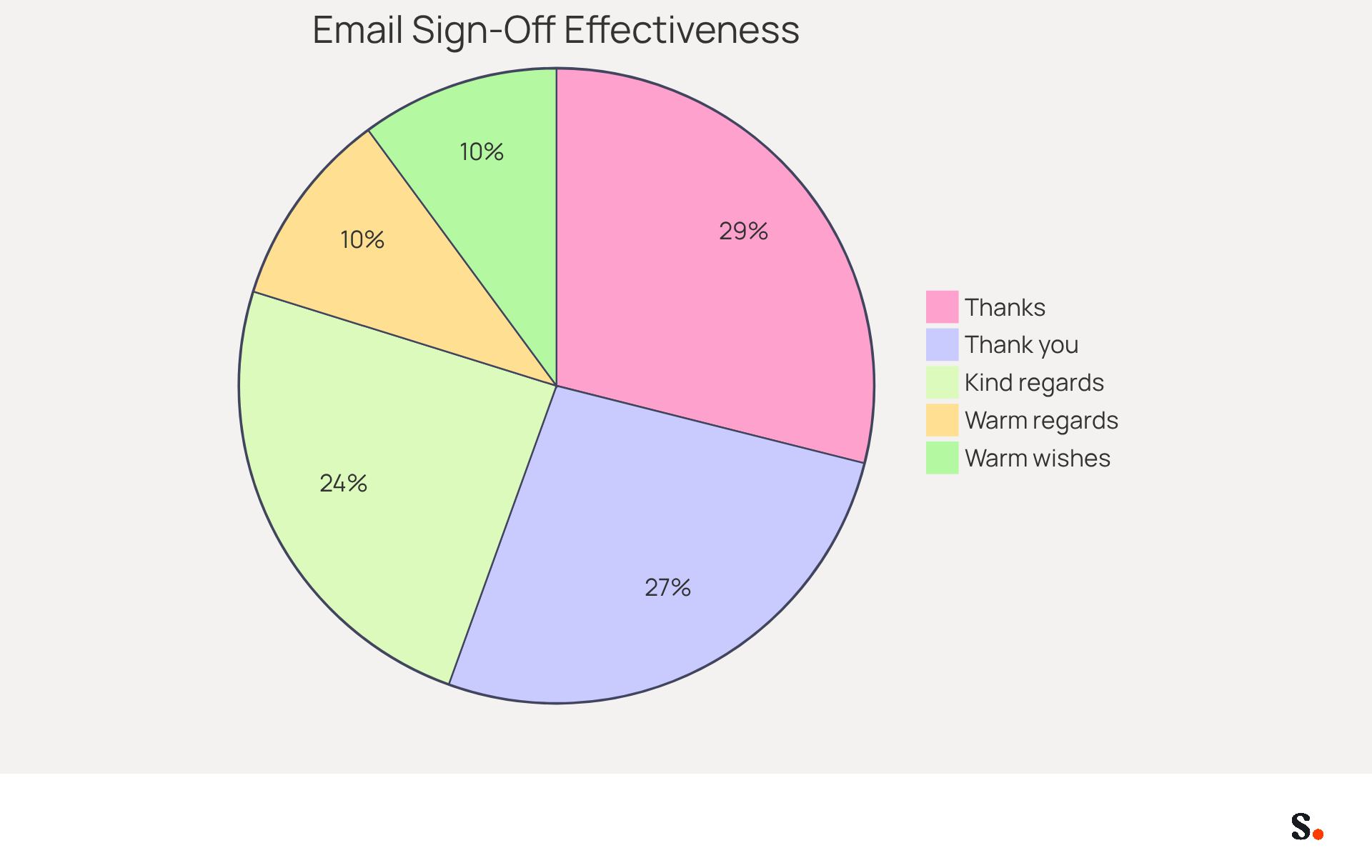
- Studies indicate that sign-offs expressing gratitude, such as 'Thanks' and 'Thank you,' achieve higher response rates of 63% and 57.9%, respectively, compared to 'Kind regards' and 'Warm regards.'
- Furthermore, messages ending with a friendly tone, such as 'Warm wishes,' receive 22% more responses than distant and formal closings.
The historical evolution of 'Best regards' highlights its adaptability to contemporary interactions, reflecting changing norms. When companies use consistent branded signatures, they see over a 22% boost in response rates, highlighting how important it is to maintain brand identity in communications.
Ultimately, the right sign-off can transform an email from a mere message into a powerful tool for engagement.
Conclusion
The choice of email sign-off can significantly influence the tone and effectiveness of professional communication.
- 'Best Regards' is typically more suitable for informal communications, as it conveys warmth while maintaining professionalism.
- In contrast, 'Sincerely' is reserved for formal contexts, emphasizing respect and seriousness.
- Case studies reveal that using the appropriate sign-off can lead to improved response rates, with warmer closings yielding higher engagement.
- The effectiveness of sign-offs is further underscored by statistics showing that messages ending with expressions of gratitude achieve notably higher response rates.
However, many professionals overlook the impact of their sign-off, leading to missed opportunities for connection. This understanding can lead to more meaningful interactions and stronger professional relationships. By making informed choices about sign-offs, professionals can elevate their communication and foster stronger connections in their networks.
Frequently Asked Questions
What is the significance of choosing the right email sign-off?
Choosing the right sign-off, such as 'Best Regards' or 'Sincerely', can significantly influence the tone and effectiveness of your message in business communications.
When should I use 'Best Regards' or 'Sincerely'?
'Best Regards' is suitable for semi-formal communications where a balance between professionalism and approachability is desired, while 'Sincerely' is more traditional and formal, making it appropriate for serious or official correspondence.
How does 'Best Regards' or 'Sincerely' affect the tone of an email?
'Best Regards' conveys goodwill and respect while maintaining a friendly tone, whereas 'Sincerely' emphasizes honesty and respect but may come off as more rigid and less warm.
What are the benefits of using 'Kind Wishes' as a sign-off?
'Kind Wishes' can significantly boost engagement, with warmer messages receiving up to 22% more replies, and it is effective for maintaining professional relationships in emails aimed at colleagues, clients, and business partners.
In what contexts is 'Sincerely' most appropriate?
'Sincerely' is most appropriate for initial interactions or formal requests, where a degree of professionalism is required.
How can the choice of sign-off impact professional relationships?
The choice between sign-offs like 'Best Regards', 'Sincerely', or 'Kind Wishes' can enhance professional relationships and encourage collaboration, making it crucial for effective communication.
What do case studies reveal about the use of these sign-offs?
Case studies show that organizations using 'Kind Wishes' in their signatures report improved rapport and professionalism, reinforcing their brand identity.
List of Sources
- Define 'Best Regards' and 'Sincerely' in Email Communication
- What is the Best Regards Email Sign Off and When to Use It? (https://scribe-mail.com/en-US/blog/what-is-the-best-regards-email-sign-off-and-when-to-use-it)
- Are people misinterpreting your email sign-off? (https://bbc.com/worklife/article/20180413-best-wishes-kind-regards-or-an-icy-yrs)
- Best Regards vs Sincerely: Choosing the Right Sign-Off for Impact (https://scribe-mail.com/en-US/blog/best-regards-vs-sincerely-choosing-the-right-sign-off-for-impact)
- 105 Alternatives to “Best Regards” for Your Email Sign-Off (https://wisestamp.com/blog/best-regard-alternatives)
- How to Use “Regards,” “Best Regards,” and “Kind Regards” in Professional Emails (https://grammarly.com/blog/vocabulary/regards)
- Context and Appropriate Usage of Each Sign-Off
- What is the Best Regards Email Sign Off and When to Use It? (https://scribe-mail.com/en-US/blog/what-is-the-best-regards-email-sign-off-and-when-to-use-it)
- ‘Yours sincerely’ is dead. So how should you sign off an email? (https://theguardian.com/lifeandstyle/2023/sep/13/yours-sincerely-is-dead-so-how-should-you-sign-off-an-email)
- Survey Says: How To Use 'Sincerely' In Your Emails & Letters (https://survey.moorlandassociation.org/moorlandassociation-news/how-to-use-sincerely-in-your-emails-and-letters-1764797050)
- Best Regards or Kind Regards: Choosing the Right Email Closing (https://scribe-mail.com/en-US/blog/best-regards-or-kind-regards-choosing-the-right-email-closing)
- Evaluate the Impact of Sign-Offs on Reader Engagement
- Is 'Best' a Good Way to End an Email? Compare Sign-Offs Here (https://scribe-mail.com/en-US/blog/is-best-a-good-way-to-end-an-email-compare-sign-offs-here)
- Your Emails Are 36 Percent More Likely to Get a Reply If You End Them This Way (https://inc.com/jessica-stillman/your-emails-are-36-percent-more-likely-to-get-a-reply-if-you-close-them-this-way.html)
- Saying 'Thank You' Increases Email Response Rates (https://mediapost.com/publications/article/297116/saying-thank-you-increases-email-response-rates.html)
- Ending Your Emails With this One Word Vastly Improves the Response Rate | Team Referral Network (https://teamreferralnetwork.com/news/2017/03/ending-your-emails-with-this-one-word-vastly-improves-the-response-rate)
- Practical Examples of Each Sign-Off in Use
- What Is the Meaning of Best Regards in Professional Emails? (https://scribe-mail.com/en-US/blog/what-is-the-meaning-of-best-regards-in-professional-emails)
- 10 Email Ending Examples to Enhance Your Professional Communication (https://scribe-mail.com/en-US/blog/10-email-ending-examples-to-enhance-your-professional-communication)
- Best regards, Kind regards, Best wishes, Yours sincerely - which to use and when | Email Signature Rescue Blog (https://emailsignaturerescue.com/blog/best-regards-kind-regards-best-wishes-yours-sincerely-which-to-use-and-when)
Get started with Scribe
Build a professional email signature
Free 14-day trial — no credit card.