How to End Emails Respectfully: 4 Steps for Professionals
Mastering the conclusion of an email is crucial for making a lasting impression on recipients. The way an email is concluded can significantly influence the
Sophie Grant
Email Signature Specialist, Scribe

Introduction
Mastering the conclusion of an email is crucial for making a lasting impression on recipients. The way an email is concluded can significantly influence the recipient's perception and response, making it essential for professionals to master the art of respectful sign-offs. This guide will explore why email closings matter and provide practical steps to improve your communication. Consider how a well-chosen phrase can elevate an ordinary email into a powerful tool for engagement and professionalism.
Understand the Importance of Professional Email Closings
The choice of email sign-offs plays a crucial role in shaping the recipient's perception of your professionalism. A well-selected conclusion can convey respect, gratitude, and professionalism, which are essential for maintaining positive workplace relationships. For instance, using sign-offs like 'Sincerely' or 'Respectfully' reinforces your commitment to professionalism, while casual endings may undermine the seriousness of your message. Research indicates that warm, professional tones can lead to a 22% increase in responses, highlighting the need to tailor conclusions to the context and the recipient.
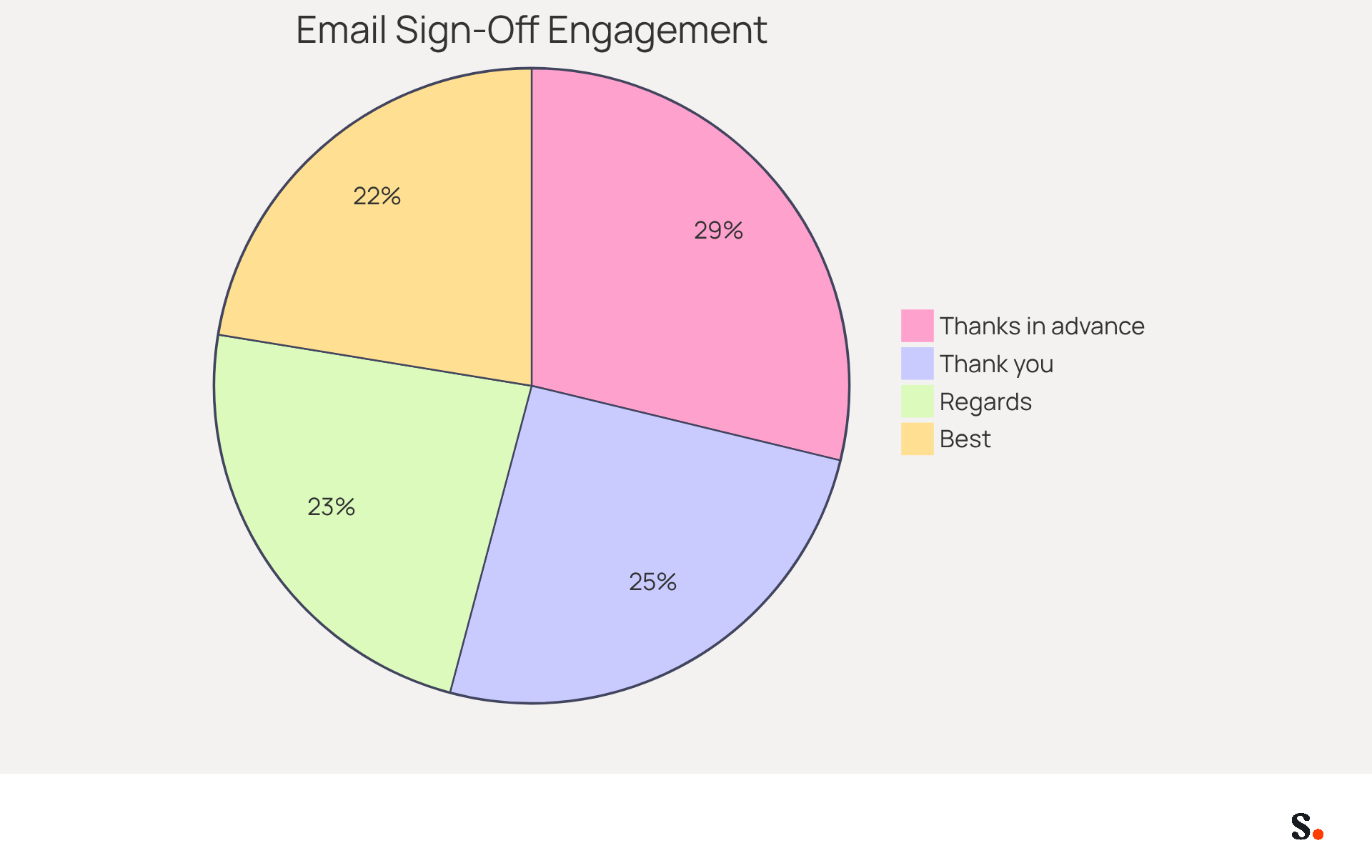
Statistics show that messages concluding with 'Thanks in advance' achieve a 65.7% engagement rate, while neutral sign-offs like 'Regards' average only 53.5%. This shows that sign-offs expressing gratitude can boost engagement, with 'Thanks in advance' achieving a 65.7% engagement rate. Moreover, expert insights highlight that a thoughtful sign-off can elevate interactions from mere information exchange to meaningful engagement, reinforcing trust and clarity in outreach efforts. Payman Taei states, 'Always take a moment to end your messages with a proper sign-off,' underscoring the importance of thoughtful message closings.
Using Scribe's email management features can enhance how you interact professionally. By syncing your Google Workspace with Scribe, you save time as your teammates' data is automatically updated, ensuring that their signature information is always current. This seamless integration means that any changes in your Google Workspace, such as moving teammates from one group to another or updating their information, will be reflected in Scribe without any manual input. This not only upholds professionalism but also guarantees brand consistency across all messages.
Case studies demonstrate the influence of professional correspondence sign-offs on communication effectiveness. For instance, ending email with respectfully by using appropriate formal sign-offs like 'Sincerely' or 'Respectfully' in job applications and client outreach helps convey professionalism and respect, leading to higher engagement rates. Furthermore, a well-organized message conclusion, which features a brief final line followed by a courteous sign-off, enhances the professionalism of communications, creating a favorable impression on recipients. Including a clean signature with your full name and contact details is also crucial for maintaining professionalism. Ultimately, ending email with respectfully can turn a simple message into a powerful tool for building lasting professional relationships.
Craft Effective Closing Statements for Respectful Emails
Crafting effective closing statements, including ending email with respectfully, is essential for impactful communication in professional settings. To achieve this, consider the following steps:
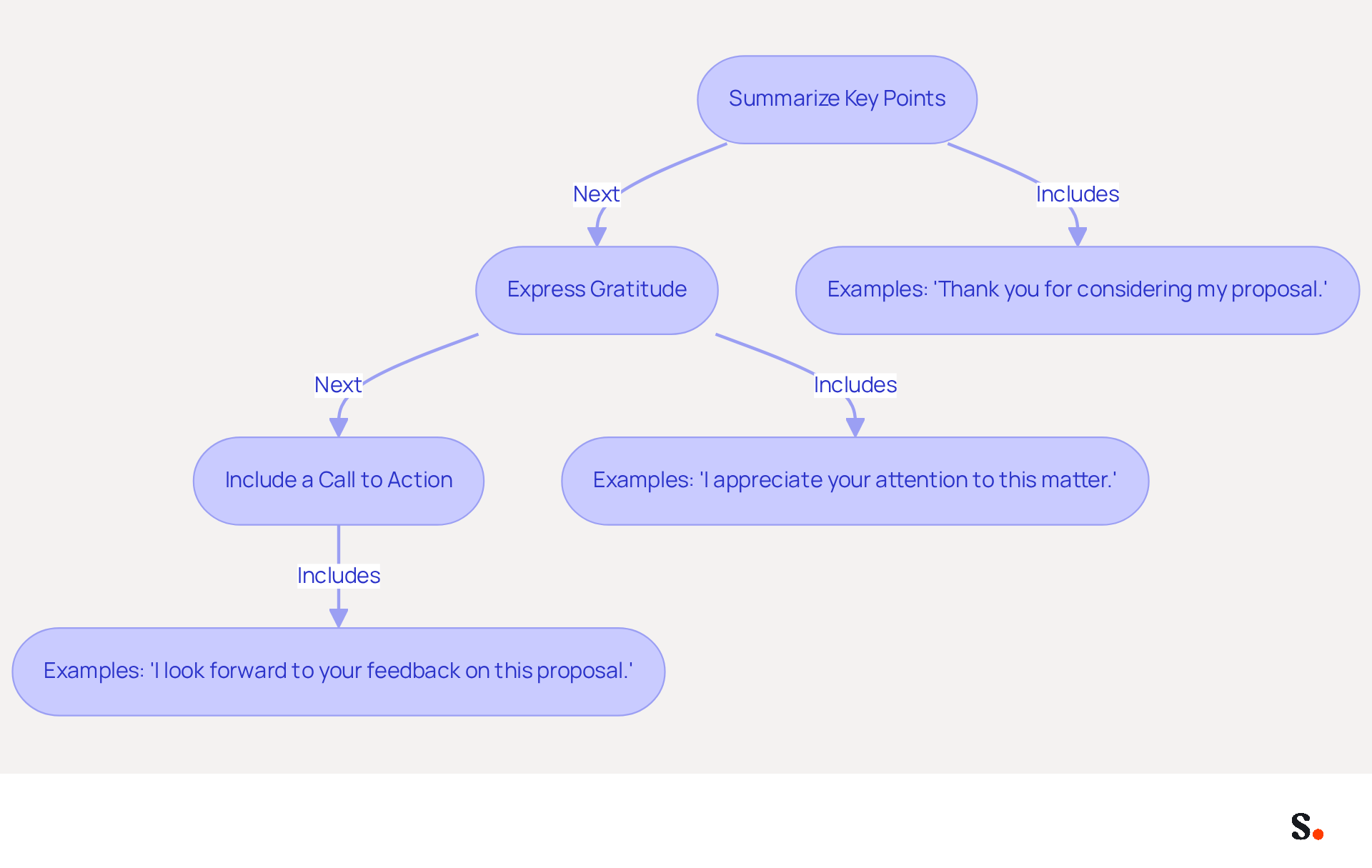
- Summarize Key Points: Briefly restate the main purpose of your message to reinforce your communication. For example, 'Thank you for considering my proposal.' This helps clarify your intent and ensures the recipient understands the main takeaway.
- Express Gratitude: Acknowledge the recipient's time and effort. Phrases like 'I appreciate your attention to this matter' can enhance the tone of your correspondence. Studies indicate that expressing gratitude in sign-offs leads to higher response rates, making this a crucial element of your conclusion.
- Include a Call to Action: If applicable, encourage the recipient to take the next step. For instance, 'I look forward to your feedback on this proposal.' A clear call to action boosts engagement significantly; messages with one clear call-to-action can increase sales by 1,617% compared to those with multiple.
When concluding a message, it is important to consider ending email with respectfully. To maintain professionalism, ensure that your conclusion aligns with the overall tone of your correspondence, particularly when considering ending email with respectfully. Avoid overly casual language to maintain a professional demeanor. Utilizing formal identifiers in message sign-offs can result in a 22% rise in response rates, highlighting the significance of professionalism in interactions. Furthermore, including your complete name, job title, and contact details in your sign-off not only offers context but also promotes further interaction.
By applying these strategies, you can enhance your professional interactions and foster lasting connections.
Choose Appropriate Sign-Offs for Different Contexts
Choosing the right email sign-off is crucial for setting the appropriate tone in your communications. Here are some guidelines to consider:
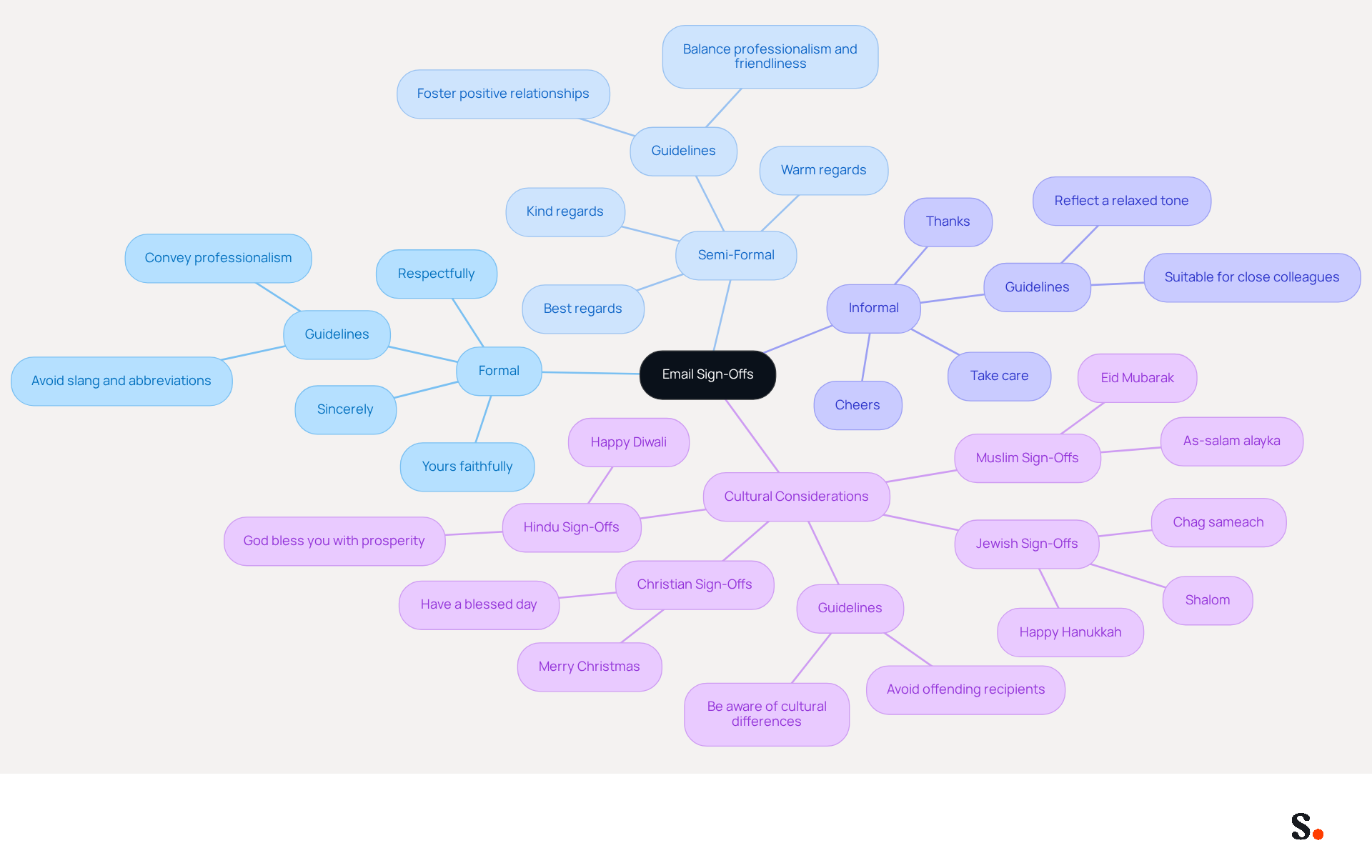
- In formal contexts, such as job applications or formal business letters, it is advisable to opt for sign-offs like 'Sincerely,' 'Yours faithfully,' or consider ending email with 'Respectfully.' These convey professionalism and seriousness. Avoid slang and abbreviations to maintain a formal tone.
- Semi-Formal Contexts: When emailing colleagues or clients with whom you have a good rapport, consider using 'Best regards,' 'Kind regards,' or 'Warm regards.' These options strike a balance between professionalism and friendliness, fostering a positive relationship.
- Informal Contexts: In casual communications, such as messages to close colleagues, you might choose sign-offs like 'Thanks,' 'Cheers,' or 'Take care.' These reflect a more relaxed tone appropriate for informal interactions.
- Cultural Considerations: Be aware of cultural differences in email etiquette. Some cultures may favor more formal closings, while others may embrace a casual approach. Understanding these nuances can really help you communicate more effectively.
Studies show that a thoughtful sign-off can greatly influence how your message is perceived, with expressions of thanks often resulting in better response rates. For instance, using phrases like 'Thanks for your time' or 'Looking forward to your response' can encourage engagement. Moreover, maintaining a consistent digital correspondence format alongside an appropriate closing reinforces professionalism and brand identity, making it essential for effective interaction across various business contexts.
Integrating Scribe with your Google Workspace streamlines signature management, ensuring your information is always up-to-date. For example, if a teammate changes their job position, this update will be instantly mirrored in Scribe, allowing you to focus on crafting the perfect sign-off while Scribe handles the details. This efficiency improves your overall strategy for interaction, making it easier to uphold professionalism in your correspondence. Ultimately, mastering the art of email sign-offs, such as ending email with 'Respectfully,' can transform your professional interactions and enhance your communication effectiveness.
Incorporate a Professional Email Signature
In today's digital landscape, a professional digital identifier is crucial for effective communication. Here’s how to create one:
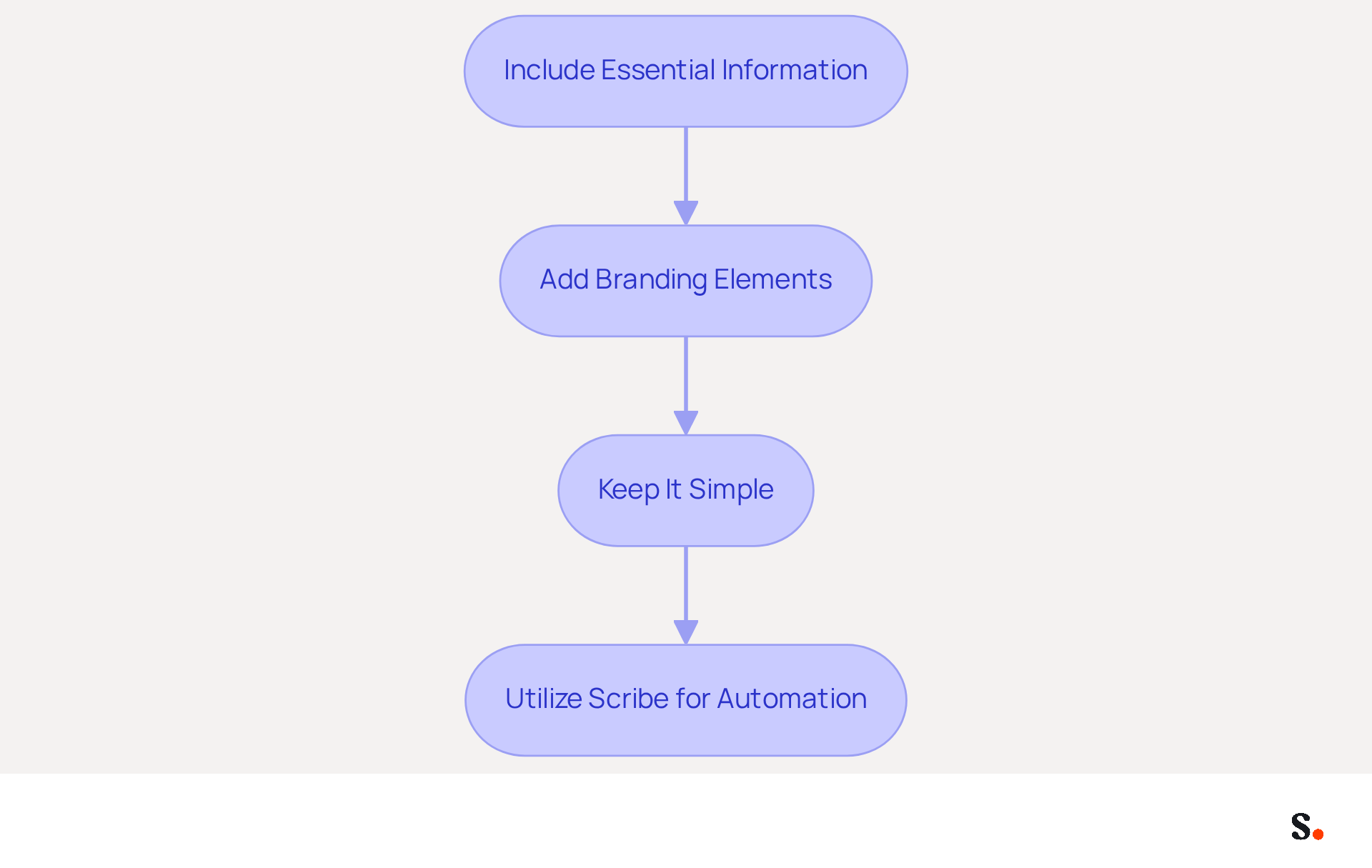
- Include Essential Information: Your mark should feature your full name, job title, company name, and contact information, including your phone number and email address. This ensures recipients can easily reach you.
- Add Branding Elements: Incorporate your company logo and utilize brand colors to enhance recognition and maintain consistency across communications. A well-branded emblem reinforces your company’s identity.
- Keep It Simple: Avoid cluttering your mark with excessive information or graphics. A clean and concise design is more effective and professional, making it easier for recipients to digest the information.
- Utilize Scribe for Automation: Consider using Scribe to streamline your correspondence management. This guarantees that your mark is always current and consistent across all communications, which is essential for strengthening your brand image.
Without a professional digital identifier, you risk losing potential connections and opportunities. Studies show that organizations with standardized electronic identifiers tend to build stronger brand recognition and trust. For example, organizations that frequently refresh their identifiers to reflect current professional information see improved engagement rates and enhanced communication effectiveness. Conversely, a poorly designed identifier can diminish your credibility and hinder communication. Furthermore, statistics show that a well-crafted digital identifier can result in higher click-through rates, making it a valuable asset for marketing and branding initiatives. Ultimately, investing in a well-crafted digital identifier can significantly enhance your professional image and communication success.
Conclusion
The conclusion of an email is often as important as its content, shaping the recipient's perception of the sender. Ending emails with respect and professionalism is essential for fostering positive relationships in the workplace. A poorly chosen sign-off can lead to misunderstandings or a lack of professionalism, making it crucial to choose sign-offs that convey gratitude and professionalism. Understanding the importance of email closings helps professionals communicate more effectively and build stronger connections.
Key strategies for crafting effective email closings include:
- Summarizing the main points of the message
- Expressing gratitude
- Choosing the right sign-offs based on the context
Ensuring that the tone aligns with the nature of the communication-whether formal, semi-formal, or informal-enhances the overall effectiveness. Additionally, incorporating a professional email signature reinforces brand identity and provides essential contact information, making it easier for recipients to engage further.
This mastery can lead to improved collaboration and opportunities. By implementing these strategies, individuals can elevate their communication, enhance engagement rates, and foster lasting professional relationships. Embracing tools like Scribe can streamline the process, ensuring that email signatures remain consistent and up-to-date, thereby reinforcing professionalism in every correspondence.
Frequently Asked Questions
Why are email sign-offs important in professional communication?
Email sign-offs play a crucial role in shaping the recipient's perception of your professionalism. A well-selected conclusion can convey respect, gratitude, and professionalism, which are essential for maintaining positive workplace relationships.
What are some effective email sign-offs to use?
Effective email sign-offs include 'Sincerely' and 'Respectfully,' which reinforce professionalism. Casual endings may undermine the seriousness of your message.
How do email sign-offs impact response rates?
Research indicates that warm, professional tones can lead to a 22% increase in responses. For example, messages concluding with 'Thanks in advance' achieve a 65.7% engagement rate, while neutral sign-offs like 'Regards' average only 53.5%.
What is the significance of expressing gratitude in email sign-offs?
Sign-offs that express gratitude, such as 'Thanks in advance,' can significantly boost engagement and create a more positive interaction, leading to higher response rates.
How can Scribe enhance professional email interactions?
Scribe's email management features allow users to sync their Google Workspace, ensuring that teammates' signature information is always current and upholding professionalism and brand consistency across all messages.
What are the best practices for concluding an email?
A well-organized message conclusion should feature a brief final line followed by a courteous sign-off. Including a clean signature with your full name and contact details is also crucial for maintaining professionalism.
How can professional sign-offs influence communication effectiveness?
Using appropriate formal sign-offs like 'Sincerely' or 'Respectfully' in job applications and client outreach helps convey professionalism and respect, leading to higher engagement rates and fostering lasting professional relationships.
List of Sources
- Understand the Importance of Professional Email Closings
- How to End an Email: 43 Ways to Sign Off on an Email (2026) (https://respona.com/blog/how-to-end-an-email)
- 50 Best Email Sign-Offs to End an Email Properly in [year] (https://elementor.com/blog/best-email-sign-offs)
- Is 'Best' a Good Way to End an Email? Compare Sign-Offs Here (https://scribe-mail.com/en-US/blog/is-best-a-good-way-to-end-an-email-compare-sign-offs-here)
- Master the Professional Way to End an Email for Impact (https://scribe-mail.com/en-US/blog/master-the-professional-way-to-end-an-email-for-impact)
- Craft Effective Closing Statements for Respectful Emails
- How to end an email: Best sign-offs for every business situation | Proton (https://proton.me/business/blog/how-to-end-an-email)
- 4 Best Practices for Effective Professional Email Closings (https://scribe-mail.com/en-US/blog/4-best-practices-for-effective-professional-email-closings)
- Email Etiquette in the Workplace (https://adminvc.ucla.edu/news/email-etiquette-workplace)
- How to End an Email Professionally (With Examples) (https://iconnect.isenberg.umass.edu/blog/2024/07/10/how-to-end-an-email-professionally-with-examples)
- Choose Appropriate Sign-Offs for Different Contexts
- Best Email Sign-Offs for Any Correspondence (https://wisestamp.com/examples/email-sign-offs)
- Different Sign-offs & When You Should Use Them | Heinz Marketing (https://heinzmarketing.com/blog/different-sign-offs-when-you-should-use-them)
- Cultural Considerations in Email Communication (https://linkedin.com/top-content/communication/email-etiquette-in-professional-settings/cultural-considerations-in-email-communication)
- Incorporate a Professional Email Signature
- 20 Tips for Creating an Effective Email Signature — SitePoint (https://sitepoint.com/creating-an-effective-email-signature)
- Why Email Signatures Are So Important (https://findlight.net/salesacademy/why-email-signatures-are-so-important)
- Professional Email Signature Etiquette Dos & Don’ts (https://blinq.me/blog/professional-email-signature-etiquette)
- Email signature statistics: Why every business should optimize their email signatures — Stripo.email (https://stripo.email/blog/email-signature-statistics-why-every-business-should-optimize-their-email-signatures)
- Email Signature Best Practices Guide With Examples - MailerLite (https://mailerlite.com/blog/email-signature-best-practices)
Get started with Scribe
Build a professional email signature
Free 14-day trial — no credit card.