When to Use Best Regards: A Step-by-Step Guide for Professionals
Mastering email communication is crucial for professionals navigating workplace dynamics. The phrase "Best Regards" serves as more than just a polite closing
Sophie Grant
Email Signature Specialist, Scribe
Introduction
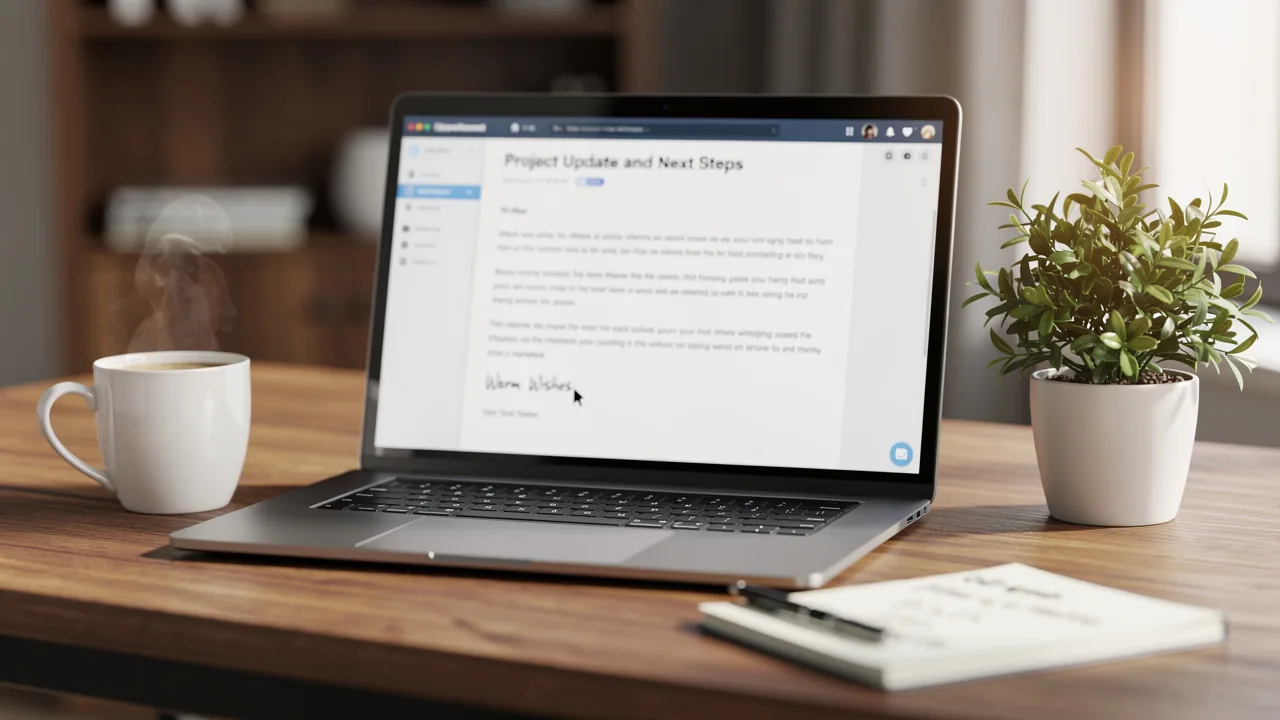
Mastering email communication is crucial for professionals navigating workplace dynamics. The phrase "Best Regards" serves as more than just a polite closing; it encapsulates goodwill and respect, making it a versatile choice across various contexts. Yet, many professionals struggle with when and how to use this sign-off effectively to build positive relationships and boost engagement. Key factors must be considered to ensure that "Best Regards" resonates effectively with the recipient.
Understand the Meaning of 'Best Regards'
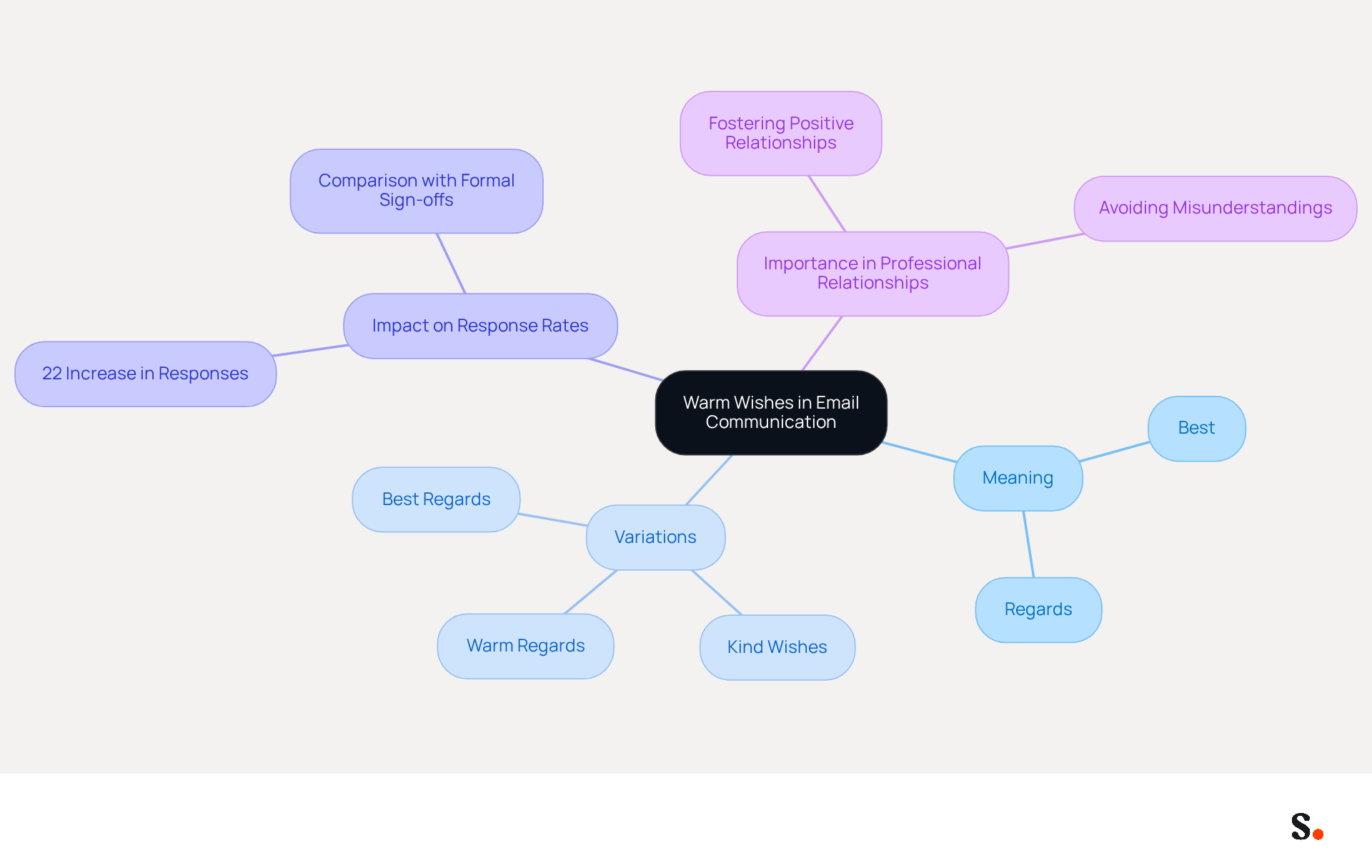
The closing phrase 'Warm Wishes' serves as a powerful tool in professional email communication. This sign-off conveys goodwill and respect, combining 'best,' which signifies the highest degree of something, with 'regards,' referring to thoughts or feelings towards someone. Understanding the role of 'Warm Wishes' in email communication is crucial for fostering positive relationships. Its versatility makes it suitable for both formal and semi-formal contexts, and failing to choose an appropriate closing could lead to misunderstandings or missed opportunities in communication.
Significantly, emails that end with a friendly tone, including variations like 'Kind Wishes' and 'Warm Wishes,' can yield a 22% increase in response rates compared to more distant sign-offs. This underscores how a well-chosen closing phrase can enhance engagement and strengthen professional relationships. As noted, 'Regards' is a generic and formal closing that comes before the signature, making it appropriate for various professional interactions.
Identify Appropriate Contexts for 'Best Regards'
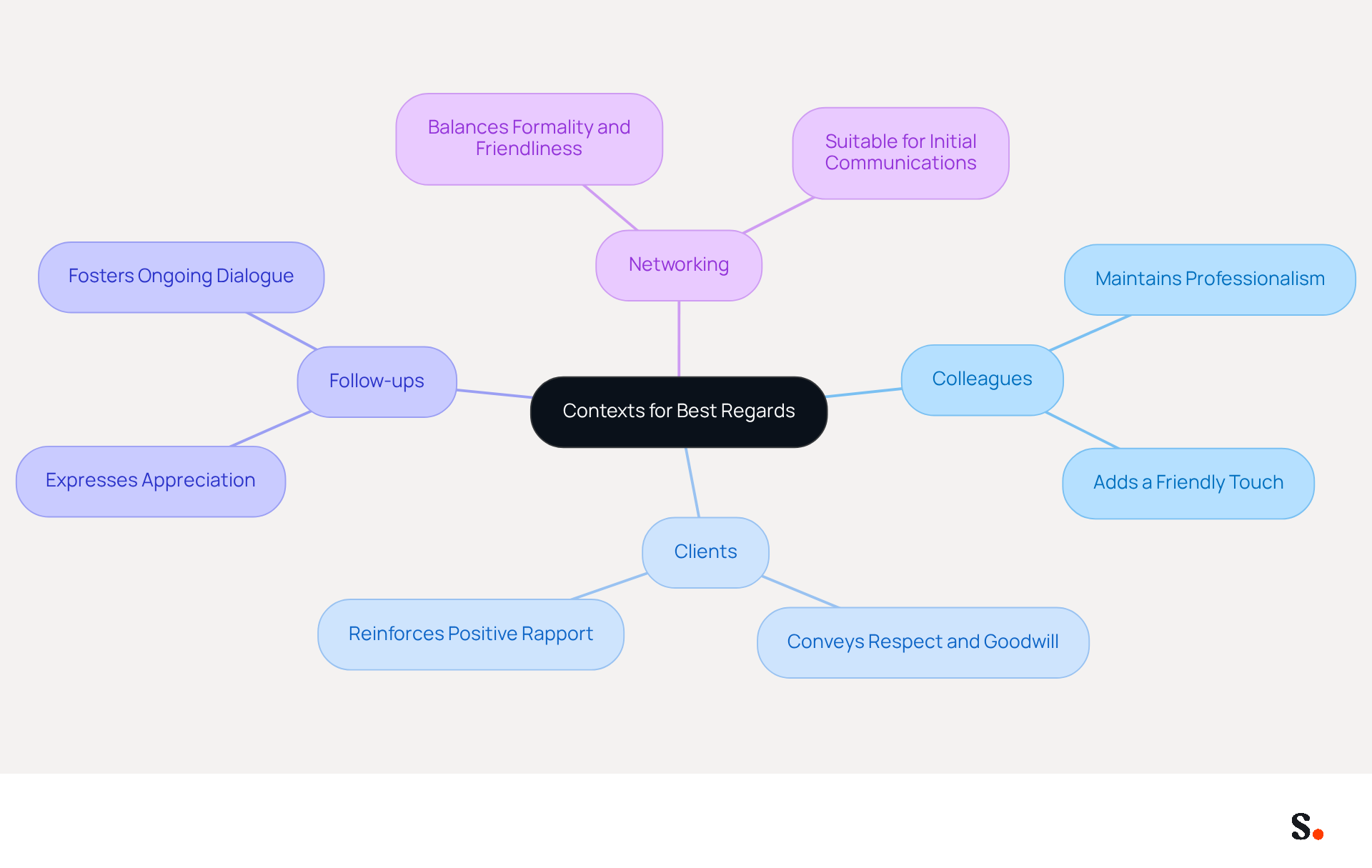
Communication effectiveness can be enhanced, especially when use best regards has been established. This sign-off is particularly effective in various contexts:
- Colleagues: This sign-off is ideal for communications with familiar coworkers, as it maintains professionalism while adding a friendly touch.
- Clients: In ongoing client relationships, 'Warm Wishes' conveys respect and goodwill, reinforcing a positive rapport.
- Follow-ups: After meetings or discussions, this sign-off expresses appreciation and a desire to continue the conversation, fostering ongoing dialogue.
- Networking: When reaching out to new contacts or following up after networking events, 'Kind Regards' strikes a balance between formality and friendliness, making it suitable for initial communications.
Recognizing these situations helps you use 'Kind Wishes' in a way that resonates. Messages that include friendly closings like 'Warm Wishes' can lead to a 22% increase in responses, highlighting the impact of considerate sign-offs.
Assess Tone and Relationship with the Recipient
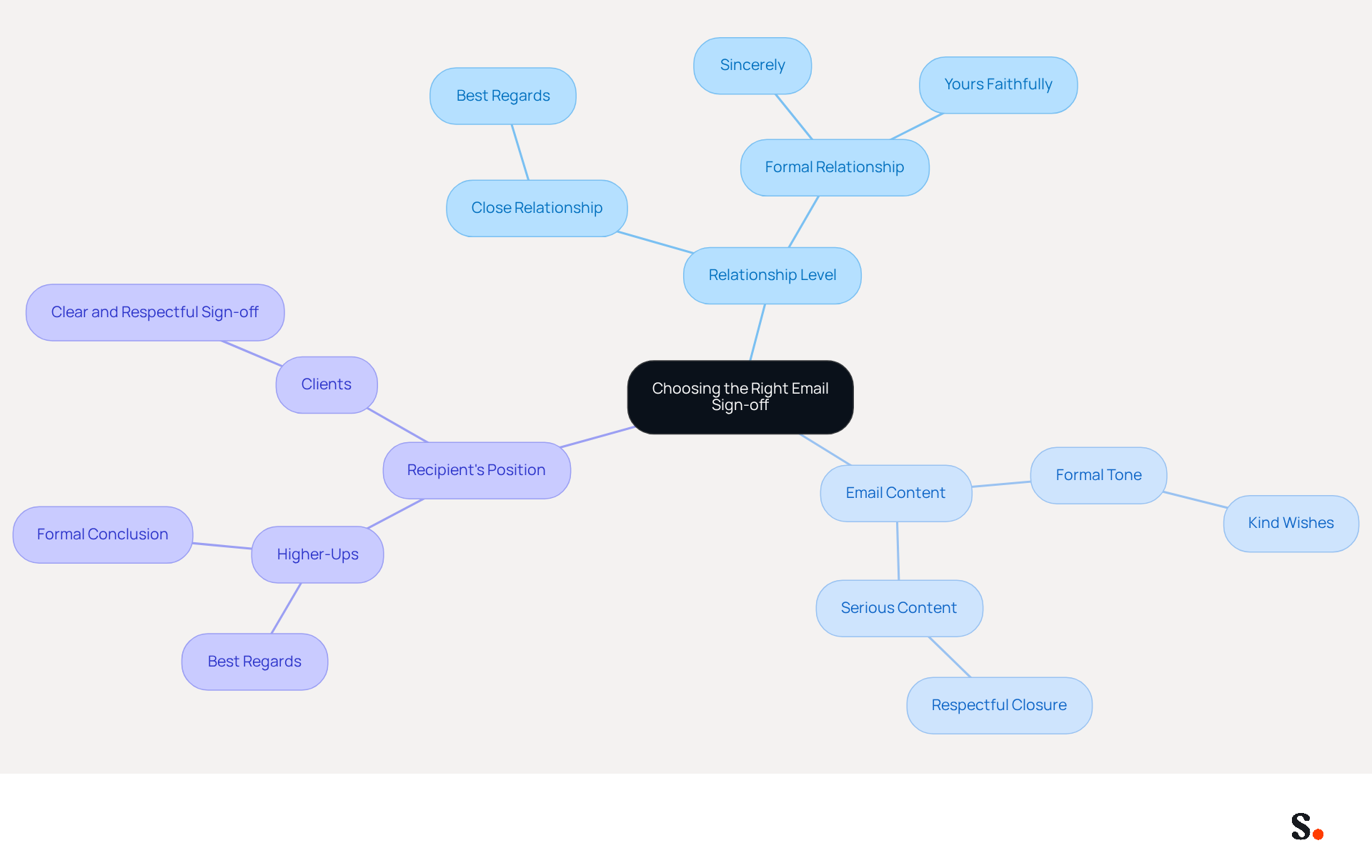
Choosing the right email sign-off is crucial for effective communication and can significantly impact the recipient's perception. Consider the following factors:
- Relationship Level: If you have a close working relationship with the recipient, 'Best Regards' is appropriate. However, for more formal relationships, consider alternatives like 'Sincerely' or 'Yours faithfully.'
- Email Content: The tone of your email should match the sign-off. If your message is formal or serious, ensure that 'Kind Wishes' aligns with that tone.
- Recipient's Position: When addressing higher-ups or clients, assess whether 'Best Regards' conveys the right level of respect. In certain situations, a more formal conclusion may be necessary.
Choosing the right sign-off can often lead to confusion and miscommunication. Failing to choose an appropriate sign-off may result in misunderstandings or a lack of professionalism. Ultimately, a thoughtful sign-off can enhance your professional image and strengthen your relationships.
Review Examples of 'Best Regards' in Use
Using the right sign-off in emails can significantly influence professional relationships. Here are some examples of how to use 'Best Regards' effectively in different email scenarios:
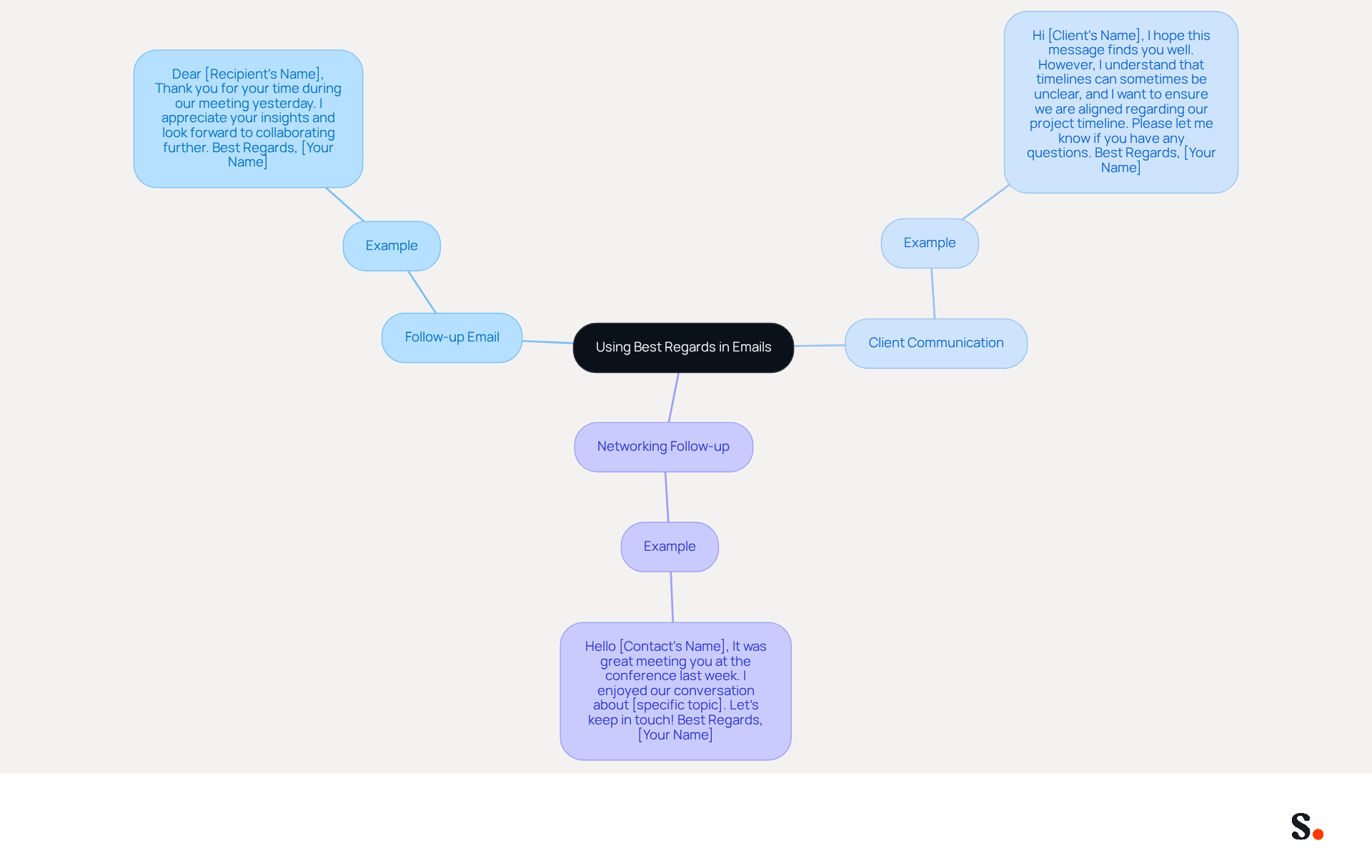
- Follow-up Email:
"Dear [Recipient's Name],
Thank you for your time during our meeting yesterday. I appreciate your insights and look forward to collaborating further.
Best Regards,
[Your Name]" - Client Communication:
"Hi [Client's Name],
I hope this message finds you well. However, I understand that timelines can sometimes be unclear, and I want to ensure we are aligned regarding our project timeline. Please let me know if you have any questions.
Best Regards,
[Your Name]" - Networking Follow-up:
"Hello [Contact's Name],
It was great meeting you at the conference last week. I enjoyed our conversation about [specific topic]. Let’s keep in touch!
Best Regards,
[Your Name]"
These examples show how you can easily use 'Best Regards' in different professional emails to improve tone and build positive relationships. Research shows that a thoughtful sign-off can boost engagement, as warmer messages often lead to higher response rates. Furthermore, 69% of consumers think that a consistent and professional signature is crucial for businesses, emphasizing the significance of upholding professionalism in all communications. The conclusion of an email can greatly affect how recipients view professionalism. Case studies demonstrate that communication outcomes can be enhanced when using best regards effectively, making it a strategic choice for professionals.
Conclusion
The choice of email sign-offs, particularly 'Best Regards,' plays a crucial role in shaping professional interactions. This guide has explored the significance of this sign-off, emphasizing its versatility across various contexts, from colleague interactions to client communications and networking follow-ups. When professionals know how to use 'Best Regards' effectively, they can show respect and goodwill, which often leads to better engagement.
Key insights discussed include the importance of assessing the tone of the email and the relationship with the recipient. Choosing the right sign-off can prevent misunderstandings and reinforce professionalism. Examples provided illustrate how 'Best Regards' can be effectively integrated into different email scenarios, showcasing its role in maintaining a positive and professional image.
In a world where effective communication is paramount, the choice of email sign-offs like 'Best Regards' can significantly impact professional relationships. By adopting best practices for using this closing, professionals can enhance their communication strategies, ensuring that their messages resonate positively with recipients. Ultimately, the thoughtful use of sign-offs like 'Best Regards' can transform the way professionals connect and communicate in their careers.
Frequently Asked Questions
What does the closing phrase 'Warm Wishes' signify in professional email communication?
'Warm Wishes' conveys goodwill and respect, combining 'best,' which signifies the highest degree of something, with 'regards,' referring to thoughts or feelings towards someone.
Why is it important to understand the role of 'Warm Wishes' in email communication?
Understanding the role of 'Warm Wishes' is crucial for fostering positive relationships, as it helps convey a friendly tone that can enhance engagement.
In what contexts is 'Warm Wishes' suitable to use?
'Warm Wishes' is versatile and suitable for both formal and semi-formal contexts in professional communication.
What impact does using a friendly closing phrase have on email response rates?
Emails that end with a friendly tone, including variations like 'Kind Wishes' and 'Warm Wishes,' can yield a 22% increase in response rates compared to more distant sign-offs.
How does 'Regards' differ from 'Warm Wishes' in terms of formality?
'Regards' is a generic and formal closing that is appropriate for various professional interactions, while 'Warm Wishes' adds a more personal and friendly touch.
List of Sources
- Understand the Meaning of 'Best Regards'
- How to Use “Regards,” “Best Regards,” and “Kind Regards” in Professional Emails (https://grammarly.com/blog/vocabulary/regards)
- 105 Alternatives to “Best Regards” for Your Email Sign-Off (https://wisestamp.com/blog/best-regard-alternatives)
- Best Regards or Warmest Regards: Choosing the Right Sign-Off (https://scribe-mail.com/en-US/blog/best-regards-or-warmest-regards-choosing-the-right-sign-off)
- What Is the Meaning of Best Regards in Professional Emails? (https://scribe-mail.com/en-US/blog/what-is-the-meaning-of-best-regards-in-professional-emails)
- Identify Appropriate Contexts for 'Best Regards'
- Best Regards or Warmest Regards: Choosing the Right Sign-Off (https://scribe-mail.com/en-US/blog/best-regards-or-warmest-regards-choosing-the-right-sign-off)
- Warm Regards vs Best Regards vs Kind Regards: Choosing the Right Email Sign-Off (https://salesforge.ai/blog/warm-regards-vs-best-regards-vs-kind-regards)
- What is the Best Regards Email Sign Off and When to Use It? (https://scribe-mail.com/en-US/blog/what-is-the-best-regards-email-sign-off-and-when-to-use-it)
- Assess Tone and Relationship with the Recipient
- It's All About Nuance. How to Convey and Discern Email Tone. (https://entrepreneur.com/growing-a-business/its-all-about-nuance-how-to-convey-and-discern-email-tone/239121)
- Your Tone Is Ruining Your Emails – Here’s How To Fix It (https://lucilleossai.com/blog/2022/05/31/your-tone-is-ruining-your-emails-heres-how-to-fix-it)
- Tone and Content Add Up To Successful Emails (https://boston.com/news/jobs/2014/07/03/tone_and_content_add_up_to_suc)
- Tone traps in professional emails (https://linkedin.com/top-content/writing/email-writing-best-practices/tone-traps-in-professional-emails)
- Review Examples of 'Best Regards' in Use
- What is the Best Regards Email Sign Off and When to Use It? (https://scribe-mail.com/en-US/blog/what-is-the-best-regards-email-sign-off-and-when-to-use-it)
- How to End an Email: 43 Ways to Sign Off on an Email (2026) (https://respona.com/blog/how-to-end-an-email)
- Master Business Sign-Off Emails: Best Practices for Impactful Communication (https://scribe-mail.com/en-US/blog/master-business-sign-off-emails-best-practices-for-impactful-communication)
- The 37 best ways to close emails (https://signitic.com/en/resources/email-sign-offs)
Get started with Scribe
Build a professional email signature
Free 14-day trial — no credit card.