What Should Be Included in an Email Signature for Marketing Success
Despite their often-overlooked status, email signatures hold significant potential for enhancing professionalism and driving marketing success. Incorporating
Sophie Grant
Email Signature Specialist, Scribe

Introduction
Despite their often-overlooked status, email signatures hold significant potential for enhancing professionalism and driving marketing success. Incorporating essential elements like contact information, branding, and calls to action allows organizations to turn these digital footers into strategic assets that enhance engagement and build trust. Yet, many people overlook how impactful a well-crafted email signature can be.
What truly makes an email signature effective, and how can it be leveraged to maximize marketing ROI? Examining the key components and best practices for email signatures highlights their importance in communication and their role as essential branding tools in today's competitive landscape.
Define Email Signature: Purpose and Importance
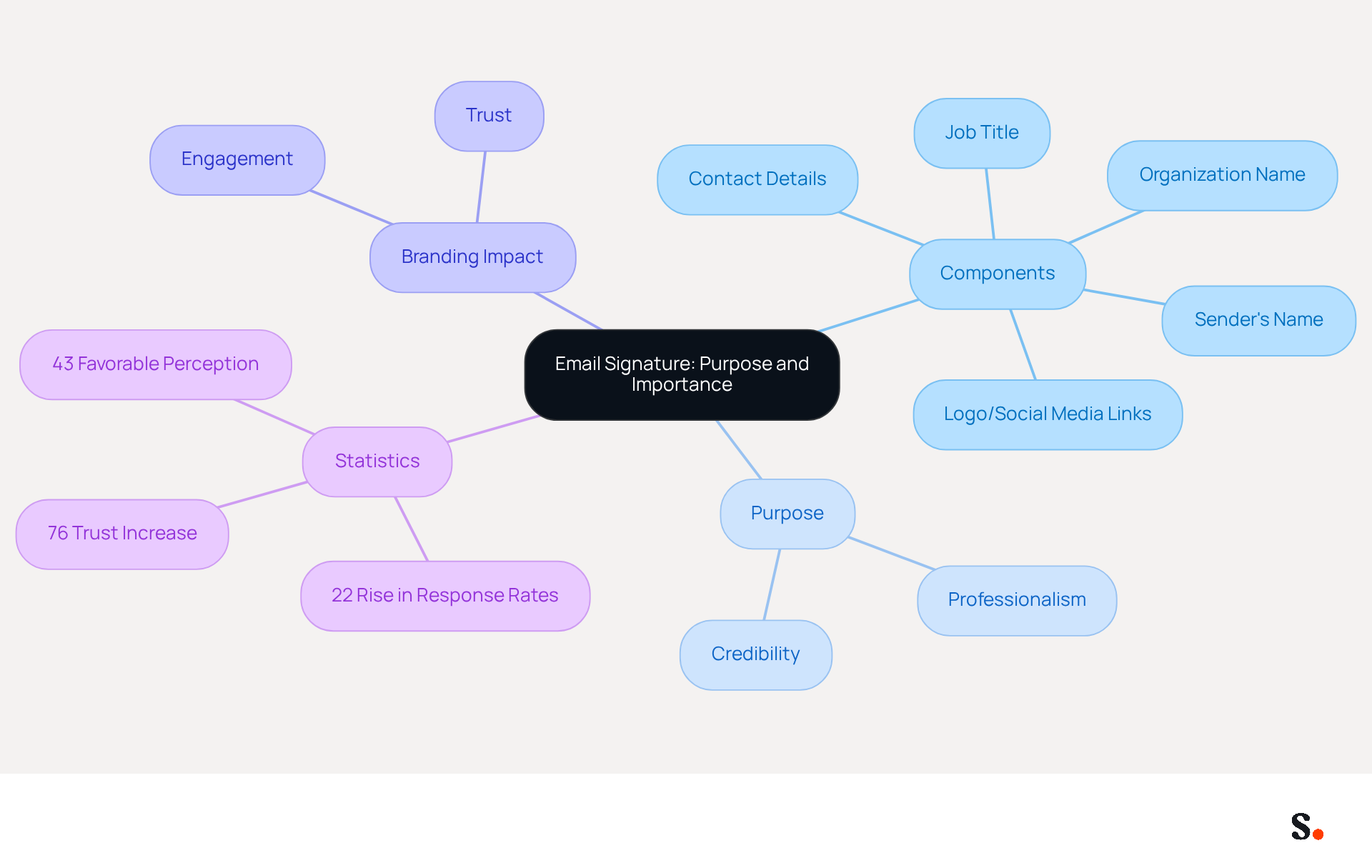
An electronic message footer is not just an afterthought; it is a crucial element that enhances professionalism and credibility in communication. Typically, what should be included in an email signature consists of the sender's name, job title, organization name, contact details, and often a logo or social media links. Its primary purpose is to provide recipients with essential information about the sender, thereby establishing professionalism and credibility. In promotion, email footers evolve into impactful branding instruments, strengthening Scribe's identity with each email dispatched. They can effectively include promotional elements, such as calls to action or links to marketing campaigns, making them a vital channel for driving engagement and generating leads.
Scribe streamlines the process by automatically filling in your teammates' initials, drawing from your business phone system for accurate data. This ensures that your teammates' identification information remains consistently updated without any manual intervention. Changes in your connected source will be automatically updated in Scribe, ensuring brand consistency across all communications. Scribe is also SOC 2 Type II compliant, ensuring that your data is safe and secure. The integration with Aircall improves this functionality, enabling smooth updates and management of digital identifiers.
Research shows that 76% of recipients feel a greater sense of trust in senders who use branded identifiers, while 43% develop a more favorable perception of the brand. Moreover, businesses that implement consistent messaging formats see a 22% rise in response rates and a notable increase in website click rates, soaring from 3% to 15%. This highlights the potential of digital identifiers as a high-impact, no-cost branding channel in 2026.
Case studies emphasize the significance of electronic identifiers in various sectors, especially in sales and promotion, where they are crucial for building relationships. Organizations that utilize digital identifiers as strategic assets not only improve brand consistency but also monitor engagement effectively. By treating electronic identifiers as essential to their communication strategy, Scribe can unlock their full potential, ensuring that every message sent contributes to their marketing goals. By leveraging digital identifiers, organizations can transform every email into a strategic branding opportunity, fundamentally changing how they engage with their audience.
Identify Key Components of an Effective Email Signature
An effective email signature is not just a formality; it is a strategic tool that can significantly influence communication outcomes. To maximize its impact, an email signature should encompass several key components:
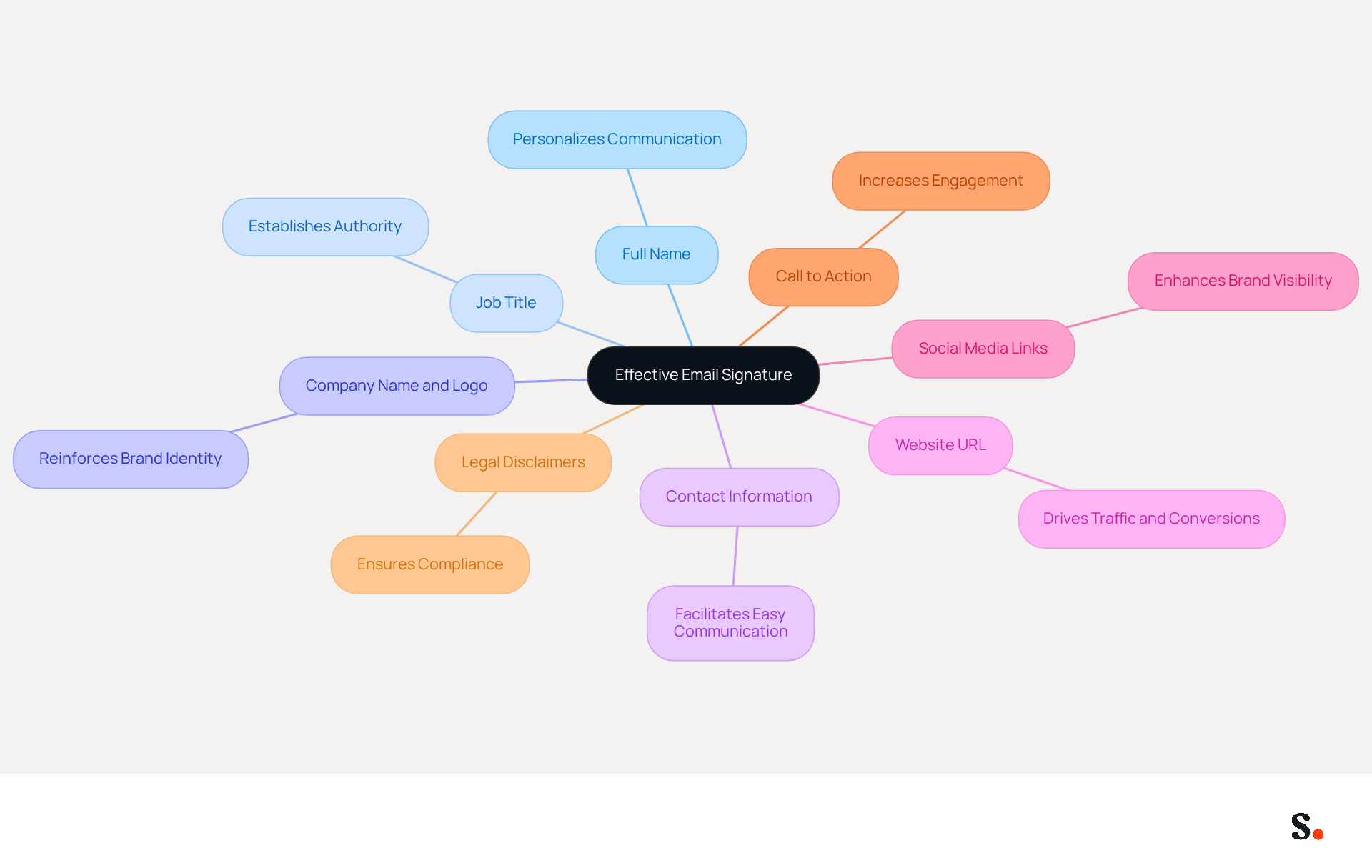
- Full Name: Clearly stating the sender's name personalizes the communication, fostering a connection with the recipient.
- Job Title: Indicating the sender's position establishes authority and context for the communication.
- Company Name and Logo: Including these elements reinforces brand identity and enhances recognition, making it easier for recipients to associate the message with Scribe.
- Contact Information: Providing a phone number and email address facilitates easy communication, ensuring recipients can reach out without hassle.
- Website URL: Directing recipients to Scribe's website allows for further exploration of products or services, driving traffic and potential conversions.
- Social Media Links: Encouraging engagement through social platforms can enhance brand visibility and foster community interaction.
- Call to Action: Including a promotional message or link to a current campaign can greatly enhance engagement; for example, branded email footers with resource downloads produce five times more Marketing Qualified Leads (MQLs) than generic CTAs.
- Legal Disclaimers: If necessary, including required legal information ensures compliance and protects the company.
Combining these components allows businesses to create digital identifiers that convey essential information and demonstrate what should be included in an email signature as promotional tools. With Scribe, you can easily sync your digital identifiers with just one click, making sure everything stays up to date. This not only saves time but also guarantees brand consistency across all communications. Additionally, Scribe's SOC 2 Type II compliance ensures that your data remains secure, allowing marketing teams to focus on engagement without compromising on safety. For instance, a tech firm that refreshed its communication footers to incorporate registration links for an upcoming webinar experienced an impressive 180% rise in signups, showing how optimized footers can boost engagement. Moreover, sign-offs with calendar booking links can result in three times more meeting reservations, highlighting the effectiveness of strategic CTAs in communication. Ultimately, leveraging Scribe's capabilities can transform your email signatures into powerful assets that drive engagement and foster connections.
Explain the Role of Email Signatures in Branding and Marketing
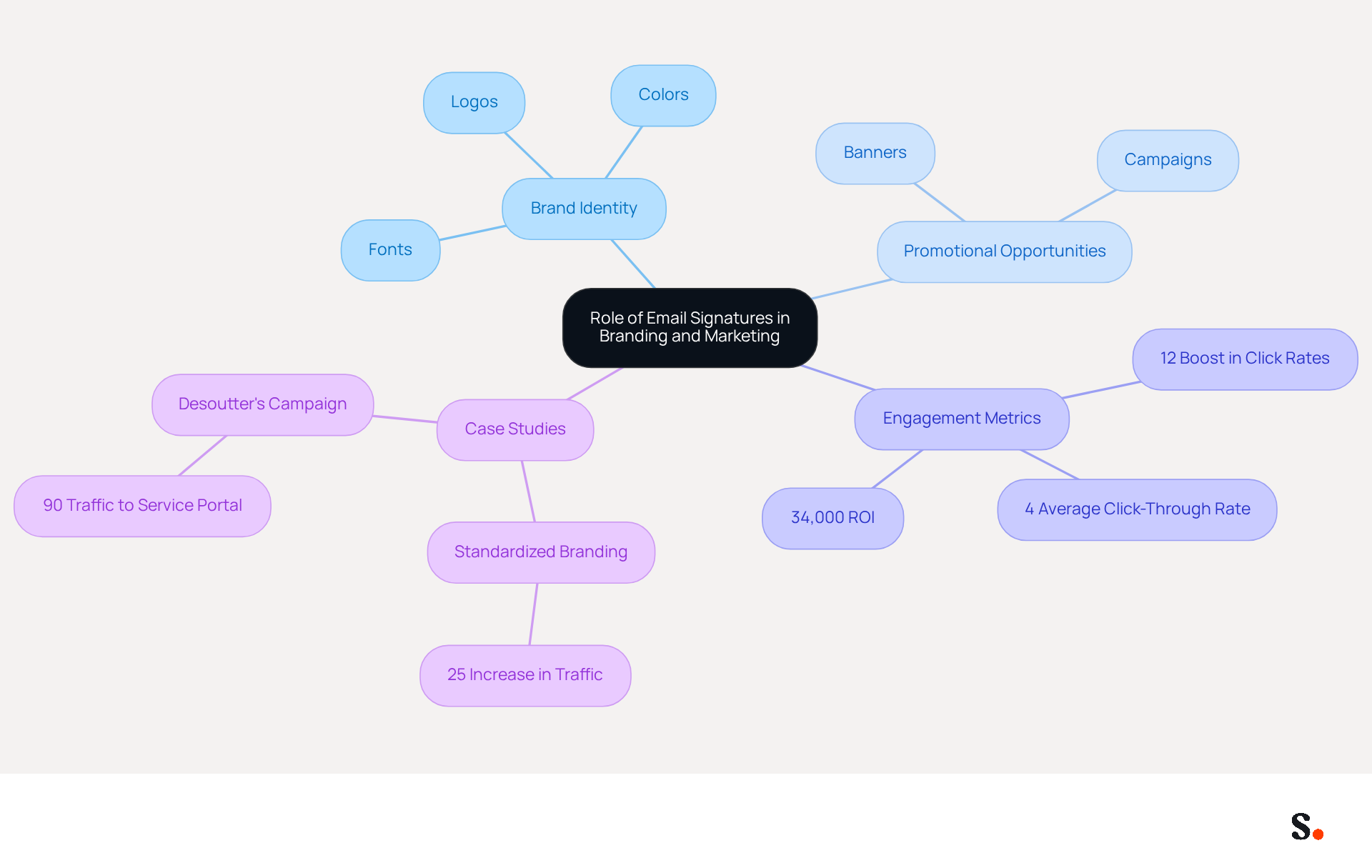
Email footers are not just an afterthought; they are a vital component of branding and promotion that can significantly impact engagement and conversions. They reinforce brand identity through the strategic use of logos, colors, and fonts that align with the company's visual identity. By incorporating elements such as banners, digital identifiers can effectively promote campaigns, share important announcements, or drive traffic to specific landing pages.
For instance, incorporating a banner into a digital footer can boost click rates by 12%, turning each message into a valuable promotional opportunity. This approach enhances brand recognition and builds trust with recipients, which can lead to higher conversions and customer loyalty.
Case studies show that companies utilizing branding through electronic correspondence have achieved notable outcomes; one multinational firm standardized its branding, leading to a 25% rise in traffic to targeted landing pages. Moreover, electronic identifiers can attain an average click-through rate of 4%, which is 60% superior to conventional promotional messages, highlighting their efficiency as a communication channel.
Furthermore, electronic identifiers can produce a return on investment of up to 34,000%, underscoring their effectiveness as a budget-friendly promotional tool. With Scribe, every modification made in your Aircall configuration will automatically be reflected in your digital identifiers, ensuring seamless synchronization and brand consistency. Scribe also adheres to SOC 2 Type II compliance and GDPR/CCPA regulations, ensuring secure data handling.
By neglecting the potential of email footers, organizations risk losing valuable opportunities to connect with their audience and enhance their brand presence.
Present Examples of Effective Email Signatures
In a competitive landscape, the effectiveness of email footers can greatly influence communication outcomes. Effective email footers can significantly vary depending on what should be included in an email signature, as well as the industry and intended audience. Here are several tailored examples:
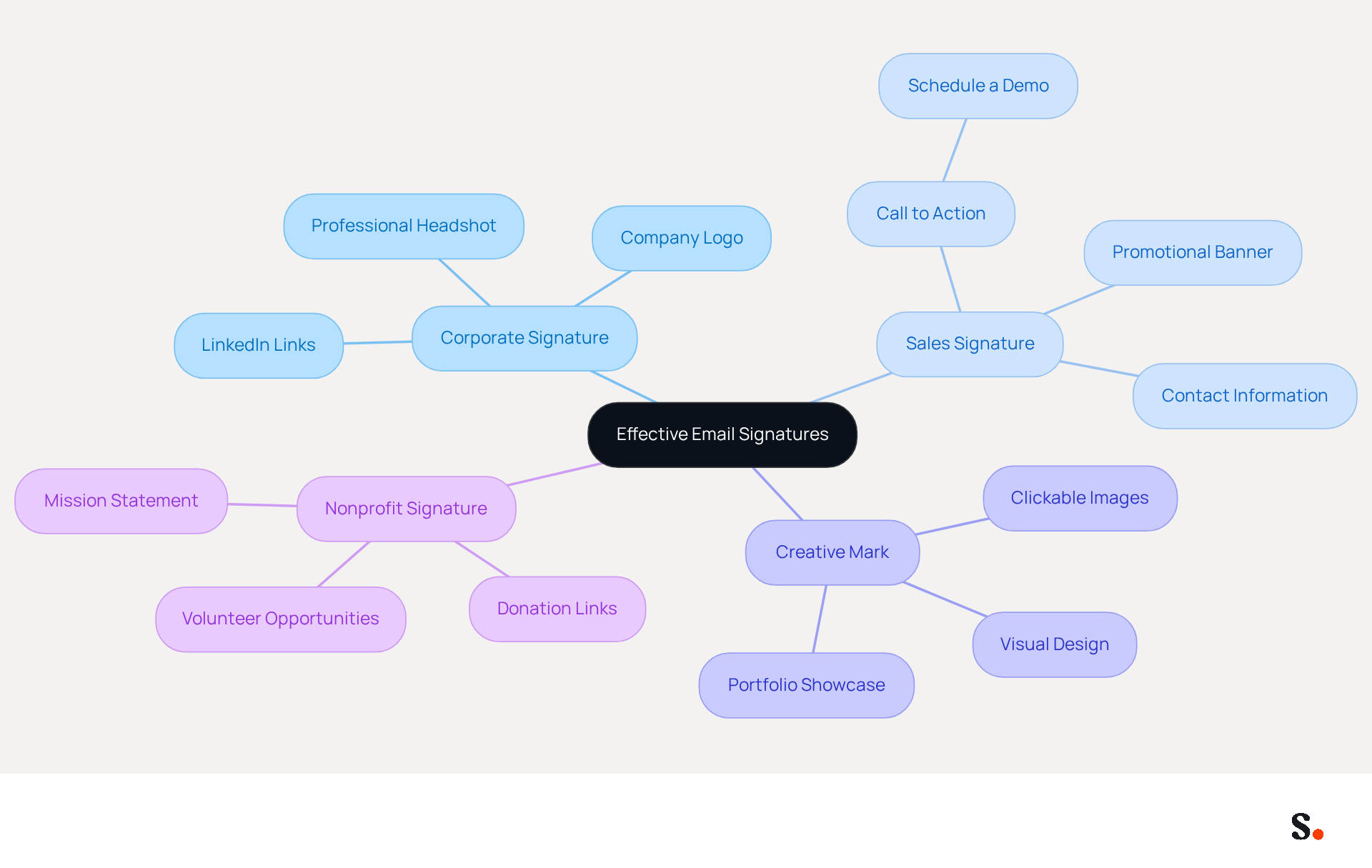
- Corporate Signature: A corporate executive's mark typically features a professional headshot, the company logo, and links to Scribe’s LinkedIn page, reinforcing brand identity and professionalism.
- Sales Signature: For a sales representative, including a call to action, such as a link to schedule a demo, alongside contact information and a promotional banner for current offers can drive engagement and conversions.
- Creative Mark: For designers, visually striking email signatures that showcase their portfolios are essential for making a memorable impression. Incorporating clickable images that lead directly to their work effectively demonstrates their skills and creativity.
- Nonprofit Signature: Nonprofits can enhance their impact by including links for donations or volunteer opportunities, along with a concise mission statement, to inspire action and connect with supporters.
These examples illustrate what should be included in an email signature to tailor specific elements that align with the sender's role and objectives, maximizing the impact of each message sent. Ultimately, neglecting the design of email signatures may result in diminished engagement and missed opportunities for connection.
Conclusion
Email signatures are not merely digital sign-offs; they are essential marketing tools that can elevate brand visibility and communication effectiveness. By incorporating key elements such as the sender's name, job title, company logo, and contact information, organizations can establish professionalism while promoting their brand identity. Without these essential elements, organizations risk appearing unprofessional and missing opportunities to promote their brand identity. The strategic use of email signatures transforms them into dynamic marketing assets that drive engagement and generate leads, making them indispensable in any communication strategy.
Throughout the article, key components of an effective email signature have been highlighted, including the importance of a clear call to action, the inclusion of social media links, and the necessity of legal disclaimers. For instance, companies that utilize branded email footers have reported higher response rates and improved customer perceptions. Scribe's capabilities further enhance this process by ensuring brand consistency and security, allowing marketing teams to focus on crafting impactful messages. Without Scribe, marketing teams may find it challenging to maintain brand consistency and security, diverting their focus from crafting impactful messages.
It's clear that email signatures play a crucial role in marketing. They represent a unique opportunity to connect with audiences, reinforce brand identity, and drive measurable results. Organizations should leverage the potential of email signatures as a strategic branding tool, ensuring that every email sent contributes to their marketing goals. By harnessing the power of email signatures, organizations can create meaningful connections with their audiences and achieve their marketing objectives.
Frequently Asked Questions
What is the purpose of an email signature?
An email signature serves to enhance professionalism and credibility in communication by providing essential information about the sender, such as their name, job title, organization name, contact details, and often a logo or social media links.
How can email signatures be used for branding?
Email signatures can act as impactful branding instruments by including promotional elements like calls to action or links to marketing campaigns, thereby strengthening Scribe's identity with each email sent.
What features does Scribe offer for managing email signatures?
Scribe streamlines the process by automatically filling in teammates' initials and drawing accurate data from the business phone system, ensuring that identification information remains consistently updated without manual intervention.
How does Scribe ensure data security?
Scribe is SOC 2 Type II compliant, which ensures that user data is safe and secure.
What is the impact of using branded identifiers in emails?
Research indicates that 76% of recipients feel a greater sense of trust in senders who use branded identifiers, and 43% develop a more favorable perception of the brand.
What are the benefits of consistent messaging formats in emails?
Businesses that implement consistent messaging formats can see a 22% rise in response rates and an increase in website click rates from 3% to 15%.
How can organizations leverage digital identifiers in their communication strategy?
By treating digital identifiers as strategic assets, organizations can improve brand consistency, monitor engagement effectively, and transform every email into a strategic branding opportunity.
List of Sources
- Define Email Signature: Purpose and Importance
- The impact of email signatures on your branding (https://signitic.com/en/resources/the-impact-of-email-signatures-on-your-branding)
- demandgenreport.com (https://demandgenreport.com/industry-news/research-recap-branded-email-signatures-increase-company-recognition-trust/47252)
- 40+ Email Signature Statistics for 2026 (Data + Insights) (https://wavecnct.com/blogs/email-signature-statistics)
- Why Email Signatures Must Be In Your 2026 Marketing Plan | Rocketseed (https://rocketseed.com/blog/what-are-the-biggest-email-trends-for-2026)
- The ultimate guide to email signatures in 2026 (https://signitic.com/en/resources/email-signature)
- Identify Key Components of an Effective Email Signature
- Email Signature Best Practices for 2026 (+ 15 Pro Examples) (https://wavecnct.com/blogs/email-signature-best-practices-2026)
- Email Signature Best Practices Guide With Examples - MailerLite (https://mailerlite.com/blog/email-signature-best-practices)
- Email Signature Best Practices - NEWOLDSTAMP (https://newoldstamp.com/blog/email-signature-best-practices)
- The ultimate guide to email signatures in 2026 (https://signitic.com/en/resources/email-signature)
- Explain the Role of Email Signatures in Branding and Marketing
- 10 ideas for marketing campaigns in email signatures (https://signitic.com/en/resources/10-ideas-for-marketing-campaigns-in-email-signatures)
- Using Email Signatures for Marketing | CloudM (https://cloudm.io/resources/blog/using-email-signatures-for-marketing-how-every-email-can-boost-your-brand)
- How Email Signatures Can Boost Your Marketing Efforts | Crossware365 (https://crossware365.com/blog/how-email-signatures-can-boost-your-marketing-efforts)
- 12 clever ways to use your email signature to support your marketing campaigns (https://blog.hubspot.com/blog/tabid/6307/bid/31054/10-clever-ways-your-email-signature-can-support-your-marketing.aspx)
- Why Email Signatures Must Be In Your 2026 Marketing Plan | Rocketseed (https://rocketseed.com/blog/2026-marketing-plan-email-signatures)
- Present Examples of Effective Email Signatures
- 20 best email signature design examples for 2026 — Stripo.email (https://stripo.email/blog/10-best-email-signature-design-examples)
- 22 Eye-Catching Email Signature Examples for Every Industry | Signitic (https://signitic.com/en/resources/email-signature-examples)
- Email Signature Marketing Examples That Drive ROI | CloudM (https://cloudm.io/resources/blog/email-signature-marketing-examples-that-drive-roi)
- 25 Amazing Email Signature Examples Across Various Professions (https://designhill.com/design-blog/amazing-email-signature-examples-across-various-professions?amp=1)
- 20 Email Signature Design Ideas for Every Industry (https://bulksignature.com/blog/20-email-signature-design-ideas-for-every-industry)
Get started with Scribe
Signatures for every role on your team
Free 14-day trial — no credit card.