3 Key Differences Between Best vs Best Regards in Emails
The nuances of email sign-offs play a critical role in shaping professional interactions and perceptions. Understanding the distinctions between "Best" and
Sophie Grant
Email Signature Specialist, Scribe

On this page
- Introduction
- Define 'Best' and 'Best Regards' in Professional Communication
- Evaluate Contextual Use: When to Choose 'Best' or 'Best Regards'
- Analyze Impact on Professional Relationships and Communication Effectiveness
- Common Misconceptions and Alternatives to 'Best' and 'Best Regards'
- Conclusion
- Frequently Asked Questions
- List of Sources
Introduction
The nuances of email sign-offs play a critical role in shaping professional interactions and perceptions. Understanding the distinctions between "Best" and "Best Regards" is essential for effective communication, as each conveys a different level of formality and respect. The choice of sign-off significantly influences the recipient's perception and the overall effectiveness of the message. By mastering these distinctions, professionals can significantly enhance their communication effectiveness and foster stronger connections in the workplace.
Define 'Best' and 'Best Regards' in Professional Communication
The choice of sign-off in professional communication can significantly affect the recipient's perception and the overall effectiveness of the message.
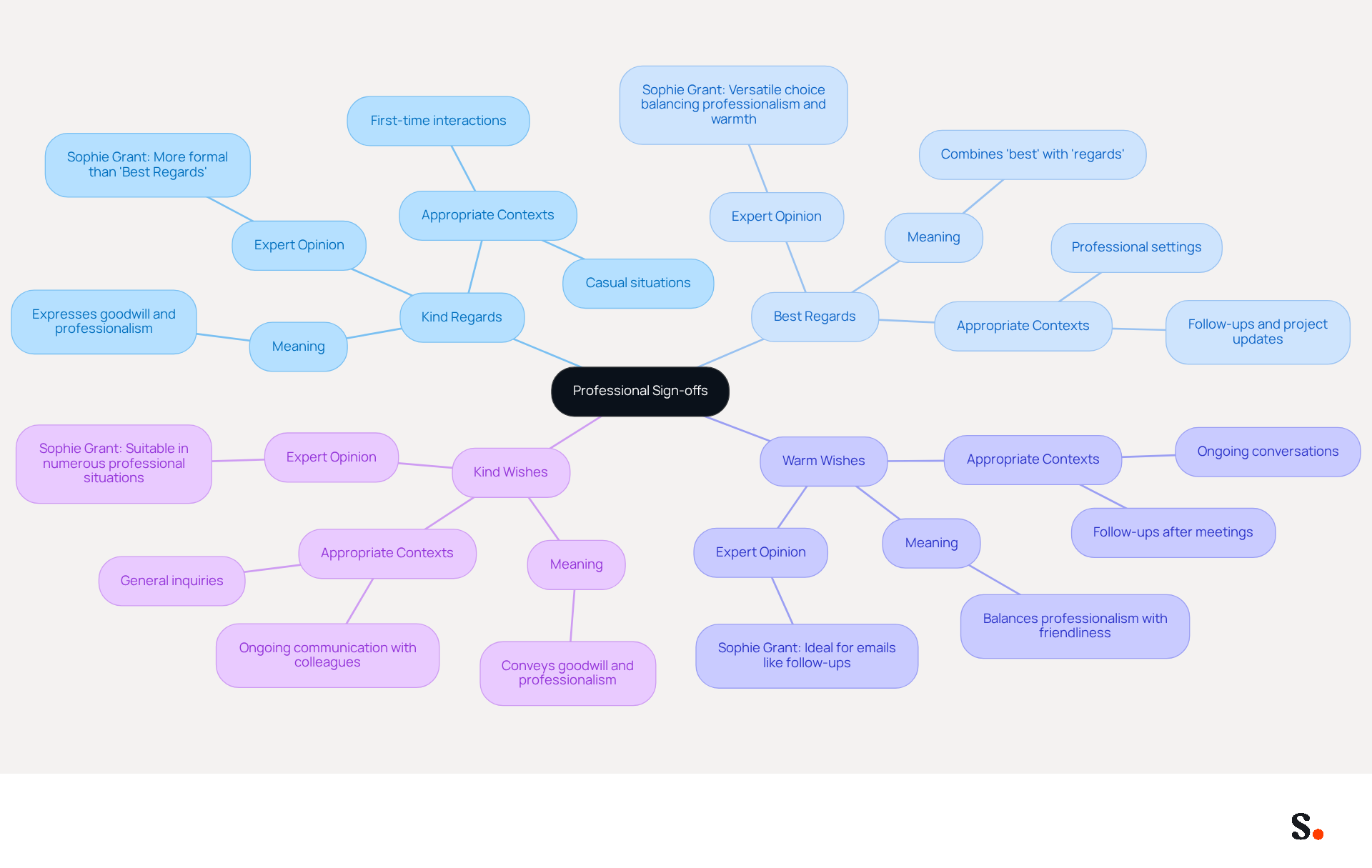
- 'Kind regards' is a brief sign-off that expresses goodwill and professionalism, frequently utilized in more casual situations. It implies a friendly tone without being overly familiar.
- In contrast, the discussion of 'best vs best regards' illustrates how 'Best Regards' combines 'best' with 'regards,' suggesting a higher level of respect and formality. This phrase is commonly used in professional settings, illustrating the distinction between best vs best regards, as it indicates that the sender holds the recipient in esteem while maintaining a professional distance.
- Recognizing these distinctions is crucial for effective communication, as the sign-off can shape how the recipient perceives both the message and the sender's professionalism.
- Research indicates that thoughtful sign-offs, such as 'Kind Wishes,' can improve engagement and response rates significantly.
- Experts like Sophie Grant point out that 'Warm Wishes' is a great choice because it balances professionalism with friendliness, making it suitable for various situations, including follow-ups and general inquiries.
- Furthermore, maintaining consistent sign-offs within the same email thread is essential to prevent confusion.
- Caution should be exercised to refrain from using 'Kind Wishes' in excessively formal situations, as this can lead to misunderstandings.
- Choosing the right sign-off can significantly enhance the effectiveness of your communication.
Evaluate Contextual Use: When to Choose 'Best' or 'Best Regards'
Choosing the right email sign-off is crucial for effective communication in professional settings.
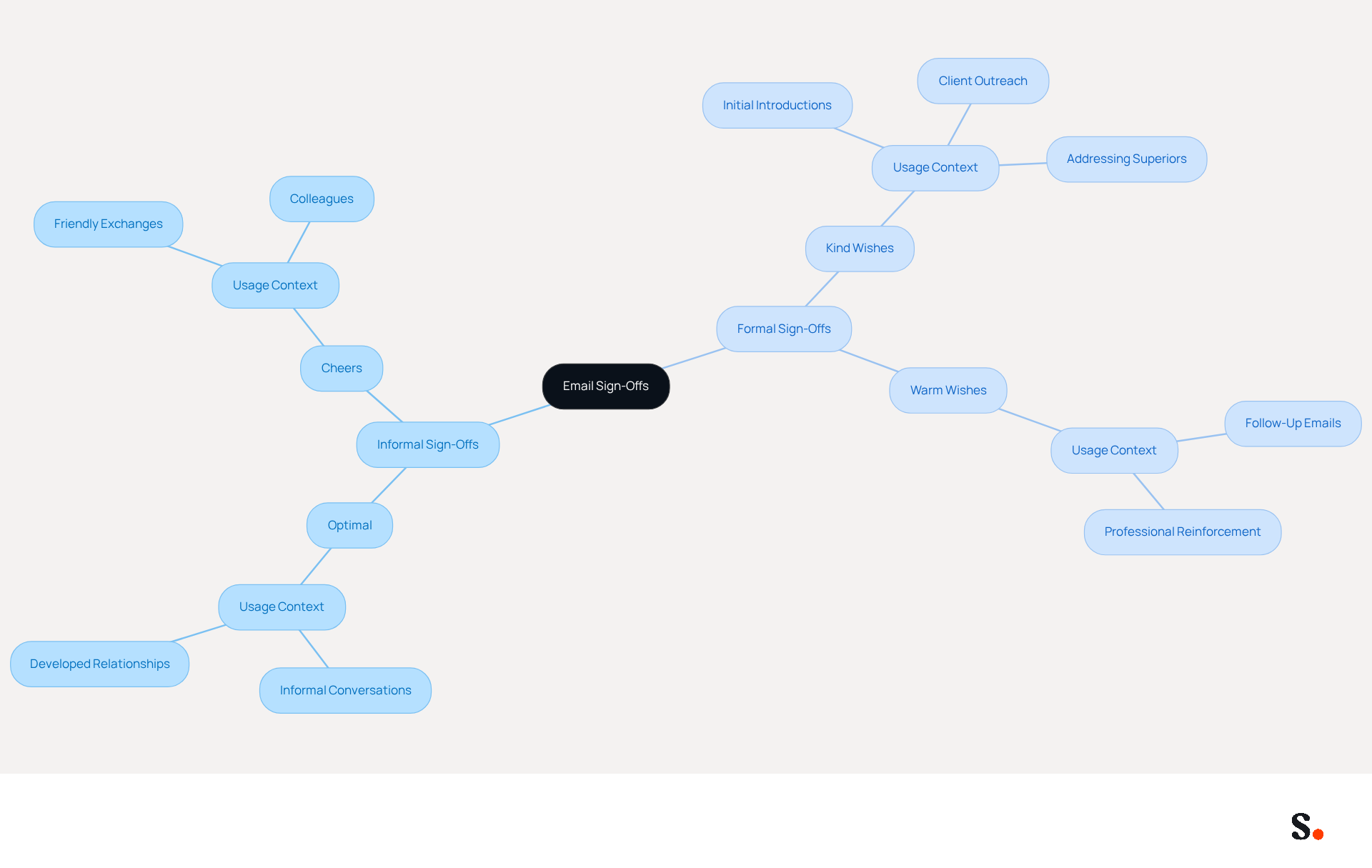
- 'Optimal' is generally appropriate for informal conversations or when interacting with colleagues or clients with whom one has a developed relationship. It conveys familiarity and approachability.
- In contrast, 'Kind Wishes' is more suitable for formal communications, such as initial introductions, client outreach, or when addressing superiors. This sign-off maintains a formal tone while still being warm.
- For example, in a follow-up email after a meeting, 'Warm Wishes' reinforces professionalism, while 'Cheers' could be used in a friendly exchange with a coworker.
By grasping these contexts, you can make sure your sign-off fits the message and the relationship you have with the recipient. Selecting an appropriate sign-off can significantly impact the perception of your professionalism and relationship with the recipient.
Analyze Impact on Professional Relationships and Communication Effectiveness
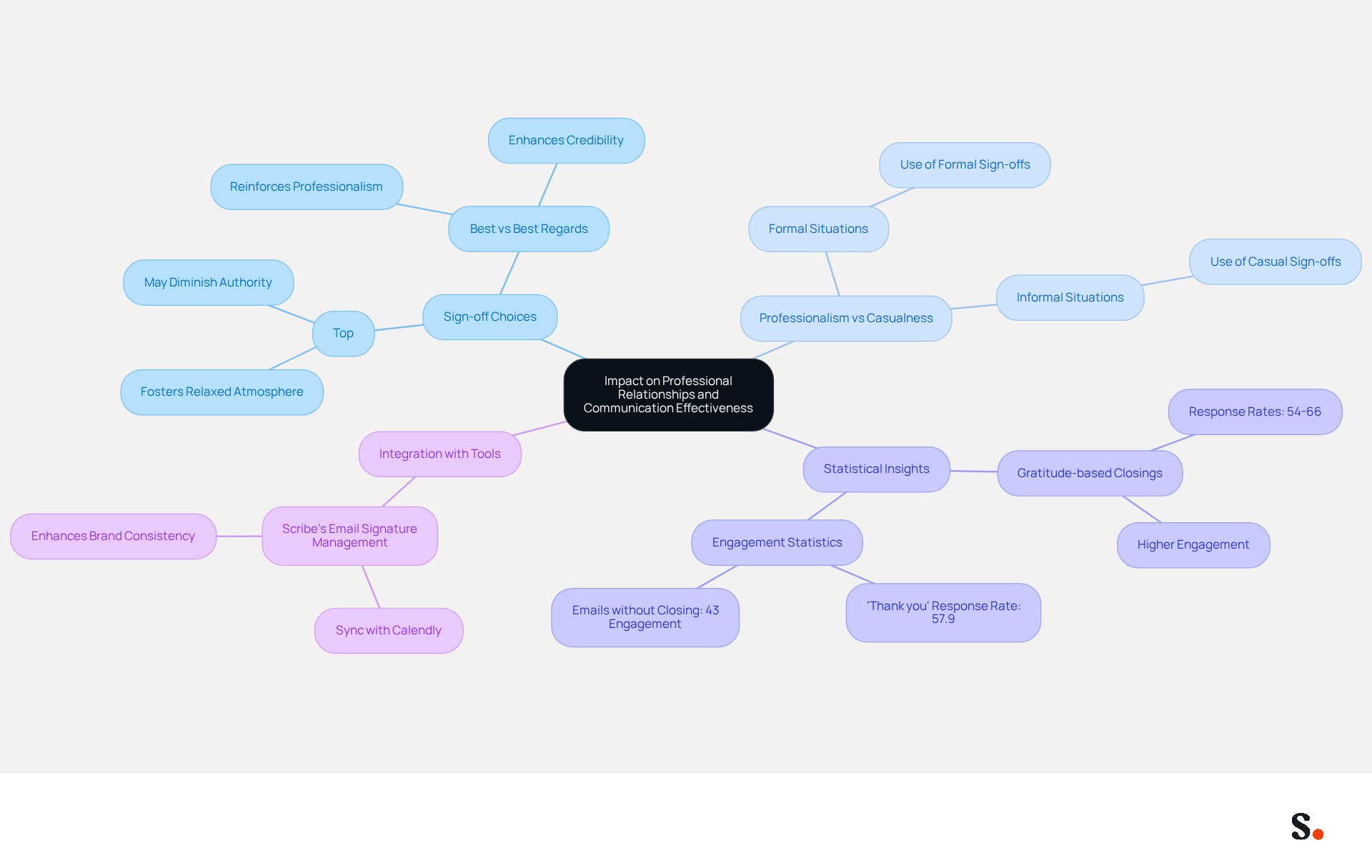
The choice between 'Top' and 'best vs best regards' significantly influences professional communication and relationship dynamics. Choosing 'Top' can foster a relaxed atmosphere that encourages open dialogue and collaboration. However, this choice may come across as too casual in some situations, which could diminish the sender's perceived authority. Conversely, the phrase 'best vs best regards' reinforces professionalism and respect, thereby bolstering the sender's credibility. In formal interactions, where establishing a professional tone is essential, the choice between best vs best regards for sign-off is particularly effective.
Studies indicate that gratitude-based closings can achieve response rates between 54% and 66%, highlighting their effectiveness. Additionally, companies utilizing well-crafted email signature sign-offs experience a 25% increase in traffic to specific landing pages, underscoring the significance of effective sign-offs. Furthermore, messages without a closing average only 43% engagement, reinforcing the necessity of proper email closings.
With Scribe's seamless integration with Calendly, all modifications made to your Calendly setup automatically sync with your Scribe signatures, ensuring brand consistency and enhancing the effectiveness of your email interactions. Case studies reveal that tailored sign-offs can improve relevance and engagement, further illustrating the impact of strategic email communication.
Common Misconceptions and Alternatives to 'Best' and 'Best Regards'
Misunderstandings about sign-offs can lead to inappropriate communication in formal settings. Many individuals incorrectly believe that 'Warmest' and 'Warmest Wishes' are interchangeable, which can result in unsuitable applications in professional contexts. Alternatives such as 'Kind Wishes,' 'Warm Wishes,' or 'Sincerely' should be considered based on the required level of formality.
'Kind Regards' is often perceived as a warmer option compared to 'Best Regards,' making it suitable for semi-formal interactions, while 'Sincerely' remains a more conventional and formal choice. Understanding these alternatives and their appropriate contexts can enhance communication effectiveness and ensure that the sender's intent is clearly conveyed.
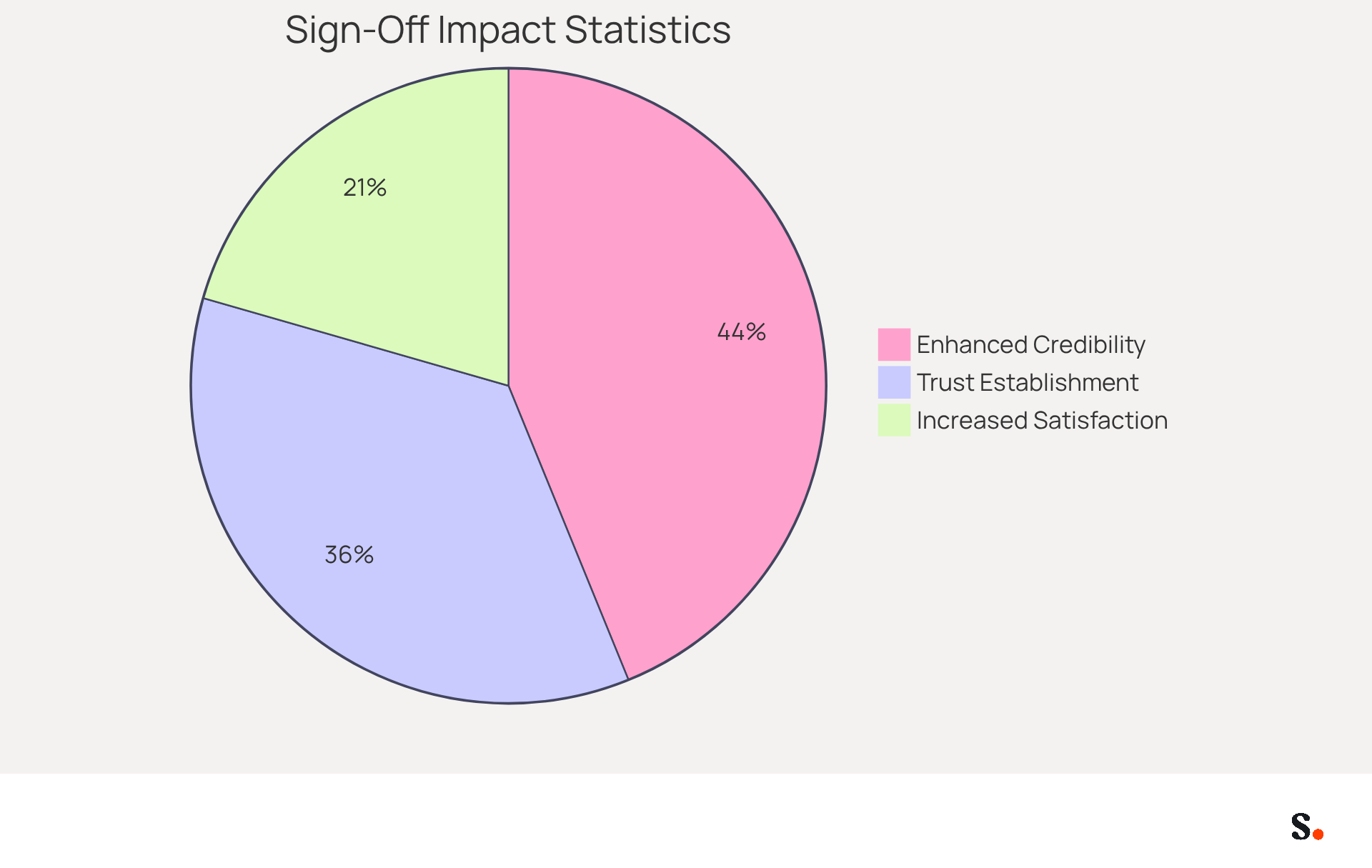
A well-chosen sign-off is crucial for establishing trust and effective interaction with clients, as 52% of individuals believe this to be true. Furthermore, 64-70% of respondents think that a branded signature enhances trust and credibility. Organizations that adopt caring sign-offs frequently report a 30% increase in satisfaction ratings, highlighting the impact of considerate interaction on professional relationships. Selecting the appropriate closing can significantly enhance trust and improve interactions with clients.
Conclusion
The choice of an email sign-off can profoundly influence the perception of professionalism in communication. The distinction between 'Best' and 'Best Regards' highlights the importance of context in professional interactions. While 'Best' conveys familiarity and approachability, 'Best Regards' elevates the tone, suggesting respect and professionalism. Understanding these nuances is crucial; without careful consideration of sign-offs, messages may be misinterpreted, leading to misunderstandings.
This discussion revealed key insights about how to choose sign-offs based on the relationship and context. Informal settings may benefit from a more casual sign-off, while formal interactions call for a respectful and professional tone. Research shows that thoughtful sign-offs can lead to higher engagement rates and improved perceptions of professionalism, highlighting their importance.
Neglecting to choose the right sign-off can result in lost opportunities for connection and professionalism. By mastering the art of sign-offs, professionals can unlock new avenues for collaboration and trust. Being mindful of the implications of 'Best' versus 'Best Regards' helps individuals foster stronger relationships and enhance interaction effectiveness. Embracing this knowledge can lead to more meaningful connections and a greater impact in the professional realm.
Frequently Asked Questions
What is the significance of choosing the right sign-off in professional communication?
The choice of sign-off can significantly affect the recipient's perception and the overall effectiveness of the message.
What does 'Kind regards' imply in professional communication?
'Kind regards' is a brief sign-off that expresses goodwill and professionalism, often used in more casual situations, implying a friendly tone without being overly familiar.
How does 'Best Regards' differ from 'Best'?
'Best Regards' combines 'best' with 'regards,' suggesting a higher level of respect and formality, indicating that the sender holds the recipient in esteem while maintaining a professional distance.
Why is it important to recognize the distinctions between different sign-offs?
Recognizing these distinctions is crucial for effective communication, as the sign-off can shape how the recipient perceives both the message and the sender's professionalism.
What impact do thoughtful sign-offs have on engagement and response rates?
Research indicates that thoughtful sign-offs, such as 'Kind Wishes,' can significantly improve engagement and response rates.
What is a recommended sign-off that balances professionalism and friendliness?
Experts suggest 'Warm Wishes' as a great choice because it balances professionalism with friendliness, making it suitable for various situations, including follow-ups and general inquiries.
Why is it important to maintain consistent sign-offs within the same email thread?
Maintaining consistent sign-offs within the same email thread is essential to prevent confusion.
When should caution be exercised regarding the use of 'Kind Wishes'?
Caution should be exercised to refrain from using 'Kind Wishes' in excessively formal situations, as this can lead to misunderstandings.
How can choosing the right sign-off enhance communication effectiveness?
Choosing the right sign-off can significantly enhance the effectiveness of your communication by positively influencing the recipient's perception.
List of Sources
- Define 'Best' and 'Best Regards' in Professional Communication
- Warm Regards vs Best Regards: Choosing the Right Email Sign-Off (https://oppora.ai/blog/warm-regards-vs-best-regards)
- Best regards, Kind regards, Best wishes, Yours sincerely - which to use and when | Email Signature Rescue Blog (https://emailsignaturerescue.com/blog/best-regards-kind-regards-best-wishes-yours-sincerely-which-to-use-and-when)
- What Does Best Regards Mean? (https://signature.email/blog/what-does-best-regards-mean)
- Define Best Regards: Master Email Sign-Offs for Success (https://scribe-mail.com/en-US/blog/define-best-regards-master-email-sign-offs-for-success)
- Evaluate Contextual Use: When to Choose 'Best' or 'Best Regards'
- Email signature statistics: Why every business should optimize their email signatures — Stripo.email (https://stripo.email/blog/email-signature-statistics-why-every-business-should-optimize-their-email-signatures)
- Different Sign-offs & When You Should Use Them | Heinz Marketing (https://heinzmarketing.com/blog/different-sign-offs-when-you-should-use-them)
- Email Sign Offs Professional: Best Practices for Business Emails (https://mailwarm.com/blog/professional-email-sign-offs-best-practices)
- 40+ Email Signature Statistics for 2026 (Data + Insights) (https://wavecnct.com/blogs/email-signature-statistics)
- Best Regards or Kind Regards: Choosing the Right Email Closing (https://scribe-mail.com/en-US/blog/best-regards-or-kind-regards-choosing-the-right-email-closing)
- Analyze Impact on Professional Relationships and Communication Effectiveness
- Master Email Signature Sign Offs: Best Practices for Brand Impact (https://scribe-mail.com/en-US/blog/master-email-signature-sign-offs-best-practices-for-brand-impact)
- Is 'Best' a Good Way to End an Email? Compare Sign-Offs Here (https://scribe-mail.com/en-US/blog/is-best-a-good-way-to-end-an-email-compare-sign-offs-here)
- Best Email Sign-Offs for Any Correspondence (https://wisestamp.com/examples/email-sign-offs)
- 12 Email Sign-Offs That Get Responses [2026 Data] (https://lagrowthmachine.com/email-sign-offs-get-responses)
- Common Misconceptions and Alternatives to 'Best' and 'Best Regards'
- Best Regards Alternative & Kind Regards: Email Sign-Offs - NEWOLDSTAMP (https://newoldstamp.com/blog/best-regards-alternatives)
- 110 Best Ways to Sign Off an Email Correctly - Warmup Inbox (https://warmupinbox.com/blog/email-marketing/email-sign-offs)
- 105 Alternatives to “Best Regards” for Your Email Sign-Off (https://wisestamp.com/blog/best-regard-alternatives)
- 10 Other Ways to Say Best Regards for Professional Emails (https://scribe-mail.com/en-US/blog/10-other-ways-to-say-best-regards-for-professional-emails)
Get started with Scribe
Build a professional email signature
Free 14-day trial — no credit card.