4 Best Practices for Using an Email Signature Editor Effectively
Many organizations find it challenging to maintain a cohesive brand image across various communication channels, yet email signatures remain a powerful, often
Sophie Grant
Email Signature Specialist, Scribe

On this page
- Introduction
- Establish Brand Consistency Through Unified Email Signatures
- Create On-Brand Signature Templates for Professionalism
- Integrate Email Signature Management with Existing Tools for Efficiency
- Leverage Email Signatures as Marketing Tools to Enhance Engagement
- Conclusion
- Frequently Asked Questions
- List of Sources
Introduction
Many organizations find it challenging to maintain a cohesive brand image across various communication channels, yet email signatures remain a powerful, often overlooked tool for reinforcing brand identity and professionalism. Let’s delve into four best practices that can help you effectively utilize an email signature editor, revealing how organizations can achieve brand consistency, enhance engagement, and leverage their signatures as strategic marketing assets.
What challenges do businesses face in maintaining this consistency? By addressing these challenges, businesses can transform their email signatures into a cohesive part of their branding strategy, ultimately enhancing trust and engagement with their audience.
Establish Brand Consistency Through Unified Email Signatures
To achieve brand consistency through unified email signatures, organizations must adopt strategic best practices:
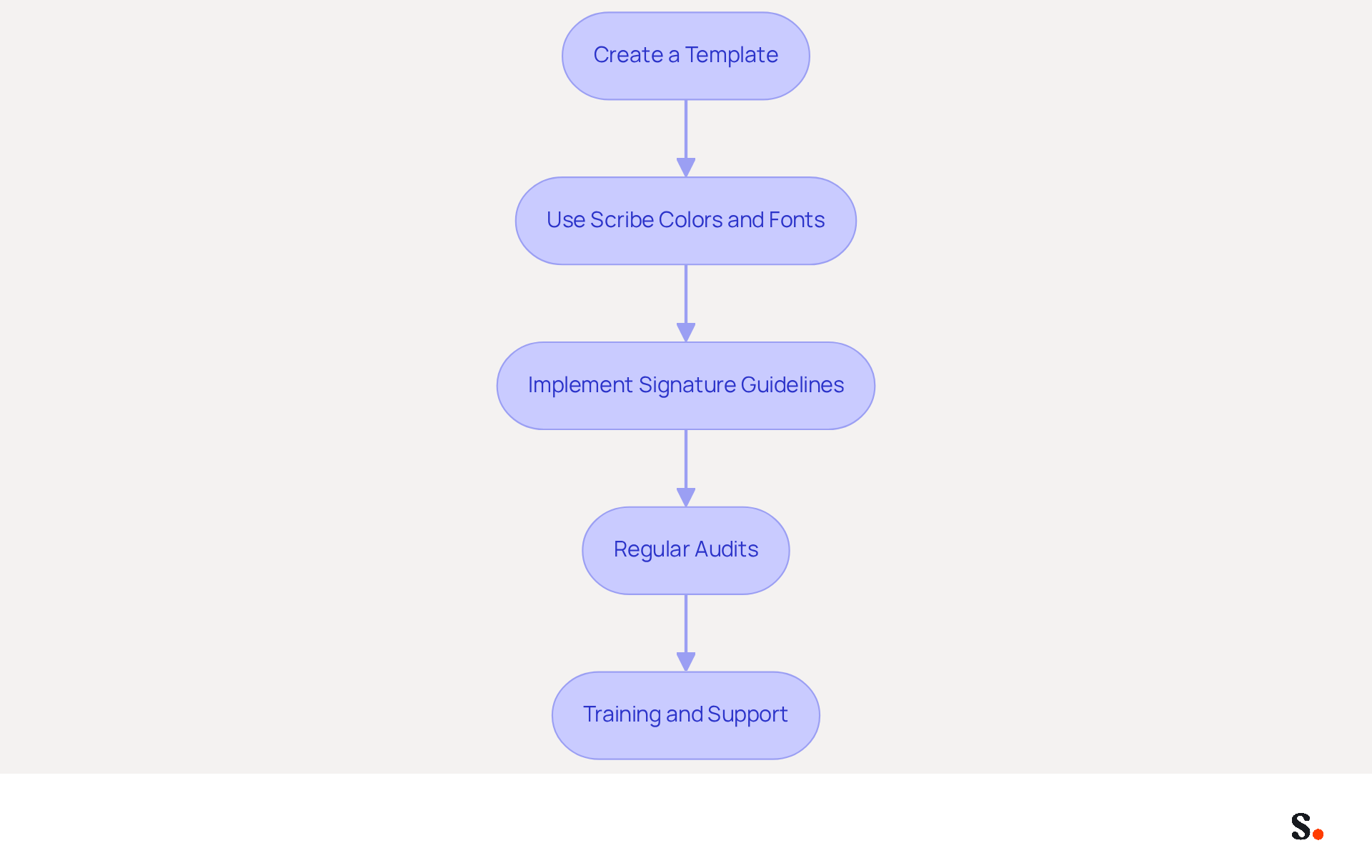
- Create a Template: Develop a standardized template that includes essential elements such as the company logo, employee name, job title, and contact information. This ensures that every email sent from the organization looks professional, which is crucial since 80% of businesses view branded email formats as essential for their branding.
- Use Scribe Colors and Fonts: Incorporate Scribe’s colors and fonts into the signature design. This not only reinforces brand identity but also enhances visual appeal. Ensure that the colors are web-safe and accessible across various devices, as consistent branding can lead to a 22% increase in response rates.
- Implement Signature Guidelines: Create a set of rules for employees to follow when configuring their electronic identifiers. This can include specifications on font size, image dimensions, and the inclusion of legal disclaimers. Providing clear instructions aids in maintaining consistency and adherence, particularly as regulations regarding disclaimers are tightening across various states.
- Regular Audits: Perform routine evaluations of digital identifiers throughout the organization to ensure adherence to branding guidelines. This practice aids in recognizing discrepancies and permits timely updates, which is crucial since spelling errors can lead to lost trust and disengagement from consumers.
- Training and Support: Offer training sessions for employees on the significance of maintaining consistency in branding and how to correctly implement their digital identifiers. Offering support can reduce errors and highlight the importance of a cohesive brand image, ultimately enhancing trust and engagement with recipients. It's noteworthy that 57% of consumers trust messages from businesses that use branded communication formats, emphasizing the significance of this practice.
Furthermore, organizations can utilize Scribe's efficient one-click synchronization with Google Workspace to automate management of email identifiers through the email signature editor. This feature allows for automatic updates of teammate information, ensuring that any changes in the Google Workspace directory are reflected in Scribe without manual input. Scribe's adherence to SOC 2 Type II ensures the protection of your data, making it a trustworthy option for maintaining brand consistency across digital identifiers. Ultimately, neglecting these practices can undermine brand integrity and consumer trust.
Create On-Brand Signature Templates for Professionalism
To convey professionalism through email signatures, it is crucial to adhere to best practices that enhance clarity and effectiveness:
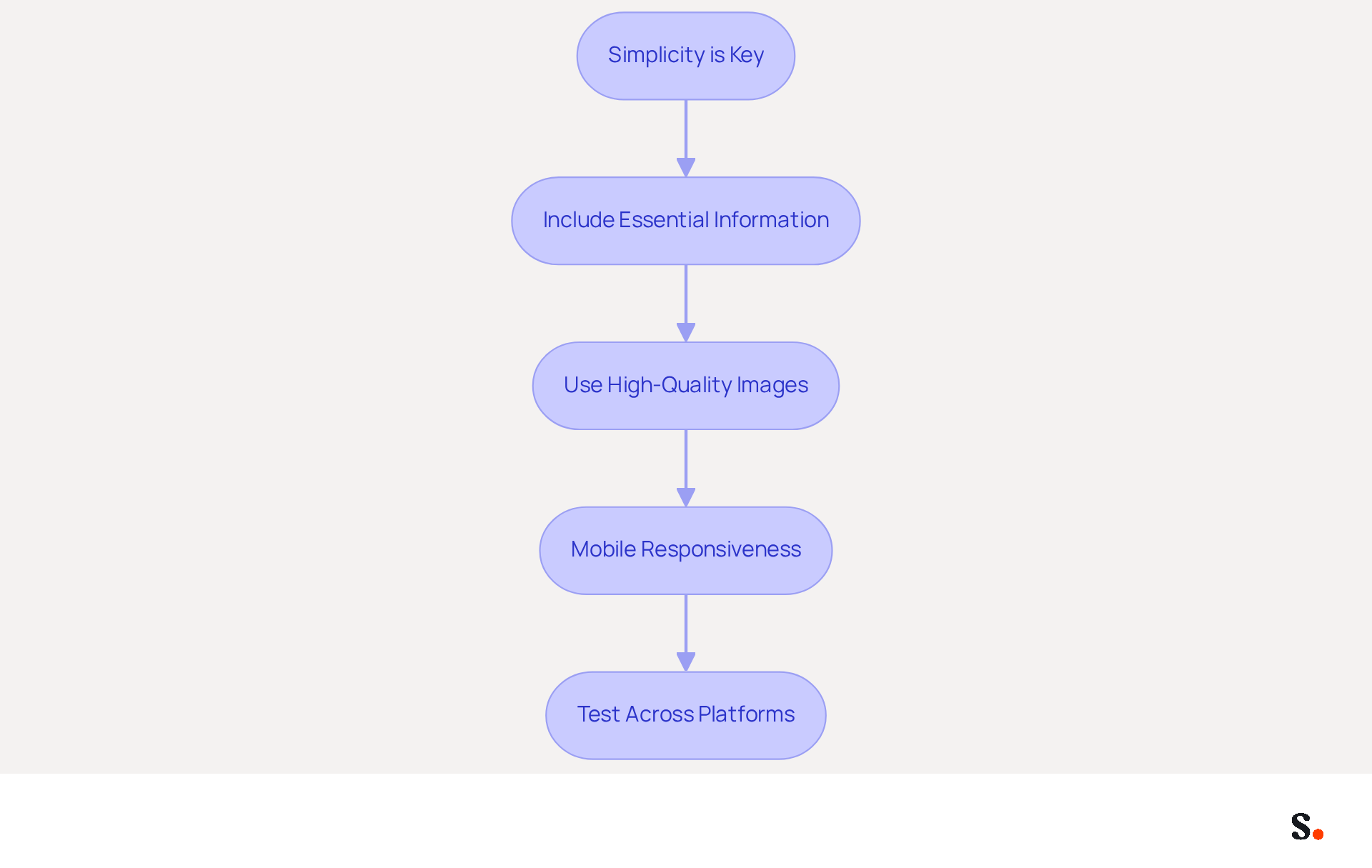
- Simplicity is Key: A clean and uncluttered design is essential. Avoid excessive graphics or text that can distract from the main message. A straightforward layout with clear information is more effective; 80% of businesses view branded digital identifiers as essential for professionalism.
- Include Essential Information: Ensure that the sign-off contains all necessary contact details, such as phone numbers, addresses, and links to social media profiles. This makes it easier for recipients to connect with you. Consistent branding can result in a 22% boost in email response levels, highlighting the significance of clear communication.
- Use High-Quality Images: If incorporating logos or images, ensure they are high-resolution and properly sized. Using low-quality images can undermine the perceived professionalism of your brand. Including a professional headshot can increase response rates by 32%, making image quality crucial.
- Mobile Responsiveness: Create designs that are mobile-friendly. With numerous recipients accessing messages on mobile devices, it’s essential that the sign-off appears correctly across different screen sizes. The email signature editor should ensure that email footers are a maximum of 600 pixels wide and under 100KB in total size to guarantee proper display and fast loading.
- Test Across Platforms: Before finalizing the template, test it across different messaging clients (e.g., Outlook, Gmail) to ensure compatibility and proper display. Failing to test across platforms can lead to miscommunication and a lack of professionalism. Regular audits can assist in identifying and rectifying potential flaws, ensuring that approvals remain effective and current.
Syncing your Google Workspace with Scribe not only saves time but also ensures that any updates to your teammates' information are automatically reflected in their profiles. This automated synchronization improves brand consistency and guarantees adherence to security standards, as Scribe is SOC 2 Type II compliant, protecting your data while streamlining management of digital signatures.
Integrate Email Signature Management with Existing Tools for Efficiency
To effectively integrate email signature management with existing tools, organizations must adopt strategic best practices:
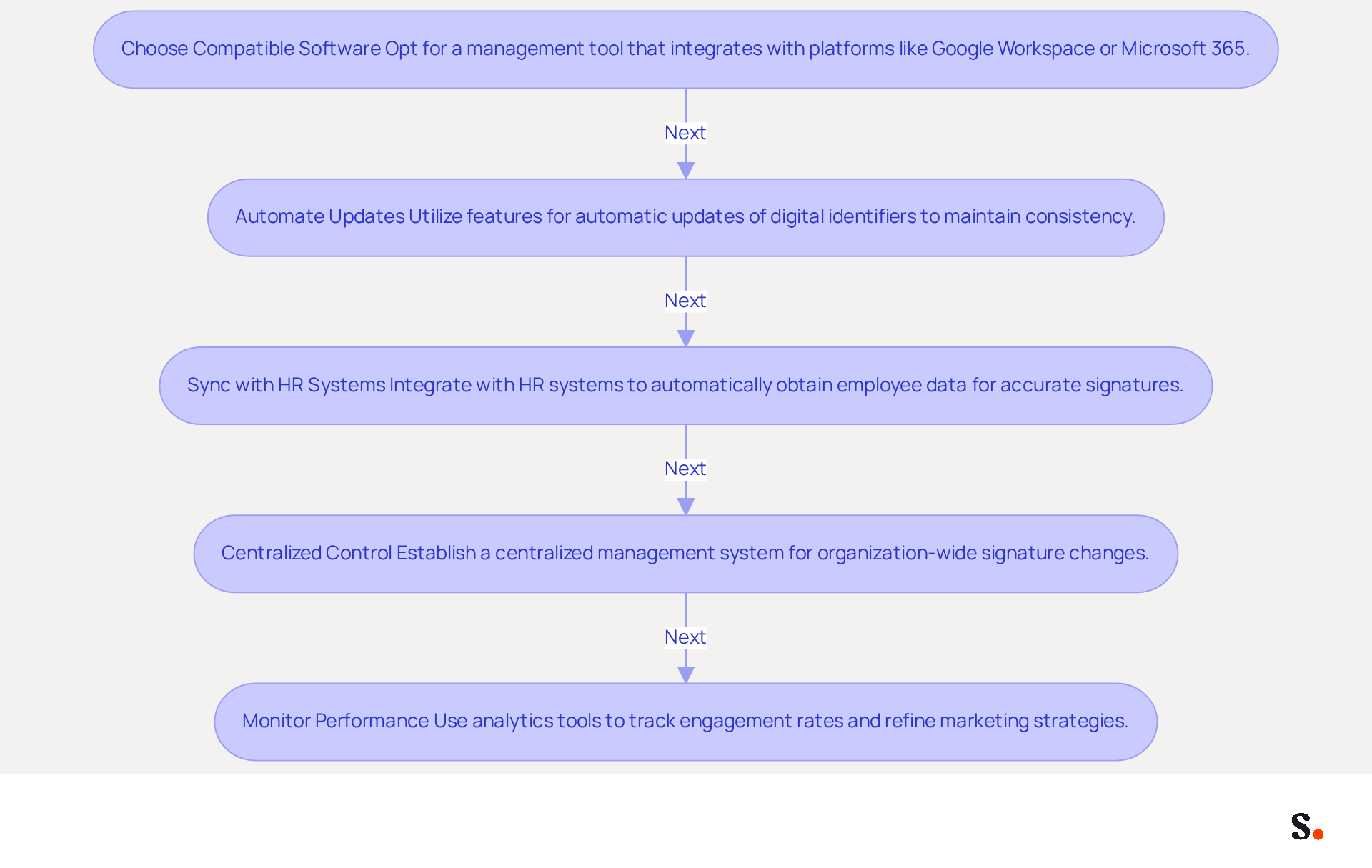
- Choose compatible software: Opt for a management tool that seamlessly integrates with your current communication platforms, such as Google Workspace or Microsoft 365, and includes an email signature editor. This compatibility ensures that identifiers can be updated automatically, removing the need for manual intervention.
- Automate Updates: Utilize features that enable automatic updates of digital identifiers throughout the organization. This practice minimizes the risk of disseminating outdated information, which can lead to confusion and damage brand reputation, while maintaining consistency in branding. Organizations that use consistent branded communication identifiers see a 22% increase in response rates, highlighting the importance of this practice.
- Sync with HR Systems: Integrate the email signature editor with HR and identity management systems to automatically obtain employee data. This integration ensures that endorsements reflect the most current information, enhancing professionalism and compliance. Automated communication footers also assist IT teams in adhering to evolving data privacy regulations, including GDPR and CCPA, minimizing the risk of mistakes. This leads to improved trust and credibility with clients.
- Centralized Control: Establish an email signature editor as a centralized management system for handling digital identifiers. This allows administrators to implement changes organization-wide, ensuring adherence to branding guidelines and reducing the likelihood of inconsistencies. Significantly, 42% of consumers have a negative perception of a business when receiving a message lacking a branded identifier, making this control crucial.
- Monitor Performance: Utilize analytics tools to track the performance of signatures. Monitoring engagement rates, including click-through rates and conversion rates, provides valuable insights that can inform and refine future marketing strategies, ultimately enhancing the effectiveness of communications. Tracking these metrics is known to enhance customer engagement and loyalty.
You might also want to think about how Scribe's Affiliate Program could fit into your marketing strategy. By promoting consistency across digital identifiers, you can earn a 50% commission on subscriptions while offering a $30 credit to new users. This not only incentivizes potential customers but also aligns with your goal of maintaining a cohesive brand image while ensuring compliance with industry standards. By implementing these strategies, organizations can not only enhance their brand image but also foster stronger relationships with their clients.
Leverage Email Signatures as Marketing Tools to Enhance Engagement
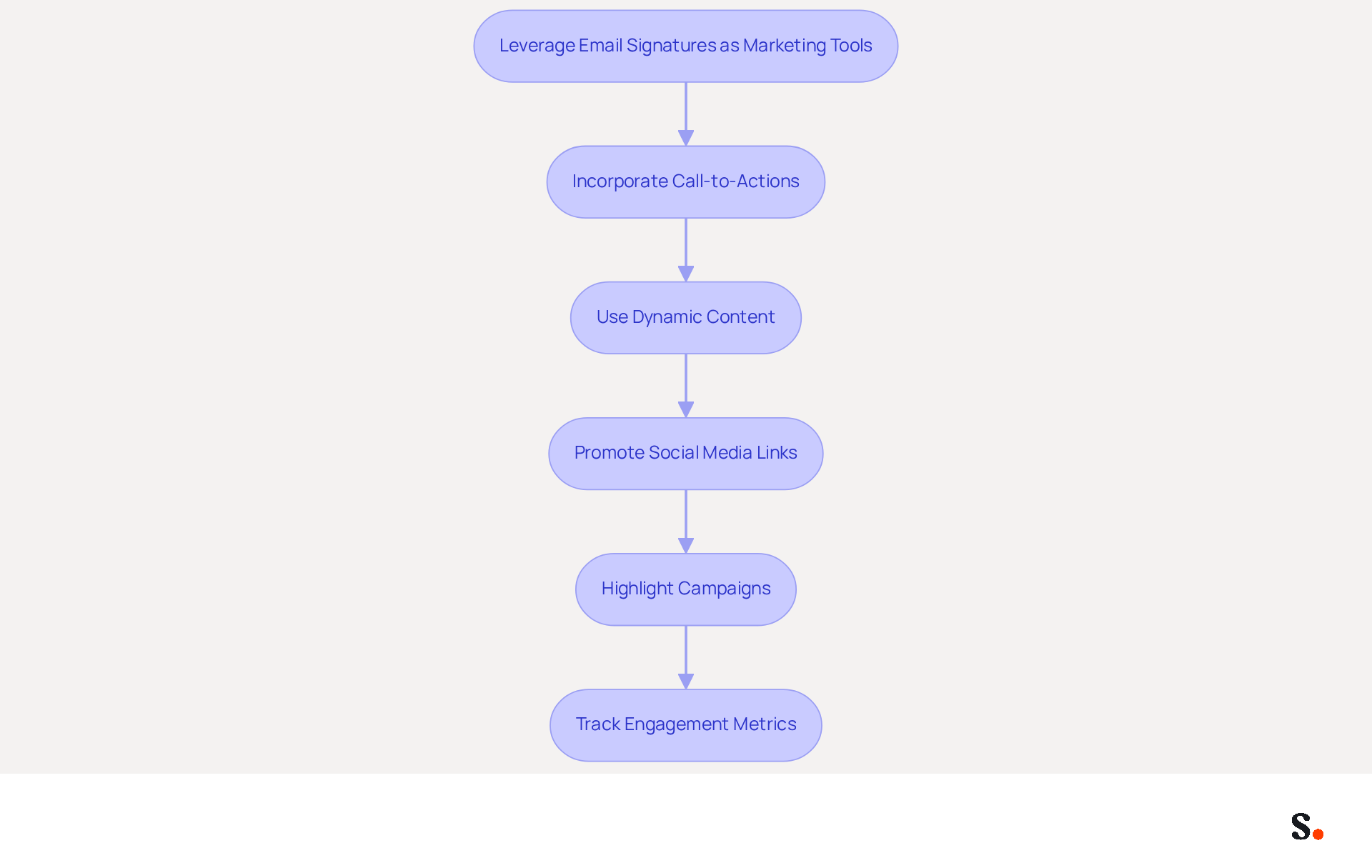
To maximize the marketing potential of email signatures, businesses must adopt strategic best practices:
- Incorporate Call-to-Actions (CTAs): Embed clear and compelling CTAs in your communication footers, directing recipients to promotional offers, upcoming events, or new product launches. This strategy encourages recipients to act, boosting engagement and conversion rates. Scribe's integration with Aircall ensures your contact details are always up-to-date, keeping your CTAs relevant.
- Use Dynamic Content: Implement dynamic content that adapts based on the recipient or context. Customizing sign-offs with the recipient's name or organization can create a more engaging experience, fostering a connection that increases the likelihood of interaction. Overloading your signature with information can dilute your message; as Irena notes, 'Including too much information in your contact details is always a mistake.'
- Promote Social Media Links: Include links to your social media profiles within signatures. This not only encourages recipients to connect with Scribe across various platforms but also helps increase followers and engagement, broadening your marketing reach. Considering that electronic mail remains the leading channel of communication for over 86% of professionals, this strategy can significantly enhance your brand's visibility.
- Highlight Campaigns: Use personalized sign-offs to promote ongoing marketing campaigns or initiatives. Incorporating visually appealing banners or graphics can draw attention to specific messages, effectively communicating your marketing goals. With 91% of 2.6 billion users checking their inbox daily, the potential reach of your campaigns is substantial. Scribe's SOC 2 Type II compliance guarantees that your communication management is secure, providing you peace of mind while promoting your campaigns.
- Track Engagement Metrics: Utilize tracking tools to assess the effectiveness of your marketing efforts related to your correspondence footer. Examining metrics such as click-through statistics offers valuable insights into which strategies are effective and where enhancements can be made, ensuring ongoing optimization of your marketing approach. Scribe boasts an average click-through percentage of 12% on branded banners, showcasing the effectiveness of well-executed digital identifiers.
If businesses embrace these practices, they can utilize an email signature editor to turn their email signatures into powerful marketing tools, capitalizing on the high engagement rates associated with email communications. In the end, refining your email signature could be the key to unlocking greater marketing success.
Conclusion
Effective email signatures are not just a formality; they are crucial for establishing brand consistency and enhancing professional image. By implementing best practices like standardized templates and Scribe's colors and fonts, businesses can create cohesive digital identifiers. This builds consumer trust and can lead to higher engagement rates, as evidenced by recent studies.
Key insights from the article highlight the importance of:
- Simplicity in design
- Necessity of including essential information
- Benefits of integrating email signature management with existing tools like Google Workspace and Microsoft 365
Additionally, leveraging email signatures as marketing tools through compelling CTAs and dynamic content can transform these digital identifiers into powerful assets for driving engagement and conversions. Organizations can feel secure in managing their email signatures, knowing that Scribe adheres to SOC 2 Type II compliance standards.
By prioritizing email signature management, organizations can transform a simple digital tool into a strategic asset that fosters lasting client relationships.
Frequently Asked Questions
What is the purpose of establishing brand consistency through unified email signatures?
The purpose is to ensure that every email sent from the organization looks professional and reinforces brand identity, which is crucial for maintaining consumer trust and engagement.
What are the essential elements to include in a standardized email signature template?
Essential elements include the company logo, employee name, job title, and contact information.
How can Scribe's colors and fonts enhance email signatures?
Incorporating Scribe’s colors and fonts into the signature design reinforces brand identity and enhances visual appeal, which can lead to a 22% increase in response rates.
What guidelines should organizations implement for email signatures?
Organizations should create rules regarding font size, image dimensions, and the inclusion of legal disclaimers to maintain consistency and adherence to branding guidelines.
Why are regular audits of digital identifiers important?
Regular audits help ensure adherence to branding guidelines, recognize discrepancies, and allow for timely updates, which is crucial to maintaining consumer trust.
What training and support should organizations provide to employees regarding email signatures?
Organizations should offer training sessions on the importance of brand consistency and how to implement digital identifiers correctly, which can reduce errors and enhance trust with recipients.
How does Scribe facilitate the management of email identifiers?
Scribe offers one-click synchronization with Google Workspace, allowing for automatic updates of teammate information in email signatures without manual input.
What security measures does Scribe adhere to for protecting data?
Scribe adheres to SOC 2 Type II standards, ensuring the protection of user data while maintaining brand consistency across digital identifiers.
List of Sources
- Establish Brand Consistency Through Unified Email Signatures
- Email Signature Branding: Consistency and Impact | Crossware365 (https://crossware365.com/blog/mastering-email-signature-branding-market-presence)
- Research Recap: Branded Email Signatures Increase Company Recognition, Trust - Demand Gen Report (https://demandgenreport.com/industry-news/research-recap-branded-email-signatures-increase-company-recognition-trust/47252)
- Why Email Signatures Must Be In Your 2026 Marketing Plan | Rocketseed (https://rocketseed.com/blog/what-are-the-biggest-email-trends-for-2026)
- Why is email signature marketing important? | Rocketseed (https://rocketseed.com/blog/why-is-email-signature-marketing-important-for-companies)
- The impact of email signatures on your branding (https://signitic.com/en/resources/the-impact-of-email-signatures-on-your-branding)
- Create On-Brand Signature Templates for Professionalism
- The impact of email signatures on your branding (https://signitic.com/en/resources/the-impact-of-email-signatures-on-your-branding)
- Email Signature Best Practices for 2026 (+ 15 Pro Examples) (https://wavecnct.com/blogs/email-signature-best-practices-2026)
- Email signature statistics: Why every business should optimize their email signatures — Stripo.email (https://stripo.email/blog/email-signature-statistics-why-every-business-should-optimize-their-email-signatures)
- Email Signature Best Practices - NEWOLDSTAMP (https://newoldstamp.com/blog/email-signature-best-practices)
- 20 best email signature design examples for 2026 — Stripo.email (https://stripo.email/blog/10-best-email-signature-design-examples)
- Integrate Email Signature Management with Existing Tools for Efficiency
- 40+ Email Signature Statistics for 2026 (Data + Insights) (https://wavecnct.com/blogs/email-signature-statistics)
- Automating Email Signatures: How IT Teams Streamline Processes & Reduce Risk (https://exclaimer.com/blog/streamlining-it-processes-automated-email-signatures)
- 5 Effective Ways To Manage Email Signatures For Large Firms (https://paayatech.com/blog/5-effective-ways-to-manage-email-signatures)
- Email signature statistics: Why every business should optimize their email signatures — Stripo.email (https://stripo.email/blog/email-signature-statistics-why-every-business-should-optimize-their-email-signatures)
- Leverage Email Signatures as Marketing Tools to Enhance Engagement
- Create Effective CTA Email Signatures (Examples & Templates) (https://wisestamp.com/examples/cta-email-signature)
- Why and how to add an effective CTA to your email signature? (https://signitic.com/en/resources/why-and-how-to-add-an-effective-cta-to-your-email-signature)
- Why Email Signatures Must Be In Your 2026 Marketing Plan | Rocketseed (https://rocketseed.com/blog/what-are-the-biggest-email-trends-for-2026)
- Email signature marketing: Triple your conversions with signature marketing (https://mailbutler.io/blog/email/signature-marketing)
- What Email Signatures Really Mean for Your Marketing Strategy (https://scribe-mail.com/en-US/blog/what-email-signatures-really-mean-for-your-marketing-strategy)
Get started with Scribe
Manage signatures across your whole team
Free 14-day trial — no credit card.