Comparing V/R Military Training and Traditional Methods: Pros and Cons
As military training evolves, the rise of virtual reality (V/R) technology presents both opportunities and challenges that could redefine traditional methods
Sophie Grant
Email Signature Specialist, Scribe
Introduction
As military training evolves, the rise of virtual reality (V/R) technology presents both opportunities and challenges that could redefine traditional methods. This innovative approach not only enhances safety and cost-effectiveness but also significantly improves soldier preparedness through immersive simulations. Yet, embracing V/R training comes with its own set of challenges that need careful consideration, raising critical questions about its effectiveness compared to conventional techniques. Understanding these differences is crucial for shaping future military training strategies.
Define V/R Military Training and Traditional Methods
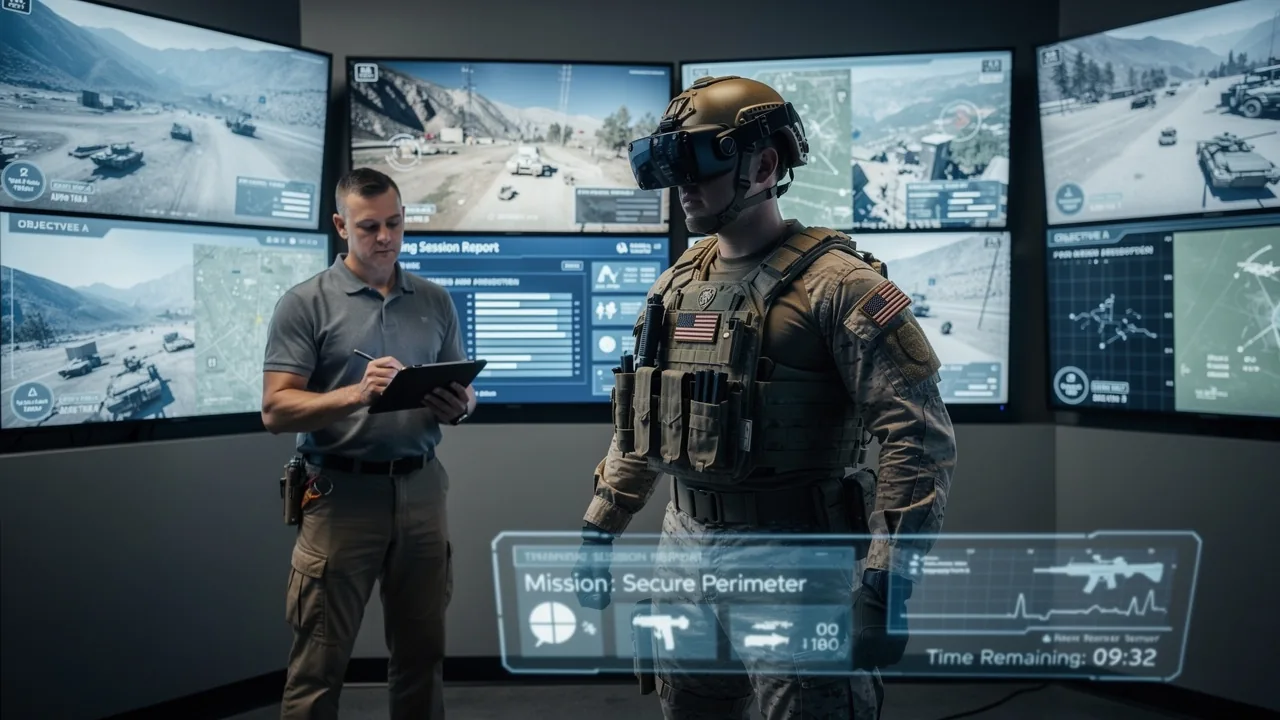
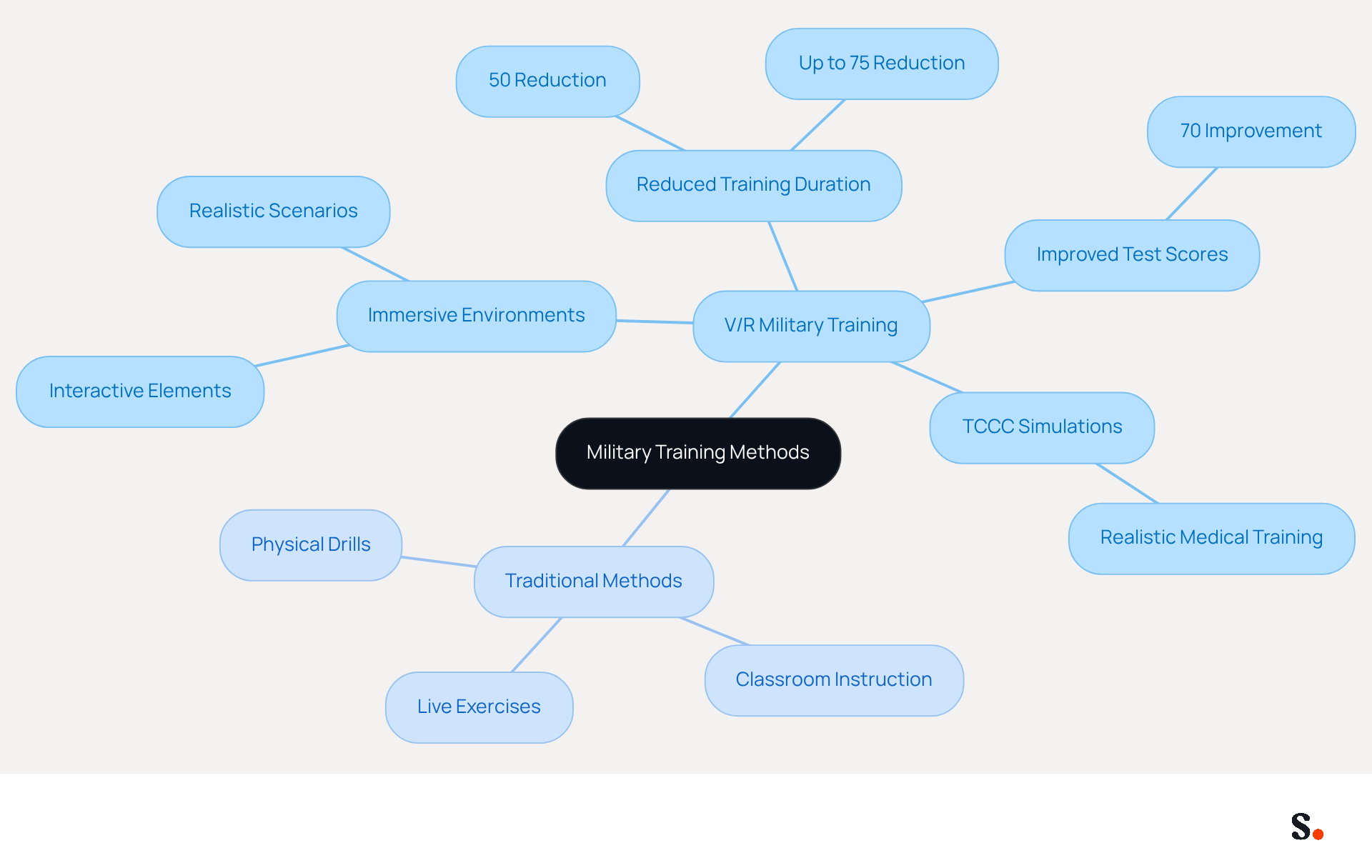
V/R military training is revolutionizing how soldiers prepare for combat by creating immersive environments that replicate real-world scenarios. This innovative approach uses advanced graphics and interactive elements to create realistic learning experiences, which greatly lower the risks tied to live exercises. In contrast, traditional military training depends on conventional methods like physical drills, classroom instruction, and live exercises, which have dominated for decades. These traditional methods often require extensive resources and personnel, making them less efficient.
Studies show that V/R military preparation can reduce training duration by 50%, with some reports indicating reductions of up to 75%, and improve test scores by 70%. Furthermore, V/R military exercises support realistic Tactical Combat Casualty Care (TCCC) simulations, enhancing their relevance in defense contexts. This shift emphasizes the growing recognition of V/R as a viable alternative to conventional instruction methods, as noted by David Dworak, who remarked, "What can be done in a virtual setting that truly replicates the environment that you’re going to be working in and what requires personal interaction?"
This evolution in training methods not only enhances soldier preparedness but also signifies a pivotal shift in military training paradigms.
Explore Advantages of V/R Military Training
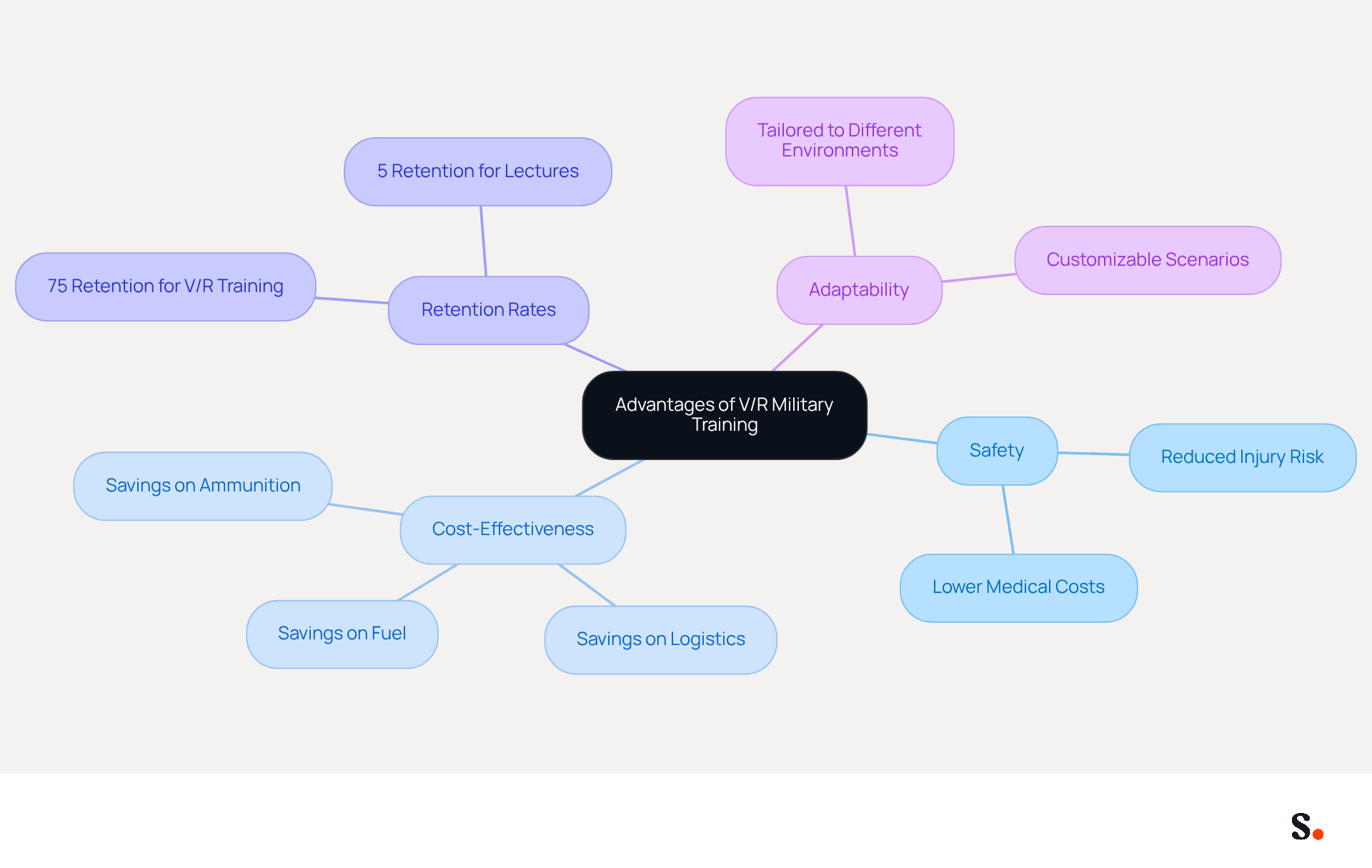
Traditional military training methods expose soldiers to physical dangers and incur high costs, making v/r military preparation a compelling alternative. Primarily, it enhances safety by enabling soldiers to participate in high-risk scenarios without the physical dangers associated with live exercises. The chances of serious injury during a VR simulation are nearly zero, which significantly lowers medical costs and creates a safer learning environment. Additionally, V/R instruction is cost-effective; it reduces expenses related to ammunition, fuel, and logistics, as simulations can be repeated without incurring extra costs. For example, simulation-based exercises in defense eliminate the need for physical objects, vehicles, or components, making it a more economical option.
V/R methods effectively depict complex military scenarios and enhance recall accuracy by 8.8% compared to traditional training methods. Moreover, retention rates in educational environments reach 75% for V/R experiences compared to only 5% for lectures. V/R exercises allow for customizable scenarios tailored to specific mission requirements, providing a more relevant and immersive experience. This adaptability is crucial for preparing soldiers for diverse environments, including urban warfare and arctic conditions.
Case studies demonstrate the effectiveness of V/R methods; for instance, Boeing achieved a 75% reduction in equipment preparation time through V/R, while Walmart reported a 70% improvement in test scores among employees educated using V/R techniques. These results highlight the potential of v/r military methods to enhance operational readiness and effectiveness in defense contexts. As military forces worldwide embrace v/r military technology, they are not just enhancing training but also redefining the future of combat readiness.
Assess Limitations of V/R Military Training
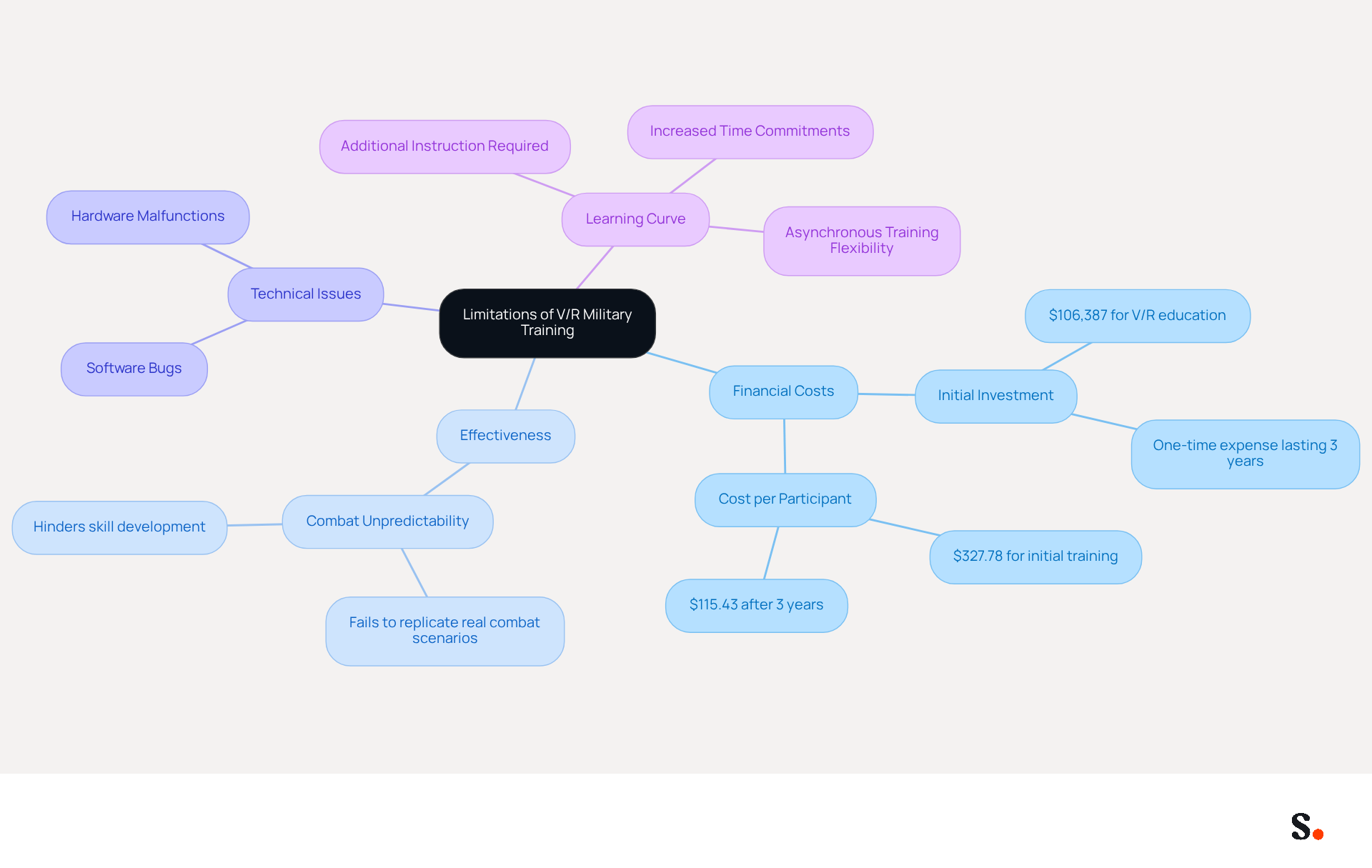
While V/R combat preparation offers innovative training solutions, it also presents significant challenges that must be addressed. The substantial initial investment required for V/R military technology poses a significant barrier to adoption among military organizations. For instance, the initial costs for VR education can reach $106,387, which is a one-time expense lasting for three years with minimal additional costs. While long-term savings may offset this initial cost, many units find it challenging to justify the upfront investment.
Additionally, V/R exercises often fail to replicate the unpredictability and physicality of real combat. This gap in experiential learning can hinder the development of critical skills needed in high-pressure environments. Technical issues, such as software bugs or hardware malfunctions, can further disrupt sessions, diminishing their overall effectiveness.
There is also a notable learning curve associated with V/R technology. Instructors and trainees may require additional instruction to effectively utilize these systems, which can increase the overall costs and time commitments involved in implementing V/R education. Nonetheless, the asynchronous nature of V/R exercises offers flexibility that may help address some learning curve challenges. As armed forces continue to investigate the incorporation of V/R military into their development regimens, overcoming these challenges will be crucial for military organizations to fully leverage the benefits of V/R technology in their training programs.
Evaluate Effectiveness of Training Methods
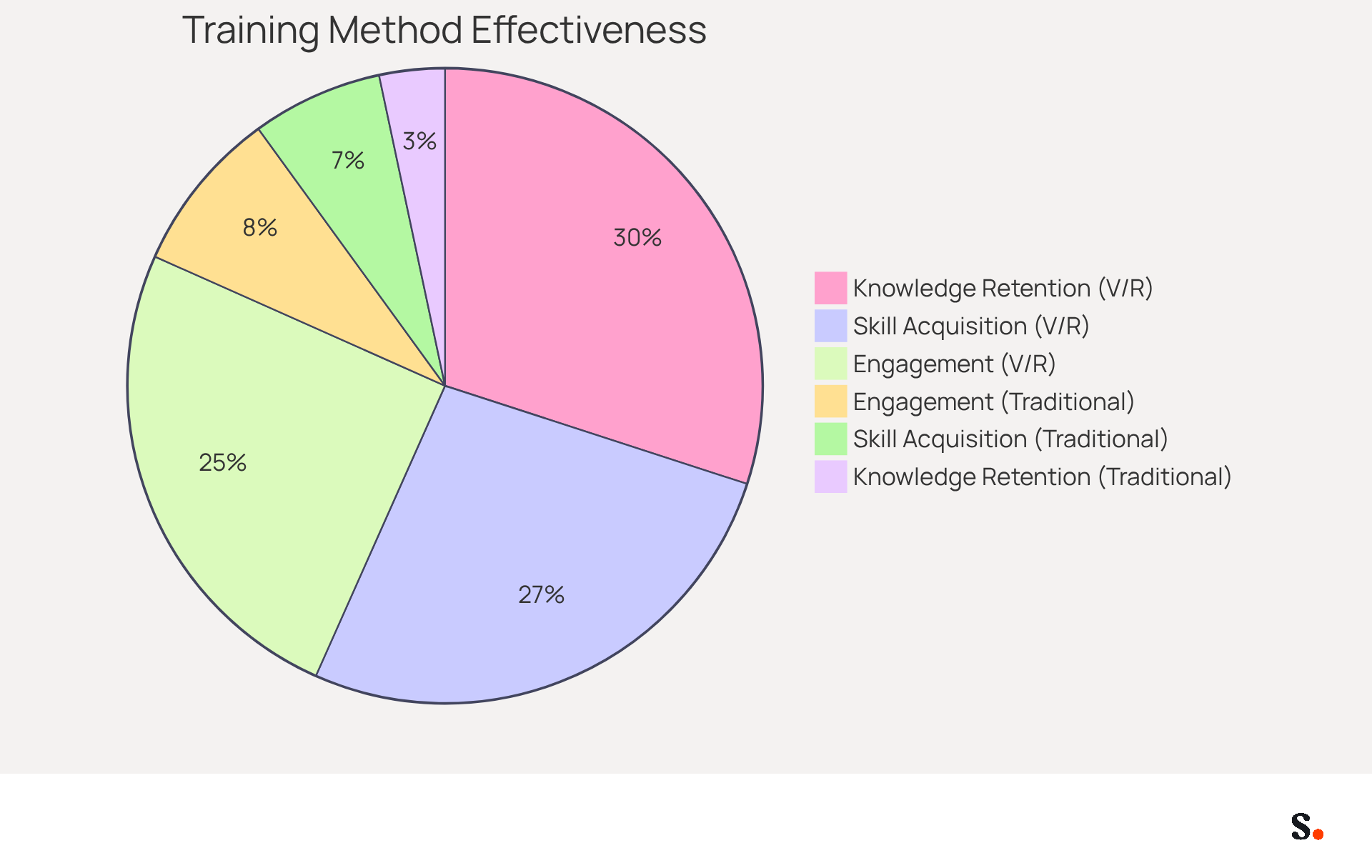
While traditional military training methods have long been the standard, the rise of virtual reality (V/R) exercises presents a compelling alternative that challenges conventional approaches. Evaluating the effectiveness of V/R military exercises compared to traditional methods reveals several critical metrics. Research indicates that V/R exercises can significantly accelerate skill acquisition, with participants completing sessions up to four times faster than in traditional classroom settings. Engagement levels are markedly higher; learners report being 3.75 times more emotionally connected to V/R content compared to traditional methods. In terms of knowledge retention, studies suggest that V/R methods yield impressive recall rates, with some reports indicating a retention rate of 90%, compared to 78% for traditional approaches. A peer-reviewed meta-analysis in Safety Science (2024) covering 52 studies found that individuals trained in V/R learned significantly more and retained more information than those trained traditionally.
Despite the advantages of V/R, traditional instruction still plays a vital role in cultivating essential physical skills and teamwork, both of which are critical in real-world combat situations. Case studies further illustrate these points, such as the pilot study by NCCER and ABC Illinois, which demonstrated that students in the V/R class achieved higher assessment scores and secured employment at a higher rate than those in conventional education. V/R exercises enhance individual performance and foster collaboration among personnel, allowing for cohesive operations in virtual environments. Ultimately, the integration of V/R exercises could redefine training paradigms, pushing the boundaries of how military personnel prepare for real-world challenges.
Discuss Future Trends in Military Training
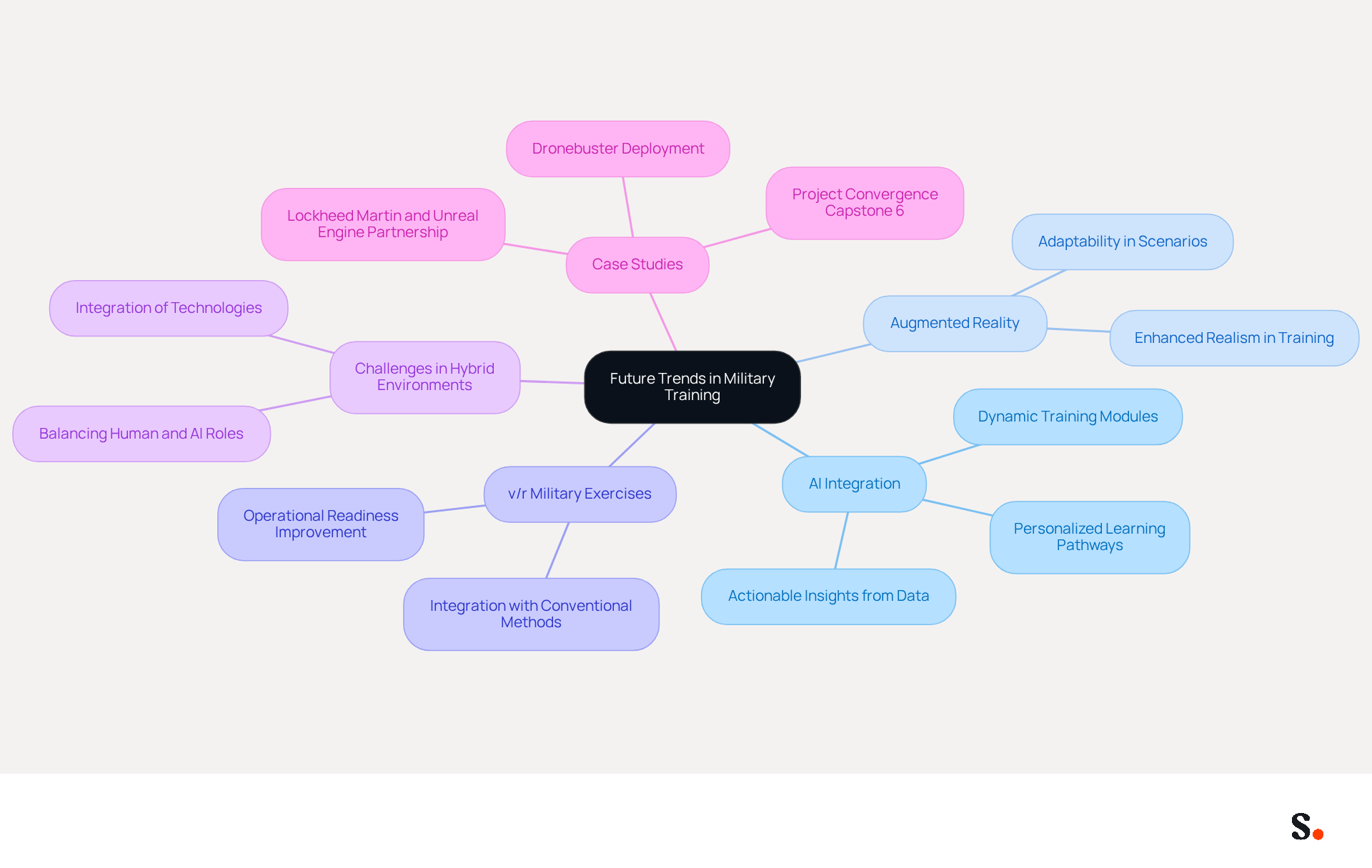
The military education landscape is on the brink of a major transformation, driven by rapid technological advancements. Key trends include the integration of artificial intelligence (AI) and augmented reality (AR) alongside v/r military exercises, which enhance realism and adaptability in scenarios. AI can analyze historical and real-time data to create personalized learning pathways that assess individual strengths, weaknesses, and learning styles. This personalization allows for effective tracking of performance metrics, ensuring that training remains aligned with current operational demands.
However, as defense organizations adopt digital solutions, they face challenges in creating hybrid environments that effectively combine v/r military techniques and conventional methods. This shift not only addresses the challenges of integration but also significantly improves operational readiness. The incorporation of sophisticated innovations, such as AI-generated instructional modules that reflect current threats and tactics, ensures that personnel are well-prepared for various scenarios, including problem-solving under stress.
Furthermore, insights from industry specialists highlight the significance of merging human and AI capabilities in defense preparation. As noted, "Effective crewed/uncrewed teaming will be necessary as we develop sixth generation aircraft and beyond." This emphasizes the essential role of innovation in shaping future defense teams. Additionally, case studies such as the partnership between Lockheed Martin and Unreal Engine demonstrate how commercial gaming technology can improve educational experiences, creating a more realistic and security-focused environment. As these trends unfold, they will redefine how defense personnel are trained and prepared for future challenges.
Conclusion
The shift from traditional military training methods to V/R technology marks a pivotal change in combat preparation. V/R training enhances safety and cost-effectiveness while improving soldier engagement and retention rates through immersive technology. This approach offers a compelling alternative to traditional methods, as evidenced by improved training outcomes.
Key insights reveal that V/R training can drastically reduce training time and costs while providing a more adaptable and realistic learning environment. While traditional methods remain essential for developing physical skills and teamwork, they face challenges in engagement and retention compared to their V/R counterparts.
The integration of advanced technologies, such as AI and AR, further emphasizes the potential for V/R training to enhance operational readiness and effectiveness. Military organizations must confront the challenges of implementing V/R training to fully realize its benefits.
Embracing these innovative training methods not only prepares soldiers for the complexities of modern combat but also positions military forces to adapt to future challenges. The future of military training hinges on the successful integration of V/R technology, which could redefine defense strategies for years to come.
Frequently Asked Questions
What is V/R military training?
V/R military training is an innovative approach that creates immersive environments replicating real-world scenarios for soldiers to prepare for combat. It utilizes advanced graphics and interactive elements to provide realistic learning experiences, significantly reducing the risks associated with live exercises.
How does V/R military training compare to traditional methods?
Traditional military training relies on physical drills, classroom instruction, and live exercises, which require extensive resources and personnel. In contrast, V/R training is more efficient, reducing training duration by up to 75% and improving test scores by 70%.
What are the safety advantages of V/R military training?
V/R military training enhances safety by allowing soldiers to engage in high-risk scenarios without the physical dangers present in live exercises. The risk of serious injury during V/R simulations is nearly zero, which lowers medical costs and creates a safer learning environment.
How does V/R military training impact costs?
V/R military training is cost-effective as it reduces expenses related to ammunition, fuel, and logistics. Simulations can be repeated without incurring extra costs, making it a more economical option compared to traditional training methods.
What are the retention and recall benefits of V/R training?
V/R training enhances recall accuracy by 8.8% compared to traditional methods and achieves retention rates of 75% for V/R experiences, compared to only 5% for lectures.
Can V/R military training be customized?
Yes, V/R exercises allow for customizable scenarios tailored to specific mission requirements, providing a more relevant and immersive experience for soldiers preparing for diverse environments.
What evidence supports the effectiveness of V/R military training?
Case studies show significant improvements, such as Boeing achieving a 75% reduction in equipment preparation time and Walmart reporting a 70% improvement in test scores among employees trained using V/R techniques.
How is V/R military training redefining combat readiness?
As military forces worldwide adopt V/R technology, they are enhancing training methods and redefining the future of combat readiness by improving operational effectiveness and soldier preparedness.
List of Sources
- Define V/R Military Training and Traditional Methods
- How Virtual Reality Is Used in the Military (https://inveristraining.com/virtual-reality-in-military-training)
- The use of virtual reality (VR) in the military and defence sector - ST Engineering Antycip (https://steantycip.com/blog/the-use-of-virtual-reality-vr-in-the-military-and-defence-sector)
- VR Training Statistics for Adoption & Effectiveness - PIXO VR (https://pixovr.com/vr-training-statistics)
- The Army wants soldiers to travel less for training, do more in virtual reality (https://taskandpurpose.com/news/army-training-virtual)
- VR in the Military (https://business.vive.com/us/stories/vr-in-the-military)
- Explore Advantages of V/R Military Training
- 5 Key Advantages of Simulation-Based Military Training (https://higherechelon.com/key-advantages-of-simulation-based-military-training)
- VR Training Statistics for Adoption & Effectiveness - PIXO VR (https://pixovr.com/vr-training-statistics)
- Virtual Reality: the Solution to Reduce Military Training Costs - ST Engineering Antycip (https://steantycip.com/blog/vr-to-reduce-military-training-costs)
- How Virtual Reality Is Used in the Military (https://inveristraining.com/virtual-reality-in-military-training)
- Benefits of VR in Military Training (https://business.vive.com/us/stories/vr-in-military-training)
- Assess Limitations of V/R Military Training
- How Virtual Reality Transforms Military Training for Real-World Success - Metaverse VR (https://metaverse-vr.co.uk/how-virtual-reality-transforms-military-training)
- VR Military Training Solutions | Immersive Combat Simulations- V-Armed (https://v-armed.com/2025/07/enhancing-military-training-with-virtual-reality-benefits-and-applications)
- Comparative Cost of Virtual Reality Training and Live Exercises for Training Hospital Workers for Evacuation - PMC (https://pmc.ncbi.nlm.nih.gov/articles/PMC7231540)
- How Virtual Reality Is Used in the Military (https://inveristraining.com/virtual-reality-in-military-training)
- Reality Check for Virtual Reality | Future Forge (https://theforge.defence.gov.au/article/reality-check-virtual-reality)
- Evaluate Effectiveness of Training Methods
- Why VR training is more effective than traditional training (https://skillsive.com/blog/why-vr-training-is-more-effective-than-traditional-training)
- Is VR Training Effective? Benefits and Real Effectiveness Data (https://transfrinc.com/resources/blog/is-vr-training-effective)
- VR Military Training Solutions | Immersive Combat Simulations- V-Armed (https://v-armed.com/2025/07/enhancing-military-training-with-virtual-reality-benefits-and-applications)
- Virtual Reality Training Effectiveness Statistics (https://zoetalentsolutions.com/virtual-reality-training-effectiveness)
- AR/VR Training in Military and Mine Action — EODynamics (https://eodynamics.co/blog/arvr-training-in-military-and-mine-action)
- Discuss Future Trends in Military Training
- 5 Trends Influencing Military Training (https://lockheedmartin.com/en-us/news/features/2024/5-trends-influencing-military-training.html)
- Homepage (https://defensescoop.com)
- How Artificial Intelligence is Transforming Military Training: Beyond Automation - Resources (https://calian.com/resources/blogs/how-artificial-intelligence-is-transforming-military-training-beyond-automation)
Get started with Scribe
Build a professional email signature
Free 14-day trial — no credit card.